Nov 14, 2025
Document AI: The Next Evolution of Intelligent Document ProcessingPersona
Industry
Use cases
Table Extraction API
[ Table Extraction API ]

Use LlamaParse to turn messy PDFs into reliable table data your apps can trust.
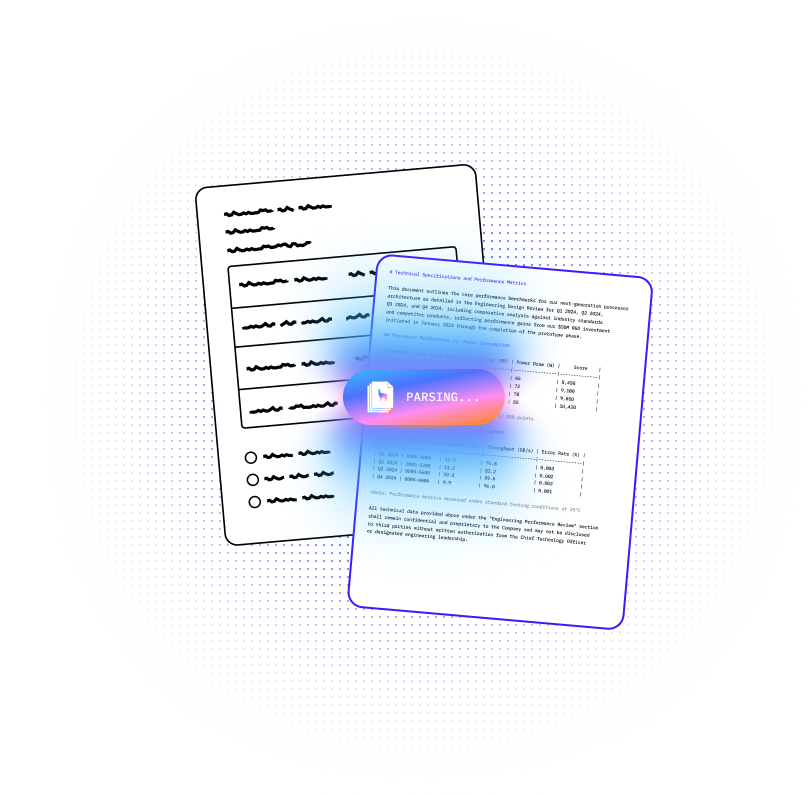
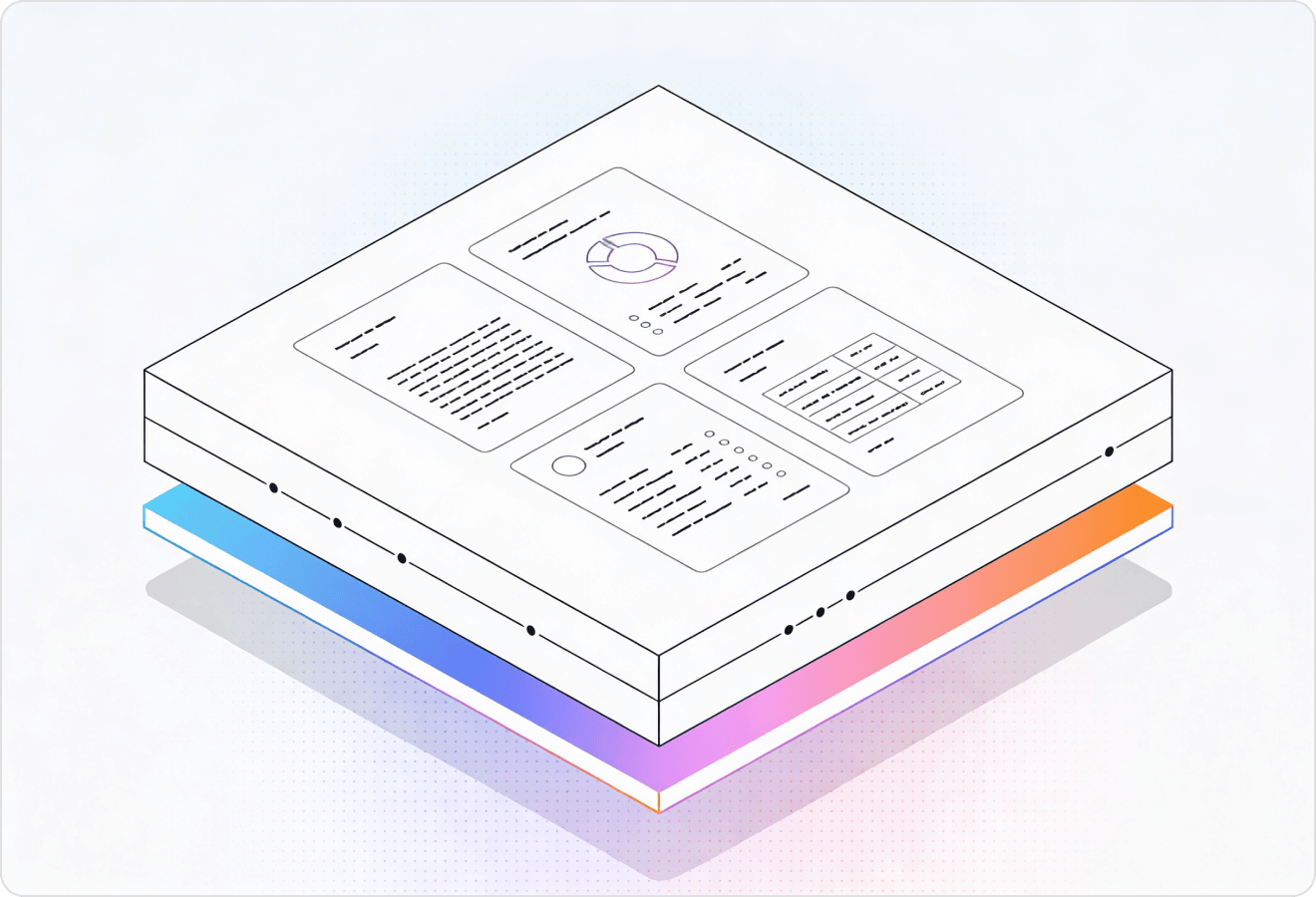

LlamaParse turns scanned PDFs, invoices, and reports into structured table JSON, preserving headers, merged cells, and row relationships across pages. Agentic document parsing uses layout-aware vision, validation loops, and confidence metadata so your Table Extraction API ships cleaner outputs with less manual cleanup.
Best-in-Class Accuracy

Extract holdings, fees, covenants, and performance tables from statements, fund reports, and credit agreements into clean JSON/Markdown without analysts re-keying spreadsheets. Layout-aware parsing preserves multi-level headers and footnotes so downstream reconciliation and compliance checks run on the right numbers, not scrambled OCR.

Turn commercial invoices, packing lists, and customs forms into structured line-item tables that map directly into your TMS/ERP for faster shipment creation and fewer chargebacks. Natural-language parsing instructions let ops teams standardize outputs across suppliers with wildly different templates—no brittle rules to maintain.

Convert study protocols, lab reports, and published PDFs into verified tables for endpoints, cohorts, and adverse events—complete with page-level citations for audit trails. Multimodal parsing captures embedded charts and scientific notation so researchers can compare results without manual data wrangling.

Ship table extraction in days by using LlamaParse as the ingestion layer for user-uploaded PDFs, returning structured Markdown/JSON that your product can search, summarize, or auto-fill workflows. Tier-based agentic processing keeps costs predictable by applying heavier parsing only to the messy scans that would otherwise break your pipeline.
The Solution
01
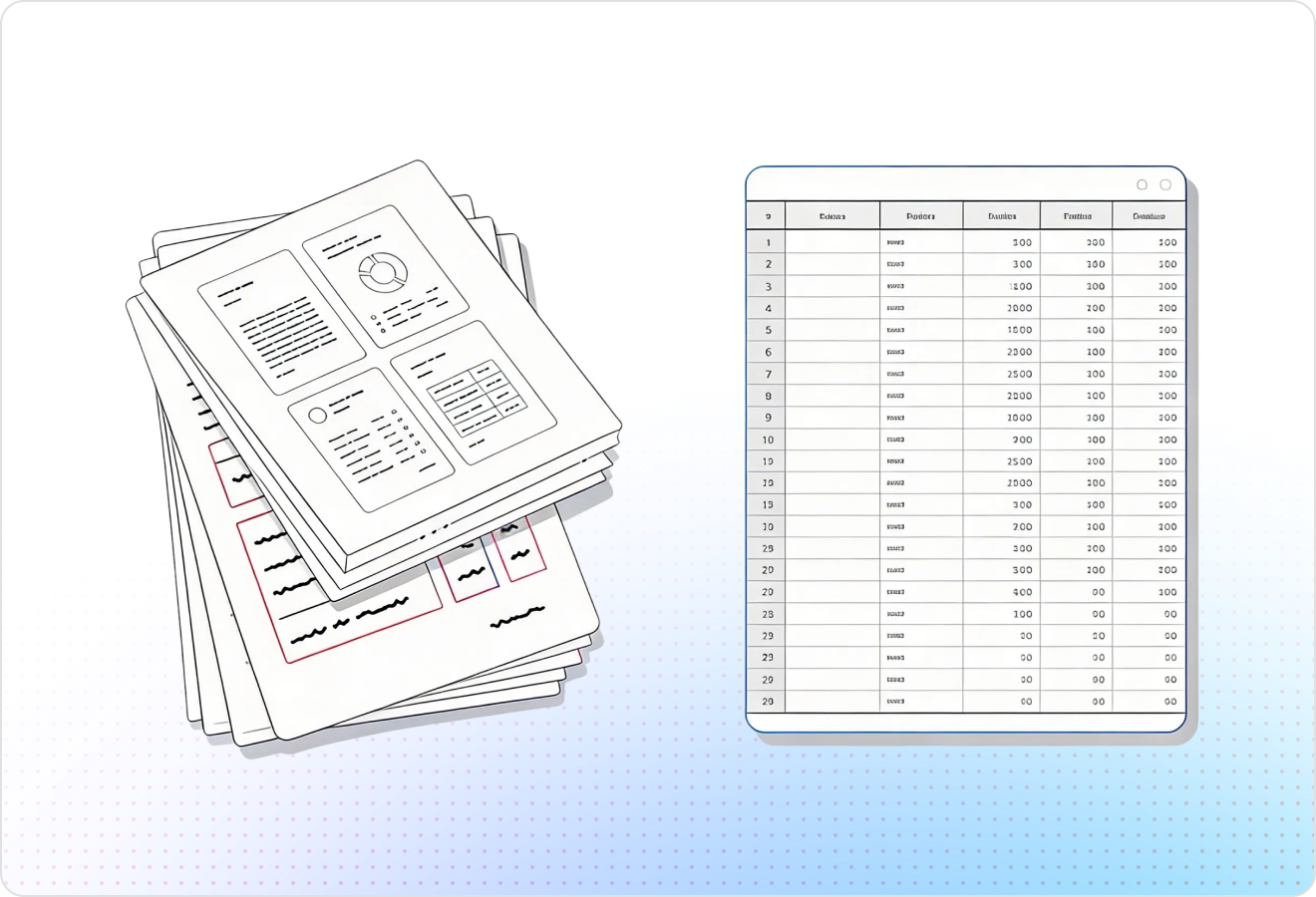
LlamaParse understands page structure so rows, columns, and merged cells don’t get scrambled when tables span multiple columns or pages. Your Table Extraction API returns clean, consistent tables without brittle heuristics for every new PDF template.
02
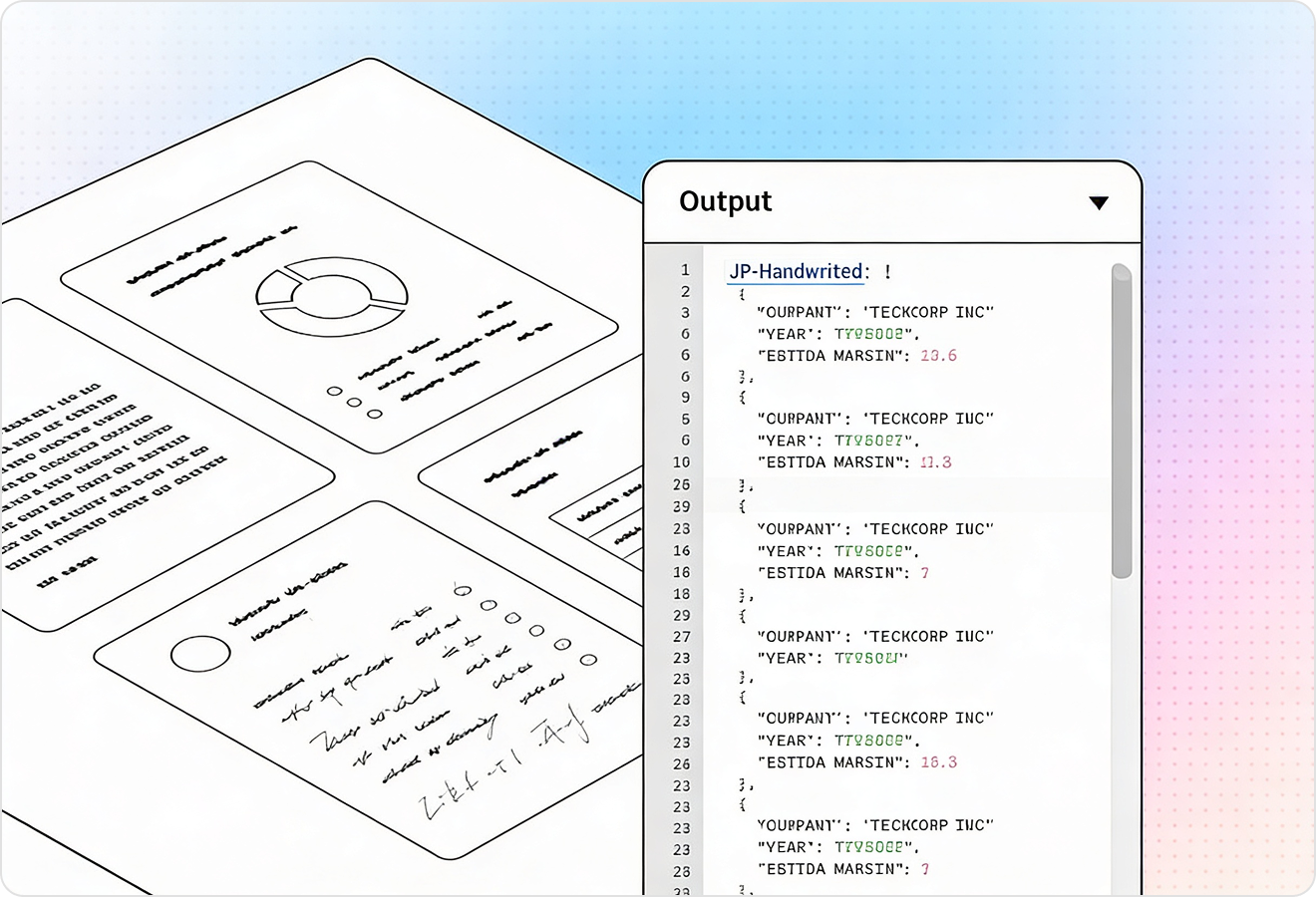
Return tables as machine-ready JSON that’s easy to validate, transform, and feed into downstream systems. This makes it straightforward to expose a stable API contract for table data instead of shipping Markdown-only outputs that require extra parsing.
03
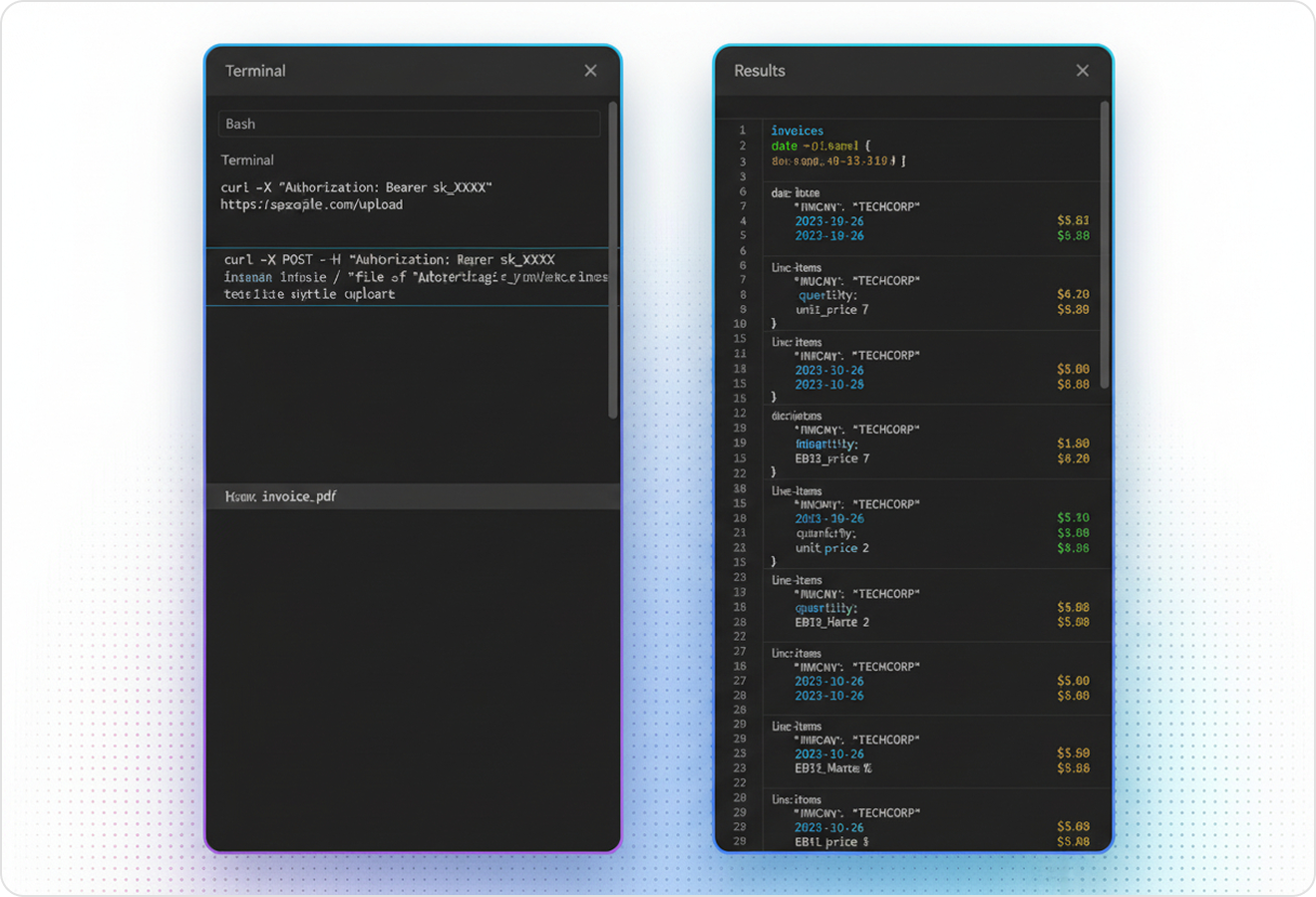
Every extracted table cell can be traced back to its page location with coordinates and element metadata. That traceability is what you want in a Table Extraction API when customers ask “where did this value come from?” or you need deterministic auditing.
04
Agentic validation loops catch common table failures like shifted columns, missing headers, and inconsistent totals before the response is returned. You get higher straight-through accuracy and fewer manual review workflows when tables come from noisy scans or messy exports.
Technical OCR documentation
Explore our developer guides to easily connect your document pipelines to LlamaParse.
Explore the documentation
Our AI catches the typos that tired eyes miss.

Export to Excel, JSON, XML, or directly via API.

SOC2 Type II compliant with end-to-end encryption.

Train the tool on your specific forms in minutes, not days.

Average processing time of <3 seconds per page.
LlamaParse’s support of a wide variety of filetypes and its accuracy of parsing made it the best tool we tested in our evaluations. The LlamaIndex team was very responsive and we were off to the races within a day.
Common FAQs
01
Our layout-aware extraction understands page structure, so rows, columns, and merged cells stay aligned—even when a table crosses columns or continues onto the next page. You get consistent output across diverse PDF templates without building brittle, template-specific rules.
02
No. We return tables as structured, machine-ready JSON designed to be easy to validate, transform, and map into your schema. This gives you a stable API contract for downstream systems instead of extra parsing and edge-case handling.
03
Yes—every table cell can include citations and spatial metadata like page number and coordinates. That makes it straightforward to answer “where did this value come from?” and support deterministic auditing and reviews.
04
What prevents common extraction errors like shifted columns, missing headers, or incorrect totals?
We use validation and self-correction loops that check for common failure patterns before returning a response. This improves straight-through accuracy, especially on noisy scans or messy exports, and reduces the need for manual QA.
05
How reliable is it across different vendors and constantly changing PDF templates?
Because extraction is driven by layout understanding rather than hard-coded heuristics, it generalizes well across new templates and formatting variations. You can onboard new document types faster and spend less time maintaining rules when vendors change their PDFs.
06
How do I integrate the output into my pipeline—ETL, databases, or analytics tools?
The JSON output is designed to plug directly into ETL jobs, data warehouses, and internal APIs with predictable fields and easy validation. Most teams can map tables into their models quickly, then scale volume without reworking parsing logic as documents evolve.