Nov 14, 2025
Document AI: The Next Evolution of Intelligent Document ProcessingPersona
Industry
Use cases
Structured Outputs API
[ Structured Outputs API ]

Use LlamaParse to turn messy PDFs into validated JSON your Structured Outputs pipeline can trust.
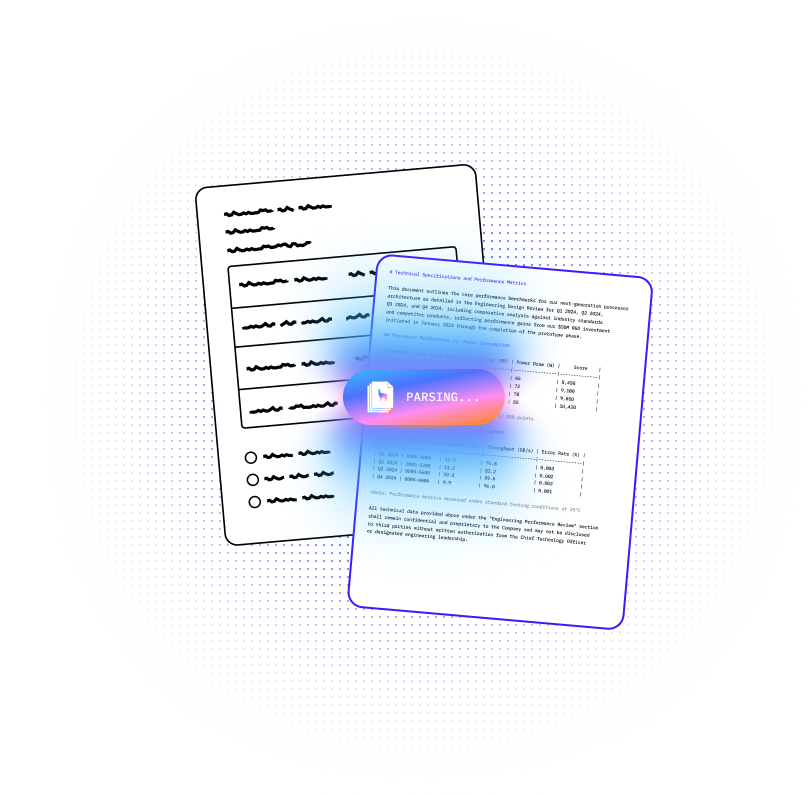


LlamaParse turns PDFs, scans, and email attachments into clean, structured JSON you can trust, delivered through a simple API call. Agentic document parsing understands layout and tables, runs validation loops, and returns confidence and citations so your downstream workflows stay reliable.
Best-in-Class Accuracy

Turn messy customer PDFs, invoices, and onboarding docs into clean JSON or Markdown with LlamaParse, so your team can ship automated workflows without building brittle extraction code. Use natural-language parsing instructions to iterate on new document types in hours, not weeks, while auto-routing keeps compute spend predictable as volume spikes.

Parse claim forms, loss runs, adjuster notes, and repair estimates into structured outputs while preserving tables, reading order, and supporting evidence for faster triage. Granular metadata and validation loops make it easy to trace every extracted field back to the source page, reducing leakage and speeding up approvals.

Convert contracts, exhibits, and scanned filings into layout-faithful Markdown and structured JSON, so clause libraries and matter workflows stop breaking on multi-column formatting and embedded tables. Capture citations and coordinates per extracted element to support defensible review, pinpoint search, and faster drafting with source-grounded context.

Extract line-item tables from POs, invoices, packing lists, and supplier catalogs without scrambling SKUs, units, or pricing, enabling clean match-and-approve pipelines. Translate charts, diagrams, and spec sheets into machine-readable outputs your ERP and analytics tools can consume, cutting manual rekeying and reducing exceptions.
The Solution
01
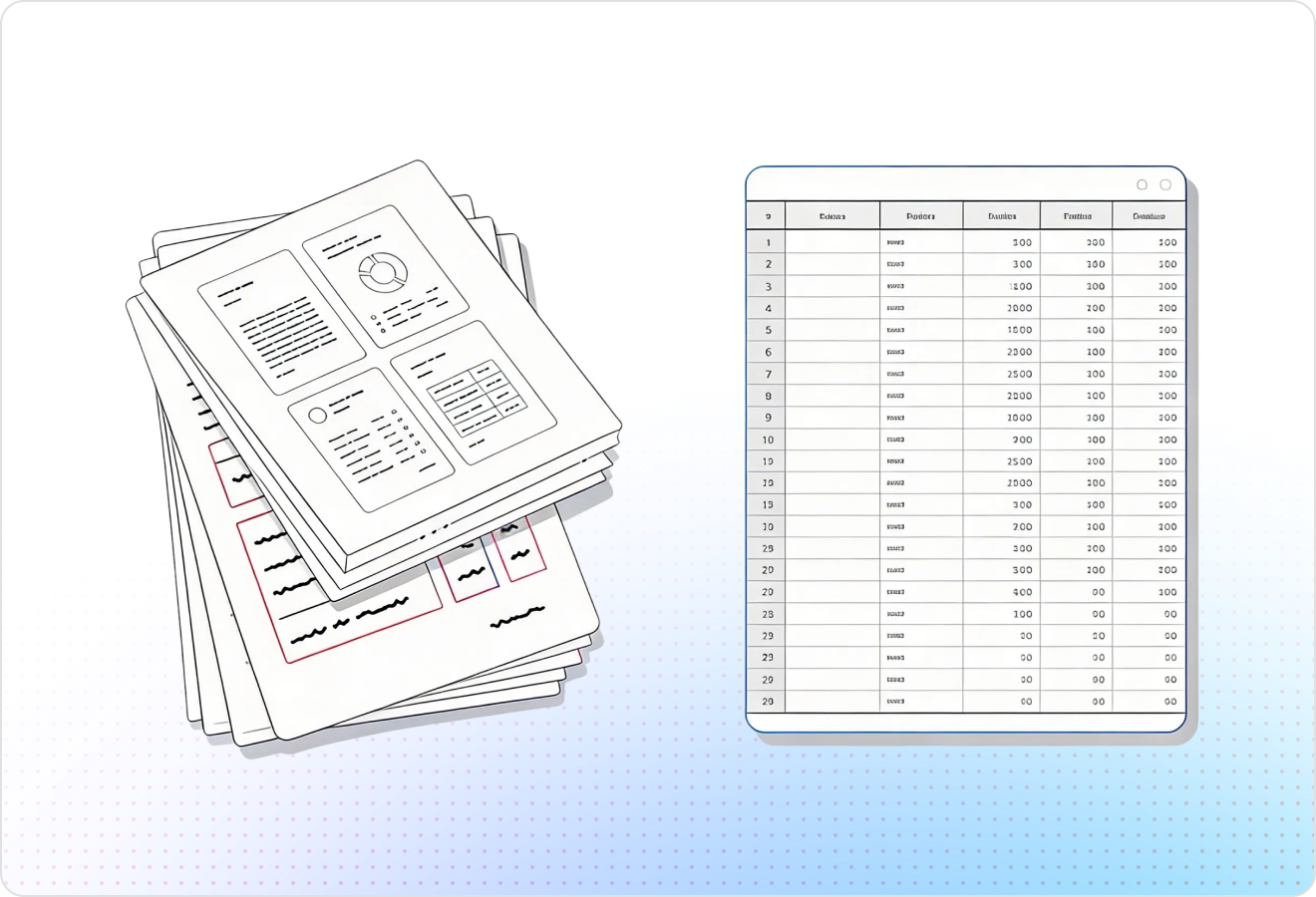
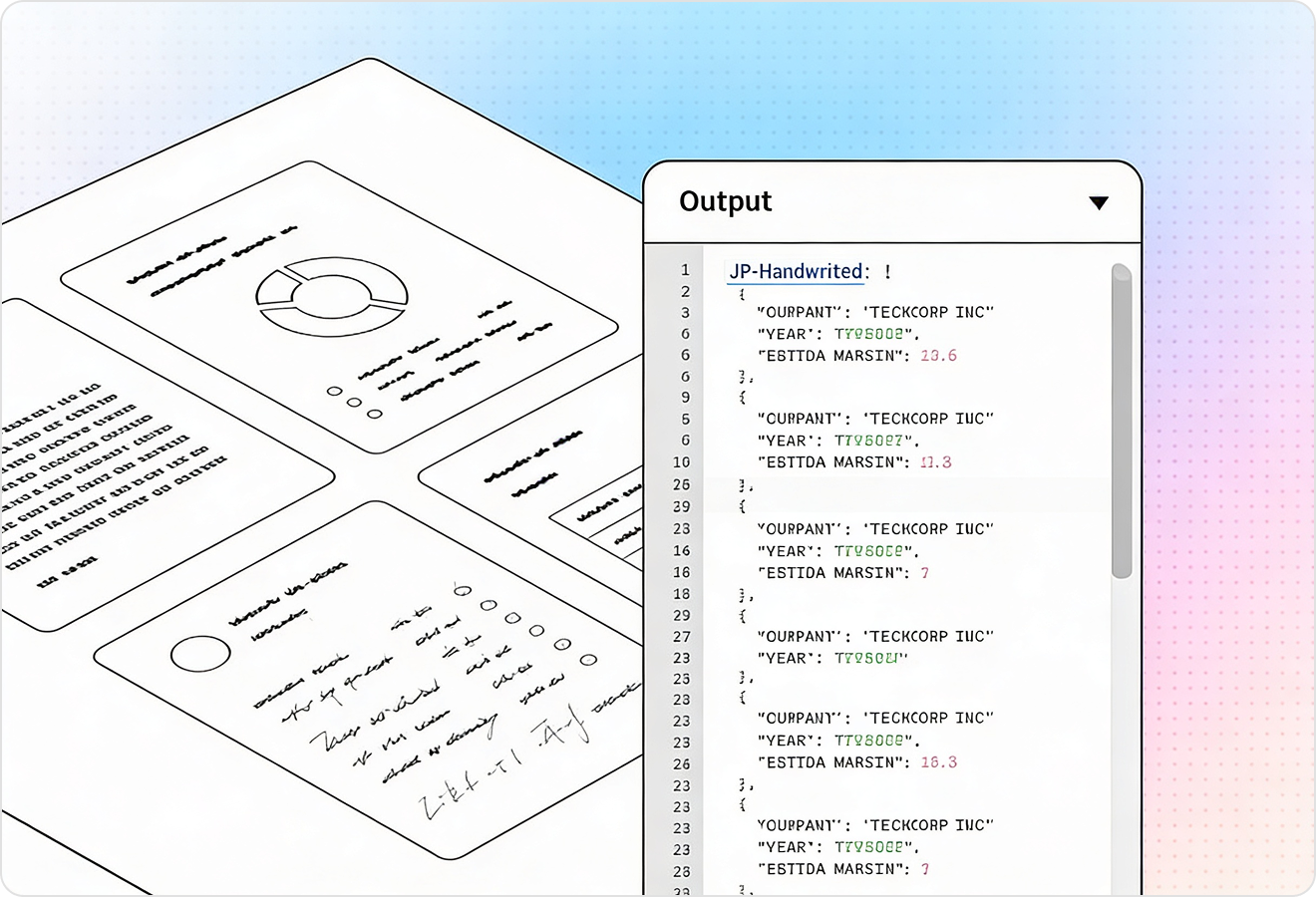
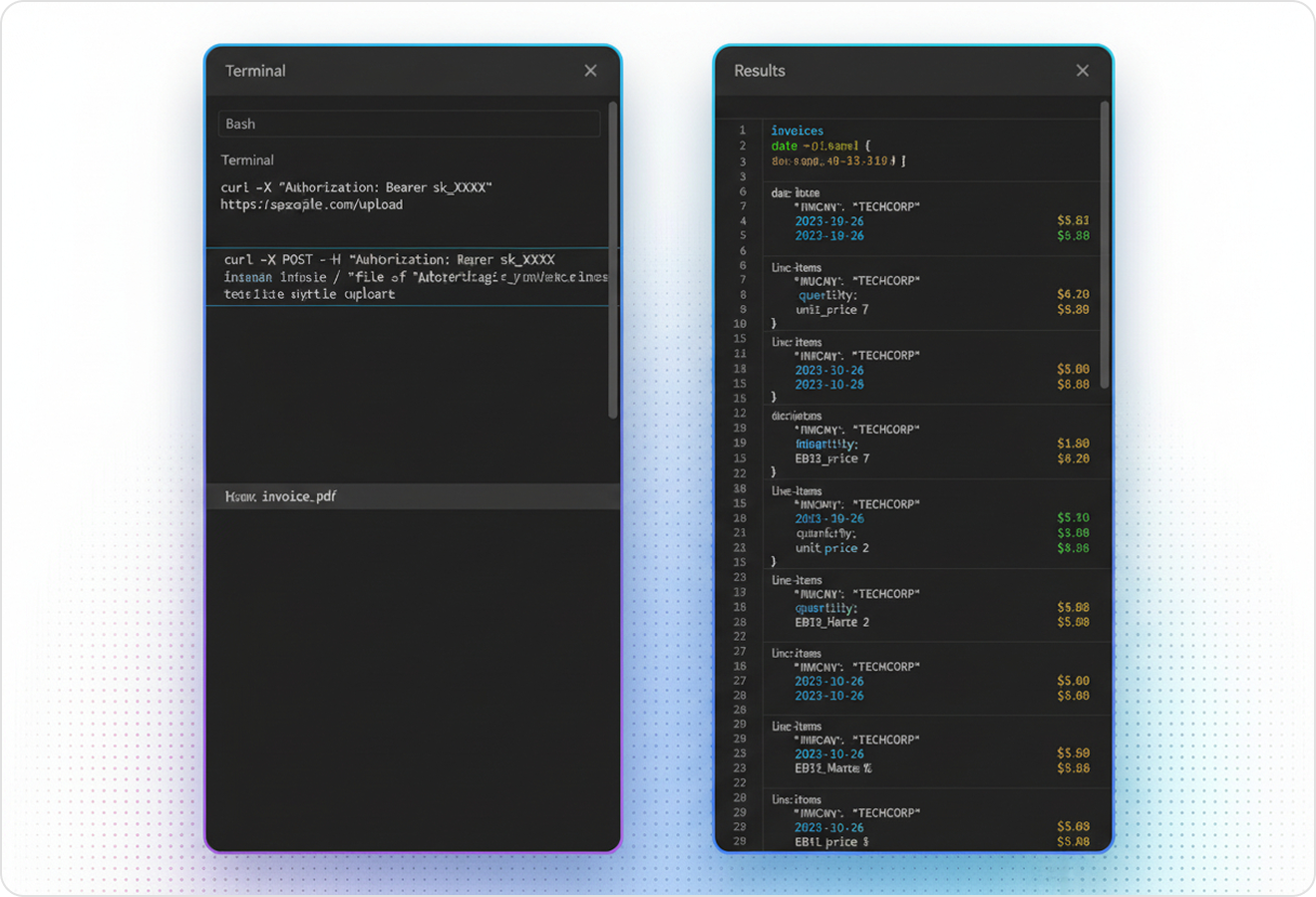
LlamaParse can return parsed documents as clean, structured JSON instead of loose text, so your Structured Outputs API has a stable payload shape to depend on. This cuts down on brittle post-processing and makes downstream validation, typing, and storage straightforward.
02
Use natural-language parsing instructions to tell LlamaParse exactly what fields you want and how they should be formatted. It’s a fast way to produce API-ready objects (e.g., line items, parties, totals) without writing custom regex pipelines for every template.
03
LlamaParse understands page structure—headers, footers, multi-column flows, and nested tables—so values land in the right keys instead of getting scrambled. That reliability is what keeps structured outputs consistent when real-world document layouts change.
04
Every extracted element can include granular metadata like page number, element type, and coordinates, giving your API traceability back to the source. This makes it easier to justify structured outputs, run automated checks, and support human review when confidence is low.
Technical OCR documentation
Explore our developer guides to easily connect your document pipelines to LlamaParse.
Explore the documentation
Our AI catches the typos that tired eyes miss.

Export to Excel, JSON, XML, or directly via API.

SOC2 Type II compliant with end-to-end encryption.

Train the tool on your specific forms in minutes, not days.

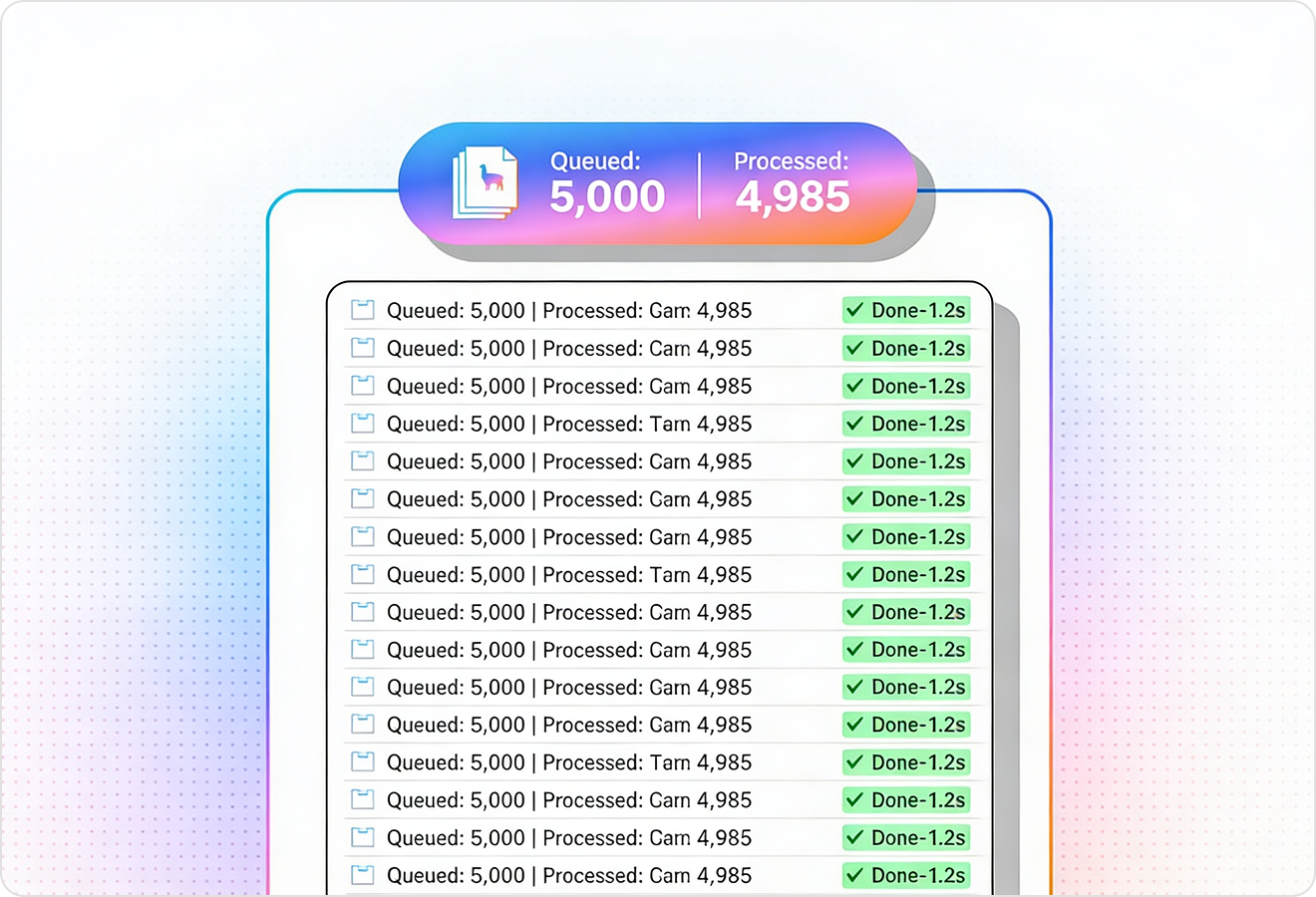
Average processing time of <3 seconds per page.
LlamaParse’s support of a wide variety of filetypes and its accuracy of parsing made it the best tool we tested in our evaluations. The LlamaIndex team was very responsive and we were off to the races within a day.
Common FAQs
01
JSON Mode returns clean, structured JSON with a predictable shape instead of loosely formatted text. That means fewer edge cases, less brittle post-processing, and easier validation, typing, and storage in your pipeline.
02
Yes—schema-guided instructions let you specify the fields you want (and the format you expect) in plain language. It’s a fast way to produce API-ready objects like parties, line items, and totals without building a custom parser per template.
03
Layout-aware field recovery understands page structure so values land in the right keys rather than getting scrambled. This improves consistency across real-world PDFs where formatting shifts between vendors, versions, or scans.
04
How can I verify where a specific extracted value came from?
Each extracted element can include traceable metadata like page number, element type, and coordinates. This makes it easier to justify outputs, run automated checks, and support human review when confidence is low.
05
Will this reduce the amount of custom parsing and QA work my team does?
Typically, yes—structured JSON outputs and schema guidance cut down on regex-heavy cleanup and one-off template logic. Teams spend less time chasing formatting bugs and more time shipping reliable, typed integrations.
06
How does this fit into my existing stack for validation and compliance?
Because the output is consistently structured, you can validate it with your existing schemas, enforce required fields, and store it safely for audits. Metadata tracing also supports compliance workflows by linking key fields back to the original document evidence.