Nov 14, 2025
Document AI: The Next Evolution of Intelligent Document ProcessingPersona
Industry
Use cases
Air Cargo Manifest OCR
[ Air Cargo Manifest OCR ]

Use LlamaParse to turn air cargo manifests into structured JSON with citations you can verify.
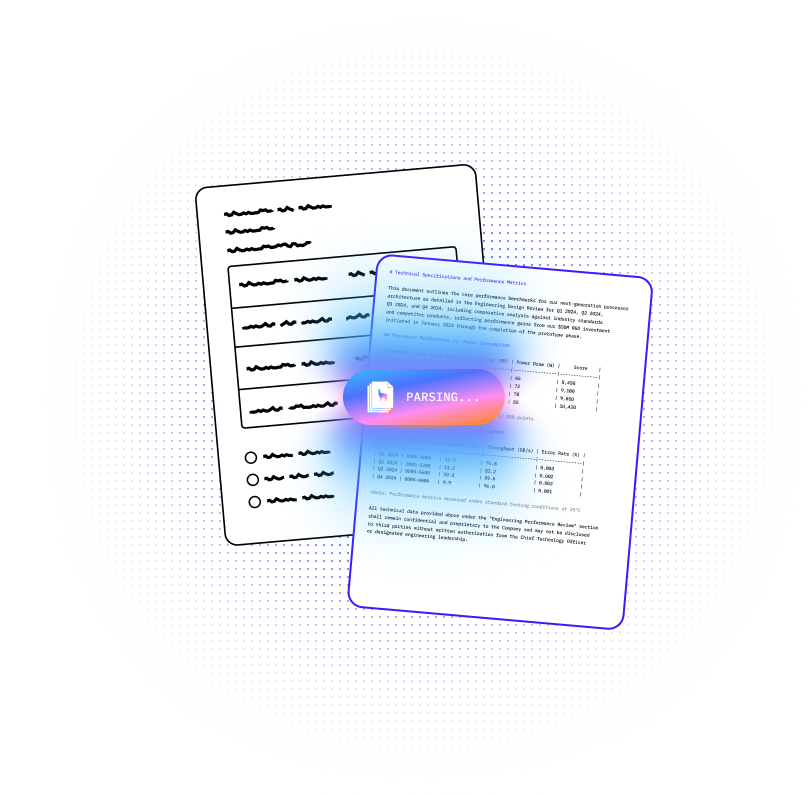


LlamaParse turns scanned PDFs and emailed air cargo manifests into clean, structured JSON or tables, capturing line items, weights, and routing reliably. Layout-aware vision and validation loops handle stamps, skewed scans, and multi-column formats, so teams reduce rework and speed downstream systems.
Best-in-Class Accuracy

Turn scanned air cargo manifests into structured JSON that maps cleanly to HS codes, shipper/consignee fields, and piece-level line items—even when multi-column layouts and tables are messy. Use citations and confidence scores to flag exceptions for audit and cut manual re-keying that slows clearance.

Extract ULD numbers, weights, AWB references, and special handling codes from manifests while preserving reading order across headers, footers, and split sections. Feed the results directly into load planning and warehouse systems to reduce misloads, shorten dock-to-flight turnaround, and improve on-time performance.

Parse manifests alongside incident reports and photos to reconcile declared contents, quantities, and routing with what was actually moved, even when key details live inside tables or stamped scans. Auto-correction loops reduce disputes caused by transcription errors and accelerate claim triage with verifiable source references.

Ship an ingestion pipeline that converts customer-uploaded manifests into normalized, schema-ready data without brittle regex or per-carrier template work. Use tier-based processing to keep unit costs predictable while scaling from pilot volumes to production SLAs across new lanes and document formats.
The Solution
01
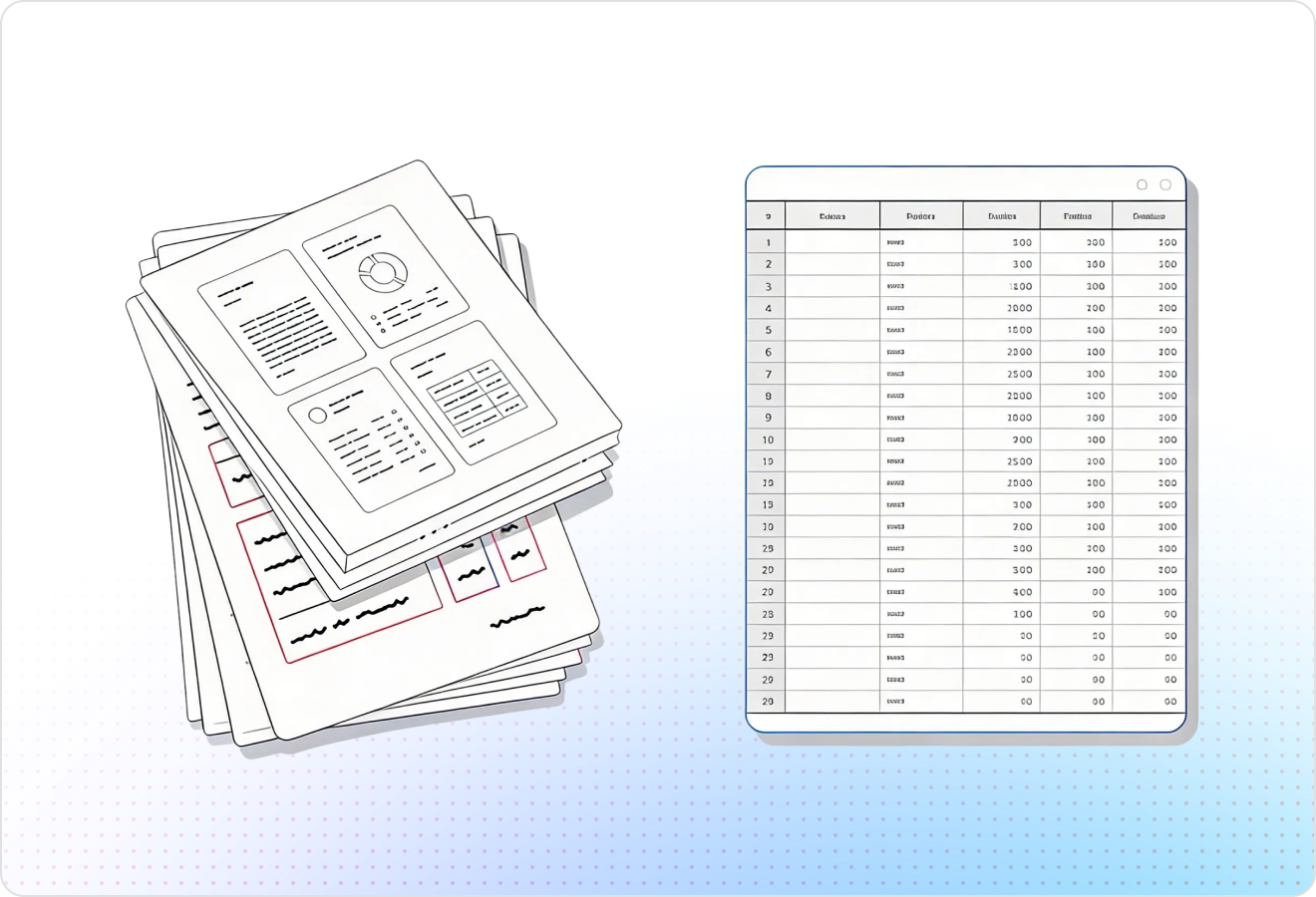
LlamaParse preserves reading order across multi-column manifests and reliably captures nested line-item tables without scrambling fields. That means AWB/MAWB numbers, piece counts, weights, and handling codes land in the right rows—ready for downstream checks and import.

02
Auto Mode routes each page to the right combination of vision and language models, escalating only when scans are messy or layouts are unusual. For air cargo manifests, you get high straight-through processing across mixed-quality faxes, scans, and PDFs without hand-tuning a brittle pipeline.
03
LlamaParse runs self-checks to catch common extraction failures like dropped digits, merged columns, or inconsistent totals and then corrects them before returning results. This reduces manual review on manifests where small errors can break customs filings, billing, or warehouse receiving.
04
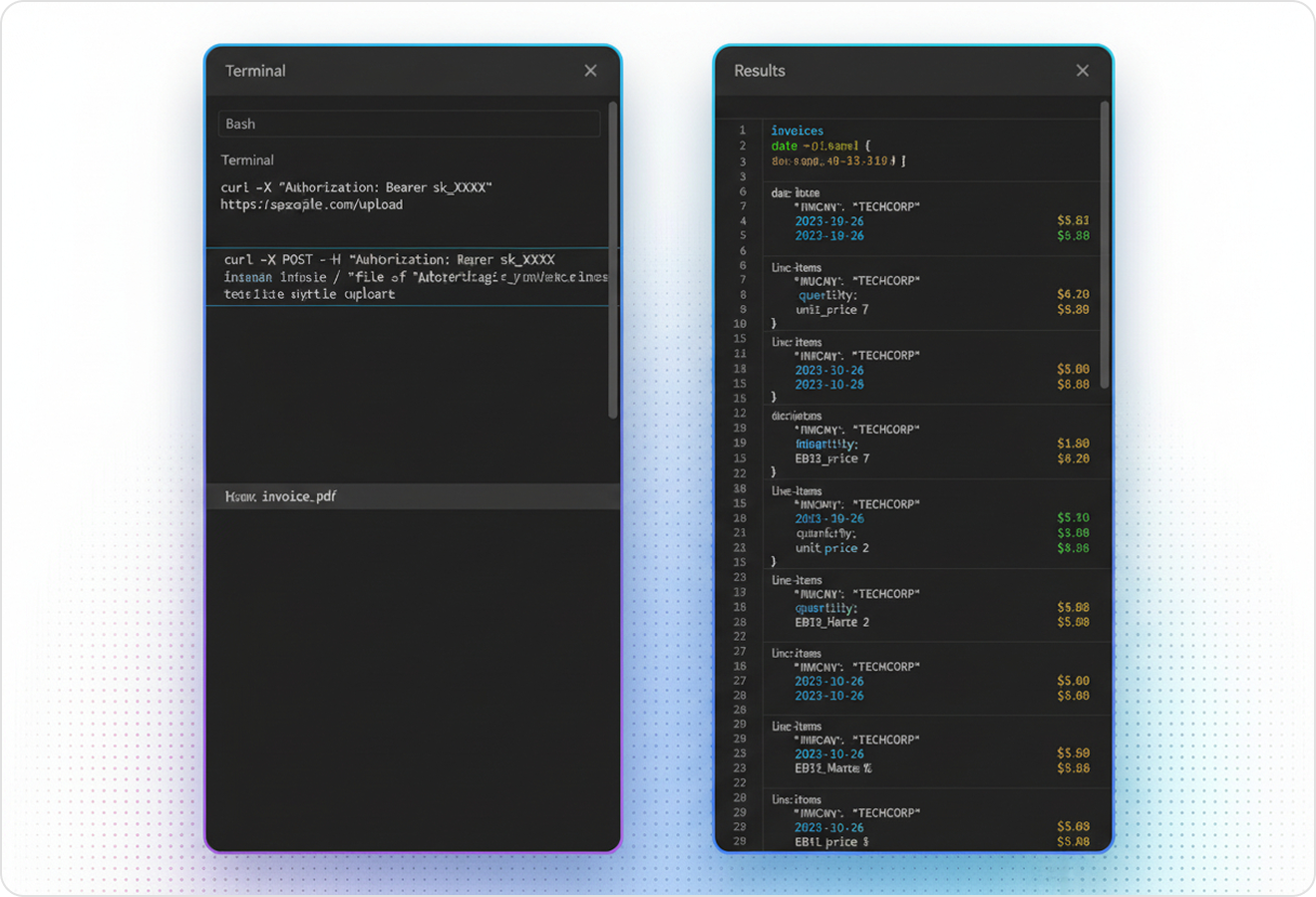
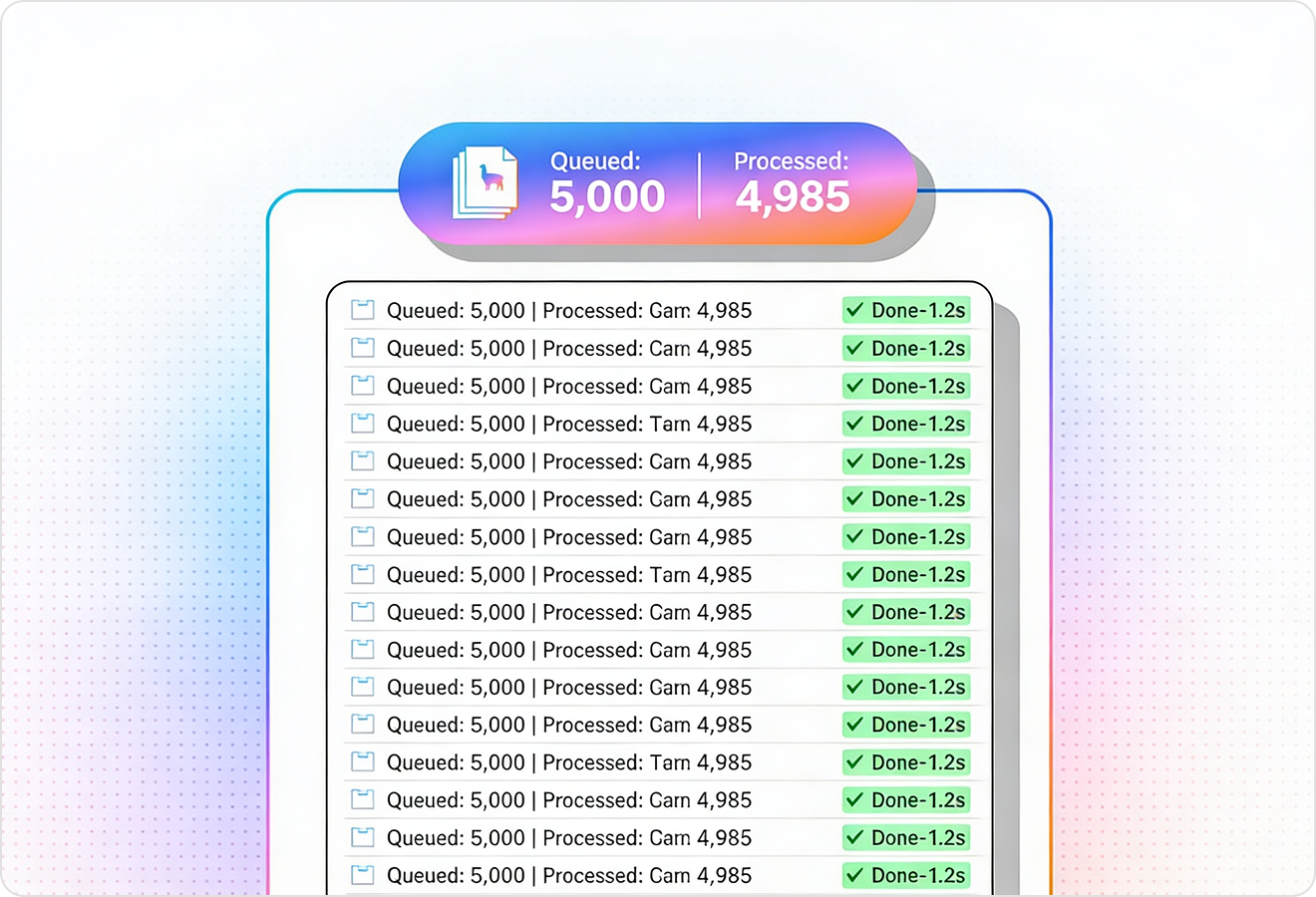
JSON mode returns clean, structured fields with page-level and region-level metadata so every extracted value is traceable back to the source. For air cargo manifests, that makes it easy to audit exceptions, flag low-confidence entries, and build reliable human-in-the-loop verification for compliance.
Technical OCR documentation
Explore our developer guides to easily connect your document pipelines to LlamaParse.
Explore the documentation
Our AI catches the typos that tired eyes miss.

Export to Excel, JSON, XML, or directly via API.

SOC2 Type II compliant with end-to-end encryption.

Train the tool on your specific forms in minutes, not days.

Average processing time of <3 seconds per page.
LlamaParse’s support of a wide variety of filetypes and its accuracy of parsing made it the best tool we tested in our evaluations. The LlamaIndex team was very responsive and we were off to the races within a day.
Common FAQs
01
Yes—layout-aware table extraction preserves reading order across multi-column pages and keeps line items aligned, so fields don’t drift into the wrong rows. That means AWB/MAWB, piece counts, weights, and handling codes are captured reliably and delivered ready for import and downstream checks.
02
Agentic Parsing Auto Mode automatically selects the right combination of vision and language models per page and escalates only when needed. You get high straight-through processing across real-world manifest quality without hand-tuning a brittle pipeline.
03
Validation and auto-correction loops run self-checks to catch issues like dropped digits, merged columns, and inconsistent totals before results are returned. This reduces manual review and helps prevent costly downstream exceptions in customs, billing, and warehouse receiving.
04
Do you return structured data we can load directly into our TMS/WMS or compliance workflow?
Yes—JSON mode returns clean, structured fields designed for automation and integration. It’s easy to map to your existing systems so your team can move from document to validated records faster.
05
Can we trace every extracted value back to the original manifest for audits and exception handling?
Absolutely—outputs include page-level and region-level metadata so each value is traceable to its source location. That makes audits simpler, supports compliance needs, and speeds up review when something is flagged.
06
How can we review low-confidence entries without slowing down operations?
Traceability metadata makes it straightforward to flag low-confidence fields and route only those items for human verification. Your team focuses on exceptions while the majority of manifests flow through automatically, improving turnaround time without sacrificing accuracy.