Nov 14, 2025
Document AI: The Next Evolution of Intelligent Document ProcessingPersona
Industry
Use cases
OCR Automation
[ OCR Automation ]

Turn messy PDFs into accurate, layout-aware JSON or Markdown with citations and confidence scores.
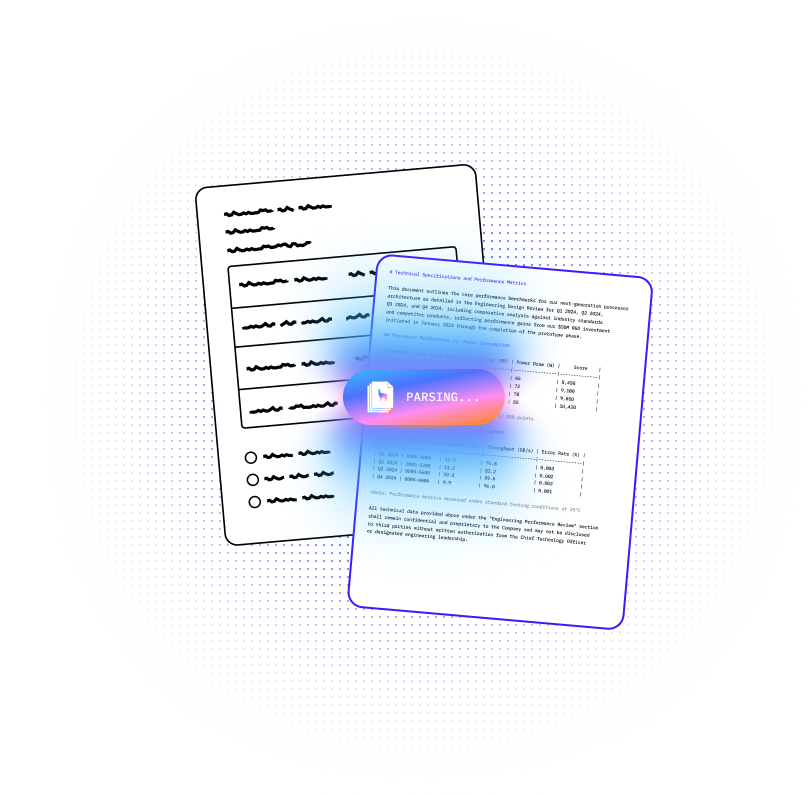
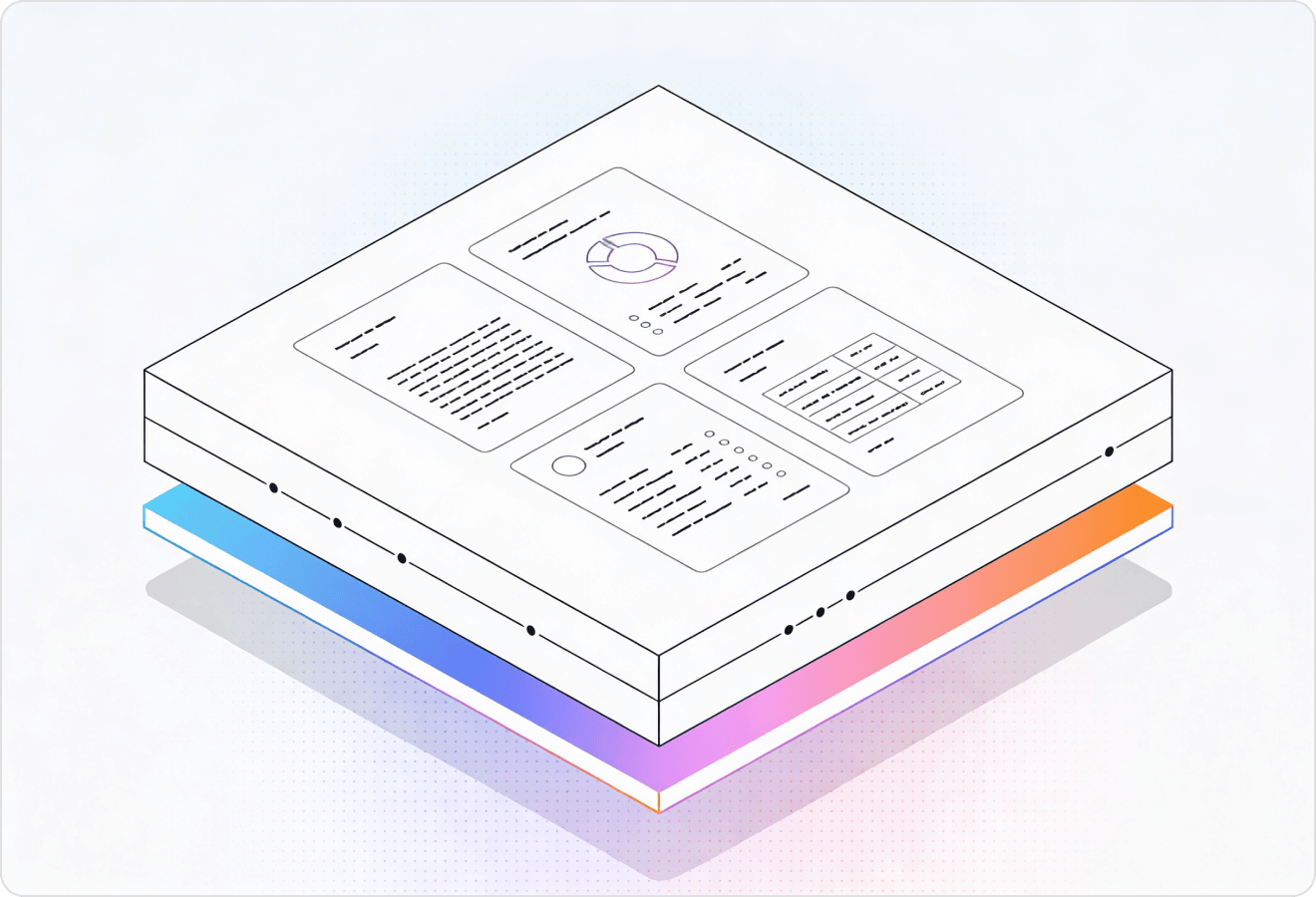

LlamaParse turns messy PDFs, scans, and forms into clean, structured JSON or Markdown automatically, so your document pipeline stops breaking. It understands layout, tables, and embedded visuals, then validates results with confidence metadata so teams can automate extraction with fewer exceptions.
Best-in-Class Accuracy

Turn bills of lading, commercial invoices, and packing lists into clean, layout-faithful Markdown/JSON so your TMS can auto-populate shipment details without broken tables or manual rekeying. LlamaParse preserves reading order across multi-column forms and extracts line-item tables reliably, reducing disputes and accelerating customs clearance and invoicing.

Parse loss runs, adjuster reports, medical bills, and photo-heavy claim PDFs into structured JSON with page-level traceability so teams can validate decisions fast instead of hunting through scanned documents. LlamaParse handles embedded tables, images, and inconsistent templates with agentic validation loops, improving straight-through processing for routine claims while flagging low-confidence fields for review.

Extract scope, exclusions, unit pricing, and compliance details from bids, contracts, and pay apps—even when the critical data lives in dense tables, headers/footers, and addenda. LlamaParse keeps complex table structure intact and returns verifiable outputs, enabling faster change-order reconciliation and cleaner cost tracking in your ERP.

Ship document automation features early by ingesting messy customer PDFs (bank statements, invoices, KYC packets) and getting AI-ready Markdown/JSON without building brittle regex and post-processing code. With tier-based processing and predictable credit pricing, startups can start on the free credits, control spend in production, and only use heavier agentic parsing on the few pages that actually need it.
The Solution
01
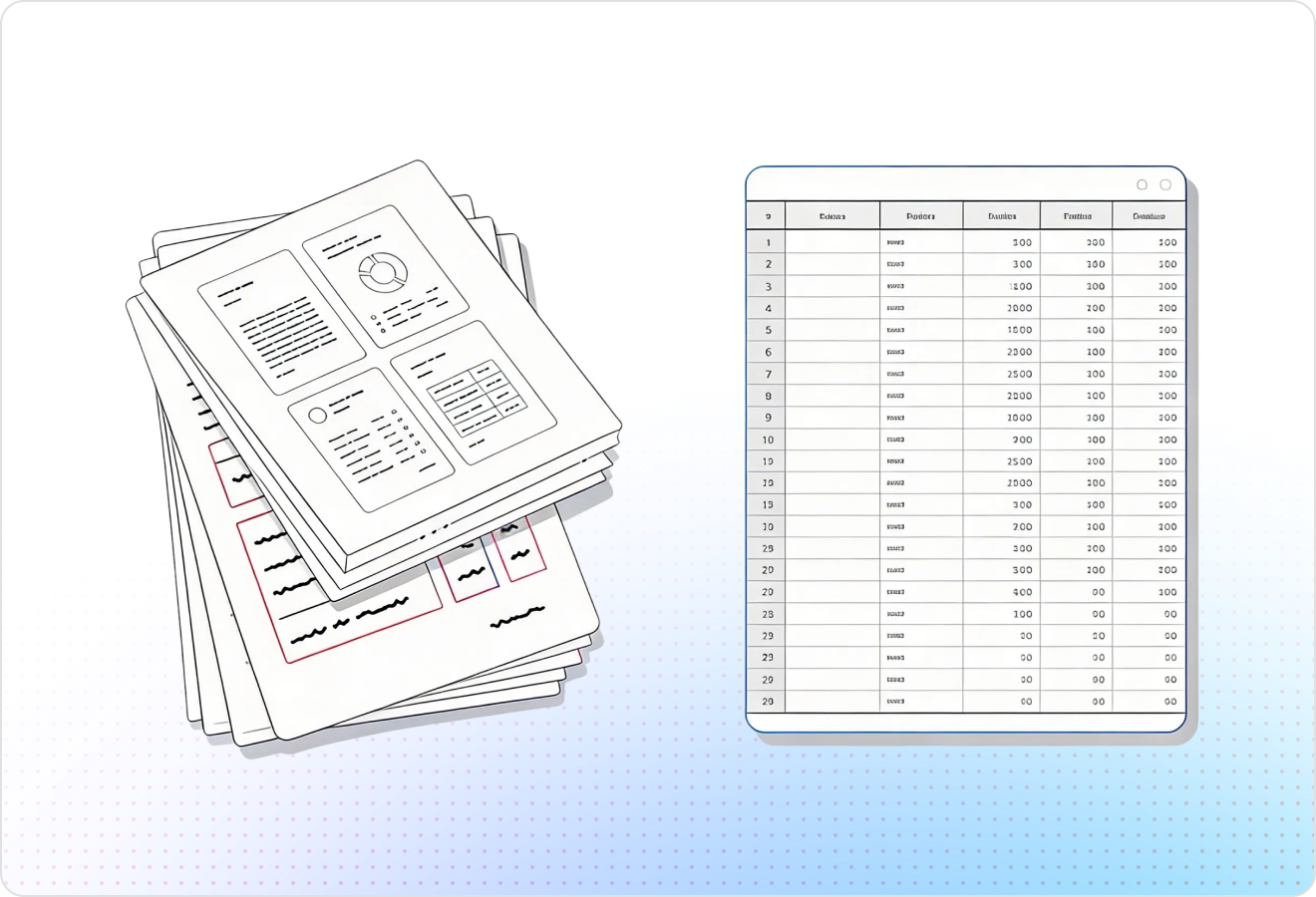
LlamaParse detects page structure—columns, headers, footers, and sections—so extracted text stays in the correct reading order. This makes OCR automation reliable across shifting templates, without brittle post-processing rules to “unscramble” outputs.
02
LlamaParse preserves complex tables (merged cells, nested headers, multi-page tables) and reconstructs them cleanly in AI-ready formats. That means automated OCR workflows can populate downstream systems with fewer manual fixes and far fewer extraction exceptions.
03
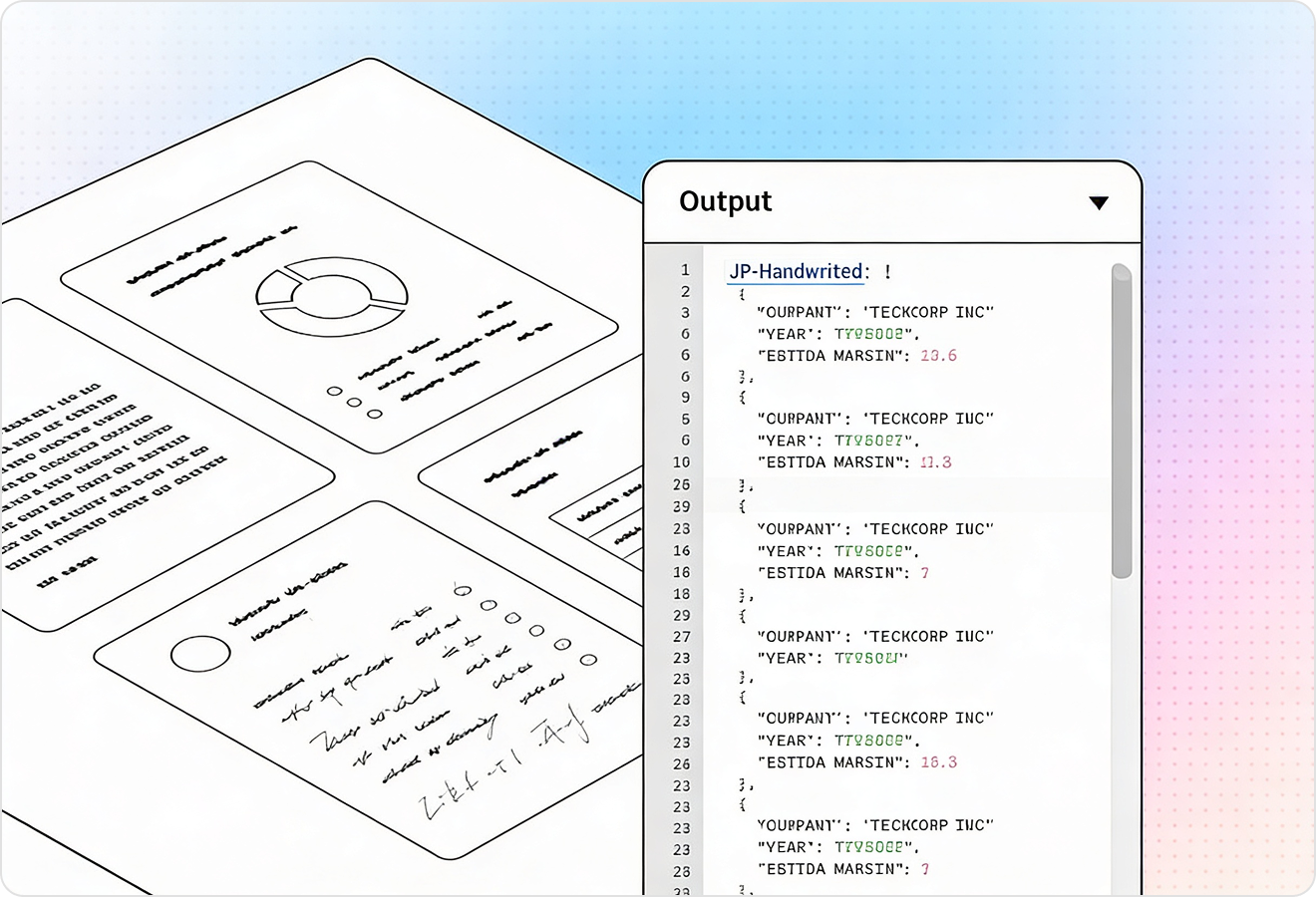
LlamaParse runs validation and self-correction steps during parsing to catch common recognition mistakes and formatting inconsistencies before results are returned. In OCR automation pipelines, this boosts straight-through processing by reducing rework and human review queues.
04
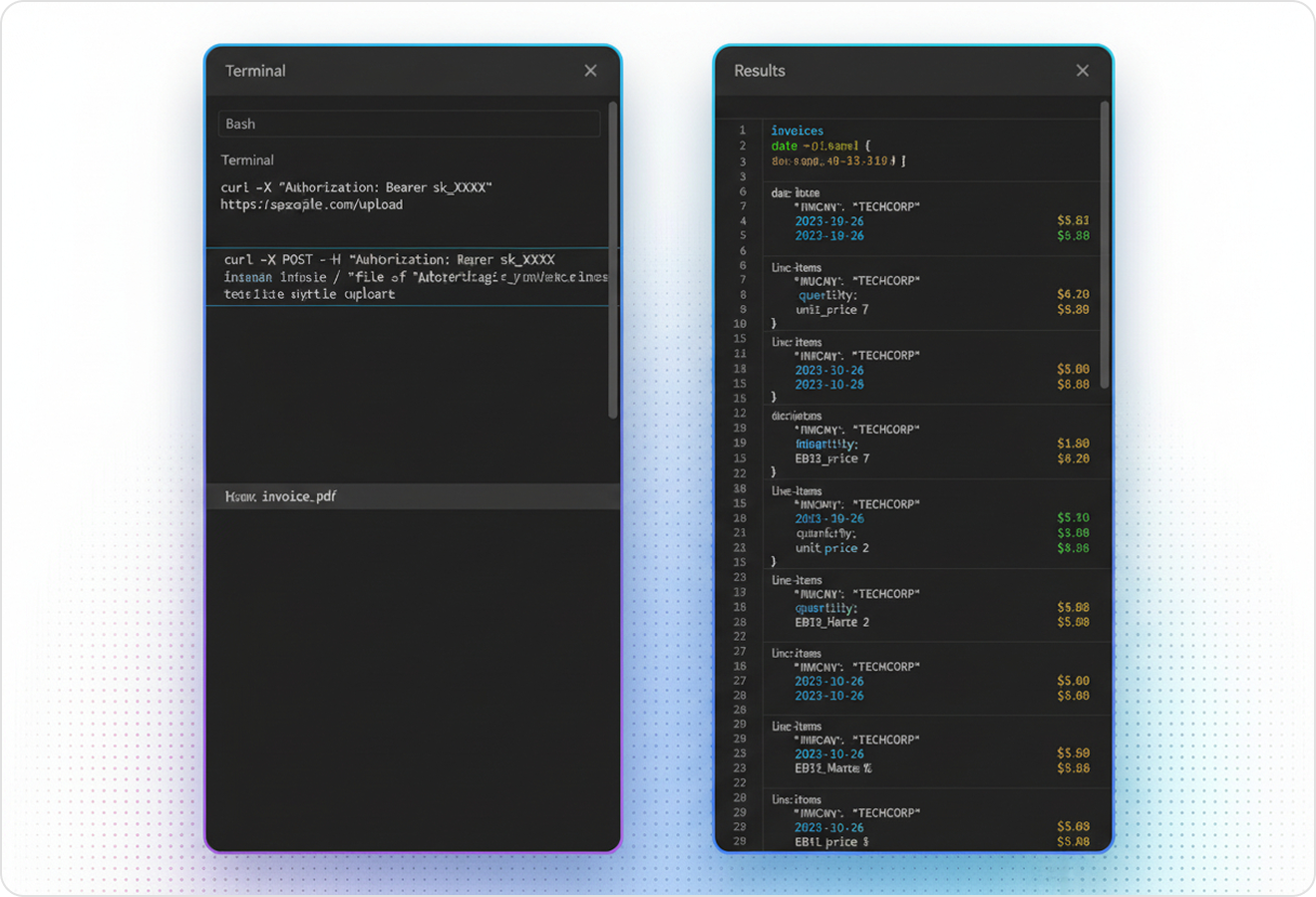
LlamaParse can output structured JSON while attaching traceability metadata like page references and spatial coordinates for each extracted element. This lets automated OCR workflows audit outputs, route low-confidence fields for review, and safely integrate results into APIs and databases.
Technical OCR documentation
Explore our developer guides to easily connect your document pipelines to LlamaParse.
Explore the documentation
Our AI catches the typos that tired eyes miss.

Export to Excel, JSON, XML, or directly via API.

SOC2 Type II compliant with end-to-end encryption.

Train the tool on your specific forms in minutes, not days.

Average processing time of <3 seconds per page.
LlamaParse’s support of a wide variety of filetypes and its accuracy of parsing made it the best tool we tested in our evaluations. The LlamaIndex team was very responsive and we were off to the races within a day.
Common FAQs
01
It uses layout-aware parsing to detect page structure (columns, sections, headers/footers) and preserve the correct reading order. This prevents the “scrambled text” problem and reduces the need for fragile, template-specific cleanup rules.
02
Yes—tables are reconstructed with structure intact, including merged cells, nested headers, and multi-page continuations. You get clean, AI-ready outputs that can flow into spreadsheets, databases, or downstream systems with far fewer manual fixes.
03
Agentic auto-correction loops validate and self-correct common recognition and formatting errors during parsing. That means higher straight-through processing and smaller review queues, while still giving you a clear path to review the few fields that need attention.
04
Do you provide structured output we can send directly to our APIs and databases?
You can output verifiable JSON designed for automation, not just raw text. Each extracted element can include metadata like page references and spatial coordinates, making it easier to map fields reliably and troubleshoot issues quickly.
05
How do we audit results and trace a field back to the original document?
Every extracted value can include traceability metadata such as the page number and location on the page. This makes audits and exception handling straightforward, so reviewers can confirm the source in seconds instead of hunting through PDFs.
06
Will this work across changing templates, or do we have to maintain rules for every document type?
It’s built to stay reliable even when templates shift—because it reads layout and structure rather than relying on brittle, hard-coded rules. You spend less time maintaining extraction logic and more time scaling automation to new document types.