Nov 14, 2025
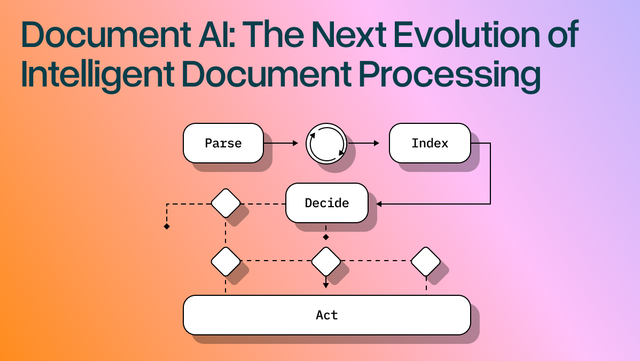
Document AI: The Next Evolution of Intelligent Document ProcessingPersona
Industry
Use cases
Document AI For Banks
[ Document AI For Banks ]

Use LlamaParse to turn messy bank documents into verified JSON with confidence scores, automatically.
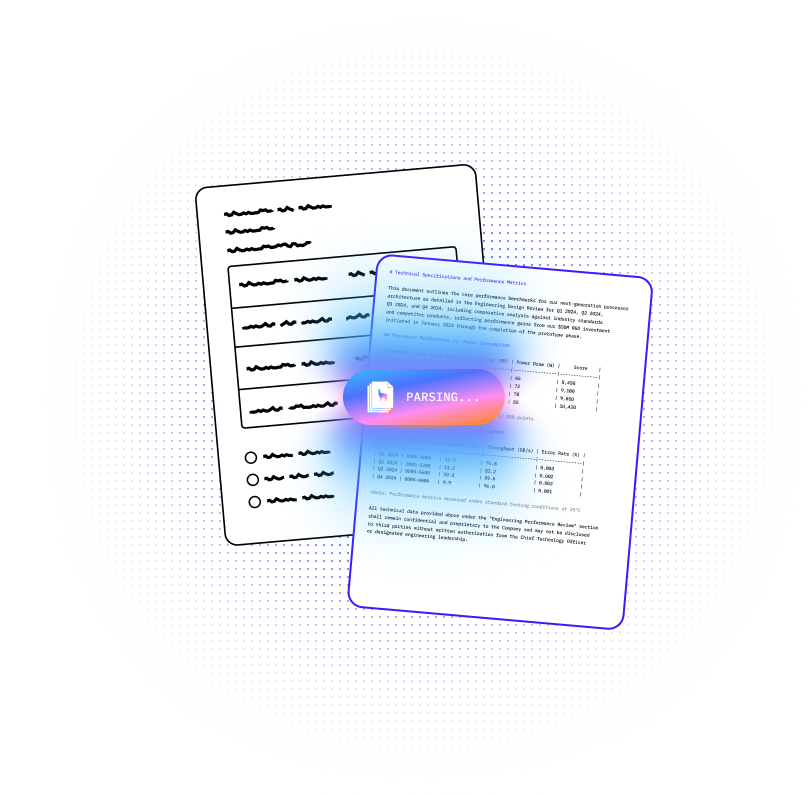


LlamaParse turns statements, loan packets, KYC files, and disclosures into clean structured data you can trust, ready for downstream models.It understands layouts, tables, and scanned artifacts, then adds citations and confidence scores so teams validate faster and automate more workflows.
Best-in-Class Accuracy

Turn messy loan packets, KYC files, and multi-form applications into clean, layout-faithful Markdown/JSON so downstream systems stop breaking on scrambled tables and missing fields. LlamaParse adds granular metadata and confidence signals for exception routing, reducing manual review while keeping every extracted value traceable back to the source page.

Parse loss runs, adjuster reports, medical bills, and photo-heavy claim PDFs by converting tables, images, and charts into structured outputs that underwriting and claims platforms can actually use. Natural language parsing instructions let teams standardize extraction across carriers and document variants without building brittle regex pipelines.

Extract charge details, diagnosis/procedure codes, and supporting documentation from complex EOBs, superbills, and prior auth packets without losing line-item tables or multi-column layouts. Auto-correction loops and multimodal parsing reduce rework caused by misread totals, illegible scans, and embedded chart content.

Ship document features fast by ingesting user-uploaded PDFs and scans into reliable JSON schemas via API—no custom parsing code or constant retraining when layouts change. Tier-based agentic processing and cost optimizer mode keep spend predictable as volumes spike, while still upgrading accuracy on the hardest pages.
The Solution
01
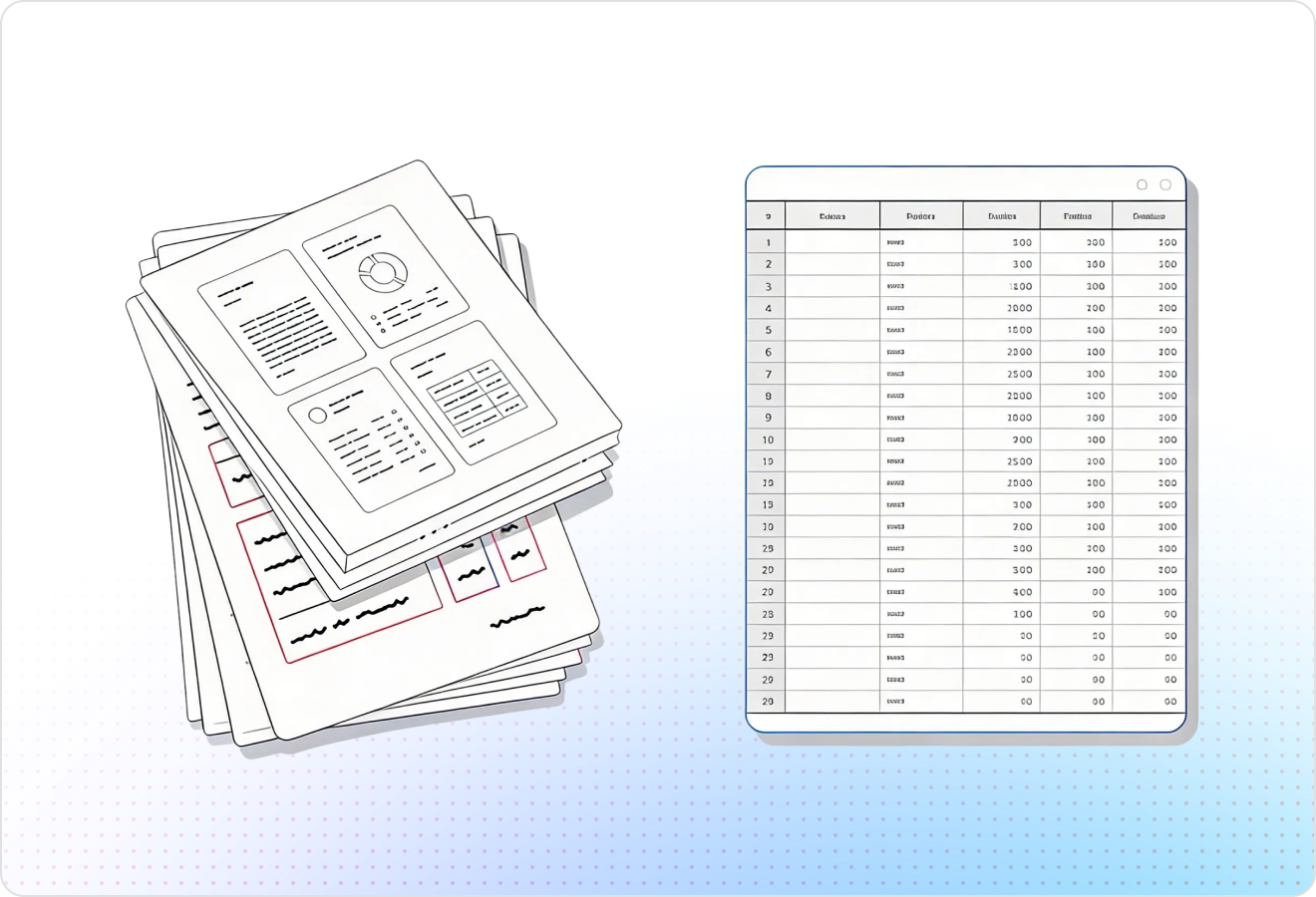
LlamaParse understands page layout to reliably capture multi-column text, footnotes, and complex tables without scrambling reading order. For banks, this means clean extraction from statements, lockbox remittances, and loan packages where tables and dense formatting drive downstream reconciliation.
02
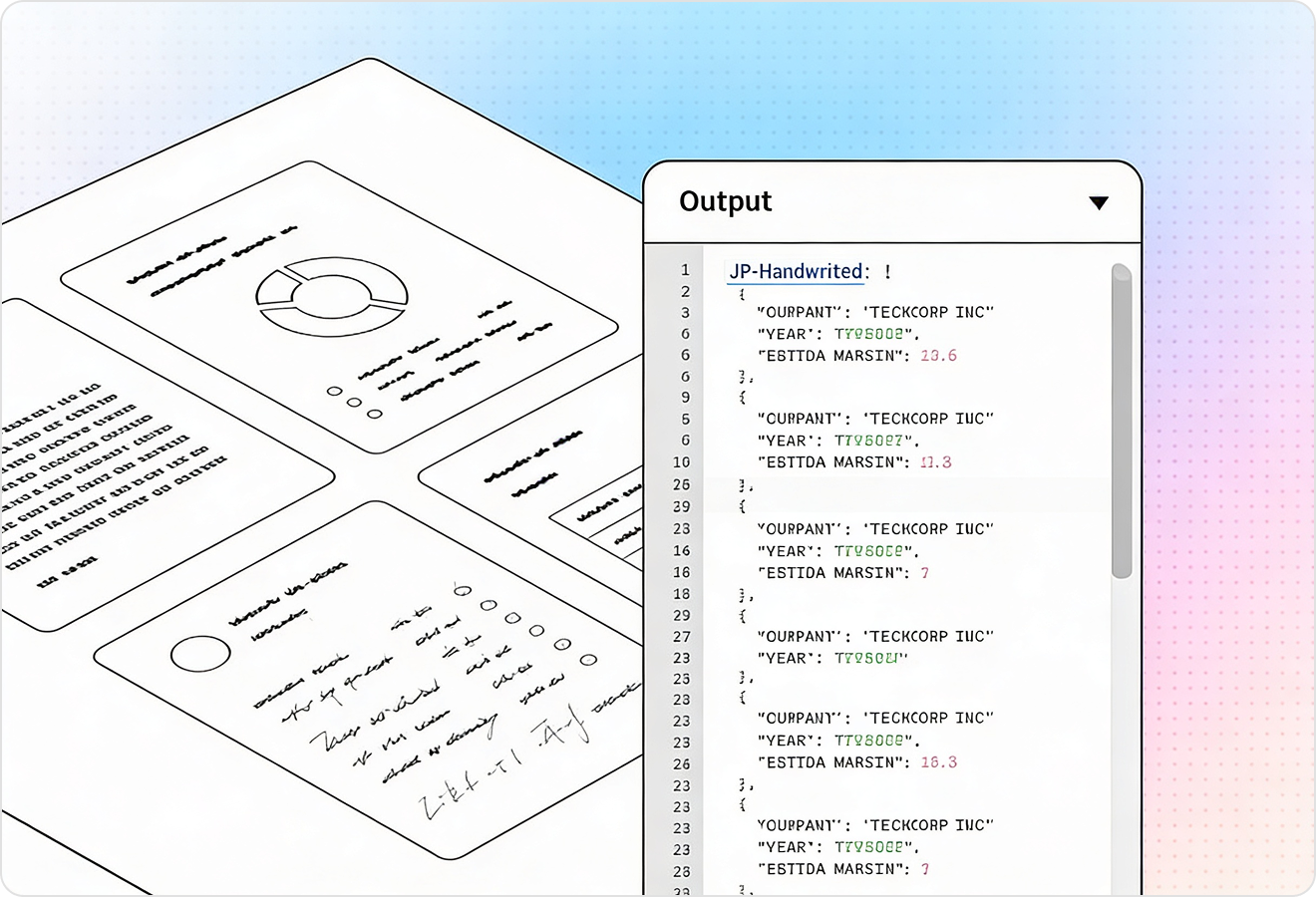
LlamaParse uses agentic parsing with validation and self-correction to reduce missing fields and known extraction errors on messy scans. In banking workflows, that translates to higher straight-through processing for KYC/AML packets and fewer manual exceptions during onboarding and servicing.
03
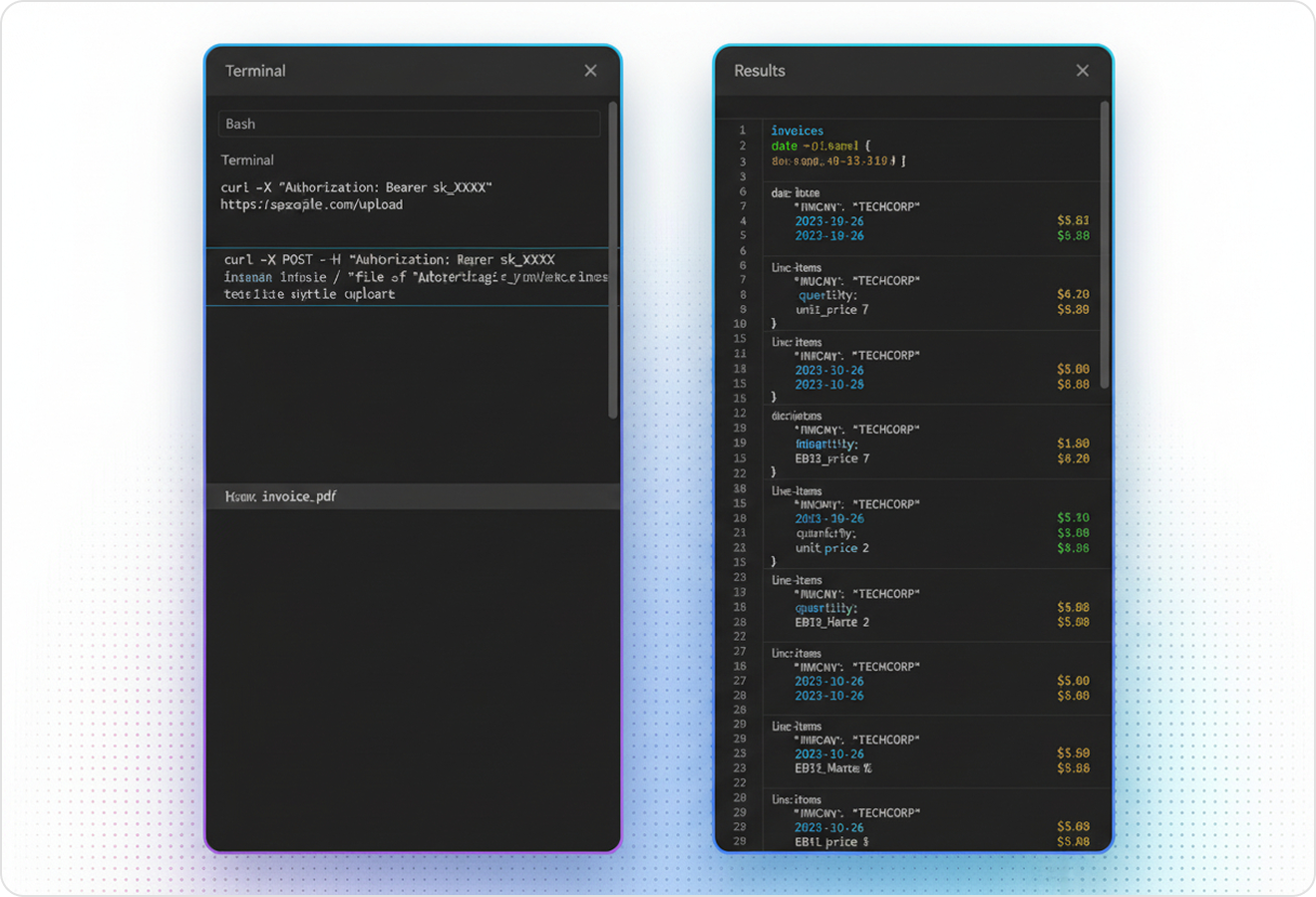
LlamaParse can emit structured JSON along with granular metadata like page numbers, element types, and coordinates for each extracted value. Banks can use this traceability to support audits and human review, tying every extracted balance, account number, and covenant back to source evidence.
04
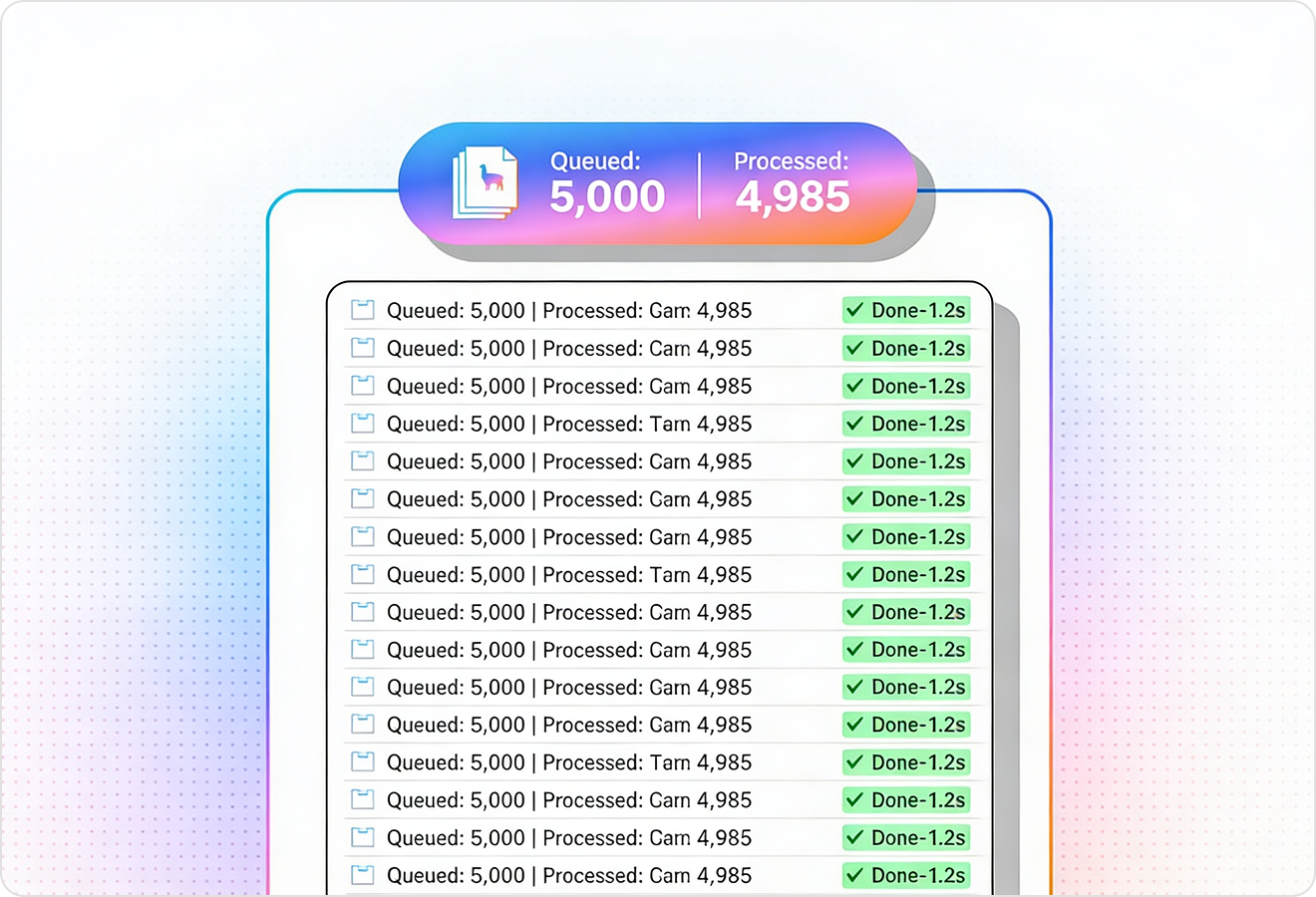
LlamaParse routes pages through different processing tiers so simple pages stay fast and cost-efficient while complex pages get deeper document understanding. For banks ingesting high volumes of statements and disclosures, this keeps spend predictable without sacrificing accuracy where it matters.
Technical OCR documentation
Explore our developer guides to easily connect your document pipelines to LlamaParse.
Explore the documentation
Our AI catches the typos that tired eyes miss.

Export to Excel, JSON, XML, or directly via API.

SOC2 Type II compliant with end-to-end encryption.

Train the tool on your specific forms in minutes, not days.

Average processing time of <3 seconds per page.
LlamaParse’s support of a wide variety of filetypes and its accuracy of parsing made it the best tool we tested in our evaluations. The LlamaIndex team was very responsive and we were off to the races within a day.
Common FAQs
01
Layout-aware extraction preserves reading order and captures complex tables without scrambling columns or losing footnotes. That means cleaner data from statements, lockbox remittances, and loan packages—so downstream reconciliation and analytics don’t start with cleanup.
02
Yes—agentic accuracy loops validate results and self-correct common extraction mistakes like missed fields or misread values. This reduces manual exceptions and increases straight-through processing for onboarding, periodic reviews, and servicing.
03
Absolutely: outputs include structured JSON plus traceability metadata like page number, element type, and coordinates. Reviewers can quickly verify balances, account numbers, and covenants against source evidence—supporting audit readiness and defensible decisions.
04
How do you keep costs predictable when processing high volumes of statements and disclosures?
Tiered cost-control processing routes simple pages through faster, lower-cost paths and reserves deeper understanding for complex pages. You get predictable spend at scale without sacrificing accuracy where it impacts risk and customer outcomes.
05
What does implementation look like—do we need to rebuild our existing workflows?
You can integrate via JSON outputs that fit cleanly into existing ETL, case management, or downstream validation steps. Most teams start with a focused use case (e.g., statements or KYC packets) and expand once they see accuracy and exception rates improve.
06
How do we handle human review and exceptions when the model isn’t confident?
Traceable outputs make it easy to route low-confidence fields to review with the exact location highlighted on the source page. This speeds up exception handling, improves consistency across reviewers, and creates a feedback loop to refine rules and thresholds over time.