Nov 14, 2025
Document AI: The Next Evolution of Intelligent Document ProcessingPersona
Industry
Use cases
Batch OCR API
[ Batch OCR API ]

Use LlamaParse to turn messy PDFs and scans into clean, structured data your systems can trust.
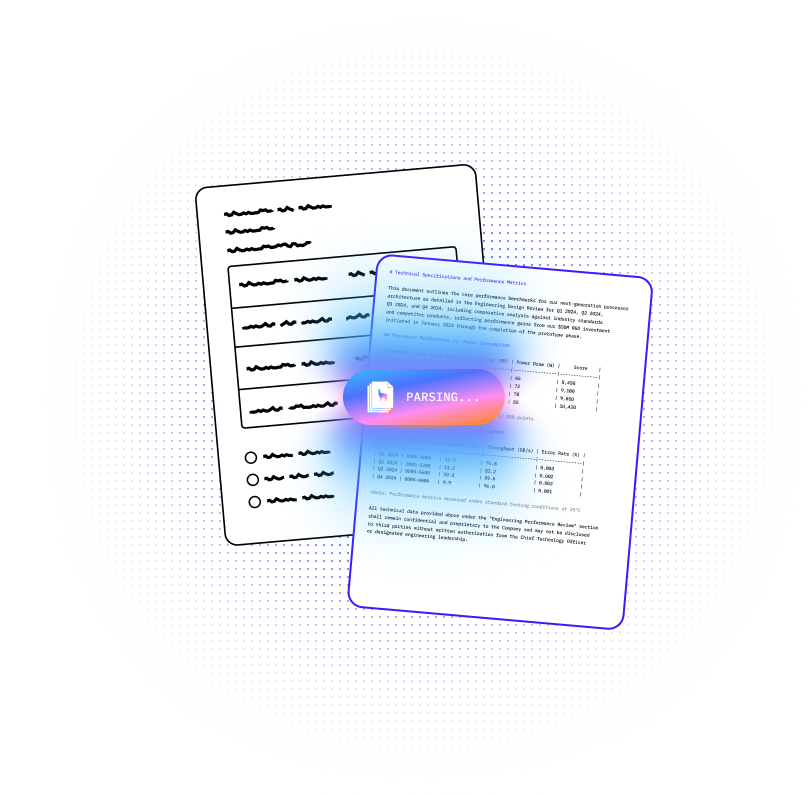
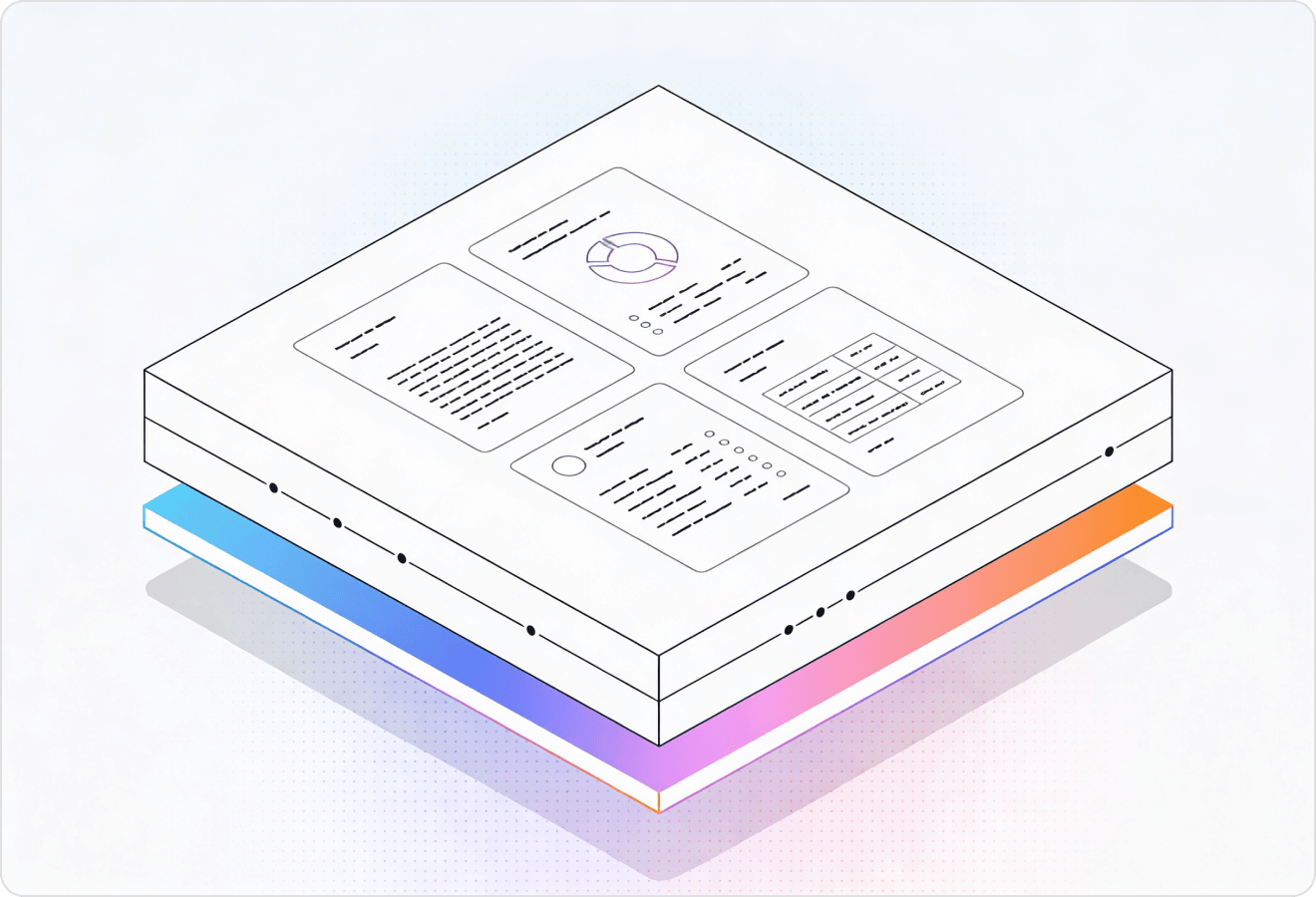

LlamaParse batches your PDFs, scans, and forms into clean, schema-ready JSON, preserving layout and table structure at high throughput. Its agentic parsing uses vision plus validation loops to reduce breakage from template changes, with confidence metadata for fast review.
Best-in-Class Accuracy

Ship a batch document ingestion pipeline that turns customer PDFs into clean Markdown/JSON without writing brittle post-processing for multi-column layouts and tables. Use tier-based agentic processing to keep unit economics predictable while you scale from a prototype to production SLAs.

Parse loss runs, adjuster notes, and estimate packets with layout-aware table extraction so totals, line items, and policy details don’t get scrambled during intake. Return verifiable JSON with page-level metadata to speed QA, reduce rework, and increase straight-through processing for routine claims.

Convert high-volume invoices, POs, and remittances into structured fields using natural-language parsing instructions that enforce your coding rules (GL, cost center, payment terms) at extraction time. Reduce exception queues by capturing line-item tables accurately and outputting consistent JSON your ERP can ingest.

Process large batches of scanned contracts and exhibits while preserving reading order across footers, headers, and multi-column clauses so downstream review doesn’t miss context. Extract clauses, defined terms, and exhibit tables into traceable outputs with citations for faster privilege review and audit-ready workflows.
The Solution
01
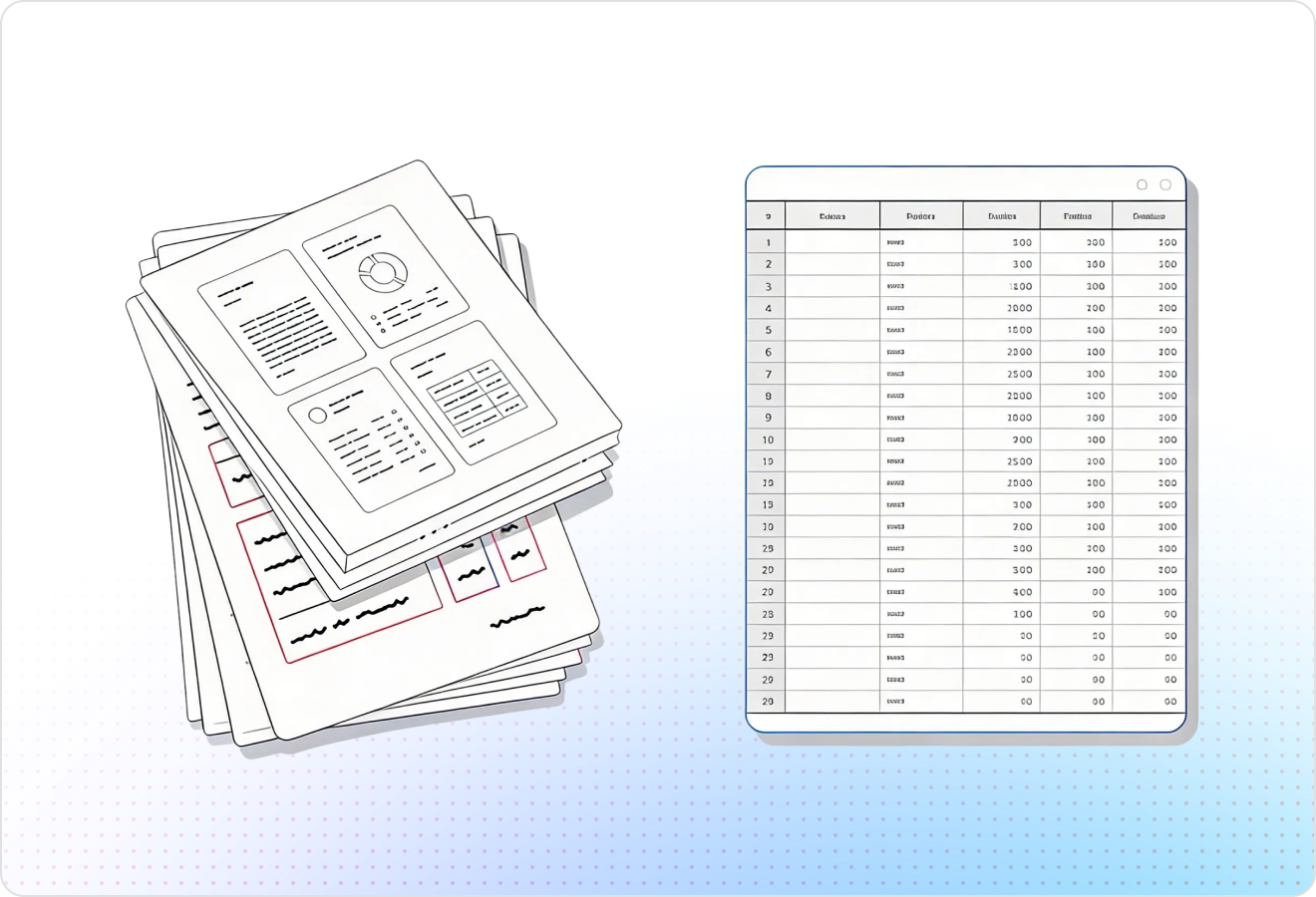
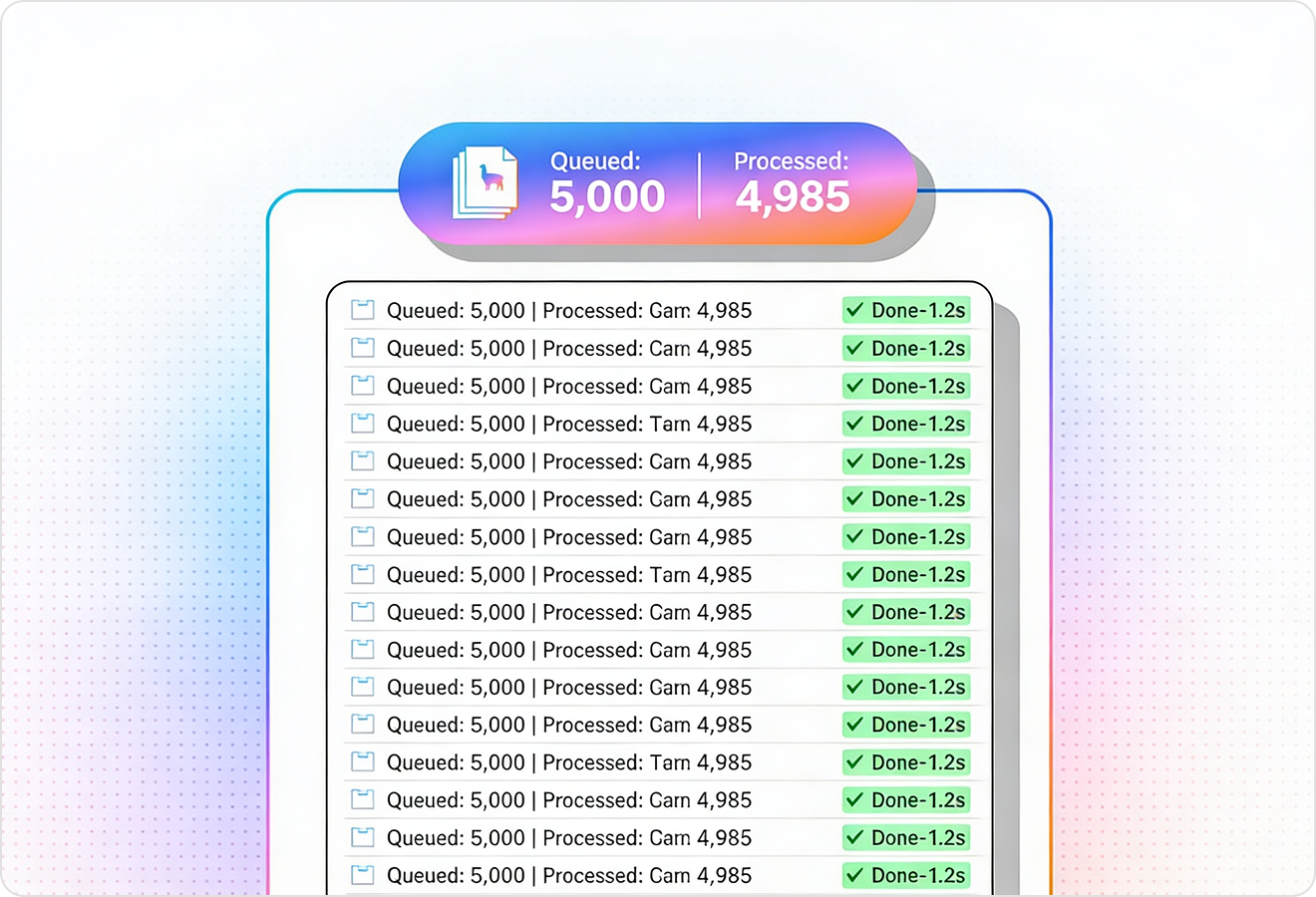
LlamaParse provides a simple API flow to submit large volumes of documents and consistently return normalized outputs. It’s built for batch OCR API workloads where you need predictable ingestion behavior across thousands of mixed-quality files.
02
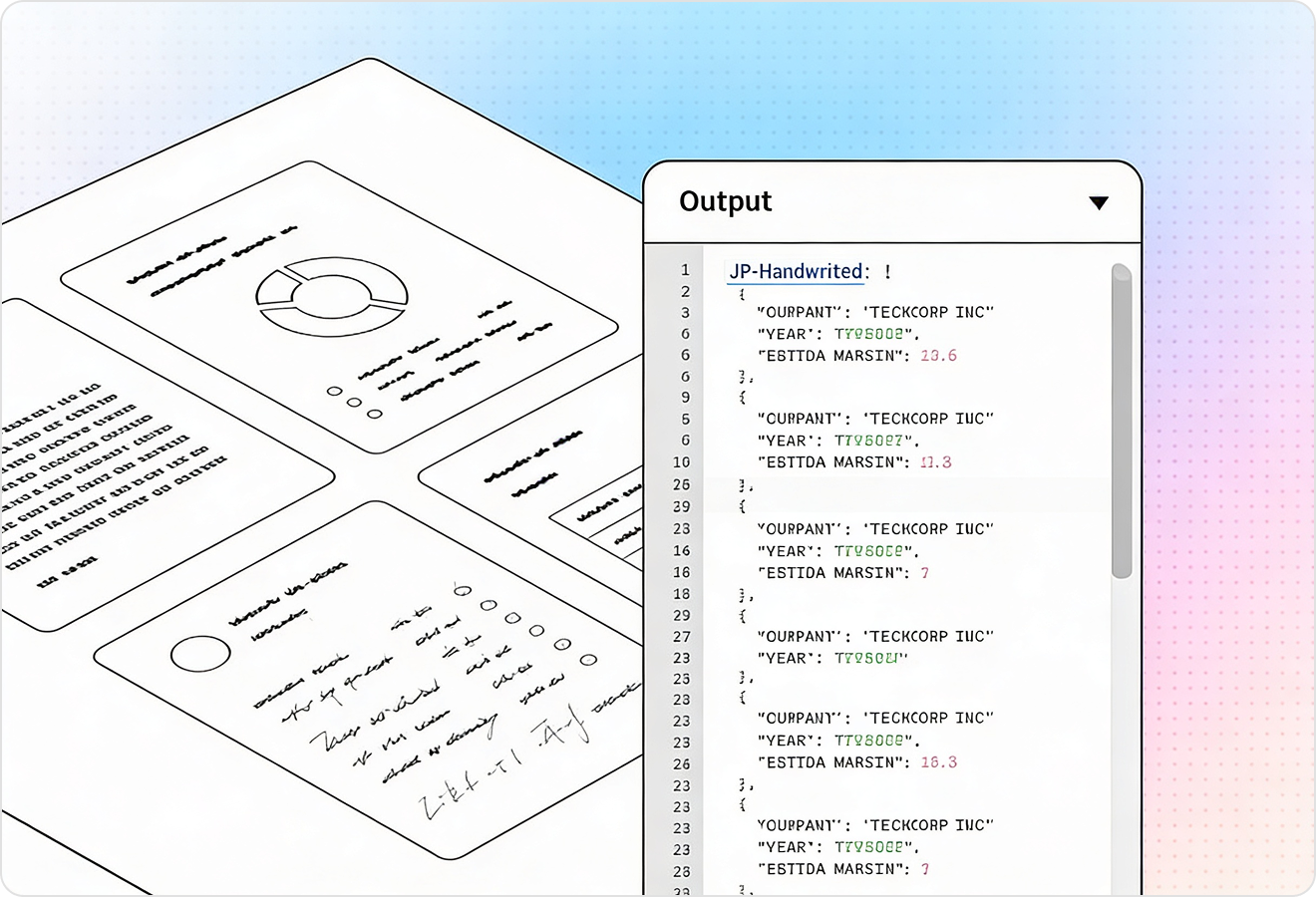
LlamaParse detects page structure and preserves reading order across multi-column layouts, headers/footers, and nested tables. In batch pipelines, this prevents the classic “scrambled output” problem that forces expensive per-document cleanup.
03
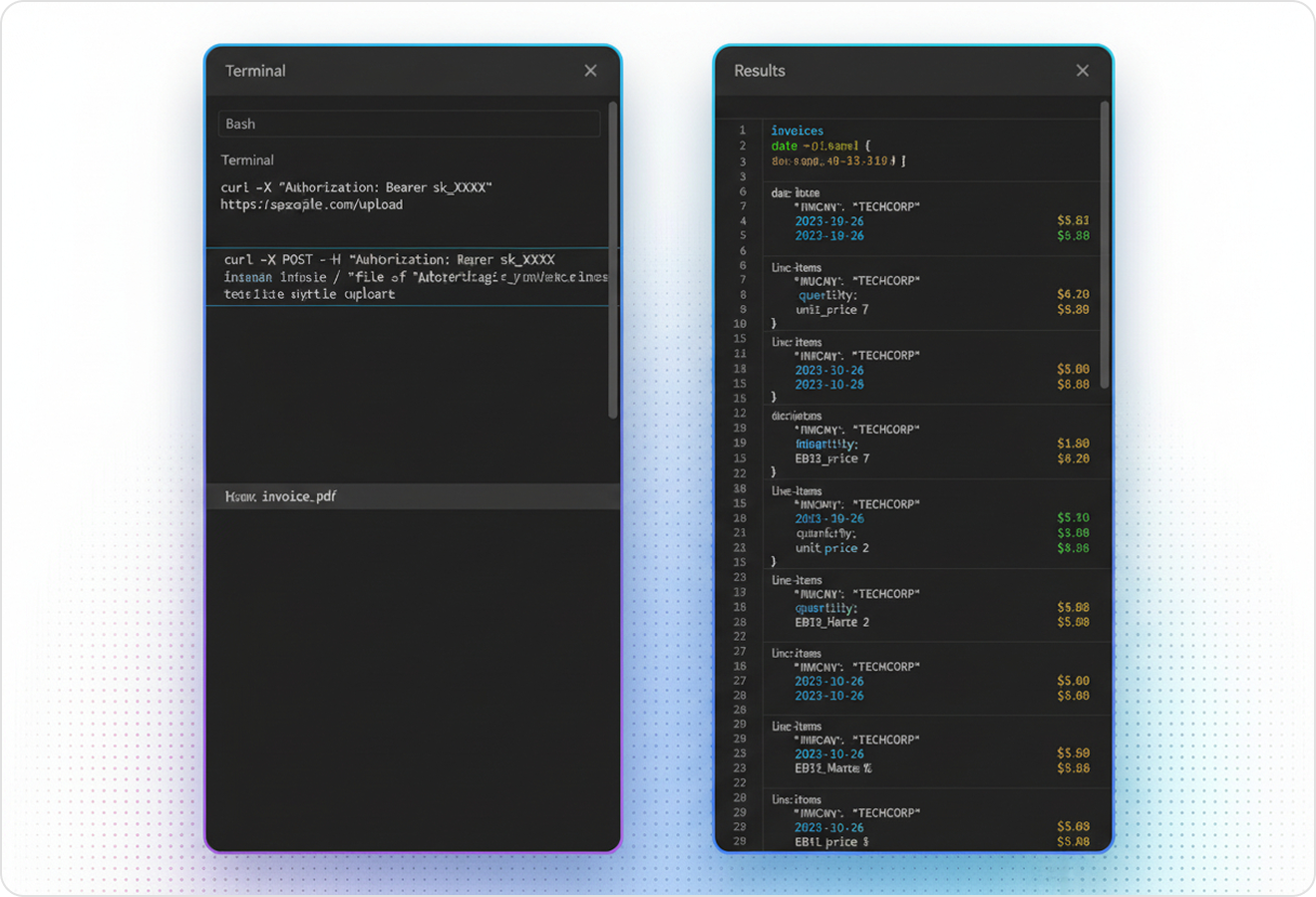
Return structured JSON with rich metadata like page numbers, element types, and spatial coordinates for each extracted block. This makes batch OCR API results easier to validate, route for review, and map directly into downstream databases and automation jobs.
04
LlamaParse uses self-correction and validation steps to catch common extraction errors and reduce hallucinations before results are finalized. For batch OCR API runs, that means higher straight-through processing rates and fewer manual exceptions to triage.
Technical OCR documentation
Explore our developer guides to easily connect your document pipelines to LlamaParse.
Explore the documentation
Our AI catches the typos that tired eyes miss.

Export to Excel, JSON, XML, or directly via API.

SOC2 Type II compliant with end-to-end encryption.

Train the tool on your specific forms in minutes, not days.

Average processing time of <3 seconds per page.
LlamaParse’s support of a wide variety of filetypes and its accuracy of parsing made it the best tool we tested in our evaluations. The LlamaIndex team was very responsive and we were off to the races within a day.
Common FAQs
01
You submit documents in bulk through a straightforward API flow and receive consistently normalized outputs, even across mixed-quality scans and file types. The pipeline is built for predictable ingestion behavior at scale, so you spend less time babysitting batches and more time shipping downstream automation.
02
Yes—layout-aware extraction preserves reading order across multi-column pages, headers/footers, and nested tables. This prevents the “scrambled output” issue that typically forces manual cleanup in batch OCR workflows.
03
Results are returned as structured JSON with metadata such as page numbers, element types, and spatial coordinates for each extracted block. That makes it easy to validate output, route exceptions for review, and map fields directly into databases, queues, and automation pipelines.
04
How do you reduce extraction errors and hallucinations in large batch runs?
Agentic validation loops add self-correction and verification steps before finalizing results. In practice, this increases straight-through processing rates and reduces the number of documents that need manual triage.
05
Can I automatically detect and review low-confidence or problematic pages in a batch?
Yes—rich metadata and structured outputs make it easy to flag items like missing tables, unusual layout shifts, or pages that don’t match expected structure. You can programmatically route only those exceptions to human review, keeping the rest of the batch fully automated.
06
How quickly can my team integrate this into an existing batch OCR pipeline?
The API is designed to be simple to plug into existing ingestion jobs, whether you run nightly batches or continuous queues. Because outputs are normalized and metadata-rich, teams typically spend less time building custom post-processing and more time connecting results to downstream systems.