Nov 14, 2025
Document AI: The Next Evolution of Intelligent Document ProcessingPersona
Industry
Use cases
Buyers Order OCR
[ Buyers Order OCR ]

Use LlamaParse to capture tables and fields reliably, delivering structured JSON to your systems.
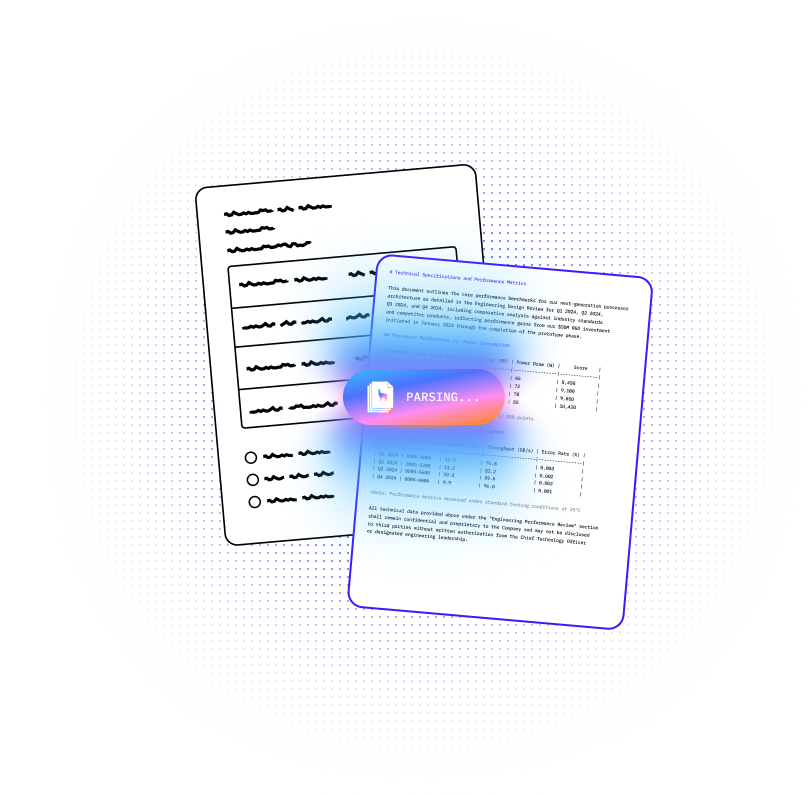
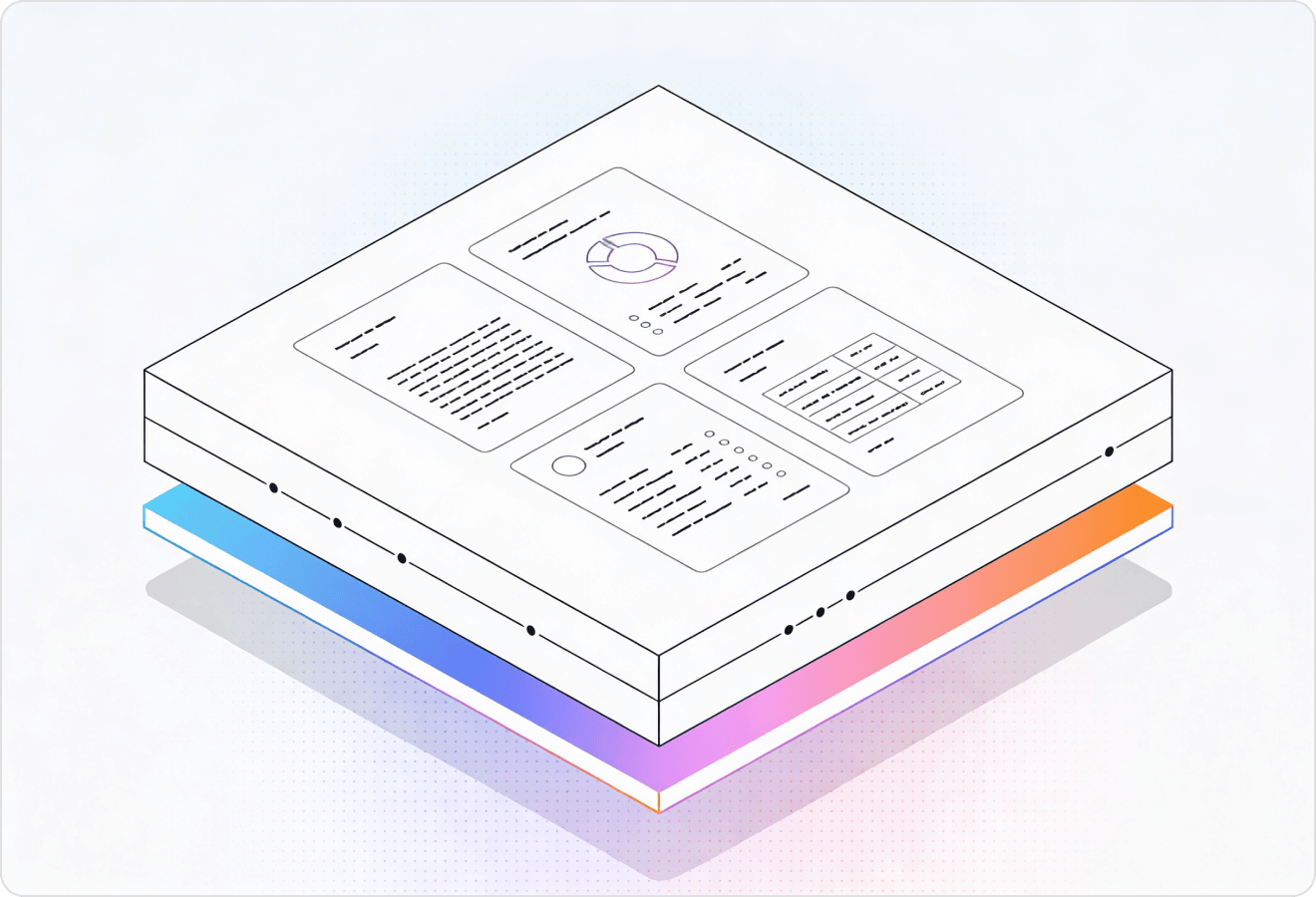
LlamaParse turns messy buyers orders into reliable, schema-ready JSON or Markdown, capturing line items, totals, VINs, fees, and signatures with layout-aware understanding. Agentic validation and confidence metadata reduce exceptions and rework, so your team can approve faster and automate downstream ERP and funding workflows.
Best-in-Class Accuracy

Automate buyer’s order intake with LlamaParse by extracting SKUs, quantities, ship-to details, and terms from messy PDFs or emailed scans into strict JSON your app can ingest. Natural-language parsing instructions let a small team map each customer’s template in minutes—no brittle rules—so you can scale onboarding without adding ops headcount.

Convert buyer’s orders with dense line-item tables into clean, layout-preserved Markdown/JSON so ERP order entry doesn’t break when columns shift or pages split. Table-aware extraction reduces mis-keys on part numbers and pack sizes, accelerating order confirmation and preventing costly production and picking errors.

Parse buyer’s orders to automatically generate shipment instructions, reference numbers, and delivery windows while preserving reading order across multi-page, multi-column forms. Granular metadata and citations make exceptions easy to audit, so teams can resolve disputes and comply with customer SLA requirements without digging through PDFs.

Ingest buyer’s orders from big-box retailers and marketplaces and normalize item, pricing, and routing guide requirements into a single structured output for OMS and EDI workflows. Auto-correction loops catch mismatched totals and missing fields before confirmation, reducing chargebacks and preventing fulfillments that fail retailer compliance.
The Solution
01
LlamaParse uses layout-aware parsing to preserve reading order and reliably separate headers, line items, and totals on Buyer’s Orders. This keeps key fields like buyer, ship-to, PO number, and dates from getting scrambled when formats change across vendors.
02
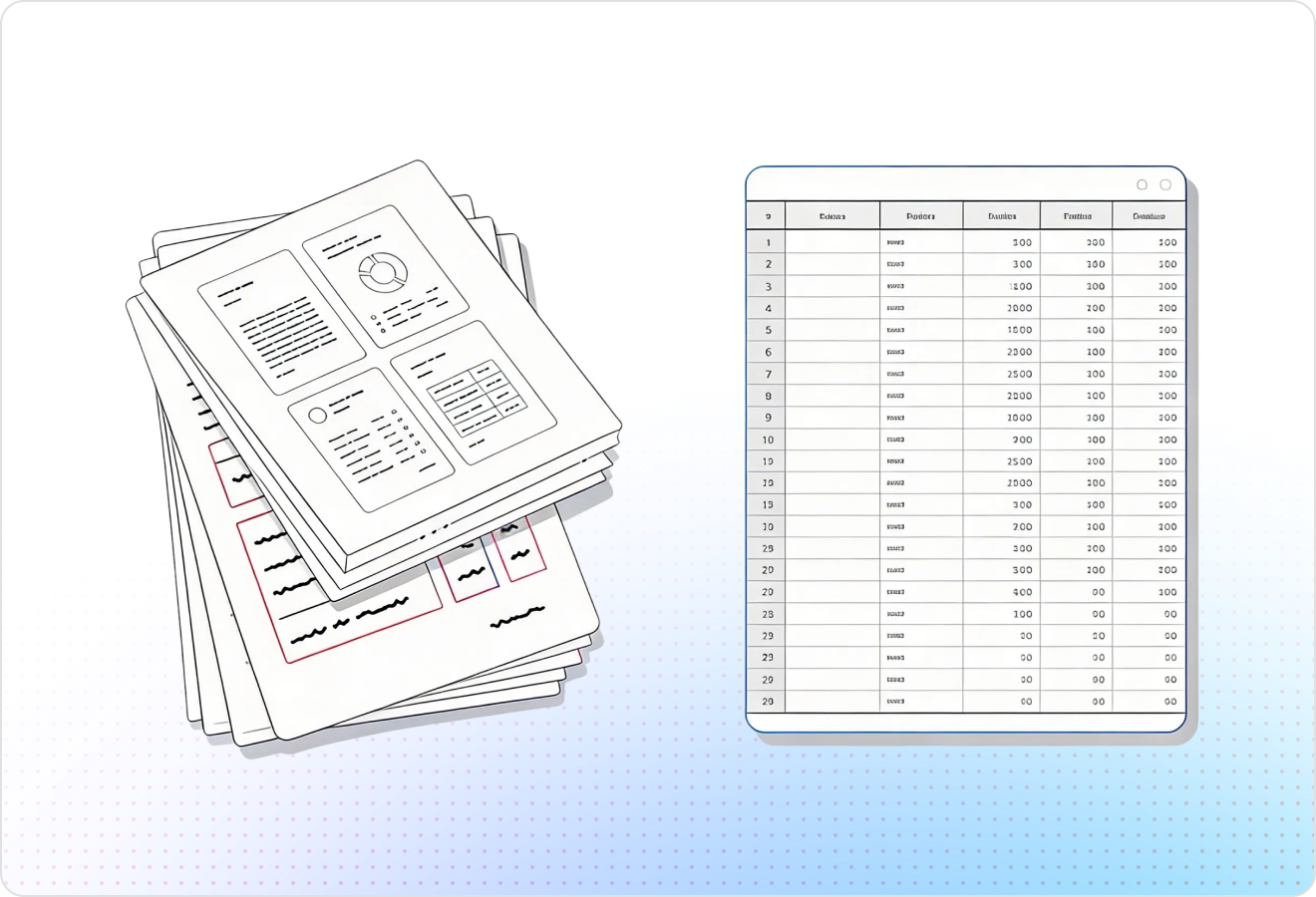
LlamaParse accurately extracts dense line-item tables, including multi-line descriptions, units, discounts, and tax rows. For Buyer’s Orders, that means you can map each SKU and quantity into your ERP schema without brittle post-processing rules.
03
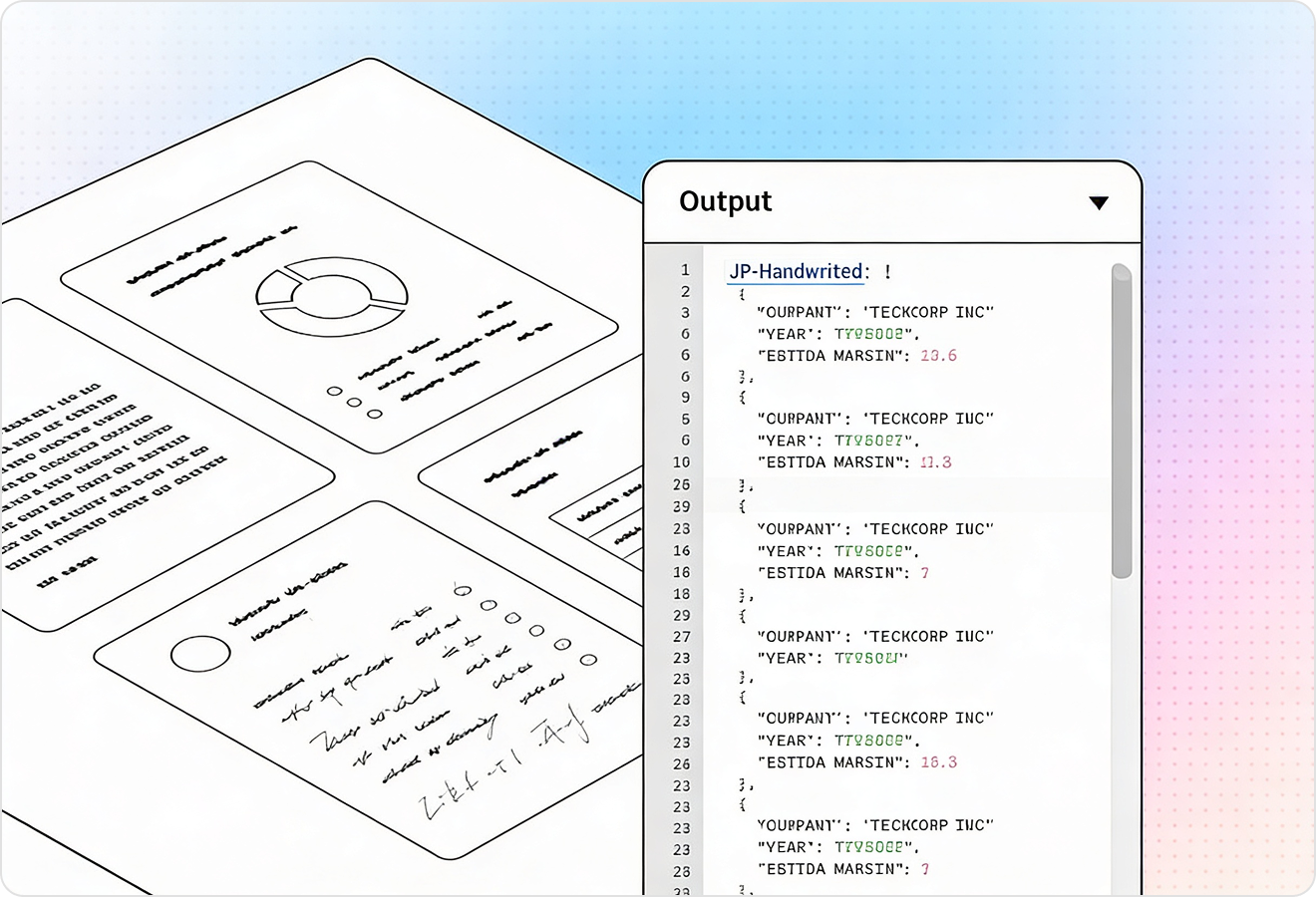
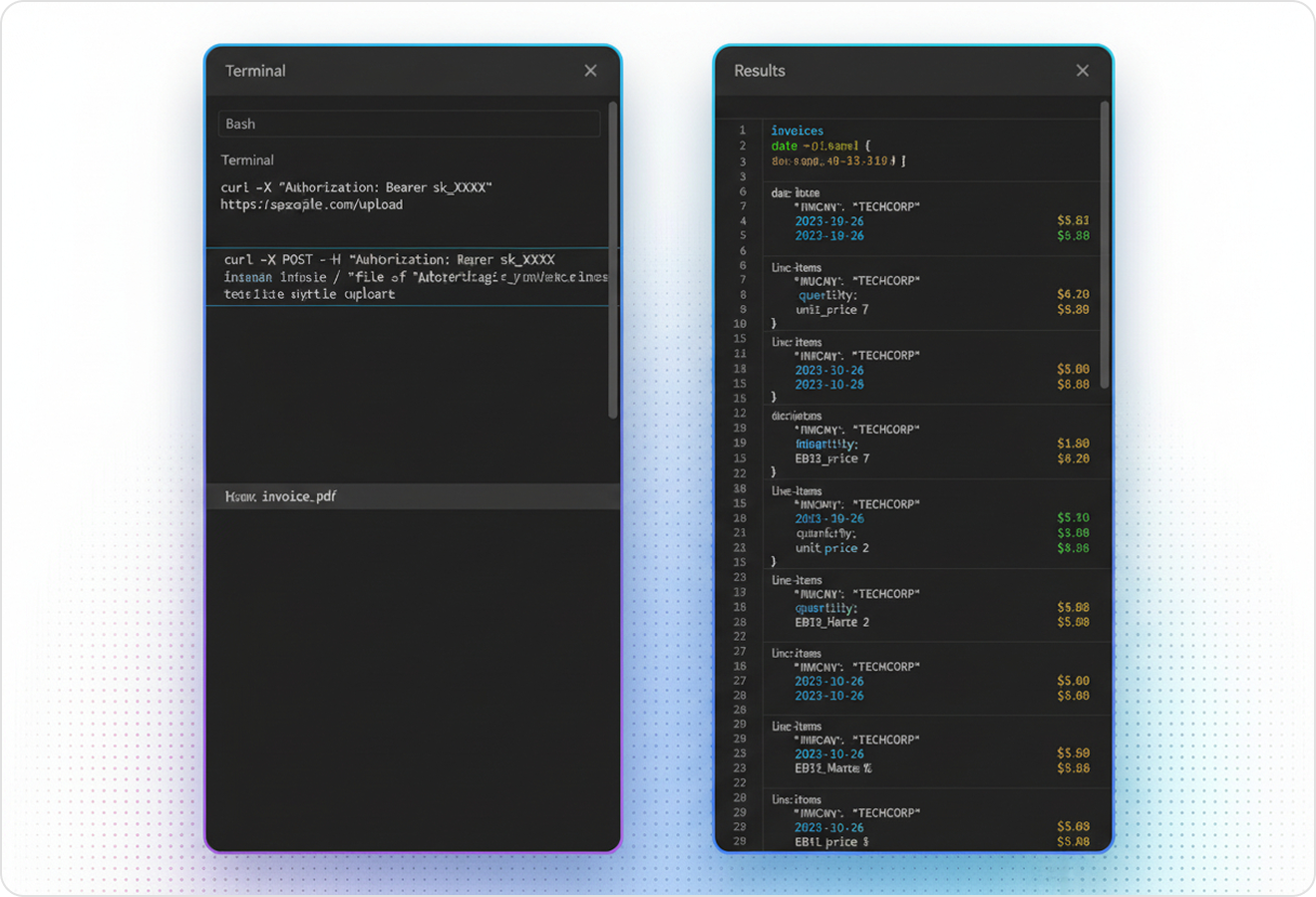
With natural-language parsing instructions and JSON mode, you can enforce a consistent output shape for Buyer’s Orders (header fields, ship/bill details, and an array of line items). This reduces downstream normalization work and makes integrations with procurement or order-management systems predictable.
04
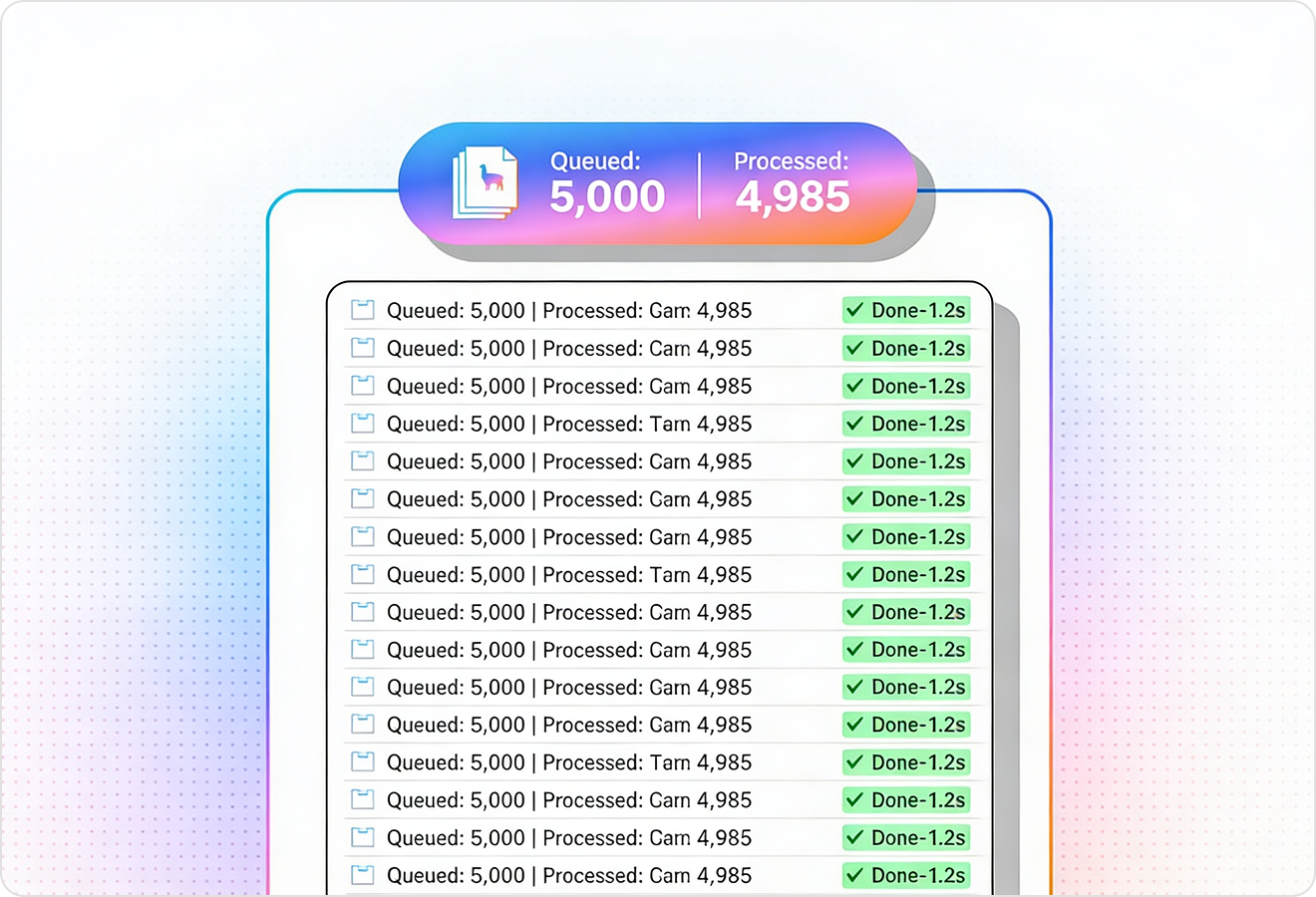
LlamaParse returns granular metadata like page references and bounding boxes for extracted fields, so each value can be traced back to its source. In Buyer’s Order processing, this enables fast exception handling and human review for only the fields that actually need confirmation.
Technical OCR documentation
Explore our developer guides to easily connect your document pipelines to LlamaParse.
Explore the documentation
Our AI catches the typos that tired eyes miss.

Export to Excel, JSON, XML, or directly via API.

SOC2 Type II compliant with end-to-end encryption.

Train the tool on your specific forms in minutes, not days.

Average processing time of <3 seconds per page.
LlamaParse’s support of a wide variety of filetypes and its accuracy of parsing made it the best tool we tested in our evaluations. The LlamaIndex team was very responsive and we were off to the races within a day.
Common FAQs
01
It uses layout-aware field capture to preserve reading order and keep headers, totals, and key fields from getting mixed up when formats vary. That means fields like buyer, ship-to, PO number, and dates stay consistent across vendors with far fewer manual fixes.
02
Yes—line-item table extraction is designed for dense tables with multi-line descriptions, units, discounts, and tax rows. You get clean line items you can map directly to your ERP schema without brittle post-processing rules.
03
You can use schema-guided JSON output to produce a predictable structure (header fields, ship/bill details, and an array of line items). This reduces downstream normalization work and makes integrations with procurement or order-management systems much more reliable.
04
How do we verify extracted values and speed up exception handling?
Every extracted field can include verifiable metadata like page references and bounding boxes, so reviewers can trace values back to the source instantly. This enables targeted human review only where it’s needed, instead of re-checking entire documents.
05
What happens when a Buyer’s Order is missing fields or contains ambiguous values?
The system can still return a structured result while flagging uncertain or missing fields for review, supported by source references for quick validation. This helps you keep workflows moving while maintaining accuracy where it matters.
06
How quickly can we integrate Buyers Order OCR into our existing workflow or ERP?
Because the output can be enforced as schema-consistent JSON, integration typically involves mapping known fields once and reusing it across vendors. Teams usually get to a stable, production-ready pipeline faster since fewer custom rules are required to handle layout changes.