Nov 14, 2025
Document AI: The Next Evolution of Intelligent Document ProcessingPersona
Industry
Use cases
Smart Document Extraction Schema
[ Smart Document Extraction Schema ]

Use LlamaParse to turn messy PDFs into reliable JSON with layout-aware, verifiable fields for your schema.
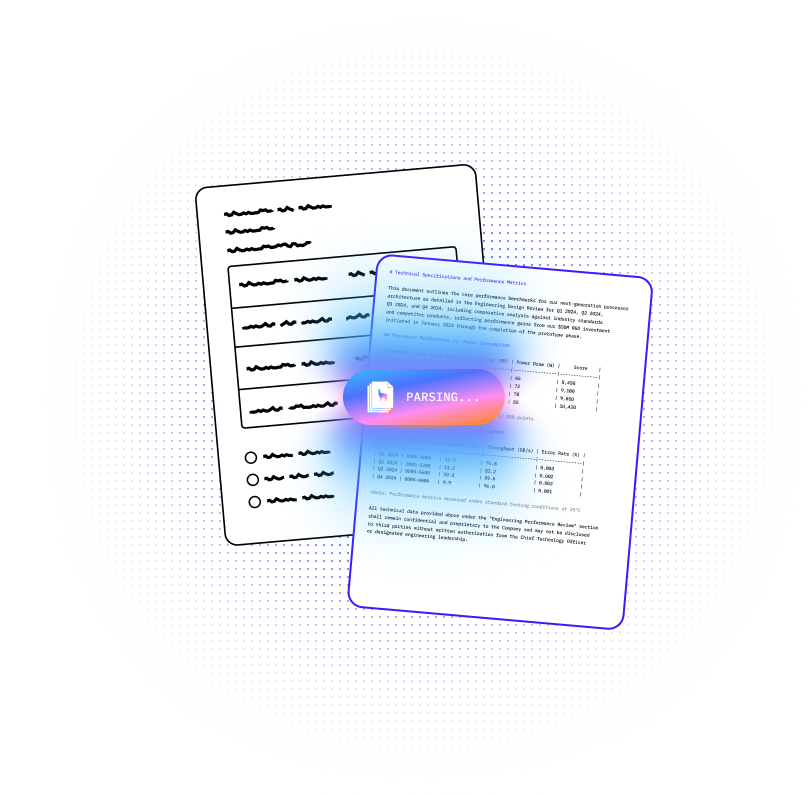


LlamaParse turns messy PDFs, scans, and image-heavy forms into schema-aligned JSON you can trust, even when layouts change midstream. Agentic document parsing applies layout-aware vision, validation loops, and citations so your Smart Document Extraction Schema stays consistent across vendors and volumes.
Best-in-Class Accuracy

Turn messy customer PDFs, SOC2 evidence, invoices, and support attachments into clean JSON and Markdown with LlamaParse, so your product ships without a brittle parsing pipeline. Use natural-language parsing instructions to enforce your schema and auto-correction loops to keep extraction stable as formats change week to week.

Parse loss runs, adjuster reports, medical bills, and property estimates with layout-aware table extraction so line items and codes don’t get scrambled across columns. Route only the tricky scanned pages to higher agentic tiers while returning citation-backed fields that speed review, reduce leakage, and raise straight-through processing.

Extract holdings, fees, and performance tables from statements, K-1s, and prospectuses into structured outputs that reconcile cleanly with downstream systems. Multimodal parsing converts charts and footnotes into machine-readable context, enabling faster due diligence and audit-ready traceability with page-level metadata.

Ingest POs, invoices, bills of lading, and spec sheets and preserve reading order across multi-column forms so quantities, SKUs, and ship-to fields land in the right place. JSON mode with coordinates makes it easy to validate exceptions and trigger automated three-way match workflows without hand-built templates.
The Solution
01
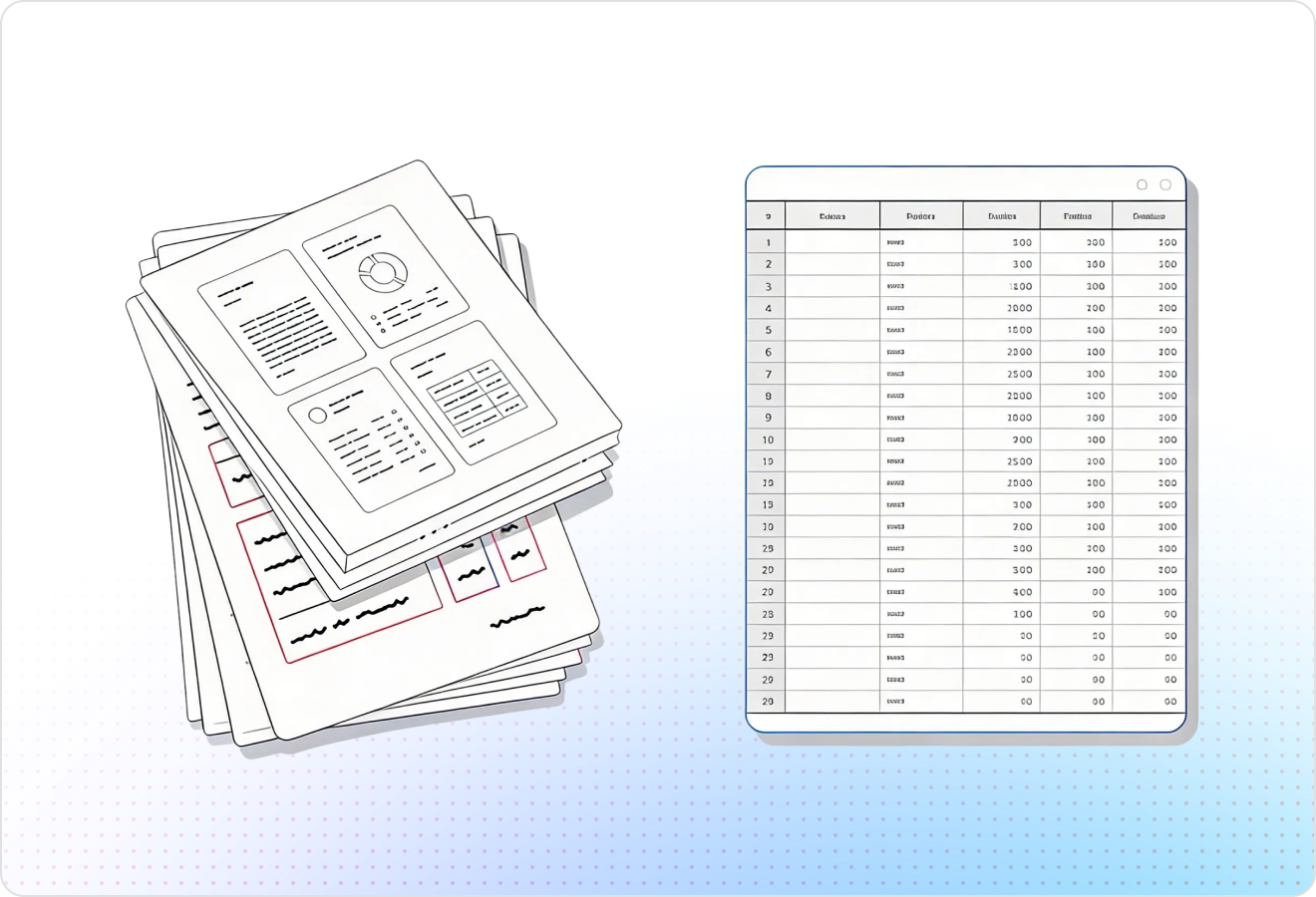
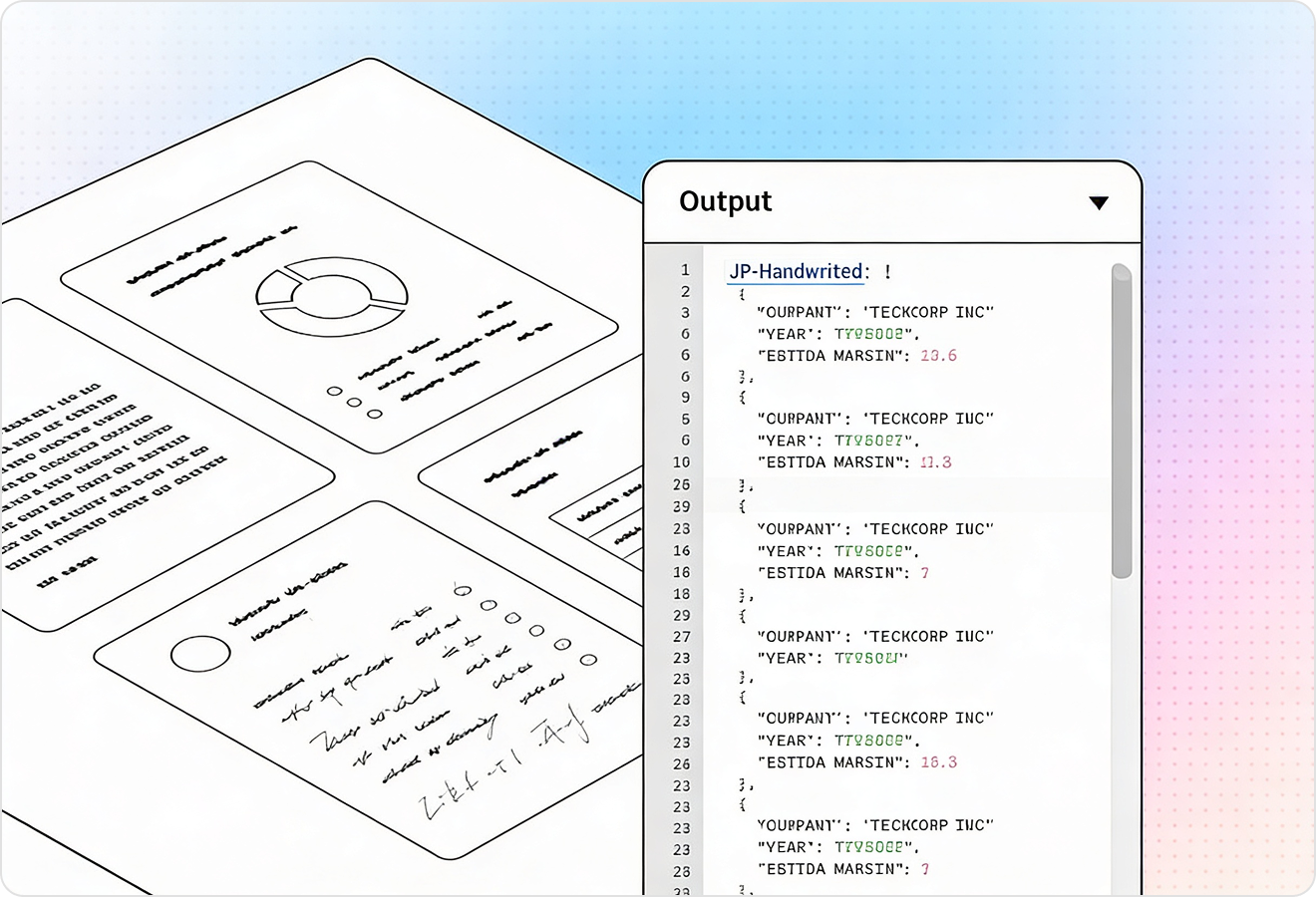
LlamaParse can return clean, structured JSON instead of loosely formatted text, so your extraction lands in a predictable shape for downstream systems. This makes it straightforward to enforce a “Smart Document Extraction Schema” across vendors and templates without writing brittle post-processing.
02
It understands document structure (sections, headers, multi-column flow, and tables) so extracted fields keep their intended relationships and reading order. That structural fidelity is what lets your schema capture the right value from the right place, even when layouts change.
03
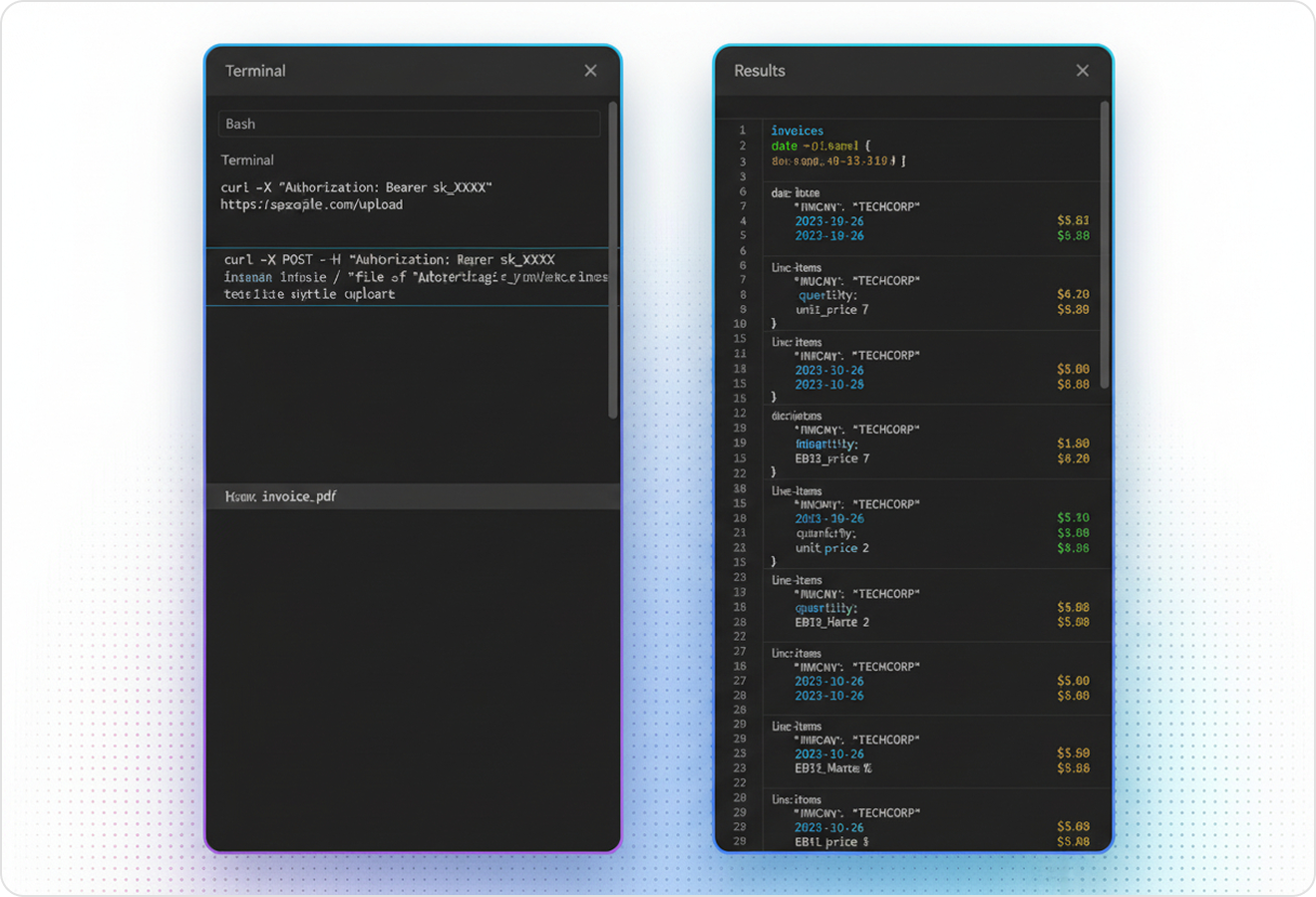
You can guide parsing with natural-language instructions to include, exclude, normalize, or rename fields at parse time. This helps you align diverse document formats to one extraction schema without building a separate rules engine for every document type.
04
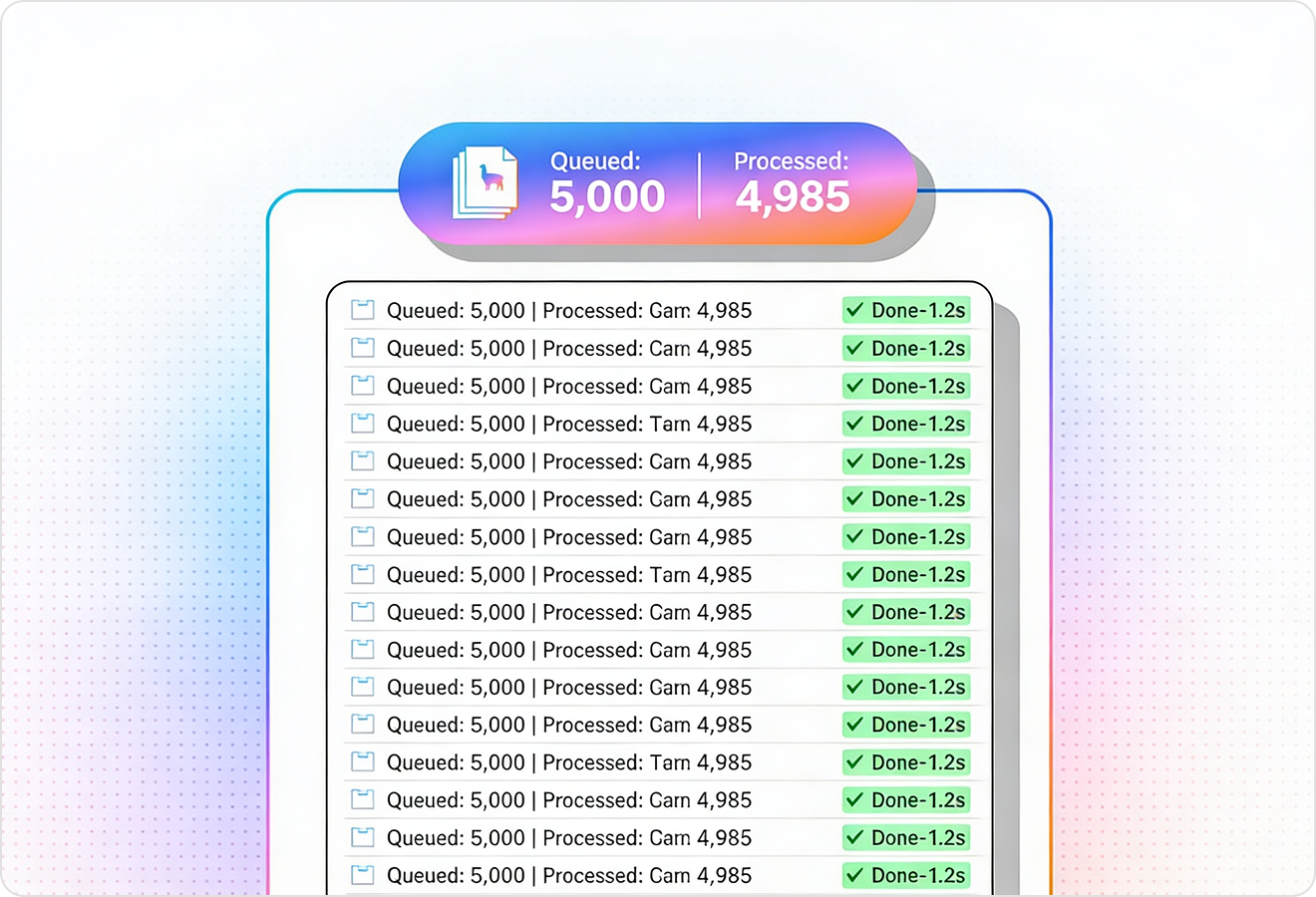
Each extracted element can include page-level traceability like coordinates and document structure metadata for auditability. That provenance lets you validate schema outputs, drive human review only where needed, and confidently debug mismatches when a field doesn’t meet your schema requirements.
Technical OCR documentation
Explore our developer guides to easily connect your document pipelines to LlamaParse.
Explore the documentation
Our AI catches the typos that tired eyes miss.

Export to Excel, JSON, XML, or directly via API.

SOC2 Type II compliant with end-to-end encryption.

Train the tool on your specific forms in minutes, not days.

Average processing time of <3 seconds per page.
LlamaParse’s support of a wide variety of filetypes and its accuracy of parsing made it the best tool we tested in our evaluations. The LlamaIndex team was very responsive and we were off to the races within a day.
Common FAQs
01
Instead of returning loosely formatted text, it outputs schema-shaped JSON so your downstream systems receive predictable keys and structures. That consistency reduces brittle post-processing and makes it easier to enforce a single Smart Document Extraction Schema across many templates and vendors.
02
Layout-aware field mapping preserves reading order and relationships across sections, columns, and tables, so fields stay tied to the right context. This helps your schema keep pulling the correct value even when a vendor tweaks formatting or moves elements around.
03
Yes—use natural-language instructions to include or exclude fields, rename keys to match your schema, and normalize values during parsing. That means you can align new document types to your schema without building a custom rules engine for each one.
04
How do I verify where a specific extracted value came from for audits or QA?
Each extracted element can include traceable metadata such as page location (coordinates) and document-structure context. This provenance makes audits simpler, speeds up debugging when something looks off, and supports confidence in automated decisions.
05
Will this reduce manual review, and how do we route only the risky cases to humans?
With verifiable metadata tracing, you can validate outputs against your schema and trigger review only when fields fail checks or look ambiguous. Teams typically use this to focus human effort on exceptions while letting clean, traceable extractions flow straight through.
06
How quickly can we onboard a new vendor template or document type?
Because the output is structured JSON and you can guide extraction with simple prompts, onboarding often becomes a configuration task rather than a re-build. You can standardize diverse formats into one schema quickly and iterate safely as requirements evolve.