Nov 14, 2025
Document AI: The Next Evolution of Intelligent Document ProcessingPersona
Industry
Use cases
SharePoint OCR PDF Extraction
[ SharePoint OCR PDF Extraction ]

Use LlamaParse to turn SharePoint PDFs into structured fields with fewer errors and reviews.
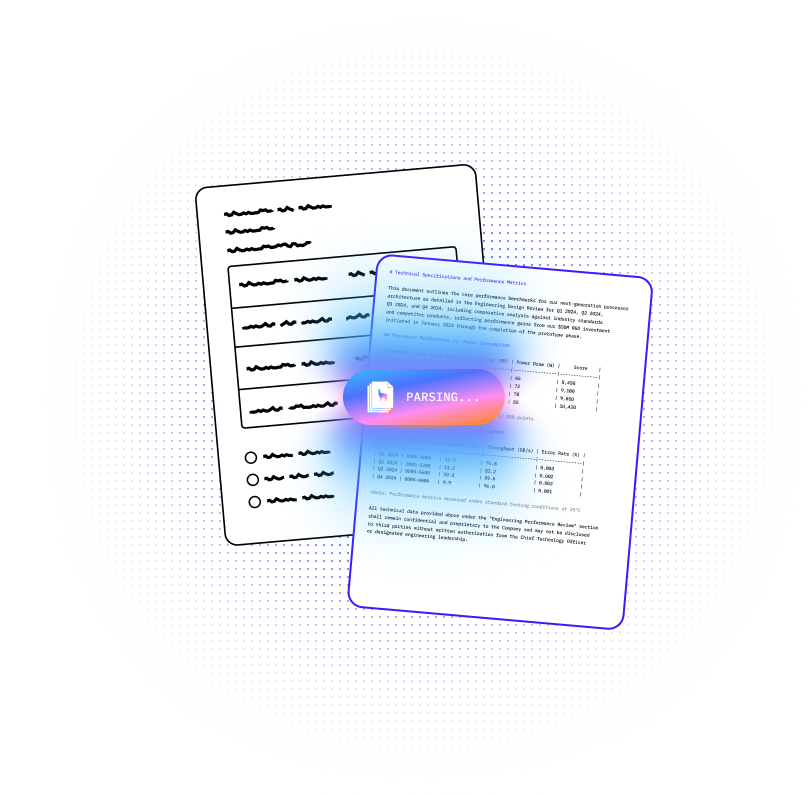
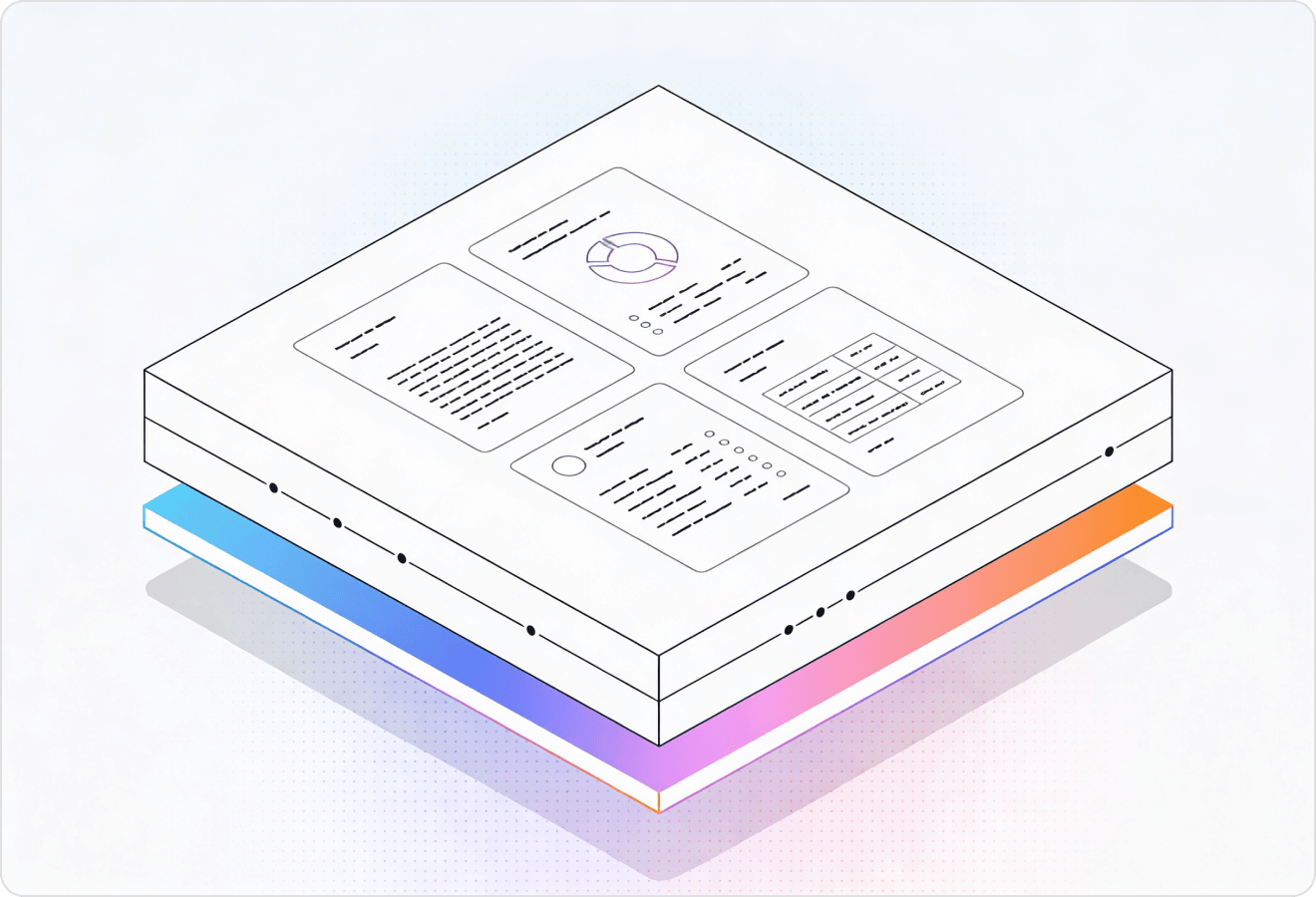

LlamaParse pulls SharePoint-hosted PDFs apart with agentic document parsing, turning messy scans and layouts into clean, structured JSON or Markdown. It understands tables, charts, and page structure, then validates results with citations and confidence so your workflows can trust the data.
Best-in-Class Accuracy

Turn SharePoint-stored PDFs like vendor contracts, SOC 2 evidence, and invoices into clean JSON/Markdown using LlamaParse, so teams can auto-fill systems and keep audit trails without building brittle extraction code. Natural-language parsing instructions and metadata with citations make it easy to standardize messy documents fast and prove exactly where every field came from.

Extract clause libraries, renewal dates, and obligation tables from scanned agreements and multi-column PDFs in SharePoint without scrambling formatting, then push structured outputs to CLM systems for review workflows. Layout-aware table extraction plus validation loops reduce missed terms and speed up due diligence on high-volume contract backlogs.

Parse POs, packing lists, and certificates of analysis saved in SharePoint into structured line items, even when tables are nested or split across pages, so ERP updates don’t require manual re-keying. Multimodal parsing also captures diagrams, spec callouts, and quality metrics from embedded images to improve traceability and reduce supplier disputes.

Convert borrower packets, bank statements, and appraisals stored in SharePoint into verified, field-level JSON with page-level citations to accelerate underwriting and exception handling. Tier-based agentic processing routes simple pages cheaply while upgrading only the hard scans, keeping per-loan document costs predictable at scale.
The Solution
01
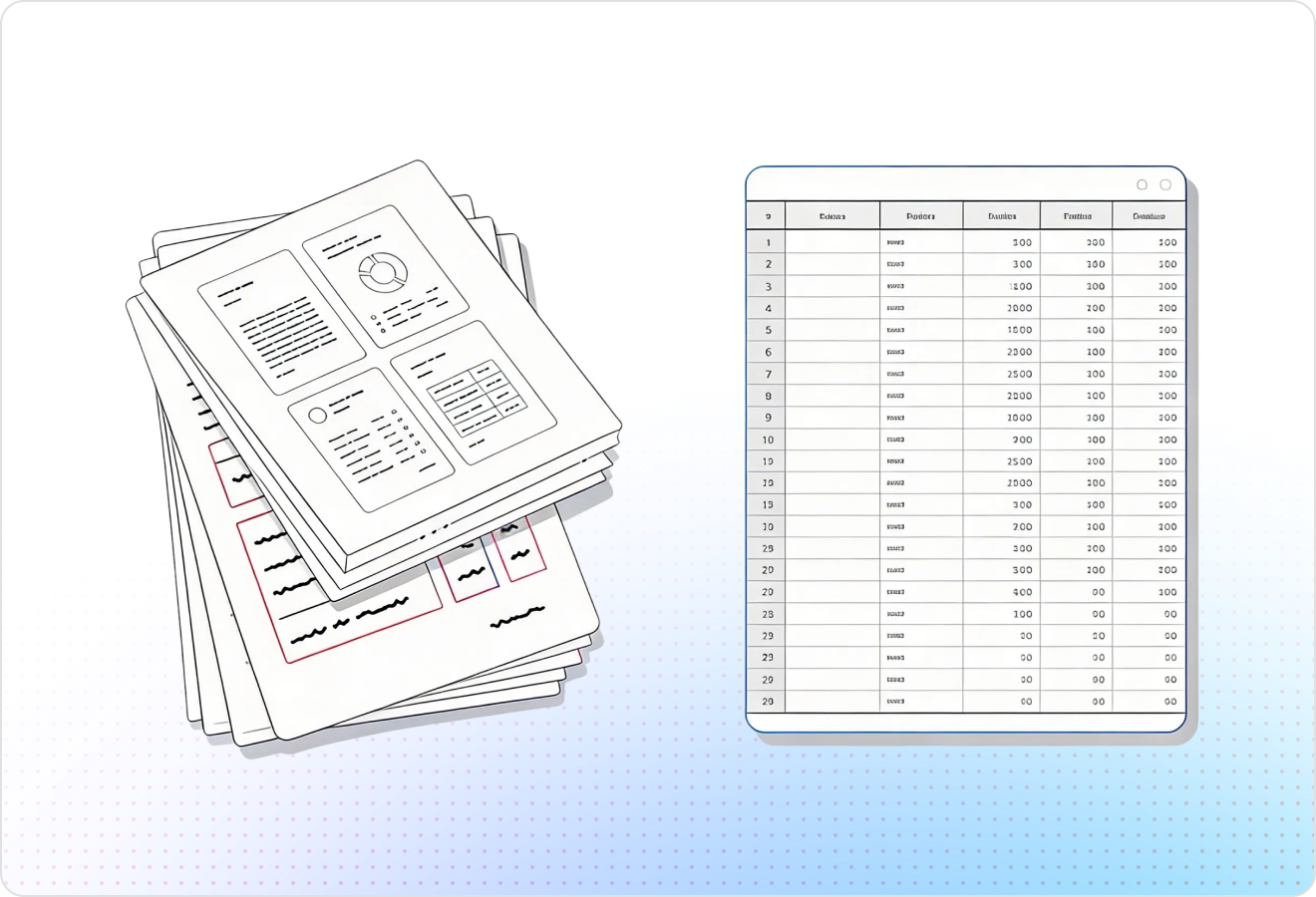
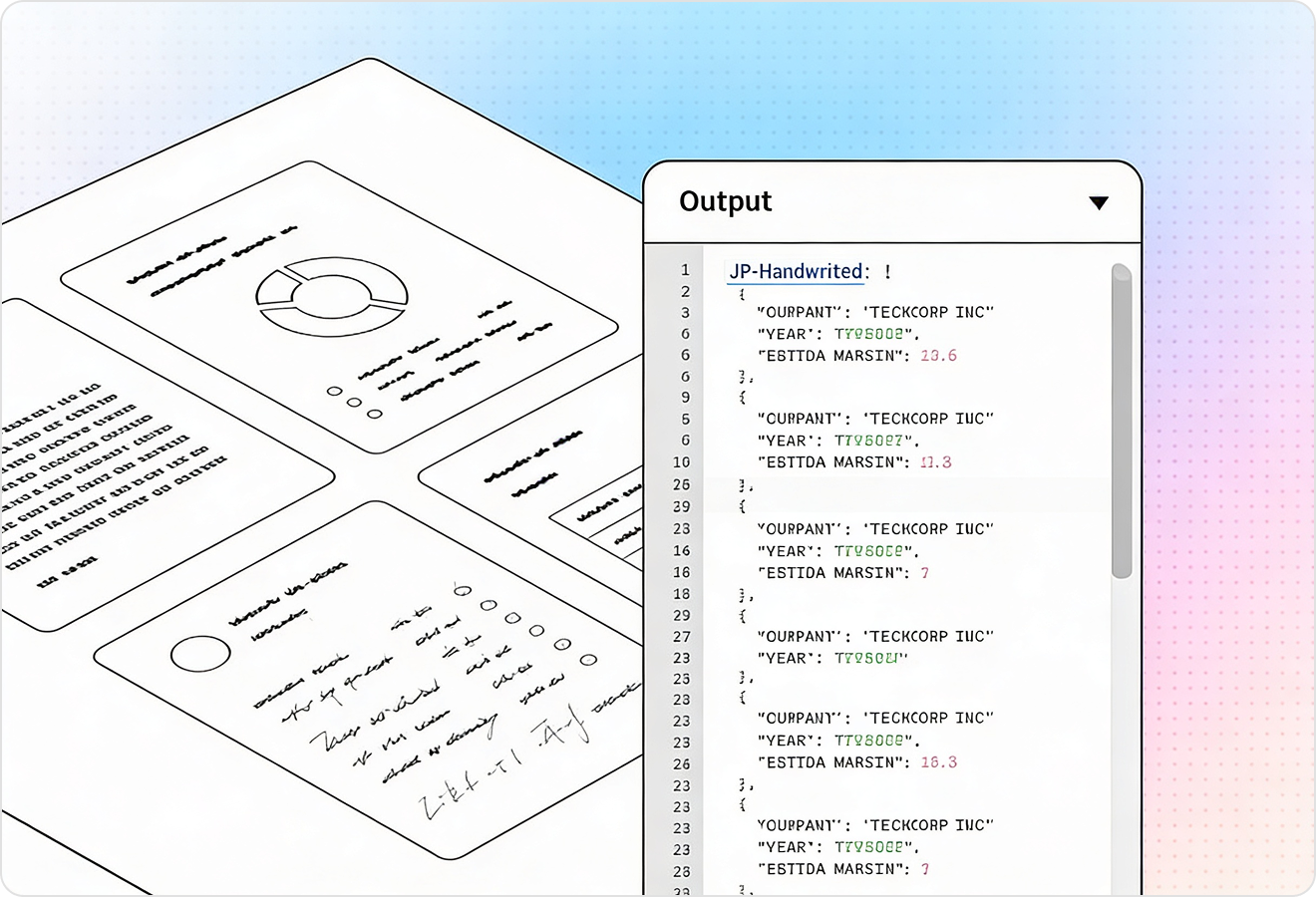
LlamaParse uses layout-aware vision to preserve reading order across multi-column pages, headers/footers, and scanned SharePoint PDFs. You get clean, logically structured text instead of the scrambled output that makes downstream extraction and search unreliable.
02
LlamaParse accurately detects and reconstructs tables from SharePoint-hosted PDFs, including merged cells and nested tables. This makes it practical to extract invoice lines, registers, and compliance matrices without hand-built post-processing.
03
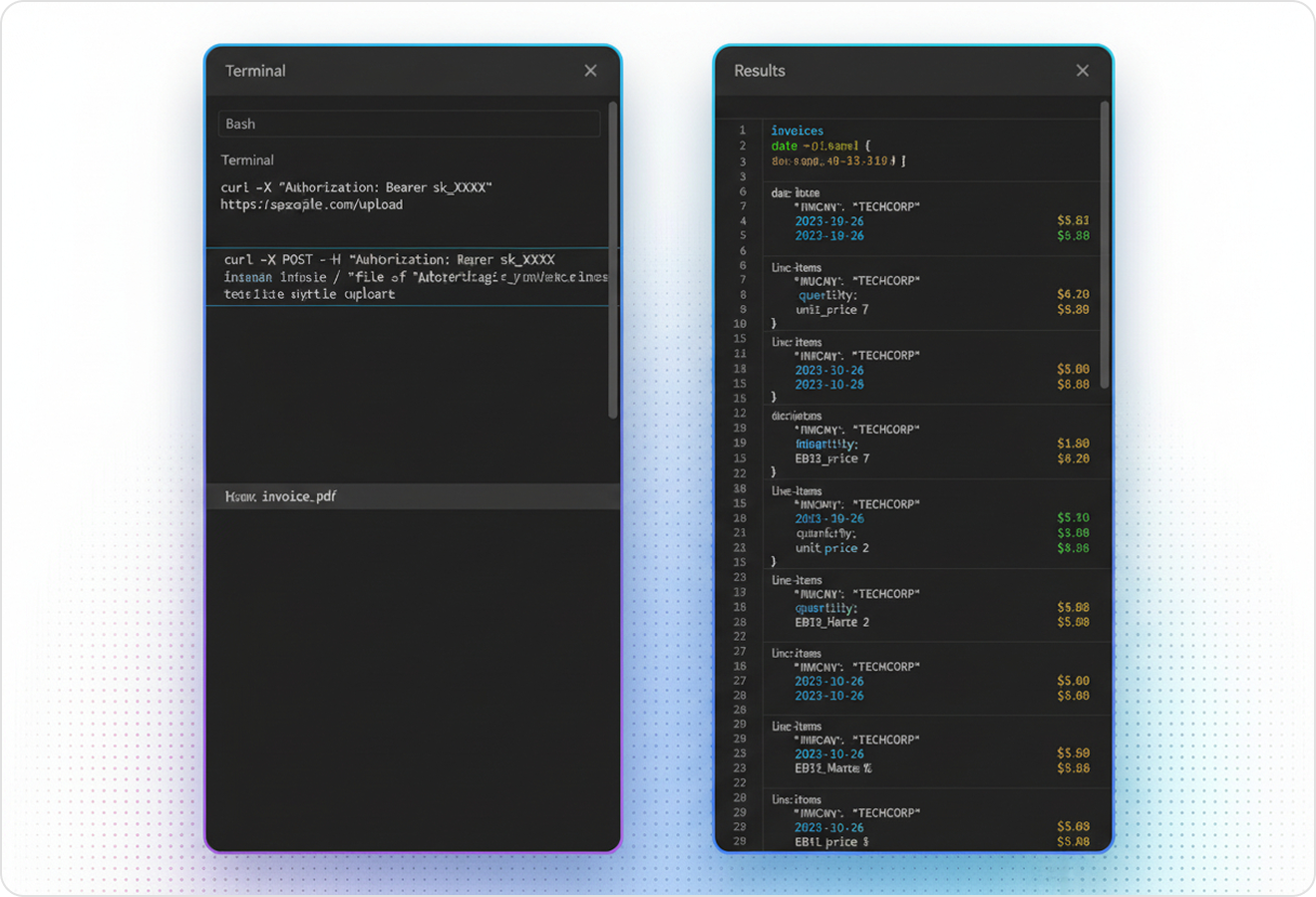
LlamaParse can emit JSON with granular metadata like page numbers, element types, and coordinates for each extracted block. That structure makes SharePoint PDF extraction auditable and easy to map into downstream systems like databases, queues, or approval workflows.
04
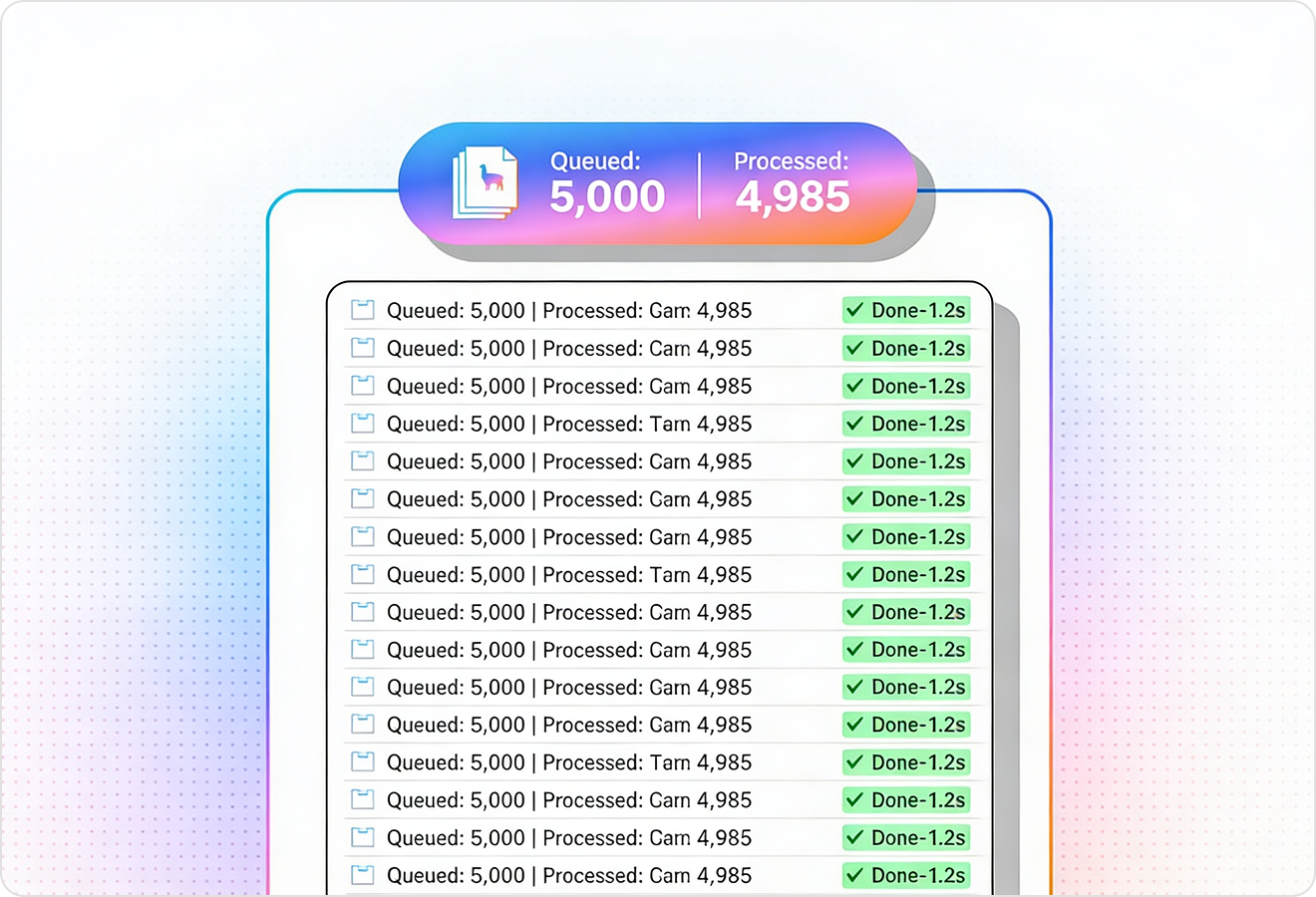
LlamaParse runs validation and self-correction steps to catch common extraction errors from low-quality scans and complex layouts. This reduces manual spot-checking for SharePoint PDF ingestion pipelines and improves straight-through processing for high-volume libraries
Technical OCR documentation
Explore our developer guides to easily connect your document pipelines to LlamaParse.
Explore the documentation
Our AI catches the typos that tired eyes miss.

Export to Excel, JSON, XML, or directly via API.

SOC2 Type II compliant with end-to-end encryption.

Train the tool on your specific forms in minutes, not days.

Average processing time of <3 seconds per page.
LlamaParse’s support of a wide variety of filetypes and its accuracy of parsing made it the best tool we tested in our evaluations. The LlamaIndex team was very responsive and we were off to the races within a day.
Common FAQs
01
Yes. Layout-aware parsing keeps content in the correct sequence across columns, headers/footers, and scanned pages so you get coherent text instead of scrambled output. That makes downstream search, classification, and extraction far more reliable.
02
It detects and reconstructs tables with strong fidelity, including merged cells and nested structures commonly found in SharePoint-hosted PDFs. You can extract line items and matrix data without brittle, custom post-processing rules.
03
Yes—JSON output includes granular metadata like page numbers, element types, and coordinates for each extracted block. This gives you clear traceability for compliance and makes it easy to map results into databases, queues, or approval workflows.
04
How does it handle low-quality scans and messy document layouts in SharePoint libraries?
Auto-correction validation loops catch common OCR and layout mistakes and then self-correct to improve accuracy. That reduces manual spot-checking and increases straight-through processing for high-volume SharePoint ingestion.
05
Will this reduce the time my team spends fixing extraction errors and reprocessing files?
In most workflows, yes—clean reading order, reliable tables, and validation steps significantly cut rework and exceptions. You’ll spend less time on manual clean-up and more time using the extracted data in downstream systems.
06
How quickly can we integrate it into an existing SharePoint PDF ingestion pipeline?
It’s designed to plug into automated pipelines by returning consistently structured output you can route into your existing processing steps. Most teams start with a pilot on a single library, then expand once the JSON mapping and quality thresholds are confirmed.