Nov 14, 2025
Document AI: The Next Evolution of Intelligent Document ProcessingPersona
Industry
Use cases
Schedule C OCR
[ Schedule C OCR ]

Use LlamaParse to turn messy Schedule C scans into verified, structured tax fields in seconds.
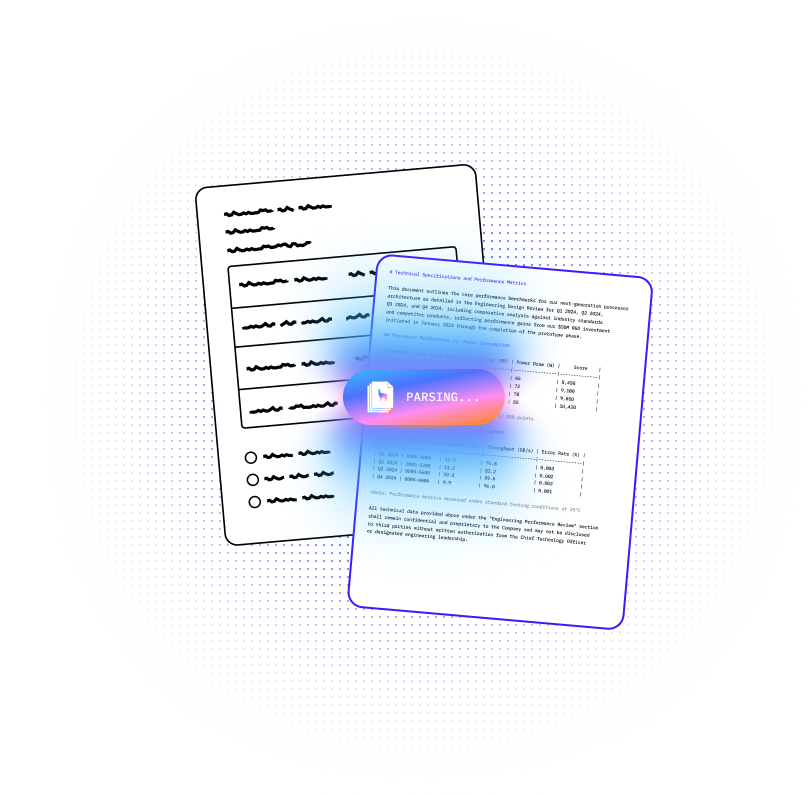


LlamaParse turns messy, skewed Schedule C scans into clean, structured rows and fields you can trust, ready for downstream systems and review. Layout-aware parsing and validation loops reduce manual keying, preserve tables and notes, and output verifiable JSON or Markdown with confidence metadata.
Best-in-Class Accuracy

Turn customer PDFs, emailed forms, and scanned onboarding docs into clean JSON in days, not quarters, so small teams can ship automated scheduling workflows without building brittle parsing code. LlamaParse uses layout-aware structure extraction and natural-language parsing instructions to normalize messy, changing templates into one reliable schema your product can depend on.

Extract appointment requests, referrals, and prior auth packets into structured fields while preserving tables, multi-column layouts, and footnotes that usually break legacy OCR. With granular metadata and confidence scoring, ops teams can route low-confidence fields to review and push the rest straight into the EHR and scheduling system.

Parse work orders, site logs, and subcontractor timesheets—even when they include handwritten notes, photos, and irregular tables—into schedule-ready line items. Multimodal parsing captures visual context and produces clean Markdown/JSON that can drive dispatch planning, change order tracking, and payroll reconciliation.

Convert statements, claim packets, and loss runs into audit-friendly structured outputs that keep page citations and coordinates for fast exception handling. Tier-based agentic processing and cost optimization route simple pages cheaply while escalating complex, table-heavy scans to higher-accuracy parsing to protect straight-through processing rates.
The Solution
01
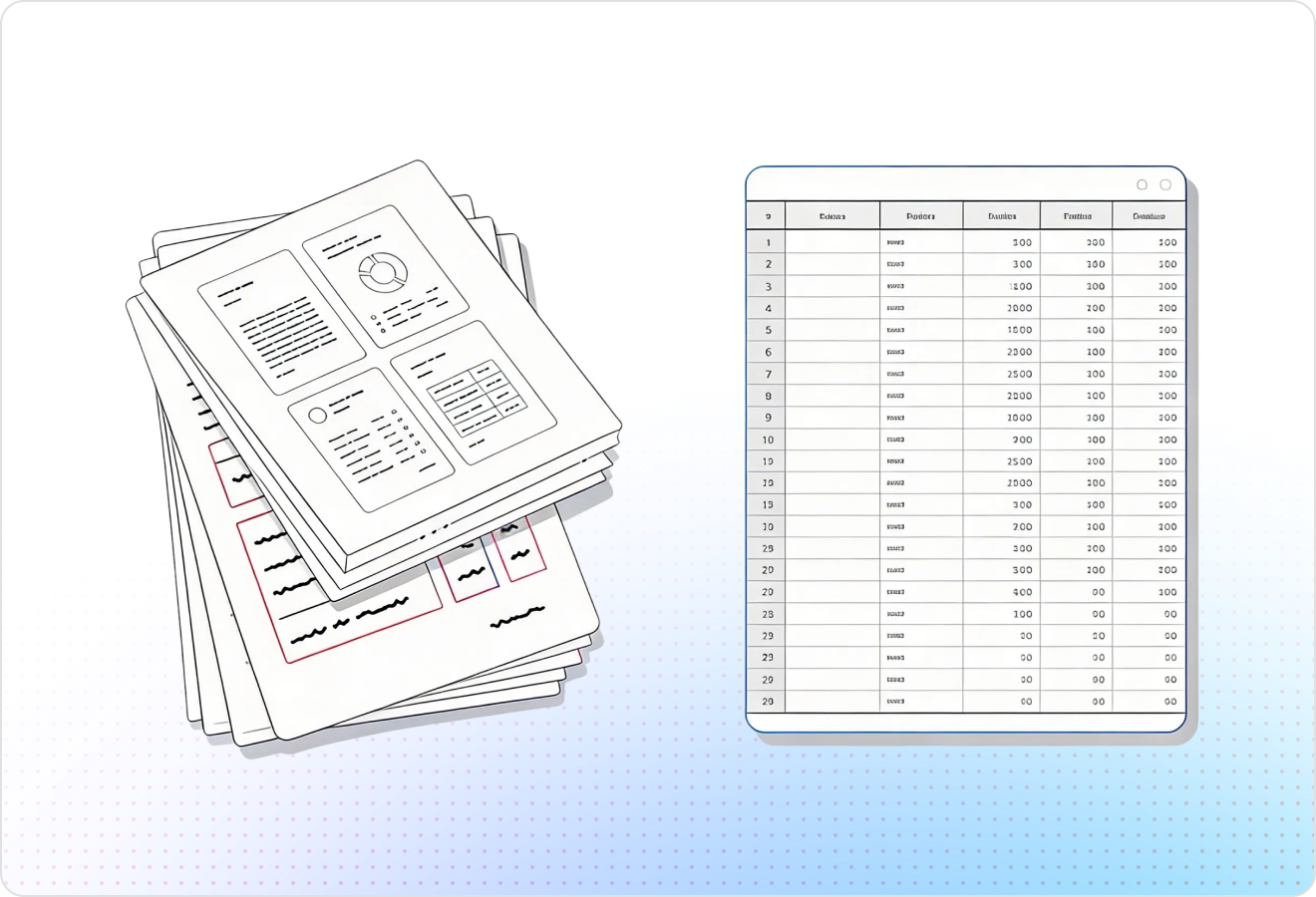
LlamaParse detects columns, headers, and repeated row patterns so Schedule C line items don’t get scrambled during extraction. This keeps categories, descriptions, and amounts aligned even when the form is scanned, skewed, or has handwritten additions.
02
LlamaParse reliably pulls Schedule C’s tabular sections into clean, structured Markdown that preserves row/column relationships. That makes it straightforward to review expenses, map fields to your ledger, and avoid brittle post-processing scripts.
03
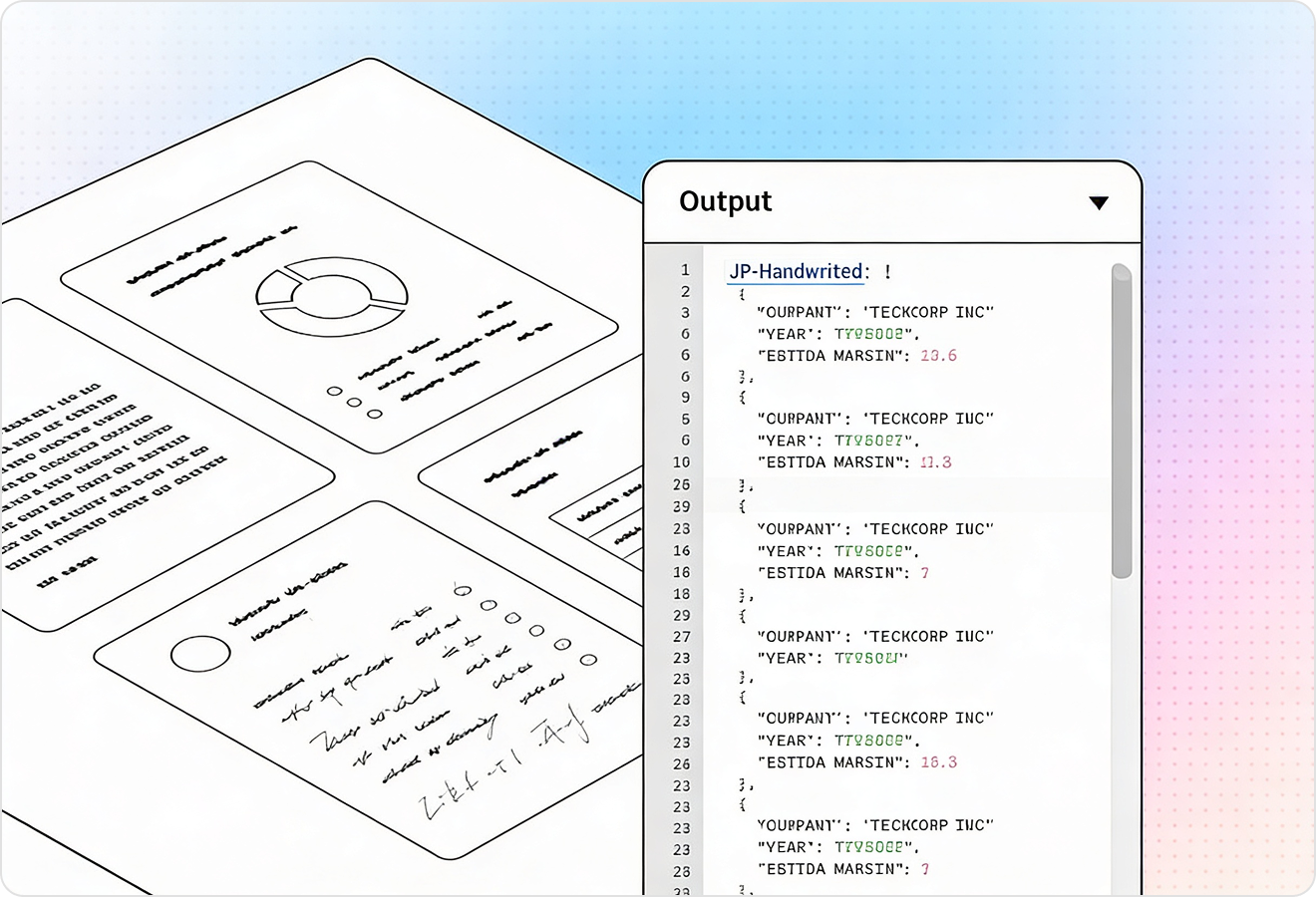
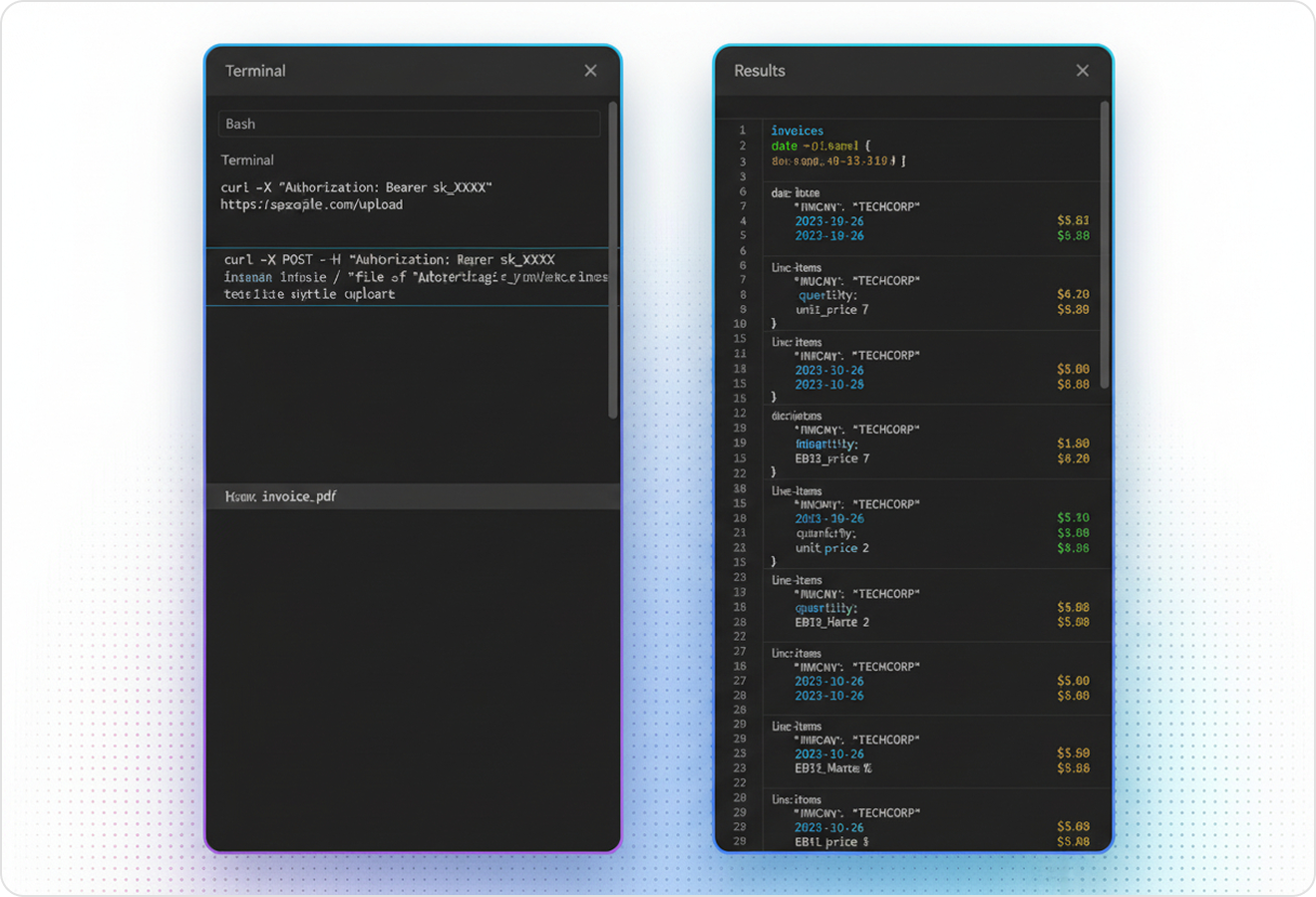
LlamaParse can return Schedule C as structured JSON, making it easy to programmatically capture key fields like gross receipts, COGS, and total expenses. The result plugs directly into tax prep workflows, validation rules, and downstream APIs without manual reformatting.
04
LlamaParse attaches page-level provenance and element metadata so every extracted Schedule C value can be traced back to its source location. This supports fast human review for edge cases and helps you confidently resolve mismatches before filing.
Technical OCR documentation
Explore our developer guides to easily connect your document pipelines to LlamaParse.
Explore the documentation
Our AI catches the typos that tired eyes miss.

Export to Excel, JSON, XML, or directly via API.

SOC2 Type II compliant with end-to-end encryption.

Train the tool on your specific forms in minutes, not days.

Average processing time of <3 seconds per page.
LlamaParse’s support of a wide variety of filetypes and its accuracy of parsing made it the best tool we tested in our evaluations. The LlamaIndex team was very responsive and we were off to the races within a day.
Common FAQs
01
Yes. Layout-aware parsing detects columns, headers, and repeating rows so descriptions and amounts don’t drift into the wrong category. This reduces cleanup time and helps prevent costly misclassifications before filing.
02
The table sections are extracted into clean Markdown that preserves row/column structure. You can quickly review expenses, copy/paste for audits, or map rows to your ledger with far less manual formatting.
03
Yes—Structured JSON Output Mode captures key fields like gross receipts, COGS, and total expenses in a consistent schema. That makes it easy to validate totals, automate data entry, and integrate directly with downstream systems.
04
How can I verify where each extracted value came from on the original Schedule C?
Each extracted field includes provenance metadata and citations that point back to the source page and location. This enables fast spot-checking, smoother reviews, and greater confidence when numbers don’t immediately match.
05
What if my Schedule C format varies year-to-year or comes from different scanners?
Layout-aware detection is designed to handle common variations like shifting headers, inconsistent spacing, and repeated row patterns. You get more stable outputs across vendors and scan qualities, which helps standardize your pipeline.
06
How quickly can my team start extracting Schedule C data at scale?
You can start by sending your PDFs and receiving Markdown or JSON outputs that are ready for review and integration. With structured outputs and built-in traceability, teams typically move from prototype to production faster and with fewer exceptions to handle manually.