Nov 14, 2025
Document AI: The Next Evolution of Intelligent Document ProcessingPersona
Industry
Use cases
Pathology Report OCR
[ Pathology Report OCR ]

Use LlamaParse to capture diagnosis, staging, and margins with citations you can quickly verify.
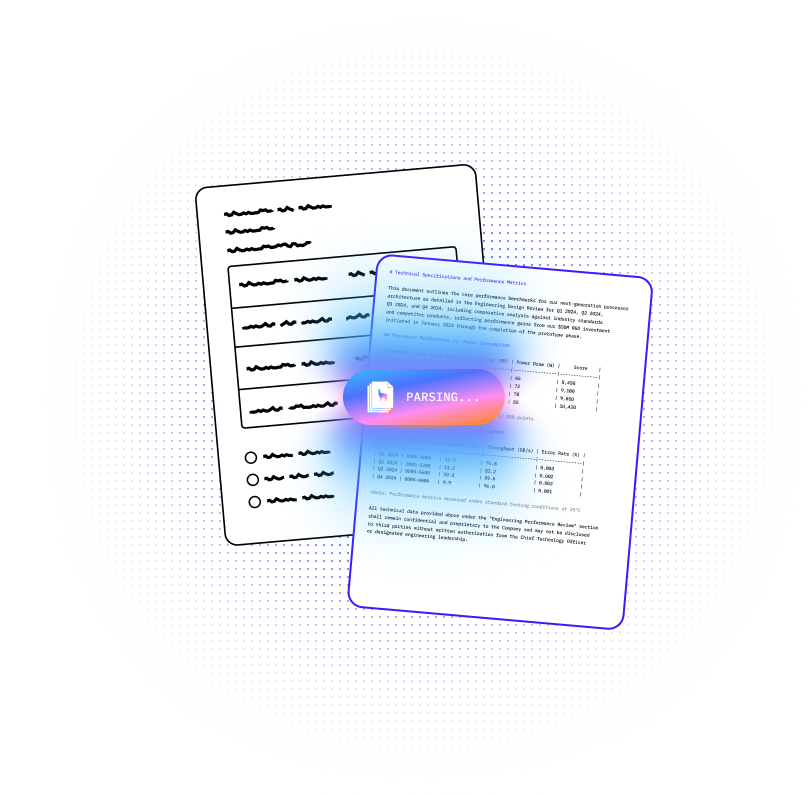

LlamaParse turns messy pathology PDFs and scanned lab reports into clean, structured JSON or Markdown you can trust in downstream clinical workflows. It uses layout-aware, agentic parsing with validation loops and confidence metadata to cut manual abstraction and improve straight-through processing.
Best-in-Class Accuracy

Use LlamaParse to convert scanned pathology reports into clean, layout-faithful Markdown/JSON, preserving specimen tables, margins, and addenda so results don’t get scrambled in downstream systems. Auto-correction loops and traceable metadata reduce manual abstraction time and support faster, auditable routing into the LIS/EHR for care-team review.

Parse pathology narratives and synoptic report tables into structured JSON to power cohort identification, biomarker dashboards, and study feasibility without custom regex pipelines. Multimodal parsing captures embedded charts and staining imagery callouts with citations, enabling analysts to validate extracted endpoints and cut data cleaning cycles.

Extract diagnosis, staging, margins, and procedure details from pathology reports into standardized fields that underwriters and claims teams can triage and adjudicate consistently. Tier-based processing routes simple pages cheaply while escalating only complex layouts, keeping per-claim costs predictable without sacrificing extraction quality.

Ship document ingestion fast by using LlamaParse as the agentic document parsing layer for pathology report OCR, returning AI-ready Markdown/JSON that’s easy to index and search. Natural-language parsing instructions let you enforce your schema and filter irrelevant sections at ingestion, so your product can deliver reliable insights without brittle post-processing code.
The Solution
01
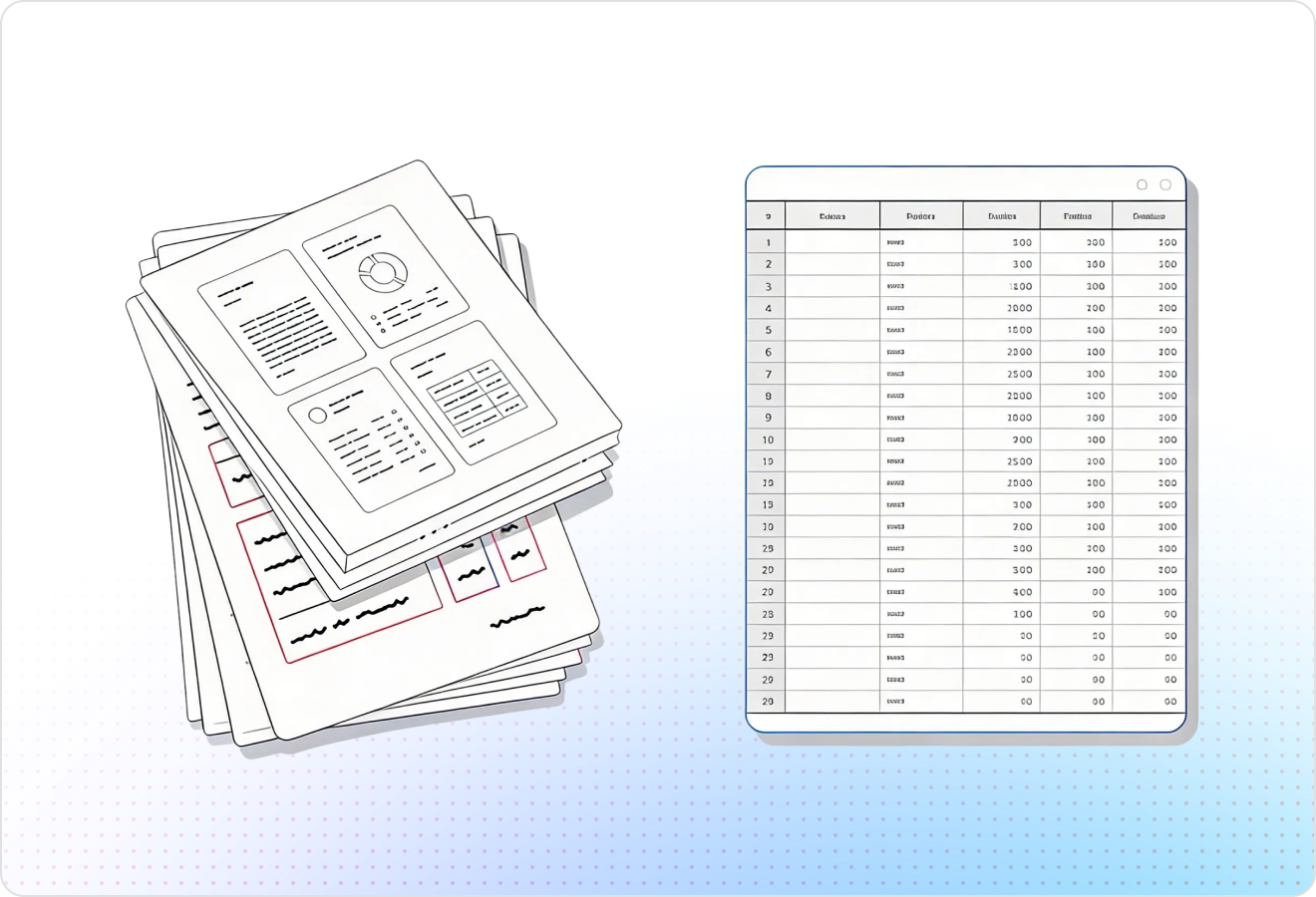
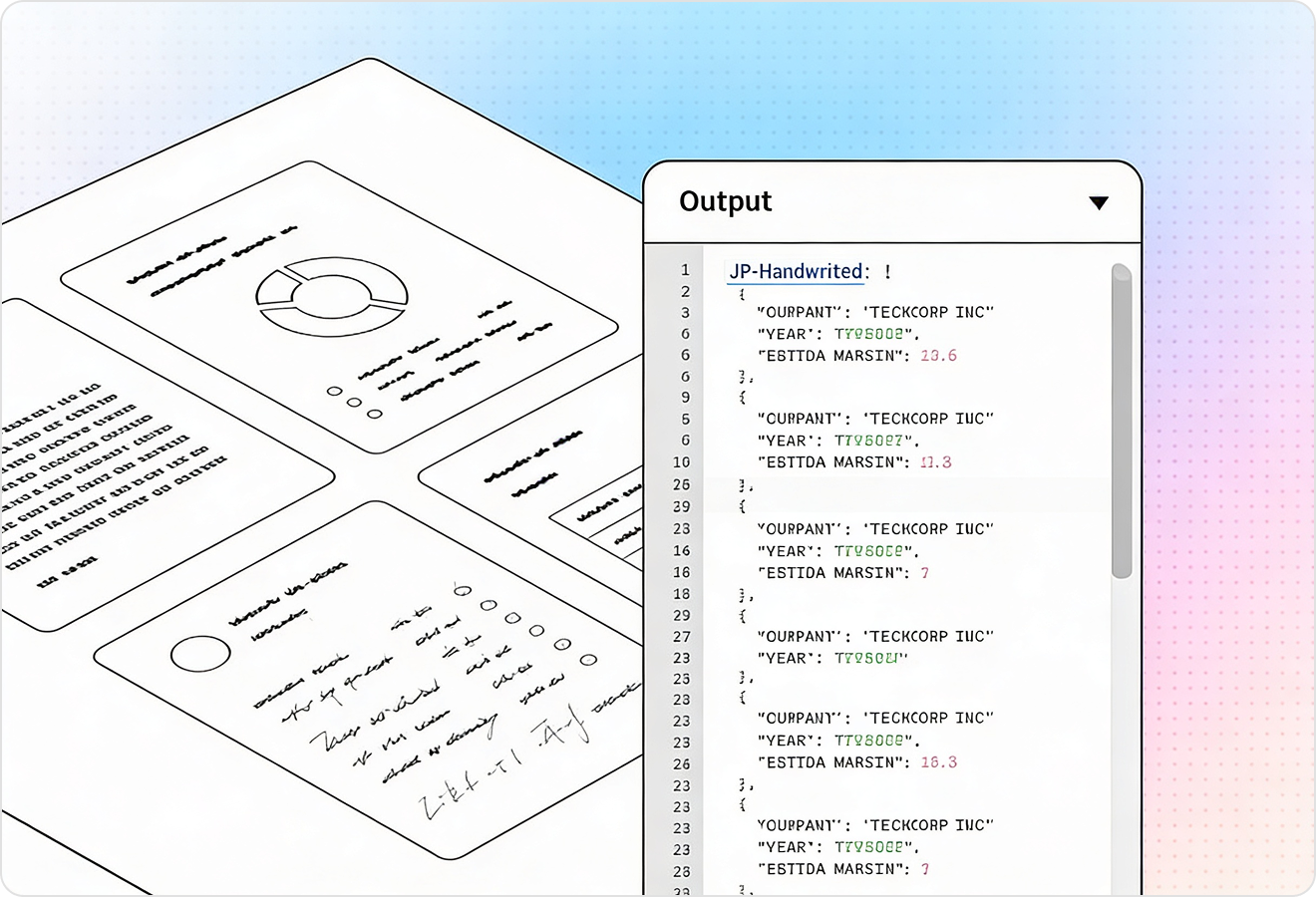
LlamaParse uses layout-aware vision to preserve reading order across multi-column pathology reports, headers/footers, and dense sections like Clinical History, Diagnosis, and Comment. That means the “Final Diagnosis” stays tied to the right specimen and subparts instead of getting scrambled into unusable text.
02
LlamaParse reliably captures structured elements like specimen lists, gross descriptions, synoptic checklists, and biomarker tables without collapsing rows or losing column meaning. You get clean Markdown or structured outputs that keep fields like site, procedure, margins, and staging aligned for downstream review and analytics.
03
LlamaParse runs validation and self-correction loops to reduce common extraction failures on messy scans, faint text, and repeated medical abbreviations. This improves straight-through parsing of pathology reports where a single character error can flip a result (e.g., “positive” vs “negative”) and force costly manual QA.
04
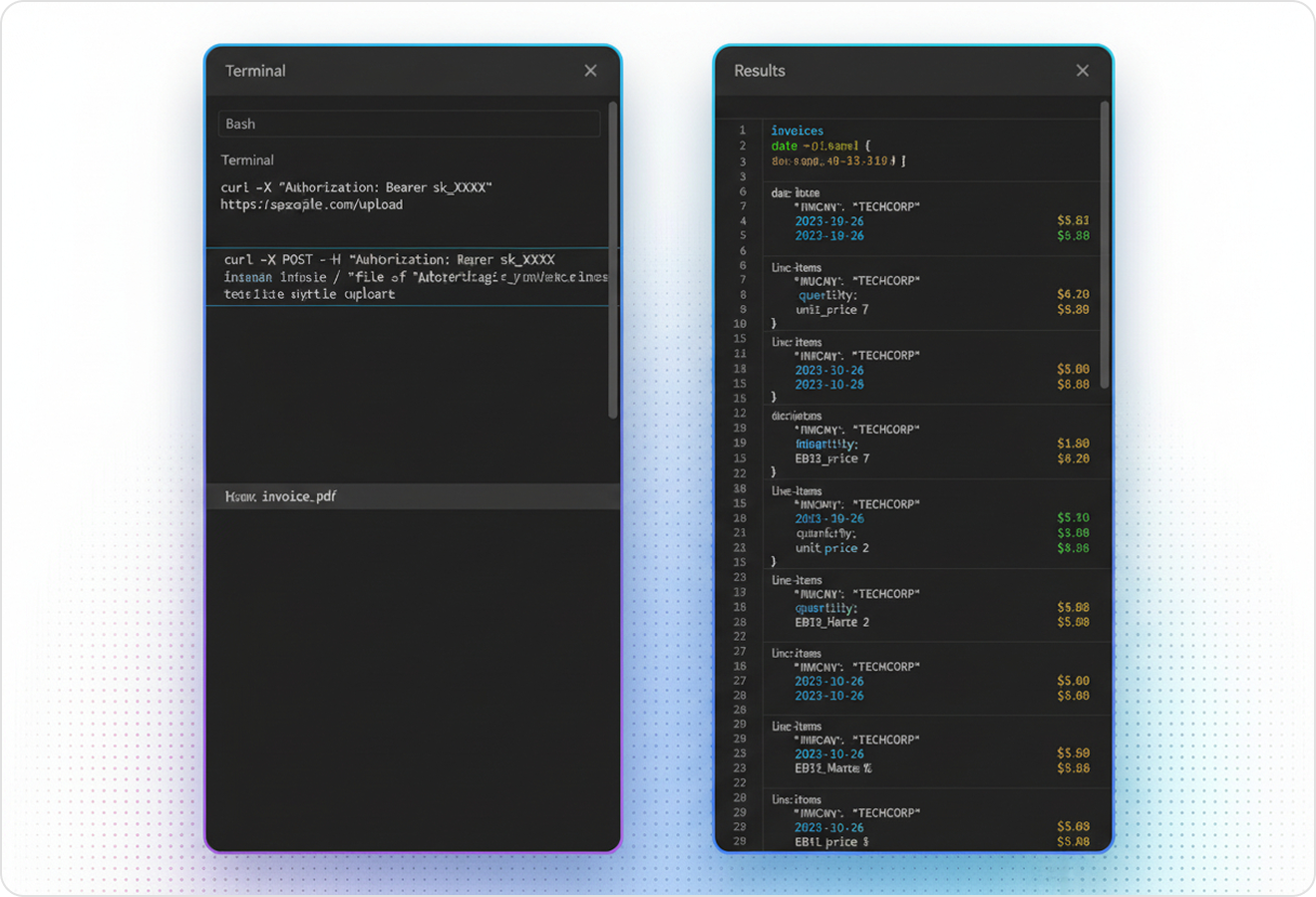
LlamaParse can return pathology data as structured JSON with granular metadata like page references and element locations for traceability. That makes it practical to build audit-friendly pipelines where each extracted diagnosis, ICD/O code, or biomarker result can be verified against the original report.
Technical OCR documentation
Explore our developer guides to easily connect your document pipelines to LlamaParse.
Explore the documentation
Our AI catches the typos that tired eyes miss.

Export to Excel, JSON, XML, or directly via API.

SOC2 Type II compliant with end-to-end encryption.

Train the tool on your specific forms in minutes, not days.

Average processing time of <3 seconds per page.
LlamaParse’s support of a wide variety of filetypes and its accuracy of parsing made it the best tool we tested in our evaluations. The LlamaIndex team was very responsive and we were off to the races within a day.
Common FAQs
01
Yes. Layout-aware parsing preserves reading order across columns, headers/footers, and dense sections so content doesn’t get merged or scrambled. This helps ensure items like “Final Diagnosis” stay linked to the correct specimen and subparts for reliable downstream use.
02
It captures tables and structured sections while keeping rows, columns, and field alignment intact. You can export clean Markdown or structured outputs that maintain key fields like site, procedure, margins, and staging—ready for review, analytics, or ingestion into your systems.
03
Auto-correction and validation loops reduce common OCR failures caused by low-quality scans and ambiguous abbreviations. That lowers the risk of critical character-level mistakes (e.g., “positive” vs “negative”) and reduces time spent on manual QA.
04
Do you provide structured JSON output for pathology data, and can we trace it back to the source document?
Yes—JSON mode returns structured fields along with granular citations such as page references and element locations. This makes it straightforward to verify each extracted diagnosis, code, or biomarker result against the original report and support audit-ready workflows.
05
How do we validate results and build an audit-friendly pipeline for clinical or research use?
Every extracted element can include traceable metadata so reviewers can quickly confirm accuracy without hunting through the PDF. That enables defensible QA workflows and makes it easier to meet internal governance requirements while scaling volume.
06
What will integration look like for our existing pathology workflow and data systems?
You can ingest reports and receive consistent structured outputs (Markdown or JSON) that map cleanly to your downstream review tools and analytics pipelines. Most teams start with a small sample set to confirm field coverage and accuracy, then scale once the output format matches their schema.