Nov 14, 2025
Document AI: The Next Evolution of Intelligent Document ProcessingPersona
Industry
Use cases
On-Premise Document AI
[ On-Premise Document AI ]

Use LlamaParse on your servers to turn complex documents into trusted, structured data with citations.
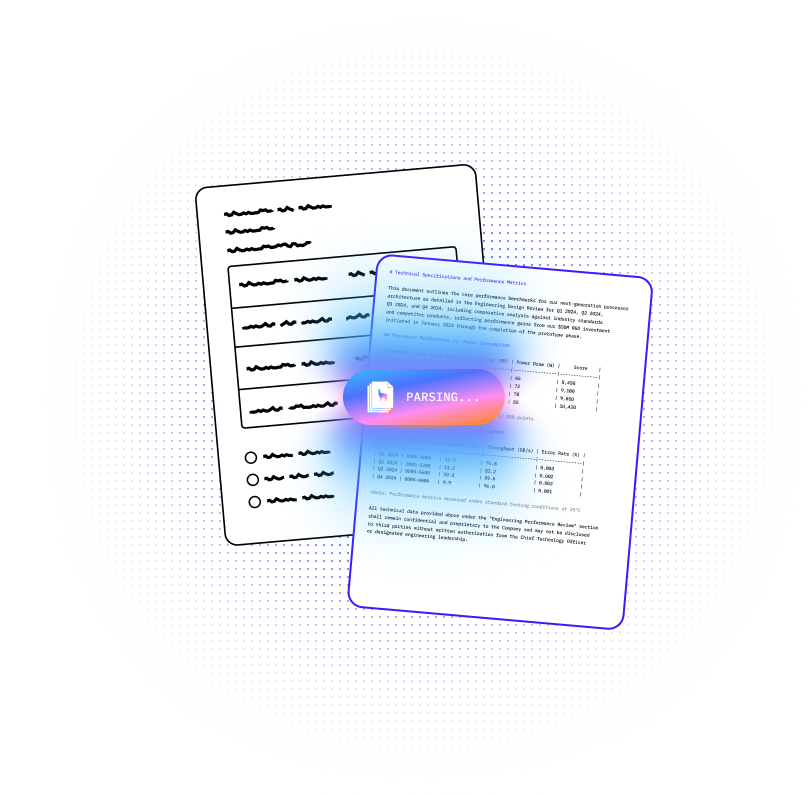
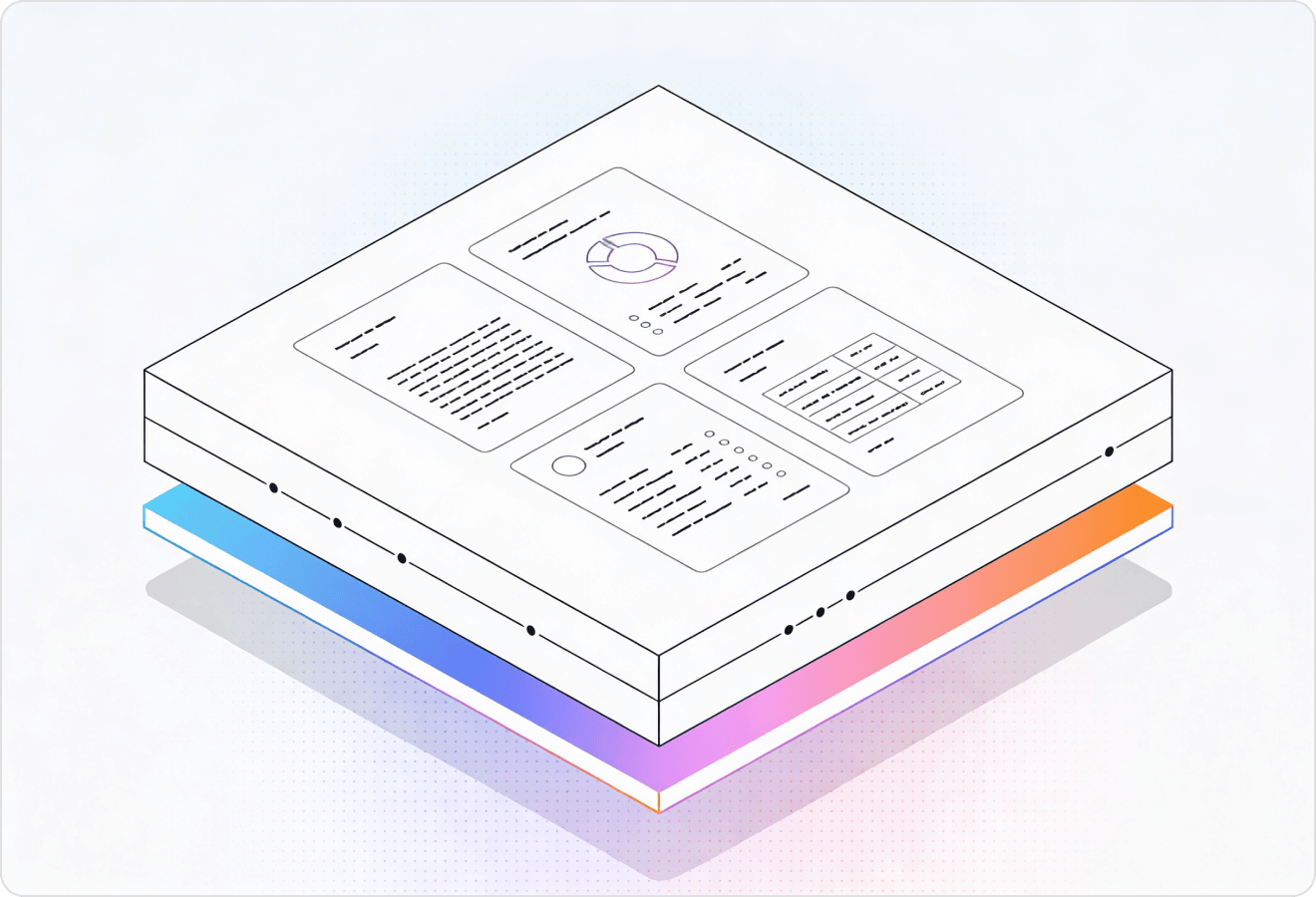

LlamaParse runs inside your environment to turn PDFs, scans, and mixed-format files into clean, structured data your models can trust. It understands layout, tables, and charts, then validates outputs with metadata so teams ship automation without retraining every template change.
Best-in-Class Accuracy

Ship on-prem document ingestion without sending customer PDFs off-network by using LlamaParse to turn messy uploads into clean Markdown/JSON with citations and confidence scores. Natural-language parsing instructions let your team change extraction logic in hours (not sprints) as you learn what customers actually need.

Parse loan packages, KYC files, and custody statements on-prem with layout-aware table extraction so multi-column forms and dense disclosures don’t scramble into unusable text. JSON mode with granular metadata makes it straightforward to reconcile fields back to page-level evidence for audits and exception handling.

Convert inspection reports, certificates of analysis, and supplier spec sheets into structured outputs that preserve tables, units, and revision history for faster lot release decisions. Multimodal parsing captures charts, diagrams, and math so engineering teams can query tolerances and trends instead of manually rekeying data.

Ingest contracts, amendments, and exhibits on-prem and extract clauses, obligations, and key dates while preserving reading order across headers, footers, and multi-column layouts. Auto-correction loops reduce missed definitions and table errors, improving straight-through processing for review queues and playbook checks.
The Solution
01
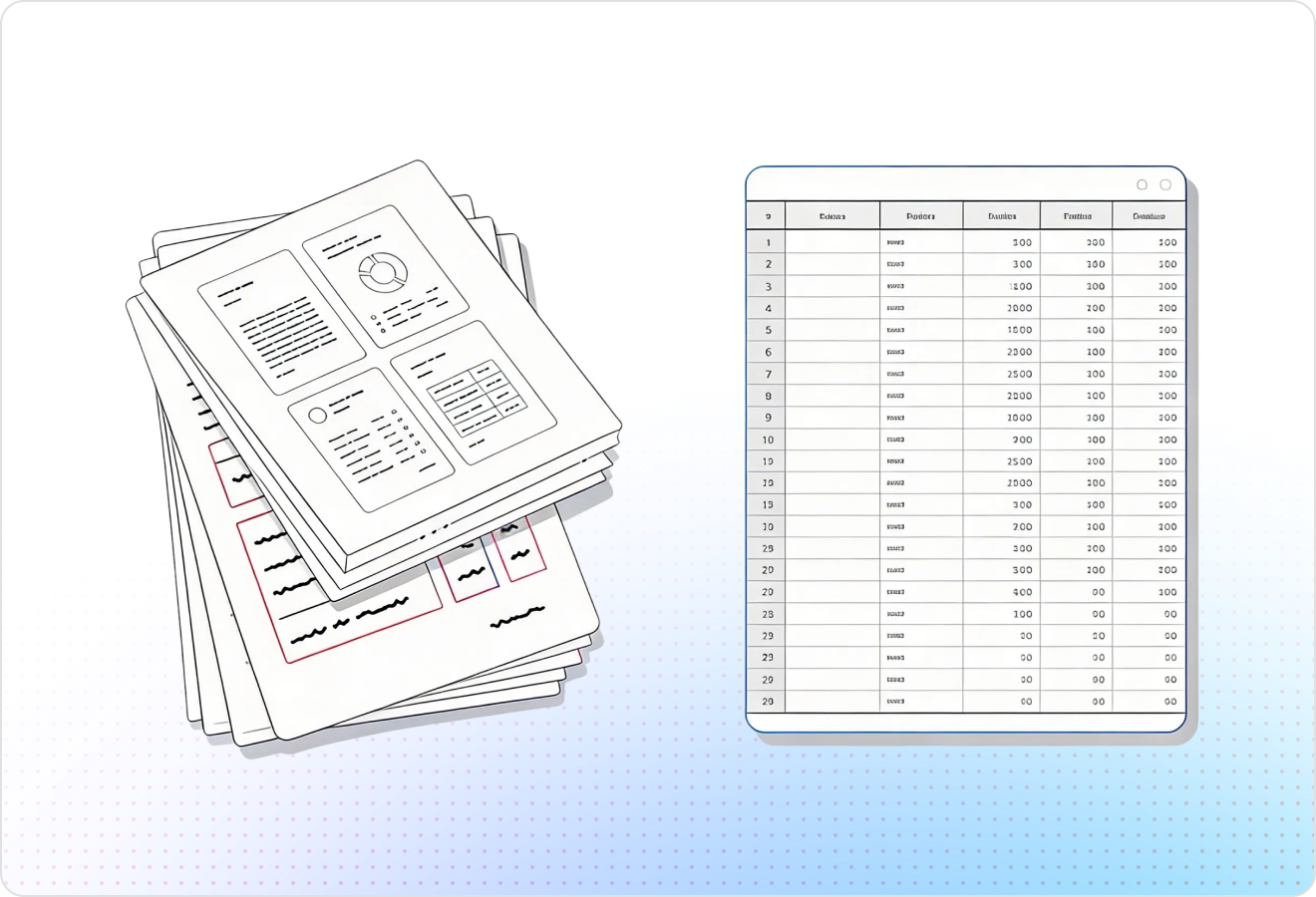
LlamaParse turns messy PDFs and scans into AI-ready Markdown, HTML, or JSON in a way that fits tightly controlled enterprise deployments. This gives on-prem teams a predictable ingestion layer they can wrap with their own network, audit, and access controls instead of stitching together fragile post-processing scripts.
02
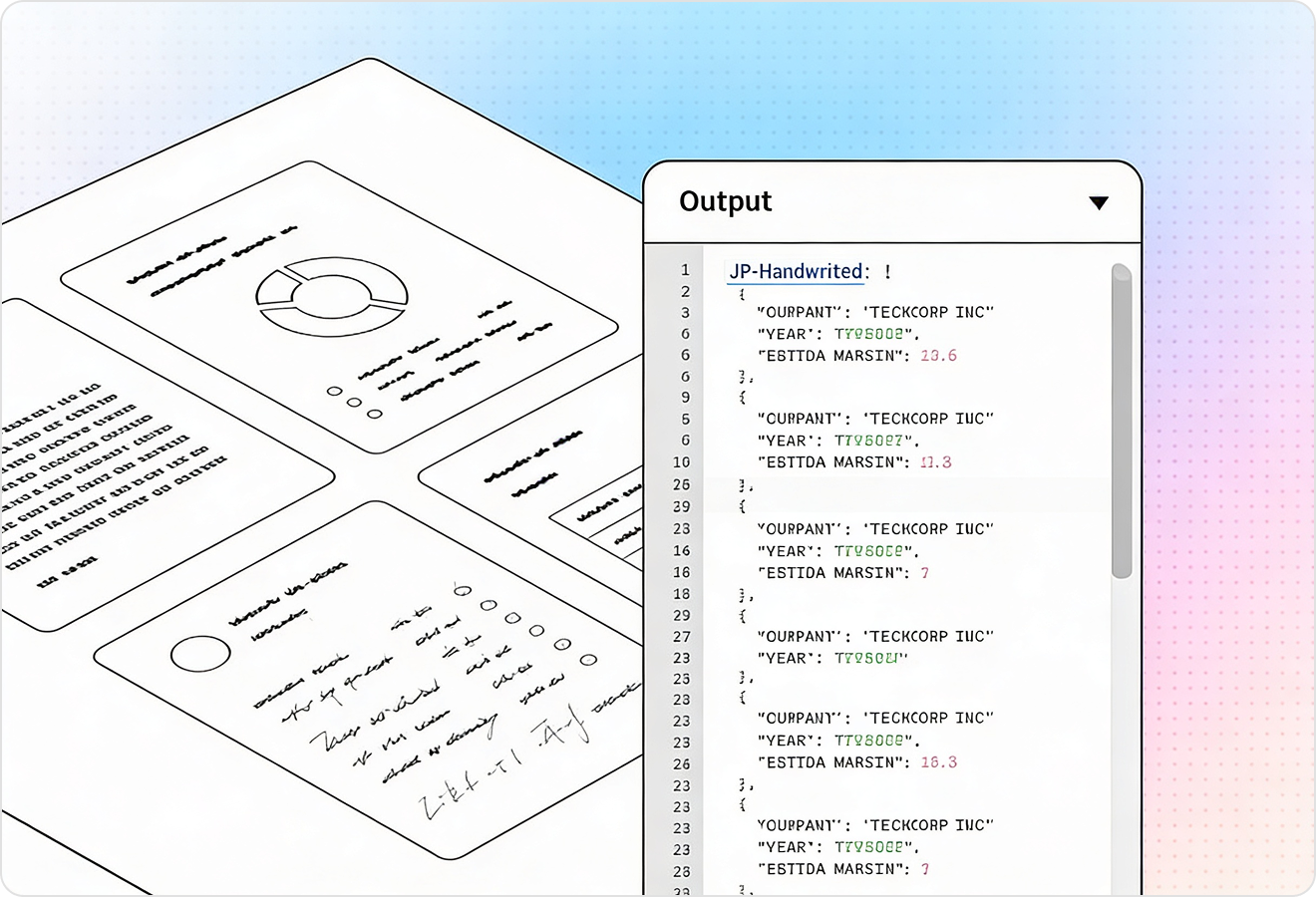
LlamaParse uses layout-aware vision to preserve reading order and correctly reconstruct multi-column pages, headers/footers, and complex tables. For on-prem Document AI, that means fewer parsing regressions when templates change and more reliable downstream automation for invoices, statements, and reports.
03
JSON mode returns strongly structured outputs with page numbers, element types, and spatial coordinates for every extracted block. In on-prem workflows, this traceability makes it easier to build deterministic rules, enforce validation, and provide auditable evidence of where each extracted field came from.
04
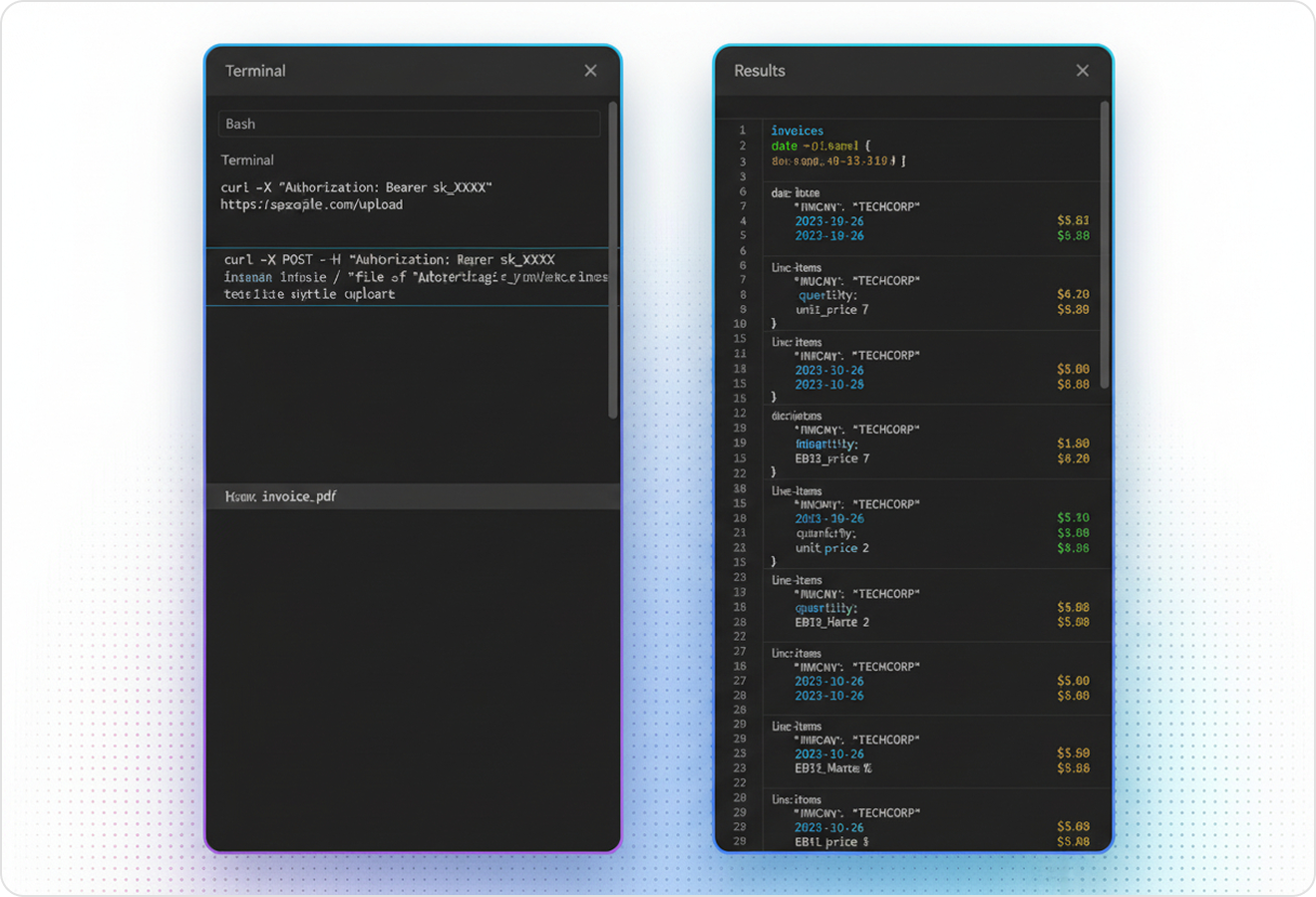
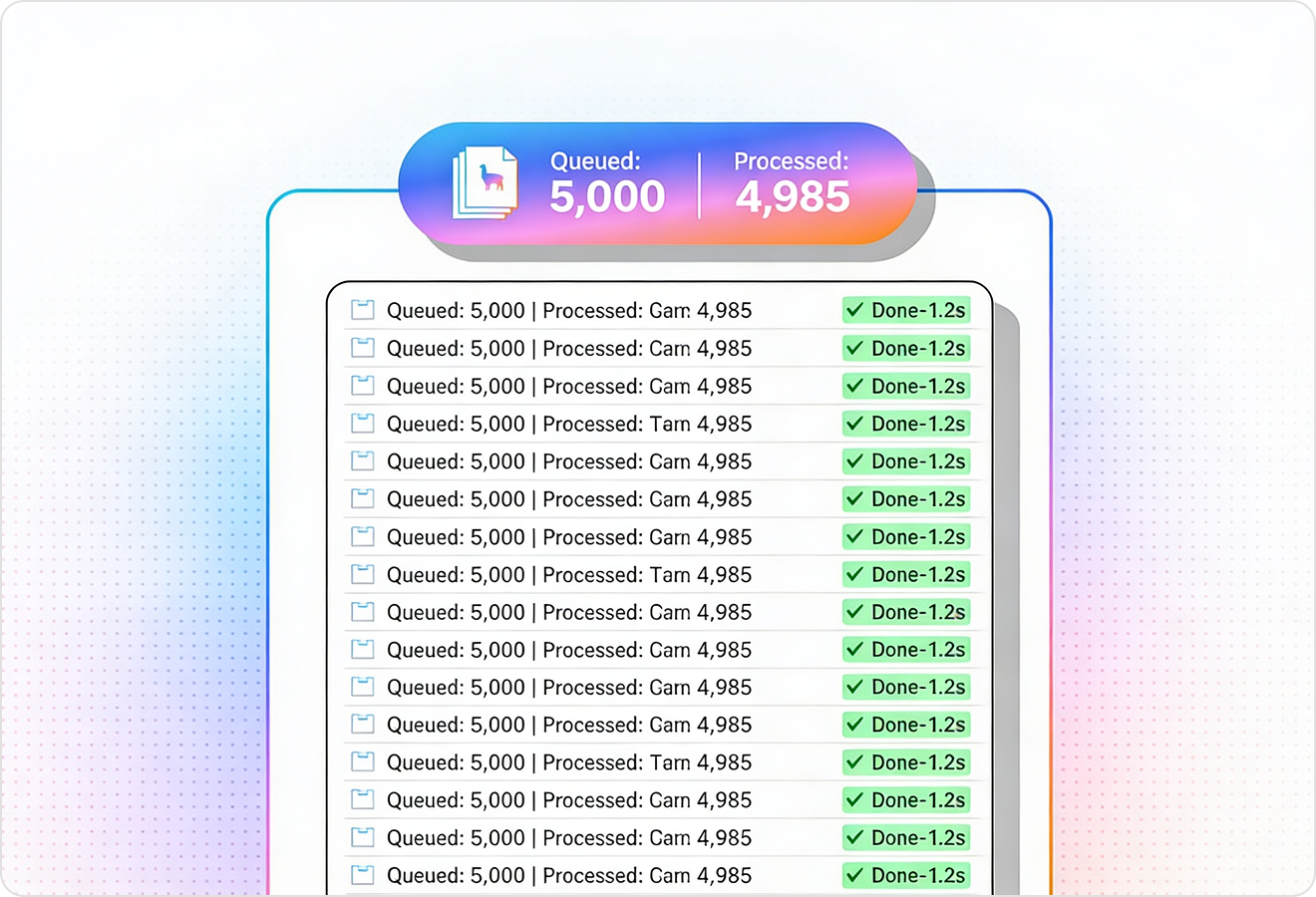
LlamaParse can route pages through different processing tiers, applying heavier agentic reasoning only where the document is actually complex. That keeps on-prem compute requirements and latency predictable while still handling tough edge cases like low-quality scans or dense tables.
Technical OCR documentation
Explore our developer guides to easily connect your document pipelines to LlamaParse.
Explore the documentation
Our AI catches the typos that tired eyes miss.

Export to Excel, JSON, XML, or directly via API.

SOC2 Type II compliant with end-to-end encryption.

Train the tool on your specific forms in minutes, not days.

Average processing time of <3 seconds per page.
LlamaParse’s support of a wide variety of filetypes and its accuracy of parsing made it the best tool we tested in our evaluations. The LlamaIndex team was very responsive and we were off to the races within a day.
Common FAQs
01
Yes—it's designed for tightly controlled enterprise deployments where documents stay inside your network boundary. You can wrap the ingestion layer with your existing audit, access, and retention controls to meet internal and regulatory requirements.
02
It converts messy PDFs and scans into clean, AI-ready Markdown, HTML, or JSON with predictable structure. That reduces the need for brittle post-processing scripts and helps your workflows stay stable even as templates evolve.
03
Layout-aware parsing preserves reading order across multi-column pages and reliably reconstructs complex tables, headers, and footers. The result is fewer parsing regressions and more dependable automation for invoices, statements, and reports.
04
Do we get traceability for extracted fields—like what page and where on the page a value came from?
Yes—JSON output includes page numbers, element types, and spatial coordinates for each extracted block. This makes validation and troubleshooting faster and provides auditable evidence you can reference during reviews or compliance checks.
05
How can we control on-prem compute costs and keep latency predictable?
You can route pages through different processing tiers, using heavier agentic reasoning only for genuinely complex content. That keeps compute requirements and throughput more predictable while still handling edge cases like low-quality scans and dense tables.
06
How does this fit into our existing on-prem Document AI stack and downstream automation?
It provides a consistent ingestion layer that outputs standardized formats your classifiers, rule engines, and extraction pipelines can reliably consume. Teams typically see faster integration and fewer production surprises because the output is structured, deterministic, and easier to validate.