Nov 14, 2025
Document AI: The Next Evolution of Intelligent Document ProcessingPersona
Industry
Use cases
OCR sdk
[ OCR sdk ]

Use LlamaParse to turn messy PDFs into structured Markdown or JSON with layout-aware accuracy.
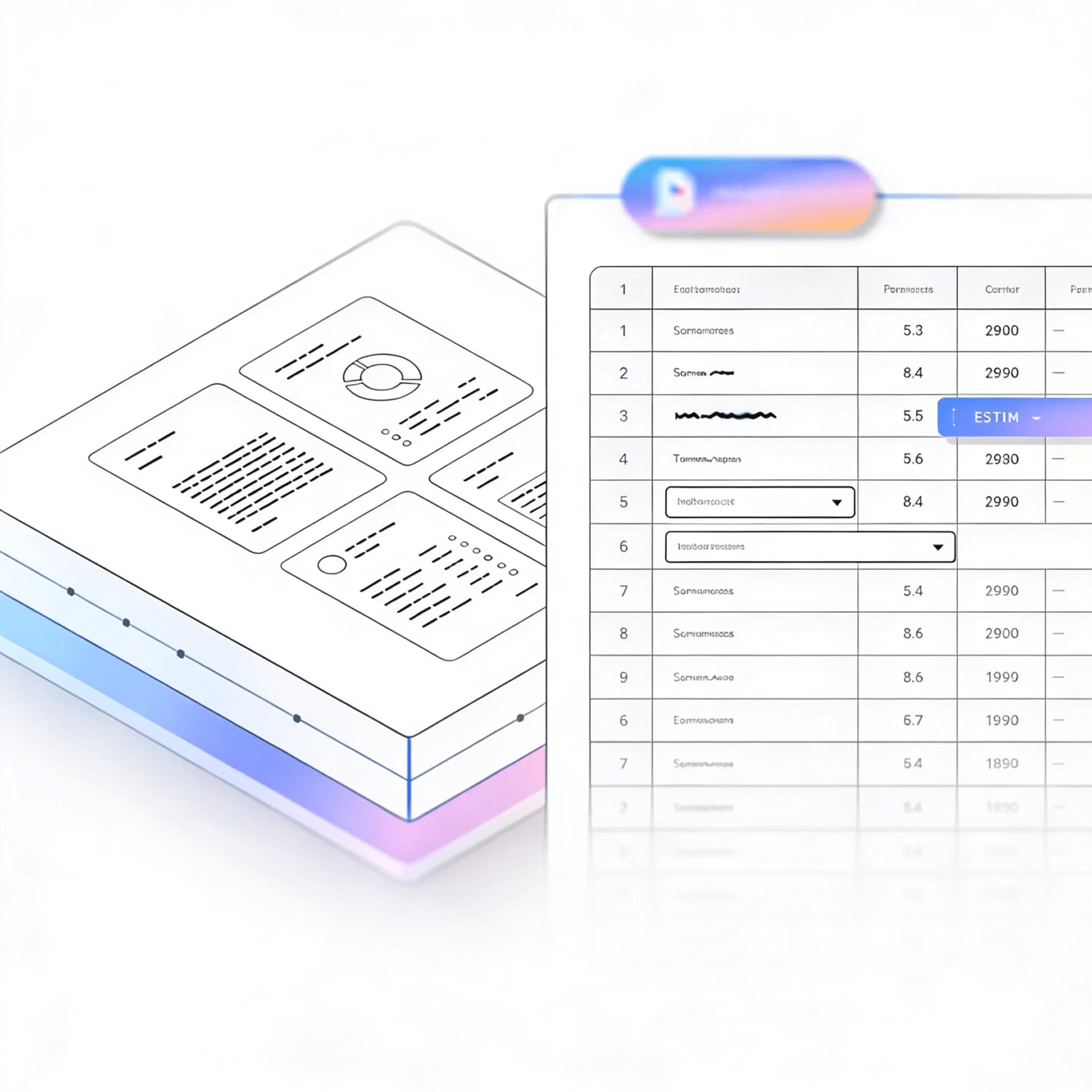
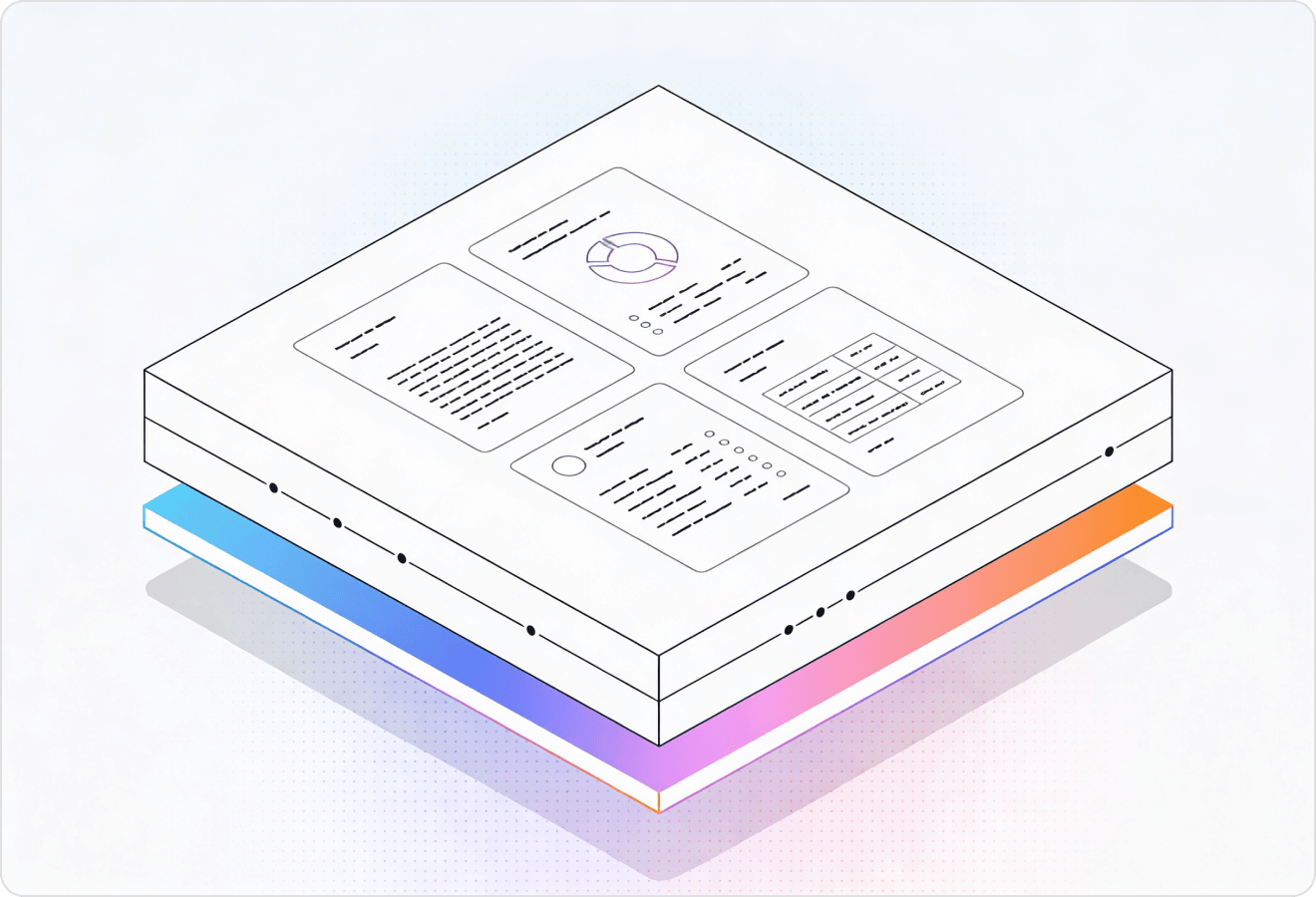

LlamaParse turns messy PDFs, scans, and mixed layouts into clean, AI-ready Markdown, JSON, or HTML so your pipelines keep moving at scale. Its agentic document parsing uses layout-aware vision, validation loops, and verifiable citations to cut extraction errors without constant retraining.
Best-in-Class Accuracy

Turn messy customer PDFs (invoices, contracts, onboarding packets) into clean Markdown/JSON in minutes, so your team can ship document-driven features without building a brittle parsing pipeline. Use tier-based agentic processing to keep costs predictable while auto-upgrading only the hard pages that would normally break traditional OCR.

Parse FNOL packets, adjuster estimates, repair invoices, and photo-heavy claim PDFs into structured JSON with page-level citations, so reviewers can verify extracted fields fast instead of re-keying data. Layout-aware table extraction preserves line-item detail and coverage breakdowns, reducing leakage and speeding straight-through processing.

Extract KYC/AML artifacts, account statements, and multi-column disclosures into schema-ready outputs that plug directly into your case management and audit workflows. Granular metadata and confidence scoring make it easier to justify decisions during audits while minimizing manual exception handling.

Convert purchase orders, packing lists, bills of lading, and spec sheets with dense tables into accurate line-item data that syncs with ERP/WMS systems. Multimodal parsing captures diagrams and measurements alongside text, reducing costly receiving errors and production delays caused by misread documents.
The Solution
01
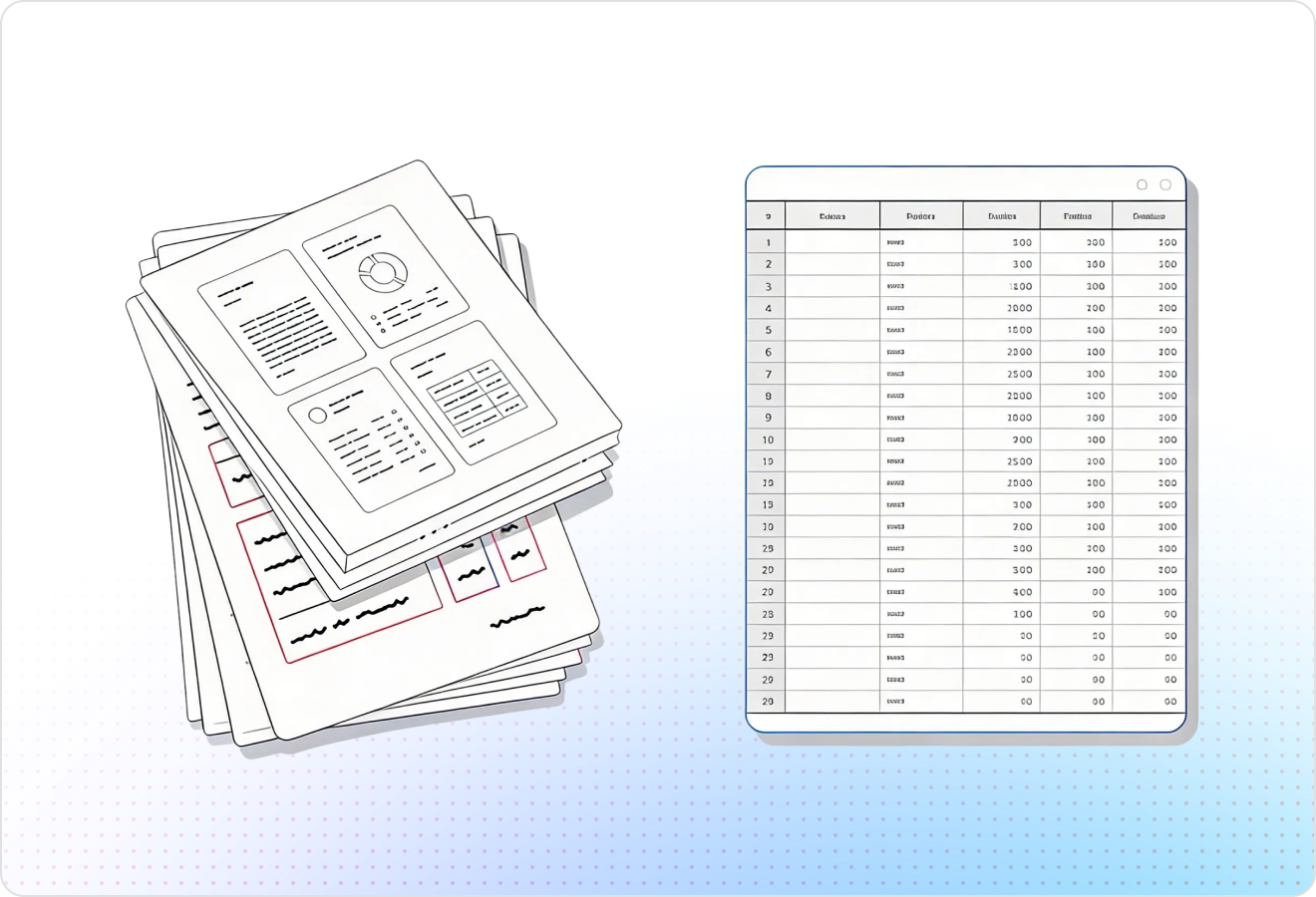
LlamaParse understands page structure (columns, headers, footers, and nested tables) and reconstructs content in the right reading order. For an ocr sdk use case, this means your API returns usable tables and sections without brittle post-processing to fix scrambled text.
02
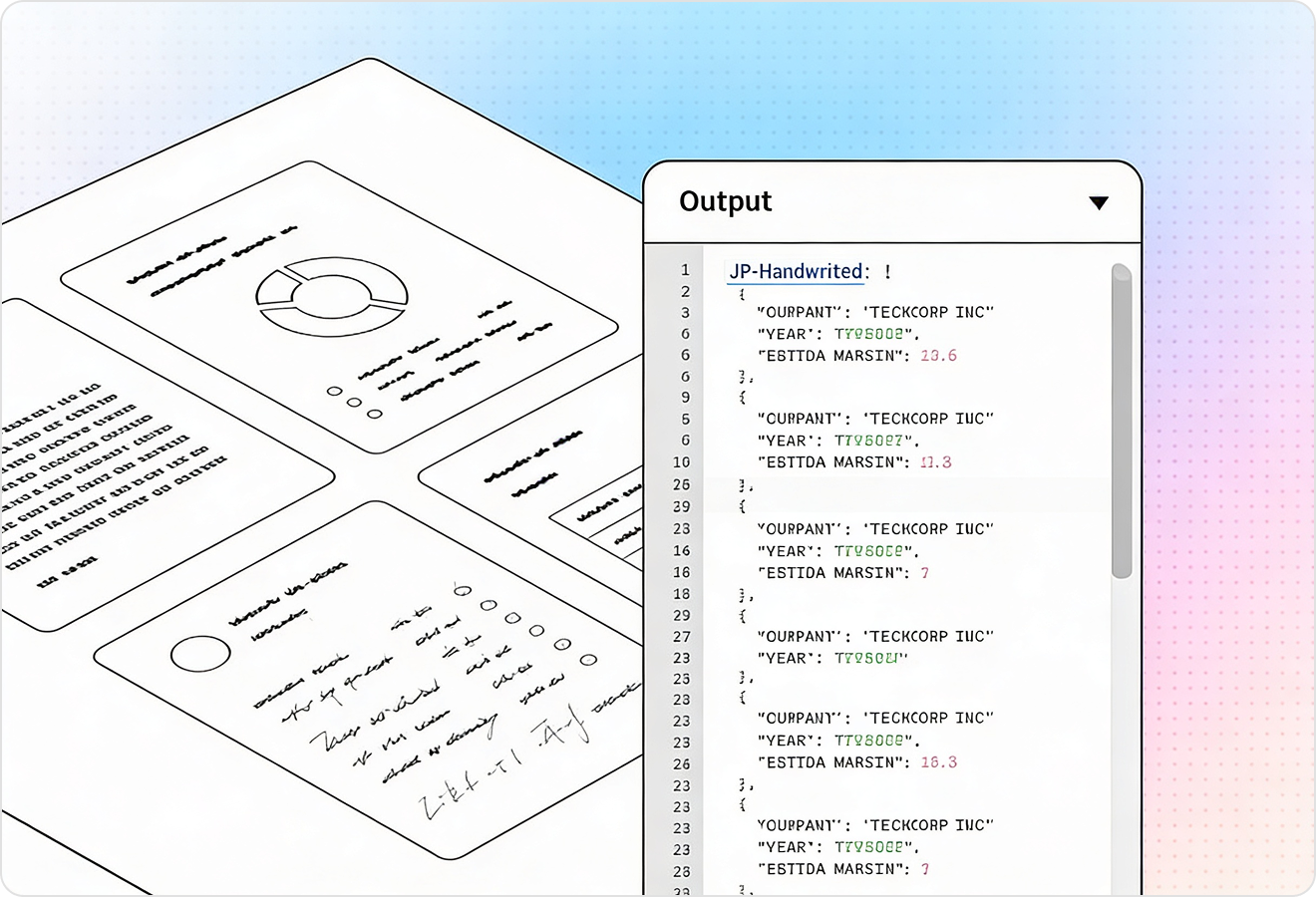
LlamaParse routes each page element to the right combination of LLM/VLM and parsing strategy to handle both clean text and messy scans. As an ocr sdk, you get higher accuracy on real-world documents without manually tuning per-template rules or maintaining multiple extraction pipelines.
03
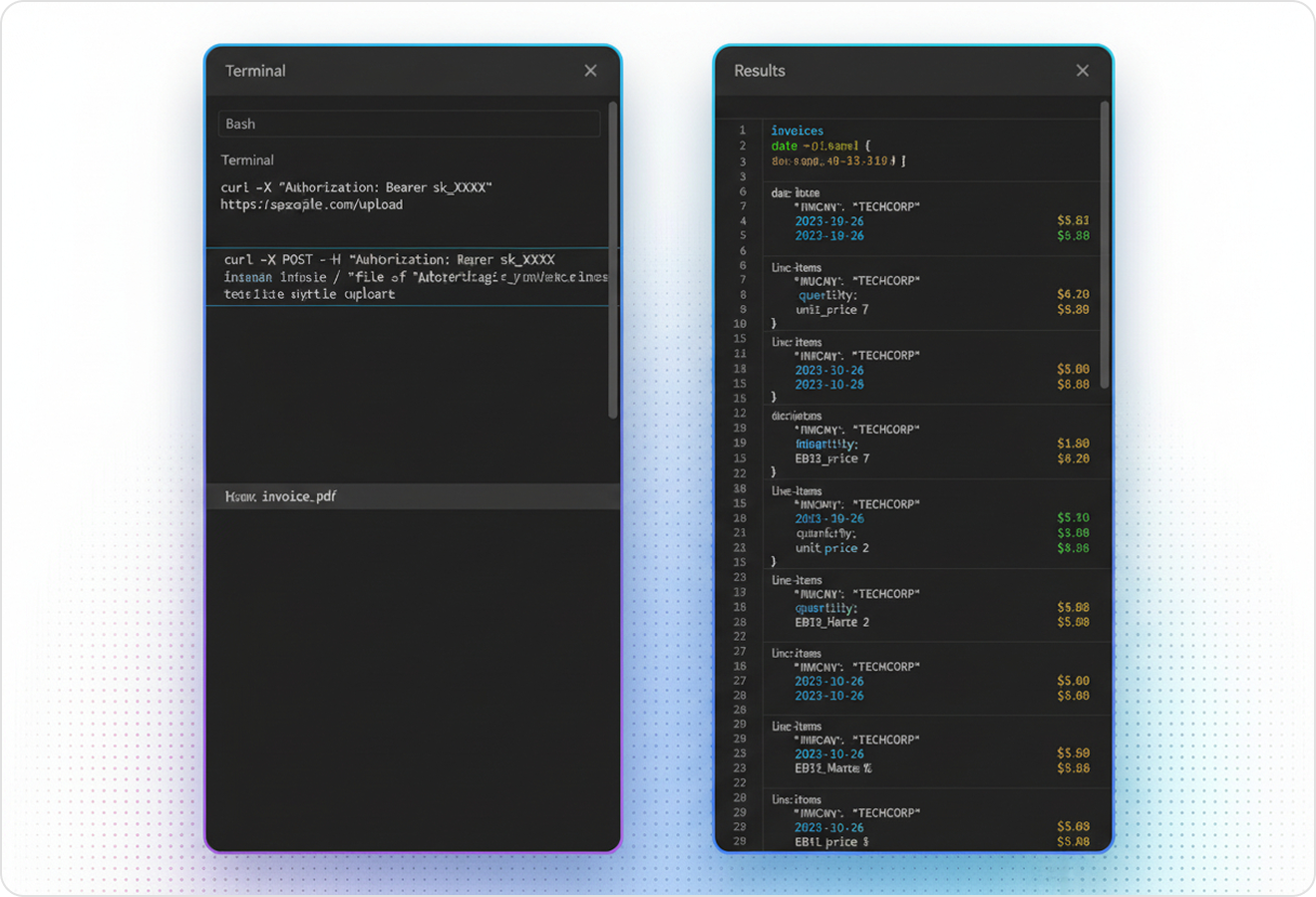
LlamaParse can emit structured JSON with rich metadata like page numbers, element types, and spatial coordinates for each extracted block. This is ideal for an ocr sdk that needs programmatic control—highlighting sources in a viewer, mapping fields to forms, or building deterministic downstream automation.
04
LlamaParse uses iterative validation to detect likely extraction errors and fix them before returning results. For an ocr sdk, that reduces manual review and improves straight-through processing when documents are noisy, skewed, or inconsistent.
Technical OCR documentation
Explore our developer guides to easily connect your document pipelines to LlamaParse.

Our AI catches the typos that tired eyes miss.

Export to Excel, JSON, XML, or directly via API.

SOC2 Type II compliant with end-to-end encryption.

Train the tool on your specific forms in minutes, not days.

Average processing time of <3 seconds per page.
LlamaParse’s support of a wide variety of filetypes and its accuracy of parsing made it the best tool we tested in our evaluations. The LlamaIndex team was very responsive and we were off to the races within a day.
Common FAQs
01
It’s layout-aware, so it detects columns, headers/footers, and nested tables and reconstructs content in the correct reading order. That means you get usable tables and sections directly from the API without brittle regex or manual “unscrambling” steps.
02
The parser automatically routes each page element through the best extraction strategy, combining LLM/VLM techniques when needed. You get higher accuracy on real-world documents without building template-by-template rules or maintaining multiple pipelines.
03
Yes—results can include structured JSON with page numbers, element types, and spatial coordinates for every extracted block. This makes it easy to power document viewers, highlight source text, and map fields into forms or downstream automation reliably.
04
What prevents hallucinations or incorrect extractions from slipping into production?
Self-correction validation loops check for common extraction errors and iteratively fix issues before returning results. This reduces manual QA and helps increase straight-through processing on noisy or inconsistent documents.
05
Do I need to fine-tune models or build custom templates to reach high accuracy?
No—agentic orchestration adapts per document and per element, so you don’t have to tune settings for every vendor format. You can onboard new document types faster and keep maintenance costs low as formats change.
06
How quickly can we integrate this into an existing OCR workflow or pipeline?
You can drop it in as an API step and receive clean, structured output that’s ready for indexing, RPA, or analytics. Because it preserves layout and adds coordinates/metadata, most teams reduce downstream transformation work and ship faster.