Nov 14, 2025
Document AI: The Next Evolution of Intelligent Document ProcessingPersona
Industry
Use cases
Lab Test Report OCR
[ Lab Test Report OCR ]

Use LlamaParse to turn complex lab PDFs into reliable JSON you can validate with citations.
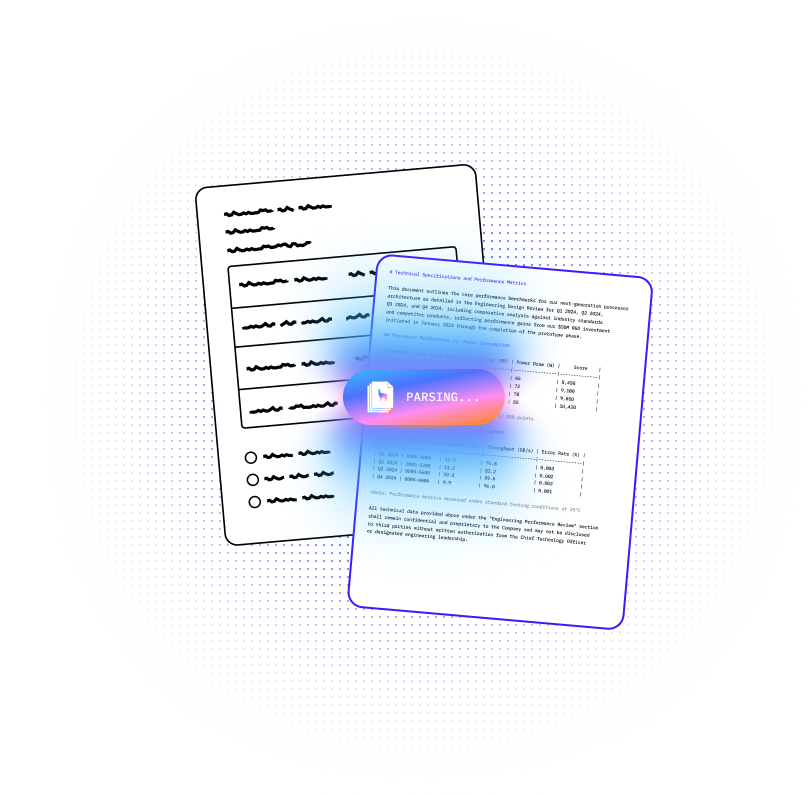
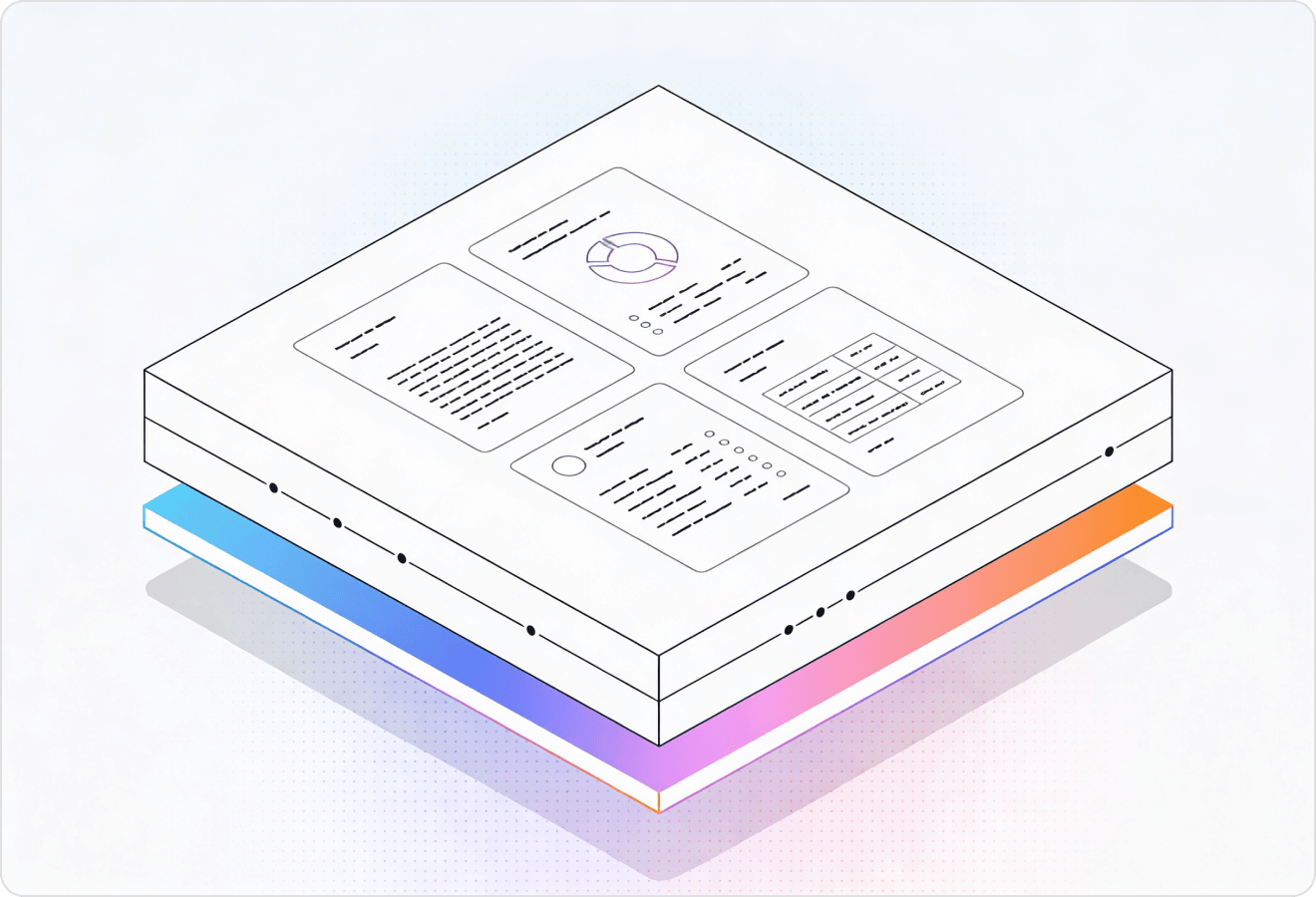
LlamaParse turns messy lab test PDFs and scans into clean, structured JSON or tables automatically, so results flow straight into your systems. Its agentic document parsing understands layout, units, and reference ranges, then validates extractions with citations and confidence for fast review.
Best-in-Class Accuracy

Turn messy lab PDFs and scanned panels into clean, layout-preserving JSON and Markdown so test names, reference ranges, flags, and units land in the right fields. LlamaParse extracts complex tables reliably and attaches page-level metadata for auditability, reducing manual data entry and cutting report turnaround time.

Automate ingestion of lab test reports for pre-auth and claim review by extracting the exact values, dates, and ordering provider details that reviewers typically hunt for line-by-line. Natural-language parsing instructions let you standardize outputs across hundreds of lab formats without brittle rules, speeding adjudication and reducing rework from misread tables.

Convert lab result reports into analysis-ready datasets by preserving reading order and reconstructing multi-column sections, footnotes, and abnormality markers that commonly break legacy extraction. Multimodal parsing captures embedded charts and measurements as structured tables, enabling faster site monitoring and cleaner downstream QC.

Ship an end-user “upload your lab report” workflow that reliably normalizes biomarkers across labs into a consistent schema for dashboards, alerts, and personalization. LlamaParse’s tier-based processing and cost controls keep unit economics predictable while auto-correction loops reduce support tickets caused by bad extractions.
The Solution
01
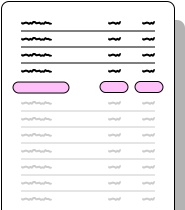
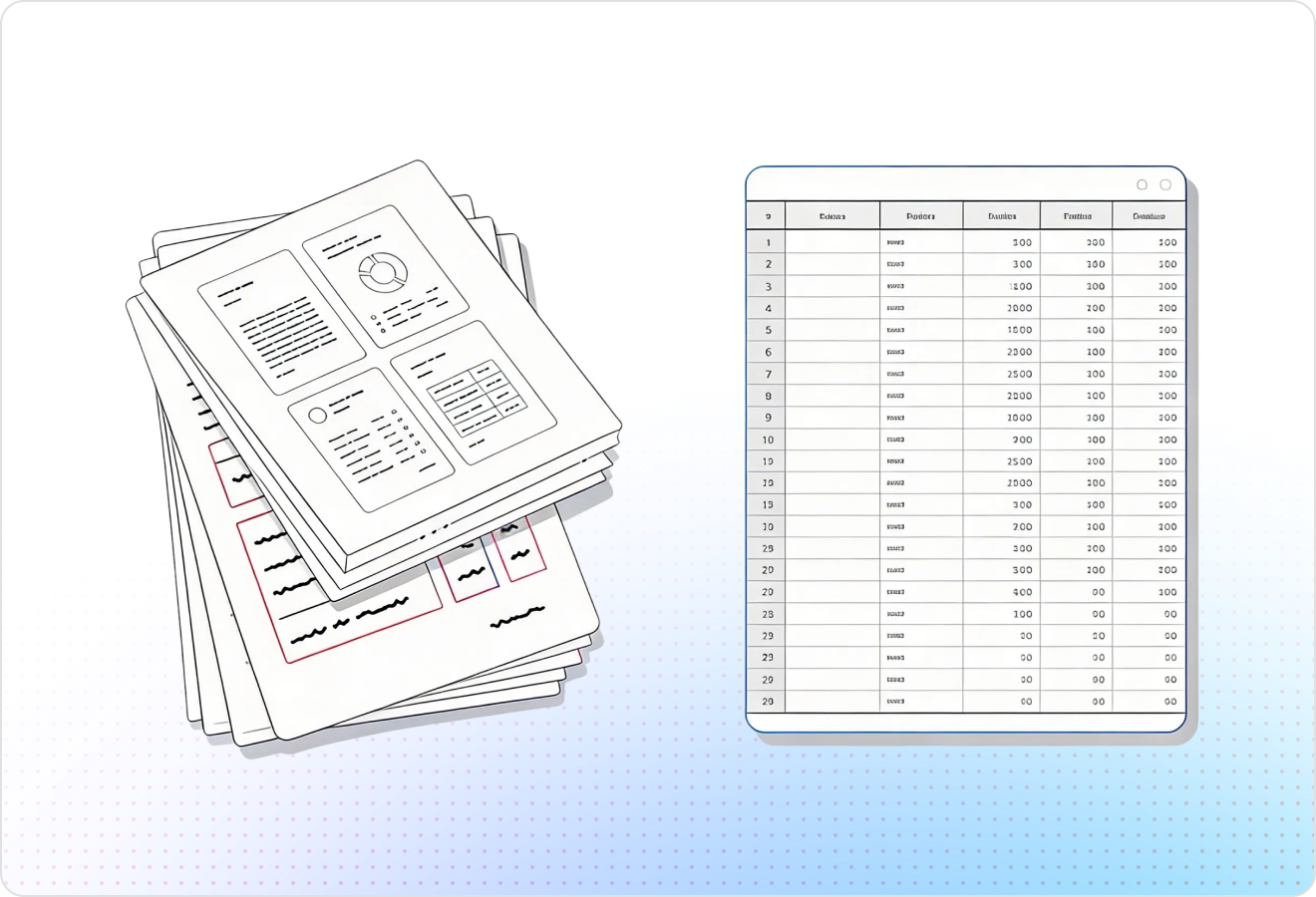
LlamaParse detects page structure and reliably extracts lab result tables without scrambling rows, units, or reference ranges. This makes it straightforward to turn multi-column lab reports into clean, reviewable outputs instead of brittle post-processing.
02
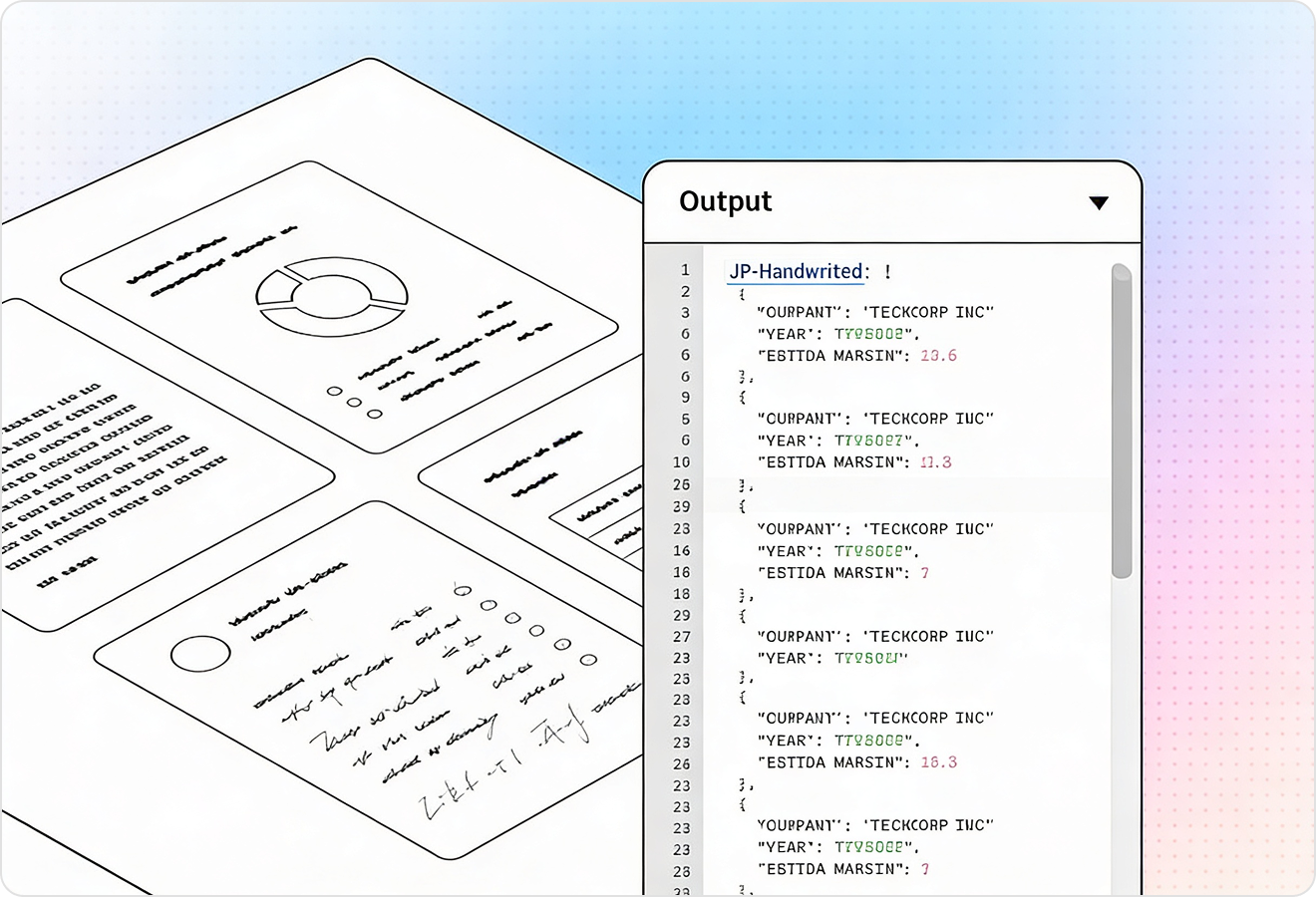
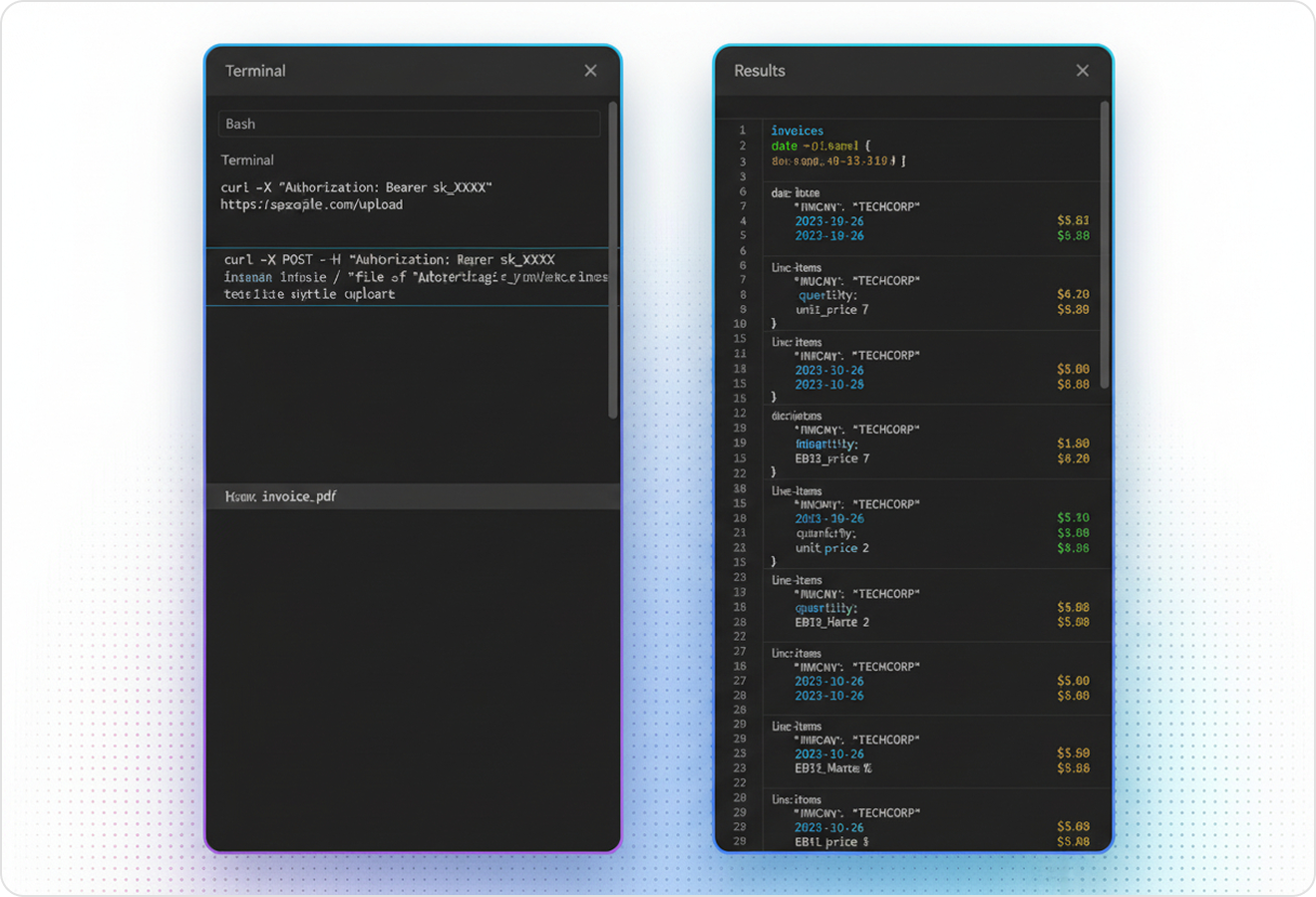
JSON Mode returns structured fields with granular metadata like page numbers, element types, and coordinates for each extracted value. For lab test reports, that traceability helps you map results into your database and keep a clear audit trail back to the source document.
03
LlamaParse can interpret visual elements like trend charts, flagged markers, and embedded images that commonly appear in lab reports. You get the context around results (e.g., historical ranges or abnormal indicators) captured alongside the text, not lost in a flat extraction.
04
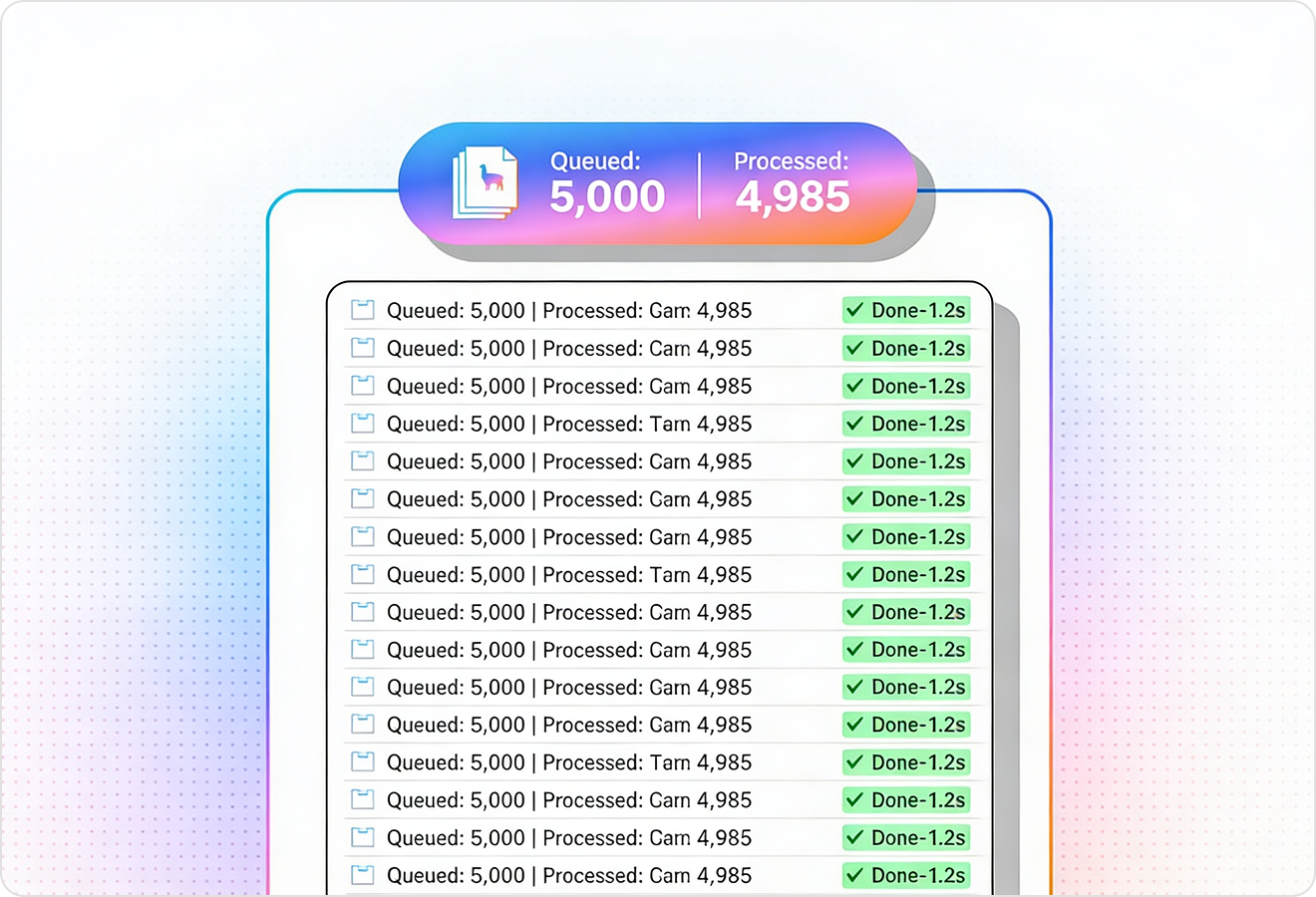
Agentic validation loops cross-check and self-correct common extraction failures like swapped columns, dropped negatives, or malformed units. That reduces manual QA on high-stakes lab values and increases straight-through processing on noisy scans and faxes.
Technical OCR documentation
Explore our developer guides to easily connect your document pipelines to LlamaParse.
Explore the documentation
Our AI catches the typos that tired eyes miss.

Export to Excel, JSON, XML, or directly via API.

SOC2 Type II compliant with end-to-end encryption.

Train the tool on your specific forms in minutes, not days.

Average processing time of <3 seconds per page.
LlamaParse’s support of a wide variety of filetypes and its accuracy of parsing made it the best tool we tested in our evaluations. The LlamaIndex team was very responsive and we were off to the races within a day.
Common FAQs
01
Yes. Our layout-aware table capture preserves the structure of multi-column lab tables so analytes, values, units, and reference ranges stay correctly aligned. You get clean, reviewable outputs without brittle manual reformatting.
02
You can export schema-ready JSON designed for downstream systems. Each extracted value includes granular metadata (like page number and coordinates), making it straightforward to map fields reliably and maintain traceability.
03
Our multimodal understanding interprets common report visuals such as trend charts, flagged markers, and embedded images. That means you capture clinical context alongside the text instead of losing it in a flat OCR pass.
04
How accurate is it on noisy scans, faxes, or low-quality PDFs?
Validation and auto-correction loops catch frequent OCR failure modes like swapped columns, missing negatives, or malformed units. This reduces manual QA and improves straight-through processing, even when inputs are less than perfect.
05
Can I audit or verify where each extracted value came from in the original document?
Yes—every value can include provenance data such as page references, element types, and positional coordinates. This makes review faster and supports compliance by providing a clear audit trail back to the source report.
06
How do we prevent costly mistakes like a dropped negative sign or the wrong unit being captured?
The system automatically validates extracted values and applies self-corrections when it detects inconsistencies (for example, unexpected unit formats or column shifts). You can also route low-confidence items for review, so high-stakes lab values get the scrutiny they deserve.