Nov 14, 2025
Document AI: The Next Evolution of Intelligent Document ProcessingPersona
Industry
Use cases
ID Card Digitization OCR
[ ID Card Digitization OCR ]

Use LlamaParse to capture fields accurately from messy photos, with layout-aware checks and confidence scores.
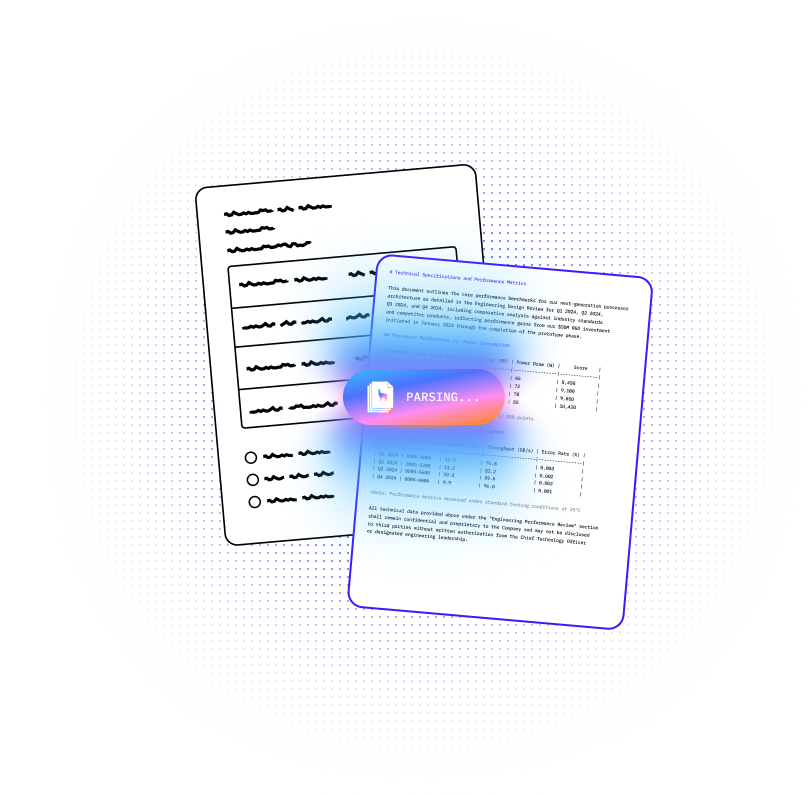
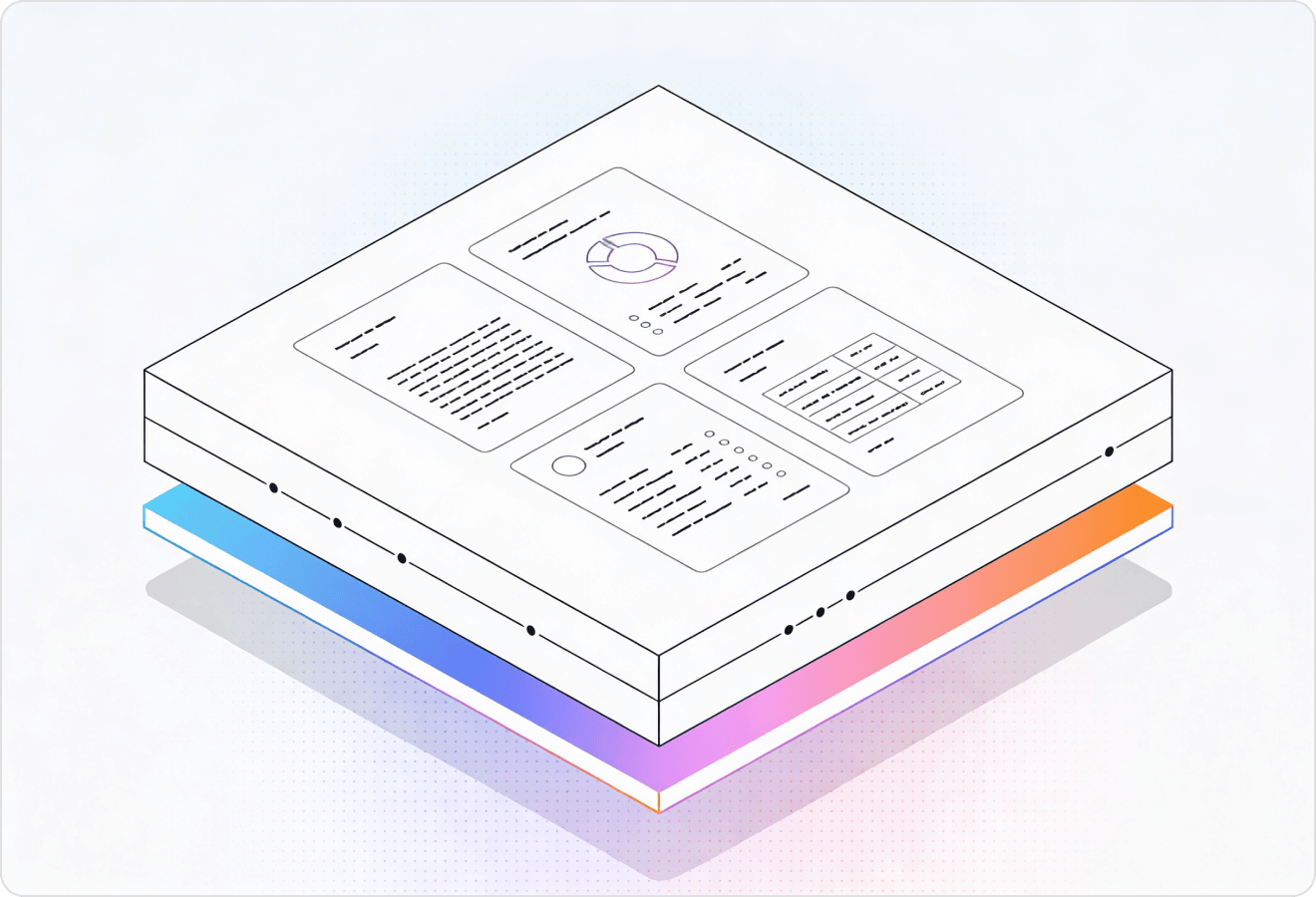

LlamaParse turns messy ID scans into clean, structured fields like name, number, and expiration date, ready for your verification workflows. Agentic document parsing stays reliable across glare, skew, and changing templates, and returns confidence metadata for faster review and fewer rechecks.
Best-in-Class Accuracy

Turn user-uploaded ID photos into structured JSON in minutes so your onboarding and KYC flows don’t rely on brittle parsing scripts. LlamaParse handles rotated images, glare, and inconsistent layouts with validation loops and confidence metadata, reducing manual review without slowing growth.

Digitize IDs from account opening, branch intake, and loan packets while preserving field-level traceability for audits and exception handling. LlamaParse’s layout-aware extraction keeps names, document numbers, and addresses aligned to the right fields across mixed templates, cutting rework and downstream compliance risk.

Automatically extract patient ID details from intake packets and attach citations to the exact page region to support front-desk verification and faster check-in. Multimodal parsing captures ID images alongside supporting documents in one workflow, reducing transcription errors that lead to claim denials and mismatched records.

Parse passports and national IDs from kiosk scans and mobile uploads while preserving reading order and nonstandard layouts like MRZ zones and multi-line addresses. With tier-based processing, you can route clean scans cheaply and escalate only the hard cases, keeping check-in fast while controlling per-guest processing costs.
The Solution
01
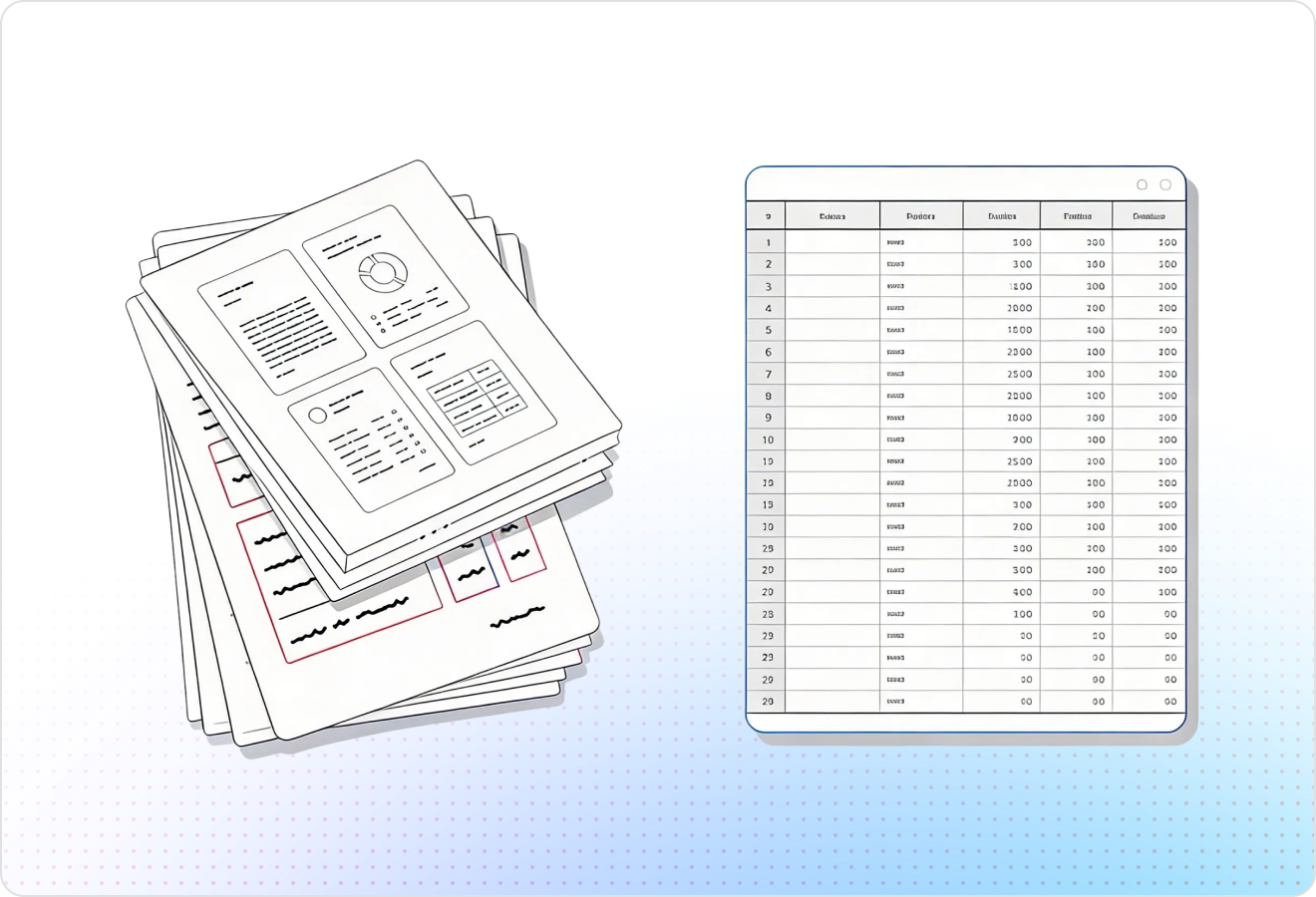
LlamaParse uses layout-aware vision to preserve reading order and isolate tightly packed ID-card regions like name blocks, address lines, and signature areas. This prevents the common “scrambled text” problem on cards with dense typography, microprint, or mixed front/back scans.
02
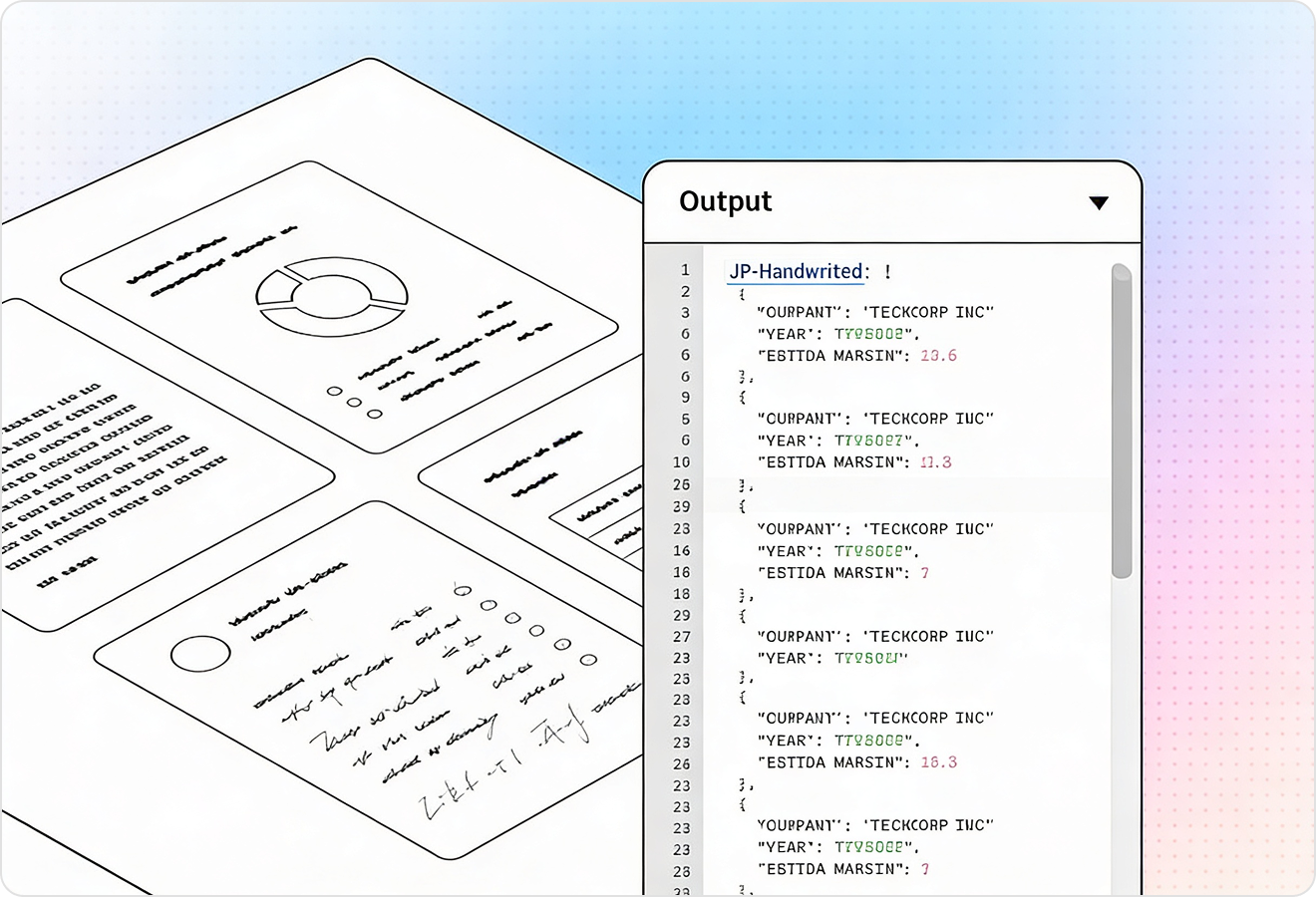
LlamaParse can interpret non-text visual elements on ID cards—portraits, emblems, barcodes/QR regions, and stamped marks—alongside the printed fields. That means your digitization pipeline can extract the full card context instead of only the easy text, which improves downstream verification and matching.
03
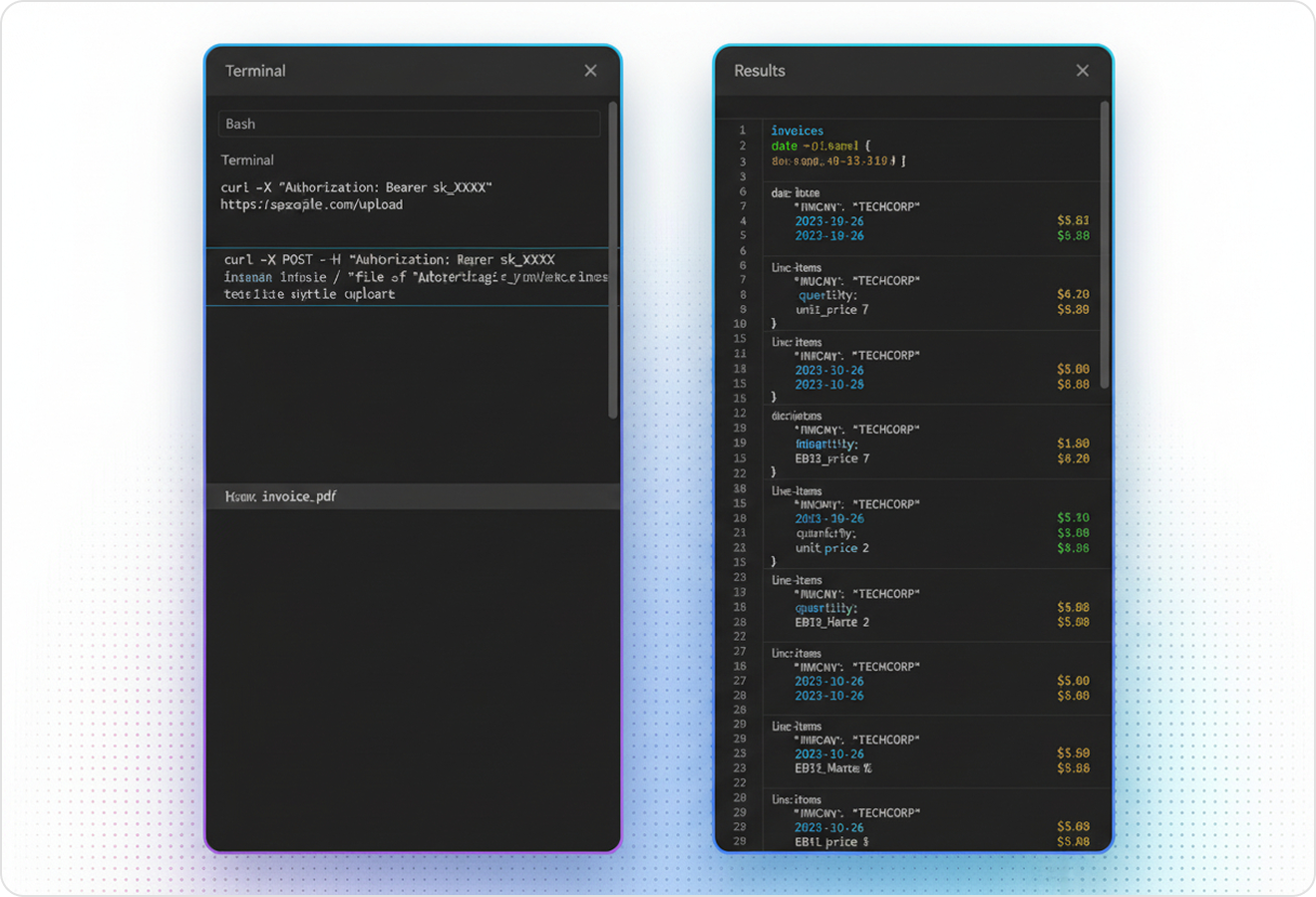
LlamaParse returns structured JSON with granular metadata like page numbers, element types, and bounding boxes for extracted fields. For ID card digitization, this makes it straightforward to map values back to exact on-card locations for audit trails, UI highlighting, and human review.
04
LlamaParse runs self-correction and validation loops to catch common extraction failures like swapped characters, partial dates, or truncated ID numbers from low-quality scans. This increases straight-through processing for ID intake workflows and reduces manual QC on edge cases.
Technical OCR documentation
Explore our developer guides to easily connect your document pipelines to LlamaParse.
Explore the documentation
Our AI catches the typos that tired eyes miss.

Export to Excel, JSON, XML, or directly via API.

SOC2 Type II compliant with end-to-end encryption.

Train the tool on your specific forms in minutes, not days.

Average processing time of <3 seconds per page.
LlamaParse’s support of a wide variety of filetypes and its accuracy of parsing made it the best tool we tested in our evaluations. The LlamaIndex team was very responsive and we were off to the races within a day.
Common FAQs
01
Our layout-aware capture preserves reading order and isolates tight regions like name blocks, address lines, and signature areas. This reduces common errors from dense typography and helps ensure fields land in the right place the first time.
02
Yes. The system interprets non-text elements such as portraits, emblems, barcode/QR regions, and stamped marks alongside printed fields to provide full card context. That additional context improves downstream verification, matching, and fraud checks.
03
You’ll receive structured JSON output that includes extracted fields plus metadata like element types, page numbers, and bounding boxes. This makes it easy to highlight fields in a review UI, create audit trails, and map values back to exact on-card locations.
04
How does it handle low-quality scans—blur, glare, cut-off edges, or faint printing?
Built-in validation and self-correction loops catch common failures like swapped characters, partial dates, and truncated ID numbers. The result is higher straight-through processing and fewer cases that need manual QC.
05
How accurate are date and ID number extractions, and what safeguards exist against subtle mistakes?
The parser uses validation checks to detect patterns that don’t look right (for example, incomplete dates or inconsistent ID formats) and then re-evaluates the extraction. This reduces silent errors that can slip into downstream systems and cause costly rework.
06
Can we support human review without slowing down our intake workflow?
Yes—coordinates in the JSON let you send reviewers directly to the exact region on the card that produced each value. That speeds up exception handling, keeps reviews consistent, and helps your team resolve edge cases quickly.