Nov 14, 2025
Document AI: The Next Evolution of Intelligent Document ProcessingPersona
Industry
Use cases
Export Declaration OCR
[ Export Declaration OCR ]

Use LlamaParse to capture tables, fields, and layout accurately, so your customs workflows run straight-through.
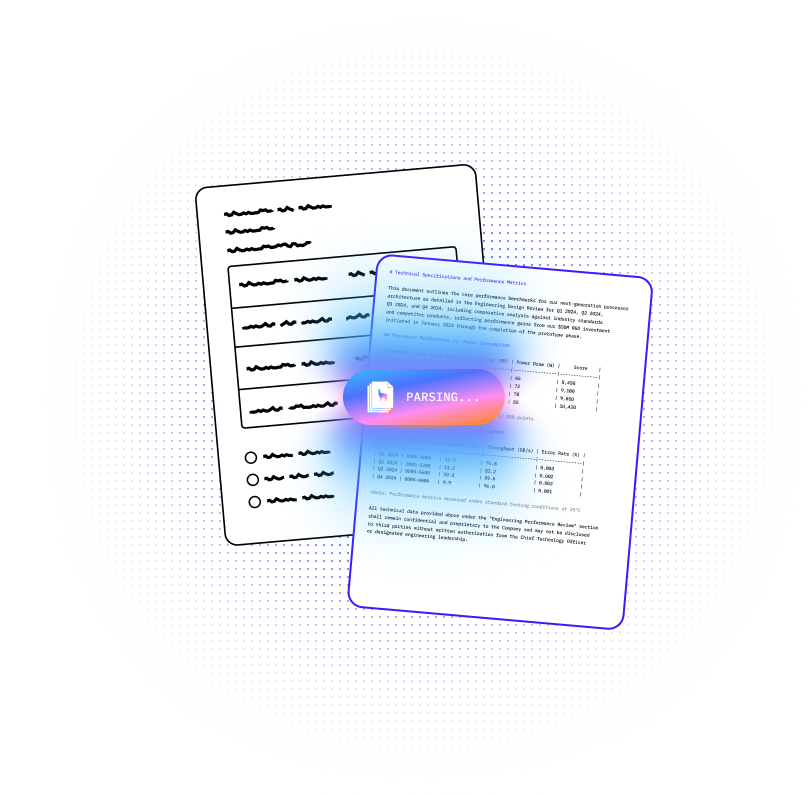

LlamaParse turns export declarations, scans, and PDFs into structured Markdown and JSON you can trust, even when layouts shift or tables get dense. It uses layout-aware vision and validation loops to extract line items, HS codes, and totals with citations, reducing rework and exceptions.
Best-in-Class Accuracy

Turn export declarations, commercial invoices, and packing lists into clean JSON with line-item tables preserved, so teams can auto-populate customs entries without rekeying. LlamaParse stays stable even when forms change layouts and supports audit-ready traceability with page-level metadata for faster exception handling.

Extract critical fields from export declarations to reconcile Letters of Credit and sanctions/KYC checks with fewer manual reviews and fewer missed discrepancies. LlamaParse uses layout-aware parsing and validation loops to reduce costly document rework while keeping outputs structured for downstream systems.

Convert export declarations into standardized, schema-ready data to validate HS codes, country of origin, and licensing requirements before goods ship. LlamaParse reliably captures multi-column sections, stamps, and embedded tables so compliance teams can catch errors early and avoid border holds.

Ship an export-declaration ingestion pipeline fast by using natural-language parsing instructions to produce the exact JSON schema your product needs, without brittle regex or custom cleanup code. Use tier-based processing to keep unit economics predictable as customers upload messy scans, while still upgrading only the pages that require deeper multimodal understanding.
The Solution
01
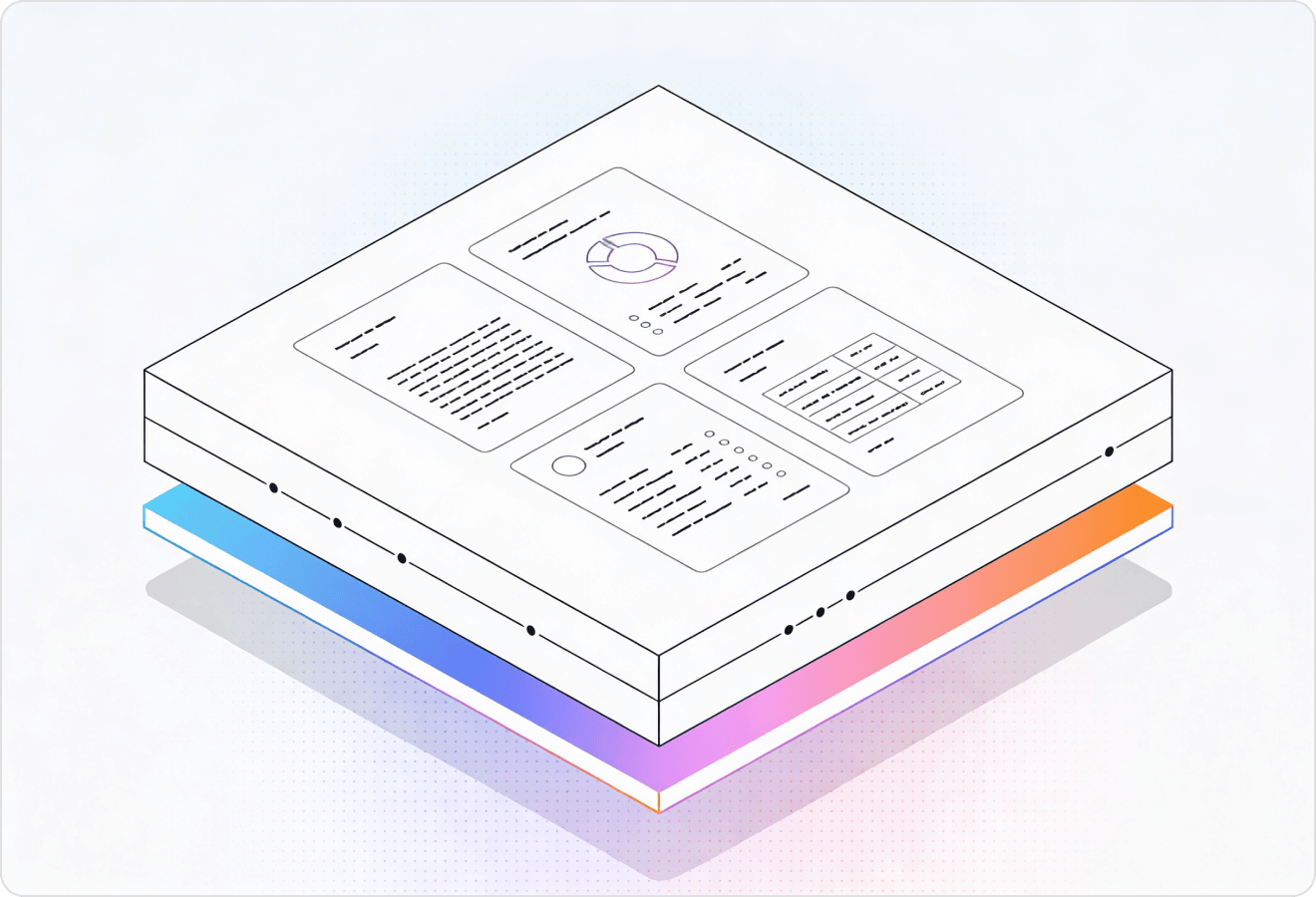
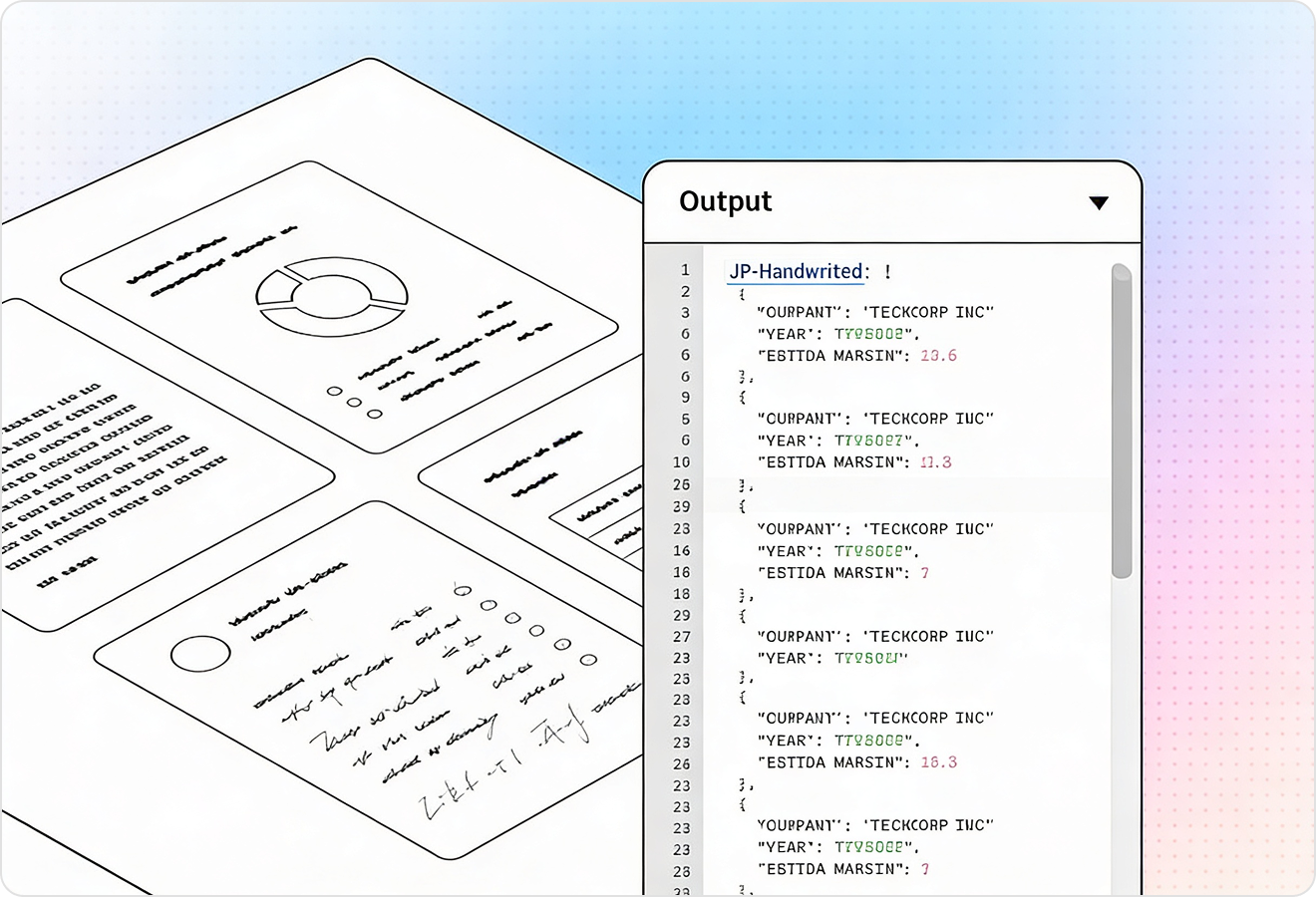
LlamaParse uses layout-aware vision to preserve true reading order across multi-column pages, headers/footers, and dense forms. That means export declarations don’t get scrambled, so field labels, values, and annotations stay aligned for reliable downstream extraction.
02
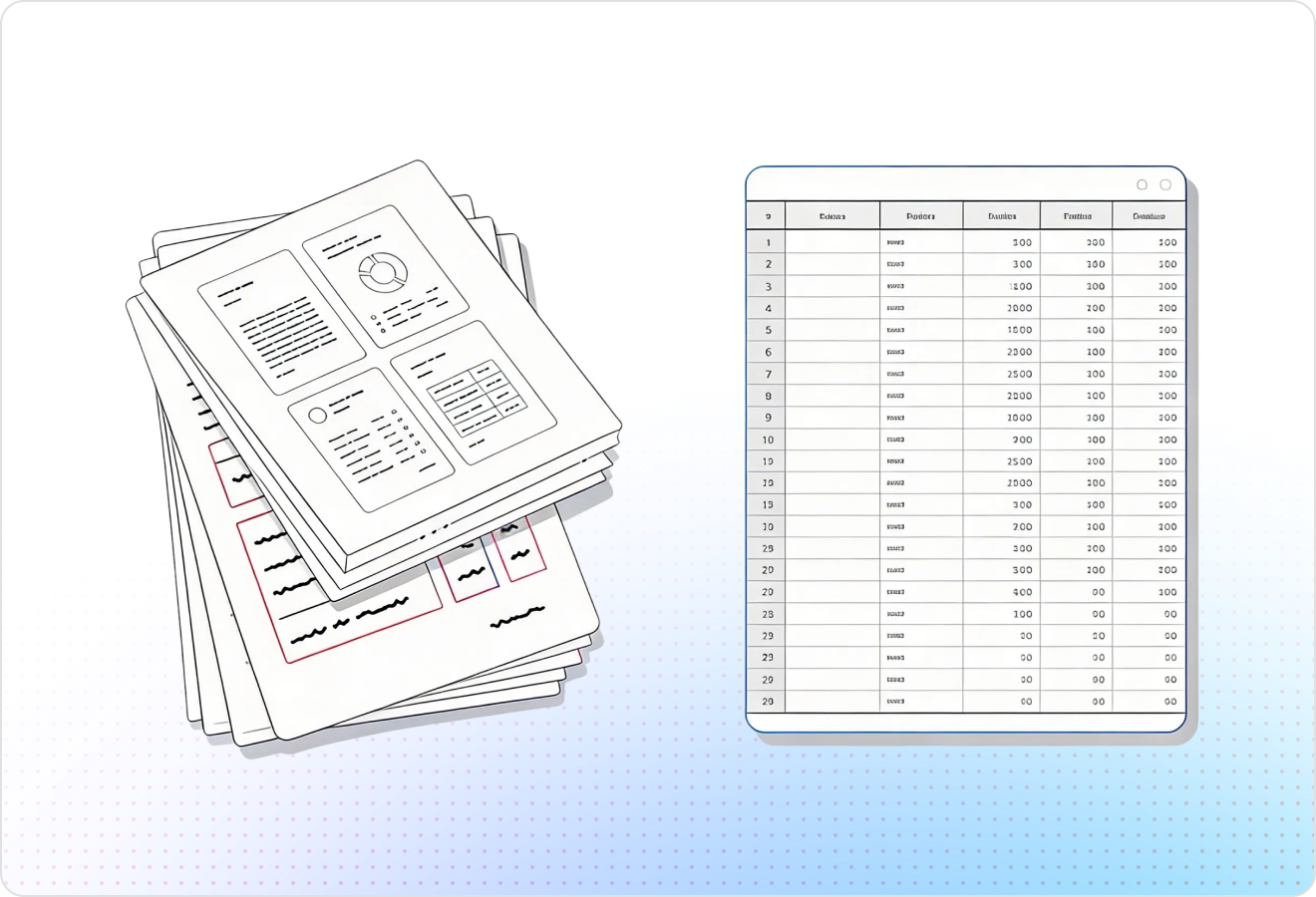
LlamaParse accurately reconstructs complex tables and nested line items into clean, machine-readable structures. For export declarations, this keeps HS codes, quantities, weights, and item descriptions correctly grouped so you can validate and ingest them without brittle post-processing.
03
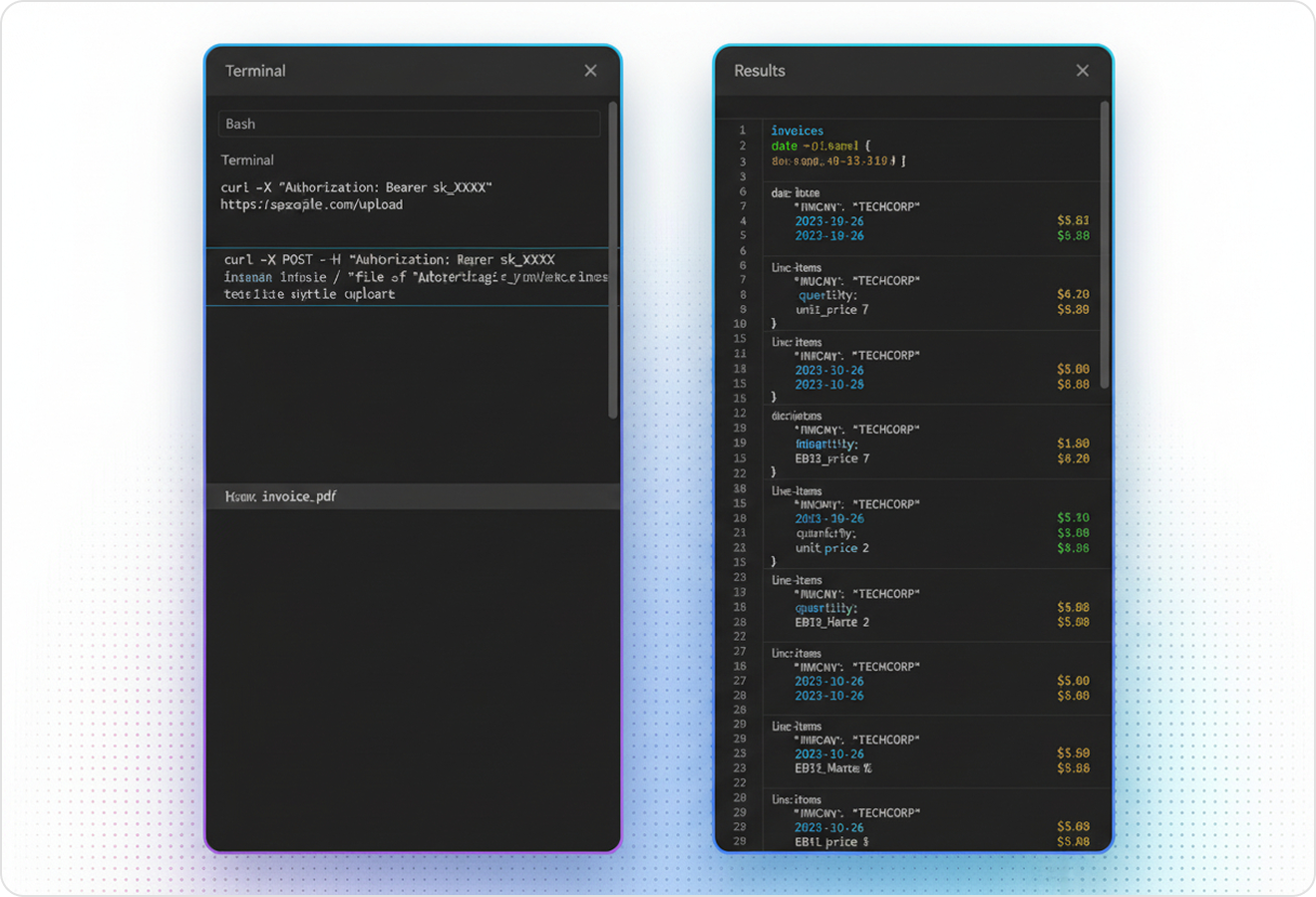
You can provide natural-language parsing instructions to focus the output on the specific fields you care about (e.g., exporter/consignee, invoice numbers, country of origin). This makes export declaration parsing consistent across different templates and carriers, without writing custom regex-heavy cleanup code.
04
LlamaParse can return structured JSON enriched with granular metadata like page numbers and element coordinates. For export declaration workflows, that gives you auditable extraction with citations back to the source region, making exception handling and human review faster.
Technical OCR documentation
Explore our developer guides to easily connect your document pipelines to LlamaParse.
Explore the documentation
Our AI catches the typos that tired eyes miss.

Export to Excel, JSON, XML, or directly via API.

SOC2 Type II compliant with end-to-end encryption.

Train the tool on your specific forms in minutes, not days.

Average processing time of <3 seconds per page.
LlamaParse’s support of a wide variety of filetypes and its accuracy of parsing made it the best tool we tested in our evaluations. The LlamaIndex team was very responsive and we were off to the races within a day.
Common FAQs
01
Yes—our layout-aware reading preserves the true order across multi-column pages, headers/footers, and dense form blocks. That keeps labels, values, and notes aligned so critical fields don’t get scrambled during extraction.
02
It reconstructs complex tables and nested line items into clean, machine-readable structures. HS codes, descriptions, quantities, and weights stay correctly grouped, reducing manual fixes and brittle post-processing.
03
Yes—you can provide simple natural-language instructions to guide which fields are parsed and how they’re returned. This keeps output consistent across different declaration templates and carriers without writing regex-heavy cleanup rules.
04
Do you return structured JSON, and can I trace values back to the original document for audits?
We can return structured JSON enriched with traceability metadata like page numbers and element coordinates. That gives you clickable citations to the exact source region, making audits, exception handling, and human review faster.
05
What happens when a declaration is messy—stamps, handwritten notes, or overlapping annotations?
Layout-aware parsing helps separate fields from noise like stamps and side annotations, so the main content stays intact. When something is ambiguous, traceability metadata makes it easy to route to review with clear evidence from the source.
06
How quickly can we integrate this into our export compliance or customs workflow?
You can start by sending your PDFs and receiving structured JSON that’s ready to validate, ingest, and reconcile with your systems. Most teams go from a pilot to production quickly because the extraction is consistent across formats and reduces downstream normalization work.