Nov 14, 2025
Document AI: The Next Evolution of Intelligent Document ProcessingPersona
Industry
Use cases
Settlement Agreement OCR
[ Settlement Agreement OCR ]

Use LlamaParse to turn complex settlement PDFs into accurate, structured fields with citations and confidence scores.
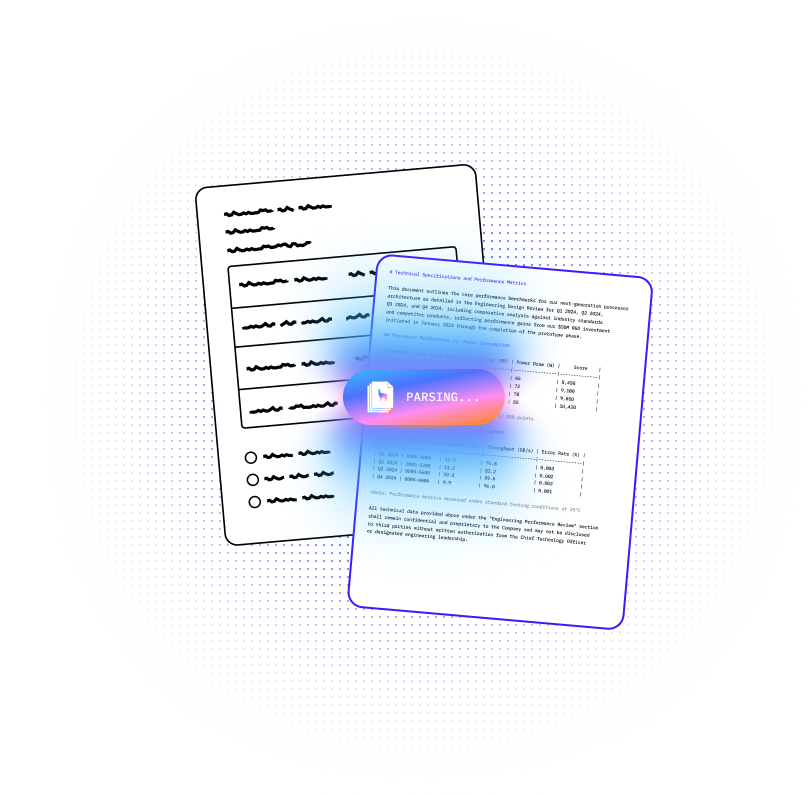
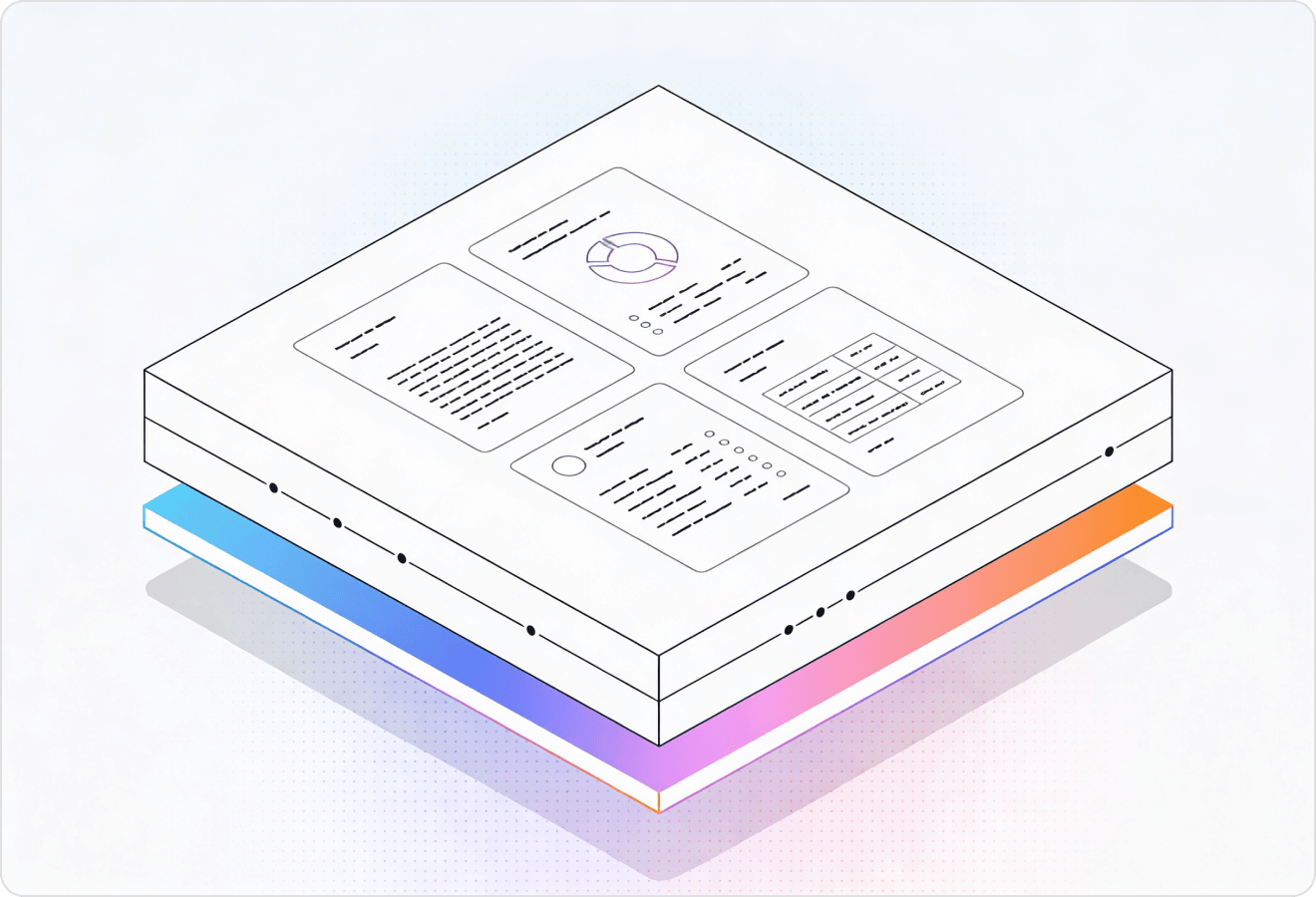

LlamaParse turns messy settlement agreements into clean, structured fields like parties, payment terms, releases, and dates in minutes, not hours. Agentic document parsing understands layout, tables, and scanned pages, then adds confidence signals so your team can verify and move on fast.
Best-in-Class Accuracy

Use LlamaParse in LlamaCloud to turn scanned settlement agreements into clean, citation-backed JSON and Markdown so teams can instantly extract parties, payment terms, releases, and confidentiality clauses without manual review. Layout-aware parsing preserves multi-column clauses, exhibits, and signature blocks, reducing missed obligations and accelerating matter closeout and audit readiness.

Automatically ingest settlement agreements tied to claims and extract structured fields like claimant, liability allocation, lien language, indemnity terms, and payment schedules to keep reserves and payouts accurate. Multimodal parsing and validation loops handle messy scans, stamps, and exhibit tables so adjusters spend less time re-keying and more time resolving exceptions.

Parse employee separation and dispute settlement agreements to populate HRIS fields for severance amounts, non-disparagement, non-compete windows, and revocation deadlines, with page-level traceability for internal review. Natural-language parsing instructions let HR standardize outputs across outside counsel templates without brittle regex or constant retraining when layouts change.

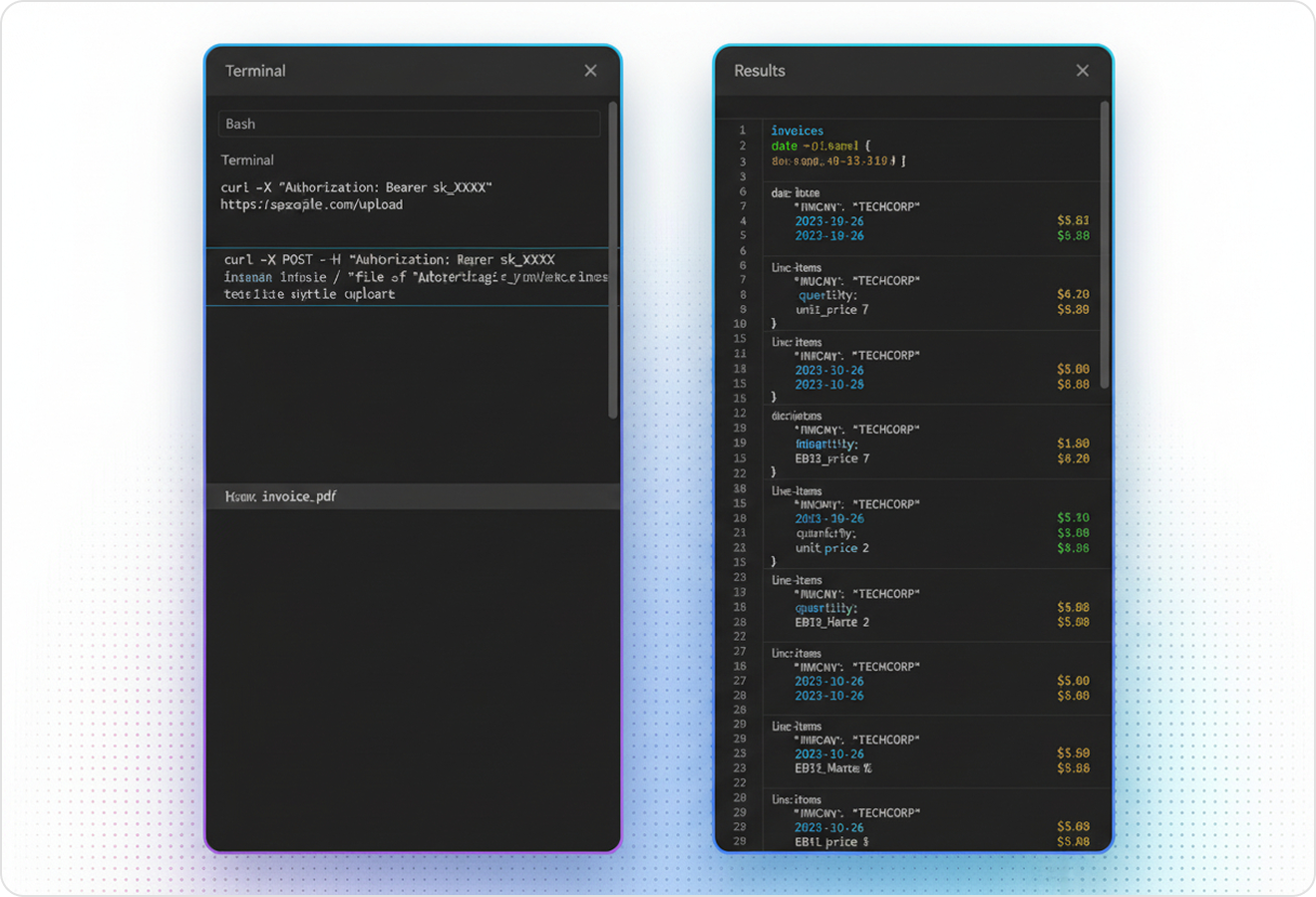
Ship a settlement-agreement intake workflow in days by using LlamaParse APIs to convert PDFs into structured JSON for dashboards, alerts, and approvals, without building custom document-cleaning code. Tier-based agentic processing and cost-optimizer mode keep unit economics predictable while maintaining high accuracy on the handful of complex, image-heavy agreements that break traditional OCR.
The Solution
01
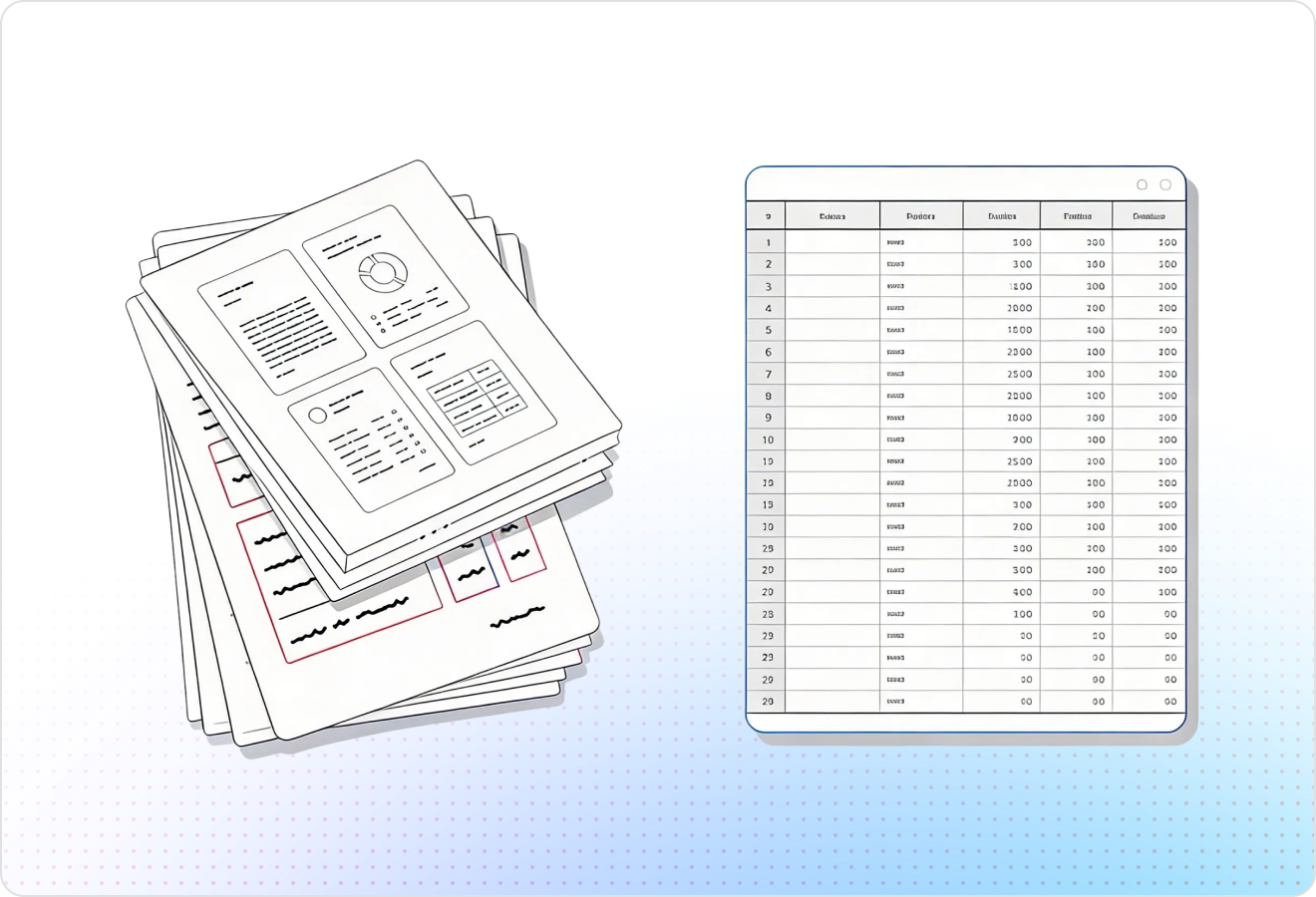
LlamaParse reads settlement agreements with layout-aware vision so multi-column text, headers/footers, and numbered clauses stay in the correct order. That prevents scrambled sections and makes it reliable to extract terms like payment amounts, release scope, and confidentiality language.
02
LlamaParse accurately captures tables and embedded exhibits (e.g., payment schedules, allocations, or addenda) without losing rows, columns, or labels. This makes downstream review and reconciliation faster because structured amounts and dates can be validated programmatically.
03
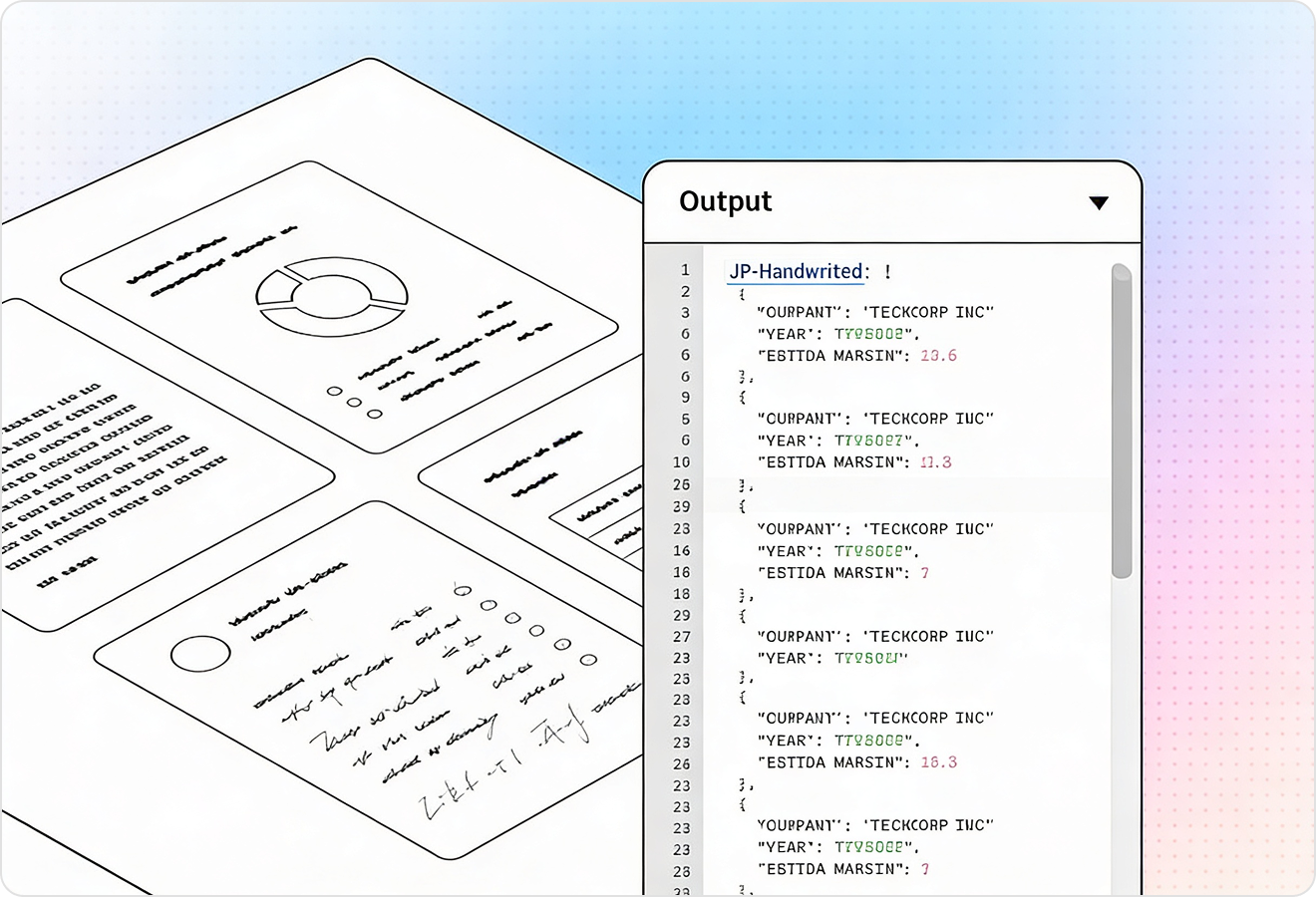
LlamaParse can output settlement agreement data as clean JSON with granular metadata like page references and element coordinates. That traceability helps legal ops teams verify extracted fields (party names, effective date, jurisdiction) and support human-in-the-loop approval.
04
LlamaParse uses validation and self-correction steps to catch common scan issues like missing signatures, broken line items, or hallucinated text. For settlement agreements, this reduces exception handling and improves straight-through processing when documents are messy or inconsistently formatted.
Technical OCR documentation
Explore our developer guides to easily connect your document pipelines to LlamaParse.
Explore the documentation
Our AI catches the typos that tired eyes miss.

Export to Excel, JSON, XML, or directly via API.

SOC2 Type II compliant with end-to-end encryption.

Train the tool on your specific forms in minutes, not days.

Average processing time of <3 seconds per page.
LlamaParse’s support of a wide variety of filetypes and its accuracy of parsing made it the best tool we tested in our evaluations. The LlamaIndex team was very responsive and we were off to the races within a day.
Common FAQs
01
No—layout-aware clause parsing keeps multi-column text, headers/footers, and numbered sections in the correct reading order. That means key terms like payment amounts, release scope, and confidentiality clauses stay attached to the right headings and clause numbers.
02
Yes—tables and embedded exhibits are captured with rows, columns, and labels intact. You get structured amounts and dates you can validate programmatically, which speeds up review and reduces reconciliation errors.
03
Yes—outputs can be delivered as clean JSON designed for downstream automation. You can map fields like party names, effective date, jurisdiction, and payment terms directly into your workflows without manual re-keying.
04
How do we verify extracted fields for legal review and audit purposes?
Each extracted value can include citations such as page references and element coordinates. That traceability makes it easy for legal ops and reviewers to confirm the source text quickly and approve results with confidence.
05
How does it handle messy scans, missing signatures, or broken line items?
Auto-correction loops use validation and self-correction steps to catch common scan issues like missing signature blocks, fragmented table rows, or incorrectly read characters. This reduces exceptions and helps you maintain high straight-through processing even when documents aren’t clean.
06
What settlement agreement terms can it reliably extract?
It’s designed to pull commonly needed terms such as parties, effective date, governing law/jurisdiction, payment amounts and schedules, release language, and confidentiality provisions. Because it preserves clause structure and provides citations, you can quickly confirm nuanced legal language before relying on it operationally.