Nov 14, 2025
Document AI: The Next Evolution of Intelligent Document ProcessingPersona
Industry
Use cases
AI Agent Platform For Documents
[ AI Agent Platform For Documents ]

Use LlamaParse to extract clean JSON from messy files, with citations and confidence you can trust.
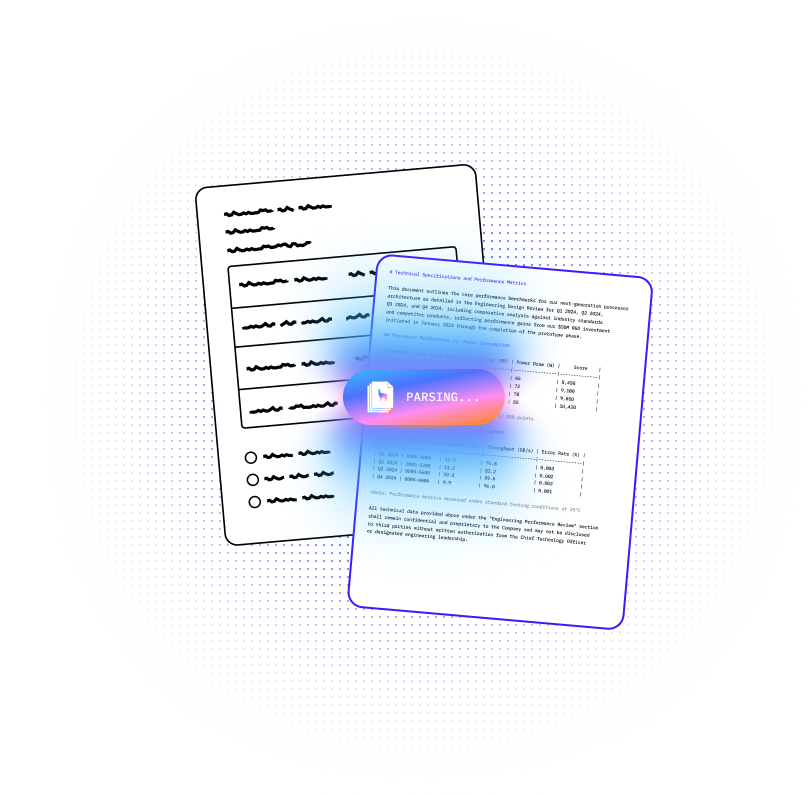
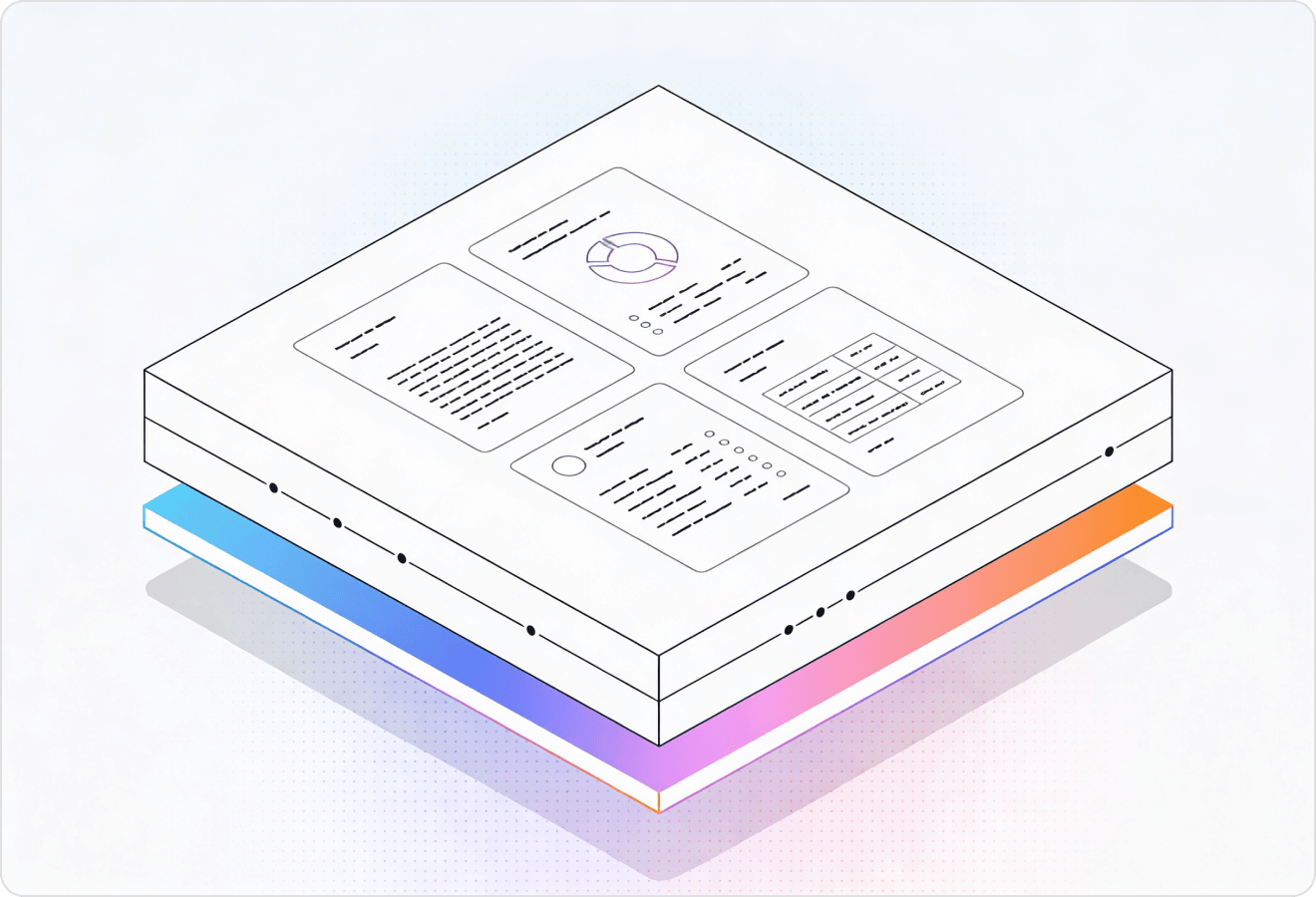

LlamaParse turns messy PDFs, scans, and slide decks into clean Markdown or JSON you can feed straight into enterprise automations and analytics. It uses layout-aware vision and agentic validation loops to capture tables, charts, and citations with confidence scores, reducing rework and exceptions.
Best-in-Class Accuracy

Use LlamaParse to turn messy inbound PDFs (contracts, invoices, security docs, customer uploads) into clean Markdown or JSON in hours—not weeks of brittle parsing code. Tier-based agentic processing keeps costs predictable while auto-correction loops reduce the manual QA that slows down small teams.

Parse FNOL packets, adjuster reports, medical bills, and photo-heavy claim PDFs with layout-aware extraction so tables, line items, and multi-column narratives don’t get scrambled. JSON mode with citations and coordinates gives claims teams audit-ready traceability for faster approvals and fewer disputes.

Convert spec sheets, certificates of analysis, inspection reports, and multi-page supplier documentation into structured outputs that can be automatically checked against tolerances and required fields. Multimodal parsing captures charts, stamped images, and embedded tables so quality teams stop rekeying data and missing exceptions.

Extract clauses, defined terms, obligations, and renewal dates from contracts and exhibits while preserving section structure and reading order for reliable downstream review workflows. Natural-language parsing instructions let teams standardize what gets pulled into a contract database without custom templates or constant rework when formats change.
The Solution
01
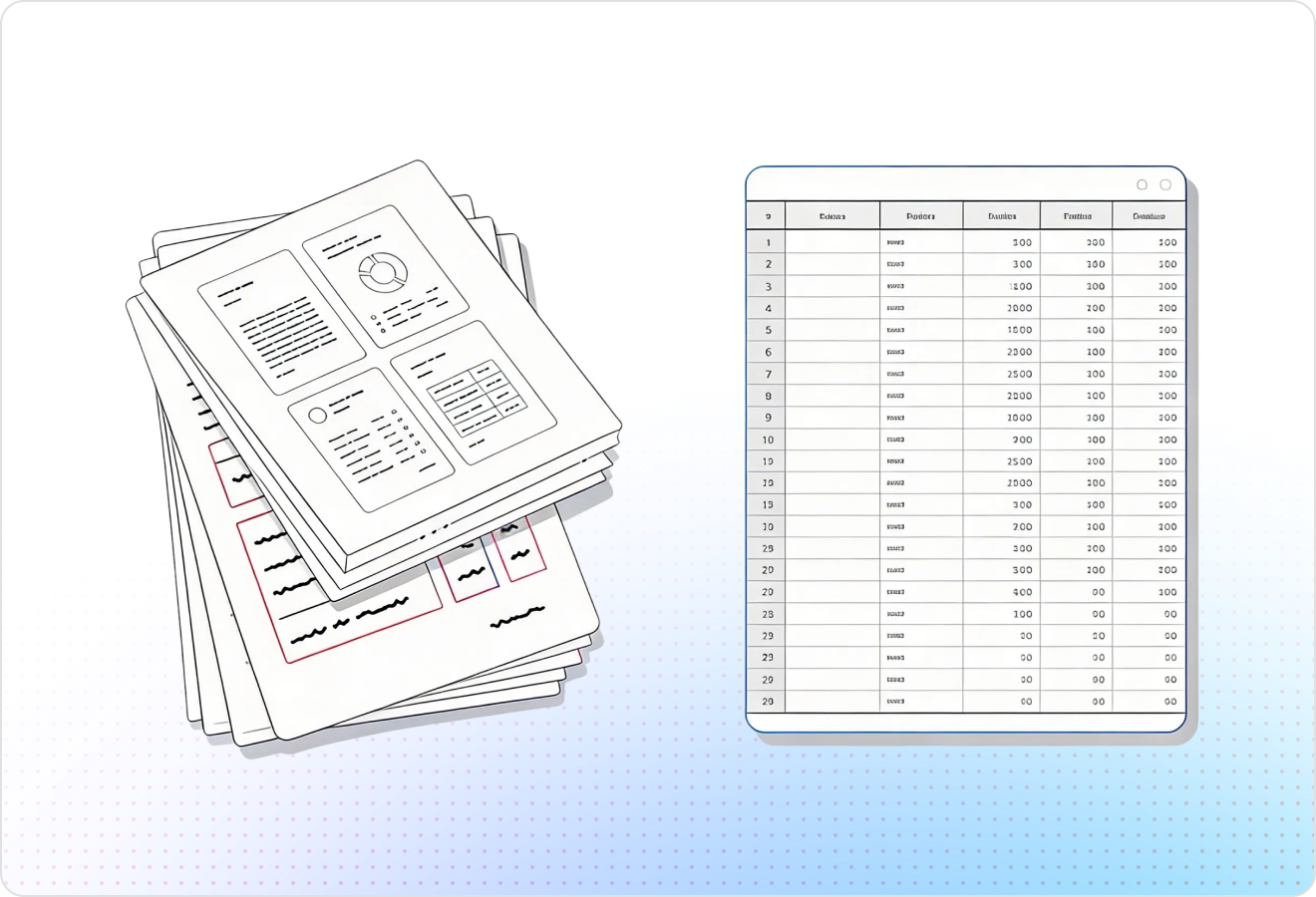
LlamaParse understands real page structure—tables, multi-column layouts, headers, and footnotes—so content doesn’t get scrambled on ingest. That reliability is foundational for an enterprise document AI platform where downstream workflows depend on consistent, audit-friendly extraction.
02
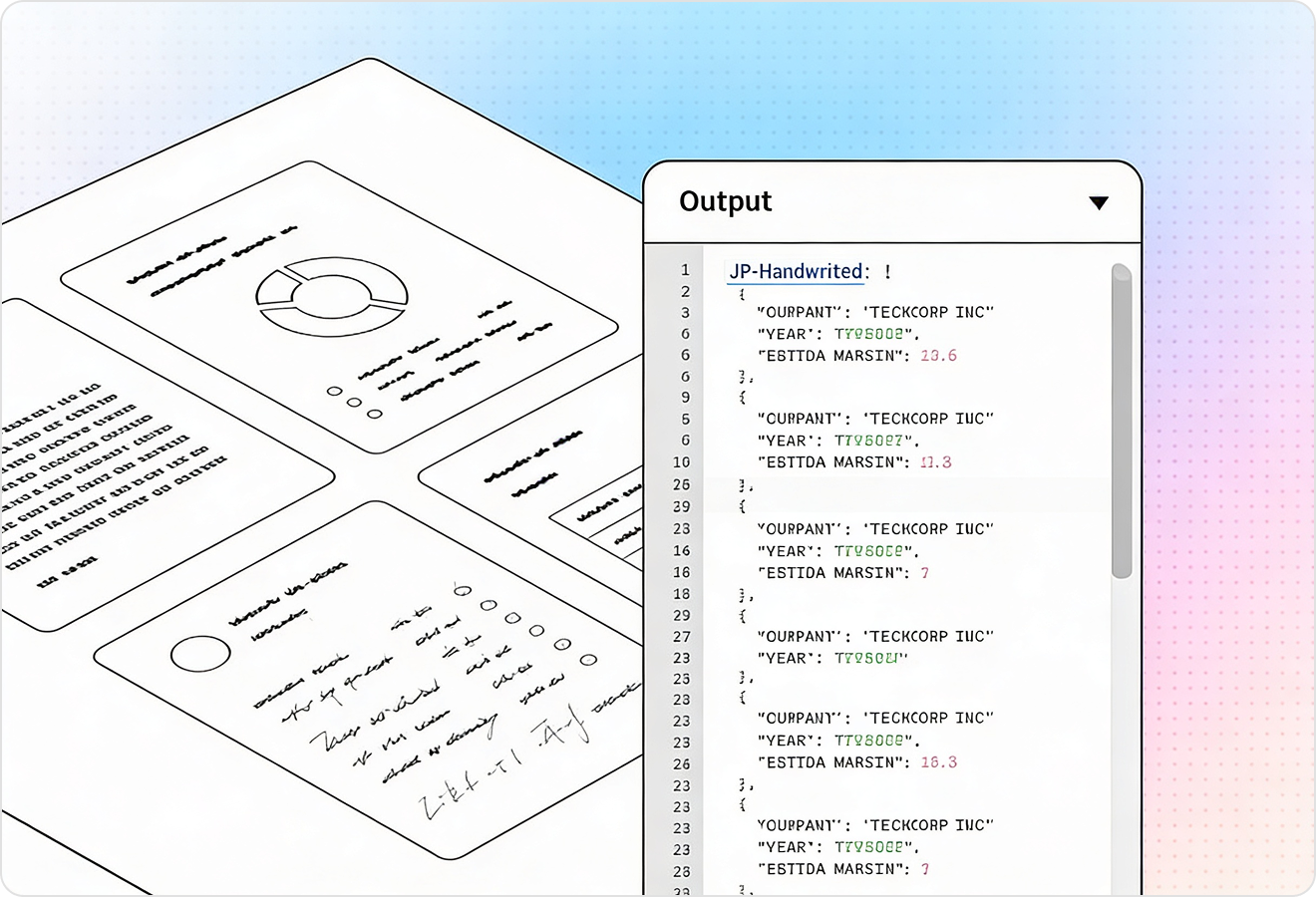
LlamaParse parses charts, images, and math into usable representations like Markdown tables and LaTeX, not just raw text blobs. This lets enterprise teams capture the meaning in financial statements, technical reports, and compliance exhibits without building custom vision pipelines.
03
You can give natural-language instructions to extract and normalize exactly what your business needs (e.g., invoice fields, contract clauses, policy limits) as the document is parsed. This reduces brittle post-processing code and keeps the platform adaptable as document templates change across vendors and regions.
04
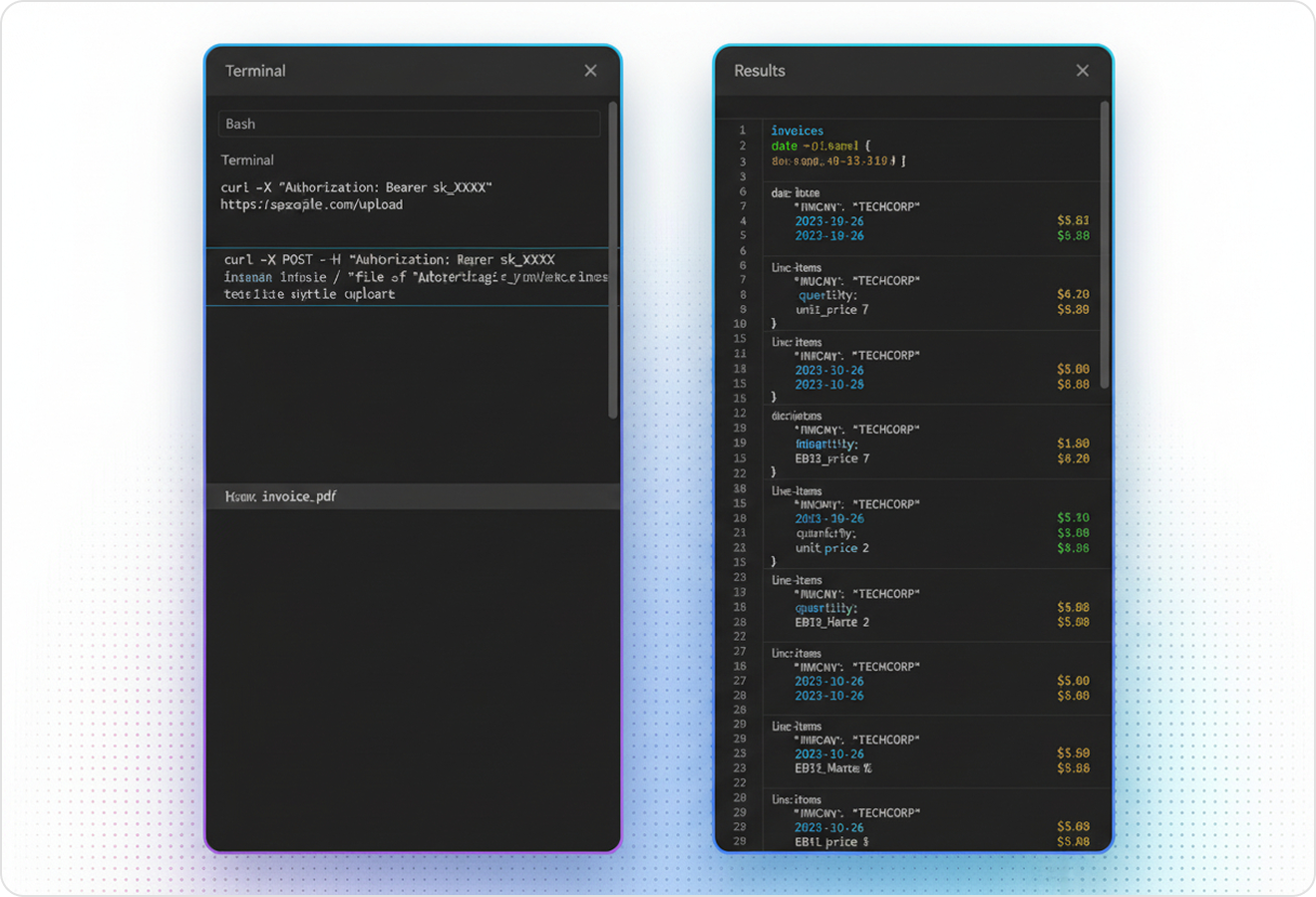
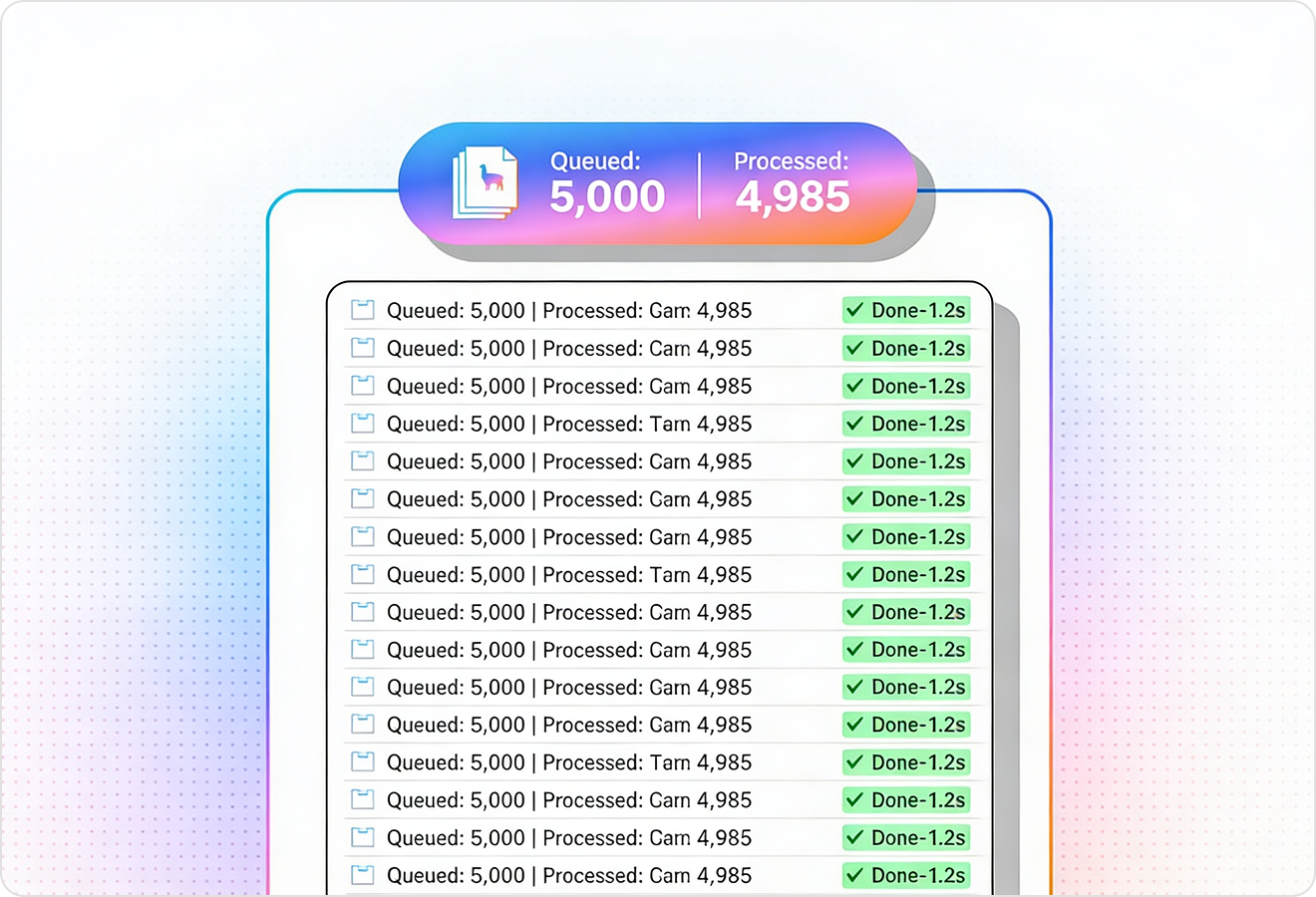
LlamaParse can return structured JSON enriched with granular metadata like page numbers, element types, and spatial coordinates. That traceability supports enterprise requirements for validation, human-in-the-loop review, and reliable integrations into downstream systems and data stores.
Technical OCR documentation
Explore our developer guides to easily connect your document pipelines to LlamaParse.
Explore the documentation
Our AI catches the typos that tired eyes miss.

Export to Excel, JSON, XML, or directly via API.

SOC2 Type II compliant with end-to-end encryption.

Train the tool on your specific forms in minutes, not days.

Average processing time of <3 seconds per page.
LlamaParse’s support of a wide variety of filetypes and its accuracy of parsing made it the best tool we tested in our evaluations. The LlamaIndex team was very responsive and we were off to the races within a day.
Common FAQs
01
It uses layout-aware parsing that understands page structure—tables, columns, headers, and footnotes—so content stays in the right order. This consistency makes downstream automation more reliable and reduces time spent fixing messy ingest outputs.
02
Yes—tables are parsed with structural awareness, which helps preserve rows, columns, and relationships even when formatting is dense or irregular. That means cleaner, audit-friendly outputs you can trust for analytics, reconciliation, and reporting workflows.
03
The platform includes multimodal visual understanding to interpret charts, figures, and equations—not just OCR text. You can get usable representations like Markdown tables and LaTeX, so important meaning isn’t lost in technical and financial documents.
04
How do we extract only the fields we care about without building brittle post-processing rules?
You can provide schema-guided parsing prompts in natural language to extract and normalize specific fields or clauses during parsing. This keeps your pipeline flexible as templates vary across vendors, regions, or versions—without constant code changes.
05
What does the output look like, and can we trace extracted values back to the source document?
Outputs can be returned as structured JSON enriched with page numbers, element types, and spatial coordinates. That traceability supports validation, human review, and easier debugging when something looks off.
06
How does this fit into enterprise workflows that require review, compliance, and system integration?
The platform’s structured JSON plus metadata makes it straightforward to route results into downstream systems and to power human-in-the-loop review where needed. With audit-friendly traceability, teams can meet compliance expectations while still scaling document automation.