Nov 14, 2025
Document AI: The Next Evolution of Intelligent Document ProcessingPersona
Industry
Use cases
Document Extraction API
[ Document Extraction API ]

Use LlamaParse to turn PDFs and scans into reliable JSON with layout-aware accuracy you can trust.
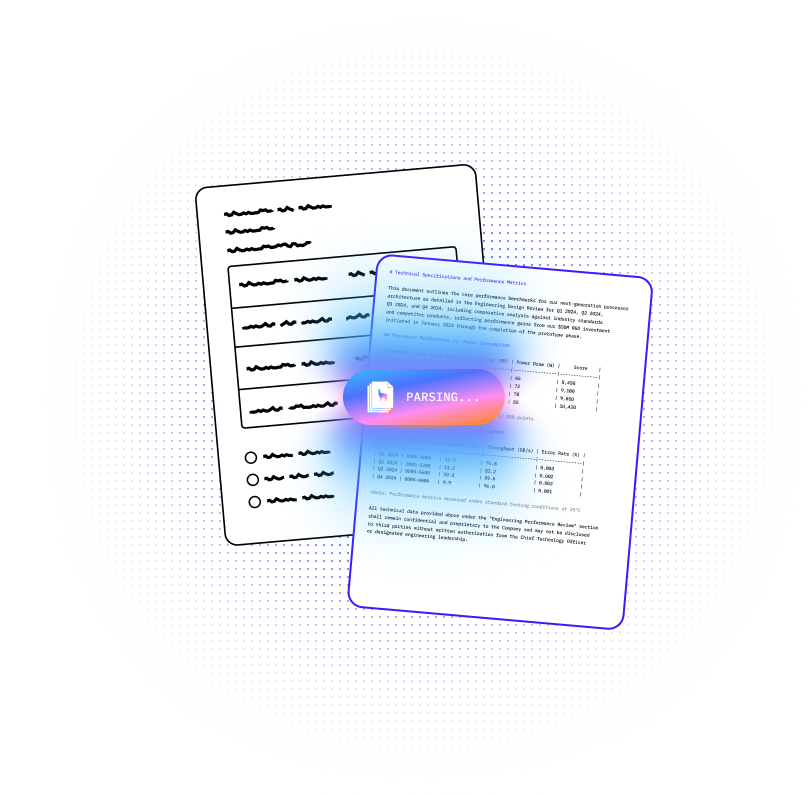
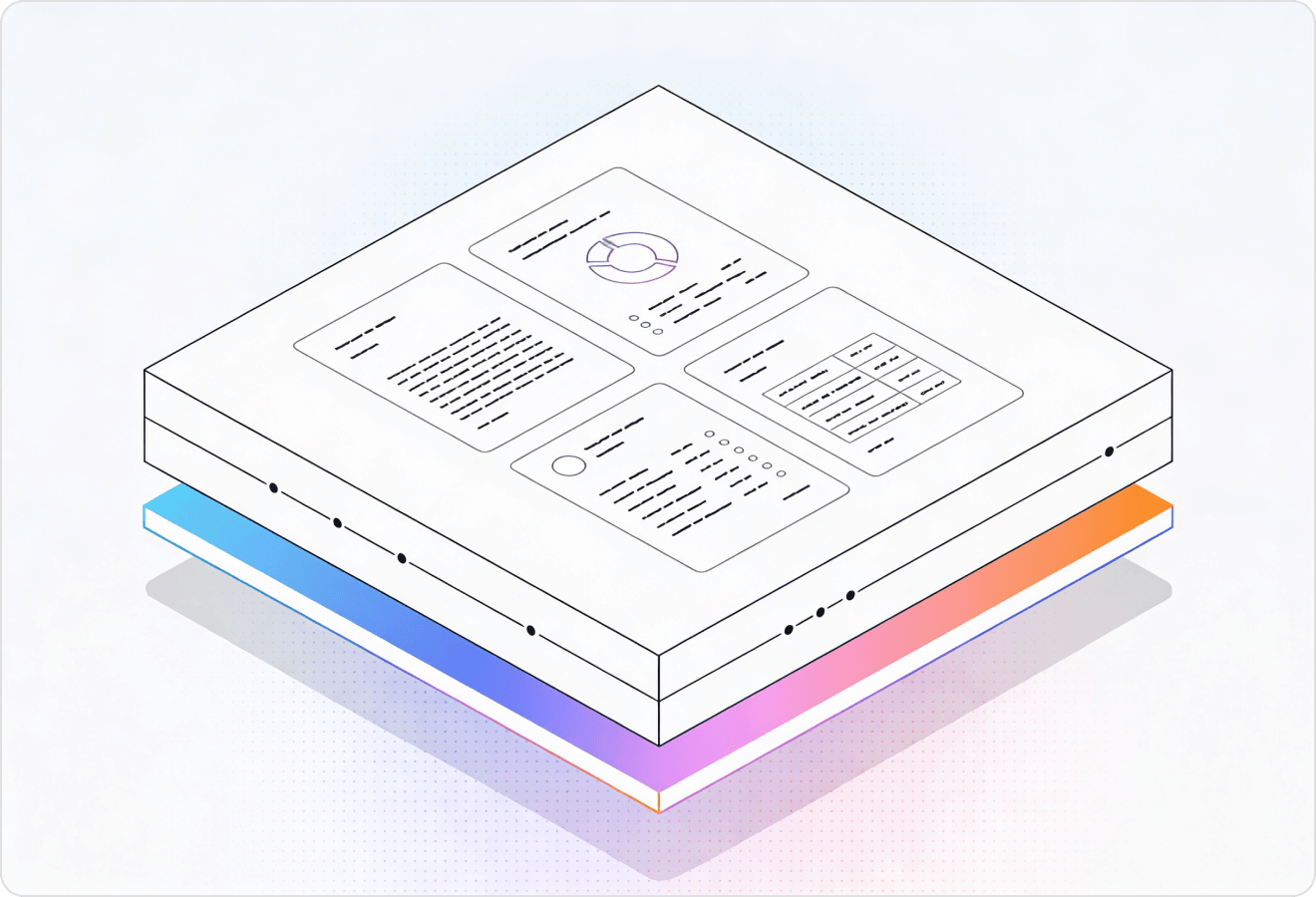

LlamaParse turns messy PDFs, scans, and complex forms into clean, structured JSON or Markdown through a simple API with layout-aware understanding. Agentic parsing uses vision and language models plus validation loops to cut exceptions, add citations and confidence scores, and improve straight-through processing.
Best-in-Class Accuracy

Turn user-uploaded PDFs into clean Markdown or JSON without writing brittle post-processing code, so you can ship onboarding, compliance, and back-office automation fast. LlamaParse preserves reading order and table structure out of the box, which prevents broken extractions that derail demos and early production rollouts.

Extract borrower data from bank statements, pay stubs, tax forms, and multi-page loan packages while keeping tables and multi-column layouts intact for downstream decisioning. JSON mode with granular metadata makes every field traceable back to page and coordinates, reducing disputes and speeding up audit-ready reviews.

Automate intake of bills of lading, commercial invoices, packing lists, and customs forms by reliably pulling line items, HS codes, weights, and Incoterms from dense tables. Natural-language parsing instructions let ops teams standardize outputs across vendors and formats without constantly reworking parsing rules.

Parse protocols, investigator brochures, lab reports, and publications by converting complex tables, charts, and equations into AI-ready Markdown and LaTeX for analysis workflows. Multimodal extraction captures figures and scientific notation accurately, cutting manual data curation time and reducing errors in study documentation.
The Solution
01
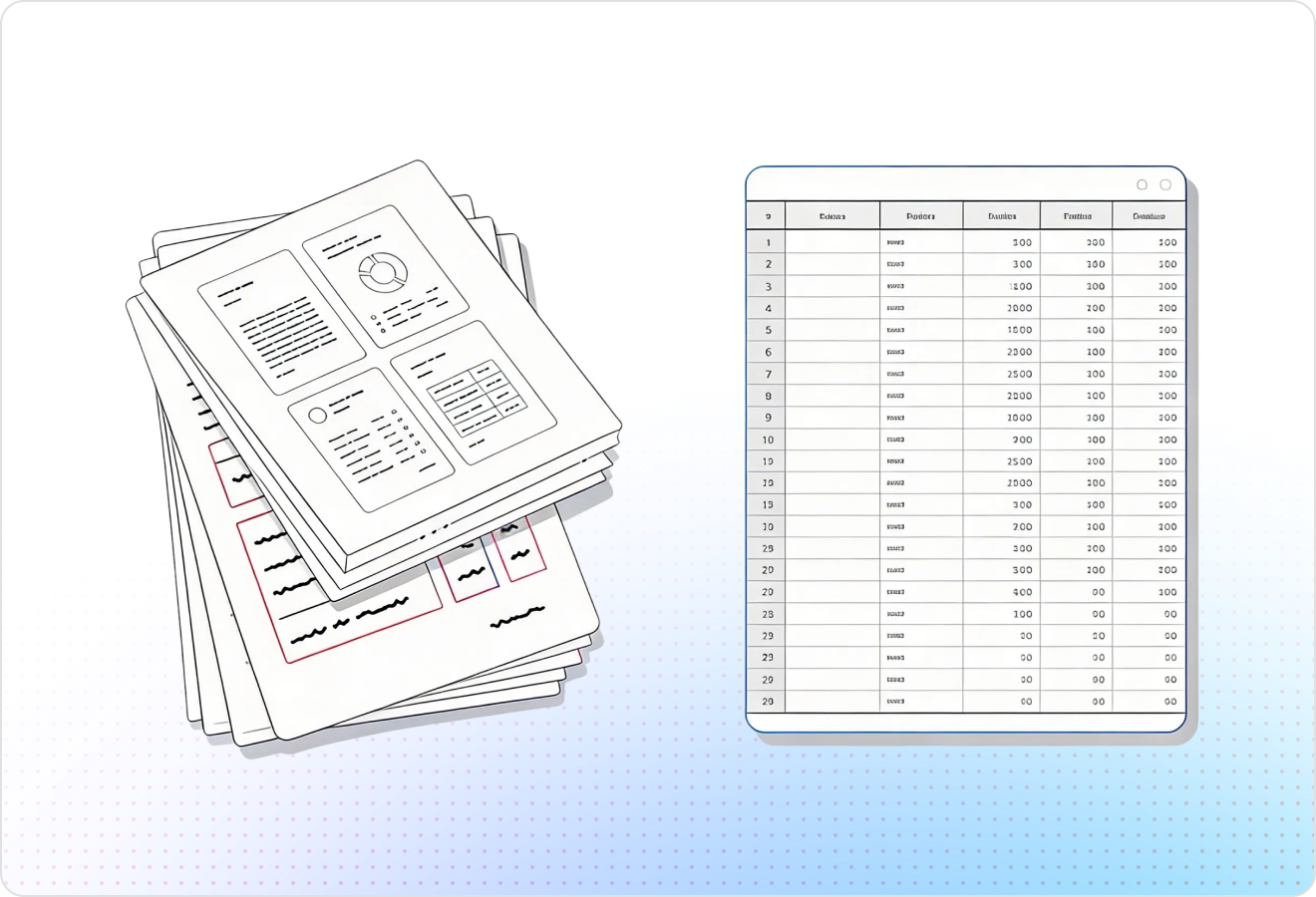
LlamaParse understands page structure so multi-column text, headers/footers, and nested sections come out in the right reading order. For a document extraction API, that means fewer broken payloads and less brittle post-processing when layouts change across customers.
02
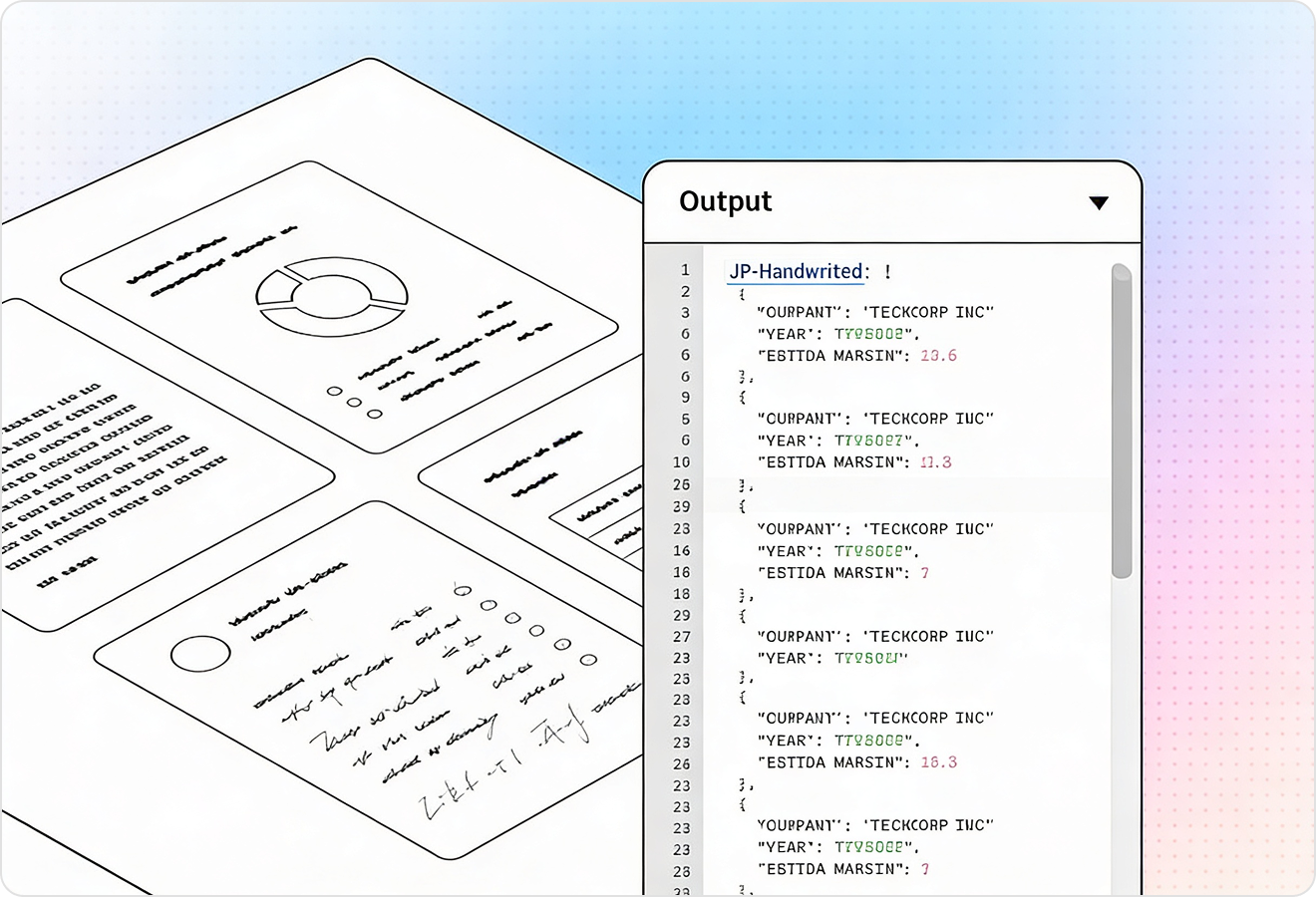
It reliably detects and reconstructs complex tables, including merged cells and multi-level headers, instead of dumping scrambled rows. Your extraction API can return consistent, machine-usable tables for downstream ETL, analytics, and database ingestion.
03
LlamaParse can emit structured JSON with per-element metadata like page number, element type, and coordinates. This makes your extraction API verifiable and debuggable, with traceability back to the exact source region when something looks off.
04
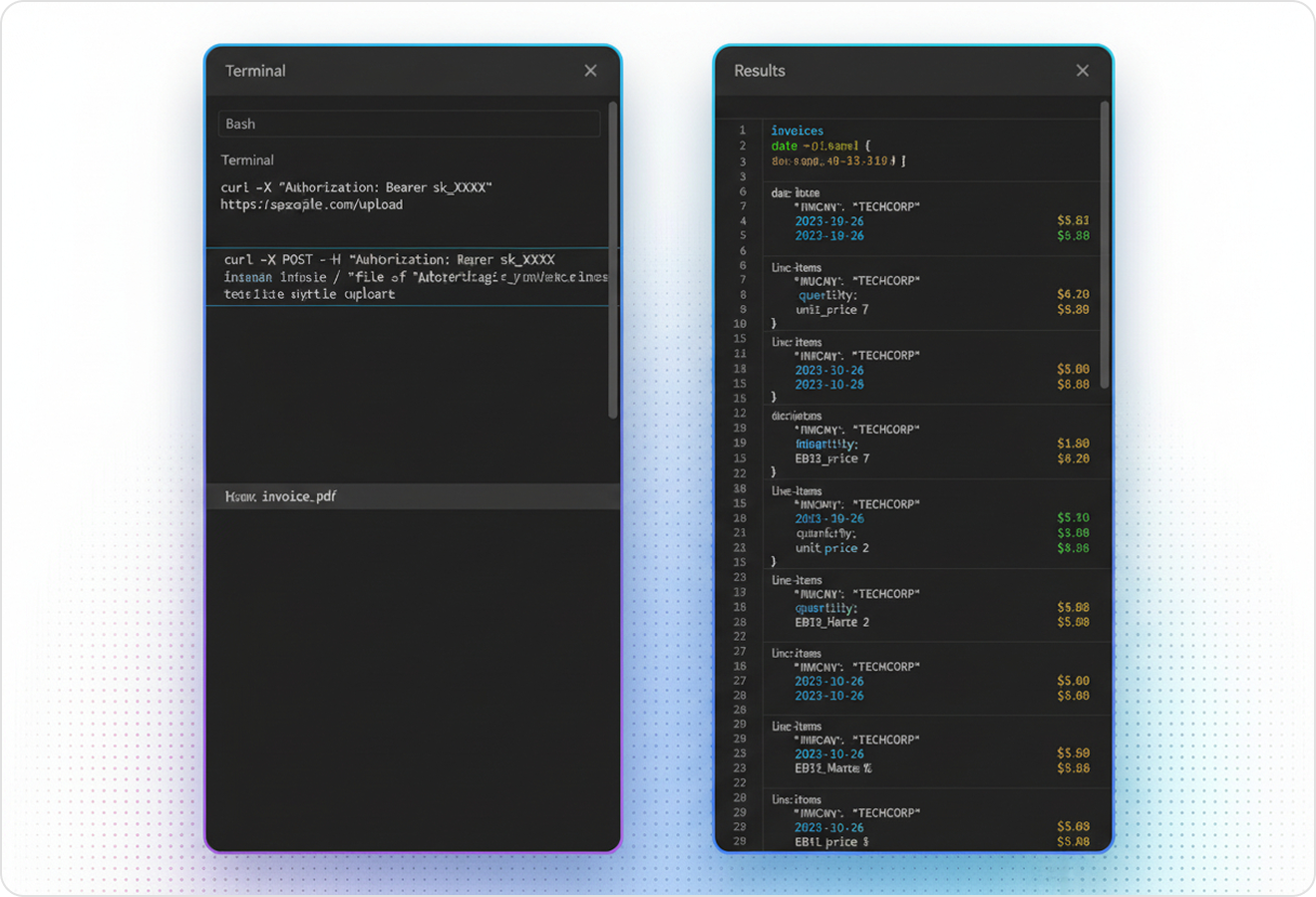
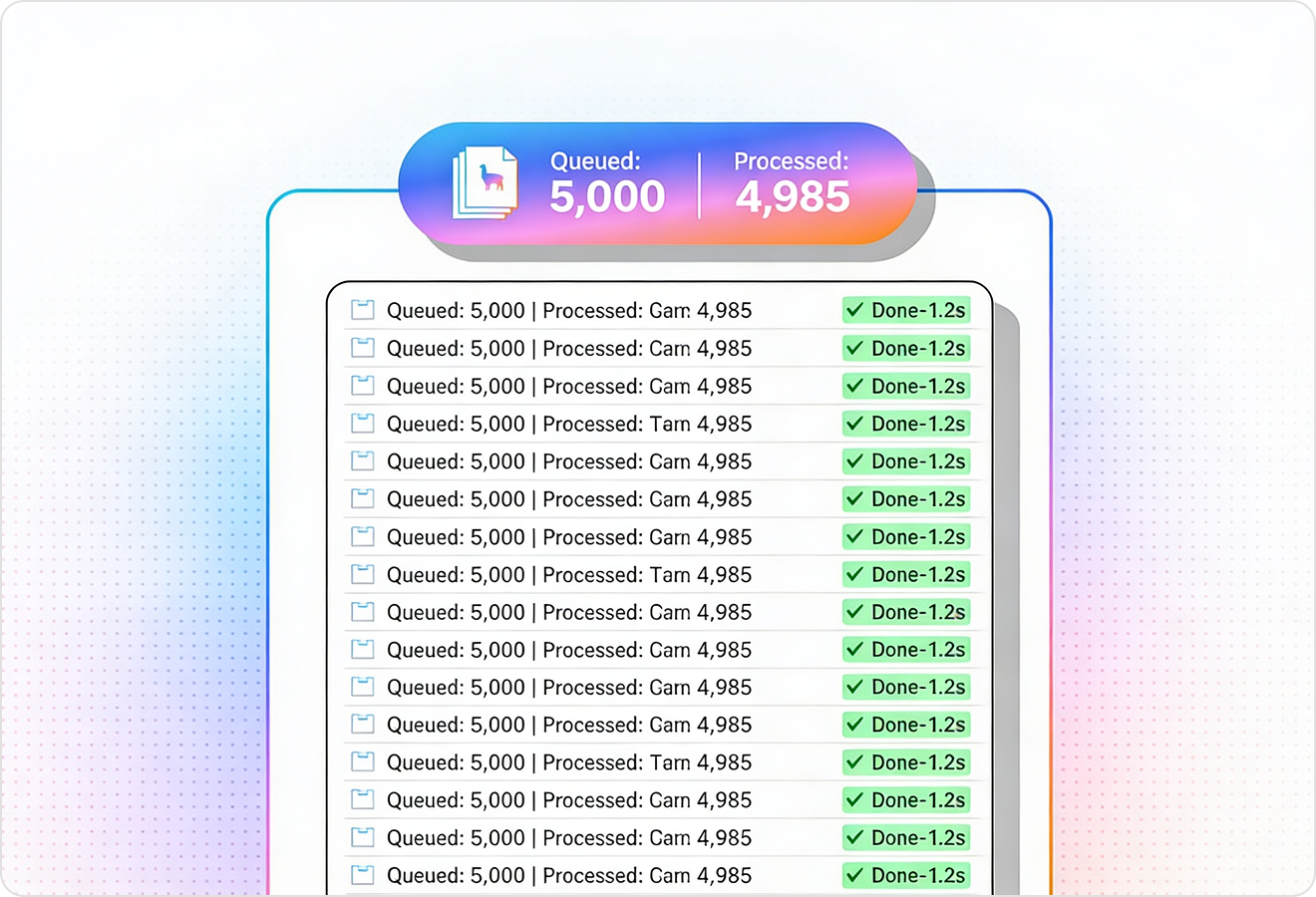
LlamaParse uses multi-step validation and self-correction to reduce common document parsing errors on messy scans and complex formatting. For an extraction API, this improves straight-through processing so you ship fewer exceptions to manual review.
Technical OCR documentation
Explore our developer guides to easily connect your document pipelines to LlamaParse.
Explore the documentation
Our AI catches the typos that tired eyes miss.

Export to Excel, JSON, XML, or directly via API.

SOC2 Type II compliant with end-to-end encryption.

Train the tool on your specific forms in minutes, not days.

Average processing time of <3 seconds per page.
LlamaParse’s support of a wide variety of filetypes and its accuracy of parsing made it the best tool we tested in our evaluations. The LlamaIndex team was very responsive and we were off to the races within a day.
Common FAQs
01
The API is layout-aware, so it preserves the correct reading order across multi-column pages, repeating headers/footers, and nested sections. That means fewer broken payloads and far less brittle post-processing when customer templates change.
02
Tables are reconstructed into consistent, machine-usable structures—including merged cells and multi-level headers—rather than scrambled rows. This makes it easy to send outputs directly into ETL pipelines, analytics workflows, or database ingestion.
03
Yes—JSON Mode returns structured output with per-element metadata such as page number, element type, and coordinates. When something looks off, you can trace it back to the exact source region to verify and fix issues quickly.
04
How reliable is extraction on messy scans or complex formatting?
The API uses agentic validation loops to self-check and correct common parsing errors on noisy scans and tricky layouts. This improves straight-through processing so fewer documents end up in manual review.
05
How does this reduce maintenance when documents vary across customers and time?
Because extraction is based on document structure—not brittle template rules—it adapts better to layout changes across vendors, versions, and regions. You spend less time patching edge cases and more time shipping stable downstream integrations.
06
What can I do when the extracted output doesn’t match what I see in the source PDF?
Use the returned metadata (like coordinates and page references) to pinpoint exactly where each field came from and validate it against the original. This makes exceptions easy to diagnose, and you can confidently automate more of your workflow instead of adding manual checks.