Nov 14, 2025
Document AI: The Next Evolution of Intelligent Document ProcessingPersona
Industry
Use cases
Direct Deposit Form OCR
[ Direct Deposit Form OCR ]

Use LlamaParse to turn direct deposit forms into clean, verified JSON with fewer manual checks.
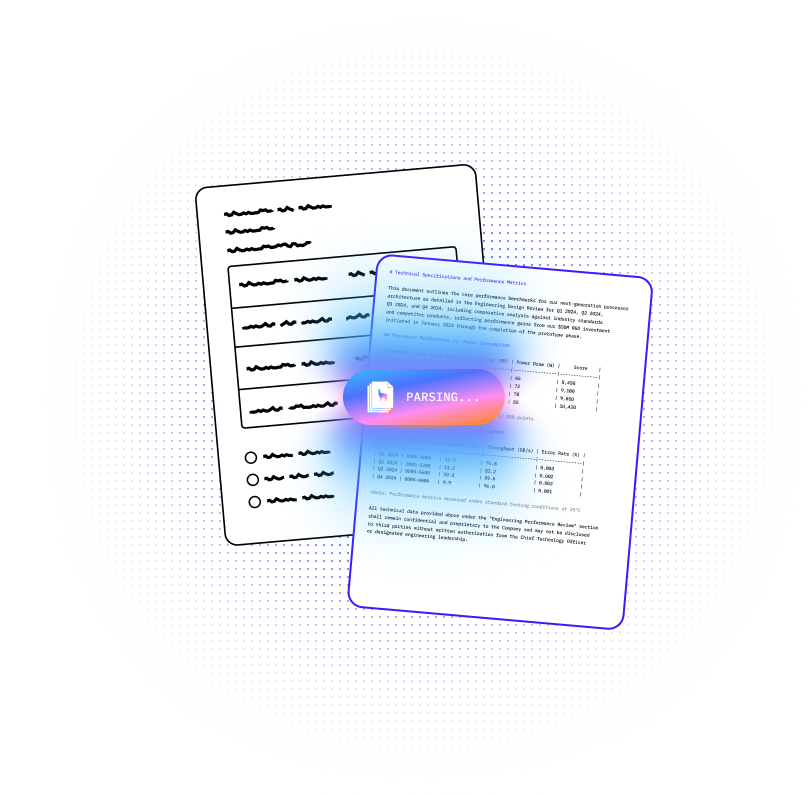


LlamaParse turns scanned or emailed direct deposit forms into clean, structured fields like account and routing numbers, names, and authorization details. It stays reliable when layouts change, using layout-aware parsing plus validation loops and citations so payroll teams can trust every extracted value.
Best-in-Class Accuracy

Use LlamaParse to turn messy, multi-format direct deposit forms into clean JSON that maps reliably into payroll systems, including bank routing/account numbers and authorization language. Layout-aware parsing preserves field relationships across multi-column forms and reduces payroll setup errors that trigger off-cycle runs and support escalations.

Automate intake for account changes and employer direct deposit setup by extracting critical fields with citations and confidence scores for audit-ready review. Agentic parsing handles scans, photos, and inconsistent form templates without constant rework, cutting manual keying time and reducing fraud-prone mismatches.

Parse direct deposit forms at onboarding and instantly validate that required fields are present before a worker’s first pay cycle. Natural-language parsing instructions let ops teams standardize outputs across client-specific packets, minimizing back-and-forth with candidates and missed start dates.

Embed direct deposit form ingestion into your product with LlamaParse APIs to convert user uploads into structured data your app can act on immediately. Tier-based agentic processing and cost optimizer mode keep unit economics predictable while maintaining high straight-through processing on real-world uploads.
The Solution
01
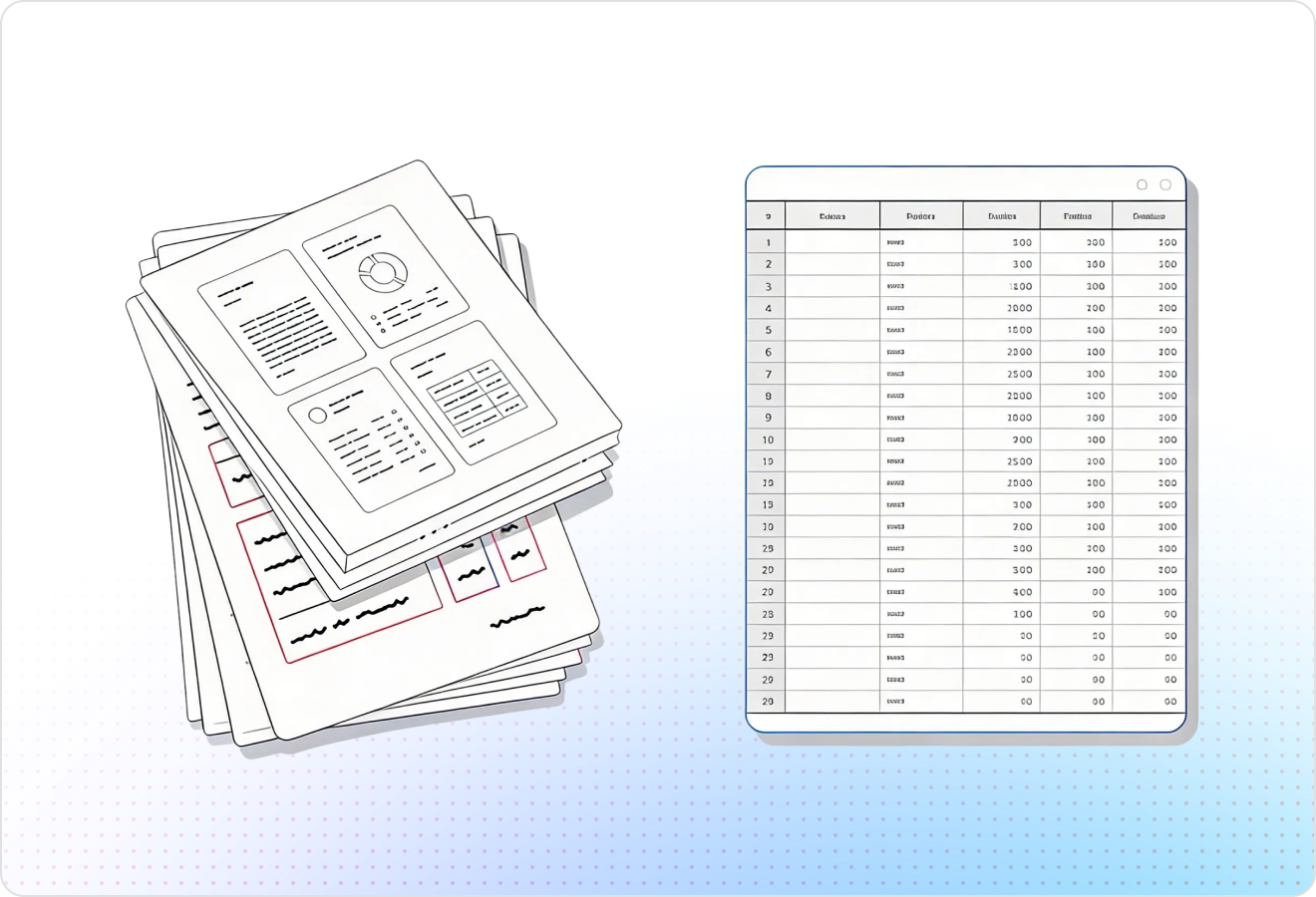
LlamaParse uses layout-aware vision to preserve reading order and correctly segment boxes, labels, and lines on direct deposit forms. That means routing numbers, account numbers, and account type selections don’t get scrambled or misassigned when the template changes.
02
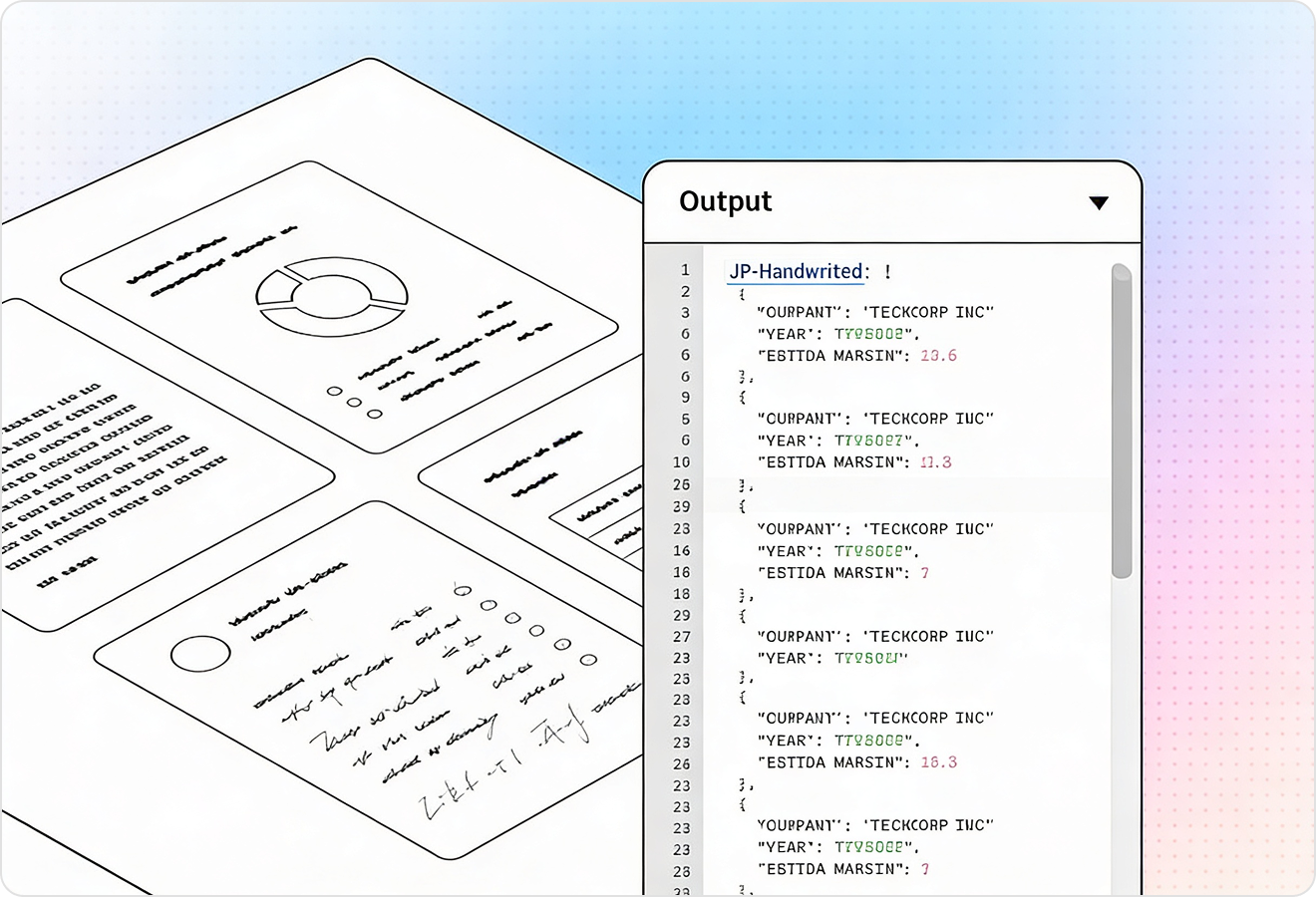
LlamaParse reliably extracts structured elements like multi-row sections, signature blocks, and checkbox-style options (e.g., checking vs. savings) without losing their relationships. This helps you turn a filled form into clean, machine-usable data instead of brittle text blobs.
03
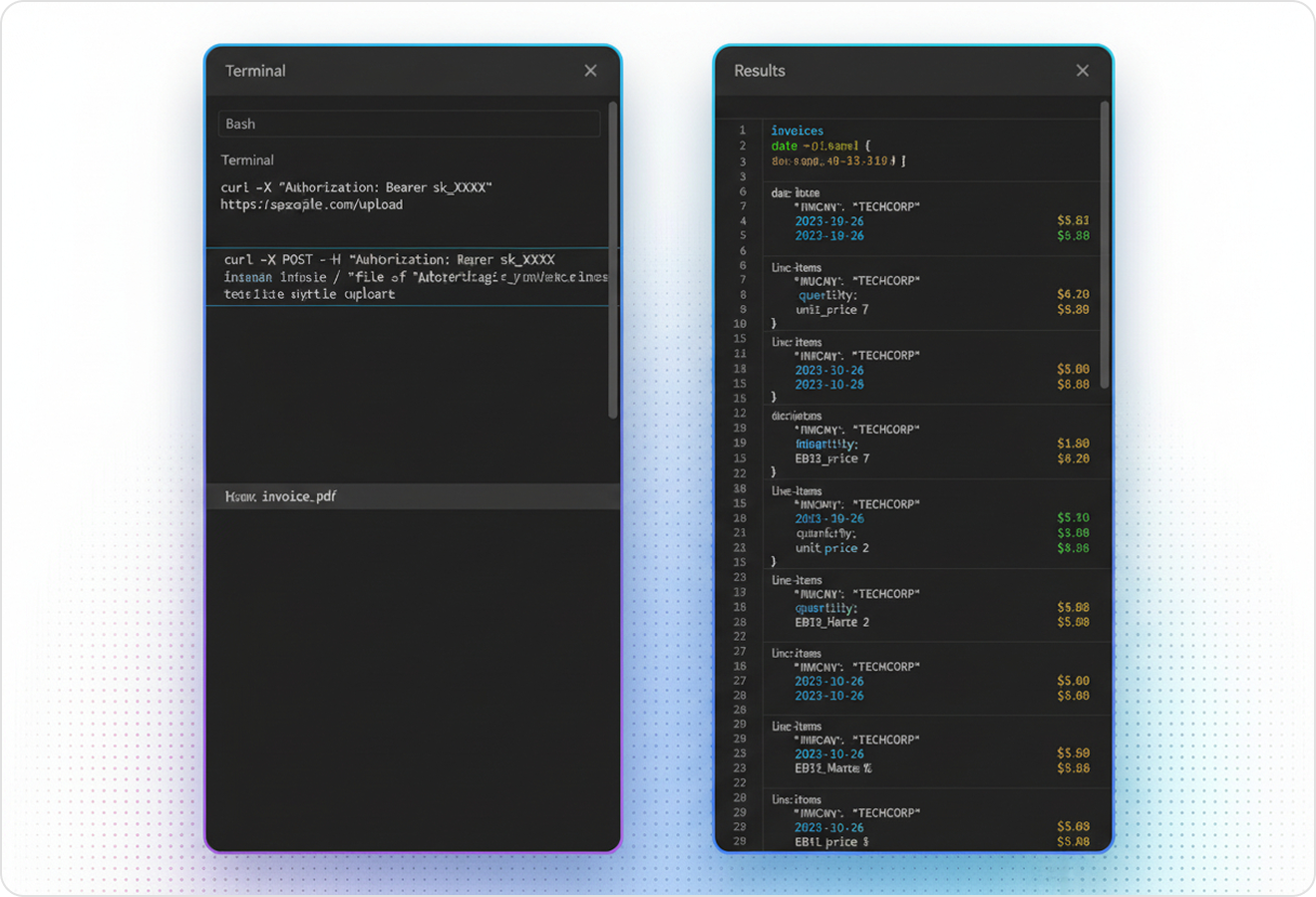
LlamaParse can return direct deposit data in JSON with granular metadata like page references and element coordinates. This makes it easy to audit extractions, route low-confidence fields for review, and prove exactly where each value came from.
04
LlamaParse runs validation and self-correction loops to catch common form errors like missing digits, misread numbers, or swapped fields. For direct deposit processing, that reduces downstream payment failures and cuts time spent on manual exception handling.
Technical OCR documentation
Explore our developer guides to easily connect your document pipelines to LlamaParse.
Explore the documentation
Our AI catches the typos that tired eyes miss.

Export to Excel, JSON, XML, or directly via API.

SOC2 Type II compliant with end-to-end encryption.

Train the tool on your specific forms in minutes, not days.

Average processing time of <3 seconds per page.
LlamaParse’s support of a wide variety of filetypes and its accuracy of parsing made it the best tool we tested in our evaluations. The LlamaIndex team was very responsive and we were off to the races within a day.
Common FAQs
01
Our layout-aware field capture preserves reading order and understands boxes, labels, and lines so values don’t shift when the form format changes. That means routing and account numbers are mapped to the right fields even across variations from different employers or banks.
02
Yes—it's designed to capture high-stakes banking fields and understand checkbox-style options like checking vs. savings without losing context. This reduces misassignments that cause payment delays and cuts down on manual review.
03
You get clean JSON output that’s easy to map into your HRIS, payroll, or onboarding workflow. Each extracted field can include traceability metadata so your team can quickly verify what was captured and where it came from.
04
How do you support auditing and compliance when an employee disputes a direct deposit detail?
Every extracted value can include page references and element coordinates to show the exact location on the form. This makes audits faster, improves reviewer confidence, and provides a clear trail for internal controls.
05
What happens when the form is messy—blurry scans, handwritten digits, or missing numbers?
Auto validation and correction loops flag common issues like missing digits, swapped fields, or misread numbers before they become payroll failures. When confidence is low, you can route only the specific fields for review instead of rechecking the entire form.
06
Will this reduce manual exception handling, or will my team still be fixing extractions all day?
It’s built to turn completed forms into machine-usable data, not brittle text blobs, so downstream exceptions drop significantly. Teams typically spend less time chasing errors because validation catches problems early and traceability makes spot checks quick.