Nov 14, 2025
Document AI: The Next Evolution of Intelligent Document ProcessingPersona
Industry
Use cases
Certificate Of Origin OCR
[ Certificate Of Origin OCR ]

Use LlamaParse to turn messy Certificates of Origin into clean JSON your workflows can trust.
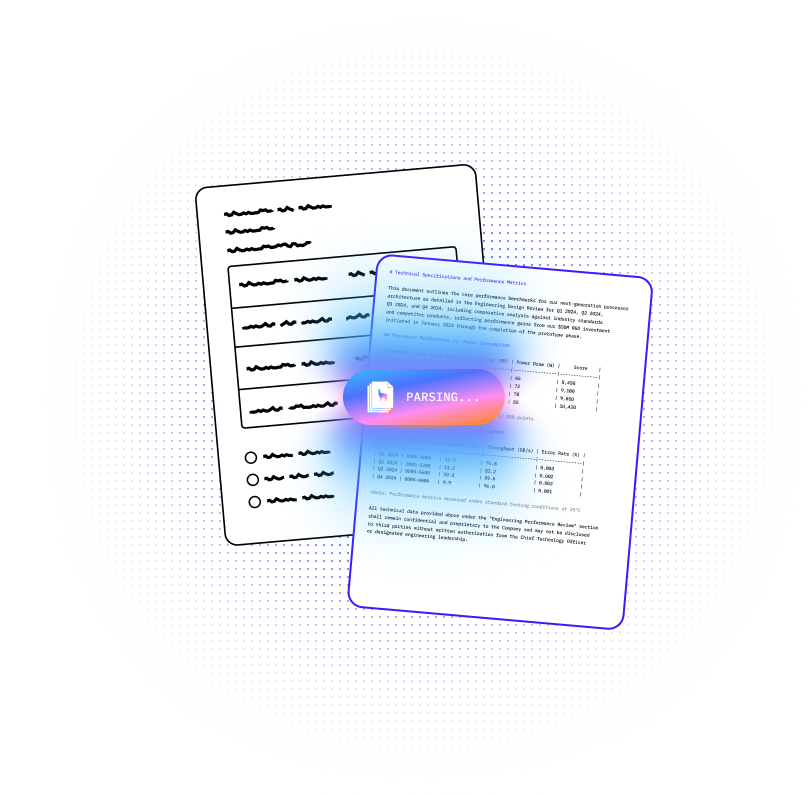


LlamaParse turns messy certificates of origin into clean, structured JSON or Markdown you can feed directly into customs, ERP, and compliance workflows. It uses agentic document parsing with layout awareness and validation loops, so fields stay accurate even when templates change.
Best-in-Class Accuracy

Use LlamaParse in LlamaCloud to parse Certificates of Origin into structured JSON, reliably capturing exporter/importer details, HS codes, country of origin, and stamp/signature fields without brittle template rules. This eliminates manual rekeying and reduces clearance delays caused by missed table rows, multi-column layouts, or low-quality scans.

Automatically ingest supplier Certificates of Origin and extract BOM-adjacent attributes (origin country per line item, quantities, invoice references) to enforce supplier compliance and validate trade preference eligibility. With layout-aware table extraction, procurement teams can reconcile CO data against POs and inbound shipments even when suppliers change document formats.

Parse Certificates of Origin as part of letter-of-credit and documentary collections workflows, producing citation-backed fields and confidence scores that make exceptions easy to review and approve. This speeds up document checking, reduces discrepancy fees, and prevents payouts based on incomplete or inconsistent origin documentation.

Ship a CO automation feature fast by using LlamaParse APIs to convert messy PDFs into clean Markdown/JSON that plugs directly into your product database and workflow engine. Tier-based agentic processing keeps unit economics predictable by reserving heavier parsing only for the hardest scans while maintaining high straight-through processing on standard documents.
The Solution
01
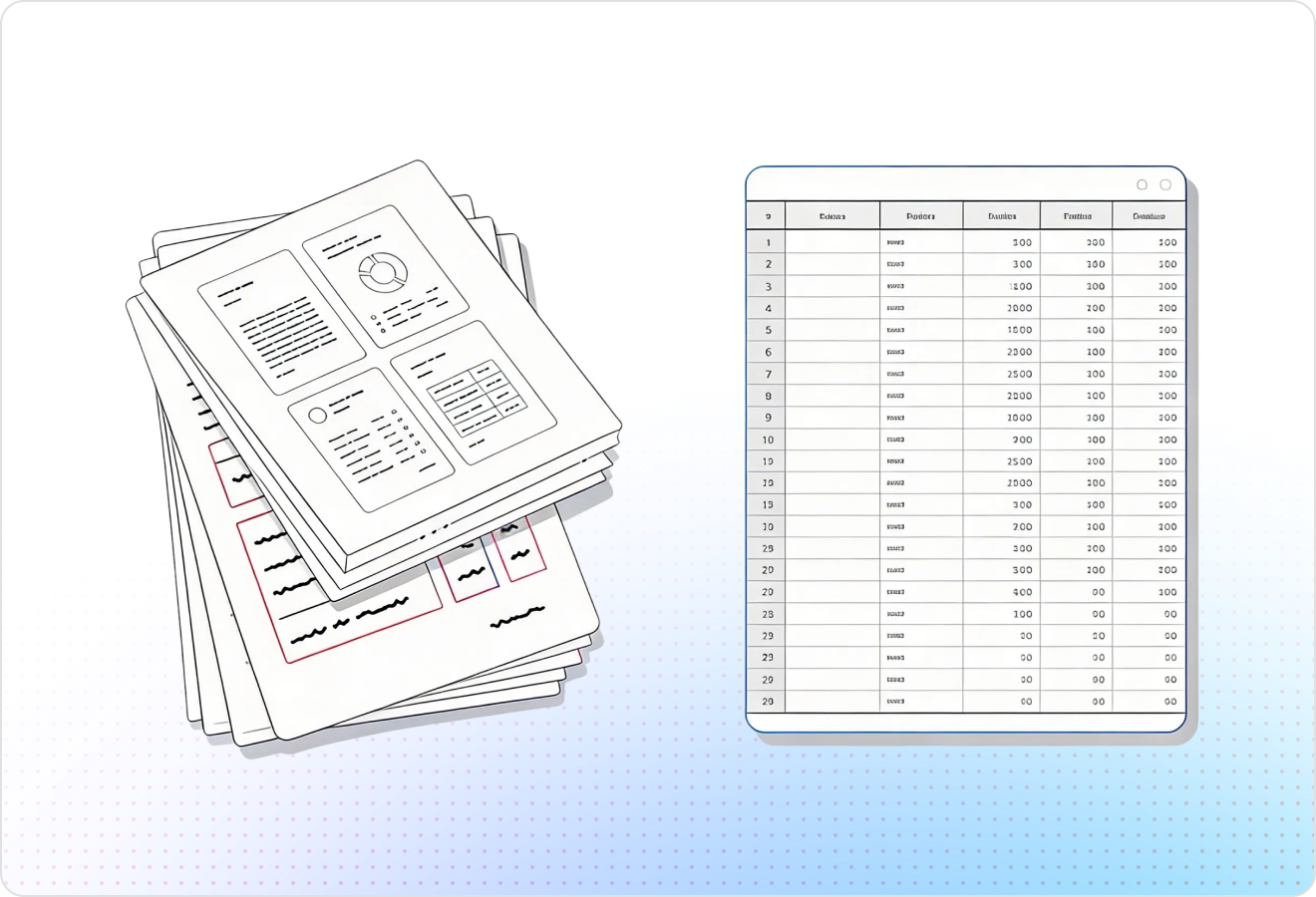
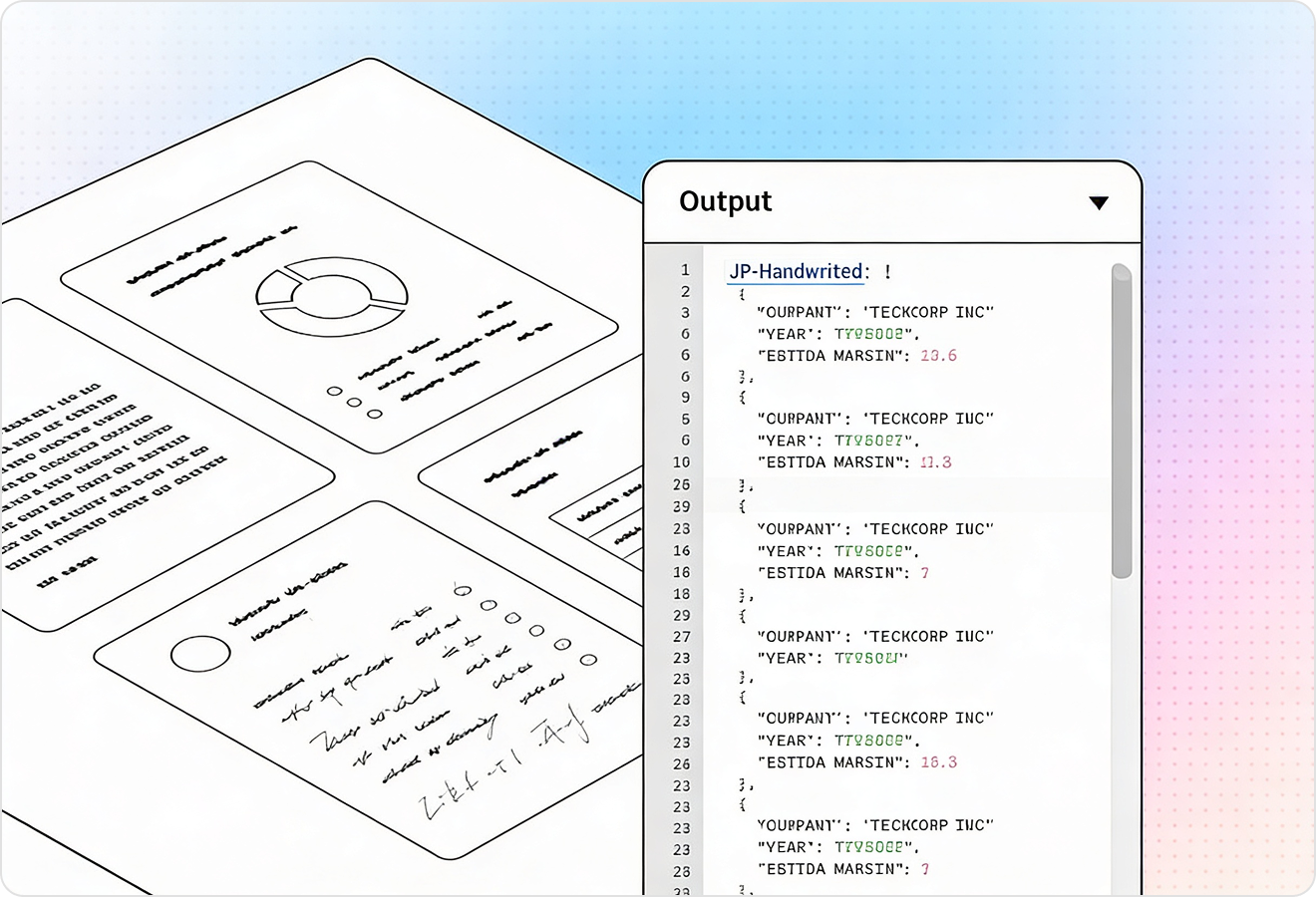
LlamaParse understands certificate layouts—boxes, multi-column sections, headers/footers—so exporter, consignee, and shipment details don’t get scrambled. This is critical for Certificates of Origin where a single shifted line can flip the meaning of a declared field.
02
It extracts line-item tables (HS codes, descriptions, quantities, invoice refs) while preserving rows, columns, and reading order. That gives you clean downstream validation against customs rules and ERP data without writing brittle table-fixing code.
03
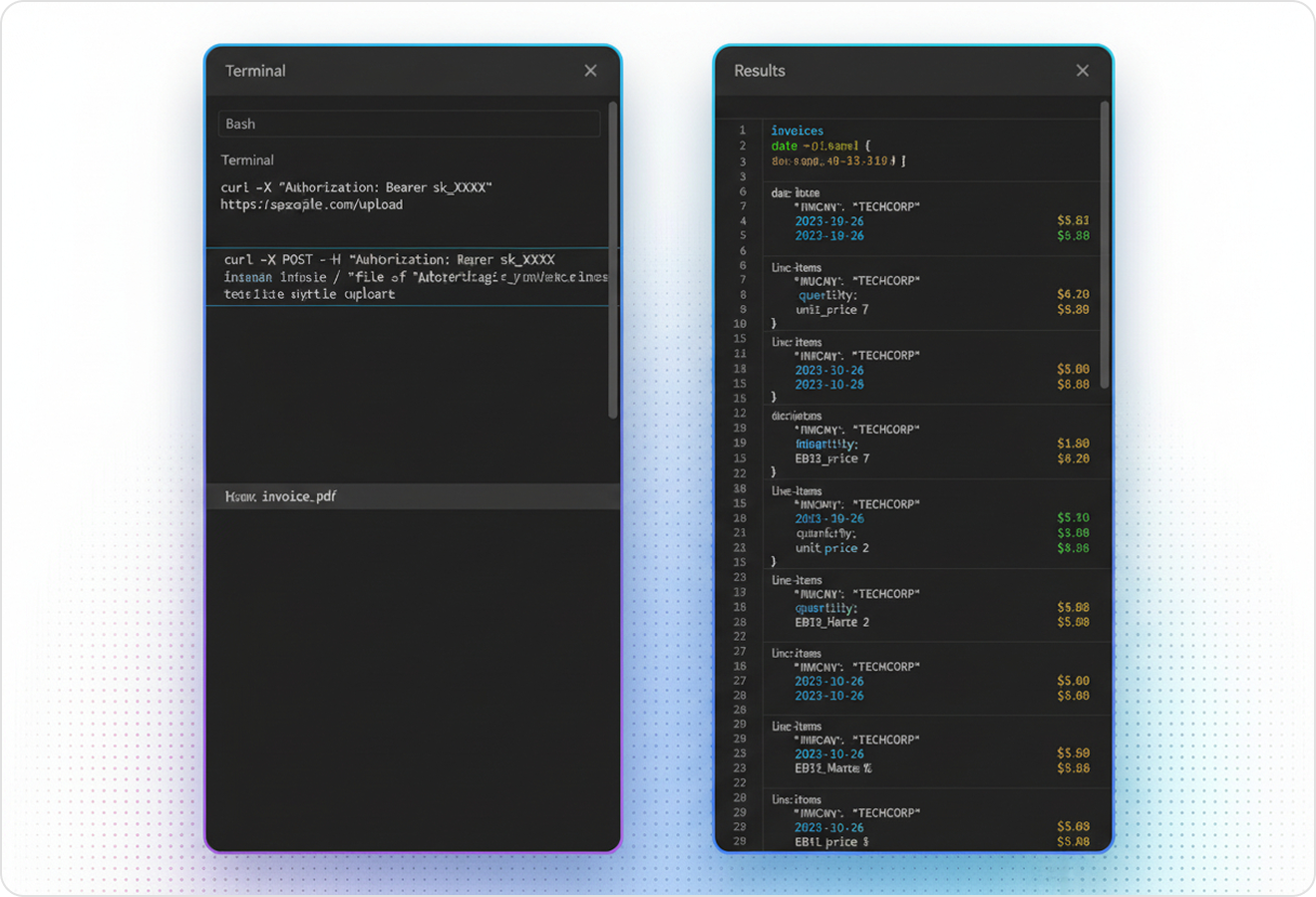
JSON mode returns structured key-value output with page references and coordinates for each extracted element. For Certificate of Origin review and audits, you can trace every field back to the exact region on the document and route low-confidence items to human checks.
04
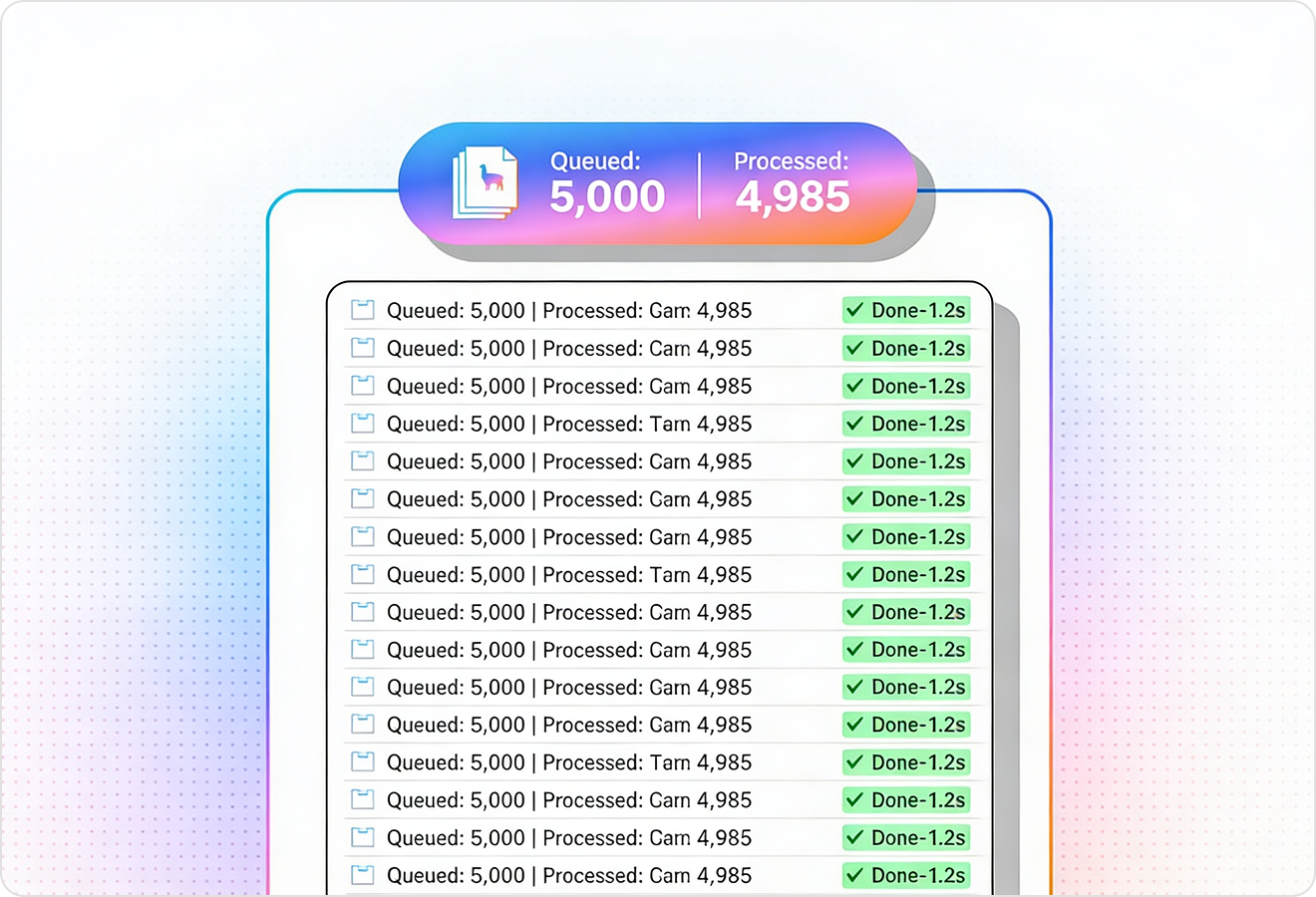
LlamaParse runs iterative validation to catch common scan issues like broken stamps, faint text, or misread characters in registration numbers. This reduces exception handling for Certificates of Origin, where small OCR errors can cause costly customs holds.
Technical OCR documentation
Explore our developer guides to easily connect your document pipelines to LlamaParse.
Explore the documentation
Our AI catches the typos that tired eyes miss.

Export to Excel, JSON, XML, or directly via API.

SOC2 Type II compliant with end-to-end encryption.

Train the tool on your specific forms in minutes, not days.

Average processing time of <3 seconds per page.
LlamaParse’s support of a wide variety of filetypes and its accuracy of parsing made it the best tool we tested in our evaluations. The LlamaIndex team was very responsive and we were off to the races within a day.
Common FAQs
01
Yes—layout-aware capture recognizes boxes, columns, and headers/footers so exporter, consignee, origin criteria, and shipment details stay mapped to the correct fields. This prevents “shifted line” errors that can change the meaning of a declaration and trigger rework or delays.
02
The system extracts line-item tables while preserving rows, columns, and reading order, so HS codes, descriptions, quantities, and invoice references remain structured. That means fewer manual fixes and smoother validation against customs rules or your ERP data.
03
Yes—JSON output includes metadata like page references and coordinates for every field. Reviewers can quickly verify what was read, and you can route low-confidence fields to human checks with a clear audit trail.
04
What happens when scans are messy—faint stamps, low resolution, or misread registration numbers?
Yes—outputs can be returned as structured JSON with page references and element metadata. Each field is traceable to its source location, which speeds audits, dispute resolution, and human review without hunting through the PDF.
05
How do you handle variations in Certificate of Origin templates across chambers, countries, and languages?
Because extraction is layout-aware, it adapts to different formats without relying on brittle, template-by-template rules. You get consistent field capture across common COO variants while still being able to verify outputs via coordinates when formats differ.
06
How quickly can we integrate this into our workflow, and what do we get back from the API?
You send the document and receive verifiable JSON with structured key-value fields plus page/coordinate metadata for traceability. This makes it straightforward to plug into review tools, compliance checks, or downstream systems—and to automate the majority of COO processing from day one.