Nov 14, 2025
Document AI: The Next Evolution of Intelligent Document ProcessingPersona
Industry
Use cases
Bulk PDF Parsing API
[ Bulk PDF Parsing API ]

Use LlamaParse to turn thousands of messy PDFs into clean JSON with layout-aware accuracy.
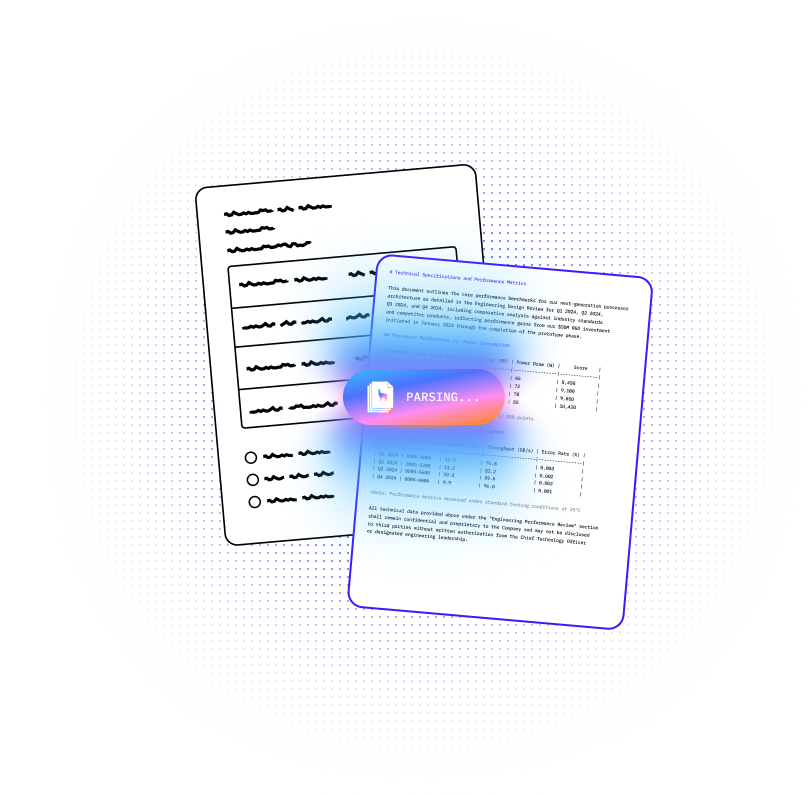
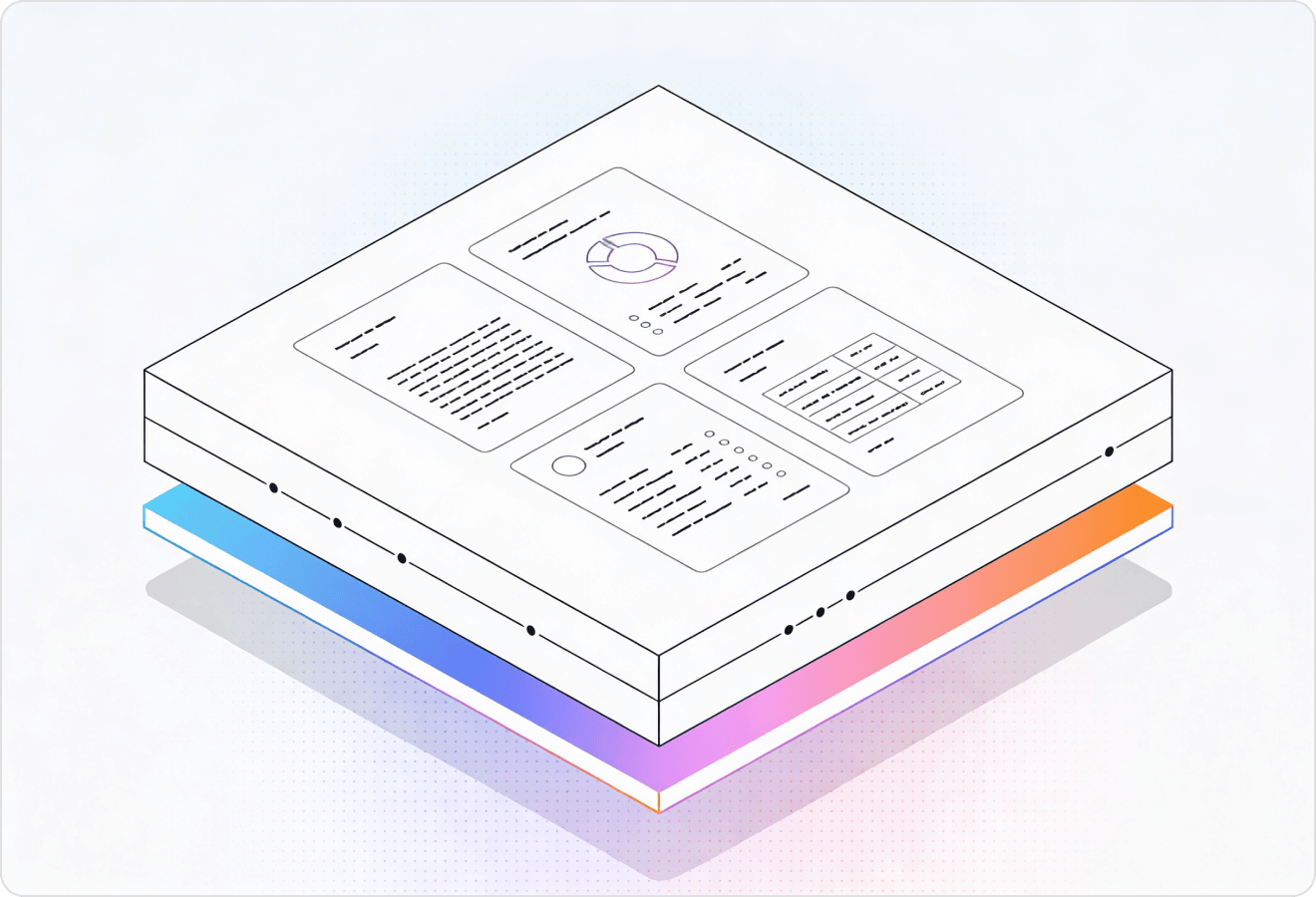

LlamaParse turns messy, high-volume PDFs into clean, structured Markdown, JSON, or HTML so your pipelines can index, extract, and automate reliably. Agentic document parsing understands layout, tables, and embedded visuals, then adds citations and confidence signals to support fast human review.
Best-in-Class Accuracy

Turn user-uploaded PDFs (invoices, contracts, statements) into clean Markdown or JSON without writing brittle layout-fixing code, so your MVP ships faster. Use natural-language parsing instructions plus tier-based processing to keep extraction reliable while controlling burn as volume spikes.

Parse bank statements, tax returns, and loan packages at scale with layout-aware table extraction that preserves line items, totals, and multi-column sections. Return structured JSON with page-level traceability so underwriting and audit teams can verify decisions without manual re-keying.

Automate ingestion of bills of lading, commercial invoices, packing lists, and certificates by extracting messy tables and reference numbers in the correct reading order. Convert scanned stamps, annotations, and embedded images into usable fields to reduce customs delays and exception handling.

Convert complex agreements and exhibits into structured outputs that preserve headings, clauses, and tables, making downstream clause extraction and comparison dependable. Use metadata and citations to power verifiable review workflows, so teams can trace every extracted term back to the source page.
The Solution
01
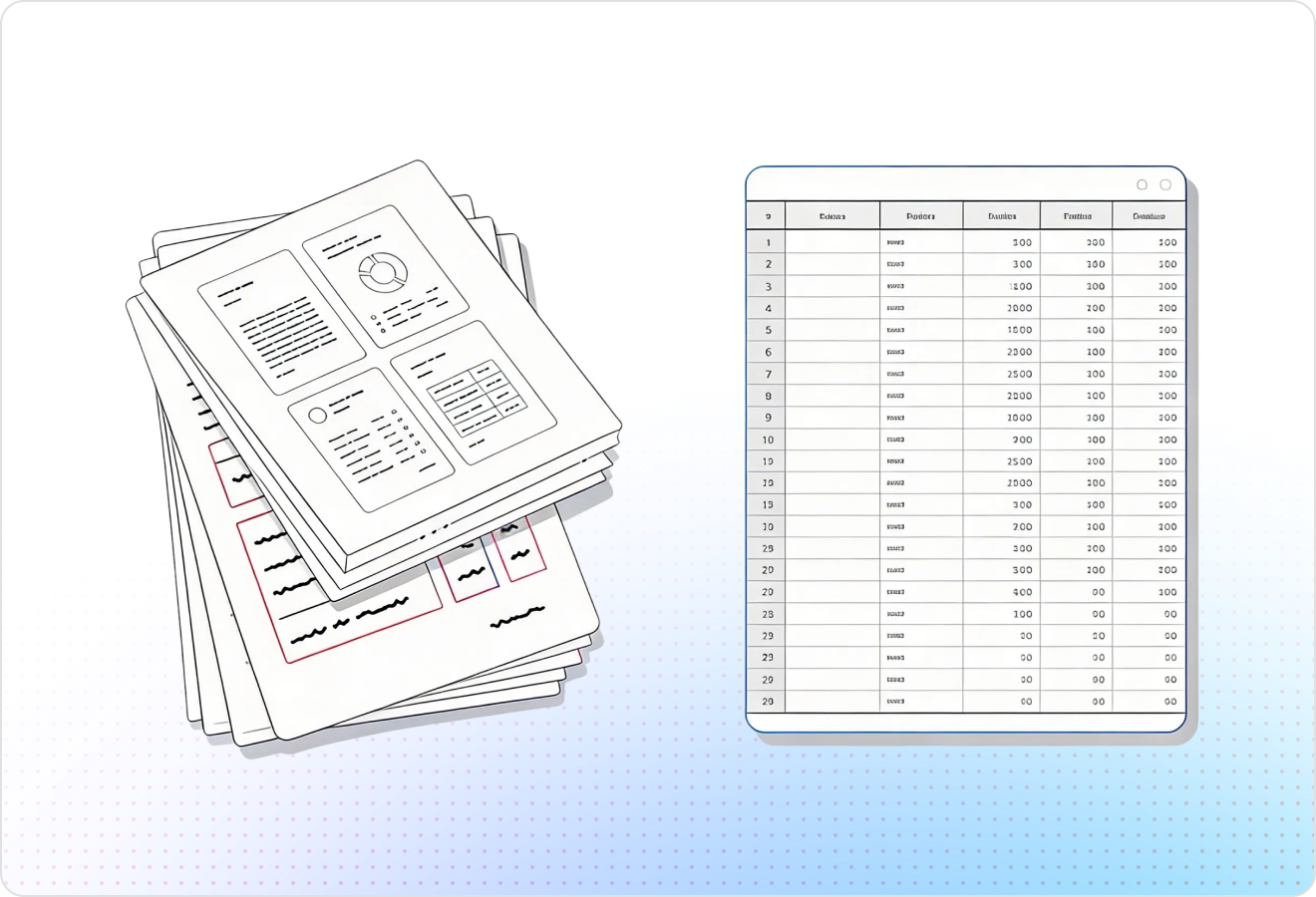
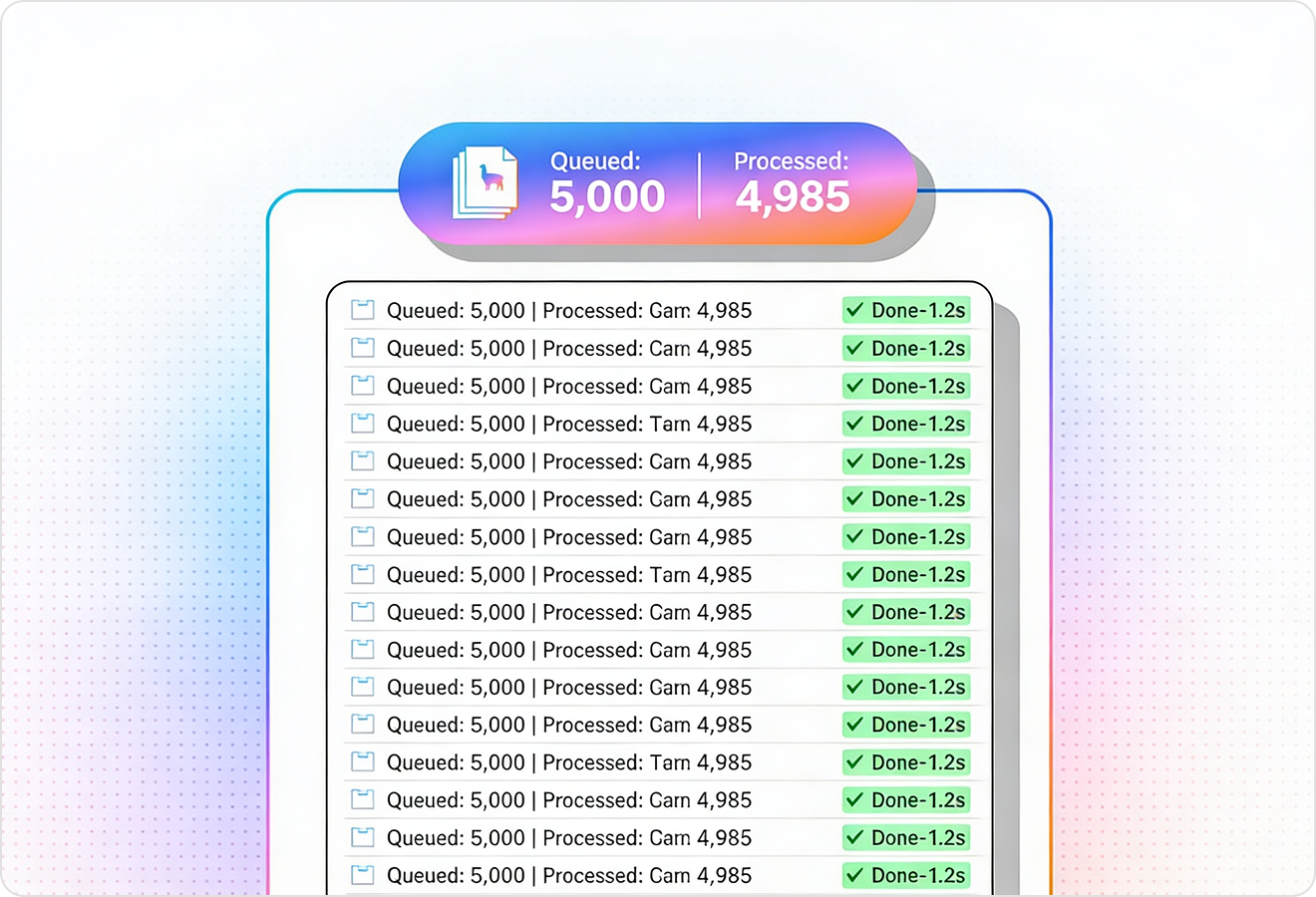
Send large PDF batches to LlamaParse via a developer-friendly API built for programmatic ingestion at scale. It keeps bulk pipelines simple and reliable, so you can parse thousands of documents without building custom parsing infrastructure.
02
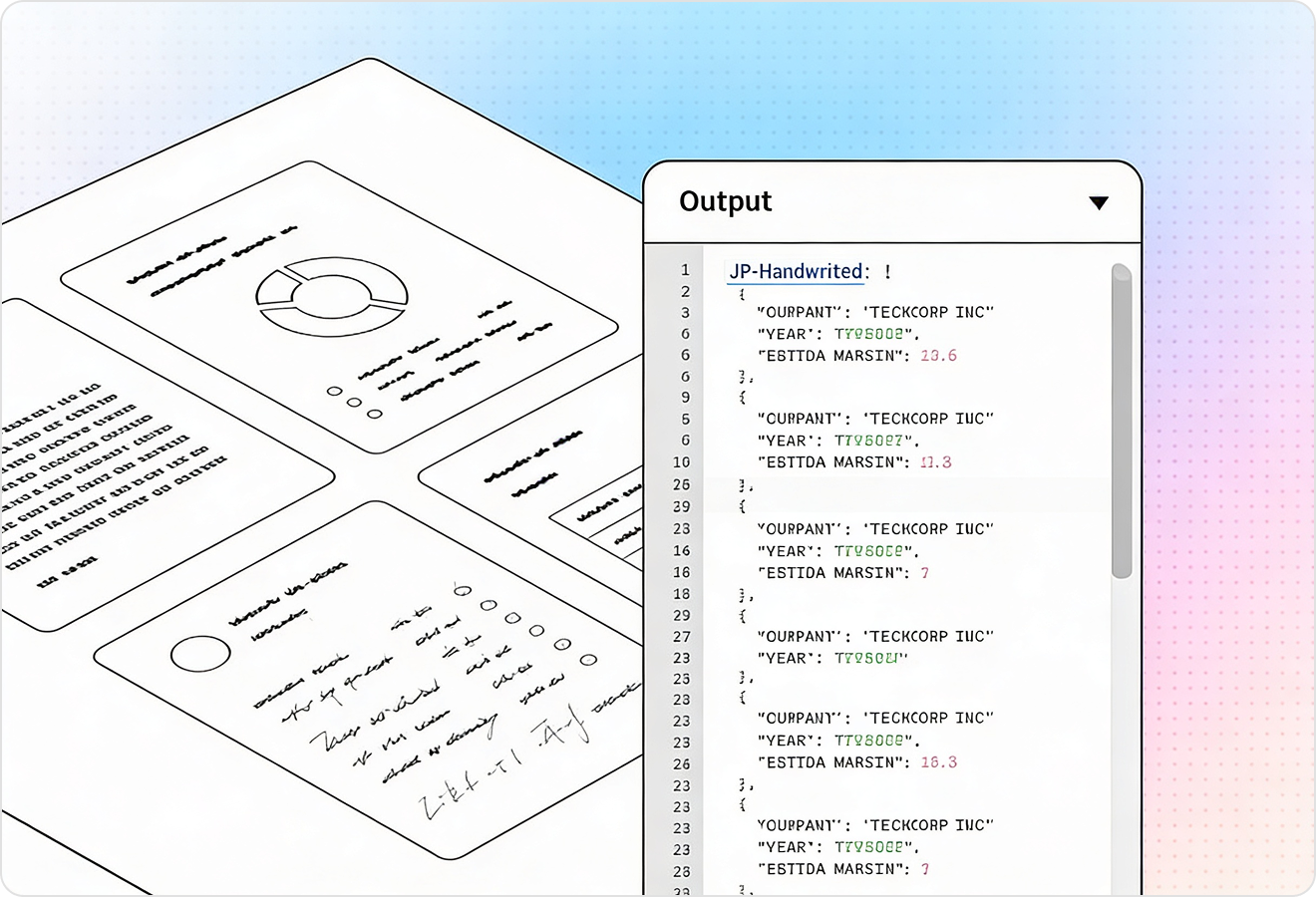
LlamaParse uses layout-aware vision to preserve reading order, headings, and multi-column structure instead of returning scrambled text. For a bulk PDF parsing API, this means downstream indexing and extraction stays consistent across wildly different templates.
03
LlamaParse accurately captures complex tables (nested cells, merged headers, irregular grids) and converts them into clean Markdown. In bulk workflows, that prevents table-heavy PDFs from becoming manual exceptions that slow your entire pipeline.
04
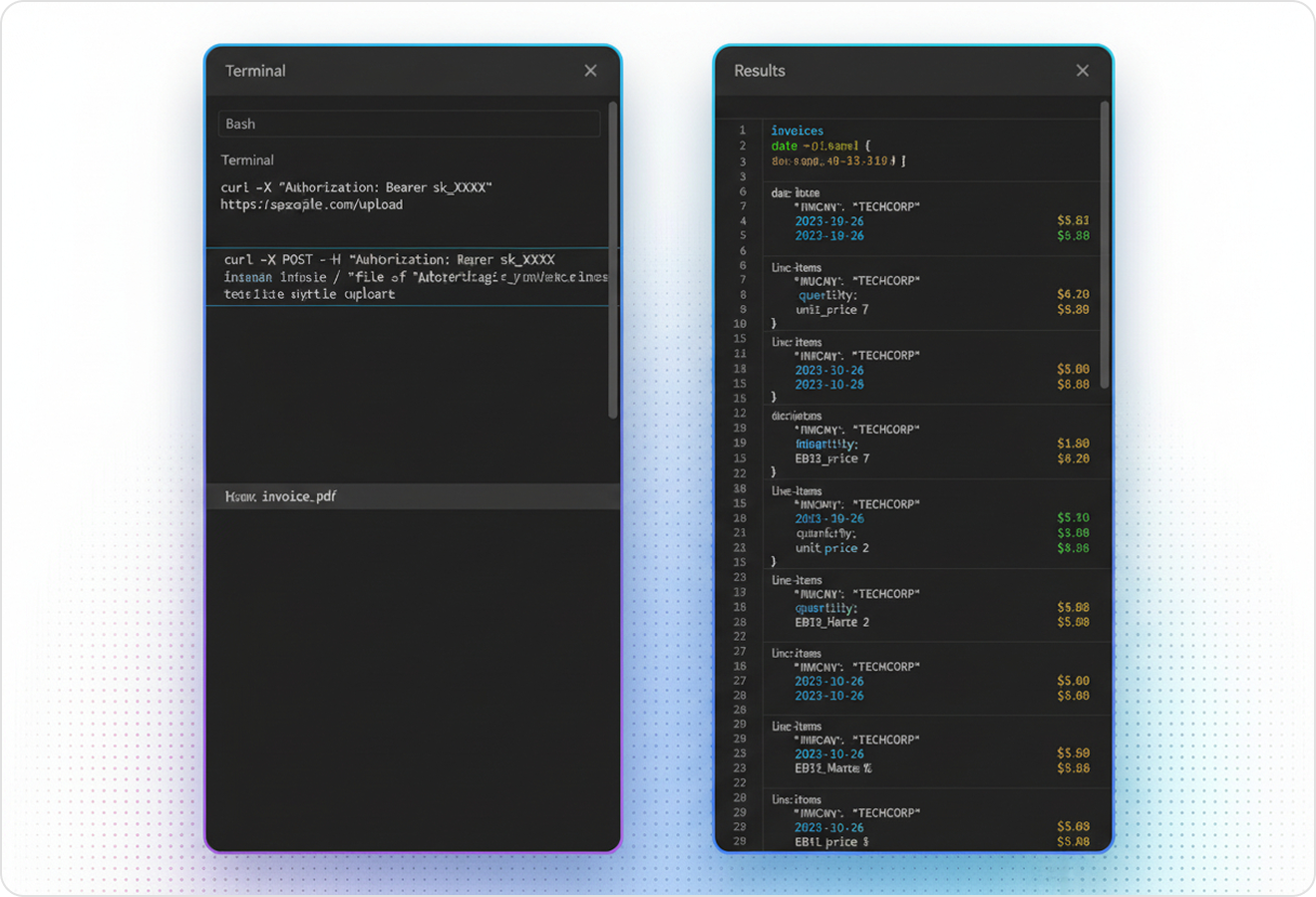
Return AI-ready JSON with rich metadata like page numbers, element types, and spatial coordinates for each extracted block. This makes bulk API outputs easy to validate, debug, and route into databases or downstream processors with full traceability.
Technical OCR documentation
Explore our developer guides to easily connect your document pipelines to LlamaParse.
Explore the documentation
Our AI catches the typos that tired eyes miss.

Export to Excel, JSON, XML, or directly via API.

SOC2 Type II compliant with end-to-end encryption.

Train the tool on your specific forms in minutes, not days.

Average processing time of <3 seconds per page.
LlamaParse’s support of a wide variety of filetypes and its accuracy of parsing made it the best tool we tested in our evaluations. The LlamaIndex team was very responsive and we were off to the races within a day.
Common FAQs
01
You can send large PDF batches through a developer-friendly REST API designed for programmatic ingestion at scale. It keeps bulk workflows simple and reliable, so you don’t need to build and maintain custom parsing infrastructure just to keep up with volume.
02
Yes—layout-aware reconstruction preserves reading order, headings, and multi-column structure instead of returning scrambled text. That consistency makes downstream indexing, search, and extraction far more dependable across different document templates.
03
Tables are captured with support for tricky cases like merged headers, nested cells, and irregular grids. They’re converted into clean Markdown so table-heavy PDFs don’t become manual exceptions that slow down your bulk processing.
04
What does the API return—raw text, Markdown, or structured data we can validate?
You get structured JSON that’s AI-ready, along with rich metadata like page numbers, element types, and spatial coordinates. This makes outputs easy to validate, debug, and route into databases or downstream processors with full traceability.
05
How do we troubleshoot failures or verify what was extracted from a specific page or section?
Metadata like page numbers and per-block coordinates lets you trace each extracted element back to its source location. That makes it straightforward to spot formatting edge cases, create targeted reprocessing rules, and maintain auditability in production.
06
Can we integrate this into our existing ingestion stack without major refactoring?
The REST API is designed to drop into modern ingestion pipelines, so you can programmatically submit batches and consume standardized outputs. With consistent JSON + Markdown results, it’s easier to plug into indexing, ETL, or LLM workflows without rewriting your downstream logic.