Nov 14, 2025
Document AI: The Next Evolution of Intelligent Document ProcessingPersona
Industry
Use cases
Auto Insurance Form OCR
[ Auto Insurance Form OCR ]

Use LlamaParse to capture claim details accurately from messy forms and route them instantly.
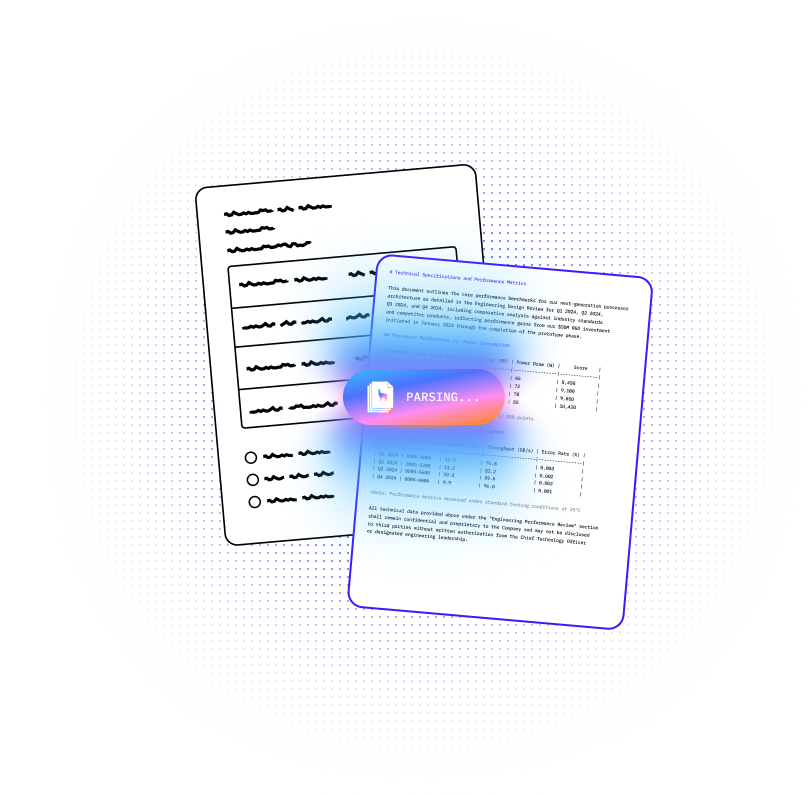
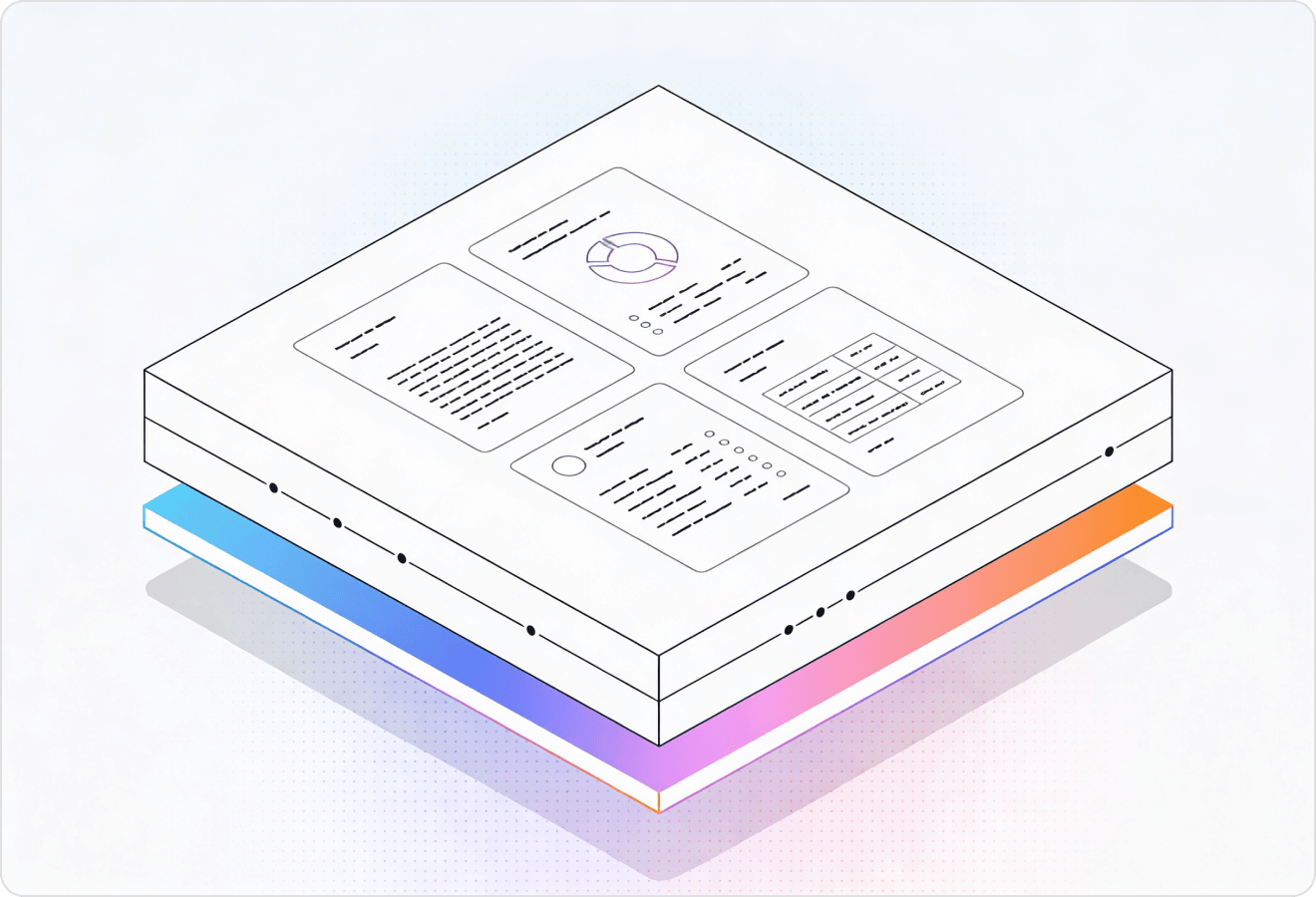

LlamaParse turns messy auto insurance forms, scanned PDFs, and photos into consistent JSON or Markdown so downstream systems can reliably ingest every field. Layout-aware vision plus validation loops reduce missing tables and misreads, boosting straight-through processing while keeping citations and confidence for fast review.
Best-in-Class Accuracy

Turn uploaded auto insurance forms and supporting documents into clean JSON with layout-aware table extraction, so policy and claim fields map correctly without manual rekeying. Use confidence scores and citations to auto-route exceptions and raise straight-through processing on endorsements, FNOL packets, and renewals.

Extract applicant, vehicle, and coverage details from insurance forms into your DMS/CRM to eliminate back-and-forth when buyers need proof of insurance before delivery. LlamaParse preserves multi-column layouts and signatures/attachments reliably, reducing funding delays and compliance risk from incomplete deal jackets.

Convert insurance forms and related evidence into verifiable, citation-backed records for audits, disputes, and discovery, including accurate reconstruction of tables and addendums. Natural-language parsing instructions let teams standardize what gets extracted (limits, exclusions, effective dates) across carriers and jurisdictions without brittle rules.

Ship an ingestion pipeline that understands messy real-world submissions—scans, photos, multi-page packets—without building and maintaining custom parsing code. Use tier-based processing and cost optimization to keep unit economics predictable while scaling from a small pilot to production volumes.
The Solution
01
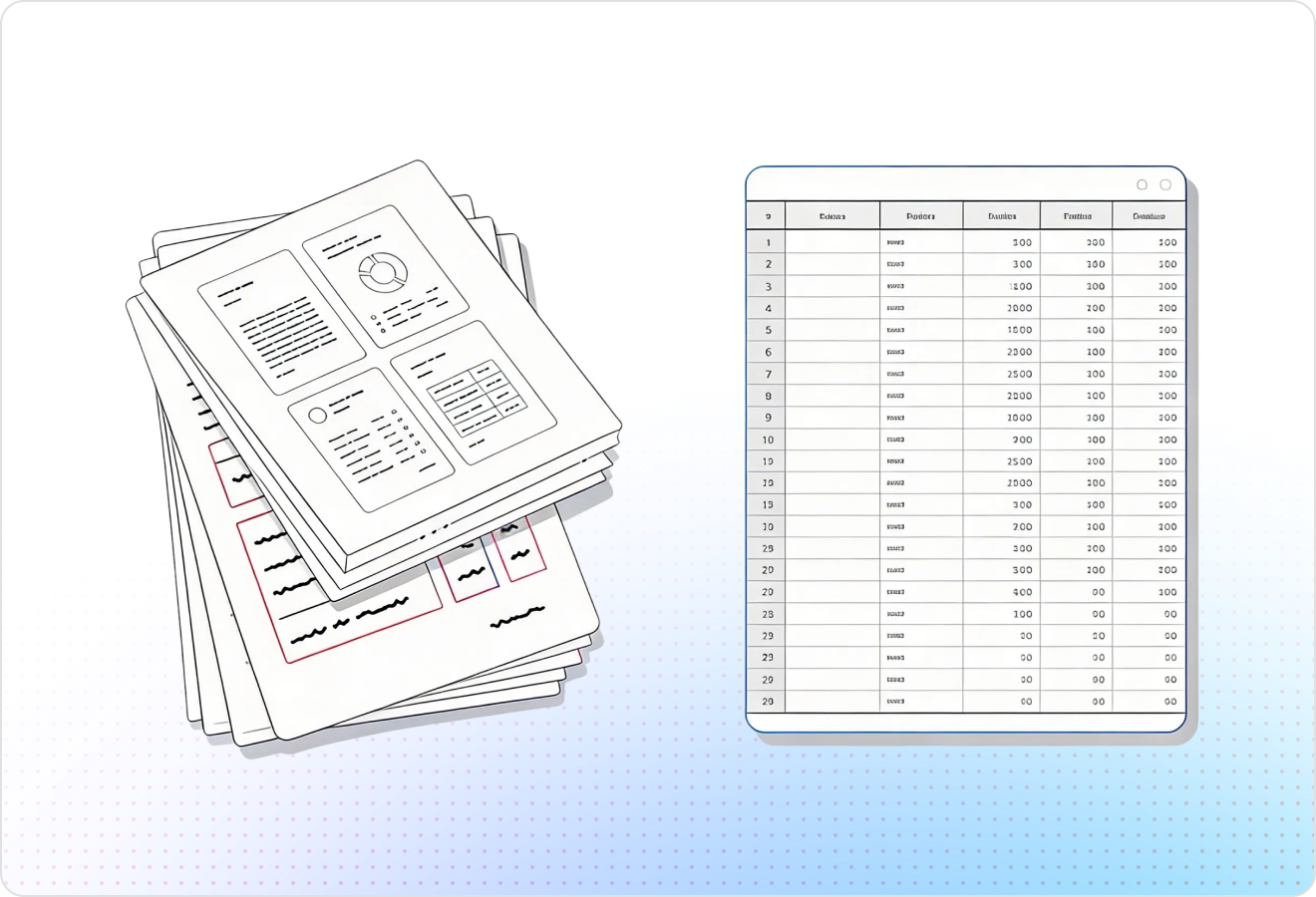
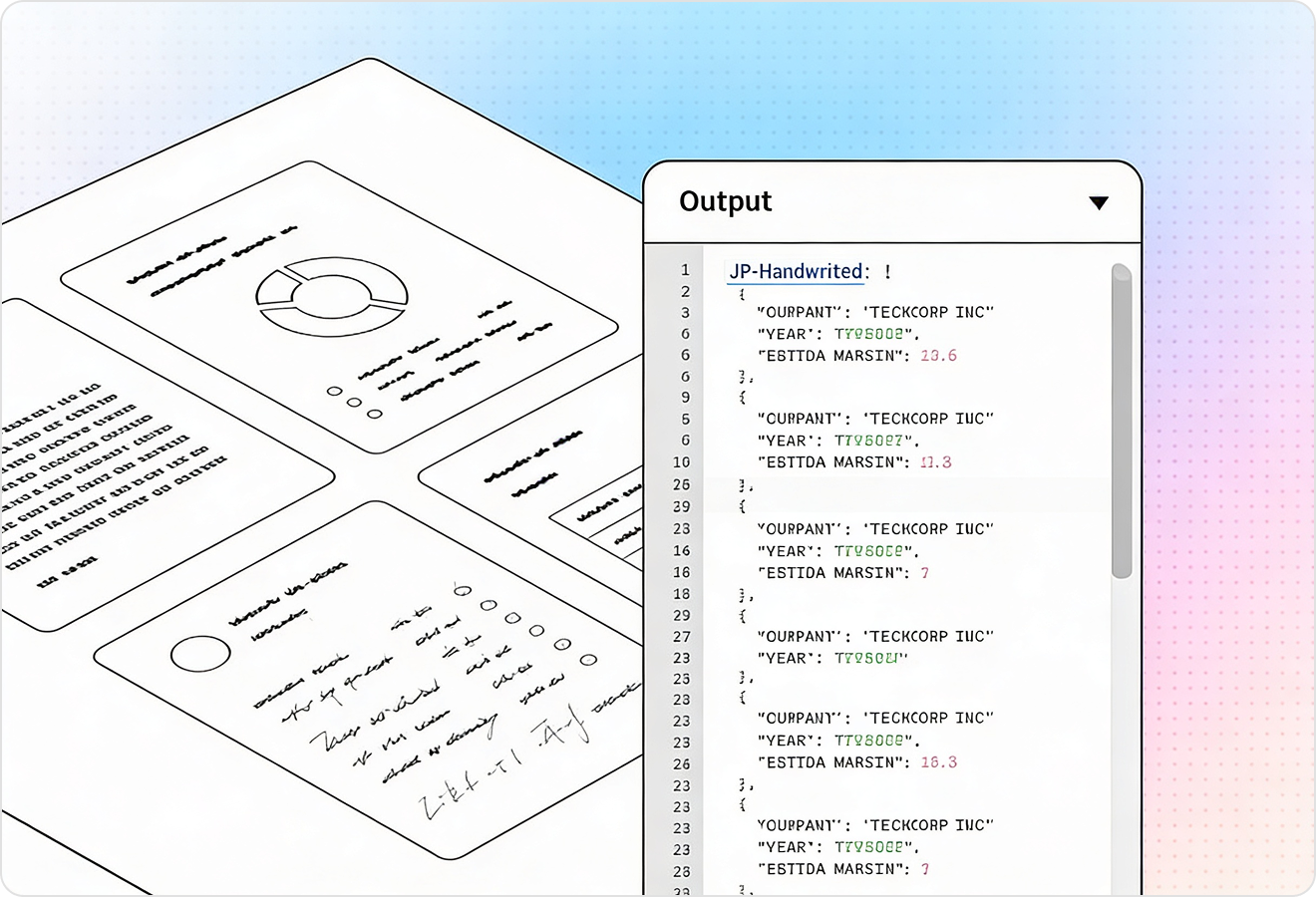
LlamaParse uses layout-aware vision to preserve reading order across boxes, checklists, multi-column sections, and footers common in auto insurance forms. That means fields like VIN, policy number, driver details, and loss location don’t get scrambled when the template or scan quality changes.
02
LlamaParse accurately reconstructs dense tables like vehicle schedules, coverage limits, deductibles, and premium breakdowns into clean, machine-readable structure. You can reliably ingest these rows into underwriting or claims systems without writing brittle post-processing to fix merged cells and misaligned columns.
03
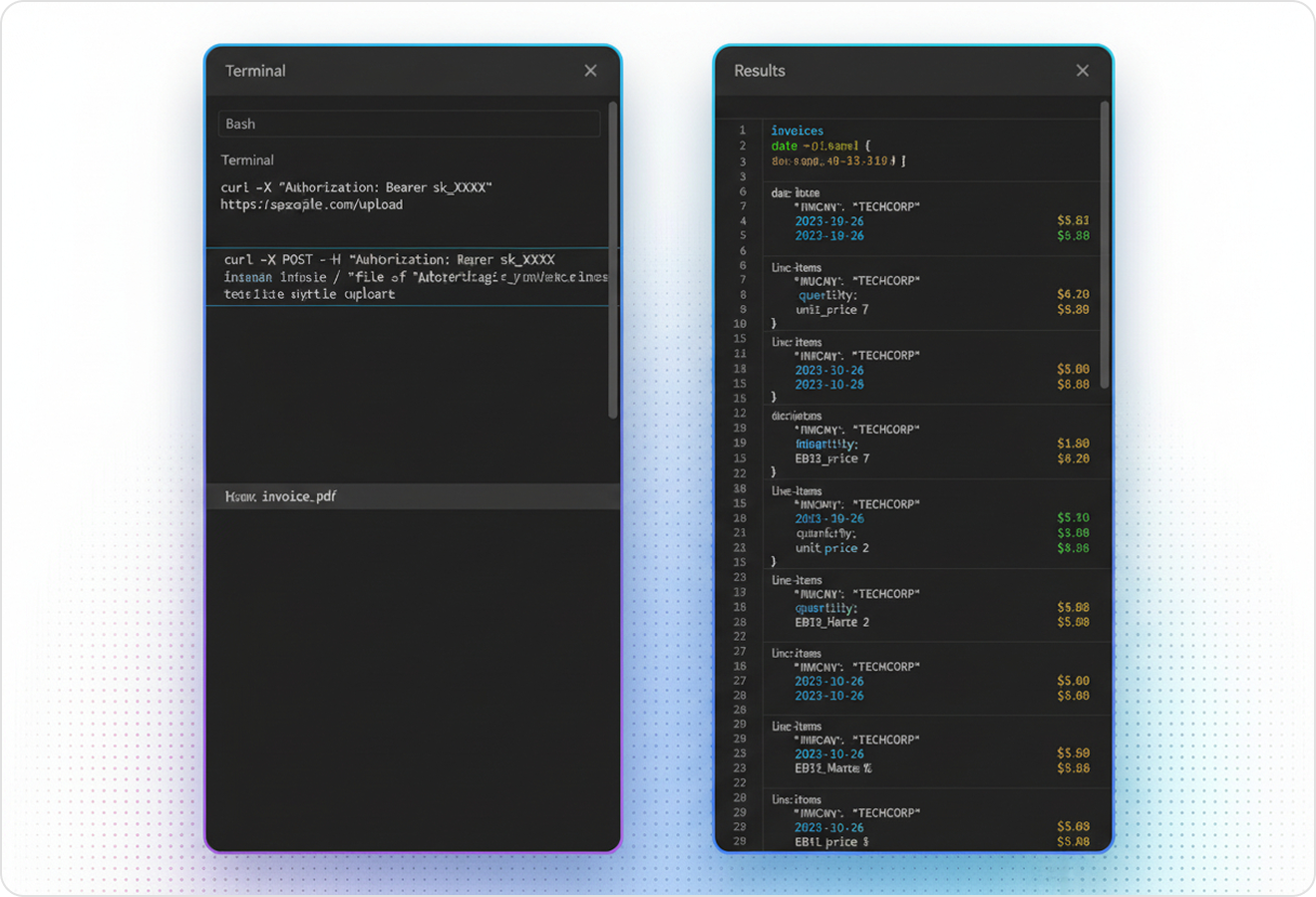
LlamaParse can return structured JSON shaped to your target schema (e.g., parties, vehicles, coverages, incident details) instead of a blob of text. This makes it straightforward to validate required fields, map to downstream APIs, and keep extraction consistent across carriers and form variants.
04
LlamaParse attaches granular metadata like page references, element types, and coordinates so every extracted value can be traced back to the exact spot in the form. For auto insurance intake, this supports fast human review on exceptions and reduces disputes by making outputs auditable.
Technical OCR documentation
Explore our developer guides to easily connect your document pipelines to LlamaParse.
Explore the documentation
Our AI catches the typos that tired eyes miss.

Export to Excel, JSON, XML, or directly via API.

SOC2 Type II compliant with end-to-end encryption.

Train the tool on your specific forms in minutes, not days.

Average processing time of <3 seconds per page.
LlamaParse’s support of a wide variety of filetypes and its accuracy of parsing made it the best tool we tested in our evaluations. The LlamaIndex team was very responsive and we were off to the races within a day.
Common FAQs
01
Yes. Layout-aware extraction preserves reading order across checkboxes, multi-column sections, and footers so values like VIN, policy number, driver details, and loss location don’t get mixed up. This reduces manual rework when templates change or scans are less than perfect.
02
It reconstructs dense tables into clean, machine-readable structure, including rows and columns that often break traditional OCR. That means you can ingest schedules and coverage lines into underwriting or claims systems without brittle fixes for merged cells or misaligned columns.
03
Yes—schema-guided JSON lets you shape results to your target model (e.g., parties, vehicles, coverages, incident details) instead of receiving an unstructured text blob. This makes validation and mapping to downstream APIs straightforward and keeps extraction consistent across carriers and form variants.
04
How do we verify extracted values during QA or when a customer disputes something?
Every extracted value can include verifiable metadata such as page references and coordinates, so reviewers can jump directly to the source location in the form. This makes exception handling faster and creates an auditable trail for compliance and dispute resolution.
05
What happens when scan quality is poor or the form layout varies by carrier?
The layout-aware approach is designed to tolerate real-world variation like skewed scans, stamps, and carrier-specific formatting without scrambling critical fields. You’ll see more stable extraction across form variants, which helps keep automation rates high as your volume grows.
06
How much manual post-processing will my team need to build reliable integrations?
Minimal. Structured tables and schema-guided JSON reduce the need for custom parsing rules, while citations make it easy to route only the true exceptions to human review. Teams typically move from “fix and reformat” work to “review and approve,” accelerating time-to-value.