Nov 14, 2025
Document AI: The Next Evolution of Intelligent Document ProcessingPersona
Industry
Use cases
Android Document Scanning SDK
[ Android Document Scanning SDK ]

Use LlamaParse to capture clean, layout-aware data from receipts, forms, and tables in your app.
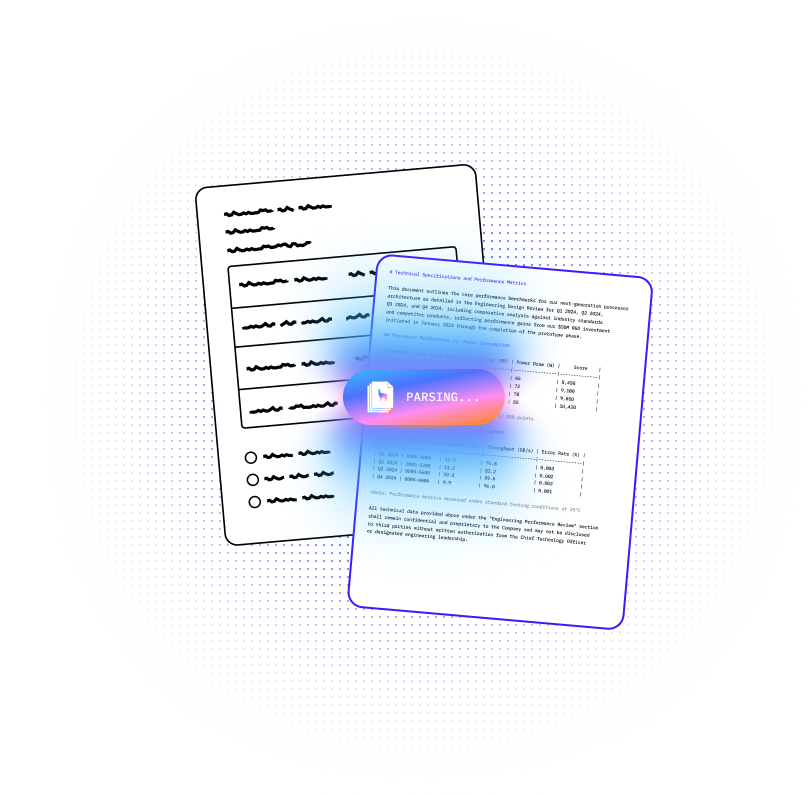
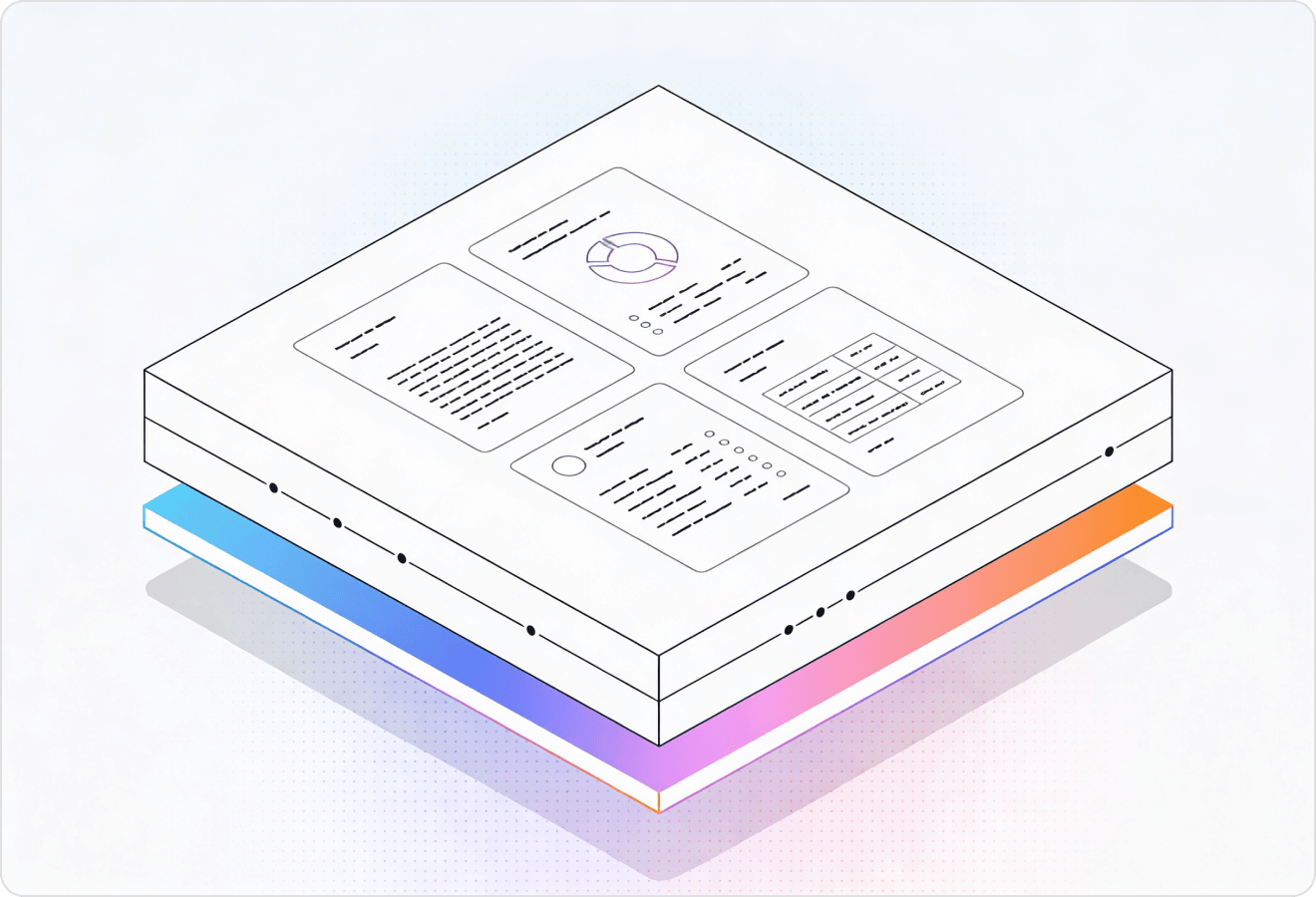
LlamaParse turns photos and PDFs captured by your Android document scanning SDK into clean, structured JSON, Markdown, or HTML your app can trust. Its agentic document parsing understands layout, tables, and embedded visuals, then validates results with confidence signals to reduce manual fixes.
Best-in-Class Accuracy

Ship an Android scan-to-structured-data flow in days by using LlamaParse to turn camera captures into clean Markdown/JSON, instead of fighting brittle OCR cleanup and edge-case layouts. Auto Mode routes simple pages cheaply and escalates only the hard ones, so you can stay within a startup budget while still hitting production-grade accuracy.

Ingest FNOL packets, repair estimates, medical bills, and adjuster photos without losing tables or line items—LlamaParse is layout-aware, so totals, CPT codes, and coverage fields don’t get scrambled. Granular metadata (page coordinates, confidence) enables fast exception review and straight-through processing for the rest, reducing cycle time and leakage.

Convert bills of lading, proof-of-delivery scans, and customs forms into structured records while preserving multi-column layouts and dense tables that typically break traditional OCR. Output consistent JSON to reconcile SKUs, quantities, and accessorials against TMS/ERP data and automatically flag mismatches before invoices are paid.

Parse contractor submittals, RFIs, change orders, and plan sheets with embedded tables, diagrams, and specs so teams can search and extract the exact fields they need without manual rekeying. Multimodal parsing turns visuals and technical notation into usable text/structures, enabling faster bid reviews, compliance checks, and closeout documentation.
The Solution
01
LlamaParse uses layout-aware computer vision to preserve reading order across multi-column pages, headers/footers, and mixed blocks of text. For an Android document scanning SDK, this means photos of receipts, forms, and letters don’t come back scrambled, so your UI and downstream logic stay predictable.
02
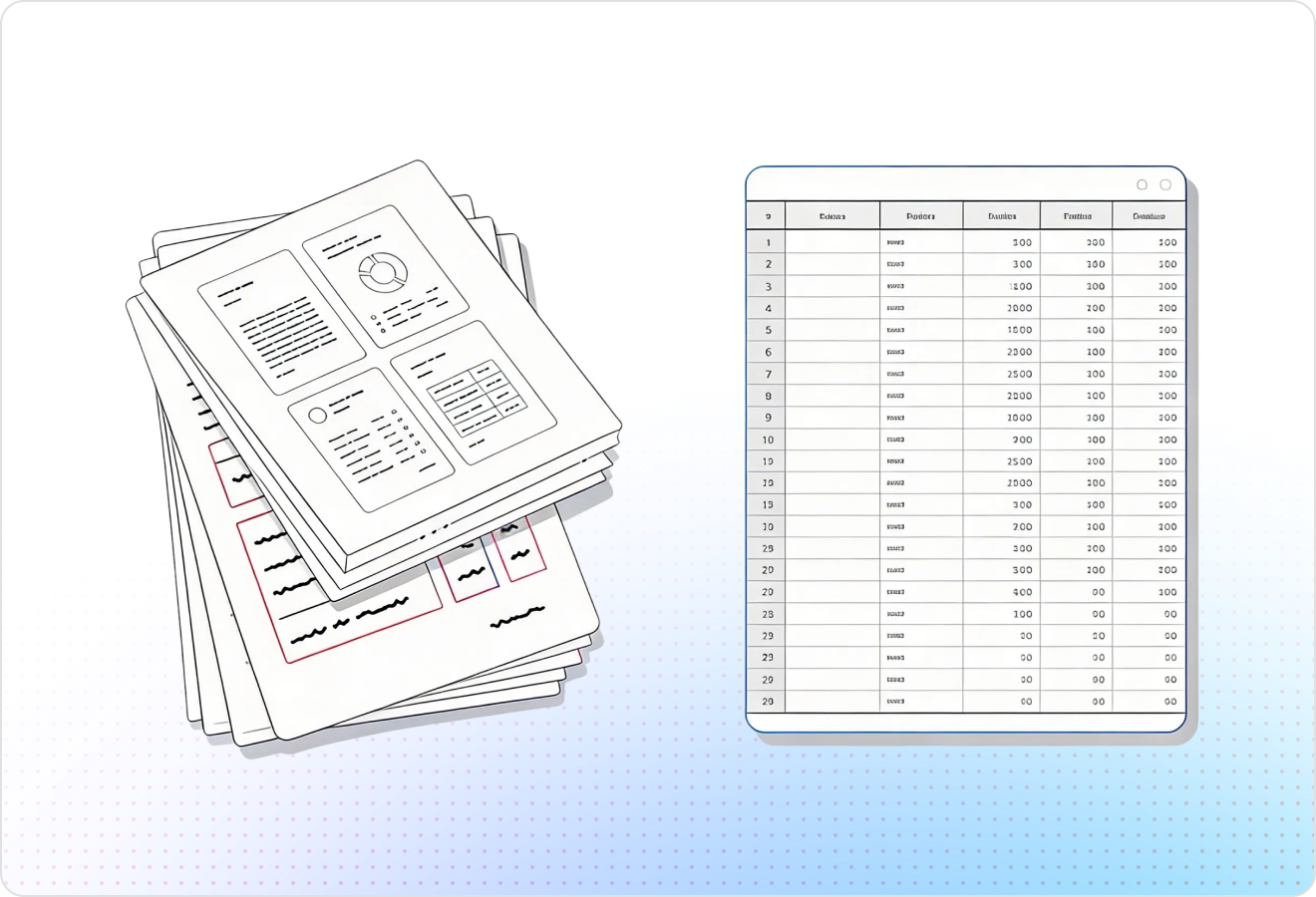
LlamaParse accurately detects tables and form-like structures and reconstructs them into clean, machine-usable output. In a mobile scanning flow, that lets you pull line items, totals, and key-value fields from real-world documents without building brittle table heuristics for every template.
03
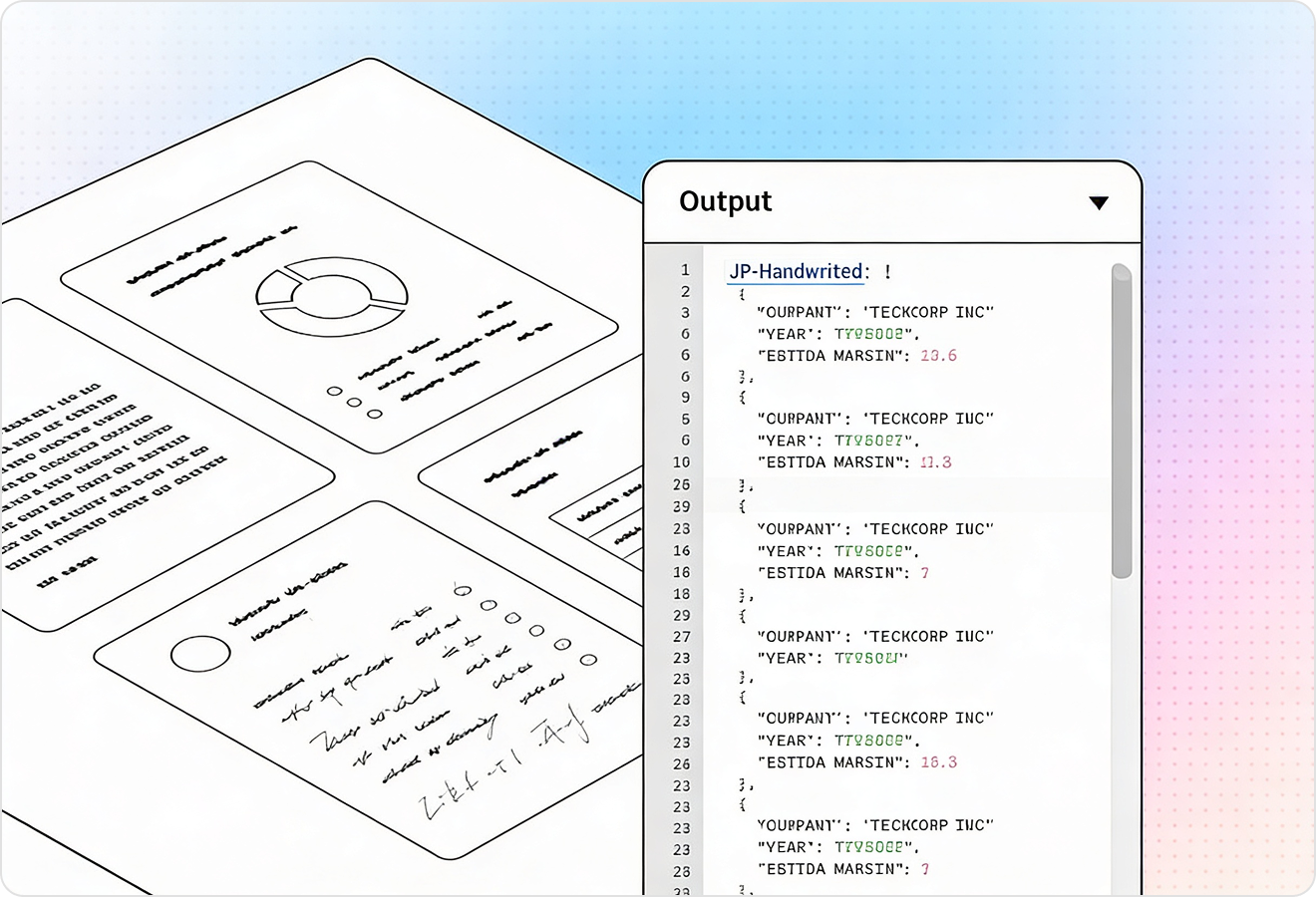
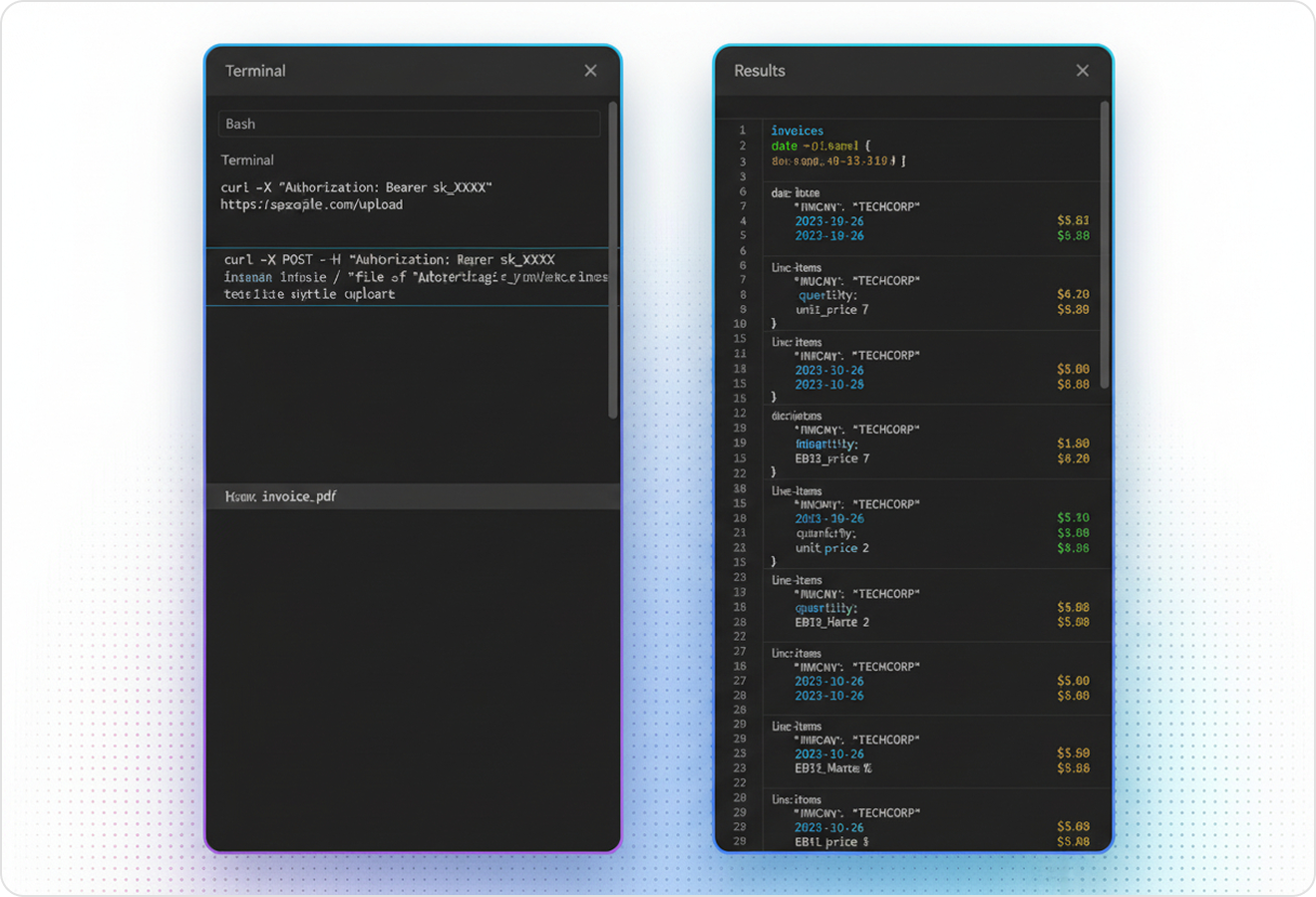
LlamaParse can return structured JSON plus granular metadata like page numbers and spatial coordinates for extracted elements. For Android scanning, this enables features like tap-to-verify highlights, confident field mapping to your app schema, and auditable extraction tied back to the original scan.
04
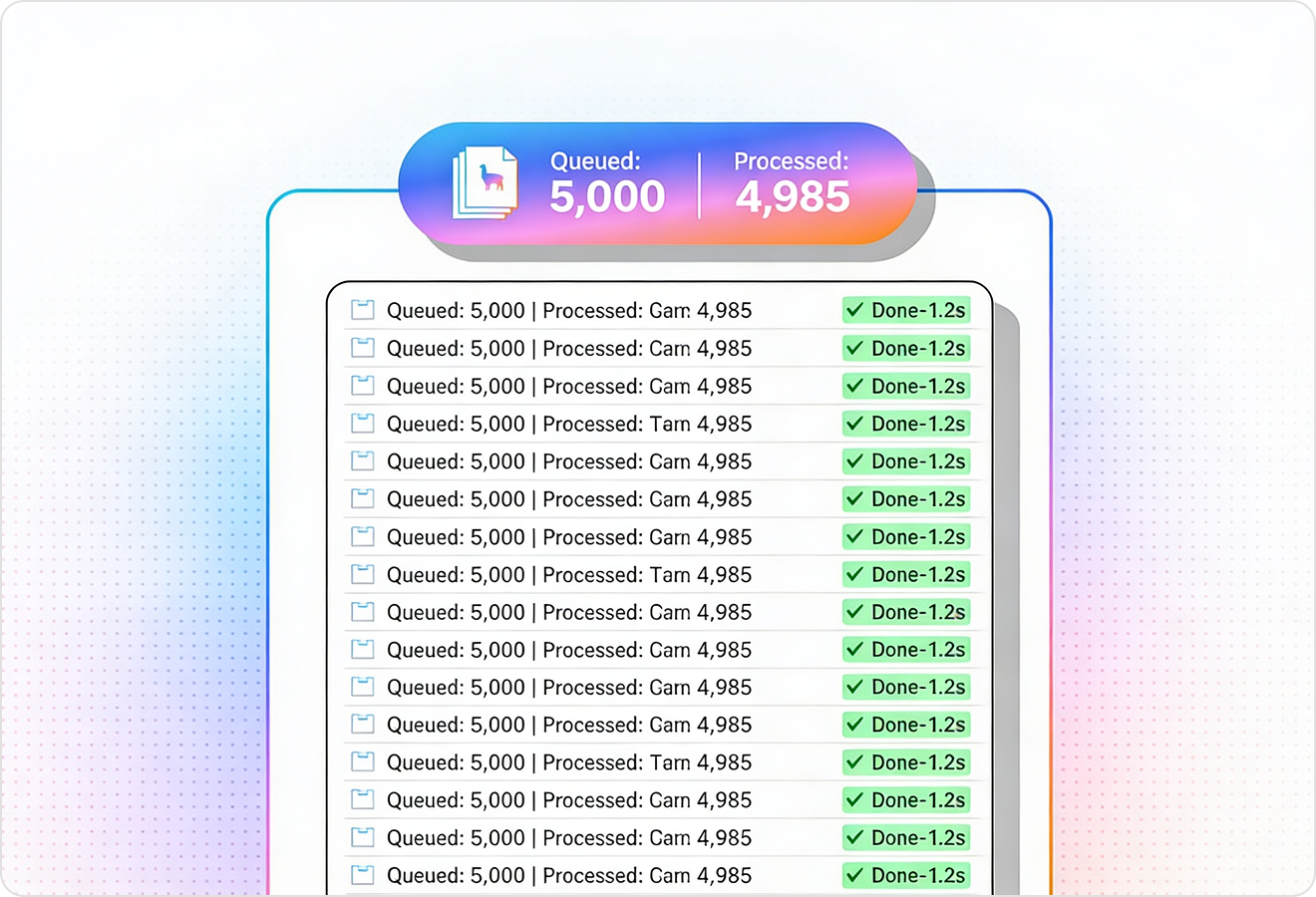
LlamaParse runs multiple validation steps to catch common extraction errors and self-correct inconsistencies before returning results. That’s especially valuable for phone-captured scans with glare, skew, or low contrast, reducing manual review and keeping straight-through processing rates high.
Technical OCR documentation
Explore our developer guides to easily connect your document pipelines to LlamaParse.
Explore the documentation
Our AI catches the typos that tired eyes miss.

Export to Excel, JSON, XML, or directly via API.

SOC2 Type II compliant with end-to-end encryption.

Train the tool on your specific forms in minutes, not days.

Average processing time of <3 seconds per page.
LlamaParse’s support of a wide variety of filetypes and its accuracy of parsing made it the best tool we tested in our evaluations. The LlamaIndex team was very responsive and we were off to the races within a day.
Common FAQs
01
Yes. Layout-aware scan parsing preserves reading order across multi-column pages, headers/footers, and mixed text blocks, so content doesn’t get scrambled. That means fewer UI edge cases and more reliable downstream parsing for receipts, forms, and letters captured from a phone.
02
It detects tables and form-like structures and reconstructs them into clean, machine-usable output. You can pull line items, totals, and key fields without writing brittle per-vendor templates—ideal for mobile captures with inconsistent layouts.
03
You’ll get structured JSON plus metadata like page numbers and spatial coordinates for each extracted element. This enables tap-to-verify highlights, confident field mapping into your app schema, and easier auditing when users dispute or correct a value.
04
How does it handle common mobile scan issues like skew, glare, and low contrast?
It runs validation and auto-correction loops to catch common extraction errors and fix inconsistencies before results are returned. That reduces manual review and helps maintain high straight-through processing even with imperfect phone-captured images.
05
Can I use the output to power verification and editing inside my Android app?
Yes—because each extracted value can include coordinates and page context, you can highlight the source region and let users confirm or edit quickly. This improves trust and completion rates compared to showing raw text with no visual grounding.
06
How quickly can I go from scan to usable data in production?
The SDK is designed to plug into your existing Android scanning flow and return structured results that are immediately usable in your backend or on-device UI. With layout-aware parsing, table extraction, and built-in validation, you spend less time tuning edge cases and more time shipping a reliable feature.