Nov 14, 2025
Document AI: The Next Evolution of Intelligent Document ProcessingPersona
Industry
Use cases
Affidavit OCR
[ Affidavit OCR ]

Use LlamaParse to capture every field, table, and signature with confidence scores you can verify.
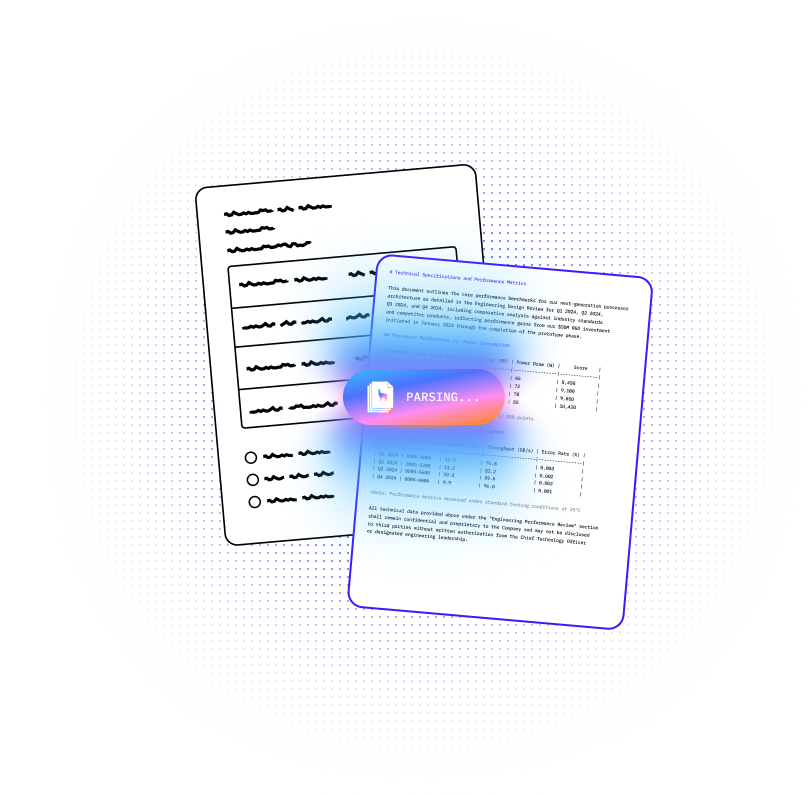
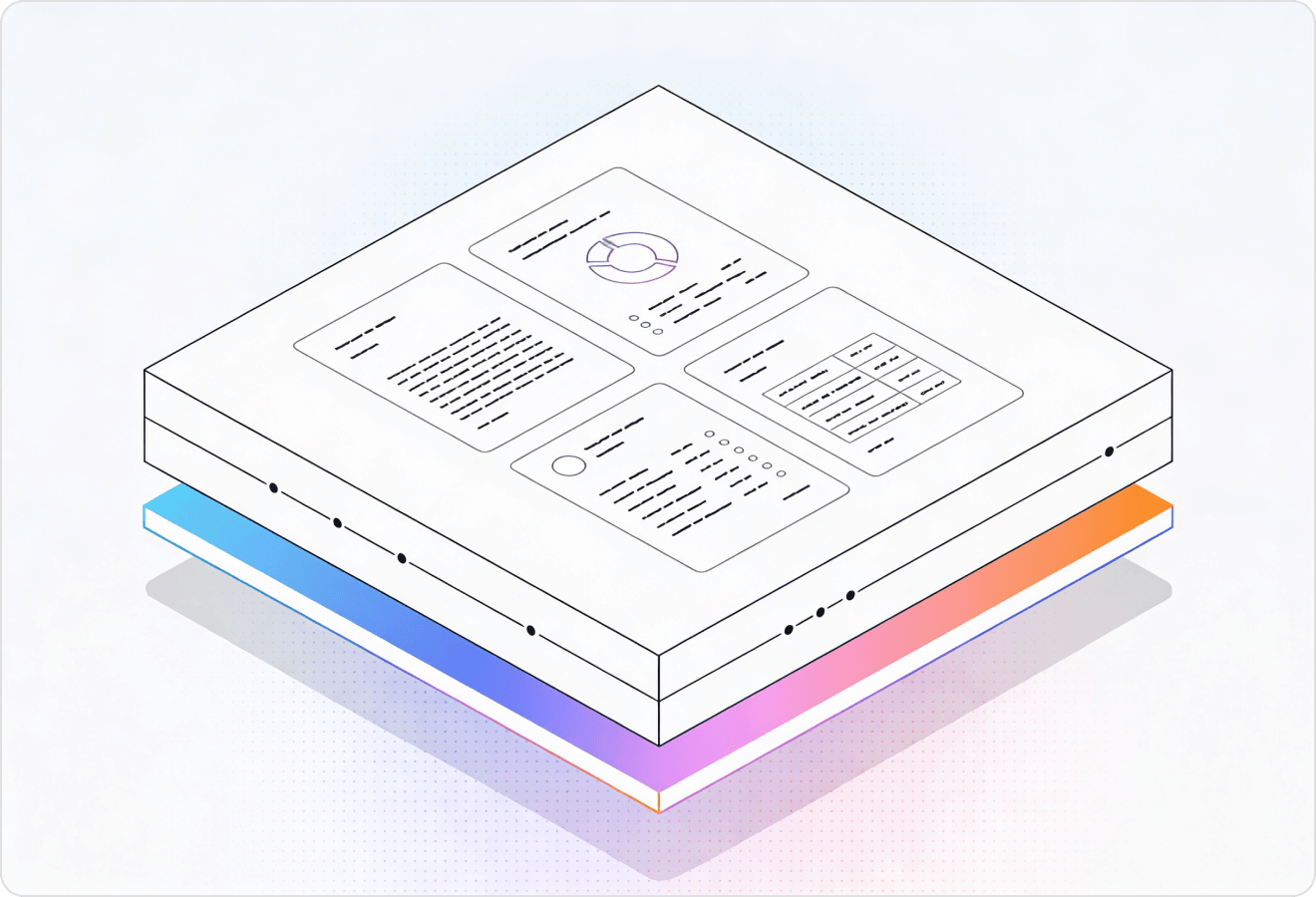
LlamaParse turns scanned affidavits and messy PDFs into clean JSON or Markdown, capturing parties, dates, notarizations, exhibits, and key statements. Agentic parsing validates fields with citations and confidence scores, so reviewers can quickly verify sources and keep downstream workflows accurate.
Best-in-Class Accuracy

Turn affidavits into clean, citable JSON and Markdown with page-level metadata, so paralegals can instantly pull names, dates, statements, and exhibits without manual rekeying. LlamaParse preserves reading order across multi-column filings and stamped pages, reducing missed facts and accelerating discovery prep and motion drafting.

Extract sworn statements from affidavits—including tables, handwritten notes, and attachments—into structured fields that feed claim systems and SIU case files. With auto-correction loops and confidence signals, teams cut rework from messy scans and speed up coverage decisions, fraud triage, and subrogation packages.

Ingest large volumes of affidavits into case management workflows by converting inconsistent forms and scanned PDFs into standardized outputs with traceable citations back to the source page. Natural-language parsing instructions let agencies enforce required fields (e.g., declarant, jurisdiction, notarization) to reduce incomplete submissions and shorten intake backlogs.

Ship affidavit ingestion fast by using LlamaParse APIs to convert user-uploaded documents into schema-ready JSON, even when layouts vary across courts and jurisdictions. Tier-based processing and cost optimization keep unit economics predictable while you scale from pilot to production without maintaining brittle OCR post-processing code.
The Solution
01
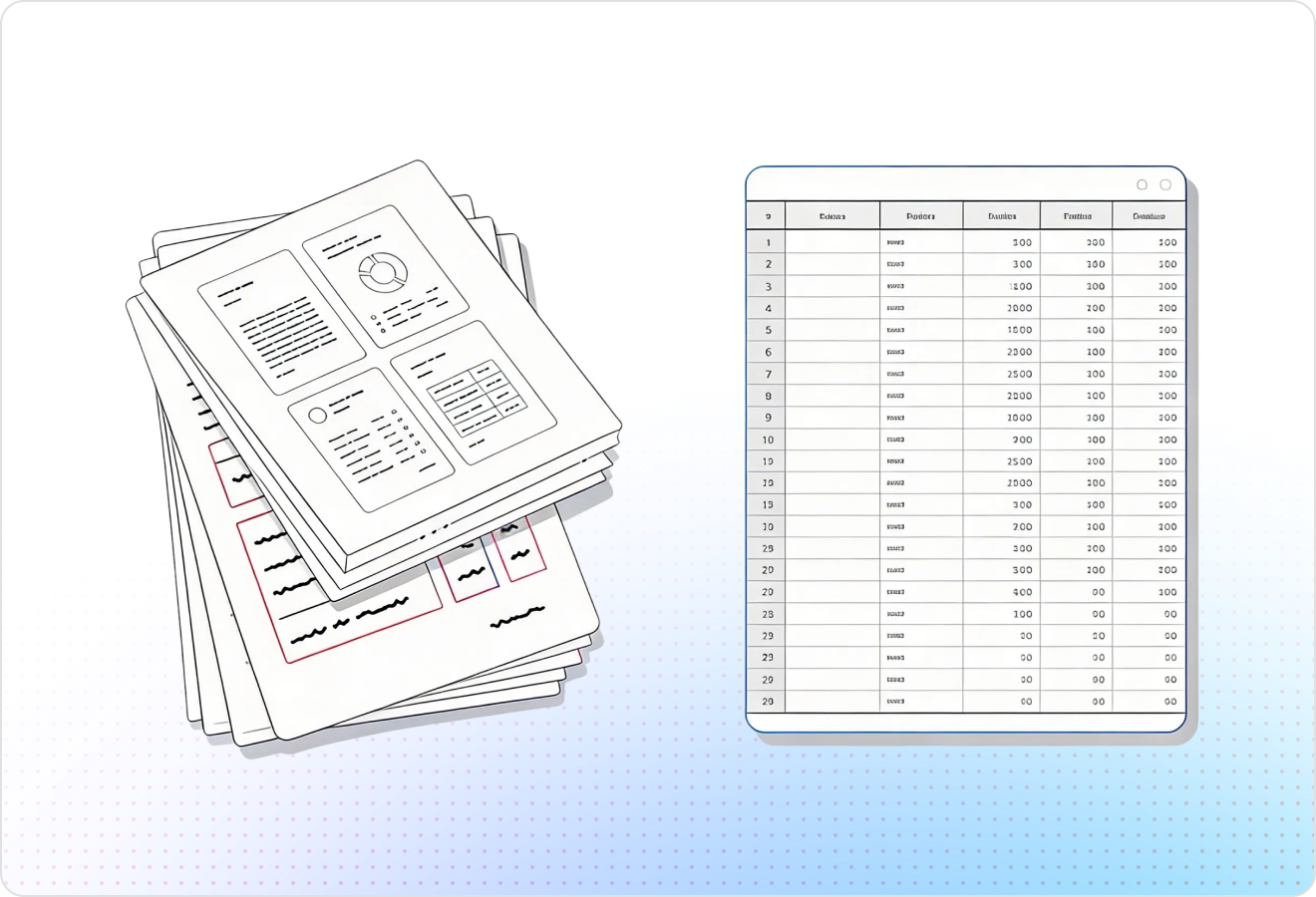
LlamaParse understands page layout and reading order, so affidavit text doesn’t get scrambled across multi-column sections, headers, footers, or notarization blocks. You get clean, logically ordered output that preserves clauses, paragraphs, and signature sections for downstream review and automation.
02
LlamaParse extracts structured elements like checkboxes, enumerations, and embedded tables commonly found in affidavit templates and exhibits. This makes it easy to capture names, dates, case numbers, and sworn statements into consistent fields instead of brittle post-processing.
03
LlamaParse runs self-correction loops to detect and fix common scan issues, misreads, and formatting inconsistencies that show up in court-filed PDFs and faxed affidavits. That reduces manual cleanup and improves straight-through processing when accuracy actually matters.
04
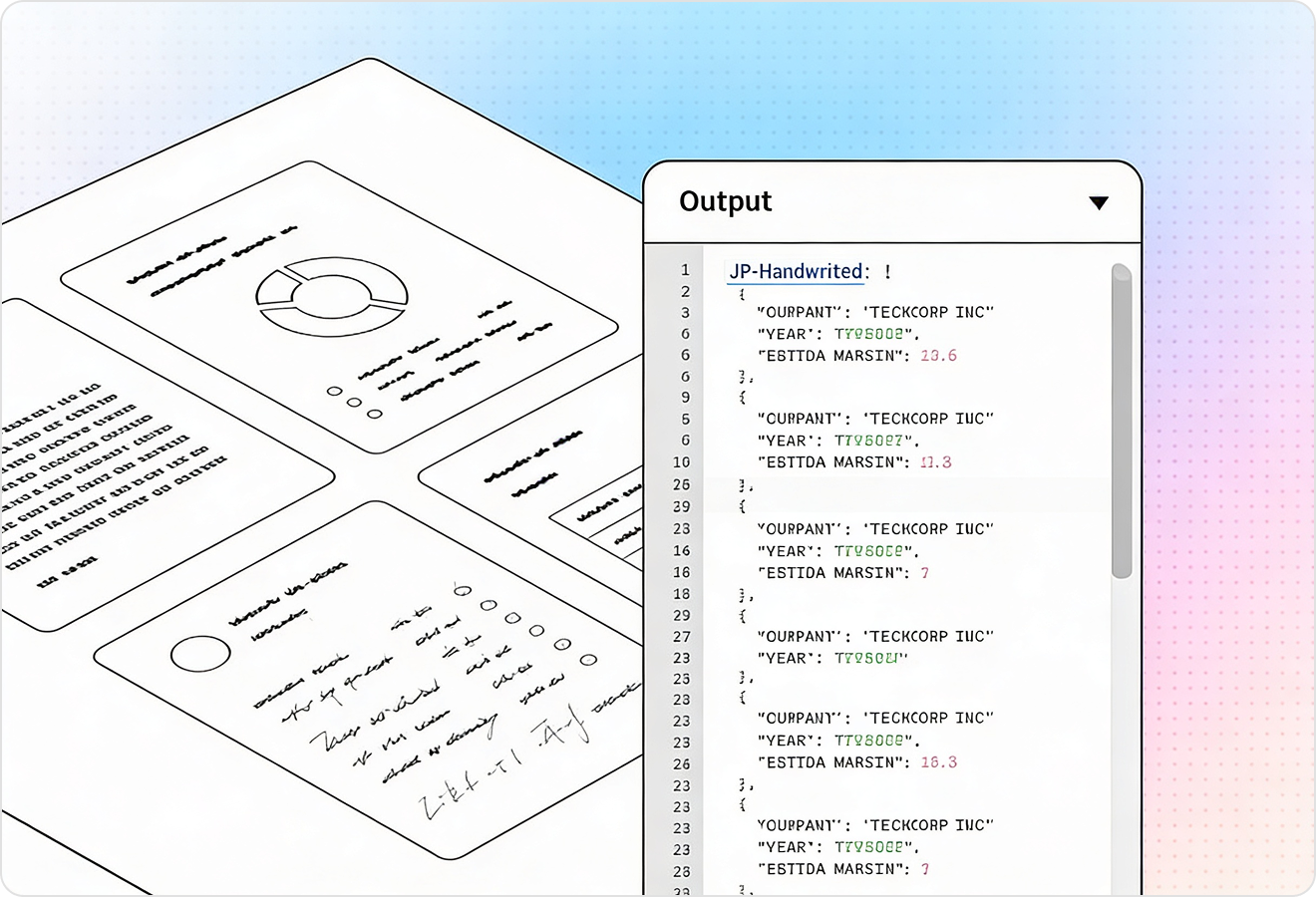
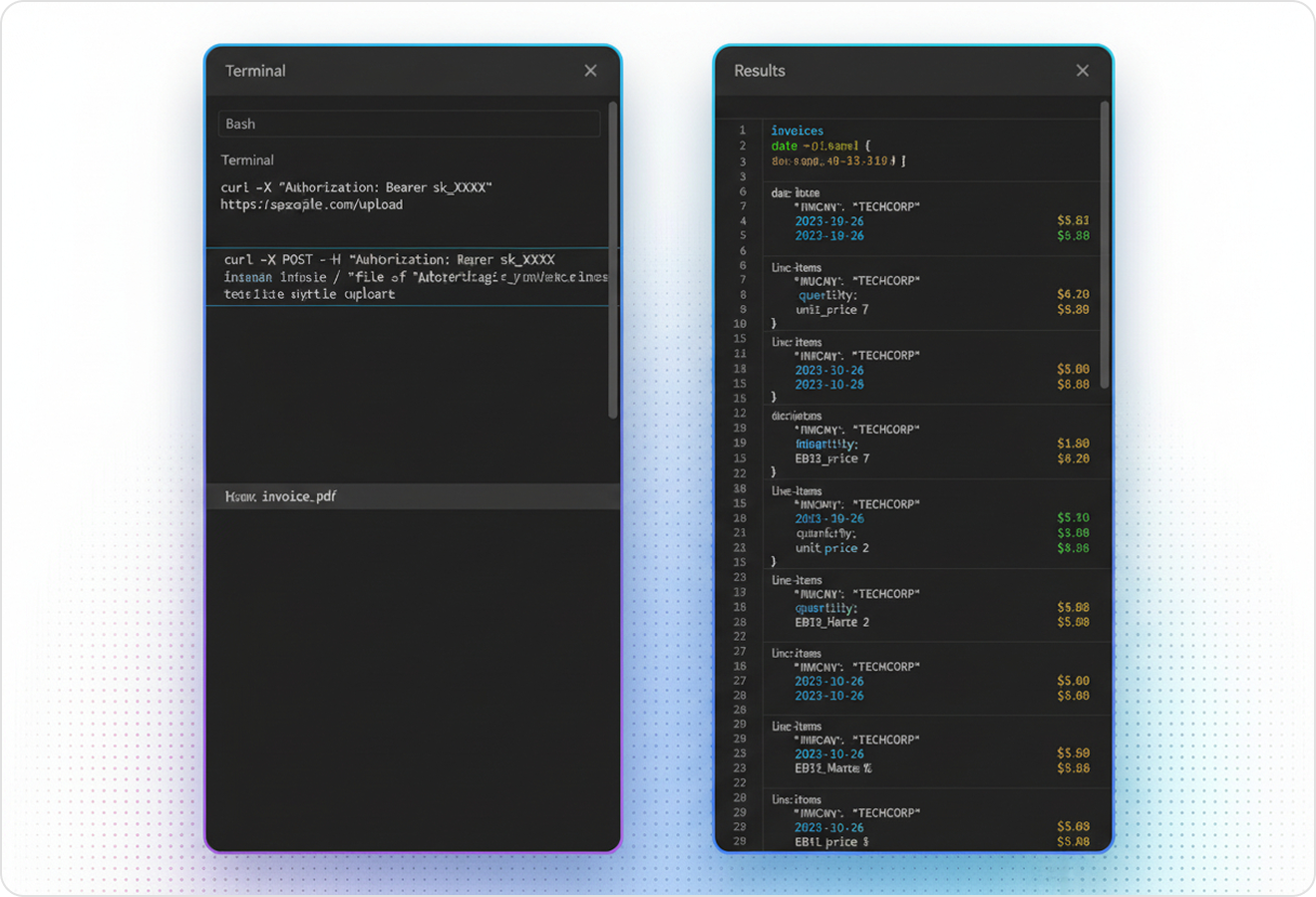
LlamaParse can return affidavit data in structured JSON with granular metadata like page references and element-level traceability. This lets you verify extracted statements against the source document and build reliable human-in-the-loop review for legal workflows.
Technical OCR documentation
Explore our developer guides to easily connect your document pipelines to LlamaParse.
Explore the documentation
Our AI catches the typos that tired eyes miss.

Export to Excel, JSON, XML, or directly via API.

SOC2 Type II compliant with end-to-end encryption.

Train the tool on your specific forms in minutes, not days.

Average processing time of <3 seconds per page.
LlamaParse’s support of a wide variety of filetypes and its accuracy of parsing made it the best tool we tested in our evaluations. The LlamaIndex team was very responsive and we were off to the races within a day.
Common FAQs
01
Yes—layout-aware parsing follows the document’s reading order so text doesn’t get scrambled across columns, headers/footers, or notarization areas. You get clean, logically ordered clauses and paragraphs that are easier to review and automate. This reduces rework and helps your team trust the extracted output.
02
LlamaParse pulls structured elements like form fields, enumerations, and common affidavit patterns into consistent fields. That makes it straightforward to capture parties, dates, case details, and statement blocks without brittle regex-heavy post-processing. The result is cleaner data you can use immediately in your workflow.
03
It extracts checkboxes and embedded tables as structured data, including tables found in exhibits and attachments. This helps you preserve meaning (e.g., selected options, line items, or numbered lists) instead of flattening everything into messy text. You can then map the output directly into your database or case management system.
04
What if the affidavit PDF is a poor scan or fax with skew, blur, or formatting issues?
Auto-correction and validation loops detect common scan problems and OCR misreads, then refine the output to improve accuracy. That means fewer manual fixes on court-filed PDFs and faxed affidavits where quality varies. It’s designed for real-world legal documents—not just pristine digital files.
05
Do you provide JSON output with citations so we can verify extracted text against the source?
Yes, you can return structured JSON with page references and element-level traceability. This makes audits and spot-checking easy—reviewers can jump from a field back to the exact location in the affidavit. It’s ideal for building reliable human-in-the-loop approval steps.
06
How does this fit into legal review workflows where accuracy and accountability matter?
The combination of clean layout-aware text, structured field extraction, and citation metadata supports fast review without sacrificing defensibility. You can standardize affidavit intake while still giving attorneys and ops teams a clear way to validate what was extracted. That balance typically speeds turnaround and reduces risk.