Nov 14, 2025
Document AI: The Next Evolution of Intelligent Document ProcessingPersona
Industry
Use cases
Salesforce OCR PDF Extraction
[ Salesforce OCR PDF Extraction ]

Use LlamaParse to turn messy PDFs into clean Salesforce fields with layout-aware accuracy.
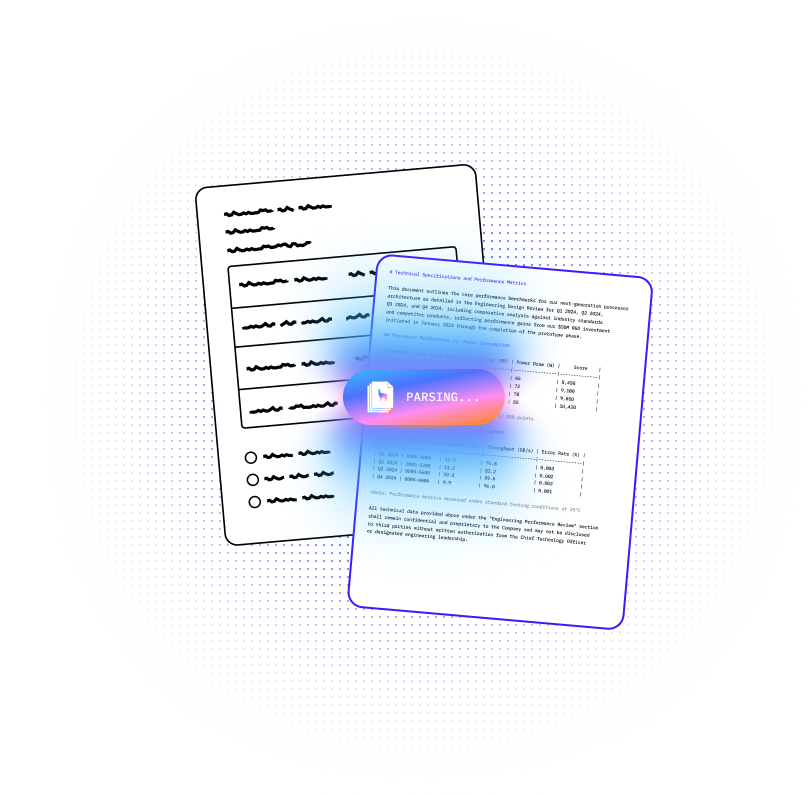
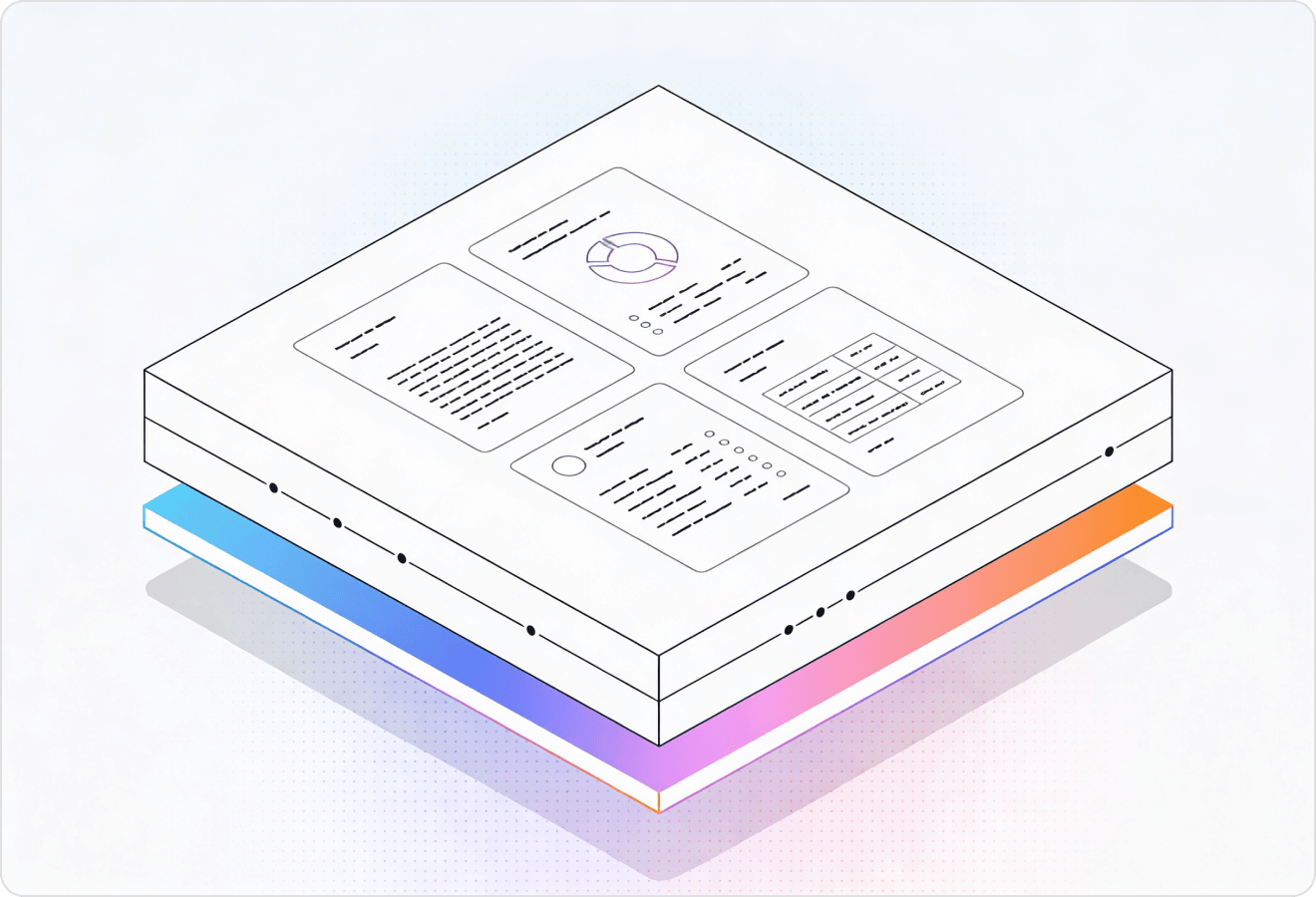

LlamaParse turns messy PDFs into structured, Salesforce-ready fields by understanding layout, tables, and scans instead of guessing from raw text. Agentic parsing adds validation loops and citations so you can trust each extracted value before it lands in Leads, Opportunities, or custom objects.
Best-in-Class Accuracy

Parse bank statements, tax returns, and credit packages into structured JSON with page-level citations, so underwriting teams can trust every extracted number and trace it back instantly. LlamaParse’s layout-aware table extraction prevents scrambled line items and reduces manual re-keying that slows approvals in Salesforce.

Convert bills of lading, commercial invoices, and packing lists into clean Markdown and fielded data that maps directly into Salesforce objects for faster exception handling. Multimodal parsing captures tables and stamp-heavy scans reliably, cutting delays caused by missing SKUs, quantities, and Incoterms.

Extract clauses, defined terms, and obligation tables from contracts and exhibits while preserving reading order across multi-column PDFs and scanned appendices. Granular metadata enables reviewers to validate outputs quickly in Salesforce by jumping to the exact page and coordinate where a term was sourced.

Turn customer PDFs like POs, MSAs, and usage reports into a consistent schema that automatically updates Salesforce records without building brittle regex pipelines. Natural-language parsing instructions let lean teams iterate extraction rules in plain English, so onboarding and invoicing workflows ship in days, not quarters.
The Solution
01
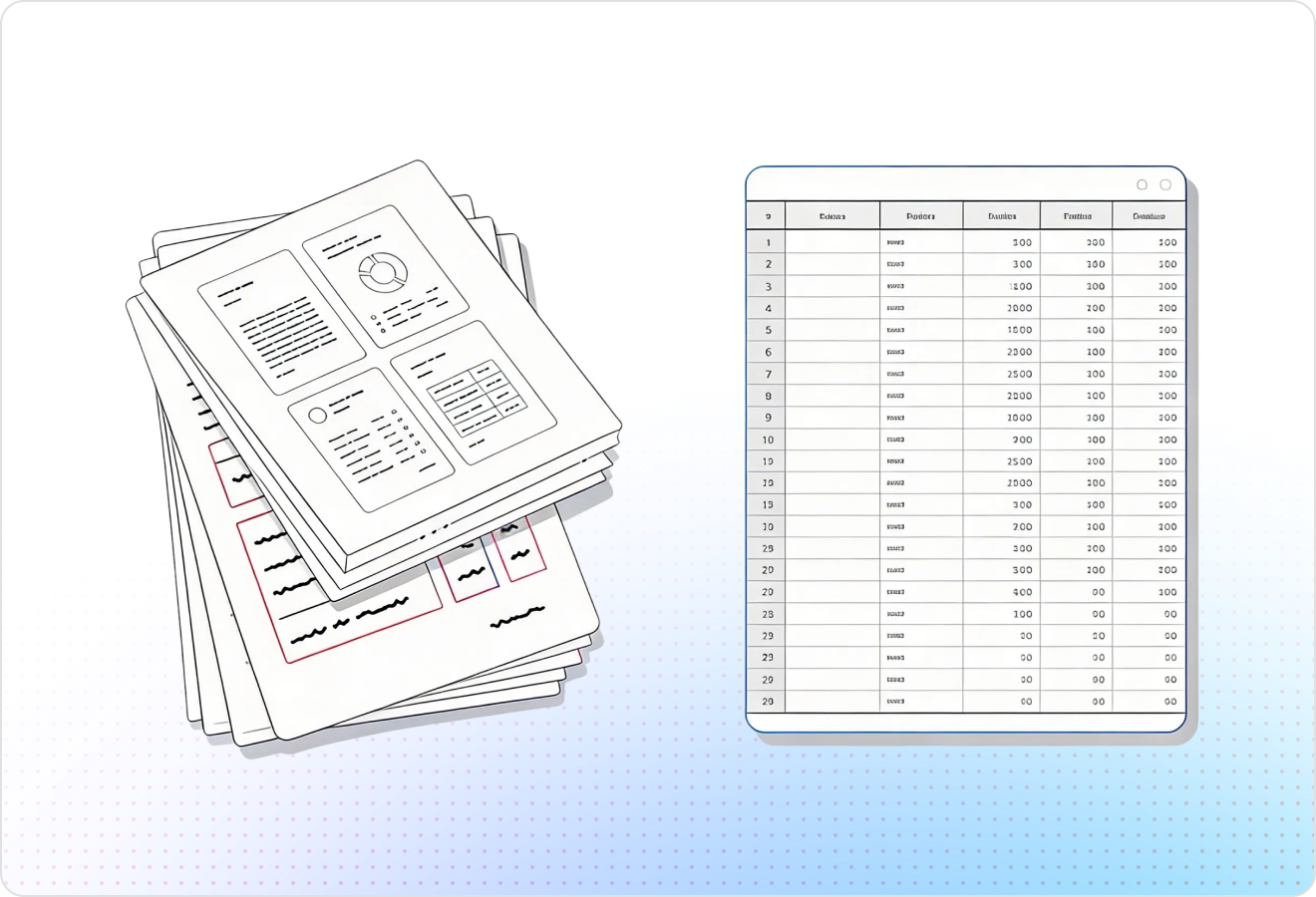
LlamaParse understands real PDF layout—columns, headers/footers, and section boundaries—so extracted text keeps the correct reading order. That means Salesforce fields get populated with the right values instead of scrambled copy/paste artifacts from brittle, legacy extraction.
02
It reliably pulls complex tables (line items, pricing grids, usage summaries) into structured outputs without losing row/column relationships. This makes it straightforward to map PDF tables into Salesforce objects like Quotes, Orders, or custom line-item records.
03
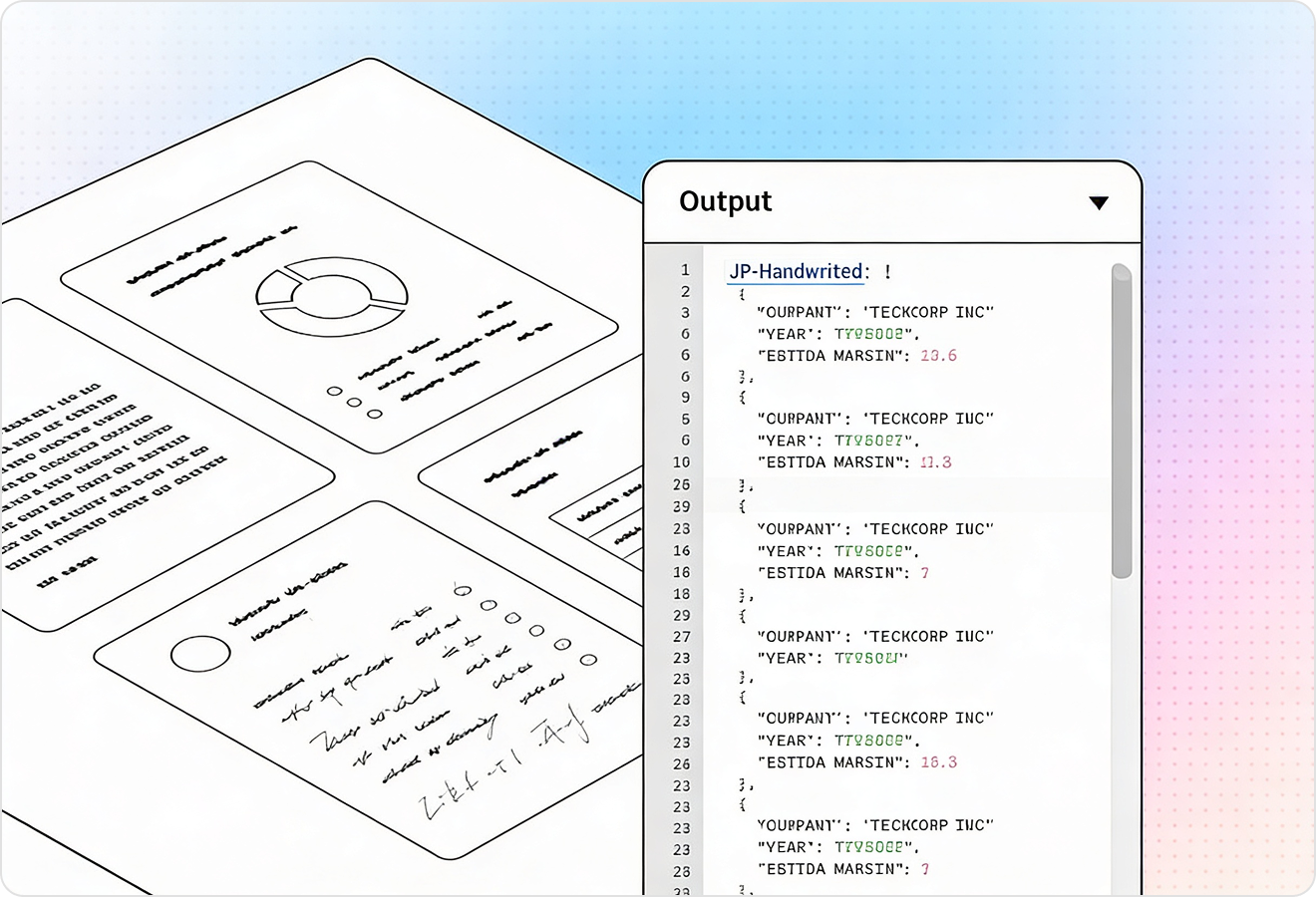
You can give natural-language instructions that shape the extraction into the exact fields you need, like Account Name, Contract Start Date, Total, or PO Number. This reduces custom parsing code and helps enforce consistent, Salesforce-ready outputs across varied vendor templates.
04
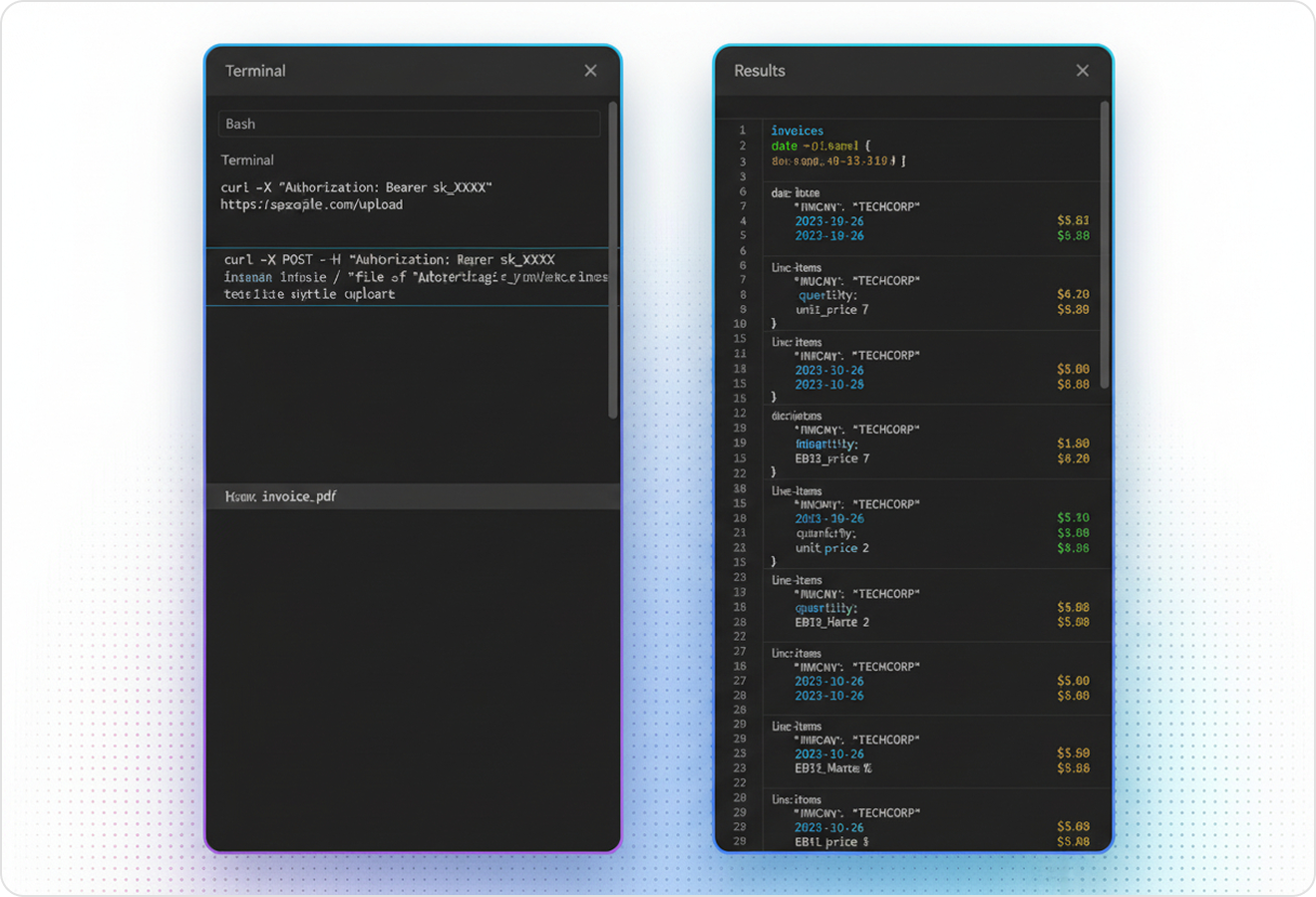
LlamaParse can emit clean JSON alongside granular metadata like page references and element-level traceability. That makes Salesforce imports auditable and safer to automate, because every extracted value can be tied back to its source location for validation and exception handling.
Technical OCR documentation
Explore our developer guides to easily connect your document pipelines to LlamaParse.
Explore the documentation
Our AI catches the typos that tired eyes miss.

Export to Excel, JSON, XML, or directly via API.

SOC2 Type II compliant with end-to-end encryption.

Train the tool on your specific forms in minutes, not days.

Average processing time of <3 seconds per page.
LlamaParse’s support of a wide variety of filetypes and its accuracy of parsing made it the best tool we tested in our evaluations. The LlamaIndex team was very responsive and we were off to the races within a day.
Common FAQs
01
Yes—layout-aware parsing preserves columns, headers/footers, and section boundaries so text stays in the right sequence. That means Salesforce fields get populated with the intended values instead of the scrambled output you often see with basic OCR or copy/paste.
02
It reliably converts complex tables (like pricing grids and usage summaries) into structured data without losing row/column relationships. This makes it easy to map each line item into Salesforce objects and reduce manual cleanup.
03
You can use schema-guided prompts to specify exactly what you need—like Account Name, PO Number, Contract Start Date, and Totals. This keeps outputs consistent across varied PDF formats and minimizes custom parsing logic.
04
Do you provide JSON output that’s ready for automation and easy to validate?
Yes, the output is clean JSON designed to feed directly into Salesforce integrations and workflows. You can standardize field names and structures so downstream mapping and imports are predictable.
05
Can we audit extracted values and trace them back to the original PDF for compliance?
Absolutely—each extracted value can include citations like page references and element-level metadata. That traceability makes reviews faster, supports compliance, and enables safer automation with clear exception handling.
06
How does this reduce implementation time compared to building a custom OCR + parsing pipeline?
Because extraction is layout-aware and schema-guided, you avoid brittle rules and constant template-by-template fixes. Teams typically get to Salesforce-ready structured outputs faster, with fewer edge cases and less ongoing maintenance.