Nov 14, 2025
Document AI: The Next Evolution of Intelligent Document ProcessingPersona
Industry
Use cases
QuickBooks OCR Invoice Scanning
[ QuickBooks OCR Invoice Scanning ]

Use LlamaParse to capture invoice details accurately and sync them into QuickBooks in seconds.
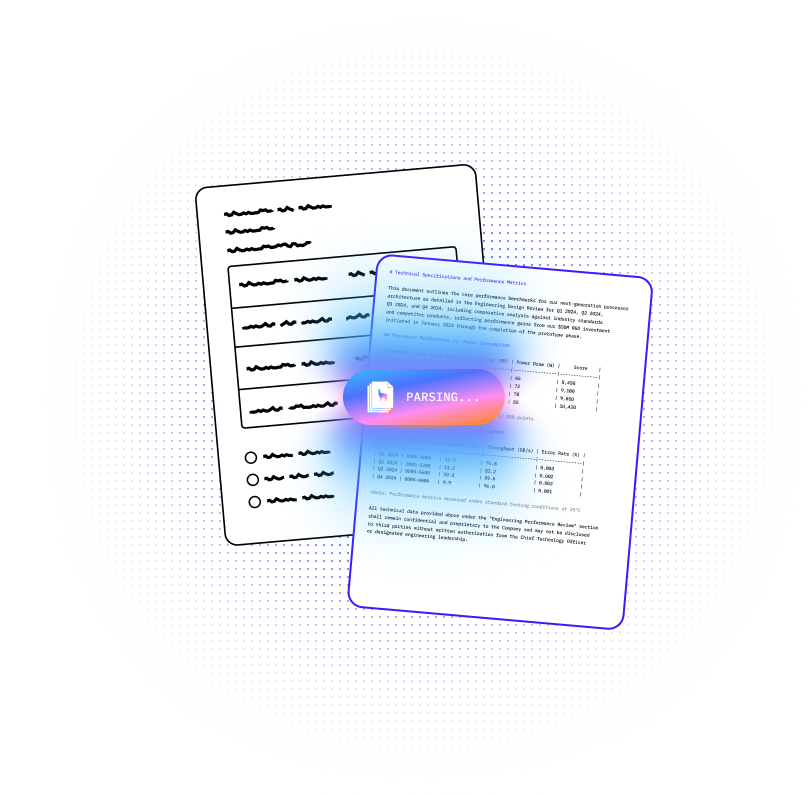
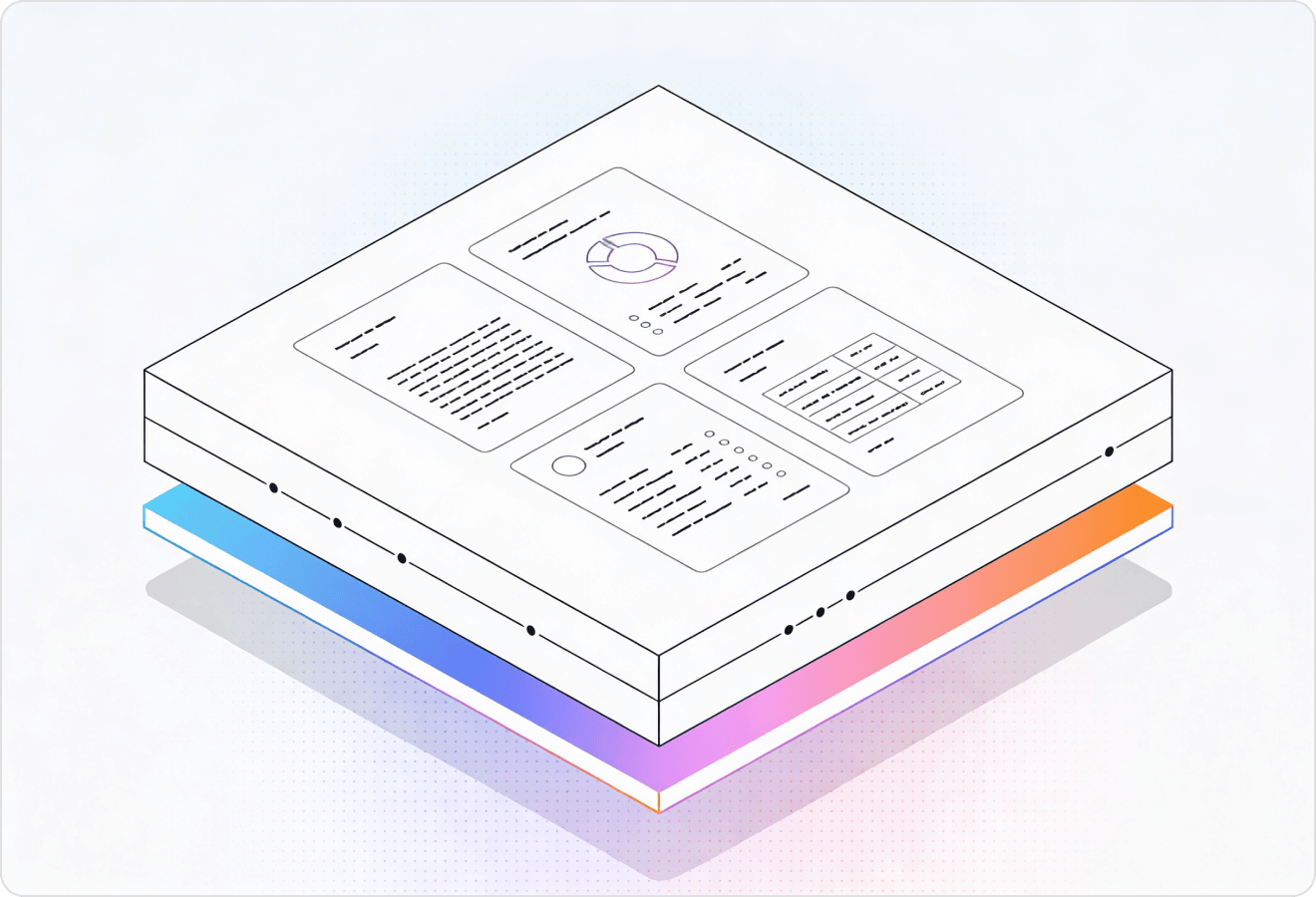

LlamaParse turns QuickBooks invoices and vendor bills into clean, structured fields you can trust, so AP and bookkeeping stop retyping line items. It uses agentic document parsing that understands layout and tables, then validates outputs with metadata so exceptions are easy to review.
Best-in-Class Accuracy

Turn emailed PDFs and vendor bills into clean, QuickBooks-ready line-item JSON without building brittle OCR cleanup scripts, even when invoices use multi-column layouts and dense tables. Close the books faster by auto-routing simple invoices through low-cost tiers while escalating only messy scans for higher-accuracy parsing and fewer exceptions.

Extract cost codes, retainage, change-order references, and line-item materials from varied subcontractor invoices where layout and tables constantly change, then map them into QuickBooks fields reliably. Reduce overbilling disputes by attaching verifiable citations and confidence scores so reviewers can validate the exact source line in seconds.

Ingest high-volume supplier and freight invoices—including accessorials, dimensional charges, and multi-page packing references—without losing table structure or scrambling reading order. Automate AP matching by producing structured outputs that reconcile invoice totals to POs and shipment records, cutting manual keying and chargeback leakage.

Parse medical supply and lab invoices that include mixed tables, abbreviations, and embedded notes, and normalize them into consistent QuickBooks categories for cleaner reporting. Minimize audit risk by preserving document structure and returning traceable metadata that supports fast, defensible approval workflows.
The Solution
01
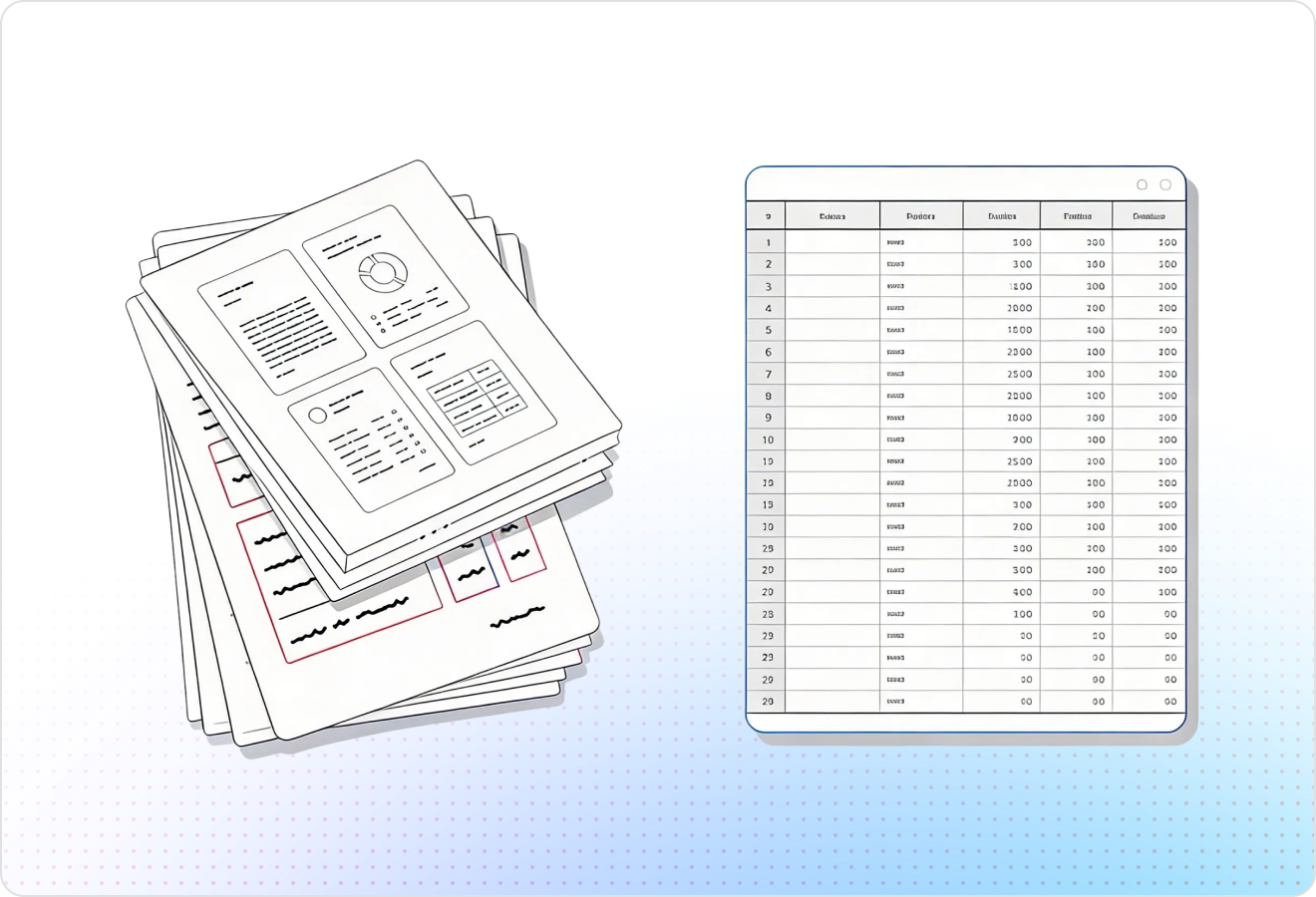
LlamaParse is layout-aware, so it preserves reading order and correctly separates headers, bill-to/ship-to blocks, totals, and line-item sections even on messy scans. That means QuickBooks gets clean, consistent fields (vendor, invoice #, dates, subtotal/tax/total) instead of scrambled text you have to manually fix.
02
LlamaParse reliably extracts complex invoice tables—quantities, unit prices, discounts, and multi-line descriptions—without losing column alignment. This makes it straightforward to map each row into QuickBooks line items for accurate coding and reconciliation.
03
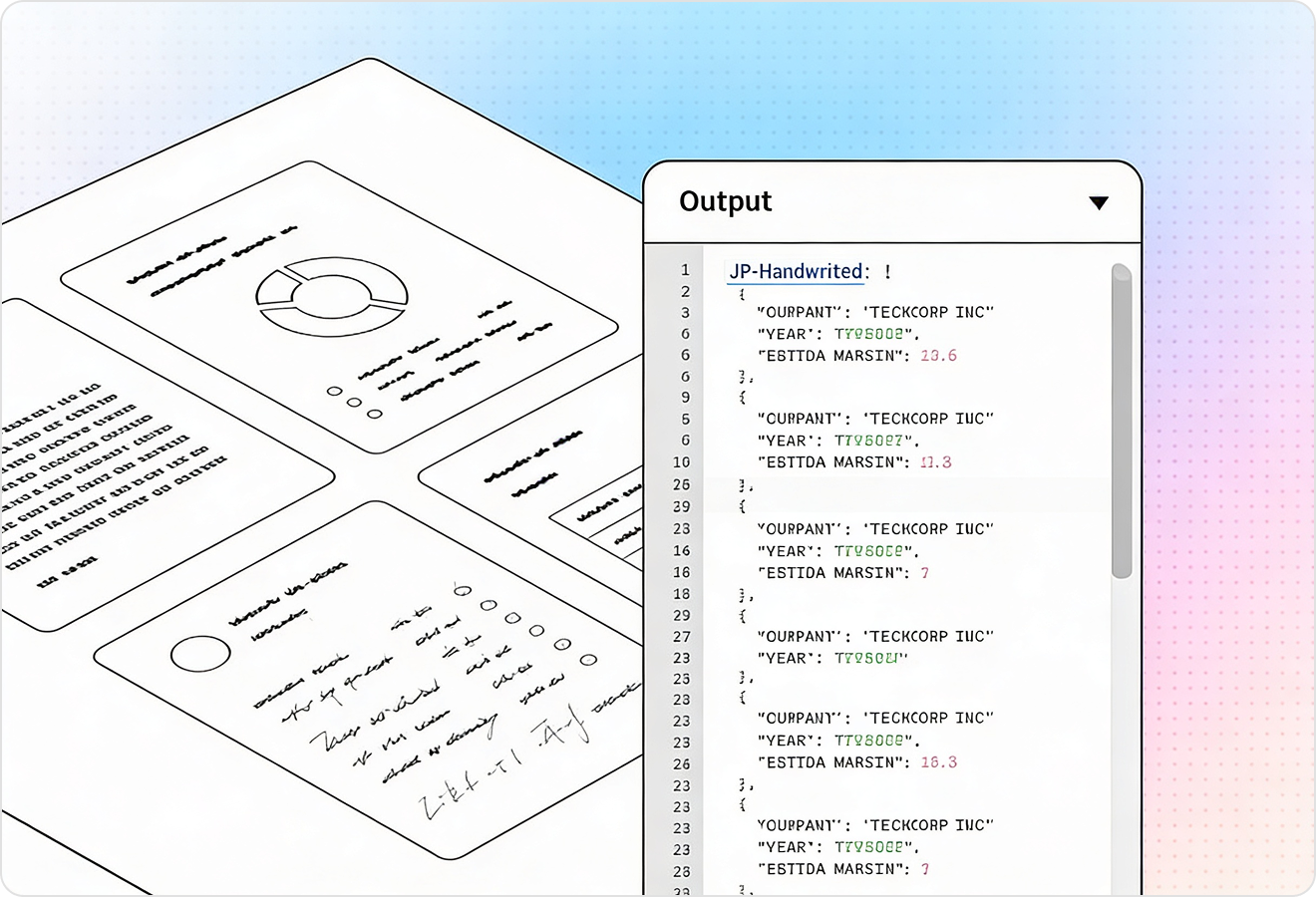
JSON Mode returns invoice data in a predictable structure you can send directly into your QuickBooks import pipeline or middleware. It also includes granular metadata like page and element coordinates to support auditability and targeted exception handling when something looks off.
04
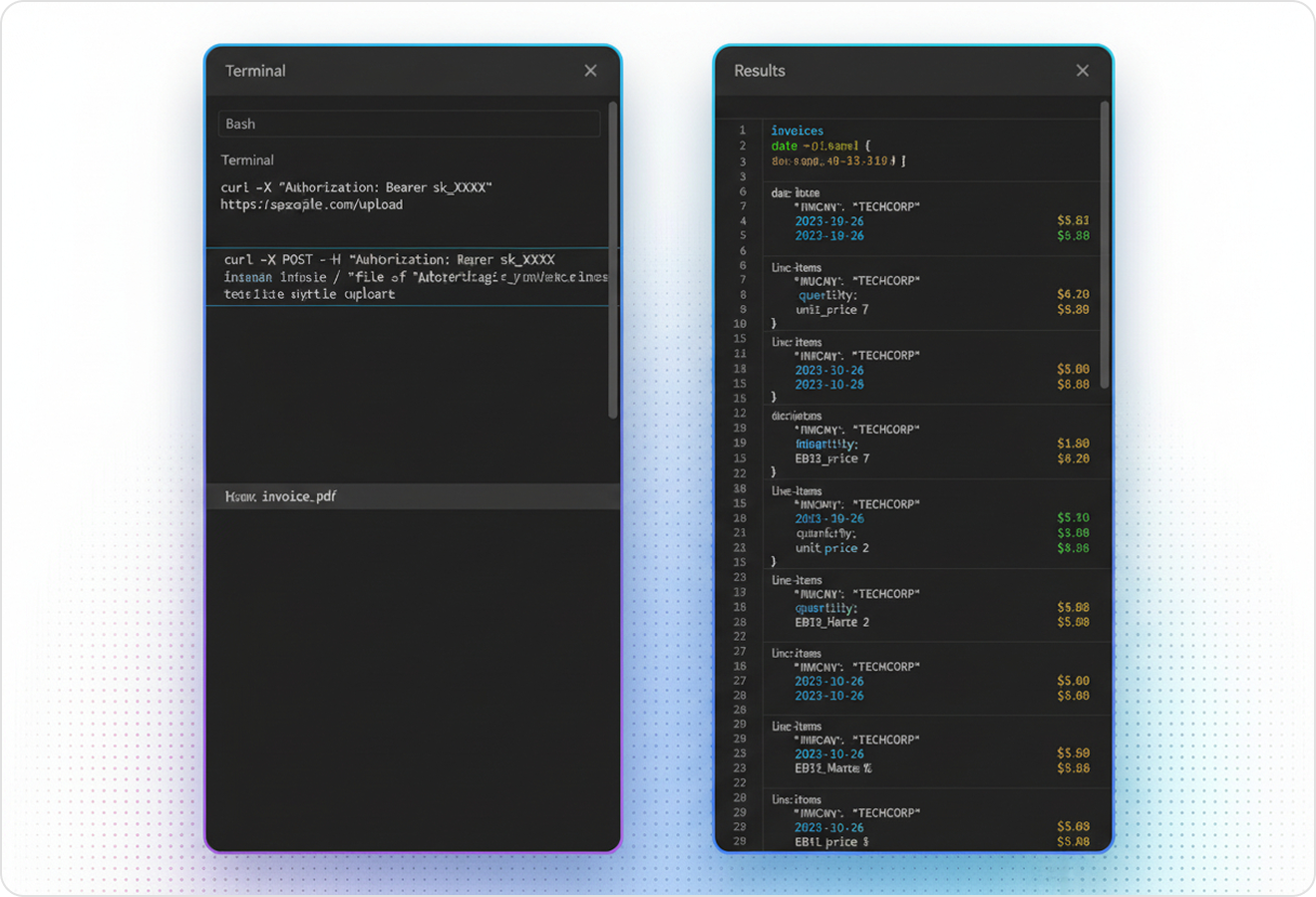
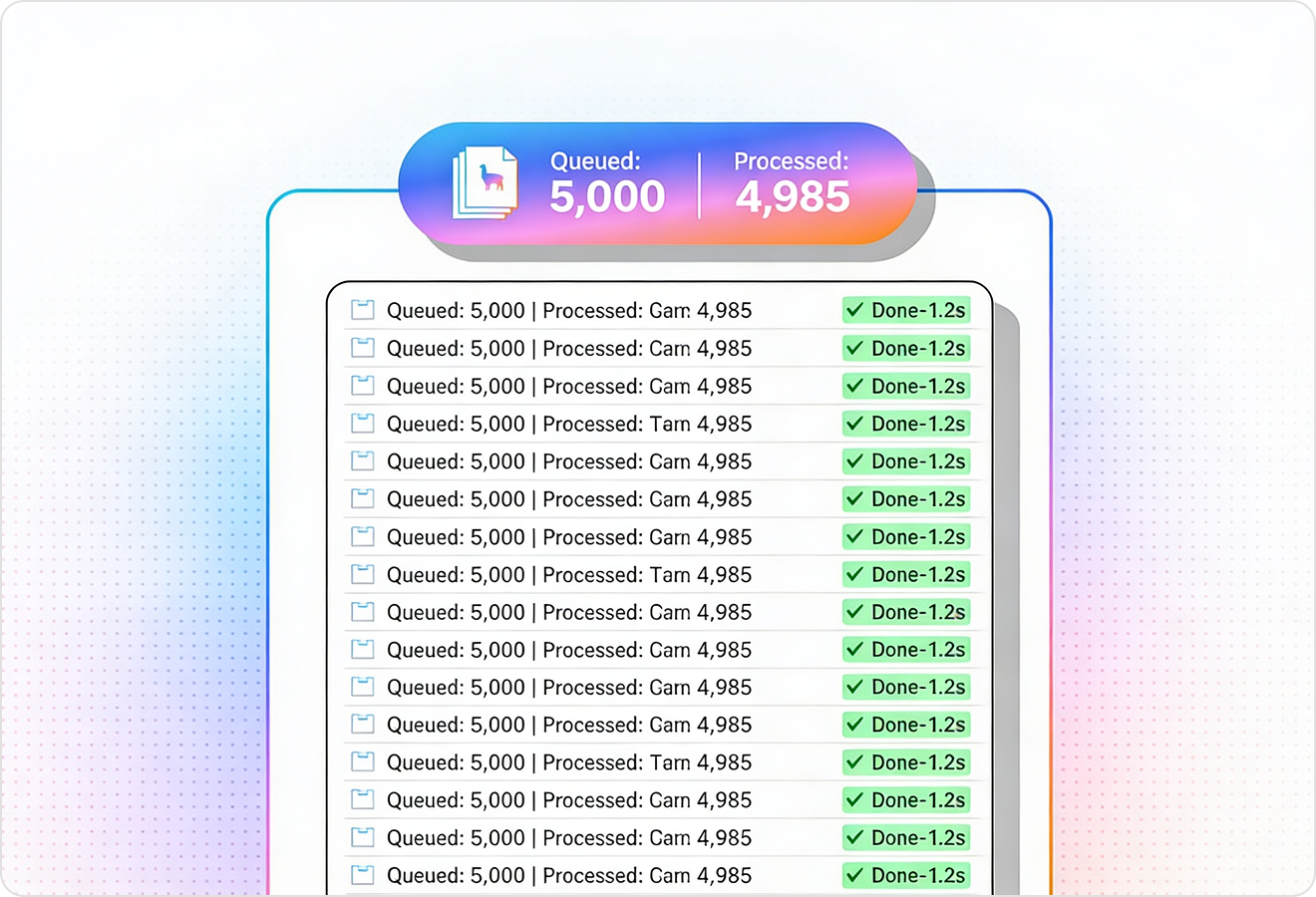
LlamaParse runs self-correction and validation steps to catch common invoice failure modes like swapped totals, missing decimals, or misread invoice numbers. That improves straight-through processing for QuickBooks invoice scanning and reduces the amount of human review needed for edge cases.
Technical OCR documentation
Explore our developer guides to easily connect your document pipelines to LlamaParse.
Explore the documentation
Our AI catches the typos that tired eyes miss.

Export to Excel, JSON, XML, or directly via API.

SOC2 Type II compliant with end-to-end encryption.

Train the tool on your specific forms in minutes, not days.

Average processing time of <3 seconds per page.
LlamaParse’s support of a wide variety of filetypes and its accuracy of parsing made it the best tool we tested in our evaluations. The LlamaIndex team was very responsive and we were off to the races within a day.
Common FAQs
01
Yes. The layout-aware engine preserves reading order and correctly separates headers, bill-to/ship-to blocks, totals, and line-item sections, so key fields don’t get jumbled. That means you get clean, consistent data ready for QuickBooks instead of spending time fixing scrambled text.
02
It reliably extracts complex tables while keeping columns aligned—quantities, unit prices, discounts, and multi-line descriptions included. Each row is captured in a way that’s easy to map into QuickBooks line items for accurate coding and reconciliation.
03
You can output structured JSON in a predictable schema that fits directly into your QuickBooks import pipeline or middleware. This reduces custom parsing work and makes integrations faster to build and maintain.
04
How do you prevent common OCR mistakes like swapped totals, missing decimals, or wrong invoice numbers?
Auto validation loops run self-correction checks designed for common invoice failure modes, catching issues like misread invoice numbers and incorrect totals. This increases straight-through processing and flags only the exceptions that truly need review.
05
Can I audit what was extracted and quickly review only the questionable parts of an invoice?
Yes—along with the extracted fields, the output includes granular metadata such as page and element coordinates. That makes it easy to trace values back to the source document and focus review on specific areas when something looks off.
06
Will this reduce manual data entry enough to justify switching from my current QuickBooks scanning process?
Most teams see a big drop in re-keying and cleanup because layouts and line items come through correctly the first time, and validation catches the common errors. With fewer exceptions to review, your AP workflow becomes faster, more consistent, and easier to scale.