Nov 14, 2025
Document AI: The Next Evolution of Intelligent Document ProcessingPersona
Industry
Use cases
Packing List OCR
[ Packing List OCR ]

Use LlamaParse to capture tables and line items accurately, then export clean JSON instantly.
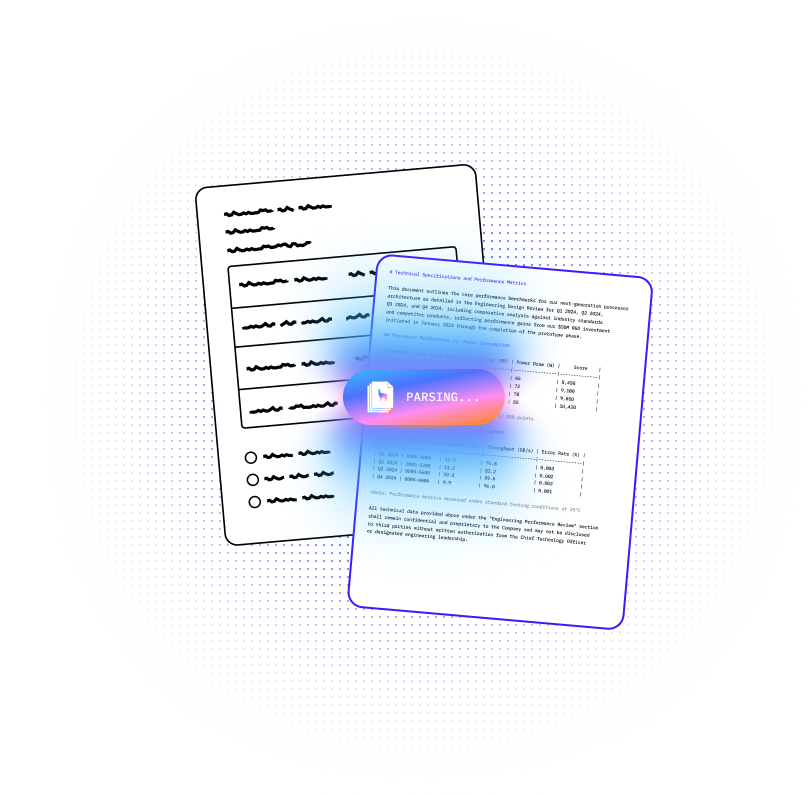


LlamaParse turns messy packing lists into clean, structured JSON in minutes, so you can automate item lines, quantities, and carton details. It uses agentic document parsing to understand layout and tables, then validates outputs with confidence metadata for faster exceptions and fewer reworks.
Best-in-Class Accuracy

Use LlamaParse in LlamaCloud to parse packing lists into clean JSON with line items, HS codes, weights, and carton counts—even when tables span pages or the layout changes by supplier. This reduces mis-declarations and rework by preserving table structure and adding traceable metadata for fast exception review.

Automatically ingest supplier packing lists to reconcile ASNs vs. received goods by extracting SKU-level quantities, case packs, and PO references from messy multi-column documents. This cuts receiving delays and short-ship disputes by converting tables into reliable, AI-ready data that maps directly into WMS/ERP workflows.

Parse packing lists to validate lot numbers, expiry dates, and serialized shipper contents against batch records and inbound quality requirements. LlamaParse’s layout-aware extraction prevents scrambled line-item tables and supports auditable checks by attaching page-level citations to every critical field.

Ship a production-grade packing list intake pipeline without writing brittle post-processing scripts by using natural-language parsing instructions to standardize outputs across thousands of vendor templates. Control burn with tier-based agentic processing that escalates only the hard pages, keeping unit economics predictable as volume scales.
The Solution
01
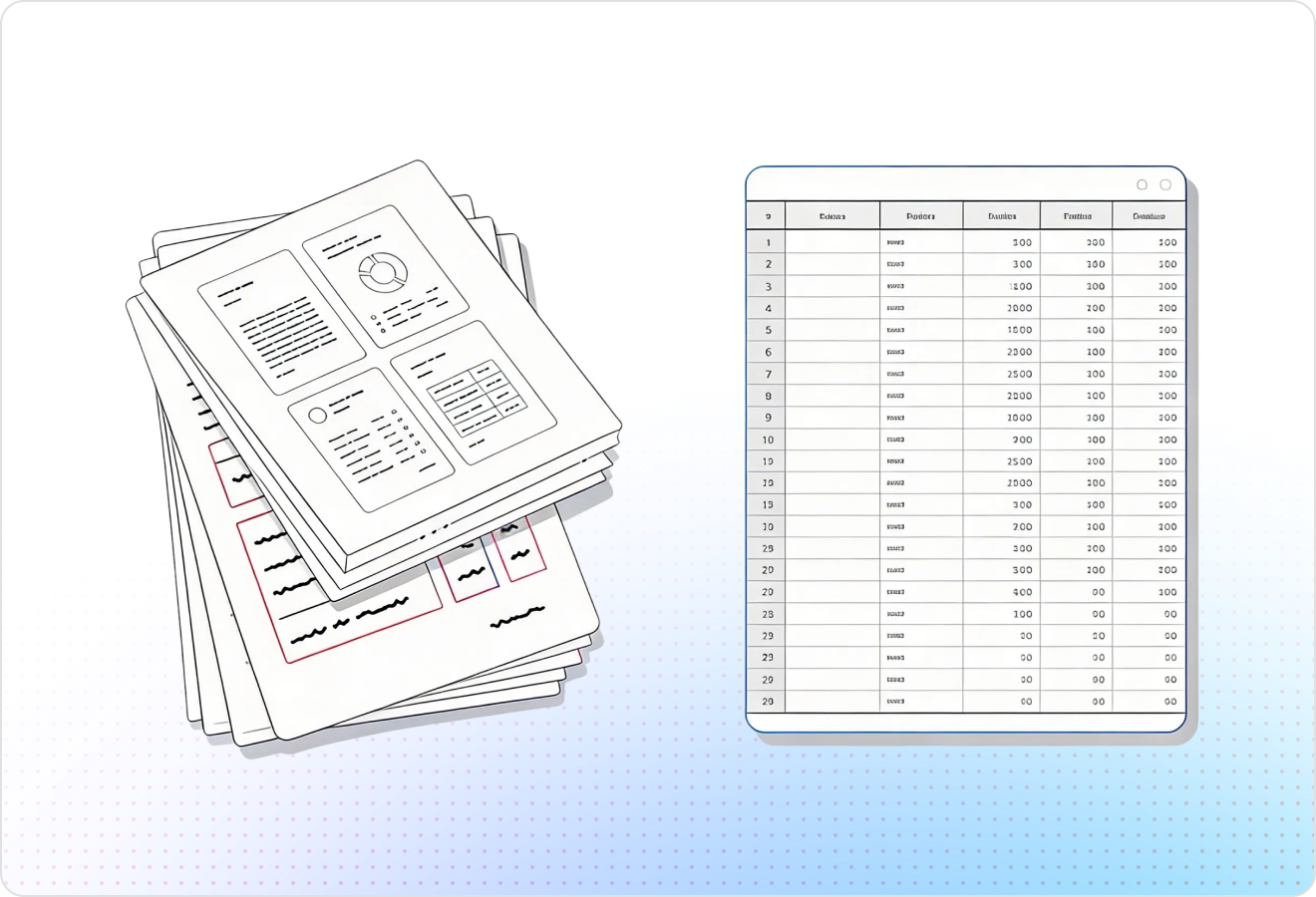
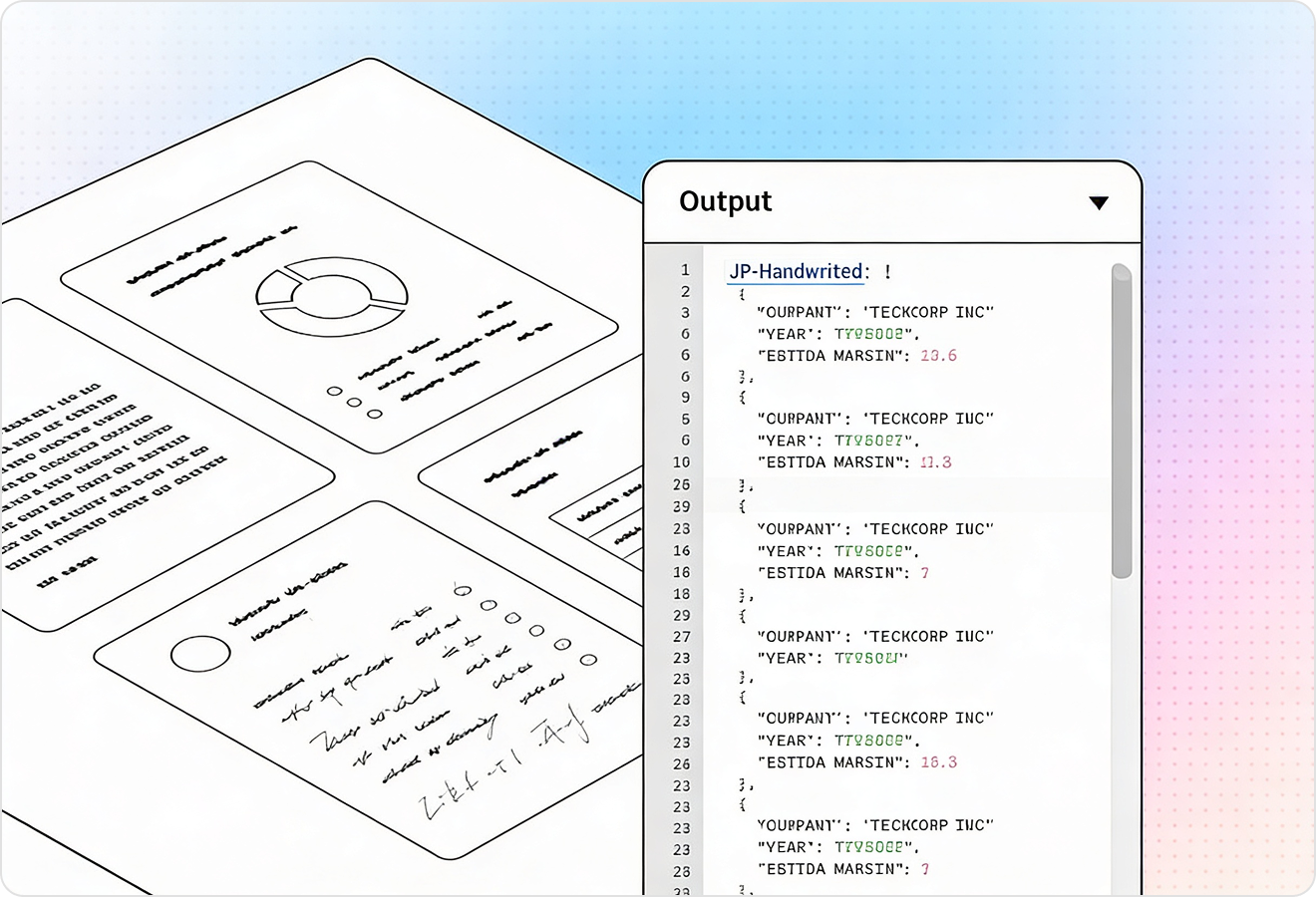
LlamaParse detects packing list structure (line items, quantities, SKUs, cartons) and extracts tables without scrambling columns or repeating headers. That means you can reliably map each row into your WMS/ERP, even when suppliers change templates or use multi-column layouts.
02
Output clean, structured JSON for fields like item code, description, qty, unit, carton count, weights, and dimensions, instead of stitching text together downstream. Each value can include page references and coordinates, so ops teams can quickly verify exceptions against the original packing list.
03
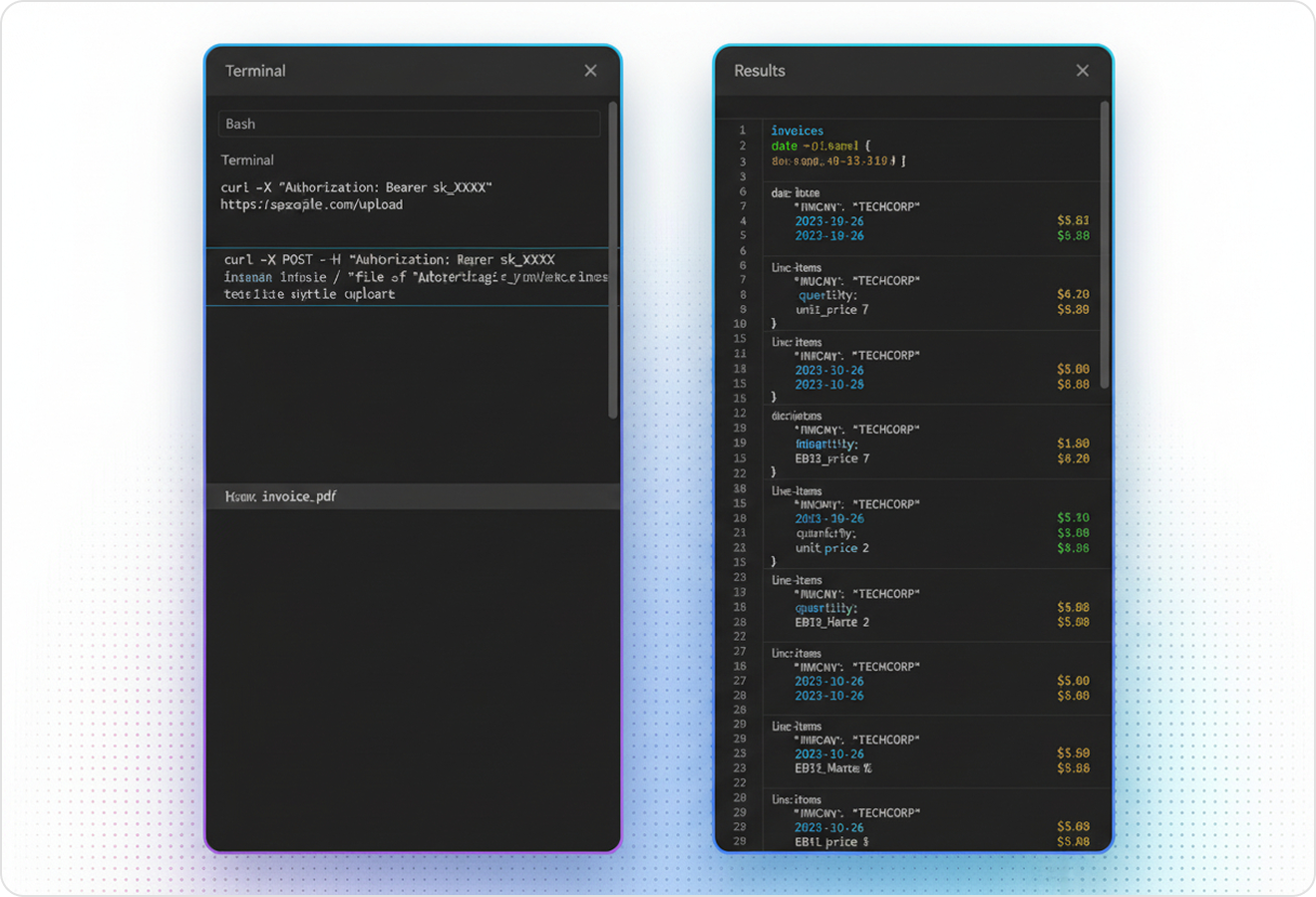
LlamaParse runs self-correction and validation steps to catch common packing list failures like misread totals, shifted columns, or duplicated footer lines. This reduces manual reconciliation and boosts straight-through processing for inbound receiving.
04
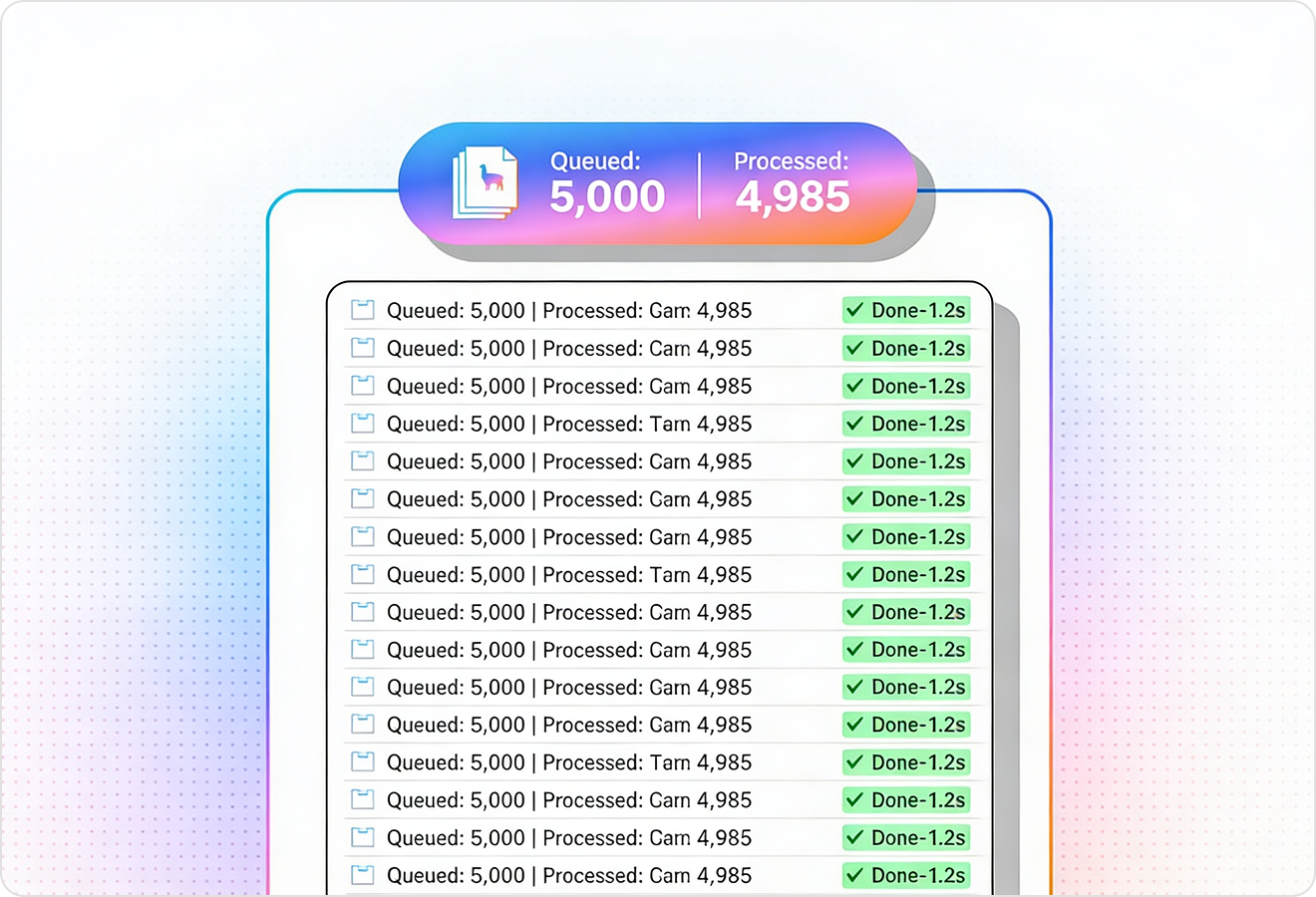
Auto Mode routes clean digital packing lists through faster parsing and automatically escalates messy scans, stamps, or low-contrast photos to more capable vision models. You get consistent extraction quality across vendors while keeping per-document costs predictable.
Technical OCR documentation
Explore our developer guides to easily connect your document pipelines to LlamaParse.
Explore the documentation
Our AI catches the typos that tired eyes miss.

Export to Excel, JSON, XML, or directly via API.

SOC2 Type II compliant with end-to-end encryption.

Train the tool on your specific forms in minutes, not days.

Average processing time of <3 seconds per page.
LlamaParse’s support of a wide variety of filetypes and its accuracy of parsing made it the best tool we tested in our evaluations. The LlamaIndex team was very responsive and we were off to the races within a day.
Common FAQs
01
Our layout-aware extraction detects line-item tables (SKUs, quantities, cartons, weights) and keeps columns aligned—even when vendors change formats or use multi-column layouts. You get consistent row-level output you can map directly into your WMS/ERP without manual cleanup.
02
Yes—JSON Mode outputs structured fields like item code, description, qty, unit, carton count, and dimensions. Each value can include page references and coordinates, so your ops team can instantly validate exceptions against the original document.
03
Agentic validation loops automatically run self-checks and corrections to catch typical packing list failures before results reach your systems. This reduces manual reconciliation and increases straight-through processing for inbound receiving.
04
We receive a mix of digital PDFs and messy scans—will accuracy and cost be predictable?
Tiered Processing Auto Mode routes clean digital files through faster parsing and automatically escalates low-quality scans or photos to more capable vision models. You get dependable extraction quality across vendors while keeping per-document costs under control.
05
How quickly can we integrate the extracted line items into our WMS/ERP workflow?
You can map each extracted row to your required schema (SKU, qty, UOM, carton counts, weights) and push it downstream as structured JSON. Most teams start with a small pilot for a few vendors and expand once the field mapping is confirmed.
06
What happens when the document is ambiguous or missing key fields like carton totals or weights?
When fields are unclear, the output can flag low-confidence values and include the exact page location for fast review. That means your team spends time only on true exceptions, not re-checking every packing list.