Nov 14, 2025
Document AI: The Next Evolution of Intelligent Document ProcessingPersona
Industry
Use cases
On Premise Document Parsing API
[ On Premise Document Parsing API ]

Run LlamaParse on your infrastructure to turn messy PDFs into verified JSON with citations.
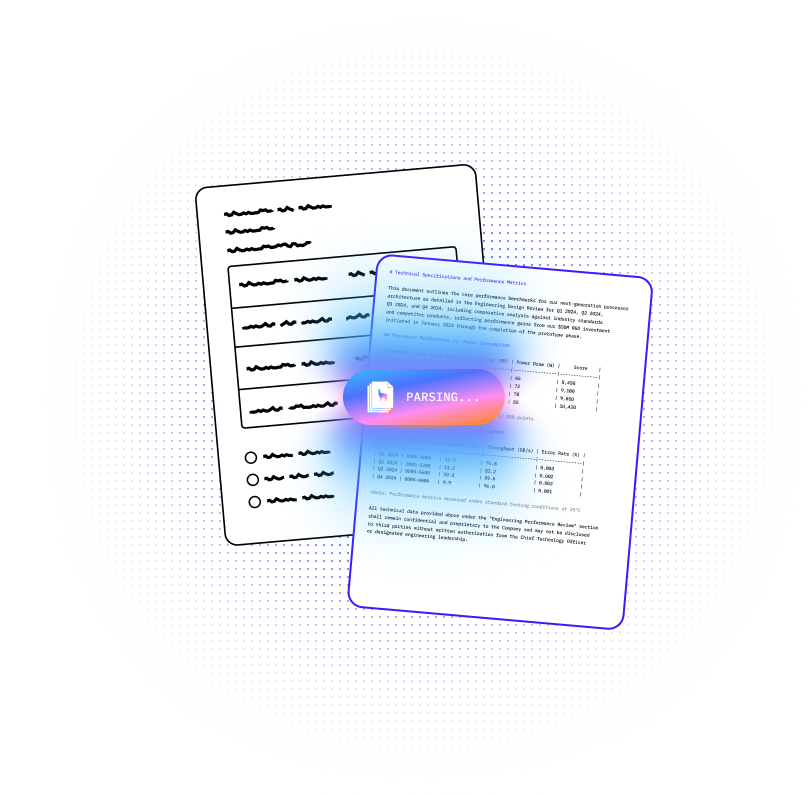
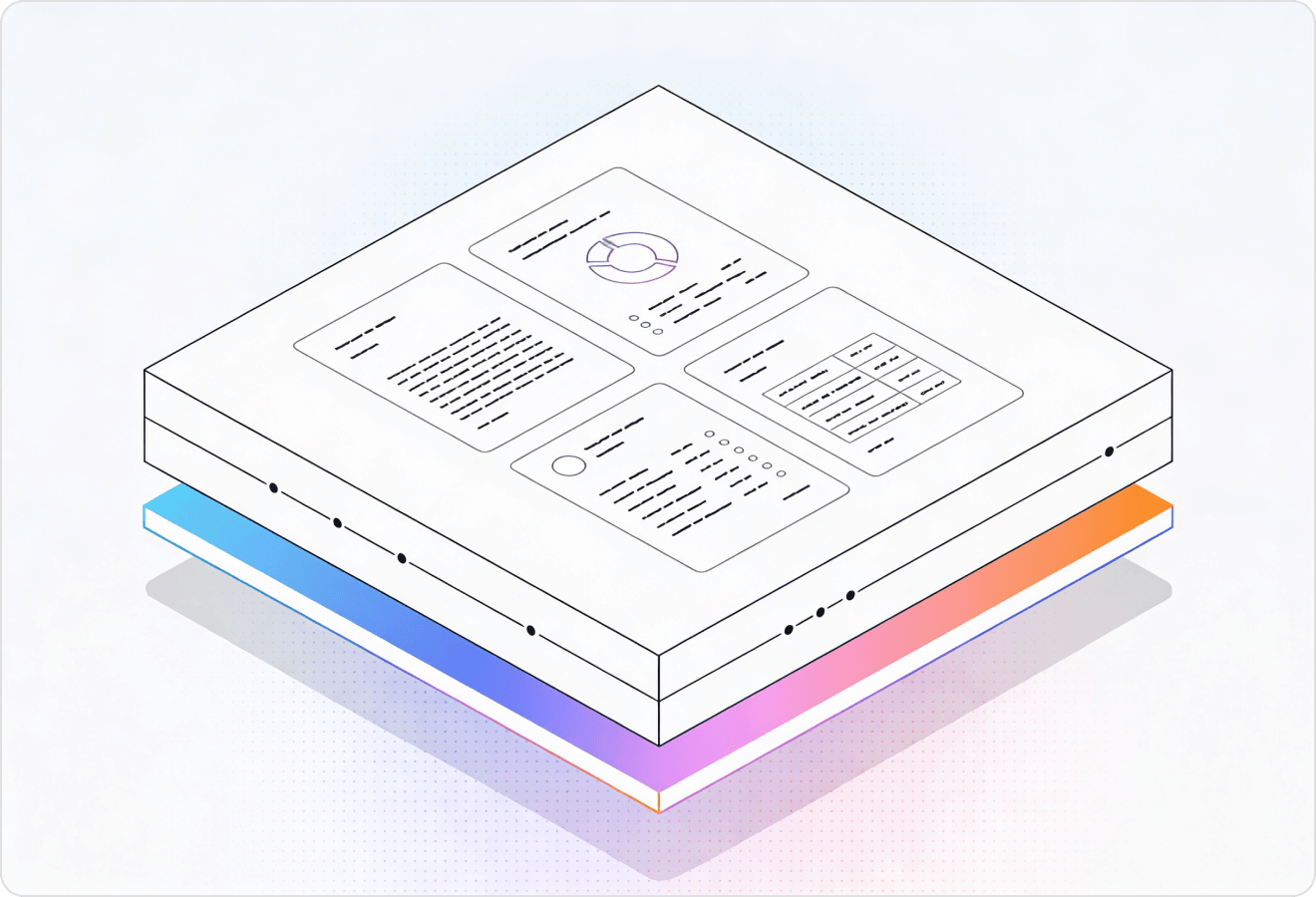

Run LlamaParse on-prem to turn messy PDFs, scans, and forms into clean JSON and Markdown your apps and agents can trust. Agentic parsing stays layout-aware, validates extractions with self-correction loops, and returns citations and confidence scores for fast review.
Best-in-Class Accuracy

Parse adjuster reports, medical bills, and loss runs on-prem—turning messy scans into clean JSON with page-level citations so claim decisions are auditable. Layout-aware extraction keeps multi-column forms and tables intact, reducing rework and increasing straight-through processing without brittle OCR retraining.

Ingest POs, packing lists, certificates of analysis, and spec sheets from vendors and convert complex tables into reliable, structured outputs for ERP and QA workflows. Multimodal parsing captures charts and measurement data that traditional OCR drops, preventing receiving errors and shortening supplier onboarding.

Turn contracts, exhibits, and scanned pleadings into AI-ready Markdown while preserving reading order, headings, and section structure for faster review and clause extraction. Granular metadata and citations let teams verify answers back to the exact page and coordinate, cutting risk in high-stakes matters.

Ship document-heavy features (KYC, underwriting, AP automation, intake) faster by using natural-language parsing instructions instead of building custom regex and post-processing pipelines. Tier-based agentic processing keeps costs predictable by applying heavy vision reasoning only to the hard pages, so pilots can reach production without a rewrite.
The Solution
01
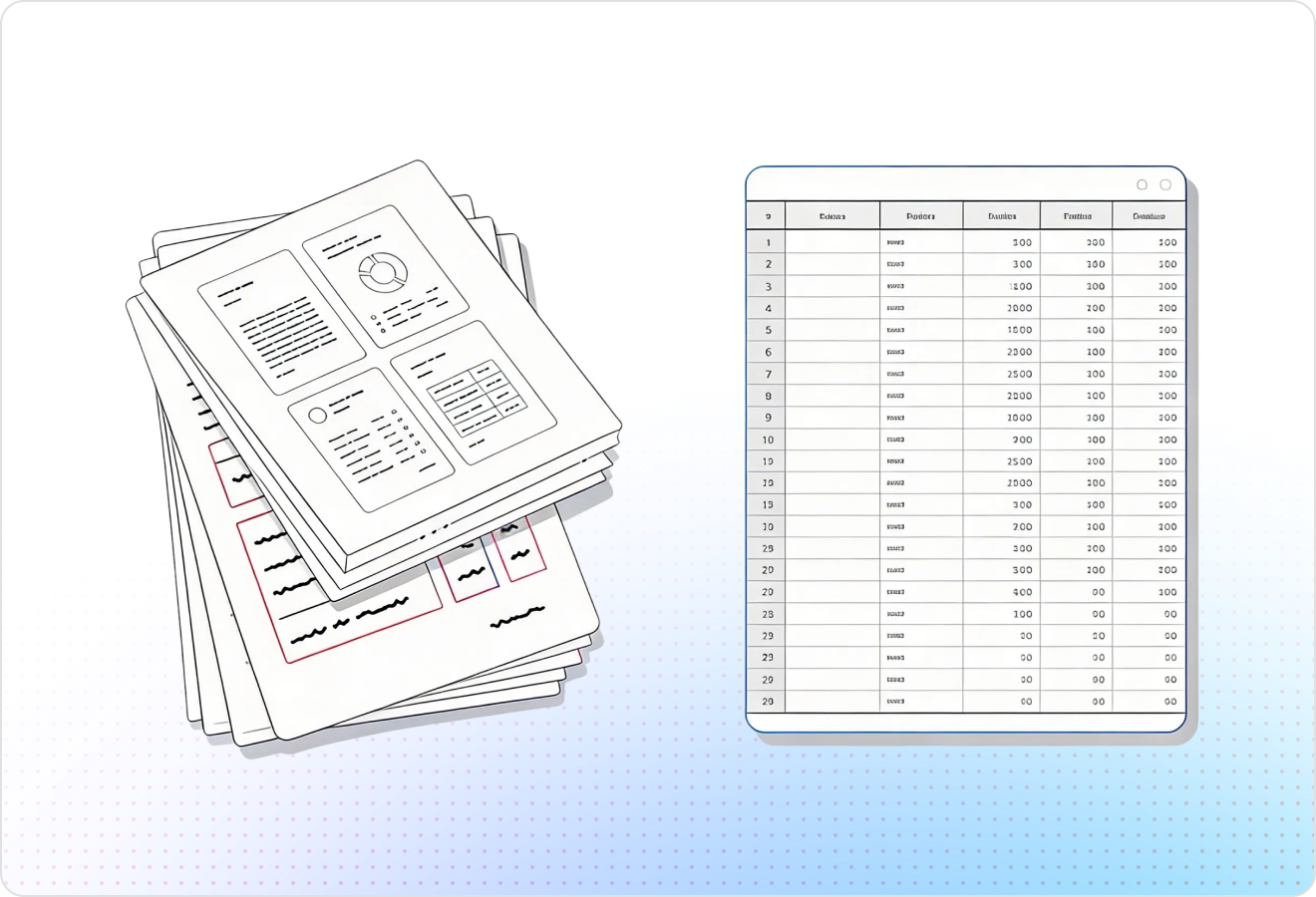
Run LlamaParse as an on-prem document parsing API so sensitive files stay inside your network boundary. It fits regulated environments where outbound document transfer isn’t an option but you still need AI-ready outputs at scale.
02
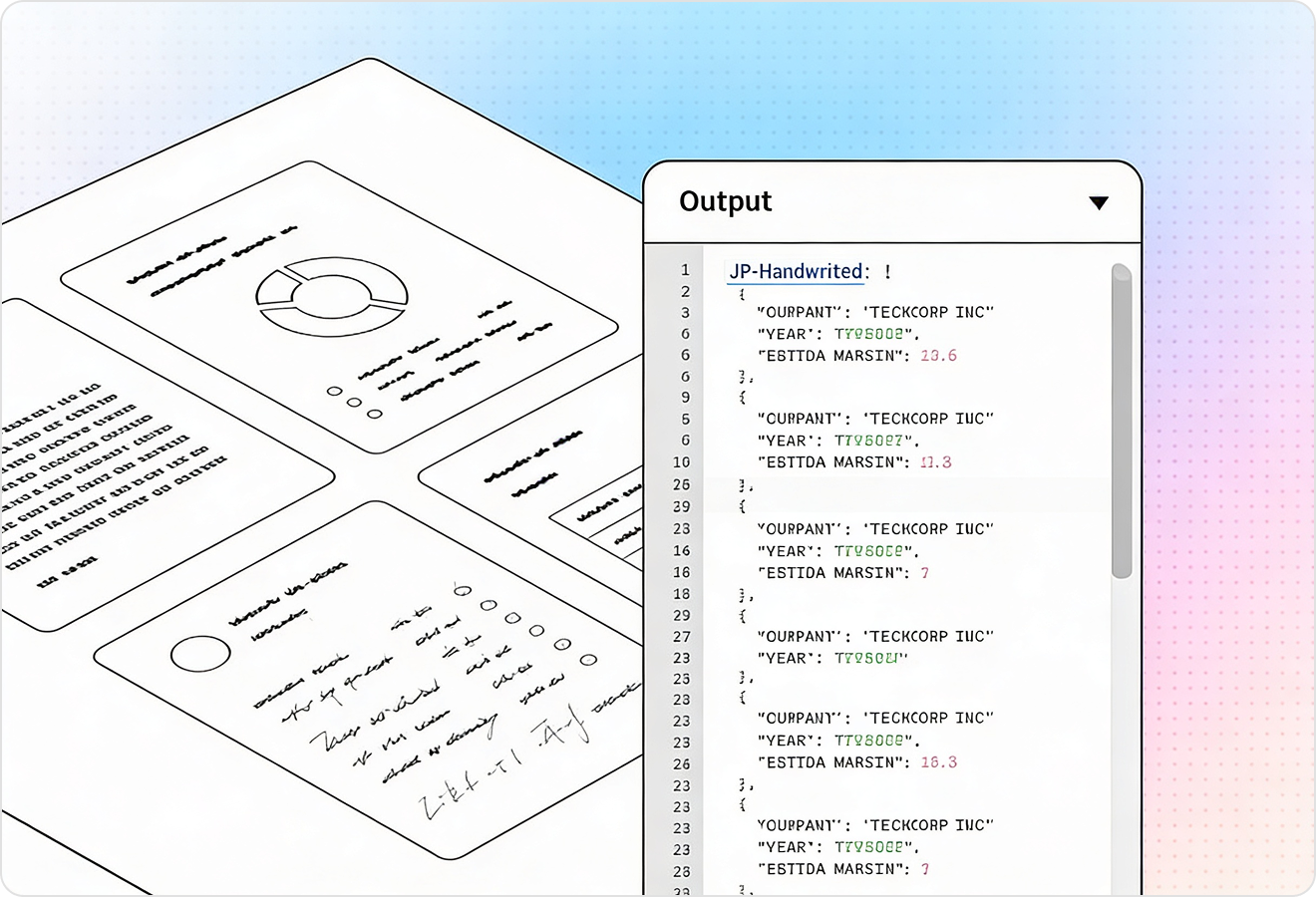
LlamaParse understands page structure to preserve reading order across multi-column layouts, headers/footers, and deeply nested tables. For on-prem deployments, this reduces brittle post-processing code and keeps downstream systems stable when templates change.
03
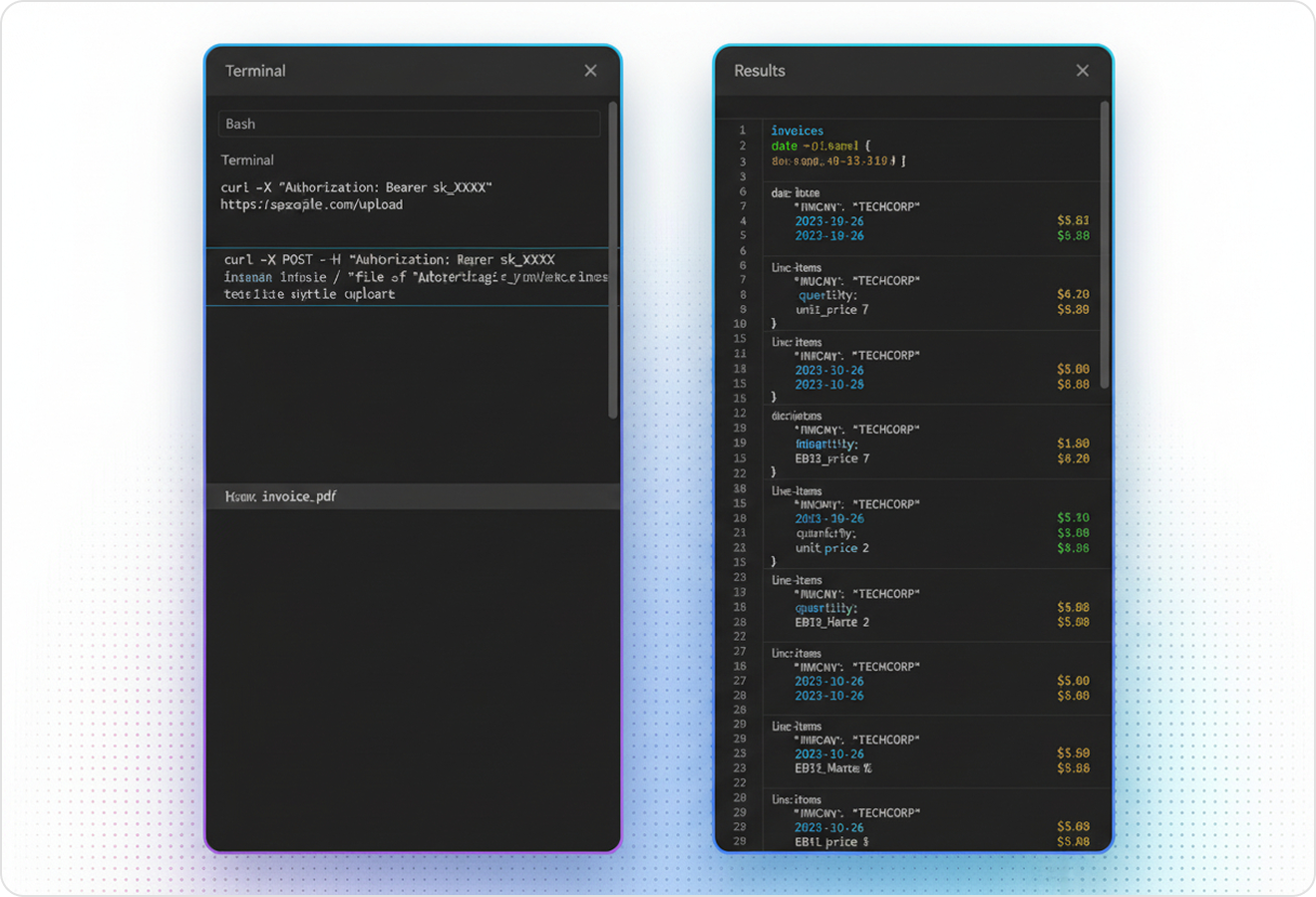
Return structured JSON with page-level traceability (like element types, page references, and spatial coordinates) to make outputs verifiable. This is critical on-prem, where teams often need auditable parsing results for internal QA, HITL review, and compliance workflows.
04
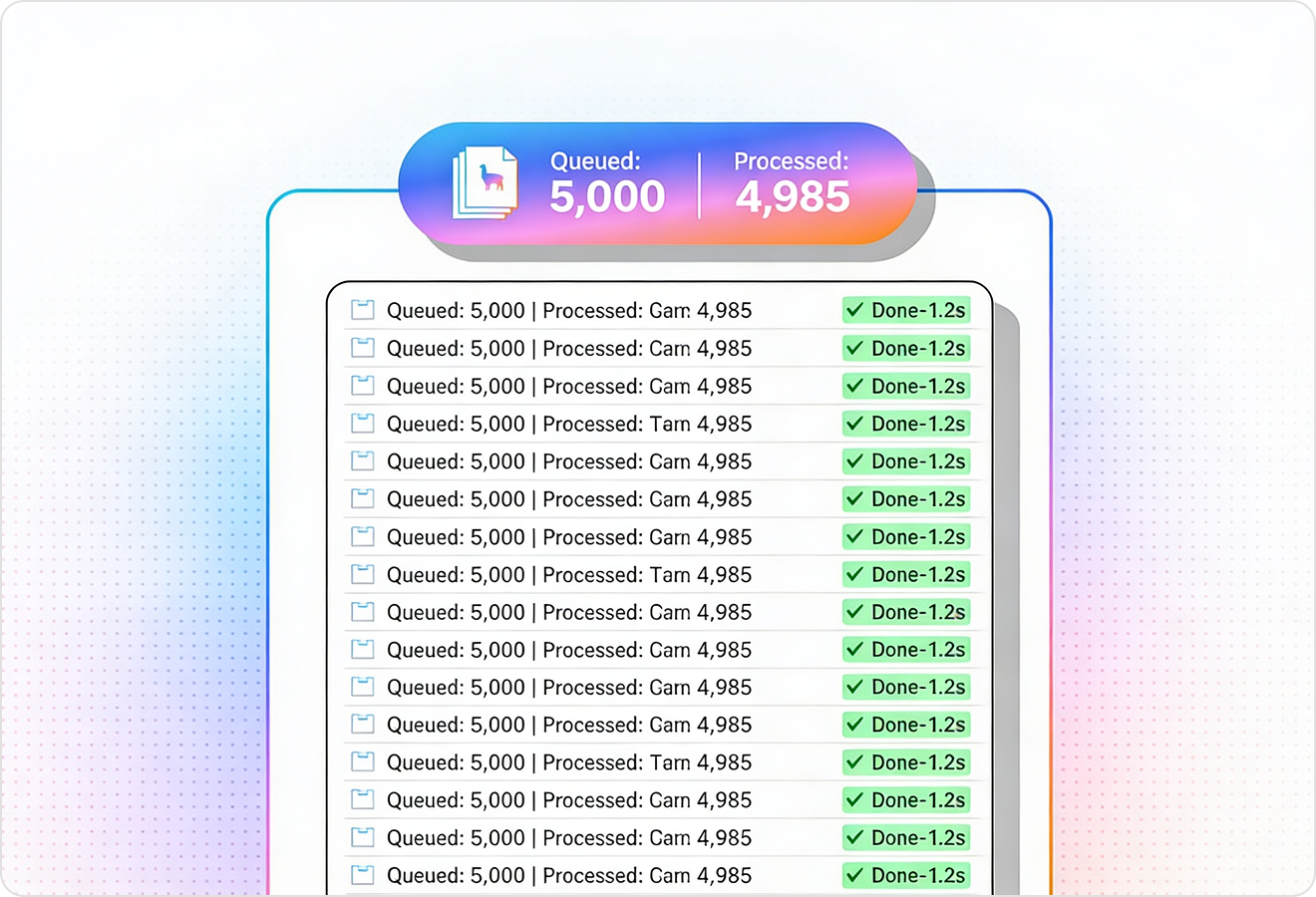
LlamaParse uses validation and self-correction loops to catch common extraction mistakes and reconcile conflicting signals across text and visuals. In an on-prem API, that means higher straight-through processing and fewer manual exception queues for messy real-world scans.
Technical OCR documentation
Explore our developer guides to easily connect your document pipelines to LlamaParse.
Explore the documentation
Our AI catches the typos that tired eyes miss.

Export to Excel, JSON, XML, or directly via API.

SOC2 Type II compliant with end-to-end encryption.

Train the tool on your specific forms in minutes, not days.

Average processing time of <3 seconds per page.
LlamaParse’s support of a wide variety of filetypes and its accuracy of parsing made it the best tool we tested in our evaluations. The LlamaIndex team was very responsive and we were off to the races within a day.
Common FAQs
01
Yes—LlamaParse can be deployed as a self-hosted API inside your network boundary, so files and extracted content stay under your control. This is ideal for regulated environments where outbound transfer is restricted, while still enabling AI-ready outputs at scale.
02
The parser is layout-aware and preserves reading order across multi-column pages, headers/footers, and mixed content blocks. That means fewer downstream fixes and more consistent results when document templates change.
03
Yes—table extraction is designed to understand page structure, including nested tables and non-uniform rows/columns. You get cleaner, more reliable tables with less brittle post-processing code to maintain.
04
What does the JSON output include, and can we trace every field back to the source document?
Outputs are returned as structured JSON with metadata like element types, page references, and spatial coordinates. This makes results verifiable and auditable—useful for QA, HITL review, and compliance workflows.
05
How do you reduce extraction errors from messy scans or low-quality PDFs?
LlamaParse uses agentic validation and self-correction loops to catch common mistakes and reconcile conflicting signals across text and visuals. In practice, this increases straight-through processing and reduces manual exception handling.
06
What does deployment look like for IT teams, and how quickly can we get to production?
Deployment is designed to fit standard on-prem infrastructure, with a clear path to integrate via an internal API endpoint. Most teams can stand up a pilot quickly, validate accuracy on their document set, and then scale with confidence once outputs meet internal standards.