Nov 14, 2025
Document AI: The Next Evolution of Intelligent Document ProcessingPersona
Industry
Use cases
Form Filling Automation API
[ Form Filling Automation API ]

Parse messy documents with LlamaParse, then populate every field with citations and confidence scores you trust.
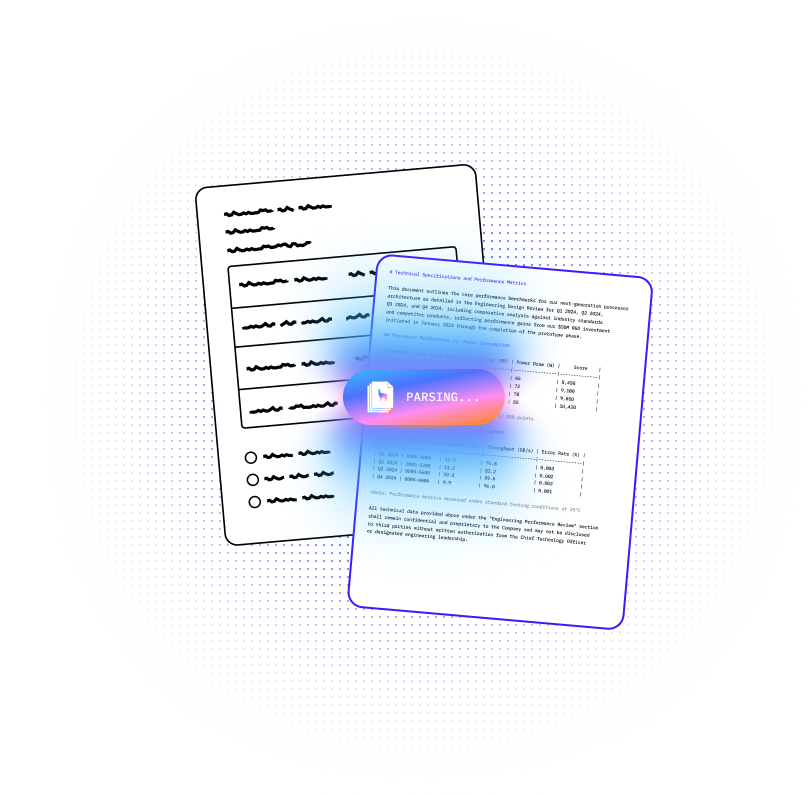


LlamaParse turns messy PDFs, scans, and emailed attachments into structured fields your app can use to auto-fill forms via a clean API. Layout-aware vision and validation loops catch tables, checkboxes, and weird spacing, delivering citations and confidence for reliable straight-through processing.
Best-in-Class Accuracy

Turn inbound PDFs and emailed forms into clean JSON instantly so your product can auto-fill onboarding, KYC, and account setup flows without building brittle parsing code. LlamaParse keeps growth loops fast by preserving multi-column layouts and tables, so extracted fields don’t scramble when customer document formats change.

Auto-populate claim and underwriting systems from loss runs, ACORD forms, and adjuster reports by extracting structured tables and line items with reliable reading order. LlamaParse returns verifiable outputs with coordinates and confidence so reviewers can audit exceptions quickly instead of rekeying entire packets.

Pre-fill loan applications from bank statements, pay stubs, and tax forms by extracting nested tables and key fields into a consistent schema for LOS ingestion. Multimodal parsing captures critical details like stamped disclosures and scanned signatures that traditional text-only approaches often miss.

Automatically fill ERP and procurement forms from vendor quotes, POs, and packing lists by converting messy PDFs into structured Markdown/JSON that preserves SKUs, quantities, and pricing tables. Natural-language parsing instructions let teams standardize extraction across suppliers without rewriting rules every time a layout changes.
The Solution
01
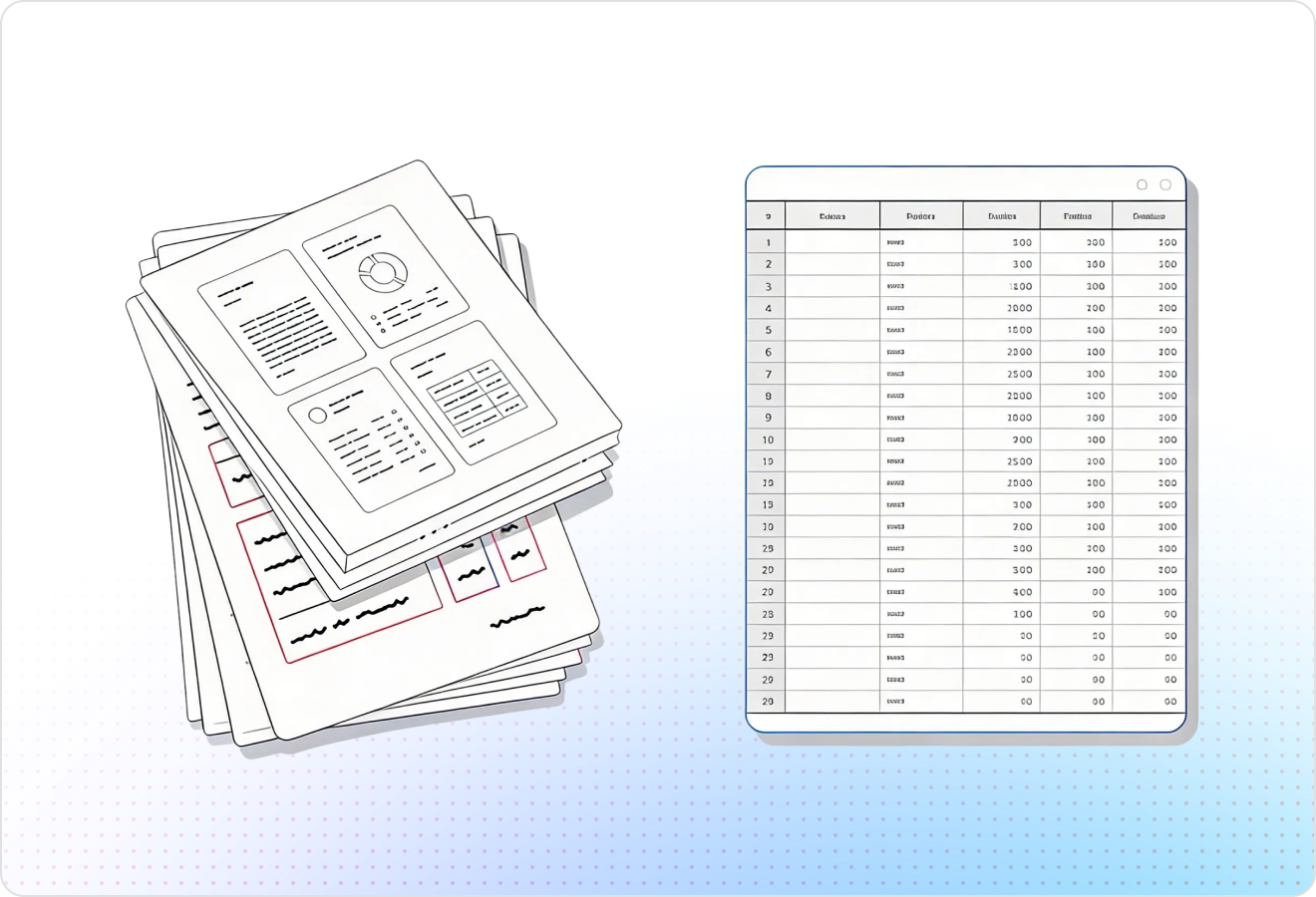
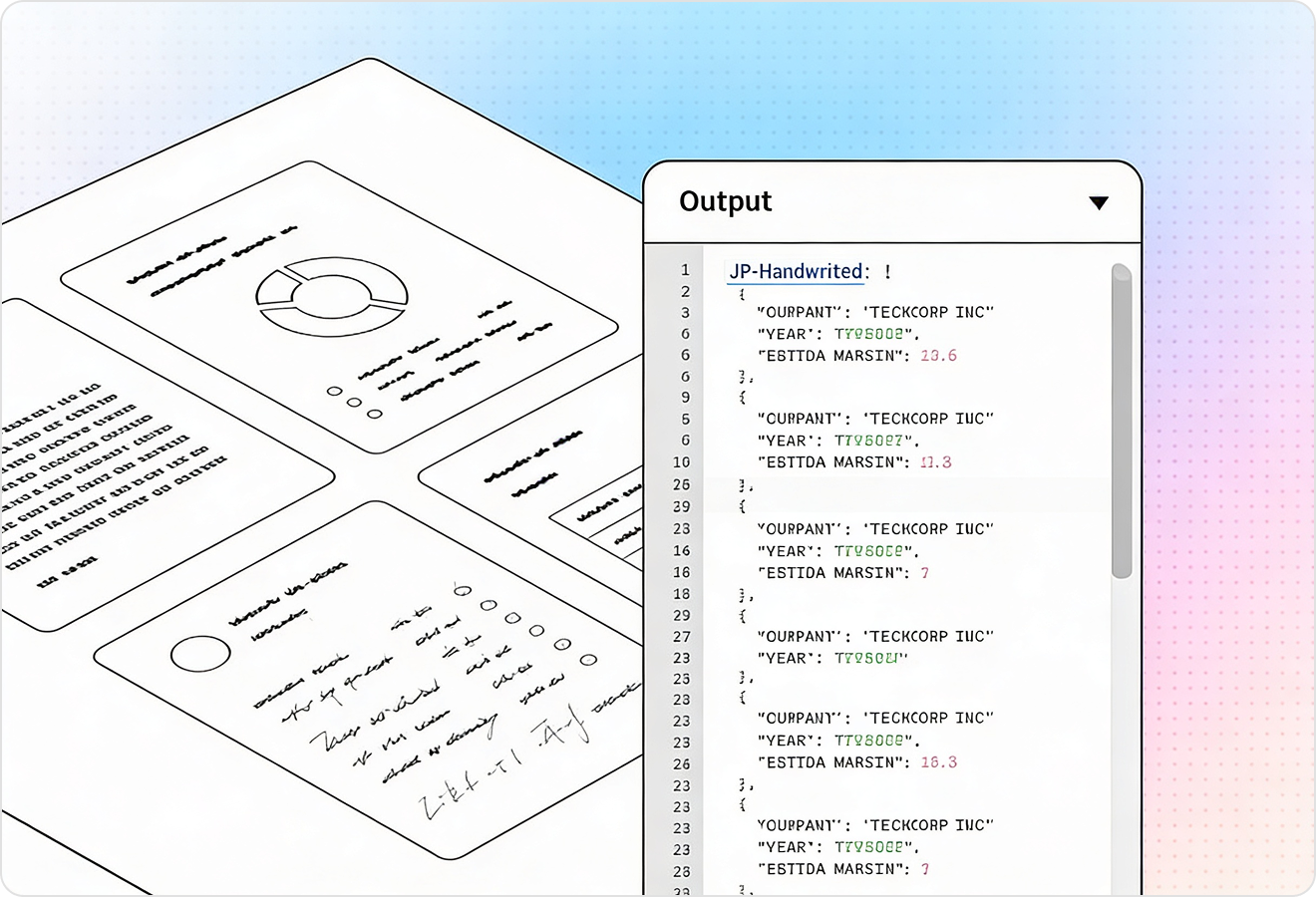
LlamaParse understands real page structure—labels, input boxes, columns, and sections—so extracted values stay tied to the right fields. That makes form filling automation reliable even when templates change or the same form appears in different layouts.
02
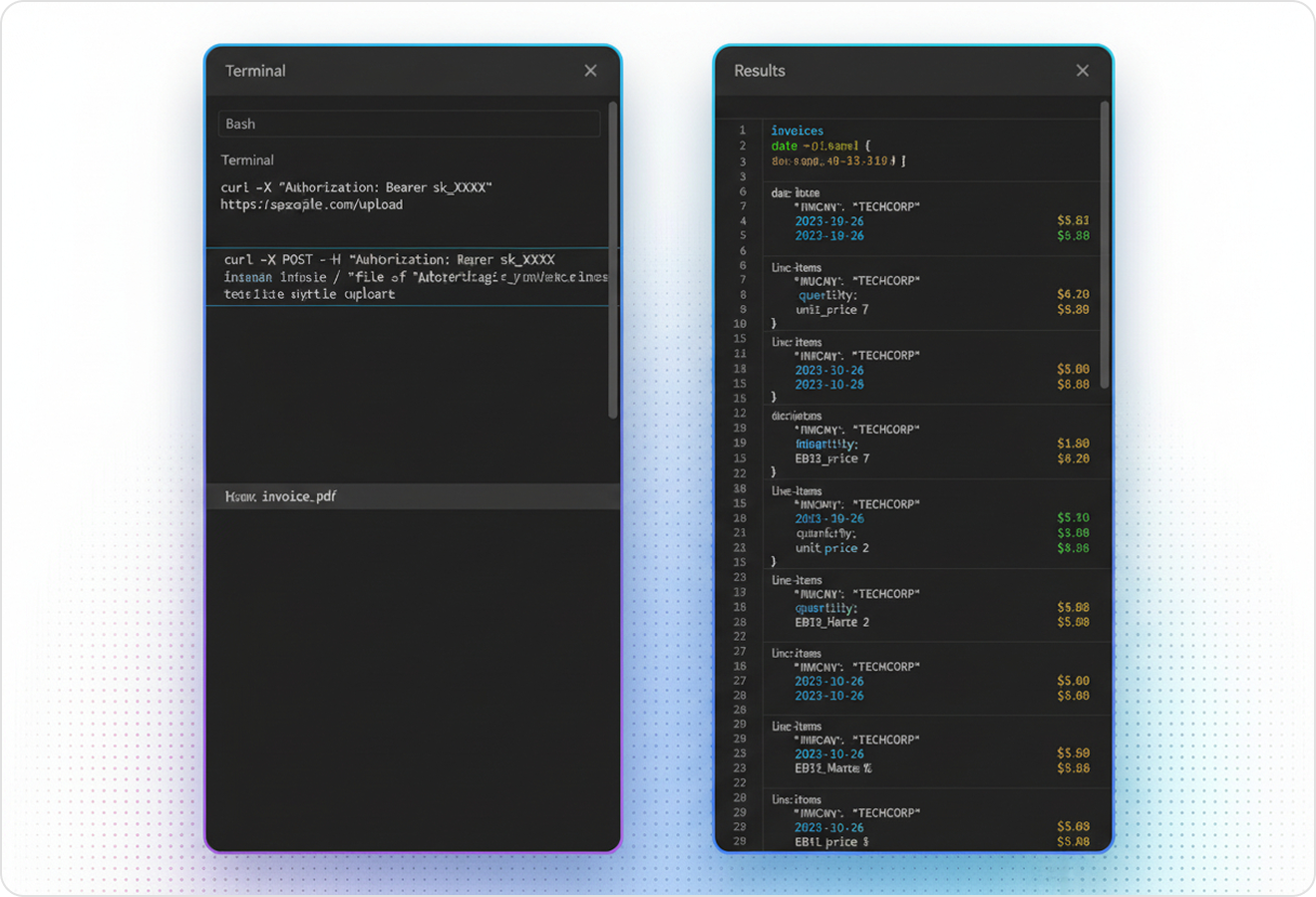
Return clean JSON that’s ready to POST into your form filling automation API, instead of stitching together brittle text outputs. You get consistent key/value data that’s easy to validate, transform, and route into downstream systems.
03
Use natural-language parsing instructions to specify exactly what fields you need, how to normalize them, and what to ignore. This replaces one-off regex and custom parsers with a maintainable way to keep extraction aligned to your form schema.
04
LlamaParse attaches provenance metadata like page references and confidence signals to extracted fields for verifiable automation. That lets you auto-approve high-confidence fills and send low-confidence cases to review without blocking the whole workflow.
Technical OCR documentation
Explore our developer guides to easily connect your document pipelines to LlamaParse.
Explore the documentation
Our AI catches the typos that tired eyes miss.

Export to Excel, JSON, XML, or directly via API.

SOC2 Type II compliant with end-to-end encryption.

Train the tool on your specific forms in minutes, not days.

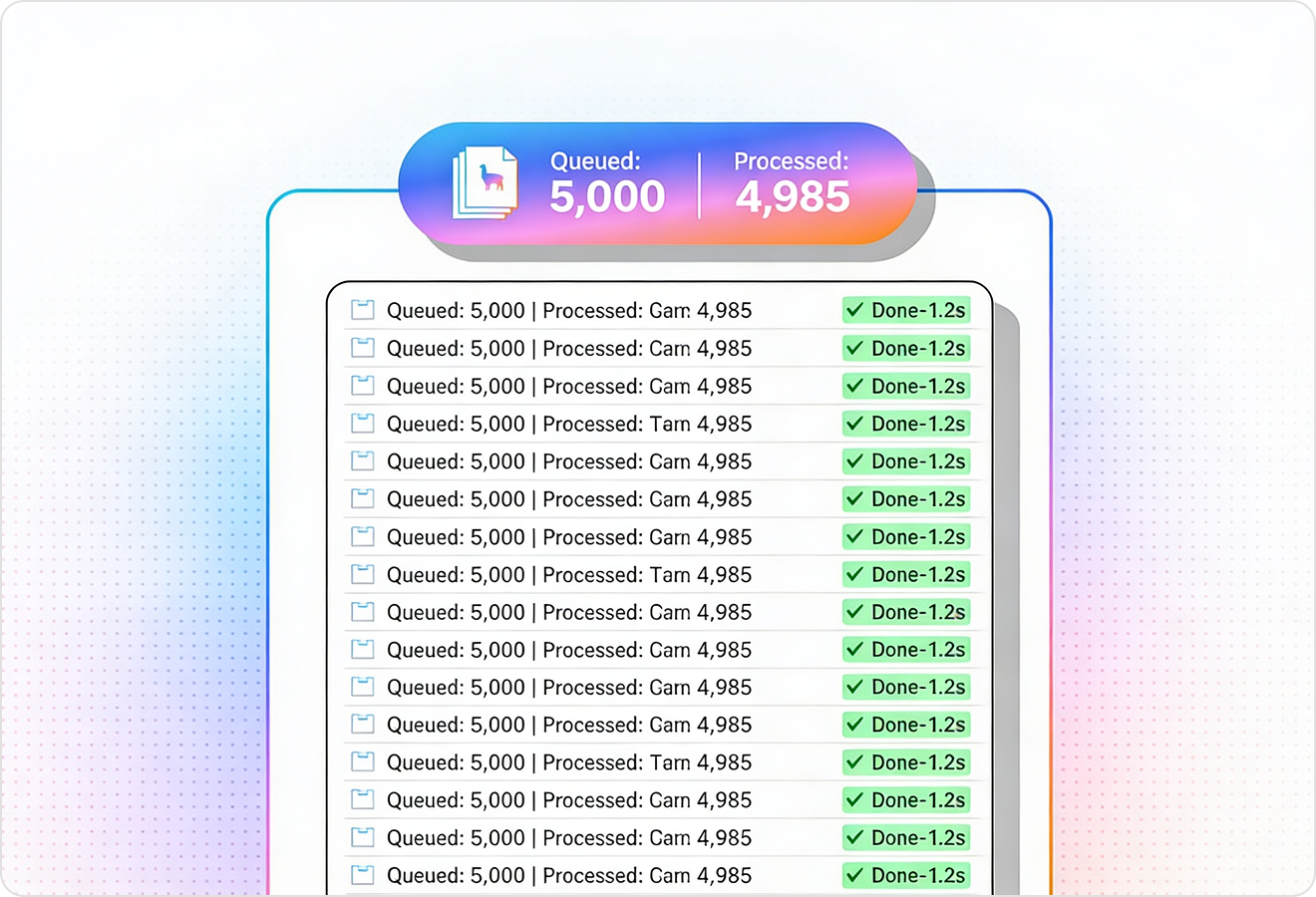
Average processing time of <3 seconds per page.
LlamaParse’s support of a wide variety of filetypes and its accuracy of parsing made it the best tool we tested in our evaluations. The LlamaIndex team was very responsive and we were off to the races within a day.
Common FAQs
01
It uses layout-aware field mapping to understand the actual page structure—labels, fields, columns, and sections—so values stay attached to the correct inputs. That means you don’t have to rebuild mappings every time a PDF version changes or a new template appears.
02
You get clean, structured JSON designed for automation, with consistent key/value pairs that are easy to validate and route. This avoids brittle text stitching and makes it straightforward to POST data into your form-filling endpoints.
03
Yes—prompted extraction rules let you describe in plain language what to capture, how to format it (dates, names, IDs), and what to ignore. This keeps outputs aligned with your form schema without maintaining a pile of regex or custom parsers.
04
How do I verify the extracted values before they’re used to auto-fill forms?
Each extracted field can include citations (where it came from on the page) and confidence metadata. You can auto-approve high-confidence fields and route low-confidence cases to review, keeping the workflow moving while staying auditable.
05
How does this reduce manual review without increasing the risk of wrong form fills?
Confidence signals let you set thresholds so only trustworthy fields are filled automatically, while ambiguous fields are flagged for human checks. The attached citations make review faster because your team can jump straight to the source location in the document.
06
What’s the fastest way to get started and prove it works on our documents?
Start by sending a small sample of your real forms and defining your target JSON schema and extraction rules. You’ll quickly see consistent outputs you can plug into your form-filling automation API, then expand coverage as you add more templates.