Nov 14, 2025
Document AI: The Next Evolution of Intelligent Document ProcessingPersona
Industry
Use cases
Form Field Extraction AI
[ Form Field Extraction AI ]

Use LlamaParse to turn messy forms into structured JSON with confidence scores you can trust.
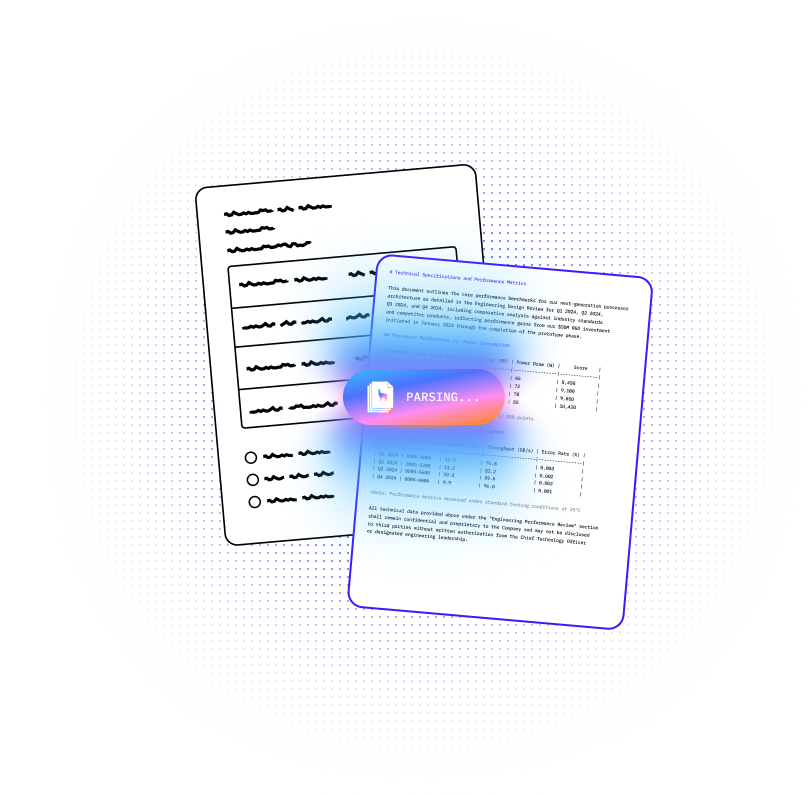


LlamaParse turns messy PDFs and scanned forms into reliable, schema-ready JSON, capturing checkboxes, tables, and repeated sections without brittle templates. Agentic document parsing uses layout-aware vision and validation loops to reduce downstream QA, with citations and confidence metadata for fast human review.
Best-in-Class Accuracy

Turn inbound PDFs, screenshots, and customer forms into clean JSON with LlamaParse, so you can ship onboarding, quoting, or underwriting flows without building brittle extraction code. Use natural-language parsing instructions to standardize messy inputs and keep your pipeline stable as templates change week to week.

Extract structured fields from claim forms, adjuster notes, and repair estimates while preserving tables, line items, and reading order—even when the layout varies by carrier. LlamaParse returns verifiable outputs with metadata and confidence signals, enabling faster triage, fewer manual touches, and clearer audit trails.

Parse POs, invoices, packing lists, and spec sheets into consistent line-item data without losing multi-column tables, part numbers, or units of measure. Multimodal parsing converts diagrams and compliance markings into machine-readable context, reducing match exceptions and speeding up three-way reconciliation.

Convert contracts, exhibits, and scanned filings into structured, citation-backed outputs that keep clause hierarchy, headings, and tables intact for downstream review. LlamaParse’s layout-aware structure and correction loops reduce missed definitions and broken sectioning that cause rework during diligence and discovery.
The Solution
01
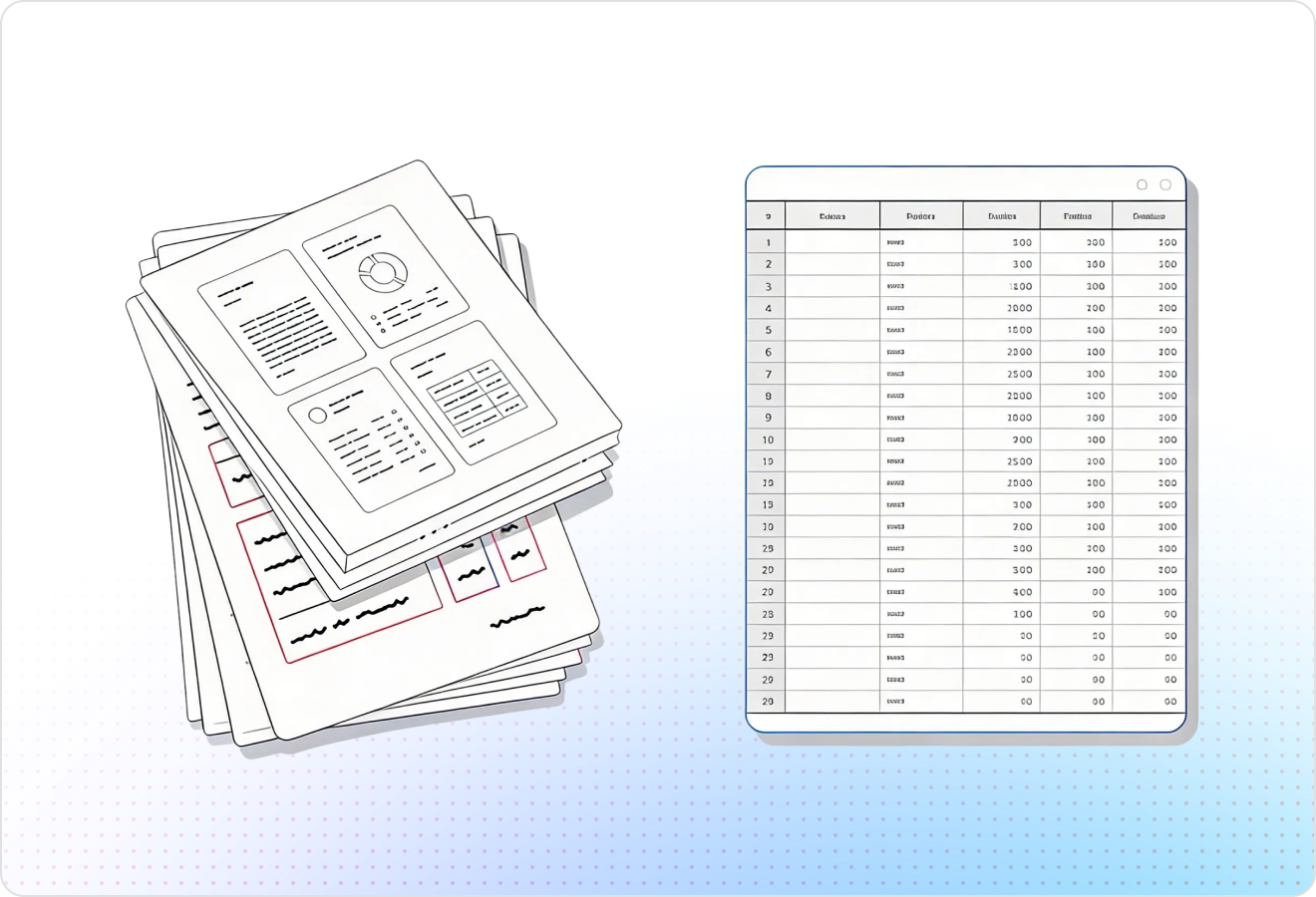
LlamaParse understands page structure to separate labels, inputs, checkboxes, and multi-column sections without scrambling reading order. That makes it reliable for extracting form fields from invoices, applications, and scanned PDFs where layout changes usually break brittle rules.
02
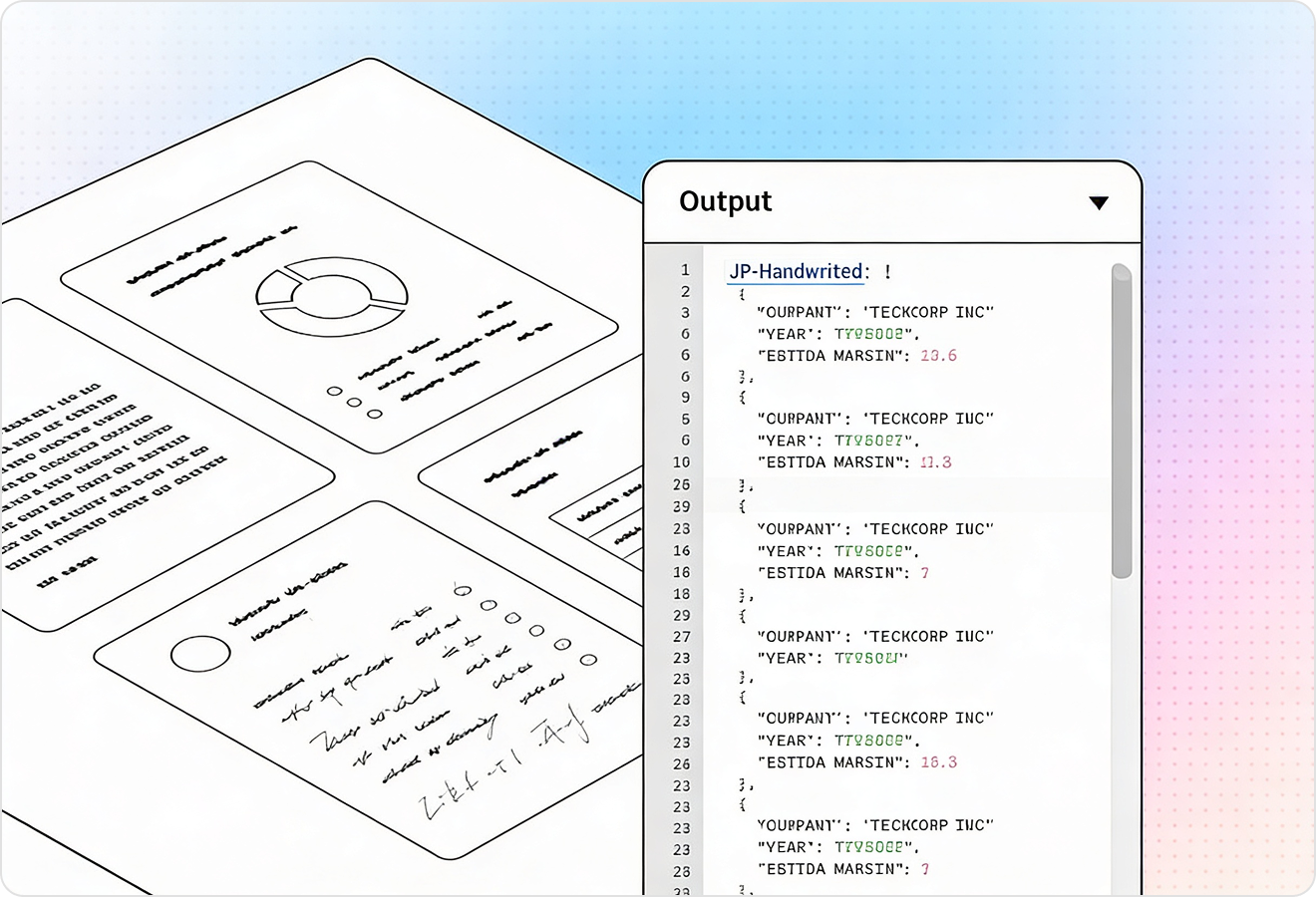
LlamaParse can return structured JSON that’s easy to map into your form-field schema and downstream APIs. You also get granular metadata (page, coordinates, element type) so you can trace every extracted value back to the exact spot on the document.
03
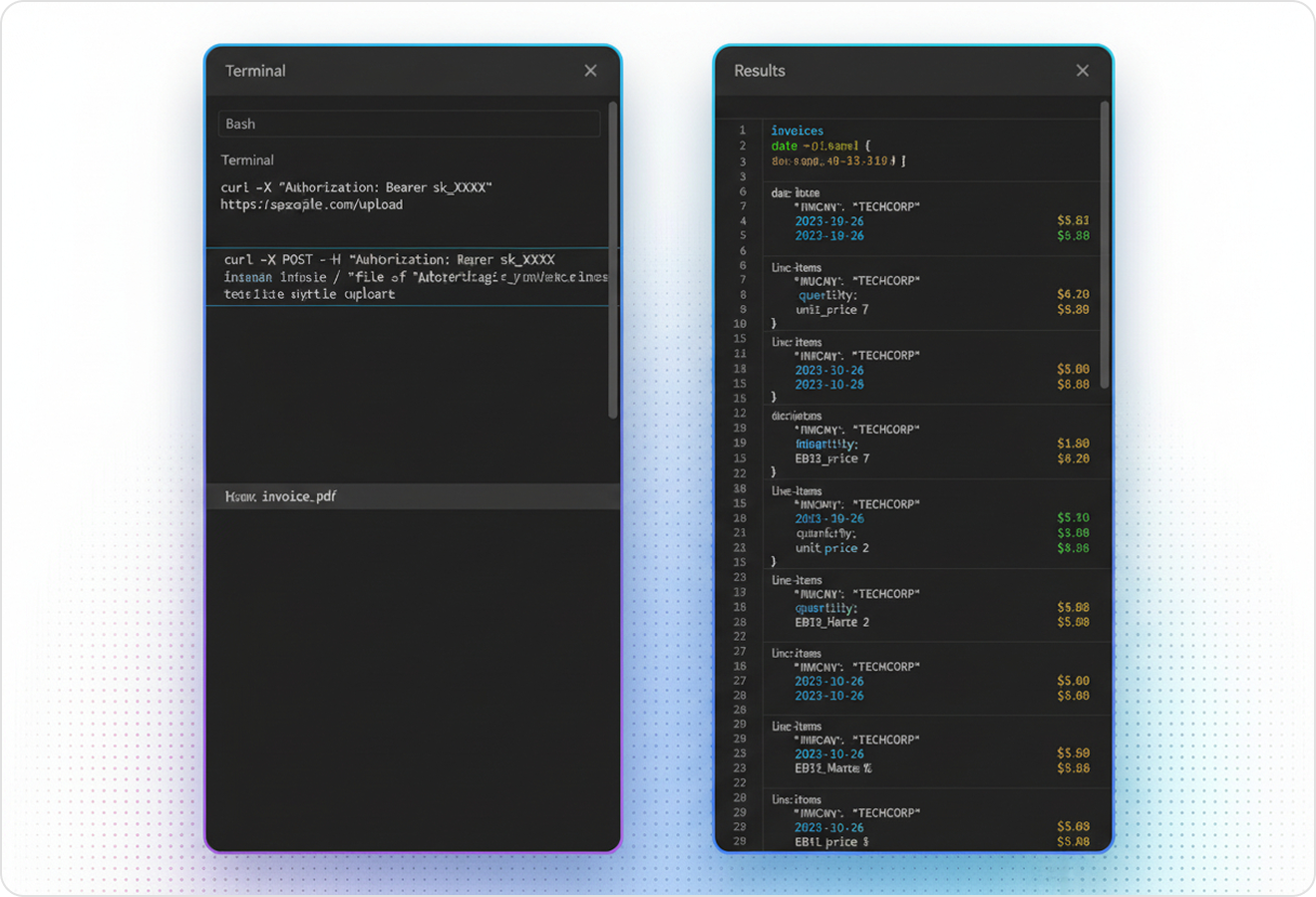
You can use natural-language parsing instructions to define which fields to extract and how to normalize them (e.g., dates, totals, addresses, IDs). This reduces custom post-processing and helps keep field extraction consistent across different templates and vendors.
04
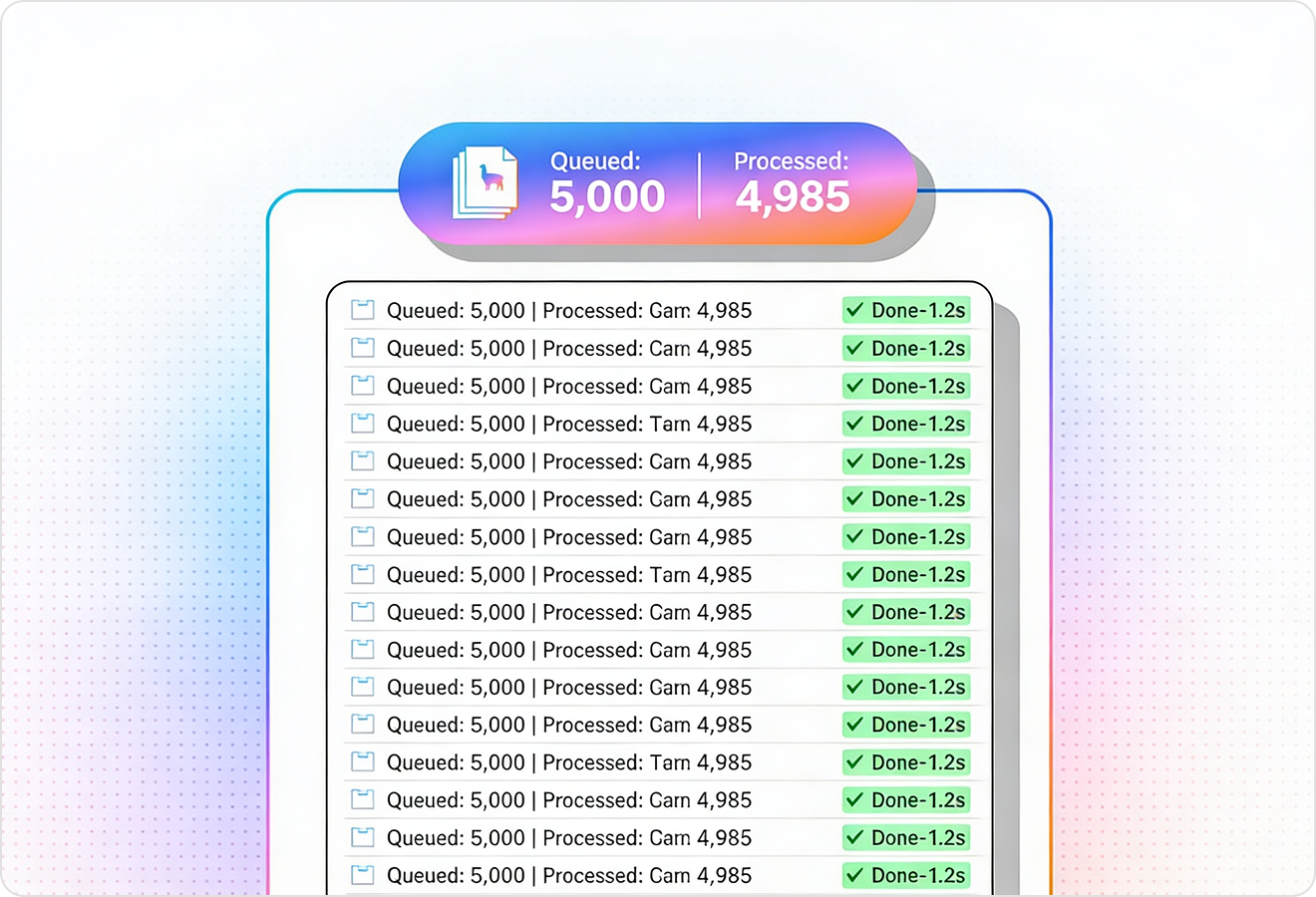
LlamaParse runs multiple validation steps to catch common extraction failures like swapped fields, missing values, or inconsistent formatting. For form field extraction, that means higher straight-through processing and fewer manual review queues when documents are noisy or partially filled.
Technical OCR documentation
Explore our developer guides to easily connect your document pipelines to LlamaParse.
Explore the documentation
Our AI catches the typos that tired eyes miss.

Export to Excel, JSON, XML, or directly via API.

SOC2 Type II compliant with end-to-end encryption.

Train the tool on your specific forms in minutes, not days.

Average processing time of <3 seconds per page.
LlamaParse’s support of a wide variety of filetypes and its accuracy of parsing made it the best tool we tested in our evaluations. The LlamaIndex team was very responsive and we were off to the races within a day.
Common FAQs
01
It uses layout-aware detection to understand the page structure, separating labels, inputs, checkboxes, and sections without scrambling the reading order. This makes it reliable across invoices, applications, and scanned PDFs where template changes typically break rule-based approaches.
02
Yes—JSON Field Output Mode returns clean, structured JSON you can map directly into your form-field schema and downstream APIs. It also includes metadata like page number, coordinates, and element type so you can trace every value back to its exact location for auditing and review.
03
No—Instruction-Guided Field Mapping lets you specify what to extract using natural-language instructions, including normalization rules for dates, totals, addresses, and IDs. That reduces template maintenance and keeps results consistent even as vendors and layouts change.
04
How do you reduce common extraction errors like swapped fields, missing values, or inconsistent formatting?
Validation & auto-correction loops run multiple checks to catch issues like swapped labels/values, missing required fields, and formatting inconsistencies. This boosts straight-through processing so fewer documents end up in manual review—especially when forms are noisy or partially filled.
05
What happens when the AI is unsure—can my team verify results quickly?
Every extracted value can include granular metadata (page and coordinates) so reviewers can jump straight to the exact spot on the document. This makes exceptions faster to resolve and helps you build trust in automation without sacrificing control.
06
Will this work on scanned PDFs and lower-quality documents?
Yes—the layout-aware approach is designed for real-world scans where text quality and alignment can vary. Combined with validation steps, it helps maintain accuracy and consistency even when documents are skewed, faint, or inconsistently filled out.