Nov 14, 2025
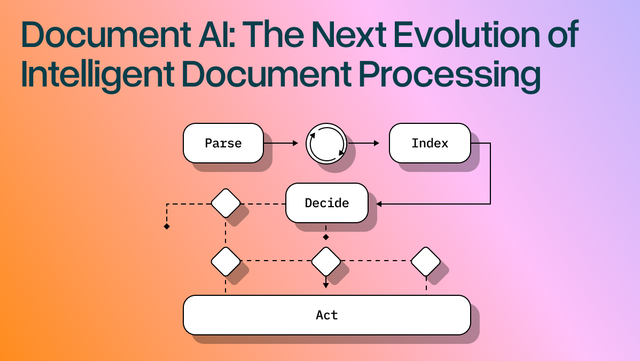
Document AI: The Next Evolution of Intelligent Document ProcessingPersona
Industry
Use cases
Financial Document OCR
[ Financial Document OCR ]

Use LlamaParse to turn statements, invoices, and tables into clean JSON with confidence scores.
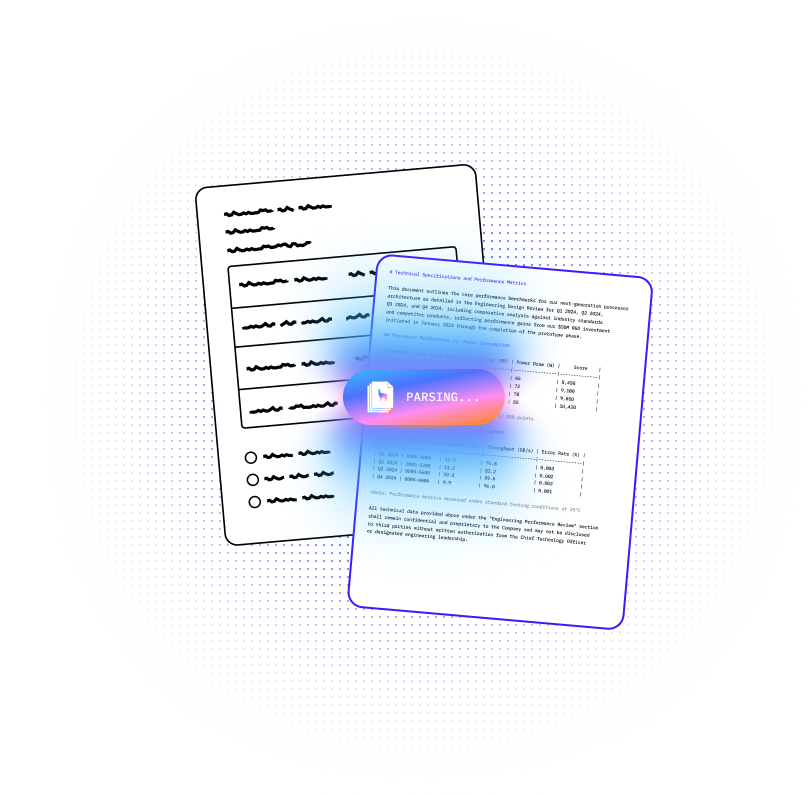
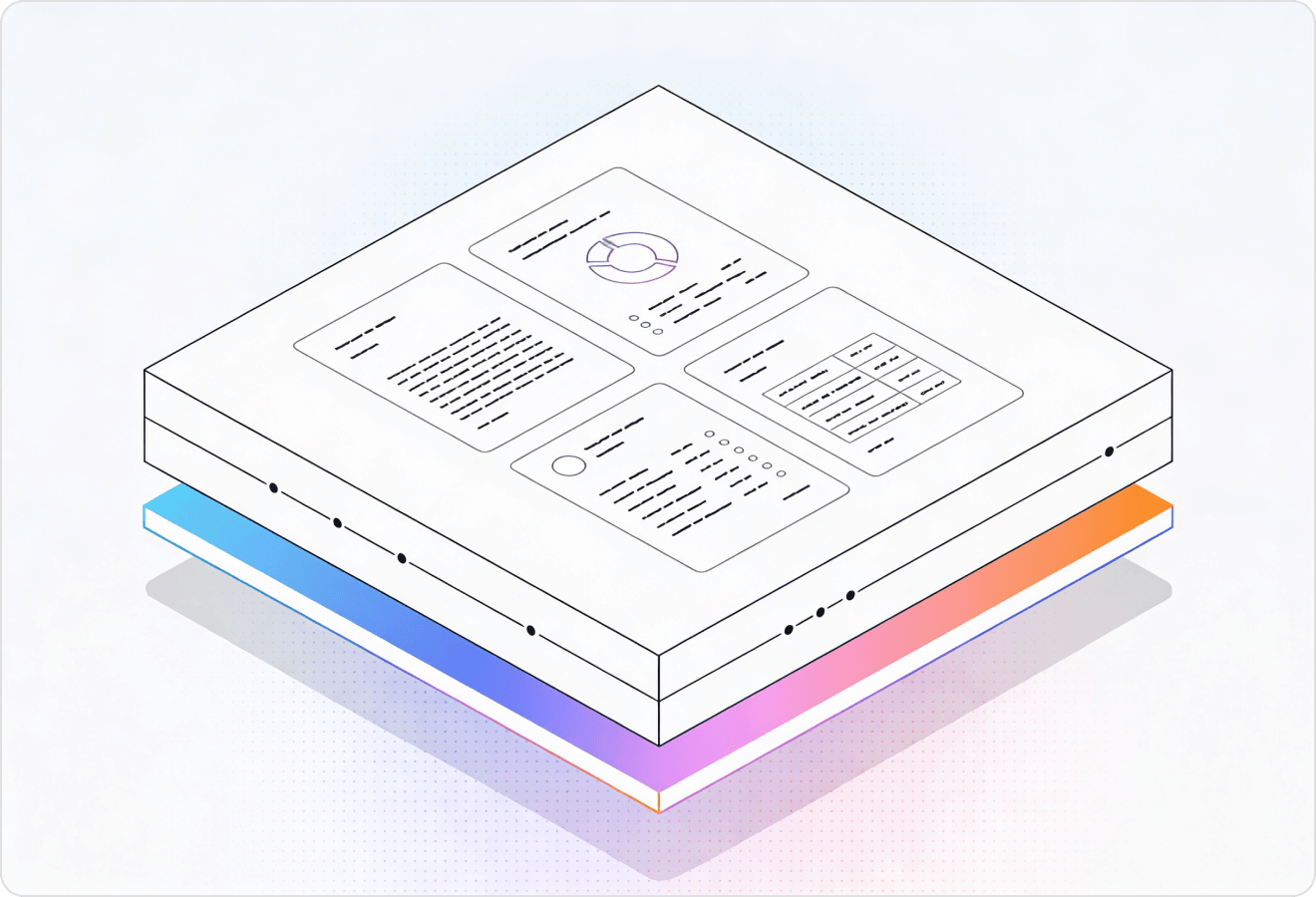

LlamaParse turns invoices, bank statements, and filings into clean JSON and reliable tables by understanding layout, line items, and totals. Agentic parsing runs validation loops with citations and confidence signals, so teams reconcile faster and automate downstream finance workflows with fewer exceptions.
Best-in-Class Accuracy

Use LlamaParse in LlamaCloud to parse loan packages, bank statements, and collateral schedules into structured JSON with citations, so underwriters can trace every number back to the source page. Layout-aware table extraction and auto-correction loops reduce rekeying and exceptions when statements include multi-column layouts, footnotes, and inconsistent formatting across borrowers.

Parse loss runs, invoices, repair estimates, and policy endorsements into clean, system-ready fields—even when totals are buried in tables, scanned forms, or mixed attachments. Natural-language parsing instructions let teams standardize extraction for each claim type (e.g., line items, deductibles, limits) without building brittle templates that break when carriers change layouts.

Automate reconciliation by extracting invoice line items, tax/VAT breakdowns, and remittance details from vendor PDFs into consistent Markdown/JSON that your ERP can ingest. Multimodal parsing captures chart-heavy spend reports and statement summaries, cutting month-end close time when suppliers send inconsistent formats across regions and marketplaces.

Ship faster by using LlamaParse as the ingestion layer for customer-uploaded invoices, receipts, and statements, returning structured outputs plus granular metadata for QA and audit trails. Tier-based agentic processing keeps unit economics predictable by routing simple pages to cheaper modes while escalating only messy scans and complex tables to higher-accuracy parsing.
The Solution
01
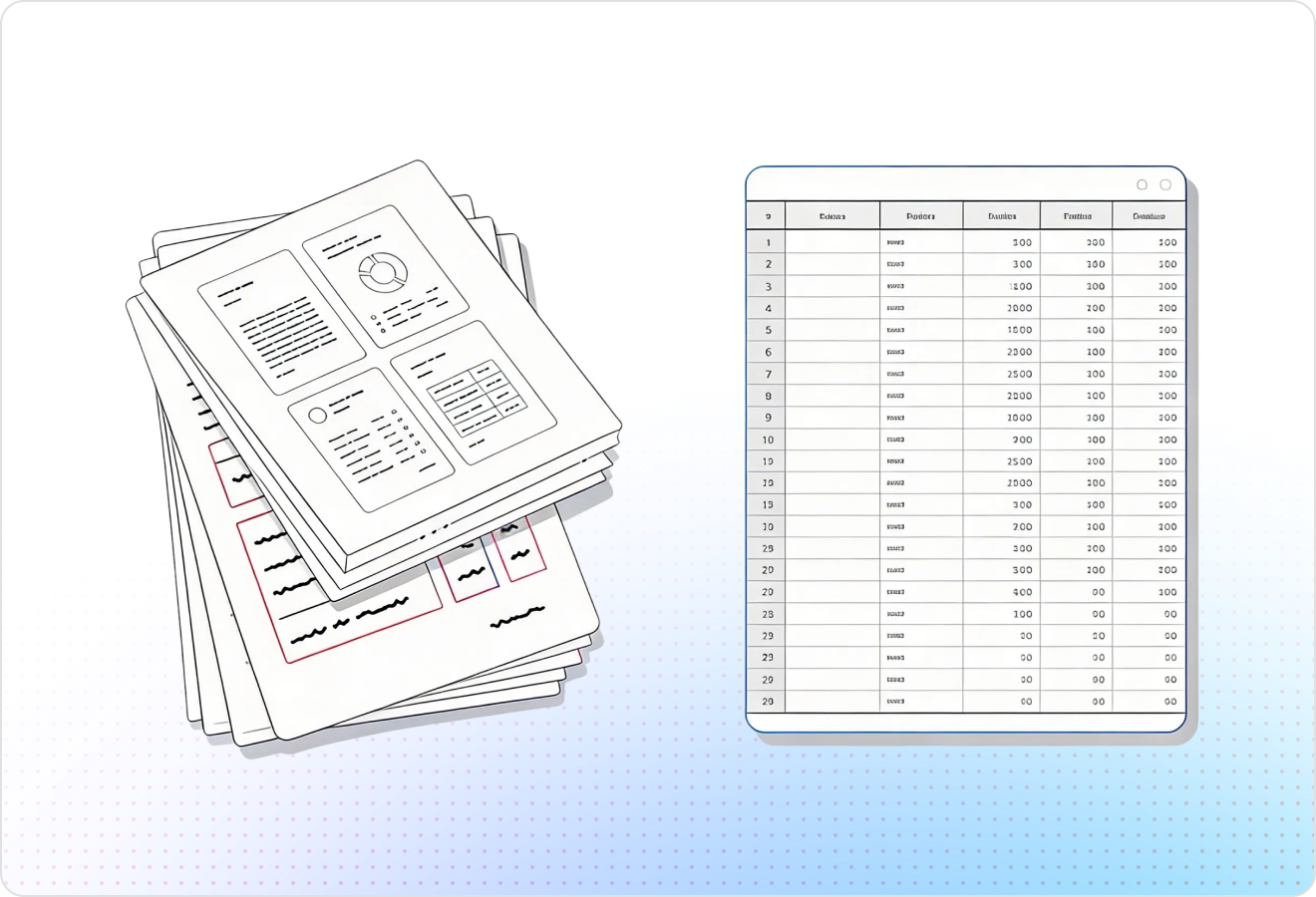
LlamaParse understands page structure to extract multi-column text, headers/footers, and dense financial tables without scrambling reading order. This makes statements, invoices, and loan packages reliable to reconcile because line items and totals stay tied to the right rows and columns.
02
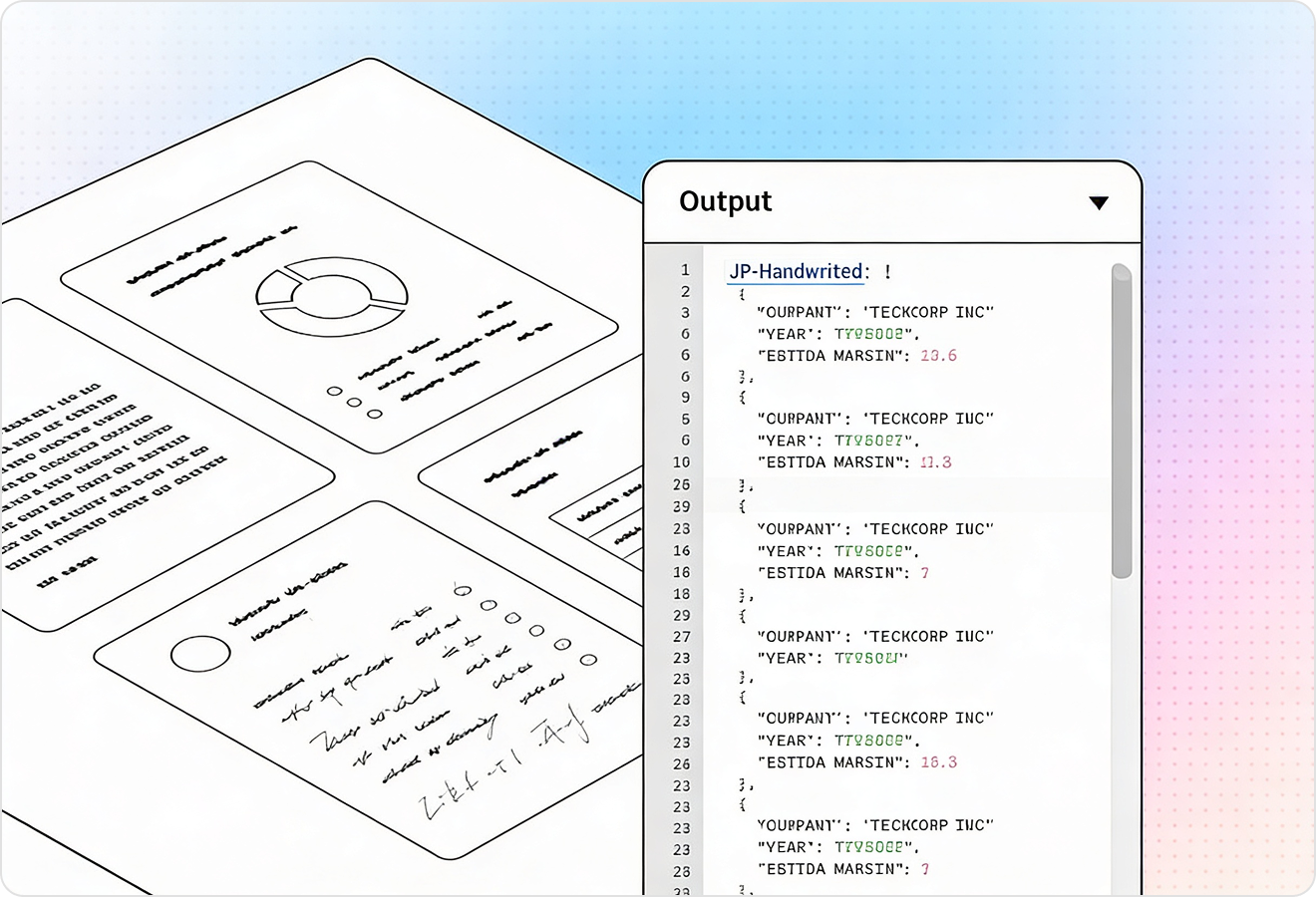
LlamaParse can interpret visual elements like charts and embedded figures and convert them into machine-readable representations such as Markdown tables. For financial reports and investor decks, you can capture KPIs and trends that would otherwise be lost in images, not just the surrounding text.
03
LlamaParse uses agentic validation steps to catch common extraction failures like missing cells, misread digits, or inconsistent totals and then retries with better strategies. This reduces downstream exception handling when you’re ingesting high-volume financial documents where small number errors create big workflow breaks.
04
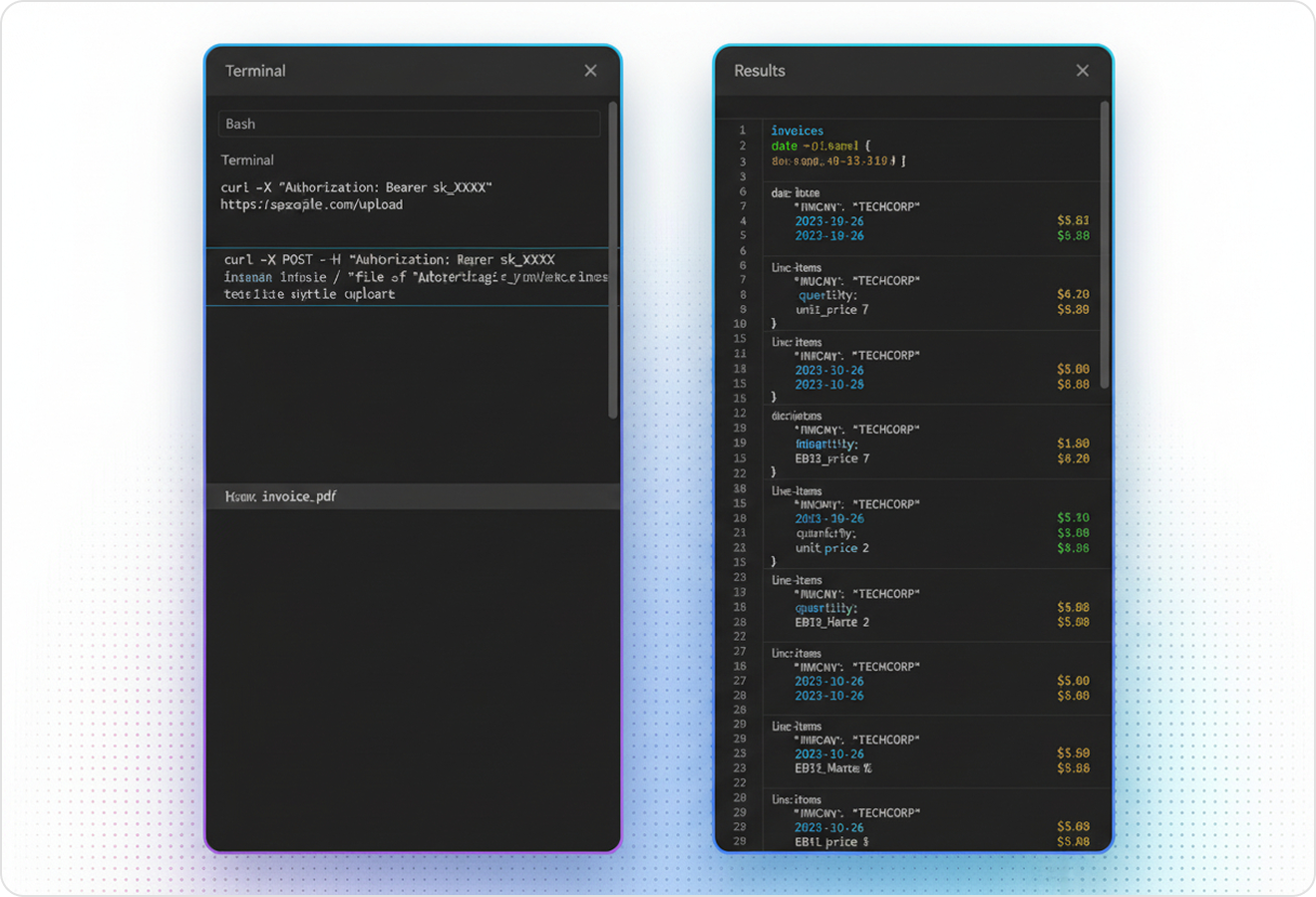
LlamaParse can output clean JSON along with granular metadata like page numbers and spatial coordinates for each extracted field. That traceability is critical in financial document workflows because you can audit values back to the source region and route low-confidence items to review.
Technical OCR documentation
Explore our developer guides to easily connect your document pipelines to LlamaParse.
Explore the documentation
Our AI catches the typos that tired eyes miss.

Export to Excel, JSON, XML, or directly via API.

SOC2 Type II compliant with end-to-end encryption.

Train the tool on your specific forms in minutes, not days.

Average processing time of <3 seconds per page.
LlamaParse’s support of a wide variety of filetypes and its accuracy of parsing made it the best tool we tested in our evaluations. The LlamaIndex team was very responsive and we were off to the races within a day.
Common FAQs
01
Yes—our layout-aware parsing preserves reading order across multi-column pages and dense tables, so descriptions, quantities, and totals stay in the correct rows and columns. This reduces reconciliation errors and eliminates the manual reformatting common with generic OCR.
02
It can interpret charts and embedded figures and convert them into machine-readable outputs like Markdown tables. That means you can extract KPIs and trends that are often trapped in images, not just the surrounding narrative text.
03
Self-correction validation loops automatically check for common failures such as missing cells, misread digits, and inconsistent totals, then retry with improved strategies. The result is fewer exceptions, less manual QA, and more reliable ingestion at scale.
04
Do you provide structured JSON output I can use directly in my pipeline?
Yes, you get clean, structured JSON designed for easy mapping into databases, ERPs, or analytics tools. This helps your team move from “extracted text” to usable data with minimal post-processing.
05
Can I audit extracted values back to the original document for compliance and review?
Every extracted field can include metadata like page numbers and spatial coordinates, so you can trace values back to the exact source region. This makes audits faster and lets you route low-confidence items to human review with clear context.
06
How well does it handle high-volume, mixed document types like loan packages and statement bundles?
It’s built for messy, real-world document sets—multi-page PDFs, varying templates, and mixed content like tables, headers/footers, and figures. Consistent structure plus validation reduces edge cases, so you can scale processing without expanding your operations team.