Nov 14, 2025
Document AI: The Next Evolution of Intelligent Document ProcessingPersona
Industry
Use cases
Building Permit OCR
[ Building Permit OCR ]

Use LlamaParse to turn messy permit PDFs into clean JSON with citations and confidence scores.
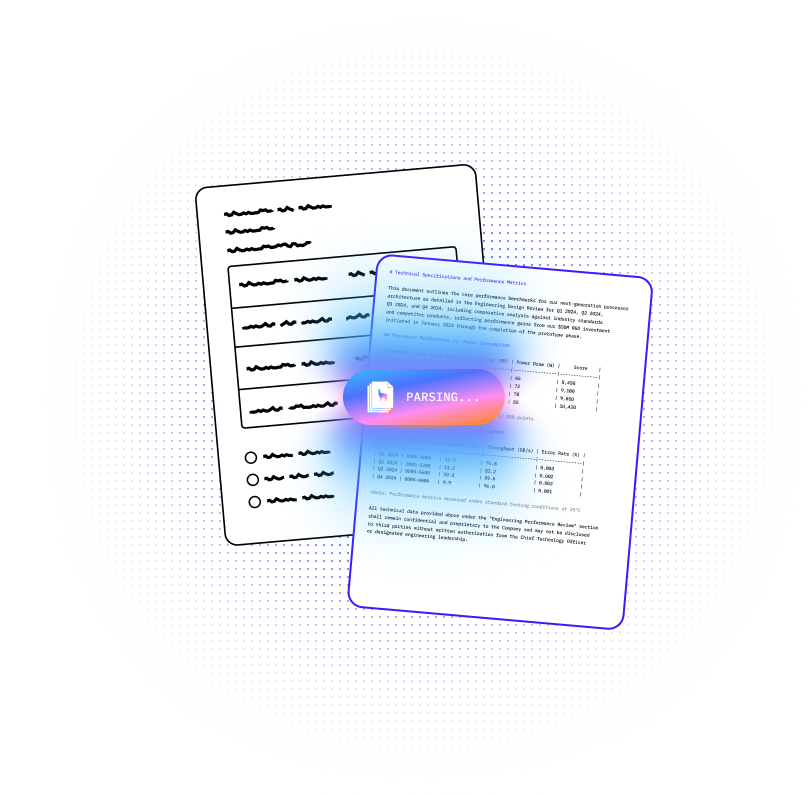


LlamaParse turns messy building permit PDFs and scans into reliable, structured fields you can actually use for intake, review, and reporting. Its agentic document parsing reads layout, tables, and stamps, then validates outputs with citations and confidence scores to reduce rework.
Best-in-Class Accuracy

Turn messy permit PDFs, plan sets, and jurisdiction-specific forms into clean JSON so your product can auto-fill applications, validate required fields, and route exceptions without building brittle rules. LlamaParse preserves reading order and tables, letting your app reliably extract scope, valuations, contractor IDs, and review statuses even when layouts change.

Normalize building permit packets into structured data to track entitlement progress, fees, and inspection milestones across portfolios without manual spreadsheet work. LlamaParse pulls key fields from multi-column forms and embedded tables, creating a verifiable audit trail with citations for faster lender and investor reporting.

Automate underwriting and claims triage by extracting permit history, scope-of-work, and inspection outcomes from scanned municipal records and contractor submissions. LlamaParse’s agentic document parsing handles stamps, tables, and attachments, reducing re-keying errors and speeding decisions when documents are incomplete or inconsistently formatted.

Digitize incoming applications and legacy permit archives into searchable, structured records without reformatting each jurisdiction’s templates. LlamaParse outputs Markdown/JSON with granular metadata, enabling faster intake QA, downstream case management integration, and targeted human review only on low-confidence fields.
The Solution
01
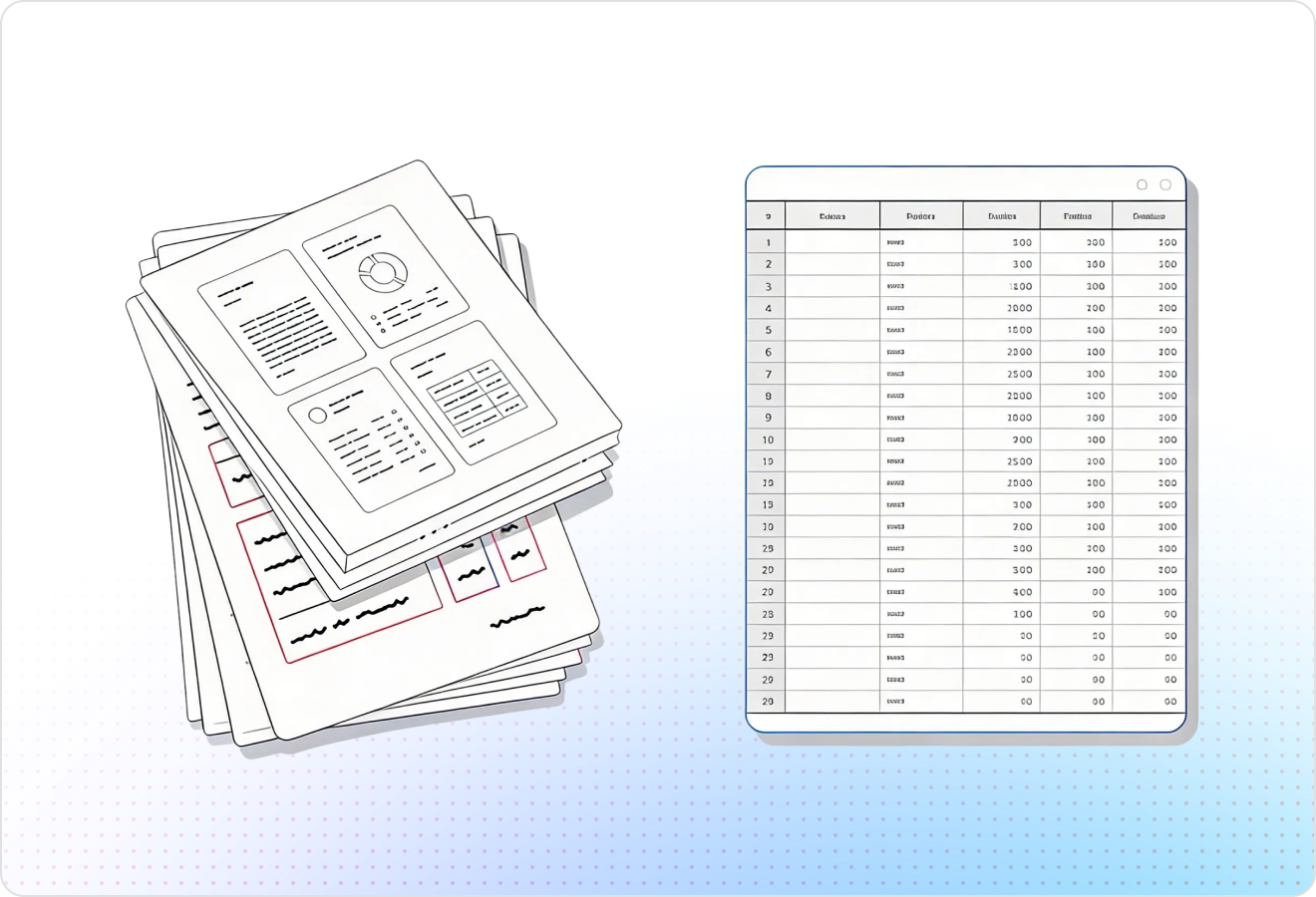
LlamaParse understands page layout so multi-column building permits, stamped headers, and side notes don’t get merged into garbage text. You get clean reading order that preserves sections like applicant info, scope of work, valuation, and approval blocks for reliable downstream extraction.
02
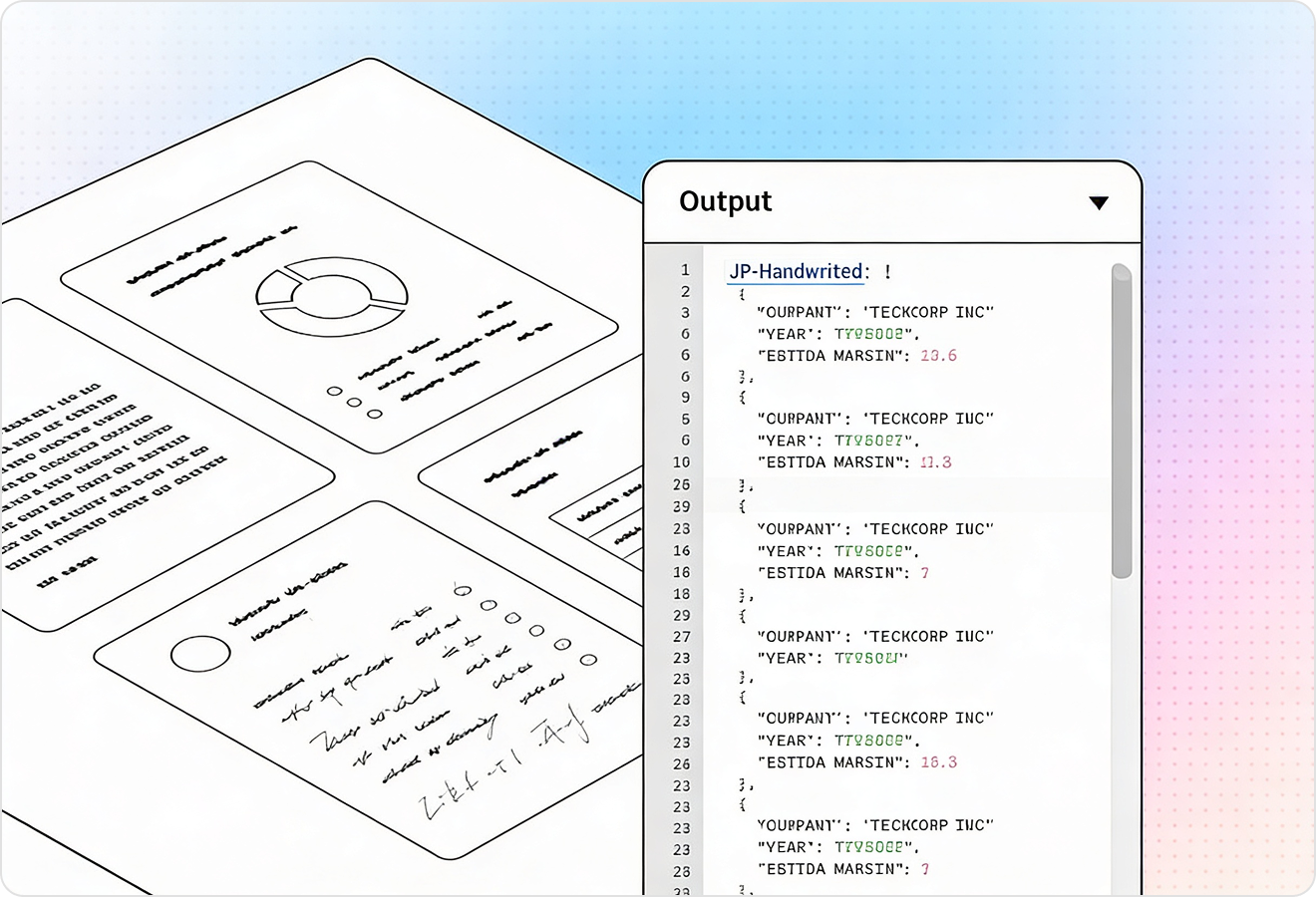
Building permits often include fee tables, inspections, and code checklists that break traditional text extraction. LlamaParse pulls these into structured tables (Markdown or JSON) so you can capture line items like permit fees, valuation, and required inspections without manual cleanup.
03
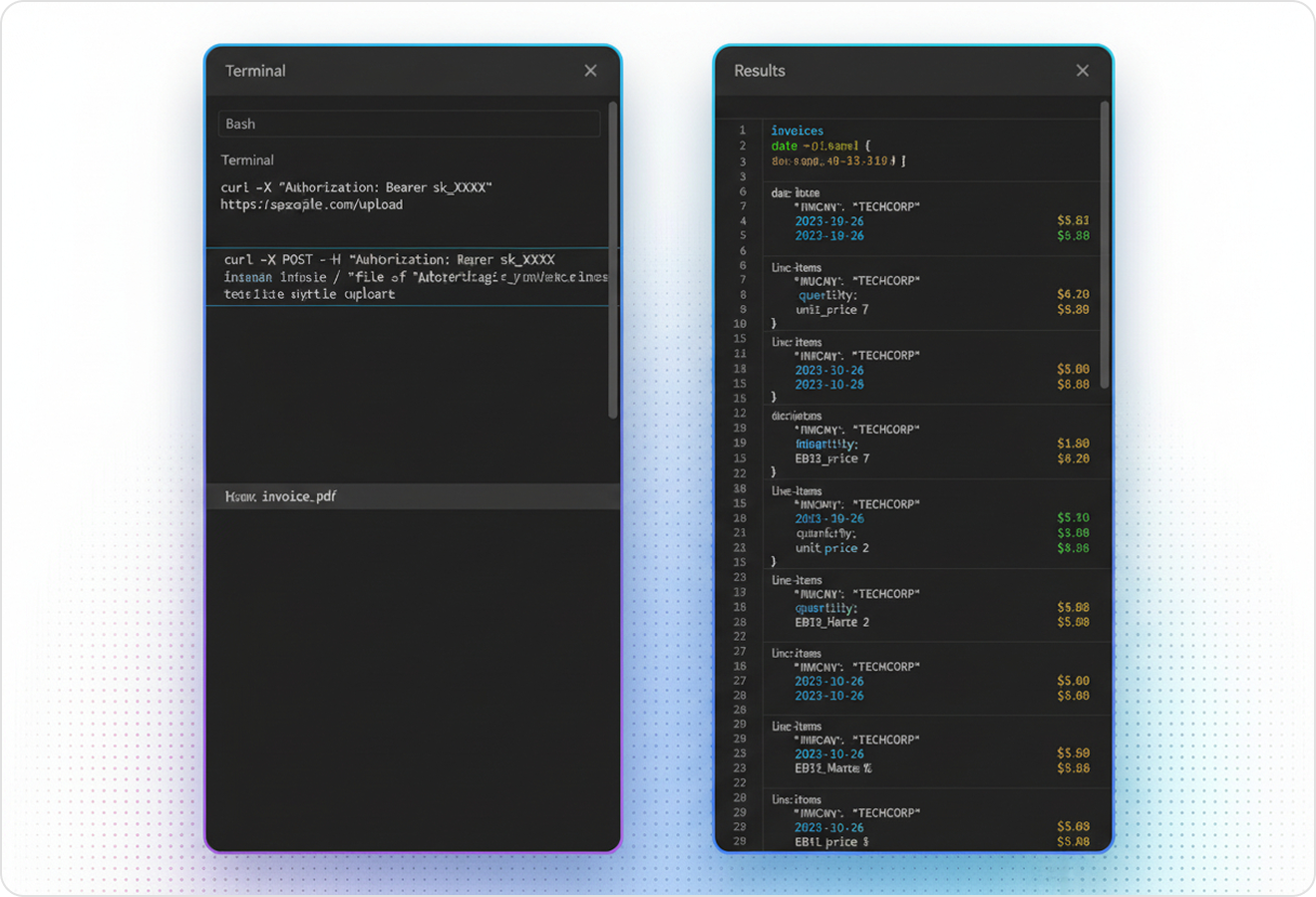
LlamaParse can return structured JSON plus granular metadata like page numbers and coordinates for each extracted field. That makes it easy to validate critical permit fields (permit number, address, contractor license) and show exactly where each value came from during audit or review.
04
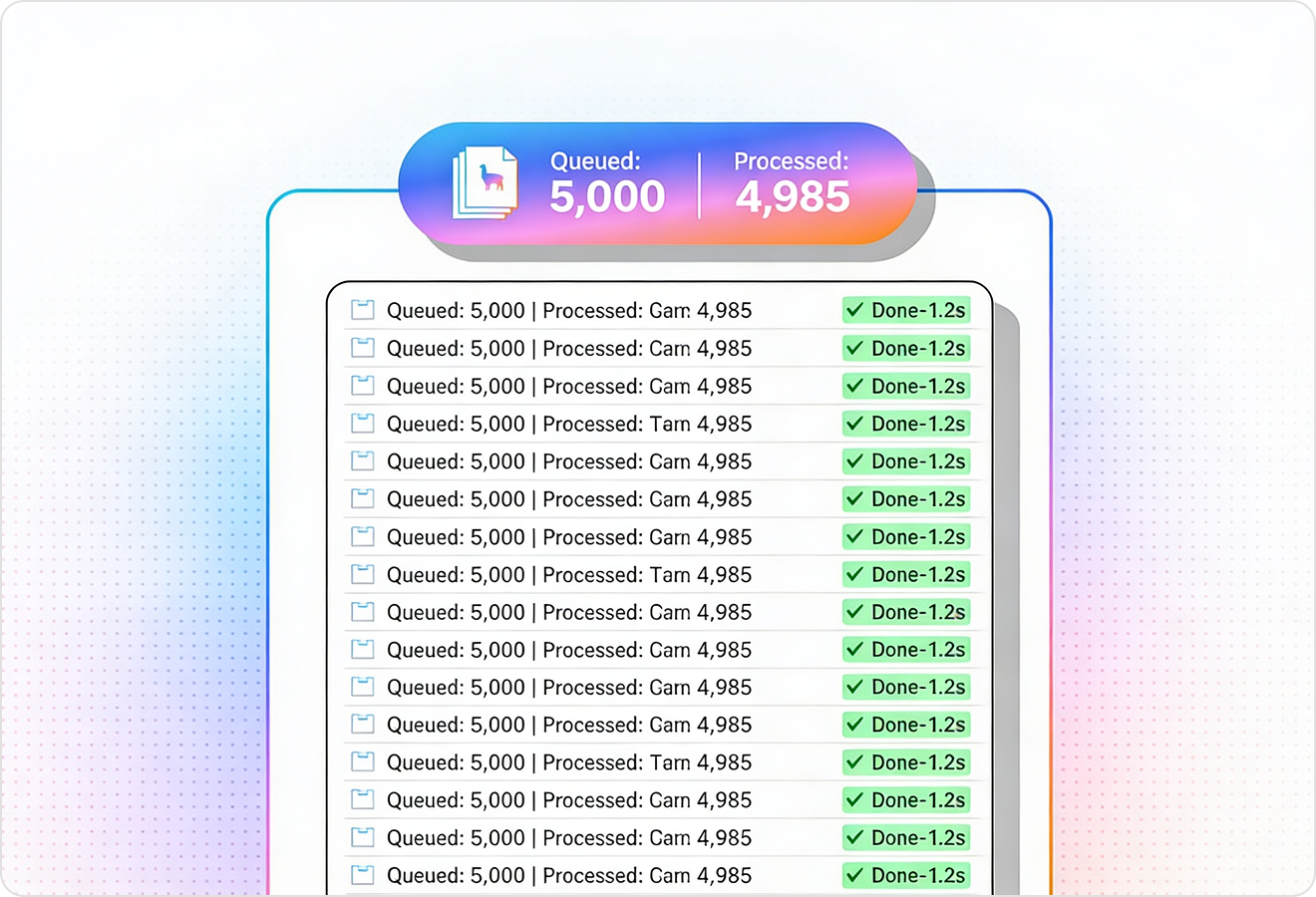
Permits are full of messy scans, stamps, and low-contrast photocopies that cause subtle extraction errors. LlamaParse uses validation and self-correction loops to catch inconsistencies and reduce rework, improving straight-through processing for permit intake.
Technical OCR documentation
Explore our developer guides to easily connect your document pipelines to LlamaParse.
Explore the documentation
Our AI catches the typos that tired eyes miss.

Export to Excel, JSON, XML, or directly via API.

SOC2 Type II compliant with end-to-end encryption.

Train the tool on your specific forms in minutes, not days.

Average processing time of <3 seconds per page.
LlamaParse’s support of a wide variety of filetypes and its accuracy of parsing made it the best tool we tested in our evaluations. The LlamaIndex team was very responsive and we were off to the races within a day.
Common FAQs
01
Yes—layout-aware parsing preserves the correct reading order across columns, stamped headers, callouts, and margin notes. That means sections like applicant info, scope of work, valuation, and approvals stay separated and usable for reliable extraction.
02
Absolutely—tables and schedules are captured as structured output (Markdown or JSON) instead of messy text blobs. You can reliably pull line items like permit fees, valuation, and required inspections without manual reformatting.
03
Yes—output can include structured JSON plus metadata such as page numbers and coordinates for each extracted value. This makes audits and reviews easier because you can show exactly where a permit number, address, or contractor license was found.
04
How accurate is it on low-quality scans and photocopies with heavy stamps?
Building permits are often noisy, so the system uses validation and self-correction loops to catch inconsistencies and reduce subtle OCR errors. The result is higher straight-through processing and less time spent on manual fixes.
05
What permit fields can we reliably extract for downstream workflows?
Common fields include permit number, property address, parcel/APN (when present), applicant and contractor details, license numbers, scope of work, valuation, dates, and approval blocks. With clean structure preserved, it’s easier to map results into your intake, CRM, or case management system.
06
How does this fit into our existing pipeline—do we need to rebuild our OCR process?
You can use it as a drop-in extraction layer that outputs clean text, tables, and JSON for your existing systems. Start with a few high-value fields, validate with traceability metadata, and scale up as your confidence grows.