Nov 14, 2025
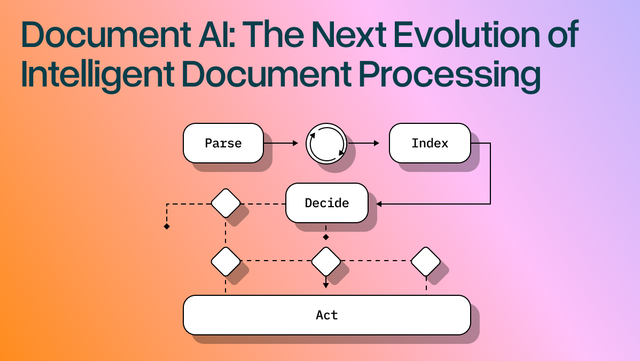
Document AI: The Next Evolution of Intelligent Document ProcessingPersona
Industry
Use cases
8-K Filing OCR
[ 8-K Filing OCR ]

Use LlamaParse to turn 8-K PDFs into clean, cited tables and fields you can trust.
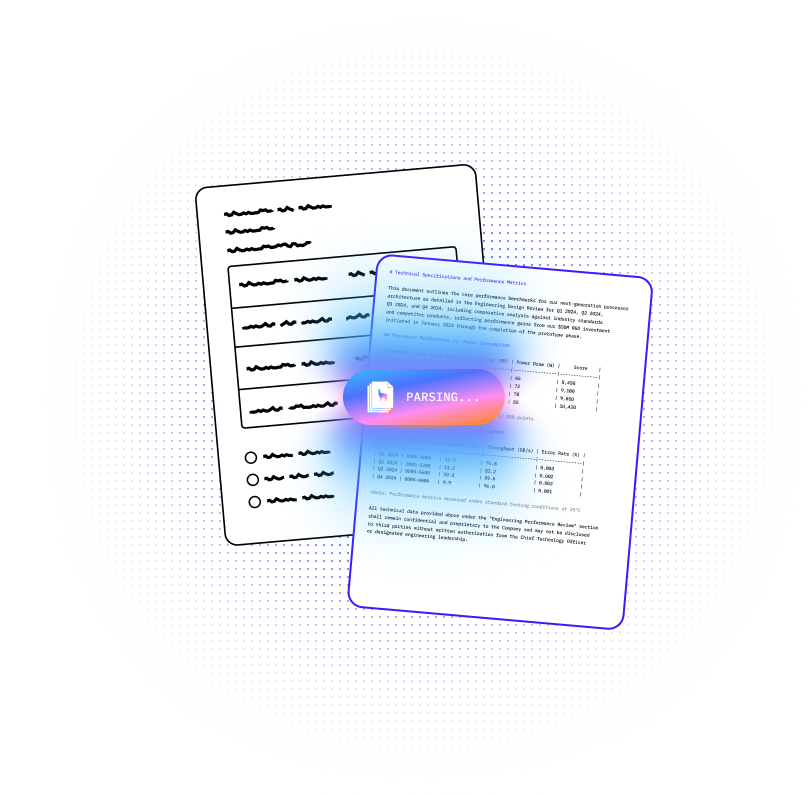

LlamaParse turns messy 8-K PDFs and scanned exhibits into clean, structured outputs like JSON or Markdown that your models can use immediately. It’s layout-aware and agentic, with validation loops and citations so you can automate extraction with fewer manual checks.
Best-in-Class Accuracy

Ingest SEC 8-K PDFs at scale and use LlamaParse to convert messy filings into clean, layout-preserving Markdown/JSON for event detection like guidance updates, executive changes, and M&A. Ship faster by avoiding brittle regex and custom parsers, while keeping provenance via page-level metadata for audit-ready answers in your app.

Parse 8-Ks into structured signals by reliably extracting itemized sections, multi-column narratives, and tables (e.g., financial exhibits) without the scrambled outputs that break traditional OCR pipelines. Automate alerting and analyst workflows by routing complex pages to agentic processing and returning confidence-scored, citable fields for faster decision-making.

Turn high-volume 8-K review into a repeatable workflow by extracting key clauses, dates, parties, and exhibit references into a consistent schema for matter tracking and client reporting. Reduce manual QA by using validation loops and traceable citations that let reviewers jump directly to the exact page region where a statement was sourced.

Continuously monitor insured public companies by parsing 8-K filings to surface material events that impact risk—credit facility changes, asset sales, restructuring, or leadership turnover—without missing details embedded in tables and exhibits. Feed structured outputs into underwriting and claims triage systems to tighten risk controls and trigger policy actions faster.
The Solution
01
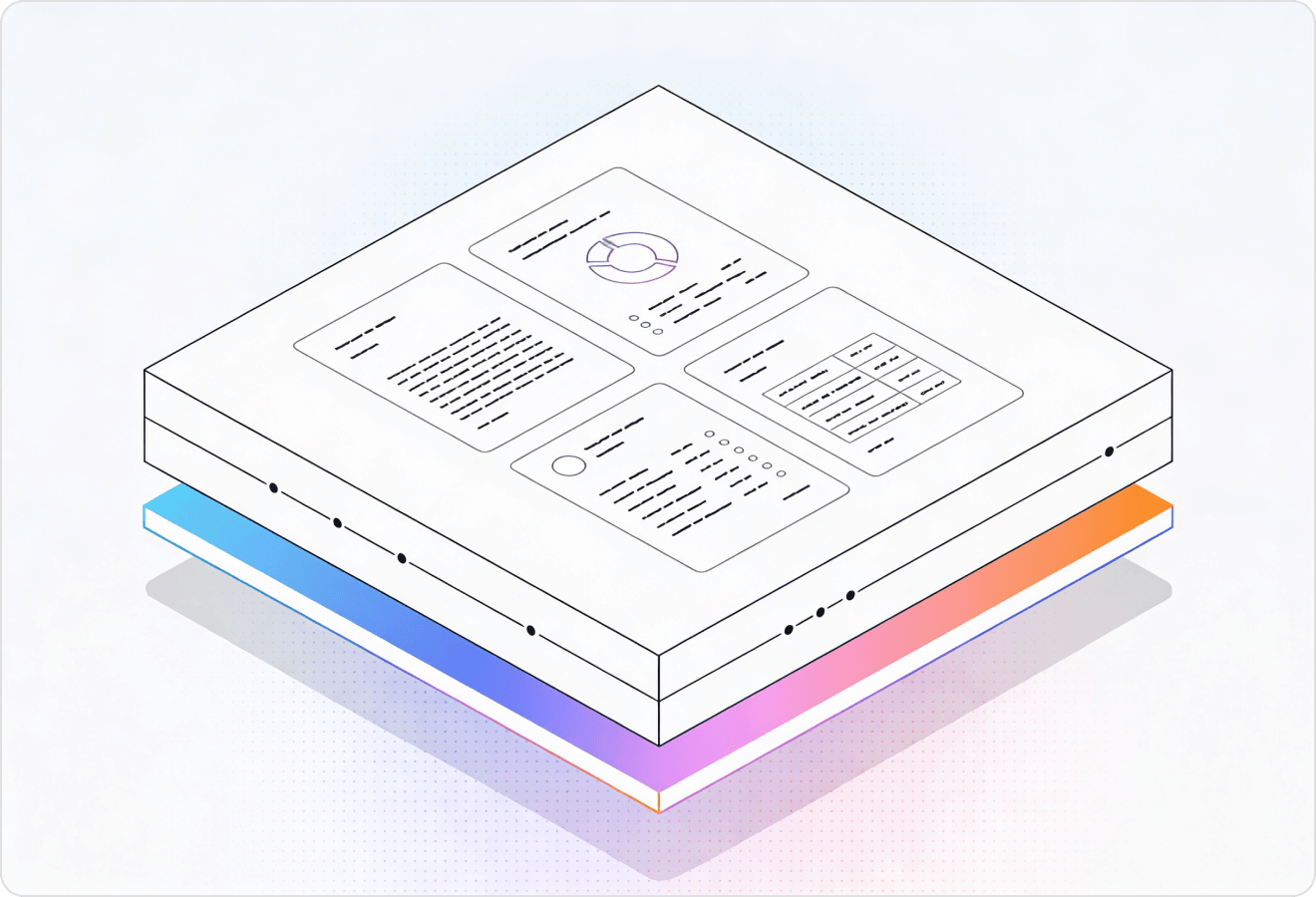
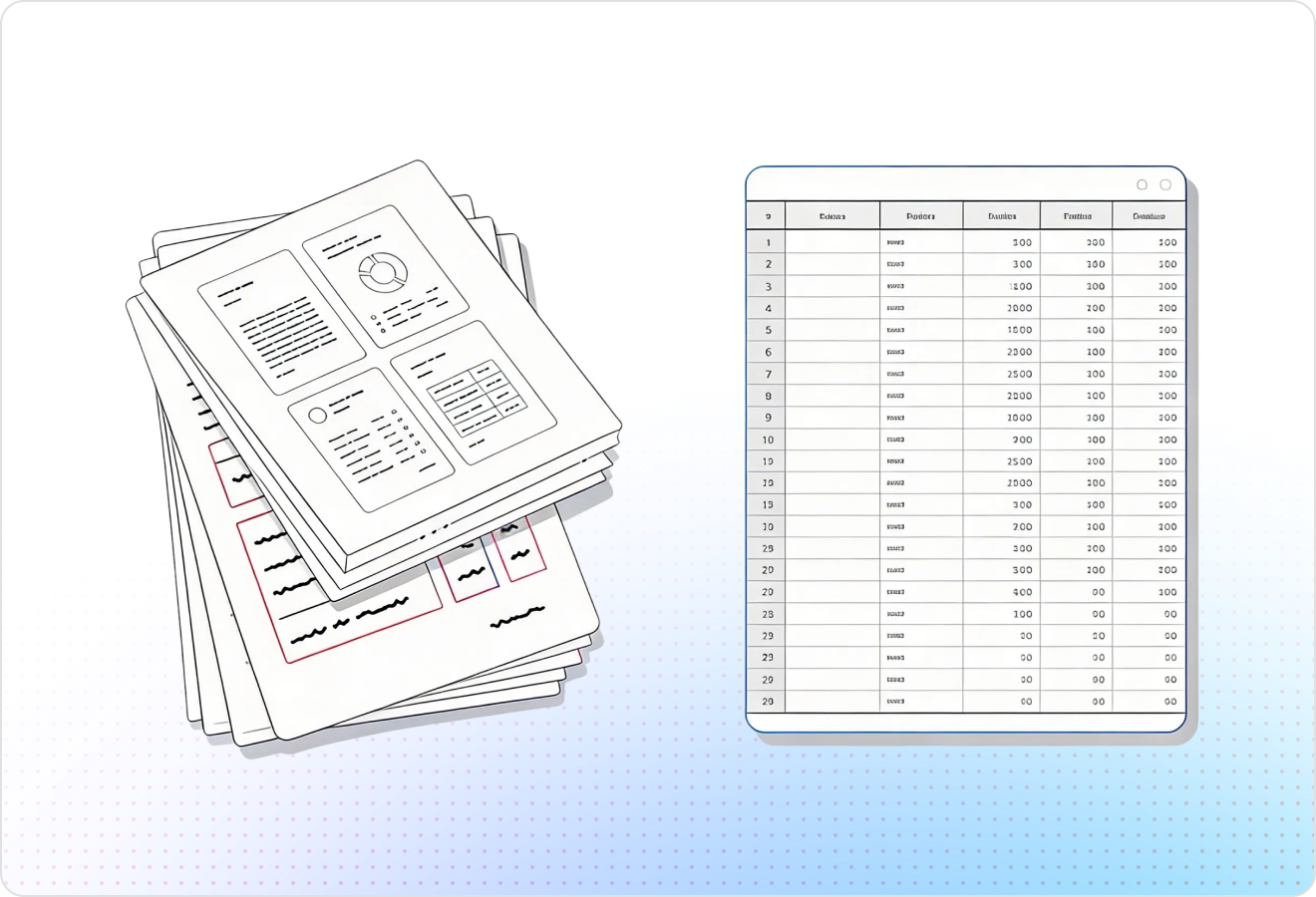
LlamaParse understands multi-column SEC layouts, headers/footers, and section boundaries so 8-Ks don’t come back as scrambled text. You get clean reading order and structure that makes it easy to isolate items like “Item 2.02” or “Item 7.01” for downstream extraction.
02
LlamaParse preserves table structure and nested rows instead of flattening everything into hard-to-parse text. That’s critical for 8-K exhibits and financial tables where a single misaligned column can break your metrics pipeline.
03
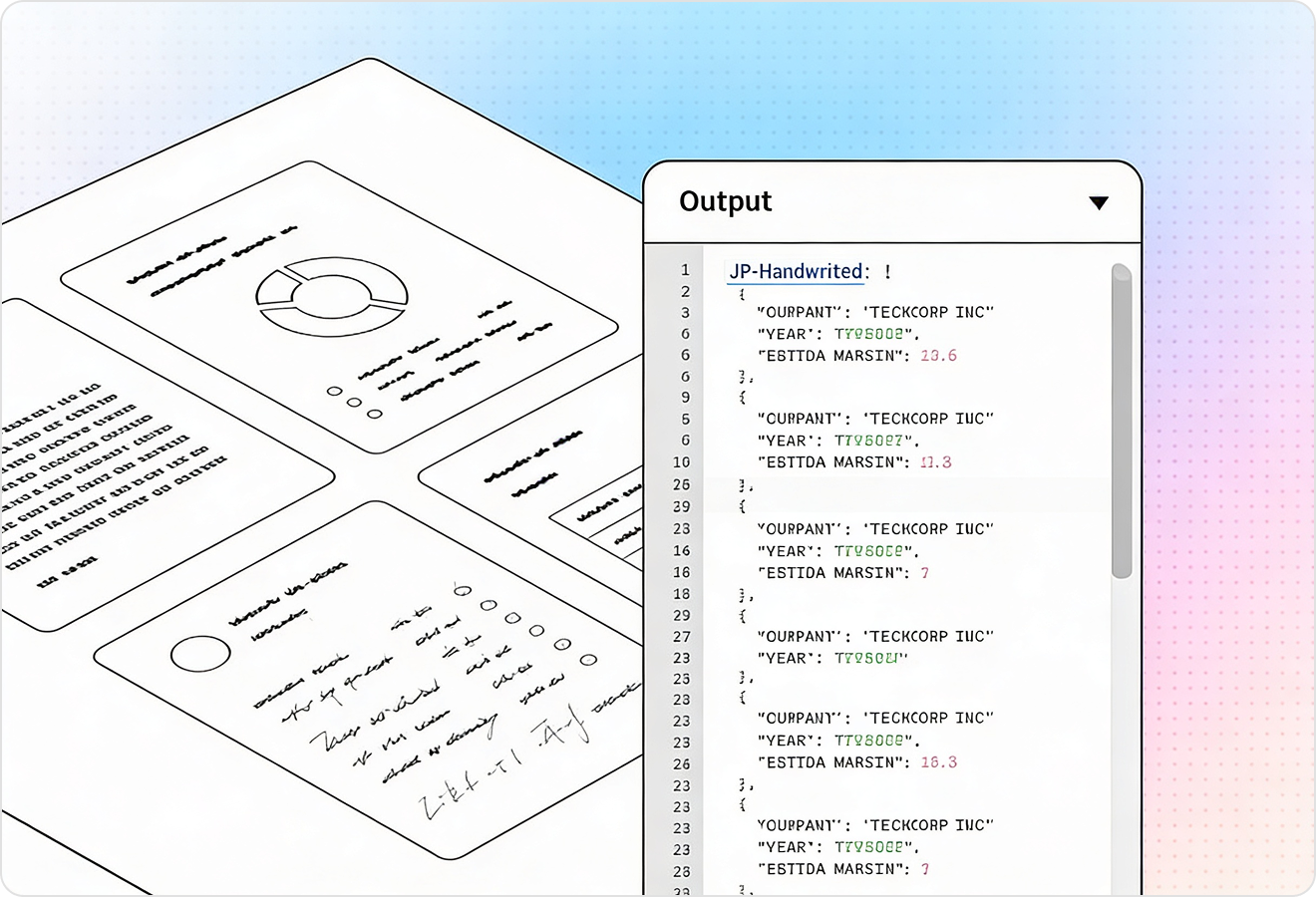
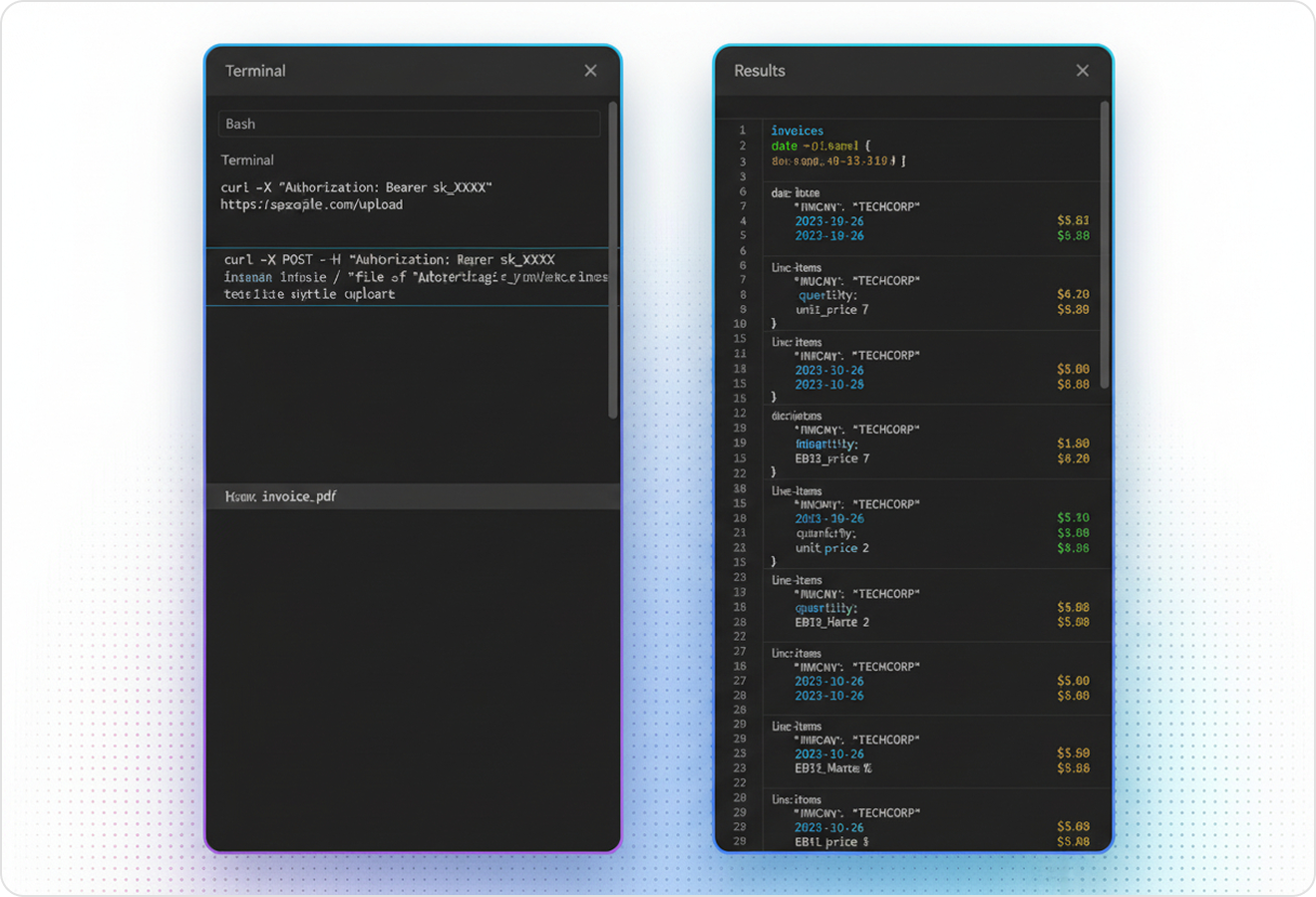
LlamaParse can return structured JSON with granular metadata like page numbers and element coordinates for traceability. For 8-K parsing, this lets you attach every extracted value to its source location so compliance review and human QA are straightforward.
04
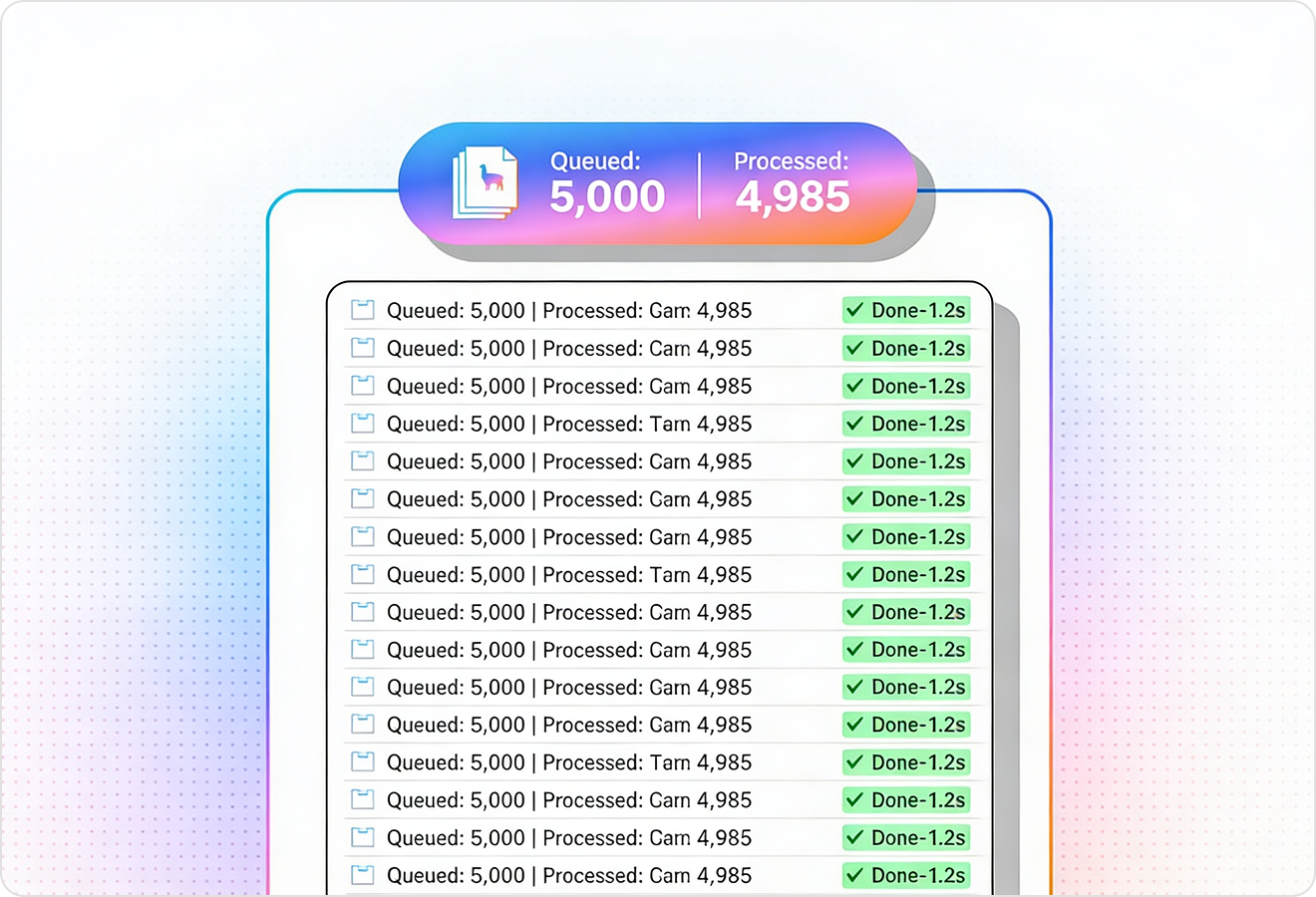
LlamaParse runs validation loops to catch common parsing errors and inconsistencies before results are returned. In 8-K workflows, this reduces manual cleanup on messy scans and helps keep extraction stable across different filers and formatting changes.
Technical OCR documentation
Explore our developer guides to easily connect your document pipelines to LlamaParse.
Explore the documentation
Our AI catches the typos that tired eyes miss.

Export to Excel, JSON, XML, or directly via API.

SOC2 Type II compliant with end-to-end encryption.

Train the tool on your specific forms in minutes, not days.

Average processing time of <3 seconds per page.
LlamaParse’s support of a wide variety of filetypes and its accuracy of parsing made it the best tool we tested in our evaluations. The LlamaIndex team was very responsive and we were off to the races within a day.
Common FAQs
01
Yes—our layout-aware parsing understands multi-column SEC formats, headers/footers, and section boundaries so text doesn’t come back scrambled. You get clean structure that makes it easy to isolate specific sections like “Item 2.02” or “Item 7.01” for downstream extraction.
02
It preserves table structure—including nested rows and aligned columns—instead of flattening everything into plain text. That means your metrics and models stay consistent even when a single column shift would normally break your pipeline.
03
Yes, results can be returned as structured JSON rather than unstructured text dumps. This makes it straightforward to map extracted fields into databases, compliance systems, or your existing ETL with fewer post-processing steps.
04
How do I audit extracted values for compliance and QA?
Each extracted element can include citations like page numbers and coordinates so reviewers can jump straight to the source location. This traceability reduces back-and-forth during review and builds confidence in automated extraction.
05
What happens when filings are messy scans or formatting varies by filer?
Validation and auto-correction loops catch common parsing errors and inconsistencies before results are returned. That reduces manual cleanup and helps keep extraction stable across different issuers, templates, and formatting changes over time.
06
How quickly can we go from raw 8-K PDFs to usable, structured data?
You can typically integrate quickly because the output is already structured and reliably ordered, including clean section boundaries and preserved tables. Start with a small batch to validate accuracy, then scale to ongoing filings with confidence.