Nov 14, 2025
Document AI: The Next Evolution of Intelligent Document ProcessingPersona
Industry
Use cases
K-1 Form OCR
[ K-1 Form OCR ]

Use LlamaParse to turn messy K-1 PDFs into structured fields with confidence scores for review.


LlamaParse turns messy K-1 PDFs and scans into clean, fielded JSON in minutes, so your pipeline can validate, reconcile, and file faster. Agentic parsing understands layout and tables, runs correction and validation loops, and returns confidence metadata so reviewers only touch true exceptions.
Best-in-Class Accuracy

Use LlamaParse in LlamaCloud to turn K-1 PDFs (including multi-partner packages and messy scanned attachments) into clean JSON and Markdown with layout-aware table extraction that preserves boxes, codes, and footnotes. Auto-correction loops and confidence-scored citations reduce reviewer time and speed up K-1 intake, reconciliation, and import into tax workflows.

Parse investor K-1s across funds into structured holdings, income types, and state allocations so teams can update client tax projections without manually re-keying tables. Multimodal parsing captures embedded schedules and annotated statements reliably, improving readiness for client reporting and year-end planning.

Automate K-1 package ingestion by extracting partner-level allocations, capital account activity, and state details into standardized schemas that flow into admin systems and LP reporting. Tier-based agentic processing routes only the hardest pages (complex tables, poor scans) to higher-accuracy models, keeping close timelines without blowing the processing budget.

Ship K-1 intake in days by using natural-language parsing instructions to define exactly what fields your product needs (e.g., Box 1–20, footnotes, state breakdowns) and return API-ready JSON with granular metadata. Cost Optimizer Mode keeps unit economics predictable while you scale from a handful of documents to peak-season batches.
The Solution
01
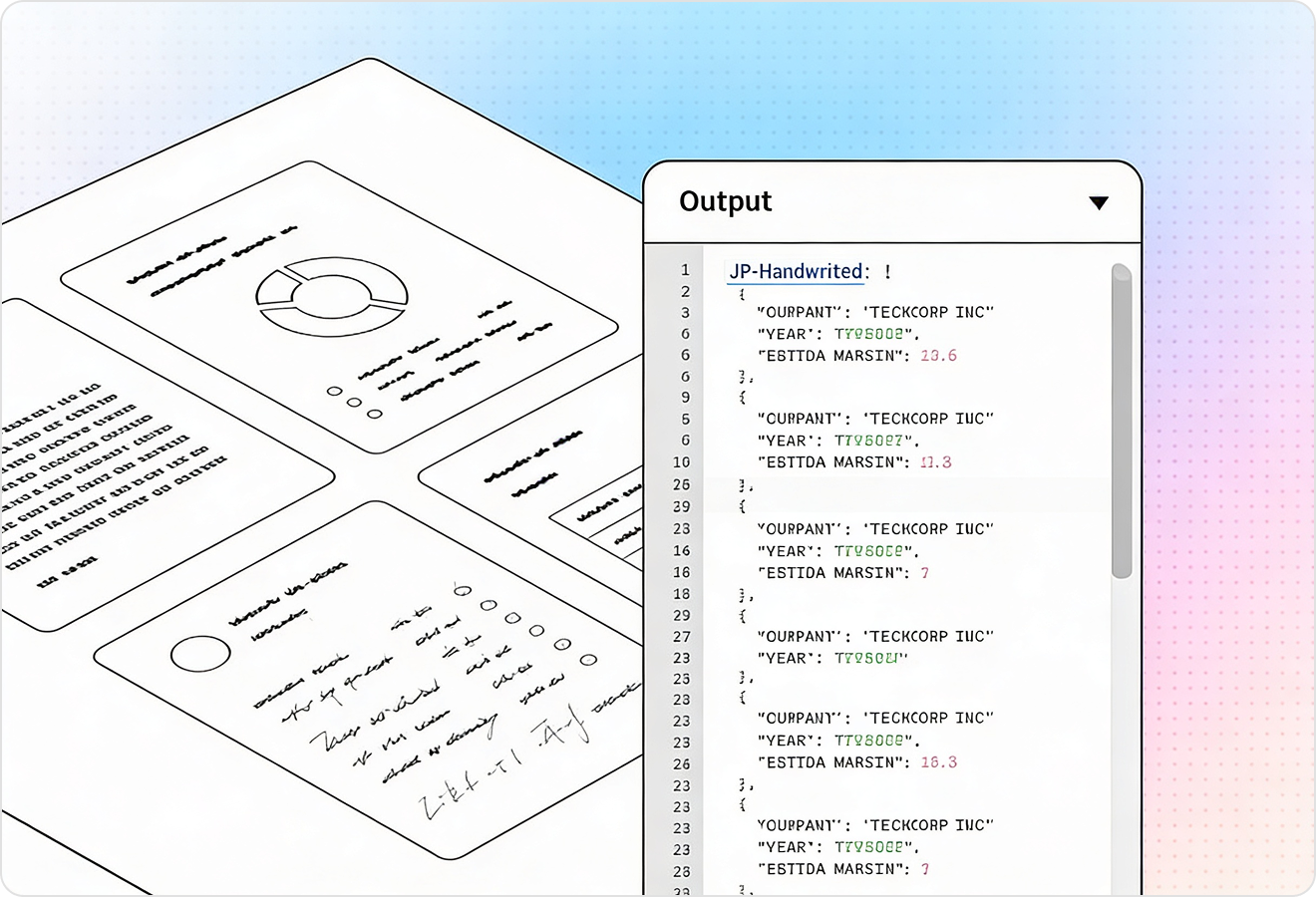
LlamaParse reads K-1s as structured forms, preserving boxes, line items, and multi-column sections instead of flattening everything into a messy text stream. That means fields like partner name/EIN and Part II/III line entries stay aligned so your extraction logic doesn’t break when the layout shifts across issuers.
02
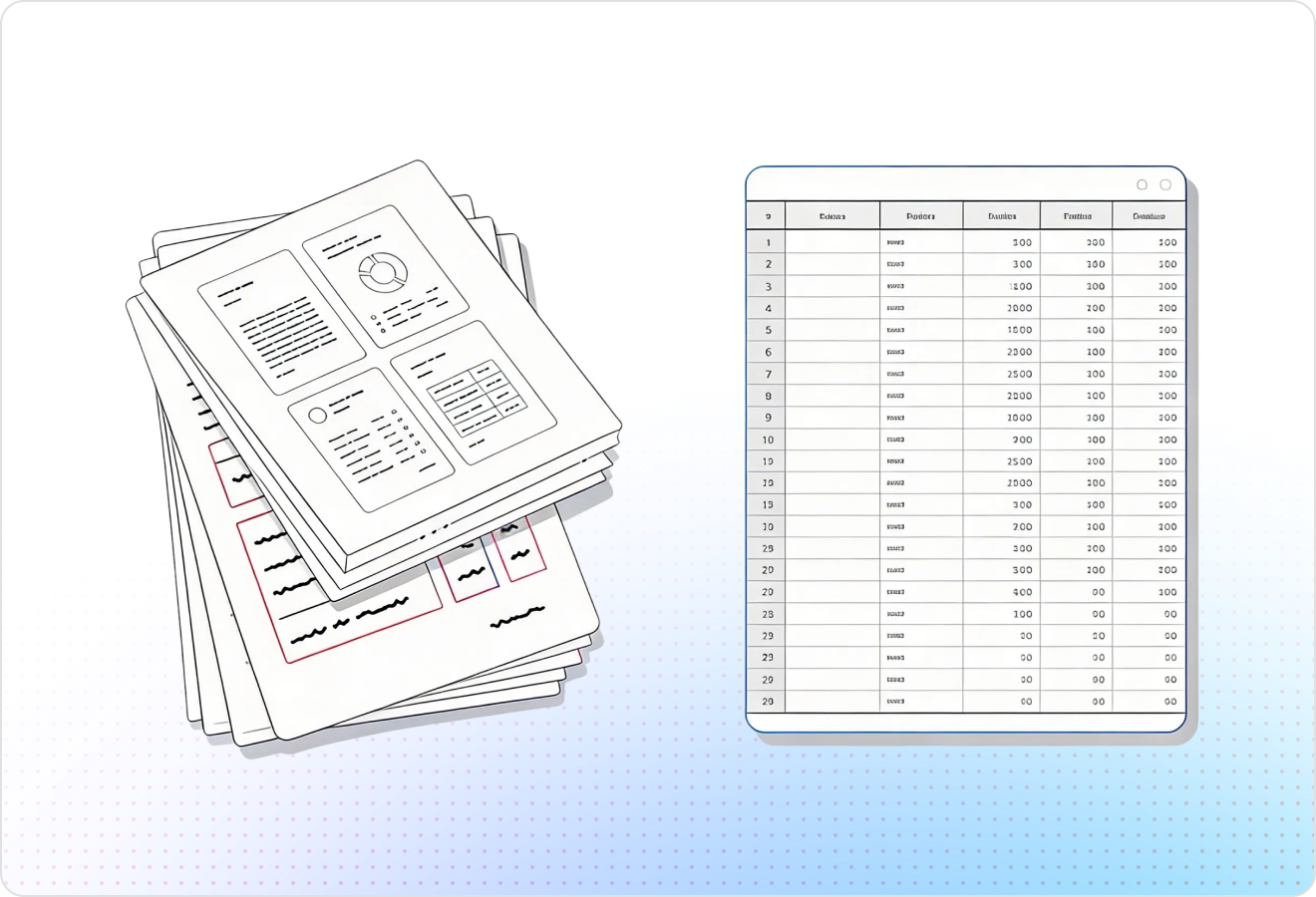
LlamaParse accurately captures K-1 tables and grid-like line items (including codes and amounts) without scrambling rows or dropping columns. This makes it reliable to ingest items like box 1 ordinary income, box 2 net rental, and box 13 codes into downstream tax workflows.
03
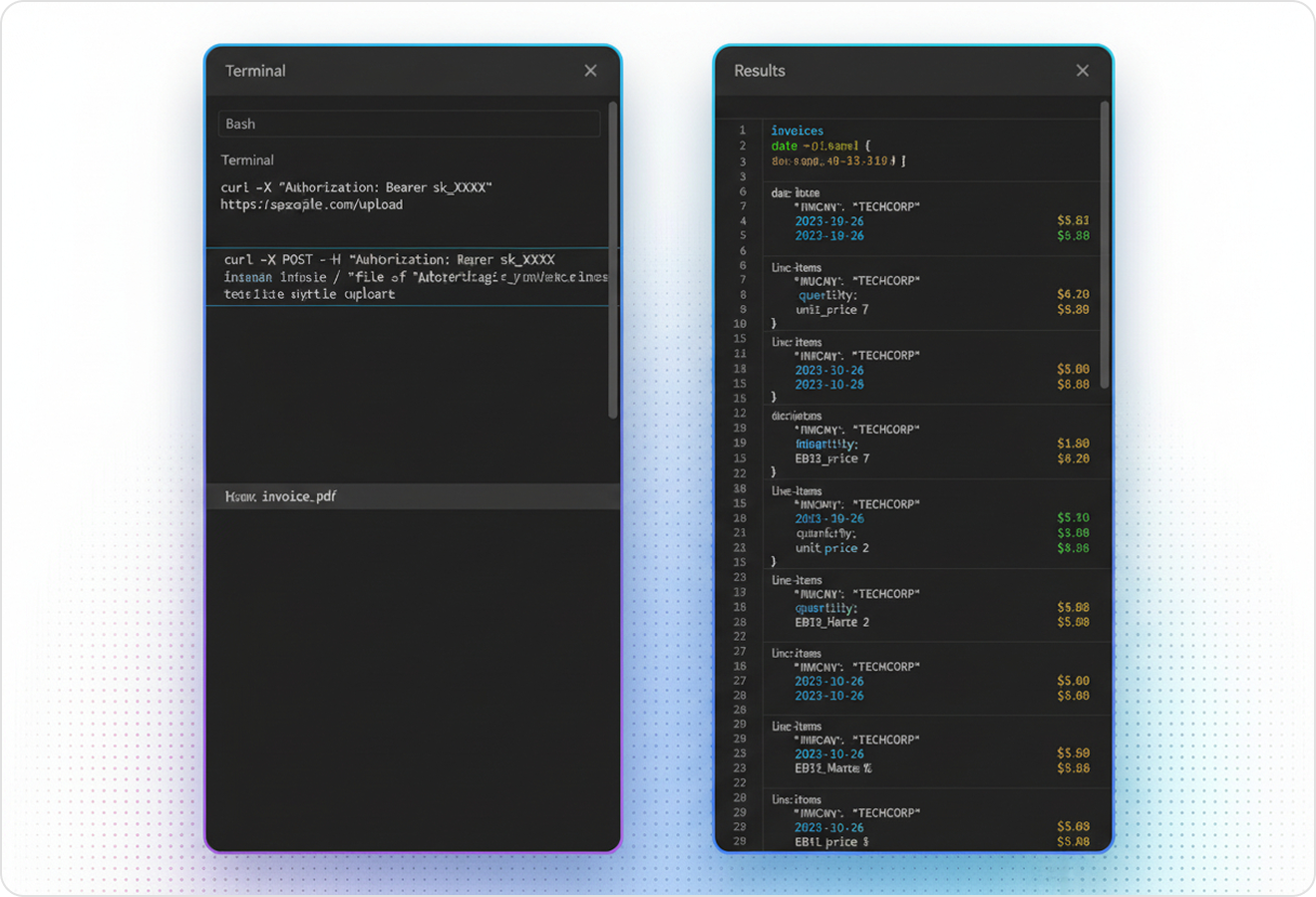
LlamaParse can return K-1 content as clean JSON that’s ready to map into your tax schema (partner info, entity info, boxes, and supplemental statements). You get consistent keys and predictable structure, which reduces custom parsing code and makes validation straightforward.
04
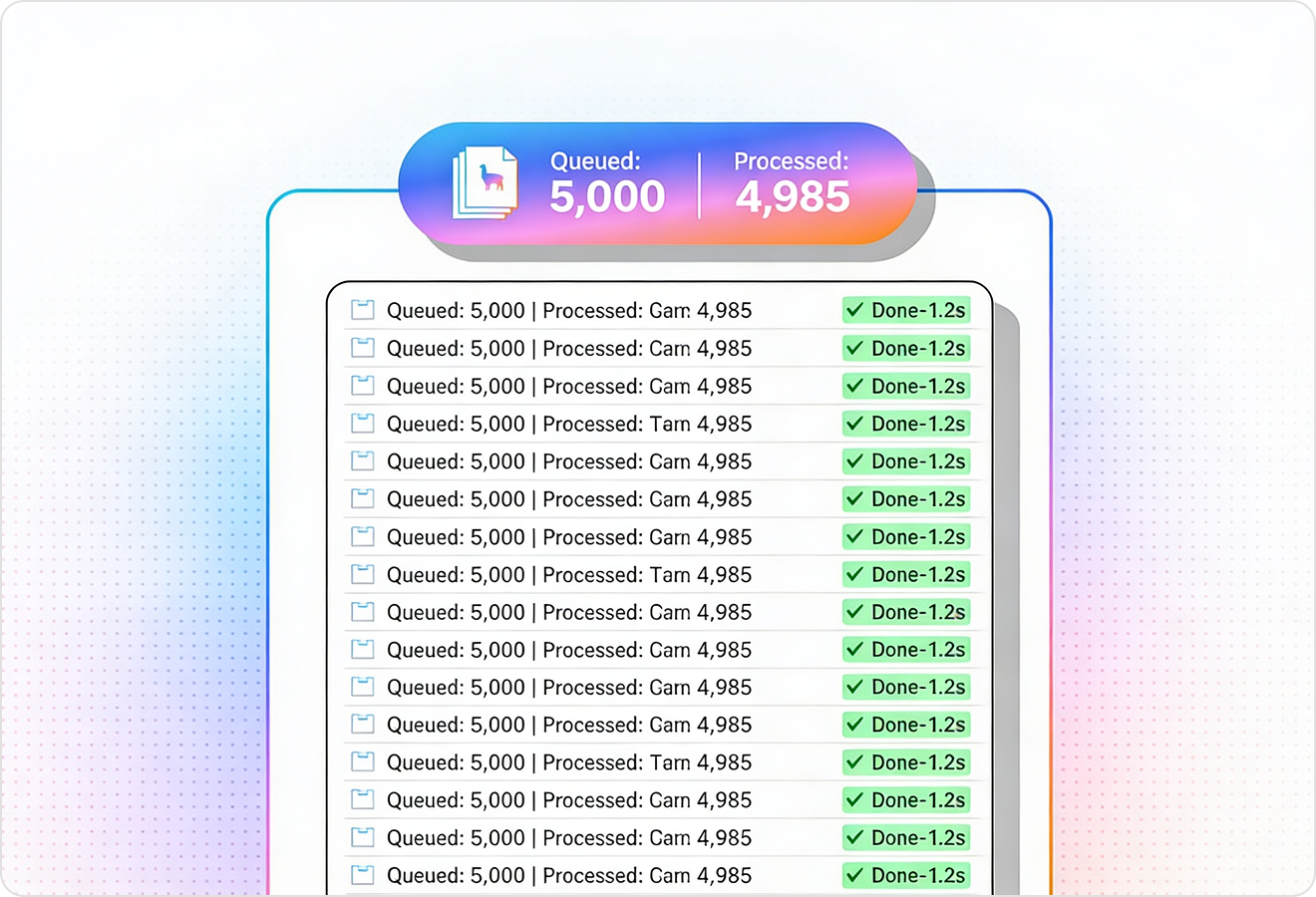
Every extracted K-1 value can carry traceable metadata like page references and element locations, so you can show exactly where a number came from. This is useful for review and auditability when a preparer needs to confirm specific boxes, codes, or statement footnotes before filing.
Technical OCR documentation
Explore our developer guides to easily connect your document pipelines to LlamaParse.
Explore the documentation
Our AI catches the typos that tired eyes miss.

Export to Excel, JSON, XML, or directly via API.

SOC2 Type II compliant with end-to-end encryption.

Train the tool on your specific forms in minutes, not days.

Average processing time of <3 seconds per page.
LlamaParse’s support of a wide variety of filetypes and its accuracy of parsing made it the best tool we tested in our evaluations. The LlamaIndex team was very responsive and we were off to the races within a day.
The engine room
01
Yes. Our layout-aware parsing reads K-1s as structured forms, preserving boxes, line items, and multi-column sections so fields don’t drift when formatting changes. This helps keep partner/entity details and Part II/III entries reliably mapped across issuers.
02
It’s built to capture tables and grids without scrambling rows or dropping columns, including common items like box 1 ordinary income, box 2 net rental, and box 13 codes. That means cleaner downstream ingestion and fewer manual fixes during tax prep.
03
Yes—structured JSON output provides consistent keys for partner info, entity info, box values, and supplemental statements. You’ll spend less time writing brittle parsing rules and more time validating and moving data through your workflow.
04
Do you provide citations so reviewers can verify where each number came from?
Every extracted value can include page references and element locations, so a preparer can click back to the exact spot on the K-1. This supports faster review, better auditability, and clearer explanations when questions come up before filing.
05
What happens when a K-1 includes supplemental statements or footnotes?
Supplemental sections are captured along with the primary boxes, and can be returned in a structured way for consistent handling. Pairing the extracted values with citations also makes it easy to confirm statement details during review.
06
How much engineering effort does it take to integrate this into an existing tax workflow?
Most teams integrate quickly by consuming the structured JSON and mapping it to their internal schema. Because the parser preserves layout and table structure, you typically avoid a lot of custom, issuer-specific parsing code and reduce ongoing maintenance.
Explore Our Resources