Nov 14, 2025
Document AI: The Next Evolution of Intelligent Document ProcessingPersona
Industry
Use cases
Incident Report OCR
[ Incident Report OCR ]

Use LlamaParse to turn messy incident reports into structured JSON with citations and confidence.
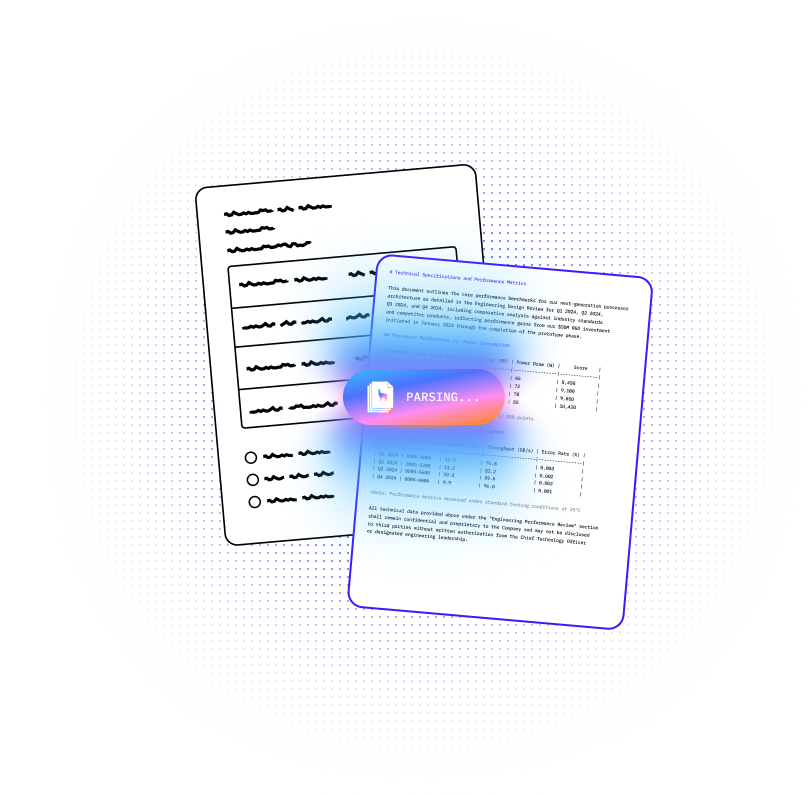


LlamaParse turns messy incident reports into clean, structured fields you can trust, even when layouts change and attachments get complicated. It uses agentic document parsing with citations and confidence signals, so teams review faster, automate downstream workflows, and reduce rework.
Best-in-Class Accuracy

Parse incident reports into structured JSON with citations so adjusters can verify key facts (who/what/when/where) without hunting through scans. Layout-aware extraction preserves witness tables, checkboxes, and diagrams, reducing rework and speeding claim triage and subrogation.

Convert EHS incident reports, near-miss forms, and corrective action logs into clean Markdown and standardized fields, even when forms vary by site or shift. This eliminates brittle manual data entry and enables faster root-cause analysis and trend reporting across plants.

Ingest photo-heavy, multi-page field incident reports and automatically extract jobsite details, equipment IDs, and safety observations while preserving reading order across multi-column templates. Natural language parsing instructions let you standardize outputs across subcontractors so issues can be routed to the right owner the same day.

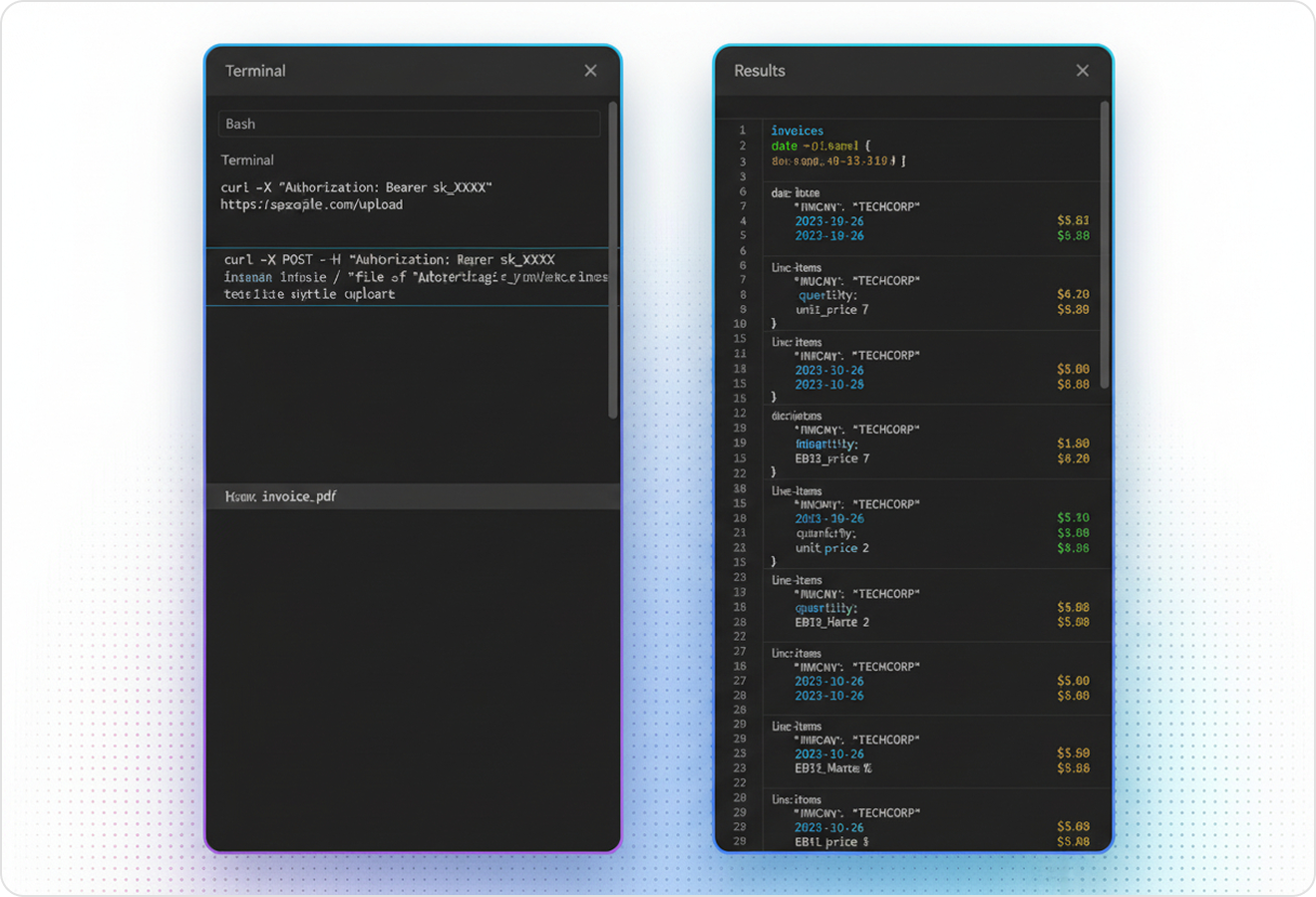
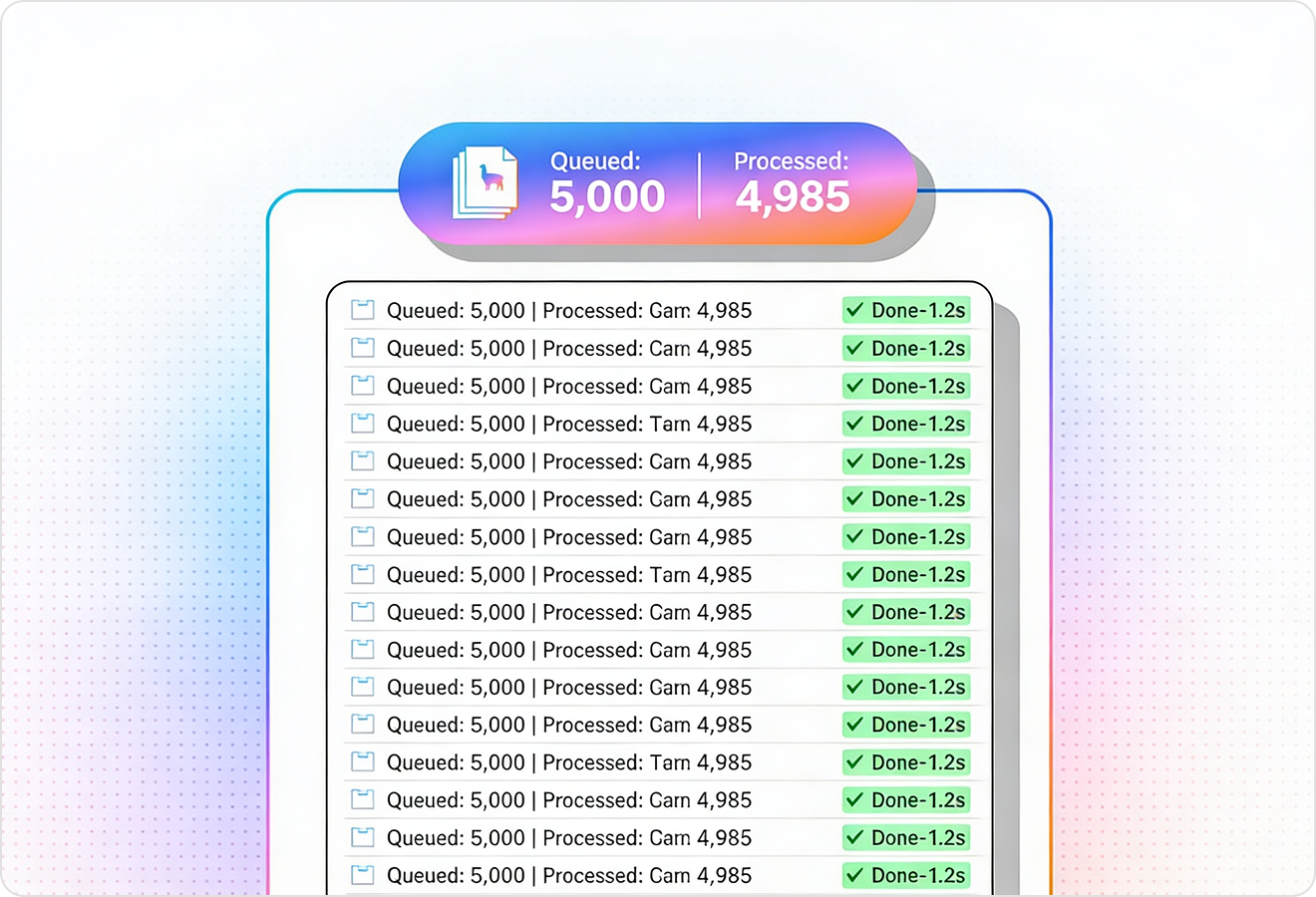
Ship an incident-report intake workflow in days by using LlamaParse APIs to turn messy PDFs and uploads into schema-ready data without building custom parsing code. Auto Mode and tier-based processing keep costs predictable while maintaining high straight-through processing as volume spikes.
The Solution
01
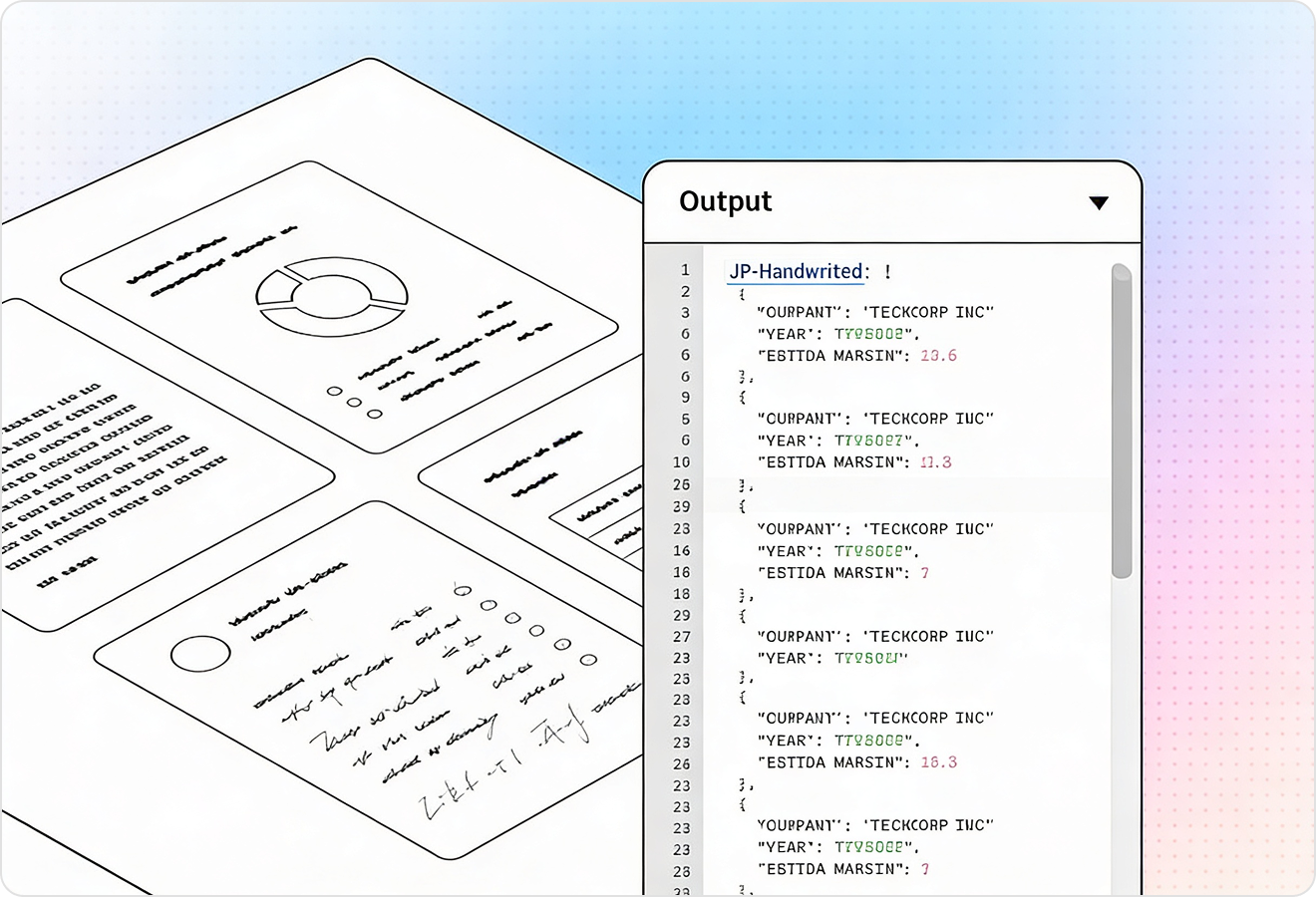
LlamaParse understands incident report structure—sections, multi-column narratives, headers/footers, and callout blocks—so text stays in the correct reading order. That means cleaner incident timelines and witness statements without brittle post-processing to fix scrambled output.
02
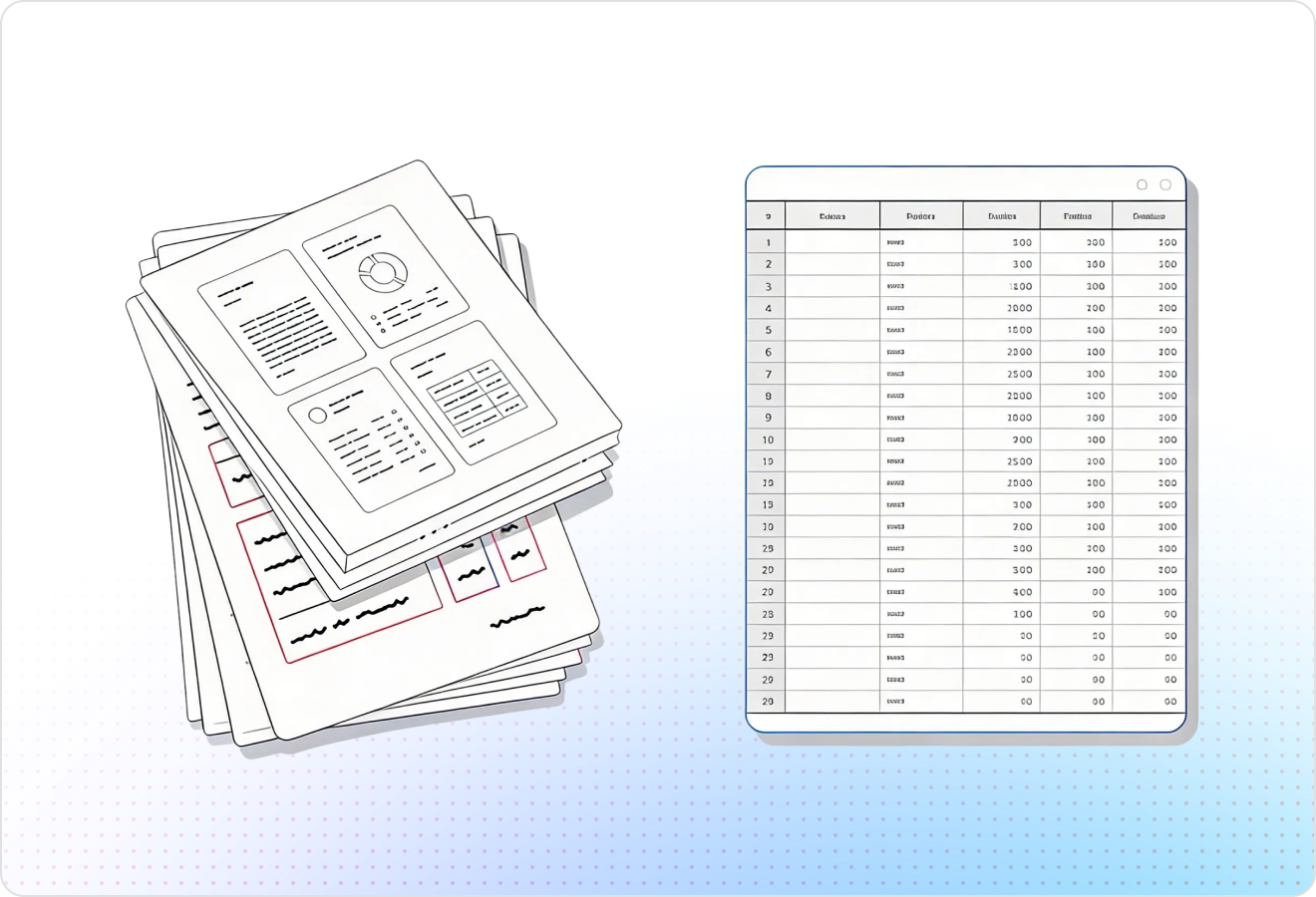
It extracts tables like injury details, equipment lists, corrective actions, and sign-off grids while preserving rows, columns, and merged cells. This makes it straightforward to turn incident reports into consistent, queryable records for audits and trend analysis.
03
LlamaParse uses self-correction and validation steps to catch common extraction errors on messy scans, stamps, and low-contrast photocopies. For incident reports, this reduces missing fields and contradictory values before they hit downstream workflows.
04
JSON mode returns normalized fields along with granular metadata like page numbers, element types, and spatial coordinates. For incident report processing, you can trace every extracted claim back to its source location for review, compliance, and human-in-the-loop approval.
Technical OCR documentation
Explore our developer guides to easily connect your document pipelines to LlamaParse.
Explore the documentation
Our AI catches the typos that tired eyes miss.

Export to Excel, JSON, XML, or directly via API.

SOC2 Type II compliant with end-to-end encryption.

Train the tool on your specific forms in minutes, not days.

Average processing time of <3 seconds per page.
LlamaParse’s support of a wide variety of filetypes and its accuracy of parsing made it the best tool we tested in our evaluations. The LlamaIndex team was very responsive and we were off to the races within a day.
Common FAQs
01
Yes. Layout-aware field capture understands headers, multi-column narratives, callout blocks, and footers so the text stays in the intended sequence. That means cleaner incident timelines and witness statements without manual reordering or brittle post-processing.
02
It reliably reconstructs tables while preserving rows, columns, and merged cells, even in sign-off grids. This makes it easy to turn incident reports into consistent, queryable records for audits and trend analysis.
03
Auto validation loops add self-correction steps that catch common extraction errors on noisy or degraded documents. You’ll see fewer missing fields and fewer contradictory values before data reaches your downstream workflows.
04
Can we get structured output that’s easy to load into our safety system or data warehouse?
Yes—JSON mode returns normalized fields that map cleanly into databases, case management tools, or analytics pipelines. You get consistent structure across reports, which reduces custom parsing and accelerates deployment.
05
How do we verify where each extracted value came from for compliance and review?
Every extracted field can include traceability metadata like page number, element type, and spatial coordinates. This lets reviewers jump straight to the source location for fast QA, compliance checks, and human-in-the-loop approval.
06
Will we need a lot of custom rules to make this work across different incident report templates?
Typically no. Because the extraction is layout-aware and validated, it adapts well to common template variations without heavy rule maintenance. You can start with a standard schema and refine only the fields that matter most to your process.