Nov 14, 2025
Document AI: The Next Evolution of Intelligent Document ProcessingPersona
Industry
Use cases
Document Ingestion API
[ Document Ingestion API ]

Turn PDFs and scans into clean, structured Markdown or JSON your ingestion pipeline can trust.
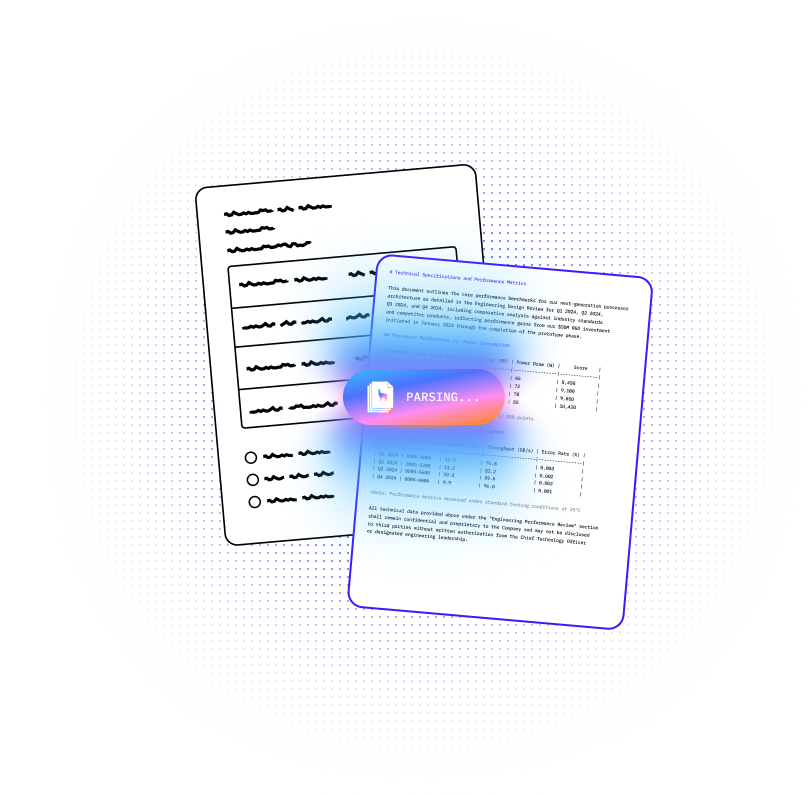
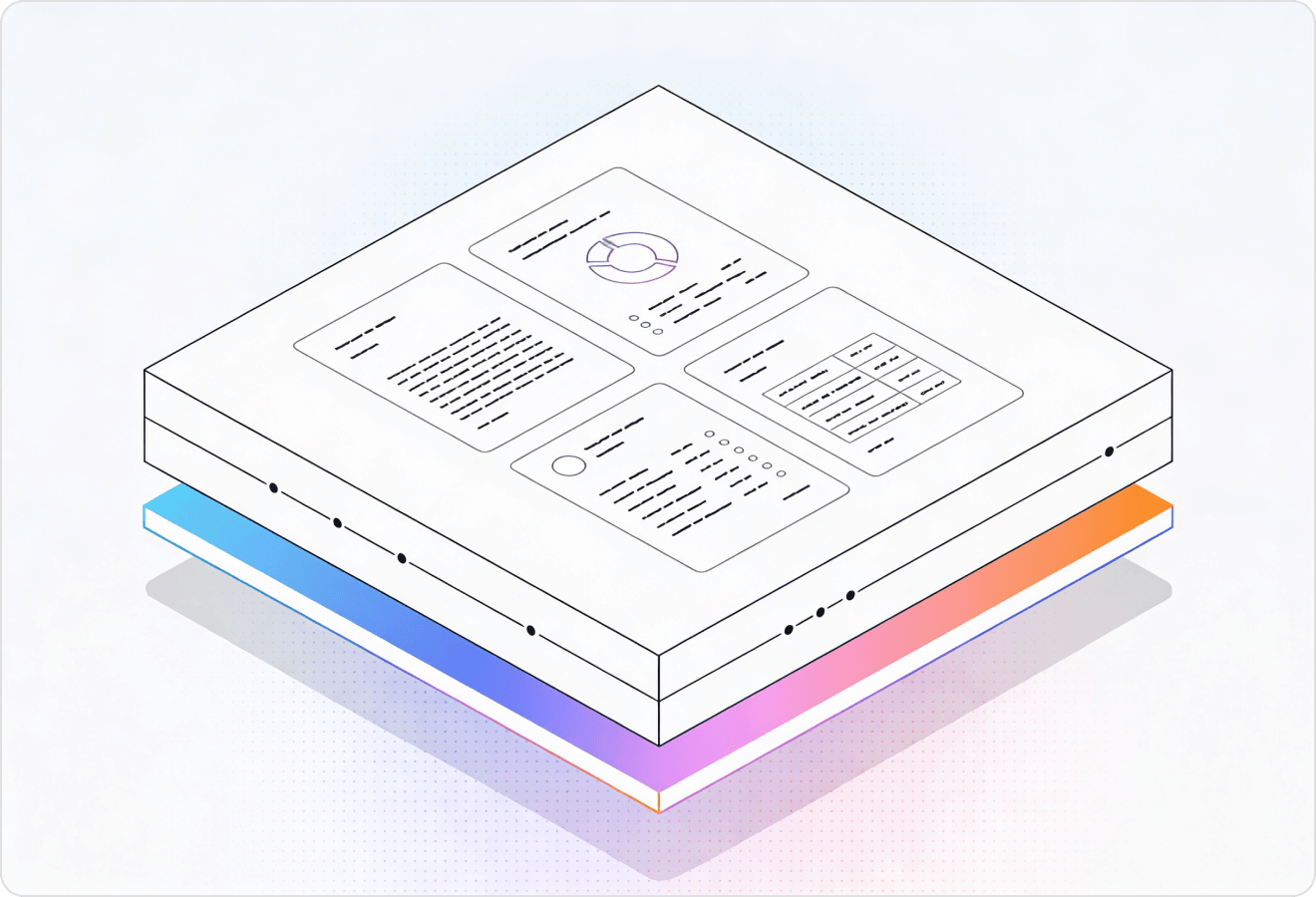

LlamaParse turns PDFs, scans, and complex layouts into clean JSON and Markdown so your ingestion pipeline gets structured data, not brittle text. Agentic parsing validates tables and charts, preserves layout meaning, and returns citations and confidence scores you can trust in production.
Best-in-Class Accuracy

Ingest loan packets, bank statements, and KYC files into clean JSON with page-level citations, even when tables, footnotes, and multi-column layouts would normally scramble downstream extraction. Use natural-language parsing instructions to standardize fields across inconsistent templates so underwriting and reconciliation workflows can run with fewer manual exceptions.

Parse contracts, exhibits, and scanned court filings into layout-faithful Markdown so clauses, definitions, and tables survive ingestion without brittle post-processing scripts. Pull structured outputs with confidence metadata to speed privilege review, clause comparison, and deal-room summarization while keeping traceability back to exact pages.

Convert plans, bids, change orders, and pay apps into structured data by accurately extracting schedules-of-values and nested tables that traditional OCR typically mangles. Turn charts, marked-up images, and spec sections into AI-ready outputs so PMs can query project docs and automate compliance checks across vendors.

Ship a reliable ingestion layer fast: LlamaParse turns messy PDFs and docs into consistent Markdown/JSON so your product can index and retrieve by real document structure instead of guessy text blobs. Keep burn under control with tier-based agentic processing that automatically spends premium compute only on the hard pages while preserving production-grade accuracy.
The Solution
01
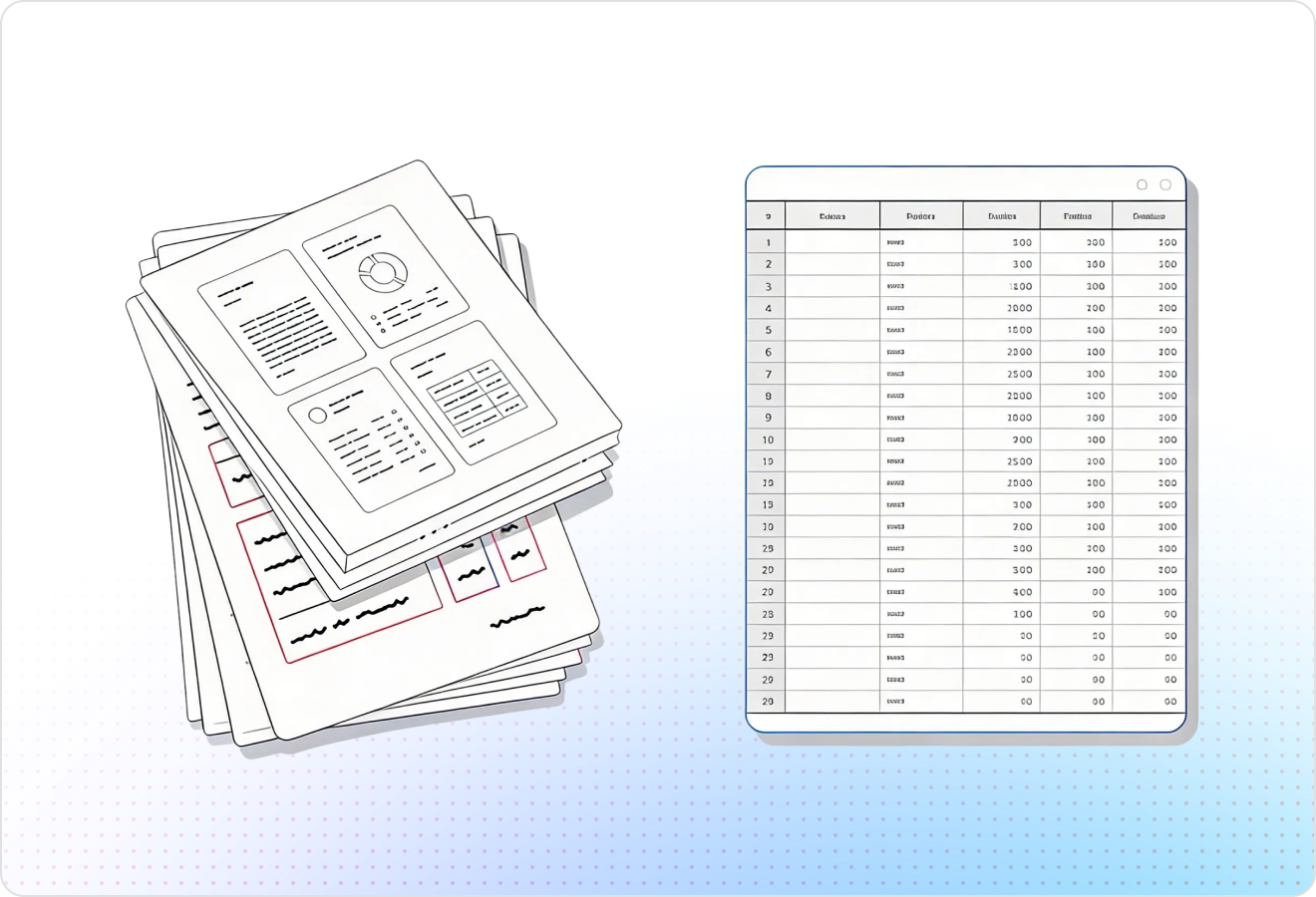
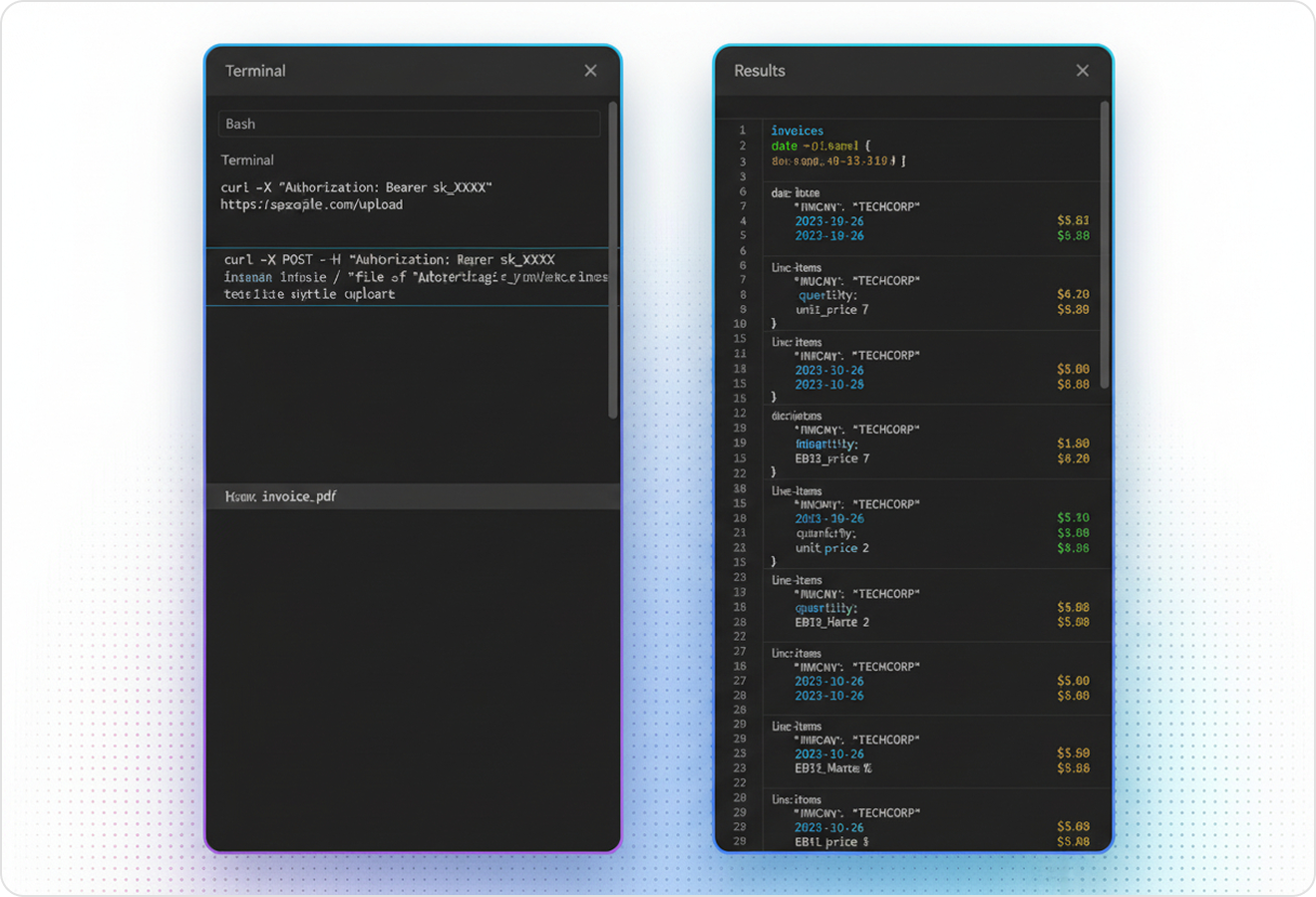
LlamaParse exposes a simple API with maintained Python and TypeScript SDKs, so you can drop document parsing directly into your ingestion pipeline. That means fewer one-off scripts and faster time from “file upload” to indexed, AI-ready content.
02
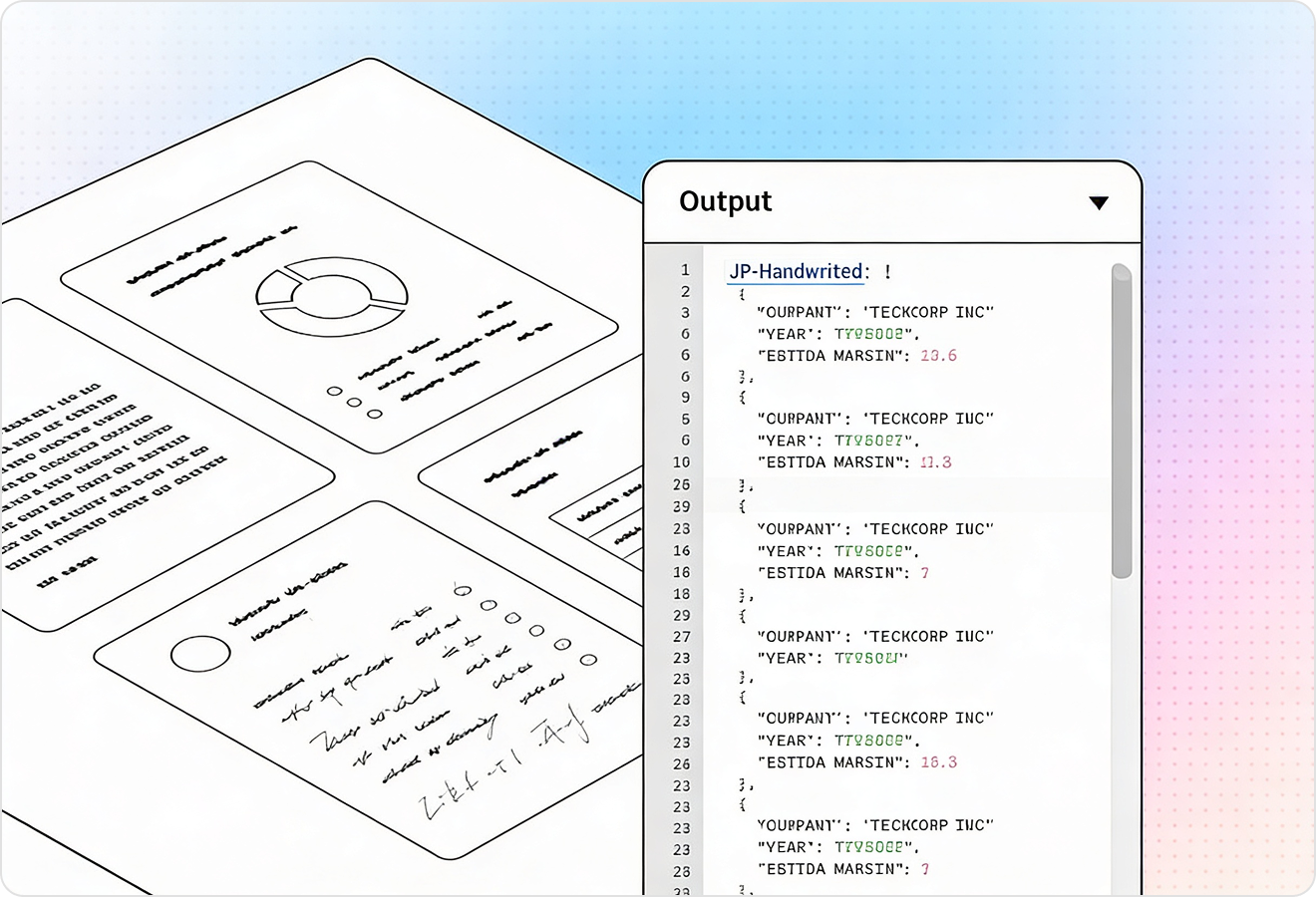
LlamaParse understands document layout to preserve reading order, sections, and complex tables instead of returning scrambled text. For a Document Ingestion API, this produces consistent structure across PDFs and scans, reducing downstream normalization and ingestion failures.
03
LlamaParse can emit structured JSON alongside rich metadata like page numbers, element types, and coordinates for traceability. This makes it easy to build ingestion endpoints that validate payloads, attach citations, and route content correctly without guessing where fields came from.
04
LlamaParse dynamically applies heavier vision-and-reasoning parsing only when the document demands it, while keeping simpler pages fast and cost-efficient. In an ingestion API, this helps you hit latency and budget targets while still handling messy scans, tables, and mixed-format uploads.
Technical OCR documentation
Explore our developer guides to easily connect your document pipelines to LlamaParse.
Explore the documentation
Our AI catches the typos that tired eyes miss.

Export to Excel, JSON, XML, or directly via API.

SOC2 Type II compliant with end-to-end encryption.

Train the tool on your specific forms in minutes, not days.

Average processing time of <3 seconds per page.
LlamaParse’s support of a wide variety of filetypes and its accuracy of parsing made it the best tool we tested in our evaluations. The LlamaIndex team was very responsive and we were off to the races within a day.
Common FAQs
01
You can start ingesting documents with a straightforward REST API, or use the maintained Python and TypeScript SDKs to get into production faster. Most teams replace brittle one-off scripts with a single, versioned integration that’s easier to test and maintain.
02
The parser is layout-aware, so it keeps reading order, headings/sections, and complex tables aligned with the original document structure. That consistency reduces downstream normalization work and prevents ingestion failures caused by mis-ordered content.
03
You receive structured JSON plus rich metadata such as page numbers, element types, and coordinates. This makes it easy to validate payloads, attach citations, and confidently show users where an extracted field came from.
04
How does it handle messy scans, mixed-format PDFs, and table-heavy documents?
It uses tiered agentic processing that applies heavier vision-and-reasoning only when a document demands it. You get robust handling for noisy scans and complex tables without paying the same cost or latency on clean, simple pages.
05
What kind of latency and cost control can we expect at scale?
The tiered approach keeps common cases fast while reserving more intensive parsing for hard pages, which helps you meet both latency and budget targets. It’s a practical fit for high-throughput ingestion where you need predictable performance across varied document types.
06
How does this reduce risk when we’re building production ingestion endpoints?
Structured JSON and metadata make downstream routing and validation deterministic, so your ingestion service isn’t guessing where fields came from. Combined with consistent layout extraction, you’ll see fewer edge-case breakages and less manual triage as volume grows.