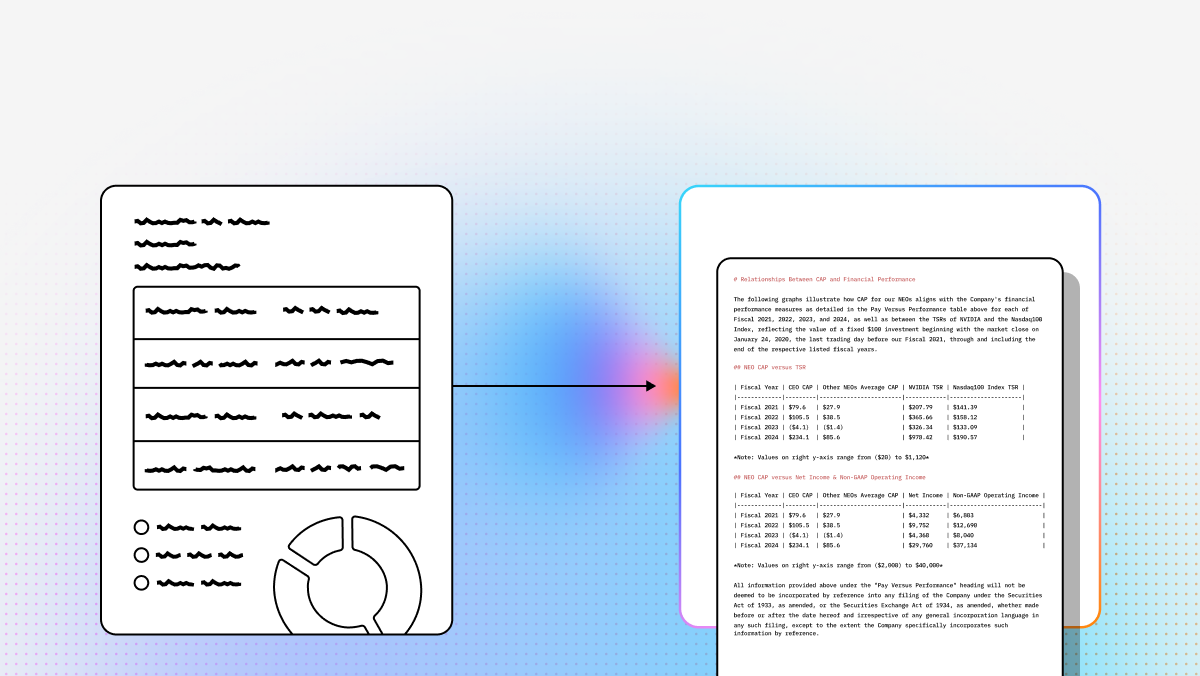
The healthcare industry has an unstructured data problem. Even as EHRs have digitized core workflows, a large share of high-value clinical information still arrives in hard-to-process formats: scanned referrals, faxed forms, handwritten physician notes, multi-page lab reports, insurance documents, and long PDFs with inconsistent layouts.
That’s exactly where legacy OCR breaks down. Traditional OCR can read characters, but it often struggles to preserve structure, meaning, and context across nested tables, mixed handwriting, images, and document drift. In healthcare, it impacts coding accuracy, claims throughput, patient onboarding, chart review, and the reliability of downstream clinical assistants or RAG systems.
The shift in 2026 is toward Agentic Document Processing: platforms that go beyond text extraction by combining OCR, layout understanding, schema-based extraction, workflow orchestration, and AI-native retrieval. For teams building healthcare AI, the parsing layer often determines whether your product is reliable in production, or brittle at scale.
| Vendor | Best at | Ideal use cases | Integration style |
|---|---|---|---|
| LlamaParse (LlamaIndex) | Agentic parsing + schema extraction + citations/confidence | Intake, chart review, coding/claims, clinical assistants, research | Developer-first SDKs + workflow orchestration |
| AWS Textract | OCR + forms/tables + queries, strong AWS security posture | Standard forms, intake digitization, claims extraction, archiving | AWS-native managed API |
| Azure Document Intelligence | Prebuilt/custom models + enterprise governance + containers | ID cards, demographics, EOBs, clinical trial paperwork | Azure APIs + optional on-prem containers |
| Hyperscience | High accuracy on faxes/degraded scans + HITL exception handling | Faxed referrals, handwriting-heavy notes, ops-heavy claims | Enterprise platform (often services-led) |
| UiPath Document Understanding | Extraction + RPA automation across systems | Referral/prior-auth, revenue cycle ops, migrations | Low-code workflows + bots + AI Center |
| ABBYY Vantage | Mature OCR/IDP + “Skills” for common doc types | Labs, prescriptions, credentialing, standardized back office docs | REST APIs + skill-driven deployment |
1. LlamaParse (LlamaIndex)
Platform summary
LlamaParse is the strongest fit here for teams building AI-native EHR workflows, not just digitizing documents. It’s designed around semantic understanding (vs. template matching) and supports complex medical inputs with structured extraction, citations, confidence signals, and orchestration via Workflows.
Key benefits
- Handles messy, high-variance clinical docs (referral packets, scans, handwriting, nested tables)
- Developer-friendly Python + TypeScript tooling
- Schema-based, predictable JSON outputs (critical for EHR field mapping)
- Strong end-to-end story: parsing → extraction → indexing/retrieval → agent workflows
Core features
- LlamaParse: complex layout-aware parsing across many file types
- LlamaExtract: schema-driven extraction to structured fields
- Citations + confidence: supports traceable, reviewable workflows
- Workflows: event-driven orchestration for multi-step pipelines
- Model flexibility: works with multiple LLMs and infra choices
Primary use cases
- Patient intake + chart review from scanned forms, IDs, insurance, referrals
- Coding + claims automation with structured outputs
- RAG + clinical assistants that need grounded ingestion
- Research/ops: turning document corpora into traceable knowledge assets
Limitations
- Not a no-code ops tool; best for technical teams
- Overkill for simple standardized forms
- LLM-driven parsing may cost more at extreme volumes; benchmark carefully
2. AWS Textract
Platform summary
Textract is a practical option for teams already deep in AWS. It’s strongest for scalable extraction of printed text, handwriting, forms, tables, and query-based extraction, especially on more standardized documents.
Core features
- OCR (printed + handwriting)
- Forms + tables extraction
- Queries: ask targeted questions of a document
- Confidence scores + bounding boxes
- HIPAA eligibility within AWS (with correct compliance setup)
Primary use cases
- Intake forms + insurance paperwork
- Standard claim data extraction
- Legacy record archiving into searchable text
- AWS-native document pipelines
Limitations
- Less reliable on highly irregular medical layouts/table drift
- More attractive when paired with broader AWS stack (lock-in)
- Costs can rise with high page volume + query-heavy usage
3. Azure Document Intelligence
Platform summary
Azure Document Intelligence is a strong enterprise extraction layer for Azure-heavy orgs, with governance and container deployment options (useful for data residency / on-prem constraints).
Core features
- Extracts text, tables, key-value pairs, structure
- Prebuilt + custom models
- Container support for cloud/edge/on-prem
- Integrates well with broader Azure/Foundry ecosystem
Primary use cases
- Insurance card + demographics extraction
- EOB processing/reconciliation
- Clinical trial and research document digitization
Limitations
- Can feel heavy for small teams
- Containerization increases ops overhead
- Custom model upkeep required as forms change
4. Hyperscience
Platform summary
Hyperscience is oriented toward enterprise-scale operations where input quality is poor (faxes, degraded scans, handwriting) and errors are expensive. It also emphasizes routing, classification, and human-in-the-loop review.
Core features
- Strong performance on degraded scans and handwriting-heavy inputs
- Document classification + automation pipelines
- Human-in-the-loop exception handling
- On-prem/private-cloud deployment options
Primary use cases
- Faxed referral ingestion
- Handwritten physician note digitization
- High-volume claims/billing where accuracy is critical
Limitations
- Typically better for large enterprises than small product teams
- Often more services-led than API-first
- Can require ongoing tuning for layout drift
5. UiPath Document Understanding
Platform summary
UiPath shines when extraction is only step one and you need to automate downstream actions, especially across legacy systems without clean APIs.
Core features
- OCR/ML/genAI extraction inside UiPath automation platform
- AI Center integration for model management
- Low-code workflow building + bots (RPA)
Primary use cases
- Referral + prior-auth processing
- Revenue cycle automation
- EHR migrations and cross-system operational workflows
Limitations
- Heavy if you only need parsing/OCR
- Licensing/platform scope can exceed needs
- Best when you’re already standardizing on UiPath
6. ABBYY Vantage
Platform summary
ABBYY is a mature OCR/IDP option with a structured “Skills” model and strong performance on common document families. It’s a dependable fit for standardized document-heavy back office workflows.
Core features
- Pre-trained “Skills” for extraction/classification
- Low-code skill design
- Handwriting support
- REST APIs + connector ecosystem
- Cloud + on-prem + private-cloud options
Primary use cases
- Lab result digitization
- Prescription/pharmacy docs
- Credentialing + back-office documentation
Limitations
- More traditional than agentic platforms
- Skills model can be less flexible for unusual layouts
- Less optimized for teams building custom AI agents end-to-end
FAQ
What’s the difference between traditional OCR and AI document parsing for EHRs?
- Traditional OCR: converts images/PDFs into text.
- AI document parsing: extracts structure and meaning, sections, tables, schema-mapped fields, and often returns JSON with citations/confidence.
Why it matters in EHR workflows:
- Intake needs patient fields in the correct places (not just text)
- Chart review needs context (meds, problems, labs, notes)
- Claims/coding needs structured, reliable outputs
- Clinical assistants/RAG need traceable, grounded sources
How do I choose the right OCR/parsing integration for an EHR product?
Evaluate:
- Document complexity (clean forms vs messy referrals/faxes)
- Output requirements (text vs structured schema/JSON)
- Workflow needs (ingest only vs validate/route/review)
- Developer experience (API-first vs low-code ops)
- Deployment/compliance constraints (cloud/on-prem/private)
General mapping:
- LlamaParse: AI-native ingestion + downstream agents
- Textract: AWS + standardized docs
- Azure: Microsoft + containers/hybrid
- Hyperscience: worst-quality docs + HITL
- UiPath: extraction + automation actions
- ABBYY: mature OCR for standard doc types
Can AI parsing tools handle faxes, handwriting, and long multi-page records?
Yes, performance varies widely by platform and document type. Best practice in production usually includes:
- document classification before extraction
- schema-based extraction for required fields
- confidence thresholds + human review for low-confidence cases
- citations/page traceability
- ongoing testing as layouts drift
What should developers look for when integrating document AI into EHR software?
- Strong SDKs/docs (Python/TS), stable APIs
- Schema/JSON outputs (not only raw text)
- Citations + confidence + auditability
- Workflow orchestration (ingest → extract → validate → route → index)
- Retrieval readiness (chunking, metadata, source grounding)
- Model/infrastructure flexibility
- Error handling (retries, queues, HITL)
- Scalability + observability in production
Are these tools HIPAA compliant?
HIPAA compliance depends on deployment, configuration, and governance, not marketing claims. Confirm:
- BAA availability
- encryption, access controls, audit logs
- retention/deletion policies
- data residency options
- whether PHI is used for model training
- private/on-prem options if needed
- incident response + security certifications
Involve security/compliance early, especially if the pipeline touches PHI and feeds downstream LLM/RAG systems.