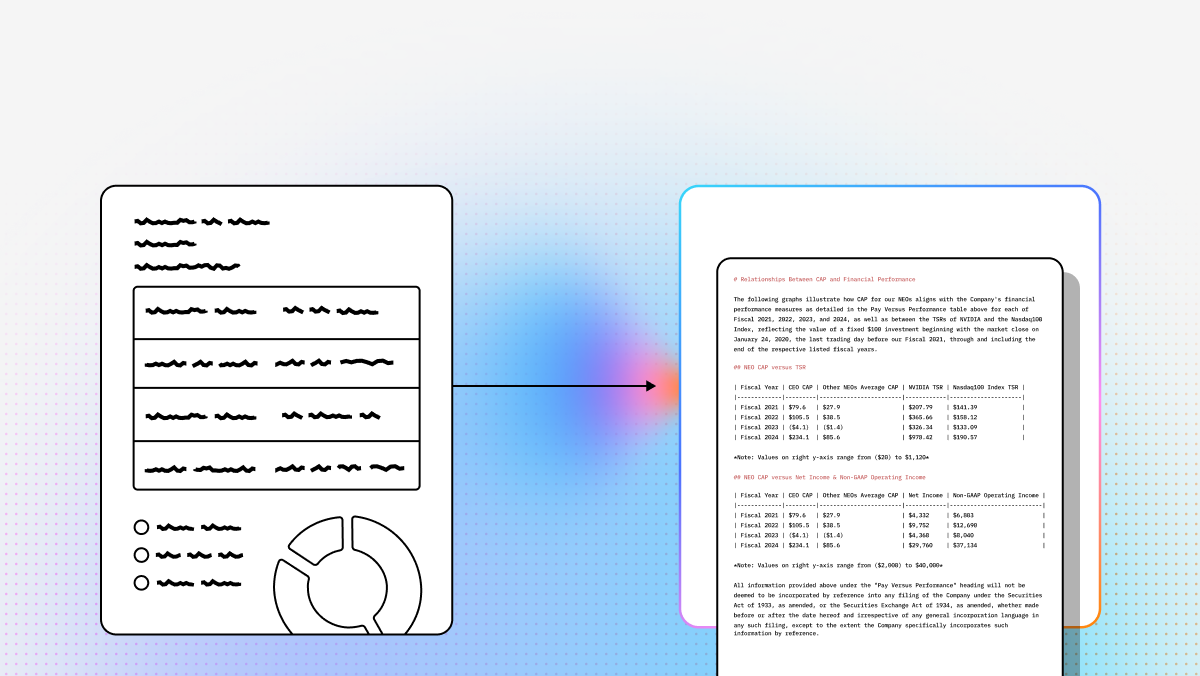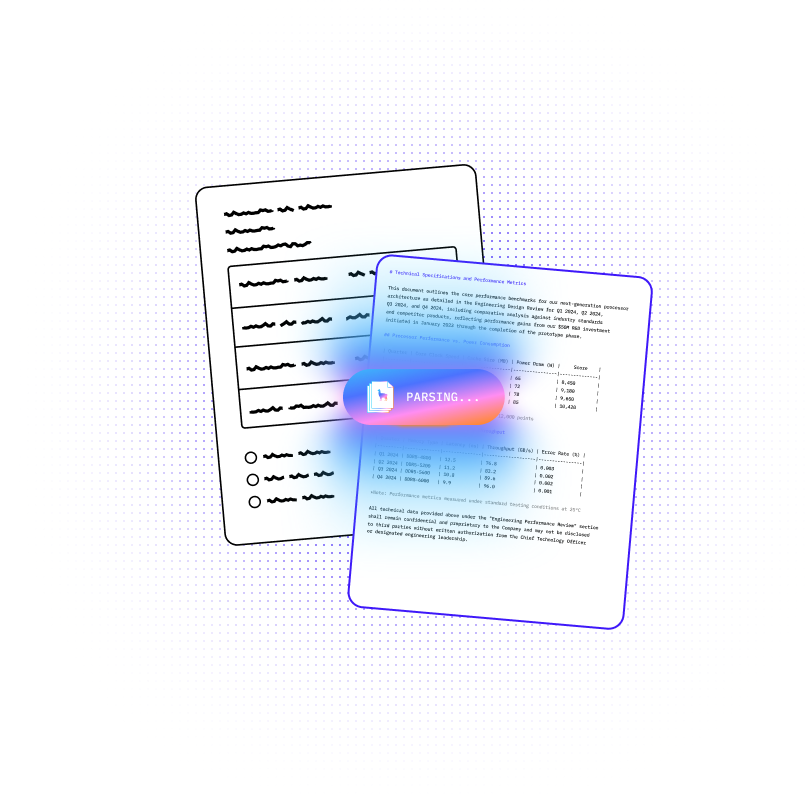
LlamaParse and Nanonets both turn messy documents into structured data, but they are built for different buyers. LlamaParse is a developer-first, agentic document processing platform providing industry-leading accuracy without the need for custom training. Nanonets is a cloud intelligent document processing (IDP) suite that pairs OCR and machine learning with no-code workflow automation for business operations.
This comparison breaks down how the two differ on document understanding, structured output, developer experience, workflow automation, deployment, and pricing — so you can match the platform to your team and use case. For broader context, see our guide to the best document parsing software.
| Dimension | LlamaParse | Nanonets |
|---|---|---|
| Approach | Agentic, VLM-powered parsing + schema extraction | OCR + ML with no-code workflow automation |
| Best for | Developers building agents and custom pipelines | Ops teams automating invoices, AP, and back-office docs |
| Output | Markdown/JSON with confidence + citations | Structured fields/JSON routed into business systems |
| Developer experience | Python/TypeScript SDKs, API-first, composable | No-code visual builder; APIs available |
| Workflow automation | Code-defined orchestration and agent workflows | No-code workflows, approvals, and ERP/accounting connectors |
| Deployment | Cloud or self-hosted / VPC | Cloud SaaS (SOC 2, GDPR, HIPAA) |
| Ideal user | Engineering and AI teams | Finance, AP, and operations teams |
LlamaParse Overview
Platform summary
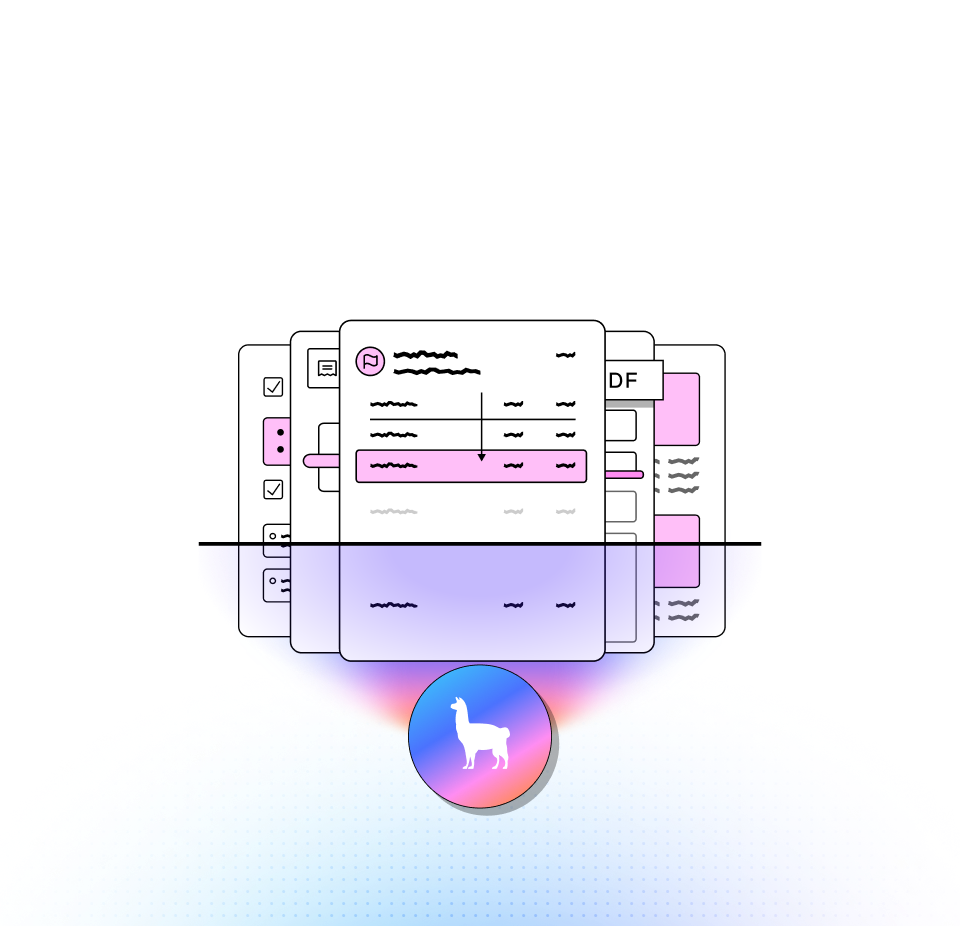
LlamaParse treats documents as structured, multimodal objects, using vision-language models to parse complex layouts, tables, charts, and handwriting into clean, AI-ready output. Paired with LlamaExtract for schema-based extraction and Workflows for orchestration, it is built for developers shipping agentic applications.
Strengths
- Semantic understanding of structure, context, and relationships across pages
- Schema-based extraction with field-level confidence and citations
- First-class Python/TypeScript SDKs and composable, API-first design
- Cloud or self-hosted/VPC deployment; distributed ingestion at scale
Recent updates
- LlamaAgents Builder (natural language → workflow code)
- LlamaParse v2 API and redesigned SDKs
- LlamaSheets (spreadsheet parsing → Parquet, cell-level features)
- RayIngestionPipeline integration for distributed ingestion
Limitations
- Developer-centric; not a no-code business tool out of the box
- Full agentic workflows require pipeline setup
- VLM workloads can require more compute than basic scrapers
Nanonets overview
Platform summary
Nanonets is a cloud IDP platform that combines OCR, machine learning, and no-code workflow automation. Its template-free models read semi-structured documents such as invoices, receipts, purchase orders, bank statements, and IDs, and route extracted data into business systems.
Strengths
- Template-free extraction across common business document types
- No-code visual workflow builder with approvals and routing
- Pre-built connectors (NetSuite, QuickBooks, Sage, SAP, Salesforce)
- SOC 2, GDPR, and HIPAA compliance; AI Guidelines for plain-language extraction logic
Limitations
- Cloud SaaS focus; less suited to fully custom, code-first pipelines
- Accuracy varies with document quality and may need tuning
- Less oriented to agent development than AI-native parsers
Head-to-head by dimension
Document understanding and accuracy
LlamaParse uses VLM-based, agentic parsing to interpret complex layouts, nested tables, and handwriting, with field-level confidence and citations for traceability. Nanonets delivers strong field-level accuracy on common business documents and improves with tuning, but is optimized for operational document types rather than arbitrary, layout-heavy inputs.
Output and structured extraction
Both output structured JSON. LlamaParse and LlamaExtract emphasize schema-based extraction with confidence and citations. Nanonets focuses on routing structured fields into downstream business systems and approval workflows.
Developer experience and integration
LlamaParse is API-first with Python and TypeScript SDKs and composable architecture, ideal for engineering teams. Nanonets leads with a no-code visual builder and pre-built ERP/accounting connectors, with APIs available for developers who need them.
Workflow automation
Nanonets shines for operations teams that want no-code workflows, human approvals, and connectors out of the box. LlamaParse expresses automation as code-defined orchestration and agent workflows, which suits custom, developer-owned pipelines.
Deployment and compliance
LlamaParse offers cloud or self-hosted/VPC deployment, useful when data residency or on-prem control matters. Nanonets is a cloud SaaS with SOC 2, GDPR, and HIPAA compliance.
Pricing model
Both offer usage-based pricing with free tiers to start. LlamaParse is credit-based and developer-oriented; Nanonets is priced around document volume and workflow usage. Evaluate cost against your document mix and volume.
The Bottom Line
Choose LlamaParse if you are a developer or AI team building agents or custom document pipelines that demand layout-aware parsing, schema-based extraction, and traceable, structured output. Choose Nanonets if you are an operations team that wants no-code invoice and AP automation with pre-built business connectors. For teams whose roadmap points toward AI agents, LlamaParse offers the most direct path from raw documents to structured, AI-ready data. Book a demo or try it for free.
FAQ
What is the main difference between LlamaParse and Nanonets?
LlamaParse is a developer-first, agentic document parsing and extraction platform built for AI agents. Nanonets is a cloud IDP suite that combines OCR and ML with no-code workflow automation for business operations like invoice and AP processing.
Which is better for invoice and accounts payable automation?
Nanonets is well suited to no-code invoice and AP automation with pre-built ERP and accounting connectors. LlamaParse can also power these workflows when teams want a code-first, customizable pipeline.
Do both support structured JSON output and compliance?
Yes. Both output structured JSON. Nanonets is SOC 2, GDPR, and HIPAA compliant as a cloud SaaS; LlamaParse supports cloud or self-hosted/VPC deployment with field-level citations and confidence for auditability.
Can I try them before committing?
Both offer free tiers and usage-based pricing. Test each on your own documents to compare accuracy, output quality, and integration fit before deciding.