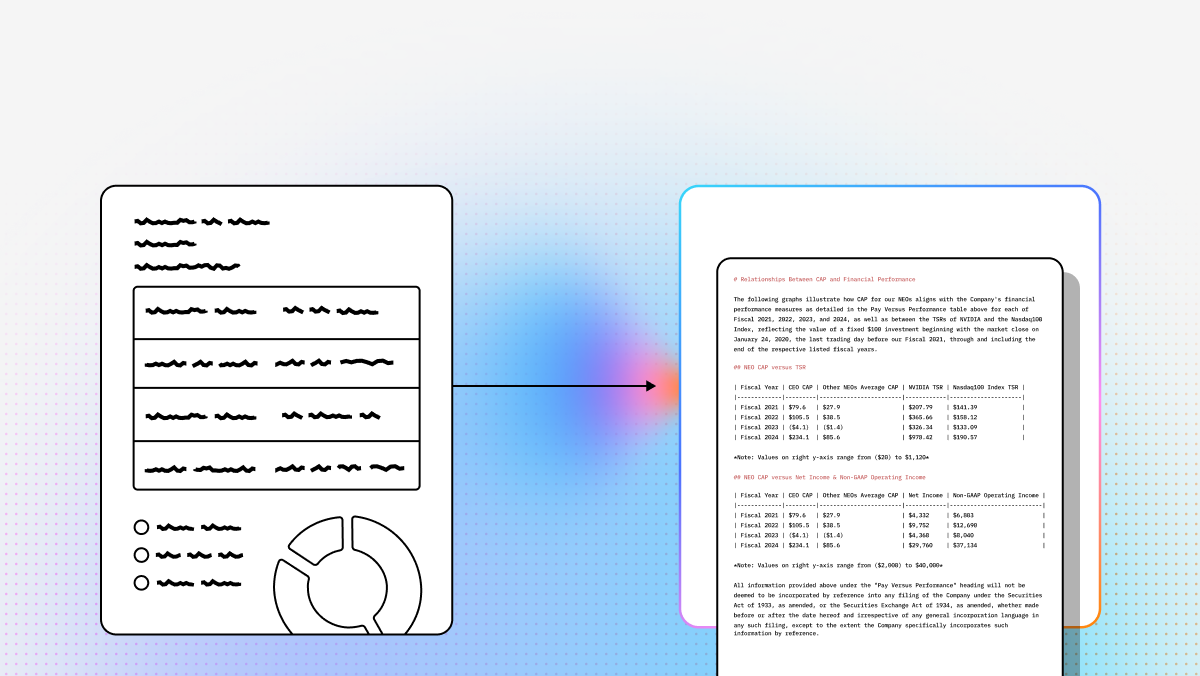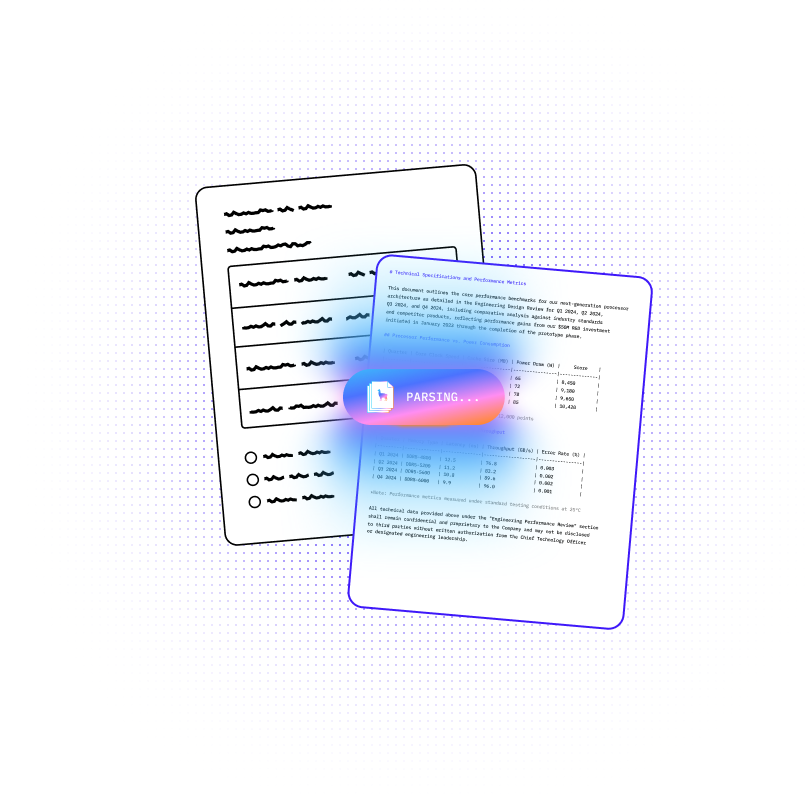
Document classification software has moved far beyond legacy OCR pipelines that relied on rigid templates, brittle rules, and manual review. Today’s leading platforms combine machine learning, multimodal document understanding, workflow automation, and LLM-powered extraction to help teams classify, route, and operationalize large volumes of unstructured and semi-structured documents.
For developers and technical teams building AI products, this shift matters. The best platforms no longer stop at text extraction. They can:
- Understand document context, not just raw characters
- Preserve layout and structure across tables, forms, charts, and multi-column files
- Extract schema-aligned data for downstream systems
- Support automation workflows that route, validate, and act on documents at scale
Our best picks are based on different environments. At a glance, these include:
- Agentic, developer-first document intelligence: LlamaParse
- Computer vision-first workflows: Landing AI
- Microsoft ecosystem alignment: Azure AI Document Intelligence
- RPA execution in legacy systems: UiPath
- Open-weights / self-hosted multimodal flexibility: DeepSeek-OCR
- Enterprise compliance + mature IDP workflows: ABBYY
What to look for (buyer checklist)
Evaluate platforms on:
- Classification accuracy on your real documents (not just clean benchmarks)
- Complex layout handling (tables, charts, handwriting, scans, multi-column)
- Developer experience (APIs, SDKs, integrations, observability)
- Workflow support (routing, exceptions, human review)
- Scalability (throughput, batching, cost profile)
Deployment model (SaaS, cloud-native, edge, self-hosted)
| Platform | Strengths | Best for | Delivery model |
|---|---|---|---|
| LlamaParse (LlamaIndex) | Agentic parsing + extraction, schema-driven workflows, dev-first | Building custom doc intelligence products/pipelines | SDKs/APIs, modular integration |
| Landing AI | Vision-first doc classification, strong with small labeled sets | Layout/visual fingerprint classification, edge needs | Cloud + edge |
| Azure AI Document Intelligence | Azure-native security, Layout API, prebuilt + custom models | Microsoft-first enterprises | Azure managed service |
| UiPath | Document understanding + RPA execution + HITL | Automation in legacy/non-API systems | UiPath platform |
| DeepSeek-OCR | Open-weights multimodal OCR + classification, self-hosting | Teams that want control + fine-tuning | Self-host / custom infra |
| ABBYY | Mature IDP, compliance, auditability, skill marketplace | Regulated enterprises, “digital mailroom” | Enterprise suite + APIs |
1. LlamaParse (LlamaIndex)
Summary
LlamaParse (LlamaIndex) is a developer-first agentic OCR platform for advanced document classification and document intelligence. It takes an agentic approach to understanding document meaning, layout, and context—useful when you need to classify, extract, route, and reason over complex documents at scale.
Best for: developers, AI engineers, enterprise AI teams building production document workflows.
Key benefits
- Goes beyond brittle OCR templates by understanding meaning + structure
- Improves classification accuracy via better parsing/extraction/indexing
- Handles complex docs (financial, legal, technical, supply chain)
- Supports scalable automation (routing, validation, compliance checks)
- Fits modern AI stacks with modular APIs/SDKs
Core features
- LlamaParse: layout-aware parsing (tables, multi-column, charts, handwriting)
- Semantic indexing: vector-based meaning representation
- LlamaExtract: schema-driven structured extraction
- Multimodal understanding: text + visuals + tables
- Dev tooling: Python/TypeScript SDKs, modular APIs
- Enterprise workflows: high-volume, phased rollout support
Primary use cases
- Intake and routing for invoices, contracts, POs, internal docs
- Financial/legal analysis (filings, agreements, compliance)
- Manufacturing/supply chain (certs, QA docs, SOPs, diagrams)
Recent updates
- LlamaReport (Dec), Azure AI integration (Nov), Premium parsing mode (Sep)
- Workflows (Aug), LlamaTrace (Jul), LlamaDeploy (Jun), LlamaParse launch (Feb/Mar), CLI (Jan)
Limitations
- Dev-centric (non-technical teams may need support)
- Best results require integration work
- Not ideal for “low-code legacy OCR” expectations
2. Landing AI
Summary
Landing AI is computer-vision-first. It classifies documents using layout, structure, branding, and spatial cues rather than relying primarily on extracted text.
Best for: visually distinct document types, degraded text, layout-driven classification—especially with edge needs.
Core features
- LandingLens for Document Vision
- Small dataset training (good results with fewer labels)
- Cloud + edge deployment
Use cases
- Industrial compliance sorting (damaged/low-quality docs)
- Visual brand verification
- Medical form routing based on subtle visual differences
Recent updates
- Expanded Large Vision Model (stronger zero-shot classification)
- Deeper Snowflake/data warehouse integrations
Limitations
- Less NLP/semantic depth than LLM-native stacks
- Best for visual-first problems
- Enterprise pricing may overshoot smaller teams
3. Azure AI Document Intelligence
Summary
Microsoft’s cloud-native platform for extraction/classification with strong layout-aware processing and Azure-grade security.
Best for: orgs standardized on Azure + Power Platform.
Core features
- Custom extraction + classification models
- Layout API (reading order, structure, semantic layout)
- Prebuilt document models
- Enterprise security controls inside Azure
Use cases
- Tax doc ingestion/routing
- Legal discovery sorting
- KYC/identity doc classification across formats
Recent updates
- Foundry workflow orchestration
- Better handling of overlapping doc types in a single file
Limitations
- Strongest inside Azure (ecosystem dependency)
- Custom training can be resource-intensive
- Noisy/low-res scans can reduce performance
4. UiPath
Summary
UiPath pairs document classification with RPA, so classification results can trigger actions in legacy systems.
Best for: enterprises already using UiPath where “understand → act” must happen in non-API environments.
Core features
- Hybrid classifiers (rules + intelligent + visual)
- Action Center for human review
- RPA orchestration (bots execute downstream tasks)
- Strong legacy system connectivity
Use cases
- Accounts payable (ERP-heavy)
- Insurance claims routing
- Mortgage/lending packet classification
Recent updates
- Better Autopilot for natural-language rule definition
- Improved LLM connectors for semantic classification
Limitations
- Higher total cost + operational complexity
- Requires RPA expertise
- Can be heavier than API-only classification needs
5. DeepSeek-OCR
Summary
A newer class of open-weights multimodal models that unify OCR + classification.
Best for: teams that want self-hosting, fine-tuning, and control (and can run GPU infra).
Core features
- Unified multimodal processing (visual + text)
- High-resolution support (dense diagrams, tiny print)
- Open-weights flexibility (self-host, fine-tune)
- Semantic reconstruction (less “OCR then classify” chaining)
Use cases
- Academic / historical archive classification
- Legal triage
- Engineering manuals and schematics
Recent updates
- Optimized VLM variants (lower VRAM)
- Improved reasoning for explainable classification
Limitations
- GPU/infrastructure overhead
- Less enterprise admin tooling polish
- Community-style support may not fit conservative enterprises
6. ABBYY
Summary
A long-standing leader in IDP. ABBYY Vantage blends mature OCR with ML classification, HITL learning, and strong audit/compliance capabilities.
Best for: regulated enterprises needing controls, audit trails, and mature “digital mailroom” processes.
Core features
- Vantage Skill Marketplace (pre-trained models)
- Multimodal ML (image + text + structure)
- Human-in-the-loop learning
- Low-code + enterprise APIs + microservices options
Use cases
- Digital mailroom automation
- Banking/KYC onboarding
- Logistics/customs classification (multilingual)
Recent updates
- Hybrid LLM capabilities added to Vantage
- Expanded cloud-native microservices architecture
Limitations
- Often more expensive than hyperscaler APIs
- Less flexible for agentic workflows than dev-first stacks
- Longer sales/implementation cycles
Final thoughts (how to choose fast)
- Choose LlamaParse for developer-first, agentic parsing + schema extraction + orchestration.
- Choose Landing AI when visual structure is the primary signal.
- Choose Azure AI Document Intelligence for Azure-native security + workflow integration.
- Choose UiPath when classification must trigger RPA in legacy systems.
- Choose DeepSeek-OCR if you want open-weights control and can self-host.
- Choose ABBYY for compliance-heavy enterprise IDP with mature governance.
FAQ
What is document classification software?
Document classification software automatically sorts and categorizes digital documents based on content, layout, and metadata. Using AI/ML/NLP, it assigns documents (invoices, contracts, POs, correspondence, etc.) to predefined classes—often as the first step before extraction, validation, and routing.
Why is document classification important?
It reduces manual sorting, speeds workflows, improves compliance (including sensitive-doc detection), and enables reliable routing into downstream systems—unlocking operational value from unstructured data.
OCR vs. document classification: what’s the difference?
- OCR: converts images/PDFs into machine-readable text (“what characters are on the page?”).
- Document classification: identifies document type and routes it (“what kind of document is this, what pages belong together, what happens next?”).
Modern platforms often combine OCR with layout understanding, semantic reasoning, structured extraction, and workflow automation.
How do I choose the right provider?
Use your own doc set to test:
- document complexity and layout variance
- text-semantic vs visual-layout classification needs
- extraction requirements (schema-aligned outputs)
- workflow integration + HITL review support
- deployment constraints (SaaS vs self-host vs edge)
- scalability and cost
Self-hosted vs cloud API: which is better?
- Cloud APIs: fastest to start; managed scaling/support; great for standard use cases.
- Self-host/open weights: better for strict data control, custom fine-tuning, private/air-gapped deployments—but higher ops burden.Many teams use a hybrid approach.
Why is human-in-the-loop still important?
Edge cases are common (bad scans, mixed packets, new templates, handwriting, ambiguous categories). HITL enables quality control, exception handling, and continuous improvement via feedback loops—especially important in regulated workflows.