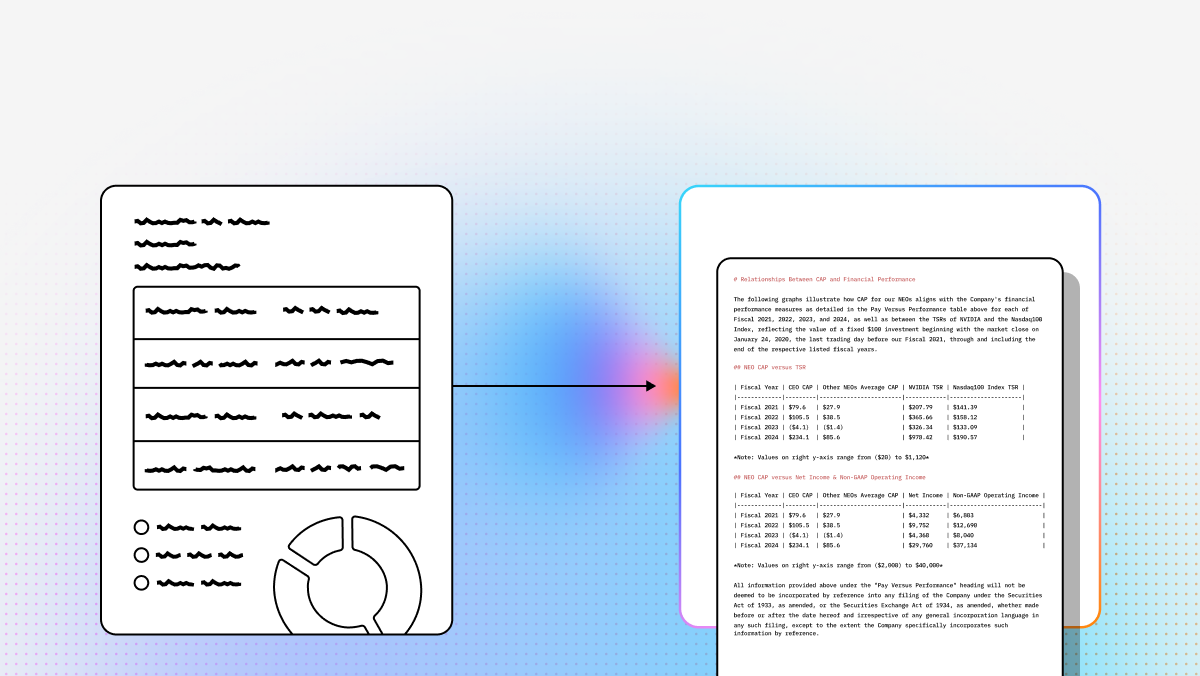
The insurance claims processing landscape is undergoing a major shift. For years, insurers have relied on legacy OCR, brittle templates, and rule-based automation that works only as long as document layouts stay predictable. In practice, that means even small changes to a medical bill, repair invoice, or policy form can trigger extraction failures and force expensive human review.
That model is increasingly hard to justify. Claims teams are dealing with a chaotic mix of scanned documents, handwritten notes, multi-page tables, photos, emails, and policy PDFs. Traditional Intelligent Document Processing (IDP) and RPA platforms can help with narrow, repetitive workflows, but they often struggle when documents become messy, varied, or high stakes.
That is why more technical insurance teams are moving toward Agentic Document Processing: a more AI-native approach that combines document parsing, structured extraction, reasoning, and workflow orchestration. Instead of treating documents like collections of bounding boxes, these systems interpret them semantically and can plug directly into downstream automation.
| Company | Capabilities | Use Cases | APIs |
|---|---|---|---|
| LlamaParse (LlamaIndex) | Agentic document processing for complex insurance workflows; semantic parsing via LlamaParse; schema-based extraction via LlamaExtract with citations and confidence scores; strong support for multi-step automation, governance, and explainability. | Claims intake and triage, fraud monitoring, compliance tracking, policy Q&A, end-to-end document-heavy insurance automation. | Strong developer fit with Python and TypeScript SDKs, comprehensive APIs, fine-grained workflow controls, and support for 150+ data sources and major vector databases. |
| Google Document AI | Specialized document processors for insurance-related forms; strong OCR and multimodal reasoning with Gemini; built-in human-in-the-loop review for regulated workflows. | FNOL automation, invoice and medical bill extraction, ID verification, high-volume enterprise document intake. | Best for teams already on Google Cloud; Cloud-native APIs and processors, with potential lock-in and pricing complexity. |
| Hyperscience | Template-based IDP optimized for predictable, high-volume forms; strong human review interface; better for standardized layouts than highly variable documents. | CMS-1500 processing, paper mailroom digitization, exception handling for back-office operations. | API story is less emphasized; more workflow/operator-centric; heavier setup/training than API-first tools. |
| Docling | Open-source document parser focused on preserving PDF structure; strong table recognition; PDF→Markdown/JSON for LLM pipelines; not a full automation platform. | Policy document RAG, knowledge base construction, structural analysis of claim/policy PDFs. | Easy to run in custom Python pipelines; no business GUI or built-in orchestration. |
| Landing AI | Computer vision platform for image-heavy workflows; strong for damage detection and visual inspection; complements document/OCR tools. | Auto damage assessment, property inspection, image-based fraud detection. | Vision APIs and model-building via LandingLens; not for text extraction/document parsing. |
| UiPath | RPA-led automation for legacy systems; OCR + workflow bots + low-code; best for UI-based data entry into older systems. | Mainframe integration, cross-system claim data entry, routing predictable claims across legacy tools. | Low-code automation platform vs developer-first; broad enterprise integrations; OCR/bot maintenance can be brittle. |
1. LlamaParse (LlamaIndex)
Platform summary
LlamaParse is the most AI-native option here for teams moving beyond legacy OCR toward true document understanding. It treats documents as semantic structures and lets developers build end-to-end workflows around that understanding—useful for messy claims packets (medical records, policy binders, invoices, handwritten notes, multi-page tables).
Key benefits
- Higher straight-through processing for complex insurance documents
- Less reliance on custom templates and per-form retraining
- Strong explainability via field-level citations + confidence scores
- Fits modern AI stacks via APIs, SDKs, and workflow orchestration
Core features
- LlamaParse: parsing for dense/irregular documents (charts, tables, handwriting)
- LlamaExtract: schema-defined extraction with citations + confidence
- Agentic workflows: routing, validation, exceptions, fraud checks, action logging
- Enterprise controls: RBAC, SSO, scalable deployment models
Primary use cases
- Claims intake assistant
- Fraud monitor (cross-checks invoices/history/policies)
- Compliance tracker
- Policy Q&A / policy explainer
Recent updates
- LlamaExtract (citations + confidence)
- Workflows 1.0 (more control/observability for agent systems)
- TrustedAgentWorker + Microsoft Agent Governance Toolkit (Apr 2026)
- LlamaSheets (Beta) for messy spreadsheets (Jan 2026)
- More agent customization: ACP integrations, persistent memory, task tracking
- Pre-built document agent templates
Limitations
- Best for technical teams (less business-user oriented)
- API-first: requires engineering time to implement
- Python/TypeScript familiarity helps
2. Google Document AI
Platform summary
A strong enterprise option if you’re already on Google Cloud: managed OCR + specialized processors + Gemini multimodal reasoning, with human-in-the-loop review.
Core features
- Prebuilt processors for common insurance/ID document types
- Human review tools for regulated workflows
- Gemini-powered multimodal reasoning
Primary use cases
- FNOL automation
- Invoice/medical bill extraction
- Identity verification and onboarding
- High-volume document intake
Recent updates
- Expanded Gemini integration for longer docs + harder reasoning
Limitations
- Best fit for Google Cloud-aligned teams
- Pricing can be hard to model at scale
- May still require tuning/custom workflow work for unique docs
3. Hyperscience
Platform summary
Traditional enterprise IDP for standardized, repetitive documents at scale—strong in mailroom/back-office workflows with expected exception handling.
Core features
- Template-based extraction
- Strong HITL review UI
- Proprietary ML models for certain document types
Primary use cases
- CMS-1500 and standardized medical claim forms
- Paper mailroom digitization
- Low-confidence exception management
- High-volume back-office ops
Recent updates
- Ongoing improvements to on-prem performance and review workflows
Limitations
- Brittle when layouts change
- Training/setup effort required
- More “assisted processing” than straight-through automation
4. Docling
Platform summary
Open-source PDF parser that produces high-quality Markdown/JSON and preserves structure (especially tables). Not a claims automation suite, but a strong building block for RAG and downstream pipelines.
Core features
- PDF → Markdown / JSON
- Strong table reconstruction
- Lightweight Python-first design
Primary use cases
- Policy/claims doc ingestion for RAG
- Structural analysis prior to LLM use
- Knowledge base construction
Limitations
- Not an orchestration/workflow platform
- No business-user GUI
- Better for parsing than OCR-heavy operations
5. Landing AI
Platform summary
A computer vision platform (not text extraction). Valuable in insurance where images matter: damage assessment, inspection, visual fraud signals.
Core features
- LandingLens model-building workspace
- Small-data training approach
- APIs for object/damage/severity detection
Primary use cases
- Auto damage assessment
- Property inspection (photos/drone/satellite)
- Visual fraud detection
Limitations
- Not built for OCR/structured document extraction
- Requires CV expertise
- Best for image-heavy workflows
6. UiPath
Platform summary
Best-in-class for RPA around legacy systems. Particularly useful when you must move extracted claim data into mainframes/desktop apps with no clean APIs.
Core features
- RPA for UI-based automation
- Document Understanding (semi-structured extraction)
- Low-code workflow builder
- Broad enterprise integrations
Primary use cases
- Mainframe/legacy claims system entry
- Cross-system data movement
- Routing predictable workflows
- UI automation when APIs aren’t available
Limitations
- Extraction brittle when layouts shift
- Bots need maintenance as UIs change
- Stronger for “process automation” than semantic doc understanding
Final takeaway
- If you’re digitizing predictable forms or automating legacy UIs, traditional IDP/RPA can still work.
- If you’re dealing with complex, variable claim packets and want deeper automation, the market is moving toward semantic parsing + structured extraction + agentic orchestration.
LlamaParse stands out for developer-first teams because it combines parsing, extraction, explainability, and workflow automation in one AI-native stack. Google Document AI, Hyperscience, and UiPath fit specific enterprise contexts, while Docling and Landing AI are strong building blocks depending on whether your bottleneck is structure, ingestion, vision, or multimodal reasoning.
How to Choose a Provider (what to evaluate)
1. Document understanding quality
Check performance on:
- multi-page documents
- tables/line items
- handwriting
- low-quality scans
- mixed media (PDF + photos + email)
2. Structured extraction
Look for:
- schema-defined outputs
- nested fields + line items
- confidence scores
- citations/page references
- validation rules
3. Workflow + orchestration
You’ll likely need more than extraction:
classification → enrichment → validation → exceptions → HITL → audit → routing
4. Integration options
Assess:
- API maturity
- Python/TypeScript SDKs
- webhooks/queues
- compatibility with vector DBs + storage + pipelines
- connectors to claims/PAS/legacy systems
5. Explainability + governance
Important for regulated ops:
- field traceability
- confidence thresholds
- audit logs
- RBAC/SSO
- controlled deployments (SaaS, VPC, on-prem)
6. Total operational cost (not just accuracy)
Include:
- human review rate
- template/model maintenance
- setup time
- per-page/per-doc/workflow costs
- engineering cost to productionize