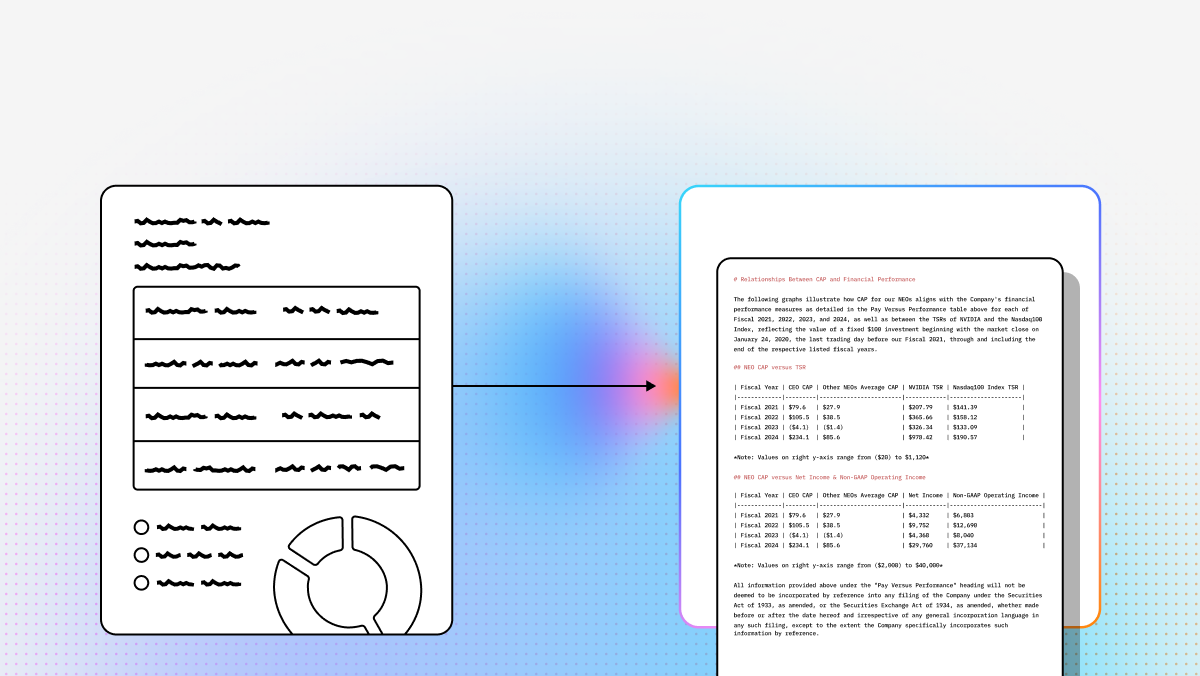
The insurance claims management landscape is shifting fast. Teams are moving away from manual data entry and brittle legacy OCR toward platforms that can parse, classify, extract, and reason over messy insurance documents at production scale. That matters because modern claims operations depend on unstructured inputs like policy PDFs, medical records, invoices, photos, emails, and claimant communications. Vendors now position around document understanding, LLM-ready extraction, IDP, and agentic automation rather than OCR alone.
For developers and technical decision-makers, the key question is no longer “Can this tool read text?” It’s:
“Can this tool turn complex, high-variance claims data into reliable downstream actions?”
The right platform depends on what you need most: agentic workflows, prebuilt processors, handwriting-heavy mailroom automation, open ingestion pipelines, low-code governance, or API-first layout preservation for LLM systems.
Quick Comparison: Top Insurance Document AI Solutions
| Vendor | Best At | Typical Insurance Use Cases | API / Integration Style |
|---|---|---|---|
| LlamaParse (LlamaIndex) | Semantic parsing, schema extraction, agentic workflows, citations/confidence | Claims intake automation, fraud checks, policy Q&A copilots, compliance | Dev-first Python/TS SDKs; modular orchestration; parsing/extract/index APIs |
| Google Cloud Document AI | Pretrained processors + custom workbench; human review | ACORD/form extraction, KYC/AML, document routing | Managed GCP APIs; strong BigQuery/Vertex integration |
| Hyperscience | Handwriting + degraded scans; validation-heavy ops | Handwritten FNOL, mailroom backlogs, exception routing | Enterprise platform; heavier implementation vs lightweight APIs |
| ABBYY Vantage | Mature low-code IDP; “skills” library | Medical bill extraction, classification, compliance audits | Low-code + REST API + enterprise integrations |
| AWS Textract | Scalable forms/tables/handwriting extraction | Proof-of-loss, ID extraction, legal/financial docs | Fully managed AWS APIs; integrates with S3/Lambda/A2I |
| UiPath Document Understanding | Document AI + RPA + validation orchestration | Claims settlement workflows, multi-system syncing, broker ops | RPA/workflow platform; drag-and-drop + enterprise connectors |
1. LlamaParse (LlamaIndex)
LlamaIndex delivers an end-to-end, LLM-native document processing platform built for developers creating AI-driven workflows. With layout-aware parsing, schema-based extraction agents, and built-in retrieval for RAG systems, it goes beyond traditional OCR to support intelligent, context-aware automation. The platform emphasizes auditability through citations and confidence scoring, making it well-suited for high-stakes environments like insurance claims processing.
Key benefits
- Replaces brittle templates with layout-aware, LLM-native parsing
- Full pipeline: parse → extract → index (within LlamaCloud)
- Strong dev experience: Python + TypeScript SDKs, orchestration primitives
- Production trust: page citations + confidence scores
Core features
- LlamaParse: advanced parsing across many file types (90+ on site; docs cite 130+ depending on component)
- LlamaExtract: schema-based structured outputs via extraction agents
- Indexing/Retrieval: for production RAG/knowledge bases
- Workflows: async event-driven orchestration (branching, looping, human review)
Primary claims use cases
- Claims intake from mixed packets (loss notice, bills, attachments)
- Cross-document consistency checks for fraud/discrepancy detection (inferred)
- Policy Q&A and adjuster copilots grounded in indexed documents
Limitations
- Developer-first (less “business-user low-code” out of the box)
- Best value when you build a broader AI system (not basic OCR-only)
- Flexibility means you must design schemas/guardrails/workflows well
2. Google Cloud Document AI
Google Cloud Document AI is a managed document processing platform that combines pretrained models, custom model training, and human review workflows. It is designed to extract and structure data from common business documents at scale, with tight integration into the broader Google Cloud ecosystem (e.g., BigQuery and Vertex AI).
Core features
- Pretrained processors (invoices, IDs, etc.)
- Document AI Workbench for custom extraction/classification
- Human-in-the-loop review for verification/correction
- Strong GCP integration (BigQuery, Vertex, pipelines)
Limitations
- Strongest on standardized docs; value less obvious for highly variable claim packets
- Biggest win when deeply invested in the GCP ecosystem
- Production accuracy still needs tuning/review architecture
3. Hyperscience
Hyperscience provides an enterprise-grade intelligent document processing (IDP) platform optimized for high-volume, paper-heavy operations. It combines machine learning-based extraction with human-in-the-loop validation workflows to ensure high accuracy, especially for handwritten or low-quality documents. With flexible deployment options (on-prem, private cloud, SaaS), it is built for organizations modernizing legacy document workflows while maintaining strict operational controls.
Core features
- ML-based doc processing at scale
- Flexible deployment: on-prem, private cloud, SaaS
- Human supervision/QA workflows
- Web app + API access
Limitations
- More implementation-heavy than API-first parsers
- Best fit for legacy/paper environments vs digital-native LLM pipelines
- Larger operating model (supervision + infrastructure) than “just an API”
4. ABBYY Vantage
ABBYY Vantage is a low-code intelligent document processing platform built for enterprise automation at scale. It offers a large library of prebuilt “skills” for common document types and use cases, allowing business users to configure extraction workflows without deep technical expertise. With support for structured, semi-structured, and unstructured documents—including handwriting and barcodes, it provides a governed, scalable environment for document-centric operations.
Core features
- Low-code/no-code document automation
- Pretrained “skills” library (marketed as 150+ use cases)
- Handles structured/semi-structured/unstructured + handwriting/barcodes
- Enterprise connectors + REST API
Limitations
- Less code-first flexibility than SDK-centric stacks
- Variable claim formats still require design/tuning work
- Heavier enterprise rollout footprint
5. AWS Textract
Amazon Web Services Textract is a fully managed document extraction service that automatically identifies text, handwriting, tables, and form data from documents. Designed for scale, it integrates seamlessly with AWS services like S3 and Lambda, enabling event-driven processing pipelines. While highly effective for extracting structured elements, it typically serves as a foundational layer that requires additional orchestration, validation, and reasoning components for complete business workflows.
Core features
- Extracts printed text + handwriting + layout elements
- Forms/tables understanding beyond OCR
- Managed APIs; integrates naturally with S3/Lambda and AWS services
Limitations
- Extraction-first: you still build orchestration, review, reasoning layers
- Less “agentic workflows + citations” out of the box
- Most leverage when you’re already on AWS
6. UiPath
UiPath Document Understanding is part of a broader automation platform that combines document processing with robotic process automation (RPA). It enables organizations to extract, validate, and act on document data within end-to-end workflows, integrating with bots, approvals, and enterprise systems. With strong validation tools and no-code configurability, it is ideal for businesses looking to operationalize document-driven processes across multiple systems.
Core features
- Document + communications coverage
- Strong validation workflows
- No-code configurable controls (prompts/LLMs/settings)
- Full automation ecosystem (bots, approvals, connectors)
Limitations
- Can be more platform than you need if you only want parsing
- Best value when orchestration/RPA is the main requirement
- Not as “lightweight API-first” as dedicated parsing tools
Picking an Insurance Claim Management Software
Document processing for claims and compliance is rapidly moving beyond traditional OCR toward LLM-native systems that don’t just extract text, but produce structured, AI-ready data. While enterprise IDP platforms and cloud services like AWS Textract and Google Document AI still play an important role in large-scale or standardized workflows, they often stop at extraction and require additional tooling to support modern AI use cases.
For developer-led teams building claims intelligence, RAG systems, or agent-based workflows, LlamaIndex (via LlamaParse) stands out as the most complete approach. It combines layout-aware parsing, schema-based extraction, citations, confidence scoring, and built-in indexing—bridging the gap between raw documents and production-ready AI systems in a single pipeline.
As a result, the real shift isn’t just better document extraction—it’s moving toward systems that turn documents directly into structured knowledge for AI. In that landscape, LlamaParse is uniquely positioned as the foundation layer for building next-generation claims and compliance workflows.
FAQs
What is the difference between OCR and modern document AI platforms?
OCR extracts raw text from documents, while modern document AI platforms understand structure, context, and relationships to produce usable, structured data.
Which platforms are best for insurance claims processing?
It depends on your stack: AWS Textract and Google Document AI are strong for cloud-native extraction, while LlamaIndex and UiPath are better for end-to-end claims workflows.
What is an LLM-native document processing platform?
It’s a system designed to feed large language models directly with structured, context-aware outputs instead of raw extracted text.
Do I still need human review in document automation?
Often yes, especially in regulated industries like insurance. Many platforms include human-in-the-loop workflows to validate edge cases and improve accuracy.
Which solution is best for developers building AI systems?
Developer-first platforms like LlamaIndex are best suited because they provide APIs, structured outputs, and integration into RAG and agent workflows.