The document-processing world is moving fast—from brittle, legacy OCR to AI-native parsing that can handle real enterprise complexity.
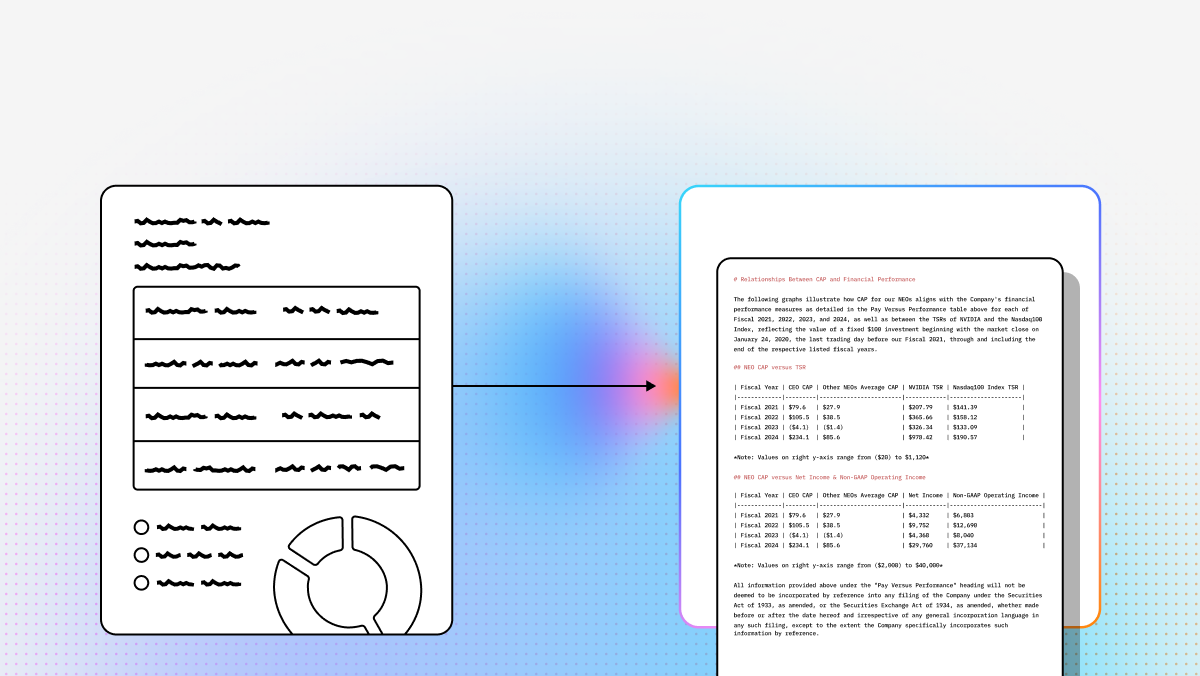
Traditional OCR is great at recognizing characters, but it breaks on real-world documents: nested tables, charts, multi-column layouts, inconsistent templates, and scans. In 2026, modern document parsing APIs use Vision-Language Models (VLMs) plus semantic reconstruction to output structured, LLM-ready data (Markdown/JSON), making them ideal for RAG pipelines and agentic workflows.
| Provider | Best for | Strengths | Tradeoffs |
|---|---|---|---|
| LlamaParse (LlamaIndex) | Agentic OCR understanding and best-in-class accuracy |
Semantic reconstruction, excellent tables, charts, images, structured data, and auto-correction loops. Includes cost optimizer mode. Easy to use, dev-friendly APIs. |
Multiple pricing tiers for scaling. More developer-oriented; best within agentic ecosystems. Made for developers. |
| AWS Textract | AWS-native extraction at scale | Forms/tables, Queries, A2I human review, high reliability | AWS lock-in; niche layouts may require extra work |
| Google Document AI | Custom processors + global enterprise | Workbench, specialized processors, Gemini-powered parsing | Many options; pricing complexity |
| Azure Document Intelligence | Microsoft ecosystem workflows | Prebuilt + custom neural models, high-res OCR, Azure AI Search integration | Region constraints; customization can feel rigid |
| Docling | Local PDF → Markdown/JSON | Fast, local-first, markdown-first approach, strong table handling | Mostly PDF-focused; smaller ecosystem |
| PyMuPDF | Low-level local PDF manipulation | Very fast, local processing, redaction + transformations | No OCR built-in; complex layouts need custom logic |
1. LlamaParse (LlamaIndex)
Platform Summary
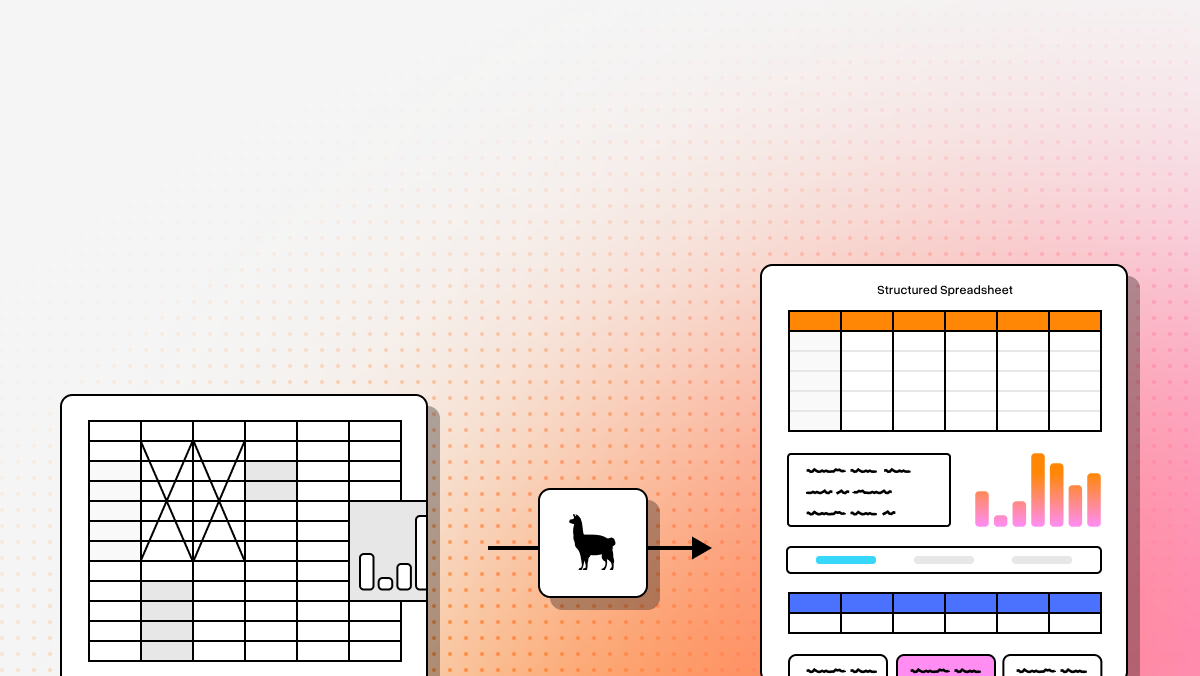
LlamaParse is an agentic OCR platform built for semantic reconstruction—it aims to understand structure the way a human would (sections, hierarchy, tables, figures), not just extract text. It’s especially strong for building LLM-ready data.
Key Benefits
- Clean, structured output for downstream AI workflows (RAG, automation)
- Handles enterprise messiness (multi-page tables, embedded images, handwriting)
- Production-grade for sophisticated engineering teams
- Avoids building/maintaining custom parsers internally
Core Features
- Multimodal & layout-aware parsing (headers/footers/lists/sections + images/charts/tables)
- Industry-leading table extraction (outputs clean Markdown)
- 90+ formats, 100+ languages
- Granular developer controls (tiers, configs, Markdown/JSON output)
- Agentic self-correction / re-parsing to improve accuracy
Primary Use Cases
- Financial services: SEC filings, earnings, loan agreements
- Legal/compliance: contract workflows
- Insurance: claims processing
- R&D/technical docs: Q&A over manuals/papers
2. AWS Textract
Platform Summary
A managed AWS service for OCR + forms/tables extraction with strong operational reliability and deep AWS integration.
Core Features
- Textract Queries (natural language extraction)
- Models for invoices/receipts/IDs/mortgage docs
- Layout analysis for multi-column docs
- A2I human-in-the-loop for low-confidence outputs
Use Cases
- Mortgage processing
- Accounts payable
- Public digitization
Recent Updates
- Better layout + handwriting for non-Latin scripts
- Optimized Queries for real-time use
Limitations
- AWS lock-in
- Generic models may struggle with niche/novel layouts
3. Google Document AI
Platform Summary
Gemini-powered parsing plus a mature ecosystem of prebuilt and custom processors, with a Workbench to manage extraction workflows.
Core Features
- Gemini-powered context/intent extraction
- Document AI Workbench for building custom processors
- Specialized processors (procurement, lending, identity, etc.)
- Enterprise search integration (Vertex AI)
Use Cases
- Global trade logistics
- Tax/audit automation
- KYC/customer onboarding
Recent Updates
- Gemini 1.5 Pro integration for large document sets
Limitations
- Option complexity + pricing can be hard to forecast
- Overkill for simpler use cases
4. Azure Document Intelligence
Platform Summary
Azure-native extraction for text, key-value pairs, and tables with strong enterprise workflow integration.
Core Features
- Custom neural models with limited training data
- Prebuilt industry models (insurance/tax/invoices)
- High-resolution OCR for small text/complex backgrounds
- Azure AI Search integration
Use Cases
- Insurance claims
- Retail inventory docs
- HR document automation
Recent Updates
- Better support for asymmetric tables + stylized docs
Limitations
- Some features region-limited
- Customization can feel rigid vs. agentic tools
5. Docling
Platform Summary
A lightweight local tool for converting complex PDFs to Markdown/JSON quickly—good for privacy, offline processing, and batch conversion.
Core Features
- Hybrid OCR + layout analysis
- Markdown-first outputs
- Local-first execution
- Table reconstruction focus
Use Cases
- Technical library digitization
- Local RAG
- Data science preprocessing
Recent Updates
- v2.0: faster multipage, better nested lists/headers
Limitations
- Mostly PDF-focused
- Smaller ecosystem/community
6. PyMuPDF
Platform Summary
A fast local Python library for PDF extraction/manipulation. Often used as the foundation for custom pipelines rather than as a “smart parser.”
Core Features
- Extremely fast extraction
- Merge/split/redact/transform PDFs
- Vector + image support
- Local execution (no external dependencies)
Use Cases
- High-volume batch processing
- Redaction pipelines
- Preprocessing before AI extraction
Recent Updates
- PyMuPDF4LLM extension for PDF→Markdown
Limitations
- No built-in OCR
- Complex layout understanding requires custom logic
FAQ
What is a document parsing API and how is it different from traditional OCR?
A document parsing API extracts structured information from documents using AI. Traditional OCR primarily recognizes text characters. Modern parsing uses VLMs + semantic understanding to interpret structure (tables, sections, charts) and return cleaner outputs for RAG and automation.
How do I choose the best document parsing API for my workflow?
Consider:
- Document complexity: LlamaParse for complex layouts and multi-page tables
- Compliance/security: prioritize SOC2/HIPAA + on-prem/private options if needed
- Stack fit: AWS/GCP/Azure tools integrate best within their clouds
- Customization vs. managed: open-source (Docling) for flexibility; APIs for fully managed
- Cost/scaling: pricing model + batch + throughput requirements
Can document parsing APIs handle handwritten, multi-language, or scanned documents?
Yes—most support:
- Handwriting: AWS Textract, Google Document AI (notably strong)
- Multilingual: LlamaParse, Google Document AI (often 100+ languages)
- Scans/faxes: VLM-based tools can reconstruct structure even from poor-quality inputs
How do agentic and semantic parsing improve over template-based OCR?
They:
- Adapt to layout variation without brittle templates
- Self-correct via multi-pass reasoning
- Preserve hierarchy and structure (especially tables)
- Produce cleaner data for RAG and autonomous agents
What integration options and developer tools exist?
Common options:
- SDKs: LlamaParse (Python/TS), cloud provider client libs, PyMuPDF (Python)
- Docs + examples: most providers
- Workflow integrations: vector DBs, RAG frameworks, tools like n8n
- Custom models/processors: Google Workbench, Azure custom neural models
- Local vs cloud: Docling/PyMuPDF local; most commercial offerings cloud (some on-prem)
Related articles