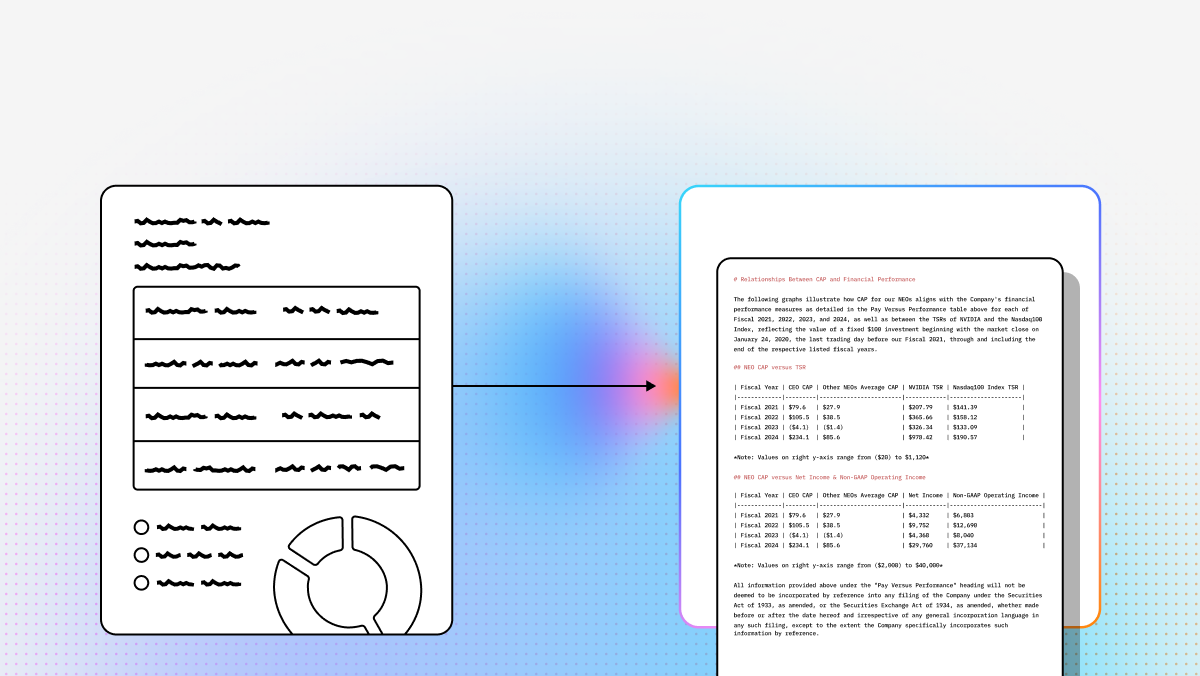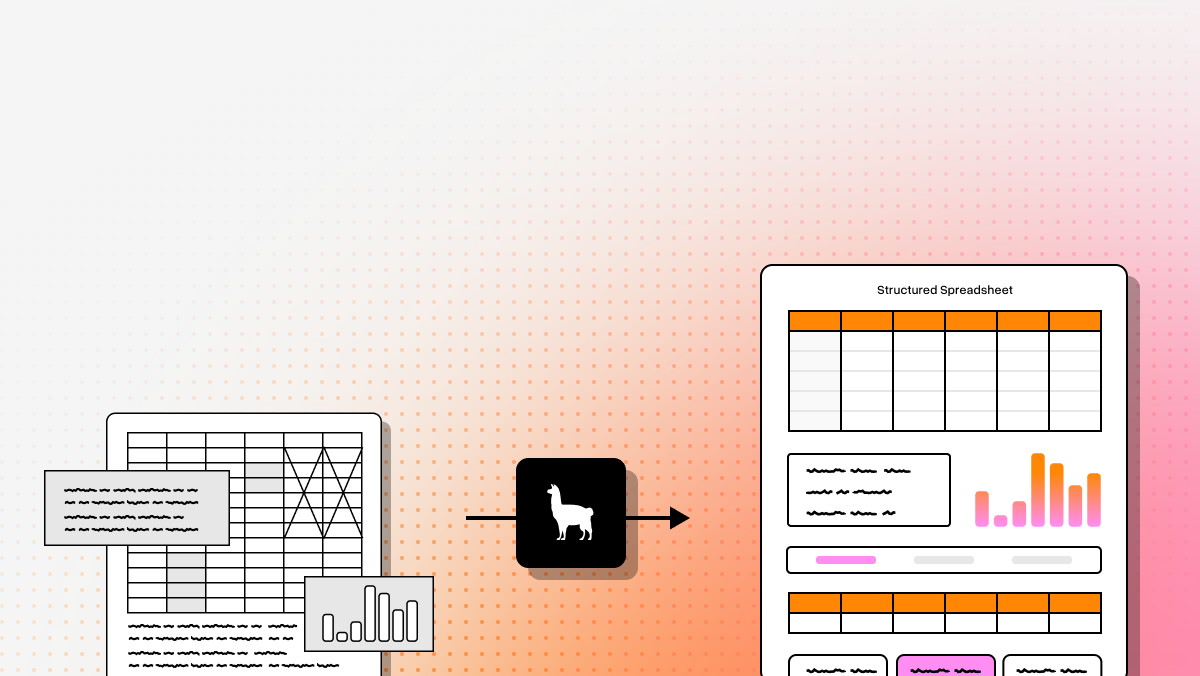
Financial institutions operate on complex documents, from SEC filings and loan agreements to tax forms and compliance reports. Manual data processing and template-based OCR systems often struggle with large-scale, unstructured financial data, creating bottlenecks in automation and reporting.
Modern platforms have shifted toward agentic document processing. By combining layout-aware vision models, large language models, and structured extraction logic, these tools interpret relationships within documents rather than simply transcribing text. The result is higher accuracy, better traceability, and structured outputs that support automation across due diligence, KYC/AML workflows, and financial operations.
Whether you’re automating due diligence, streamlining KYC/AML compliance, or scaling invoice processing, choosing the right stack is critical. This guide covers the top financial OCR tools defining the 2026 standard for accuracy, traceability, and reasoning.
| Company | Best For | Key Strengths | APIs / Integrations |
|---|---|---|---|
| LlamaIndex | Complex + unstructured finance docs; RAG/agents | Agentic doc processing, semantic reconstruction, citations/confidence | LlamaParse, Agentic RAG |
| Azure AI Document Intelligence | Enterprise workflows in Microsoft stack | Prebuilt financial models, security, hybrid/on-prem containers | Azure + Microsoft 365 ecosystem |
| Google Cloud Document AI | Multilingual + global ops | Strong vision models, HITL review, broad language support | Unified Document AI API |
| AWS Textract | AWS-native document workflows | Forms/tables, Queries feature, Lending API | AWS services (A2I, Bedrock, etc.) |
| Docling | Privacy-first / local parsing for AI pipelines | Layout-aware parsing, local execution, format versatility | Open-source CLI/libs |
| PyPDF / PyMuPDF | Fast extraction from digital PDFs | Speed, metadata, PDF manipulation | Python libraries |
| DeepSeek OCR | Multimodal visual reasoning | High-res support, charts/visual understanding, open-weight options | Self-host or API (ecosystem evolving) |
1. LlamaParse (LlamaIndex)
Platform Summary
LlamaParse is pushing the shift from traditional OCR to Agentic Document Processing. Instead of only transcribing text, it understands the semantic structure of complex financial documents.
It can reason over nested tables, interpret financial charts, and provide verifiable citations for extracted values—important for high-stakes decision workflows.
Key Benefits
- Agentic Document Processing: Handles unseen layouts without retraining.
- Accuracy & Explainability: Field-level confidence + citations for auditability.
- Semantic Reconstruction: Rebuilds complex elements like multi-page tables.
- Workflow Automation: Validation, routing, notifications built into pipelines.
Core Features
- Layout-Aware Parsing: Handles nested tables and multi-column financial documents.
- Structured Schema Extraction: Outputs configurable JSON with field-level confidence and traceability.
- Multimodal Understanding: Processes charts, images, and visual elements.
- Enterprise Security: SSO, audit logs, VPC options.
Primary Use Cases
- Investment research automation
- Loan due diligence (covenants/terms extraction)
- KYC/AML processing with audit trails
- Contract analysis and compliance reporting
Recent Updates
- LlamaAgents Builder (Jan 2026)
- LlamaParse v2 API (Jan 2026)
- LlamaSheets Beta (Dec 2025)
- Core package improvements (Feb 2025)
Limitations
- Requires engineering effort to implement well
- Higher complexity than plug-and-play OCR
- Newer ecosystem than legacy vendors
2. Azure AI Document Intelligence
Platform Summary
Formerly Form Recognizer, Azure AI Document Intelligence is Microsoft’s enterprise-grade extraction suite. It performs best for high-volume structured/semi-structured documents and fits naturally in Microsoft-heavy organizations.
Core Features
- Pre-built financial models (invoices, receipts, tax forms)
- Enterprise security (VNets, managed identities, compliance certs)
- Hybrid/on-prem support via containers
Primary Use Cases
- Accounts payable automation
- Mortgage processing
- Contract digitization / archive conversion
Recent Updates
- Added generative extraction + document Q&A features using GPT-4o capabilities (per Microsoft integration announcements).
Limitations
- Best fit inside Azure ecosystem
- Can struggle with highly unstructured “messy PDF” financial reports
- Pricing complexity across tiers
3. Google Cloud Document AI
Platform Summary
Google Document AI combines scalable OCR with Google’s strong computer vision and multilingual support—well-suited to multinational finance operations and mixed-language document intake.
Core Features
- Advanced Vision API (handwriting + low-res text)
- 200+ languages
- Human-in-the-loop (HITL) review tools
Primary Use Cases
- Global trade finance (letters of credit, bills)
- Retail banking (checks, deposit slips)
- Archival search and historical record digitization
Recent Updates
- Custom Extractor improvements using Gemini foundation models for variable layouts.
Limitations
- Privacy/regulatory configuration can be complex
- May need tuning for niche instruments
- Integration effort may be heavy for small teams
4. AWS Textract
Platform Summary
AWS Textract is a managed service for extracting text, handwriting, tables, and forms, with strong AWS-native workflow integrations.
Core Features
- Queries (ask for fields in natural language)
- Table + form extraction
- Lending API (mortgage doc workflows)
Primary Use Cases
- Tax document processing
- Insurance claims processing
- Portfolio monitoring from statements
Recent Updates
- Better support for large-format docs + integration paths with Amazon Bedrock.
Limitations
- Costs can scale quickly with high volume
- AWS setup complexity for end-to-end workflows
- Handwriting recognition often behind Google in practice
5. Docling
Platform Summary
Docling (IBM Research) focuses on layout-aware parsing and converting documents into AI-friendly formats like Markdown/JSON—especially useful for privacy-first or on-prem workflows.
Core Features
- Layout-aware parsing to preserve hierarchy
- PDF/DOCX/images support
- Local execution for full data control
Primary Use Cases
- RAG pipeline preprocessing
- Batch conversion of legacy PDFs
- Sensitive-data extraction on-prem
Recent Updates
- Better table recognition + new CLI improvements.
Limitations
- No turnkey GUI
- You manage infrastructure
- Smaller ecosystem/community than hyperscalers
6. PyPDF / PyMuPDF
Platform Summary
These aren’t OCR engines—but they’re essential for finance pipelines when documents are already digital PDFs. They’re often used to triage (OCR needed vs not) and to manipulate/prepare documents.
Core Features
- Fast text extraction (digital PDFs)
- Metadata access (useful for audit trails)
- PDF manipulation (split/merge/rotate)
Primary Use Cases
- Initial document triage
- Automated report assembly
- Fast indexing of filings and reports
Recent Updates
- PyMuPDF improvements in memory handling + vector graphic extraction.
Limitations
- Cannot read scanned images without OCR
- Weak on complex tables
- No semantic understanding
7. DeepSeek OCR
Platform Summary
DeepSeek OCR is a vision-language model approach focused on multimodal document understanding, often strong at interpreting both text and visual relationships (e.g., charts/figures).
Core Features
- Multimodal reasoning (not just text transcription)
- High-resolution support (dense spreadsheets, small print)
- Open-weight flexibility (self-host or API)
Primary Use Cases
- Extracting values from charts/graphs
- Complex form understanding
- Low-cost scale-out (depending on deployment)
Recent Updates
- DeepSeek-V3 claims improved long-figure transcription stability / fewer hallucinations.
Limitations
- GPU requirements if self-hosting
- Integration ecosystem still maturing
- May require more prompt engineering than template OCR
FAQs
What is OCR Software for Finance?
OCR software for finance extracts and digitizes data from financial documents (invoices, purchase orders, bank statements, receipts, loan applications, compliance forms). Unlike generic OCR, finance OCR is designed to handle common financial layouts and terminology and to identify + structure key fields (vendor name, invoice number, line items, totals) for direct integration into ERPs/accounting systems.
Why is it Important?
OCR enables financial process automation by reducing manual data entry, minimizing errors, and speeding up workflows like accounts payable and expense processing. It also strengthens compliance by creating a searchable digital audit trail and accelerating KYC/AML verification and onboarding.
How to Choose the Best Provider
Prioritize:
- Accuracy on your real document types (especially edge cases)
- Integration (APIs, ERP/accounting connectors, workflow hooks)
- Security & compliance (SOC 2, GDPR, encryption, access controls, on-prem/VPC options)
- Scalability & cost (how pricing behaves at high volume)
- Support & implementation effort (plug-and-play vs engineering-heavy)