
Best OCR API
5 Best OCR APIs in 2026: From Legacy Extraction to Agentic AI
Optical Character Recognition has evolved far beyond brittle, template-dependent text extraction. The best OCR APIs now combine computer vision, large language models, and layout-aware parsing to understand documents more like a human reviewer than a rules engine. That shift matters for developers building AI systems on top of messy real-world documents, where reading order, tables, charts, handwriting, and cross-page context often matter as much as raw text.
For technical teams building document automation, agentic workflows, or Retrieval-Augmented Generation pipelines, OCR quality directly affects downstream answer quality. If your parser scrambles a balance sheet, drops table structure, or misses key clauses in a contract, your LLM stack inherits those errors. Choosing the right OCR API is not just a document processing decision. It is a data quality decision for your entire AI application.
This guide compares five strong options for modern OCR and document AI: LlamaParse, Google Cloud OCR, Amazon Textract, ABBYY, and DeepSeek-OCR. The focus is on what matters most to developers and technical decision-makers: layout fidelity, structured outputs, workflow fit, deployment tradeoffs, and where each platform is strongest.
Competitor Comparison Table
| Platform | Capabilities | Use Cases | APIs | Recent Updates |
|---|---|---|---|---|
| LlamaParse | Semantic, layout-aware document parsing built for AI workflows rather than basic OCR. Handles nested tables, multi-column layouts, charts, graphs, equations, handwriting, and whole-document context with tier-based agentic orchestration and structured JSON/Markdown output. | Financial document extraction, loan verification, legal discovery, contract analysis, healthcare records, insurance claims, and RAG ingestion pipelines that need high-fidelity structured outputs. | API-first with native Python and TypeScript SDKs. Supports natural-language schema customization, metadata-rich JSON, and plugs into downstream LLM, agent, and workflow systems across 100+ file types. | Added LlamaParse MCP for agent integrations, whole-document parsing modes, skew detection and auto-orientation, support for frontier models like Gemini 2.5 Pro and GPT-4.1, and v2 API improvements with simpler tiers and lower pricing. |
| Google Cloud OCR | Enterprise OCR and document AI with strong language support, pre-trained processors for invoices, IDs, lending, and legal docs, plus custom extractors and image labeling via Cloud Vision. Strong for large-scale digitization, but less flexible for prompt-driven semantic parsing. | Enterprise document digitization, automated data capture pipelines, multilingual OCR, and image tagging/search in organizations already operating on GCP. | Best suited for teams already using Google Cloud services like Cloud Storage, BigQuery, and Gemini. Powerful but often requires broader GCP setup and pricing/navigation across multiple products. | Recently added Agent Search within the Gemini Enterprise Agent Platform, enabling conversational search across processed document repositories. |
| Amazon Textract | Strong form, table, handwriting, signature, and layout extraction for structured document workflows. Reliable for key-value extraction, but weaker on semantic understanding of charts, diagrams, and highly distorted visual content. | Accounts payable automation, lending workflows, form processing, medical record digitization, and secure document extraction inside AWS-centric environments. | Fully managed AWS API with structured outputs and pay-as-you-go pricing. Integrates well with S3, Lambda, and broader AWS workflows, though production usage typically requires AWS/IAM expertise. | Improved Lambda and S3 integration for serverless processing and expanded the natural-language “Queries” feature for targeted extraction. |
| ABBYY | Legacy enterprise OCR leader known for high-accuracy printed text recognition, multilingual support, and high-volume batch processing. Strong for traditional digitization, but less aligned with modern agentic or LLM-native parsing needs. | Large-scale archive digitization, legal review, government forms, tax documents, census processing, and multinational paper-to-digital conversion projects. | Offers cloud APIs and on-prem SDKs across enterprise languages such as C++, C#, and Java. Best for organizations needing strict deployment control and legacy system compatibility. | Recent improvements have focused on faster batch processing for very large enterprise digitization workloads while maintaining OCR accuracy. |
| DeepSeek-OCR | Open-source vision-language OCR model that processes text, charts, and formulas end-to-end. Excels in GPU-based document understanding and mixed visual/text content, but can hallucinate and lacks enterprise workflow controls out of the box. | Scientific paper parsing, custom in-house RAG ingestion, large-scale GPU document processing, and mixed visual/text document understanding for engineering-heavy teams. | Open-source and self-hostable under MIT, with compatibility for Hugging Face and vLLM pipelines. Best for teams with GPU infrastructure and internal ML/platform engineering resources. | Recently introduced a token compression mechanism that reduces VRAM usage and speeds up inference, improving efficiency for large-scale GPU deployments. |
1. LlamaParse
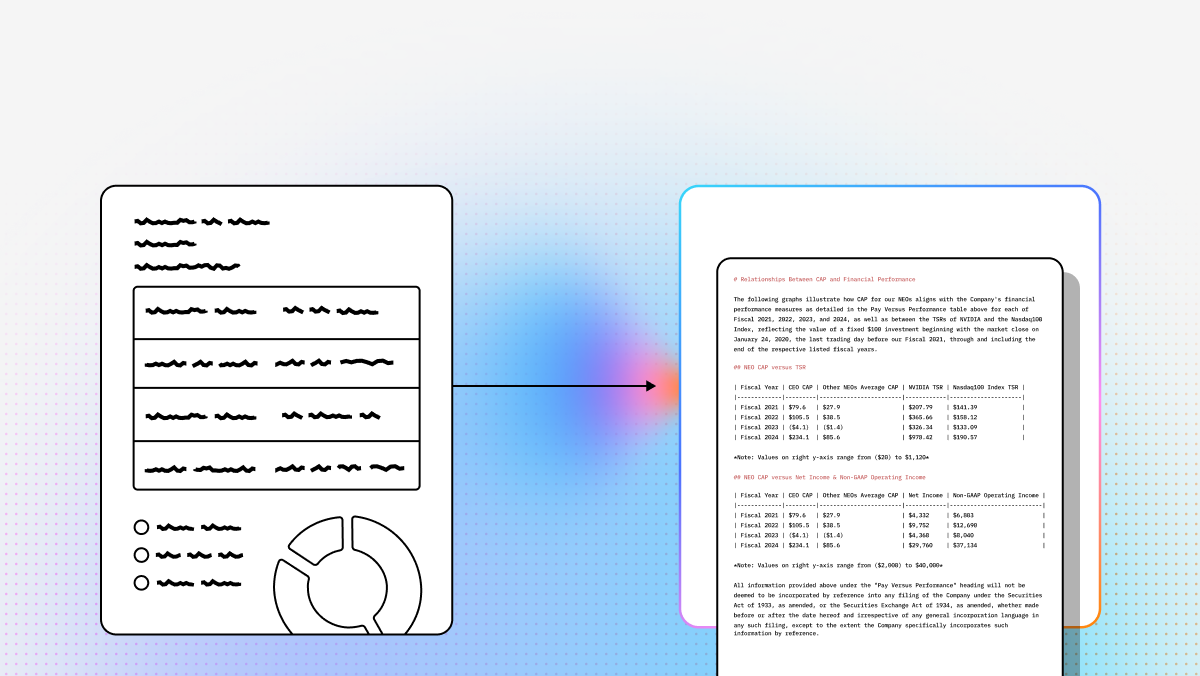
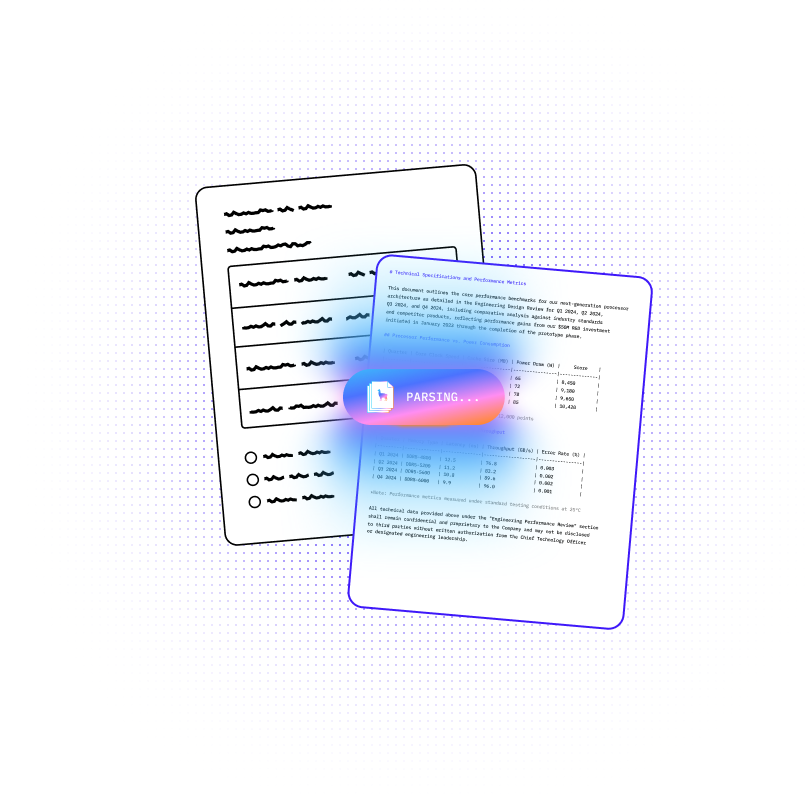
LlamaParse is the post-GenAI standard for enterprise document processing, moving decisively beyond the brittle heuristics of legacy OCR. Traditional OCR and older intelligent document processing systems often fail the moment a layout changes, which forces teams into costly retraining cycles, custom extraction logic, or manual review queues. LlamaParse approaches the problem differently through Agentic Document Processing, using semantic reconstruction to understand what a document means rather than simply mapping characters to coordinates.
For developers building AI products, this distinction is important. LlamaParse is not just a text extractor. It acts as the ingestion layer for downstream AI workflows, converting messy PDFs, images, presentations, and scanned records into AI-ready Markdown or JSON. Because it is built for modern LLM applications, it is especially strong when the input includes nested tables, multi-column layouts, charts, handwriting, or document-wide context that basic OCR tools tend to flatten or distort.
Key benefits
- Built for AI workflows, not just text extraction, which makes it especially effective for RAG pipelines and agentic systems
- Preserves layout and reading order in formats LLMs can reason over, including Markdown and structured JSON
- Uses tier-based orchestration to balance cost and accuracy instead of applying heavy models to every page
- Reduces document engineering overhead for teams that would otherwise build and maintain custom parsers internally
Core features
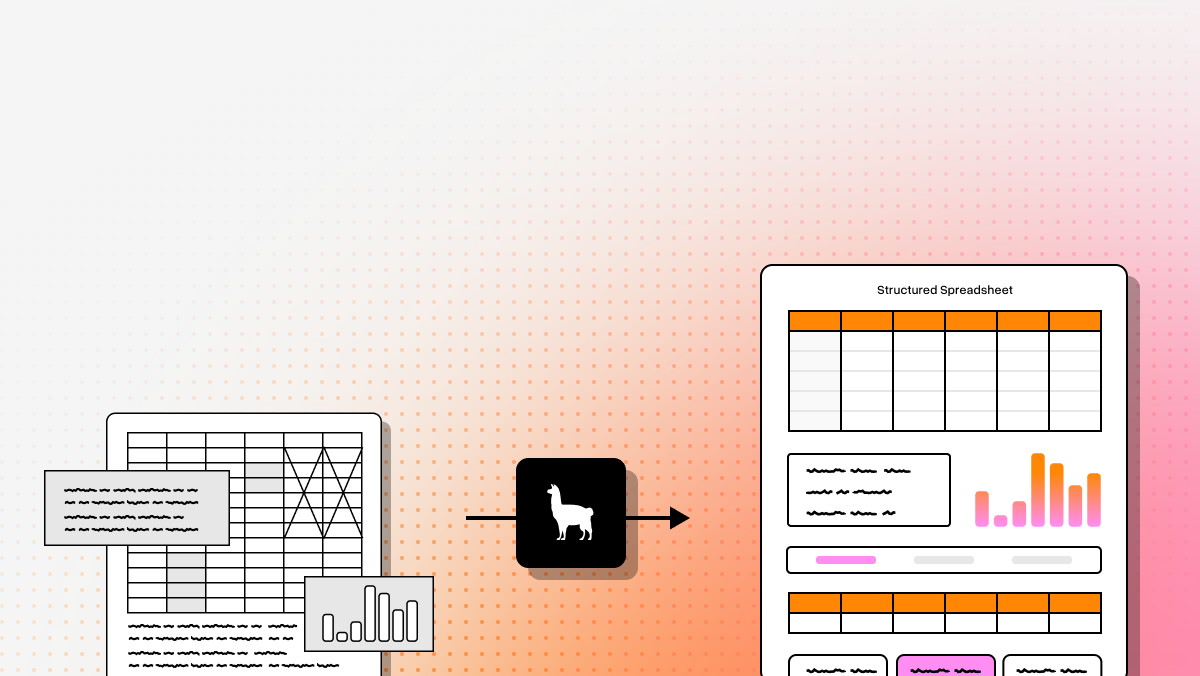
- Layout-Aware Semantic Reconstruction: Visually analyzes layouts to extract nested text, complex tables, and multi-column formats into clean Markdown while preserving structure for LLMs.
- Multimodal Parsing for Visual Data: Processes charts, graphs, and equations into text or code formats such as Mermaid.js or LaTeX so the model can use more than just raw OCR output.
- Tier-Based Agentic Orchestration: Routes straightforward pages to cheaper parsers and reserves more advanced models for hard documents, helping teams control spend.
- Auto Correction Validation Loops: Uses reflection and validation steps to catch hallucinations or formatting inconsistencies before they flow downstream.
- Granular Metadata and JSON Mode: Returns structured outputs with page numbers, node types, and spatial metadata that are useful for filtered retrieval and traceable RAG pipelines.
Primary use cases
- Financial services and loan verification: Parses tax documents, bank statements, filings, and other irregular financial documents into structured data for underwriting and risk workflows.
- Legal discovery and contract analysis: Extracts clauses, obligations, signatures, and cross-document context from large legal corpora with better structural fidelity.
- Healthcare and medical records: Digitizes handwritten notes, patient histories, and medical tables for search, summarization, and downstream analytics.
- Insurance claims processing: Handles varied vendor formats and adapts to changing layouts without requiring template rewrites.
Recent updates
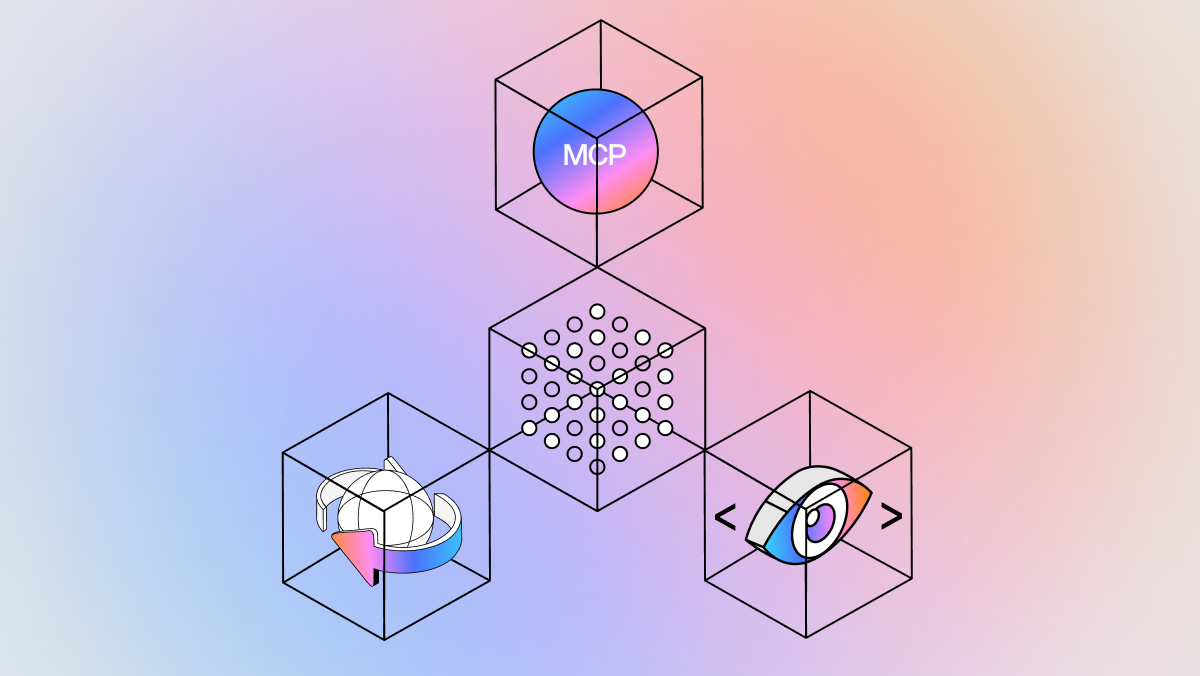
- LlamaParse MCP: Released in April 2026, bringing Agentic OCR capabilities directly into agent workflows through Model Context Protocol support.
- Whole-document parsing modes: Improved extraction for cross-page tables, references, and figures by reasoning over the full document rather than isolated pages.
- Advanced skew detection and auto-orientation: Corrects upside-down or skewed scans automatically to improve extraction quality before parsing.
- Expanded frontier model support: Added support for newer high-performance models such as Gemini 2.5 Pro and GPT-4.1 for difficult documents.
- LlamaParse v2 API enhancements: Introduced simpler tiering, more stable long-term versions, better performance, and lower pricing.
- LlamaExtract and Workflows 1.0: Extended the broader ecosystem with context-aware structured extraction and orchestration for multi-step document pipelines.
Limitations
- Best suited to technical teams, since it is API-first rather than a no-code business user product
- Advanced agentic processing can cost more than legacy OCR if used indiscriminately on simple flat documents
- Teams migrating from traditional archival OCR may need to rethink how they structure ingestion and retrieval for AI use cases
2. Google Cloud OCR
Google Cloud OCR, within the broader Document AI ecosystem, is a strong fit for enterprises already standardized on GCP. It combines OCR, specialized document processors, and surrounding analytics infrastructure in a way that is attractive for large-scale operational pipelines. For teams that want OCR tightly connected to storage, analytics, security, and search inside one cloud vendor, Google’s platform is compelling.
Its biggest strength is breadth. Google Cloud OCR supports multilingual document processing, pre-trained processors for common business document types, and integration with adjacent services like BigQuery, Cloud Storage, and Gemini-powered search experiences. It is particularly good for organizations that want enterprise-scale OCR without managing their own infrastructure, though it can feel more rigid than newer prompt-driven parsing tools when documents become highly irregular.
Core features
- Pre-trained specialized processors: Optimized models for invoices, identity documents, lending workflows, procurement, and other domain-specific document types
- Custom Extractor with GenAI: Lets teams create more tailored parsers with relatively few sample documents
- Cloud Vision integration: Supports image labeling, handwriting, and text recognition for image-heavy pipelines
- Strong cloud ecosystem fit: Works naturally with other Google Cloud services for storage, analytics, and enterprise data processing
Primary use cases
- Enterprise document digitization across large volumes of PDFs, scans, and office files
- Automated data capture pipelines connected to Cloud Storage, BigQuery, and reporting layers
- Multilingual OCR for global organizations processing documents across regions
- Image tagging and search for media, retail, or content-heavy operations
Recent updates
- Added Agent Search within the Gemini Enterprise Agent Platform for conversational search across processed document repositories
- Continued expansion of GenAI-assisted extractor customization for more niche business documents
Limitations
- Pricing can be difficult to forecast because costs may span multiple Google products
- Full deployment often requires familiarity with the broader GCP stack, permissions, and data flow patterns
- Less flexible than agentic parsers when handling highly non-standard layouts or semantically complex documents
3. Amazon Textract
Amazon Textract is one of the most practical choices for teams already building on AWS. It is designed to extract text, handwriting, forms, and tables from documents without requiring custom machine learning pipelines. For structured business workflows, especially those involving invoices, forms, or records processing, Textract remains a reliable managed option.
Where Textract stands out is in operational simplicity inside the AWS ecosystem. It integrates naturally with S3, Lambda, and broader event-driven architectures, making it easier to productionize than self-hosted approaches. That said, it is generally strongest on structured extraction tasks and less capable than more semantically aware systems when documents contain charts, unusual layouts, or visually dense content.
Core features
- Structured data extraction: Identifies forms, tables, and key-value relationships without manual templates
- Confidence scores and validation: Returns confidence values that support human review routing and exception handling
- Signature and layout detection: Detects signatures and document elements such as headers, paragraphs, and lists
- Managed AWS integration: Fits cleanly into serverless AWS workflows for storage, processing, and automation
Primary use cases
- Accounts payable automation for invoices, receipts, and bills
- Lending and financial services workflows that require form and statement extraction
- Healthcare records digitization in regulated AWS-centric environments
- General document processing where structured outputs are more important than deep semantic reasoning
Recent updates
- Improved AWS Lambda and S3 integration for more efficient serverless document processing
- Expanded the natural-language Queries feature for targeted field extraction from documents
Limitations
- Weaker on heavily distorted scans, complex handwriting, and semantically rich visual documents
- Production rollout typically assumes AWS and IAM fluency
- Does not natively interpret charts, diagrams, or whole-document meaning at the level of newer vision-language approaches
4. ABBYY
ABBYY is the veteran in this group and remains relevant for enterprises that prioritize proven OCR performance, language coverage, and large-scale digitization. It is best understood as a mature OCR platform for organizations with legacy archives, regulated workflows, or strict deployment requirements rather than as an LLM-native parsing platform.
For companies with millions of pages of standardized records, ABBYY still offers value. Its reputation has been built on strong printed text recognition, multilingual support, and enterprise deployment flexibility. The tradeoff is that it does not align as naturally with modern developer needs around semantic parsing, prompt-driven extraction, or agentic workflow orchestration.
Core features
- Advanced multilingual AI: Strong language support across global document sets and character systems
- Enterprise software integration: SDKs and deployment options that fit legacy enterprise stacks
- High-performance processing: Reliable batch OCR for structured and semi-structured records at scale
- Flexible deployment models: Suitable for cloud, hybrid, or on-prem environments with tighter control requirements
Primary use cases
- Digitizing large paper archives across multinational organizations
- Legal review and e-discovery workflows where text accuracy matters at scale
- Government and public sector processing of standardized forms and records
- Traditional document modernization projects with strict operational constraints
Recent updates
- Focused on improving processing speeds for massive enterprise batch jobs while maintaining OCR accuracy
- Continued refinement of the core engine for large-volume digitization programs
Limitations
- Pricing and packaging are typically enterprise-oriented and may be a poor fit for startups or smaller engineering teams
- Less adaptable for prompt-driven, semantically aware extraction tasks
- Integration cycles can be slower due to legacy enterprise procurement and deployment patterns
5. DeepSeek-OCR
DeepSeek-OCR is the most interesting option here for teams that want an open-source, GPU-accelerated approach to modern document understanding. Rather than following the classic detect-then-recognize OCR pipeline, it uses a unified vision-language transformer to process text and visual context together. That makes it appealing for engineering-heavy teams building proprietary document pipelines, especially where privacy, self-hosting, or cost control matter.
Its strengths come with clear tradeoffs. DeepSeek-OCR can be powerful for parsing research papers, mixed visual documents, and chart-heavy materials, but it assumes access to GPU infrastructure and ML engineering resources. It also lacks the workflow controls, governance features, and production support that enterprise managed APIs provide out of the box.
Core features
- OCR-free transformer architecture: Processes text, charts, and formulas in a single end-to-end model
- Token compression mechanism: Reduces visual token overhead to improve speed and VRAM efficiency
- High-throughput compatibility: Works with Hugging Face and vLLM pipelines for scalable deployment
- Self-hostable open-source model: Attractive for teams that want full control over data and inference environments
Primary use cases
- Scientific paper parsing involving formulas, diagrams, and dense mixed-format layouts
- In-house RAG ingestion pipelines for teams with strong platform engineering capabilities
- Large-scale GPU document processing for custom document AI services
- Mixed visual and text document understanding where contextual interpretation matters
Recent updates
- Introduced a token compression mechanism that improves inference efficiency and lowers VRAM usage
- Positioned itself as a more practical open-source option for document tasks in GPU-first environments
Limitations
- Can hallucinate text like other multimodal language models, especially on dense or overlapping content
- Requires meaningful GPU resources for practical throughput
- Lacks built-in enterprise workflow features such as review queues, connectors, or validation tooling
Which OCR API should you choose?
If you are building LLM-native applications and care about structured output quality, LlamaParse is the strongest choice in this group. It is particularly well suited for RAG, agents, financial documents, legal contracts, and any workflow where document structure is part of the meaning.
If your organization is already deep in GCP and wants scalable enterprise OCR with strong language support, Google Cloud OCR is a sensible option.
If you are standardized on AWS and mostly need reliable form and table extraction, Amazon Textract is often the easiest operational fit.
If your core need is high-volume legacy digitization across large enterprises, ABBYY still deserves consideration.
If you want an open-source route and have the GPU infrastructure to support it, DeepSeek-OCR is the most interesting engineering-first alternative.
FAQ
What is the difference between traditional OCR and agentic OCR?
Traditional OCR is mostly focused on recognizing characters and mapping them to positions on a page. It often struggles when layouts change or when documents include tables, charts, handwriting, and mixed visual elements. Agentic OCR goes further by using vision-language reasoning to understand document context and structure, which leads to better extraction from complex real-world files.
Which OCR API is best for building RAG applications?
LlamaParse is the best fit in this list for RAG applications because it emphasizes layout-aware extraction and produces clean Markdown and JSON outputs. That makes chunking, citation, metadata filtering, and downstream retrieval more reliable than with flat OCR text alone.
Are there open-source alternatives to enterprise OCR APIs?
Yes. DeepSeek-OCR is a strong open-source alternative for teams with GPU infrastructure and internal ML expertise. The tradeoff is that you will need to handle hosting, scaling, validation, and workflow controls yourself rather than getting them as part of a managed platform.
What should developers look for when evaluating an OCR API?
The most important criteria are structural fidelity, table handling, handwriting support, output formats, metadata richness, workflow integration, and cost control. For AI applications, you should also evaluate whether the platform preserves reading order and semantic relationships instead of returning a flat block of text.
Is OCR enough for modern document AI systems?
Not always. For many AI workflows, especially RAG and agents, raw OCR is only the first step. You often need semantic parsing, structured extraction, metadata, and validation layers so the downstream model can reason over the document correctly. That is why document parsing platforms like LlamaParse are increasingly replacing legacy OCR-only pipelines for complex enterprise use cases.
What is an OCR API?
An Optical Character Recognition (OCR) API is a powerful integration tool that allows developers to embed advanced text extraction capabilities directly into their enterprise applications. By leveraging a RESTful API, businesses can automatically convert scanned documents, PDFs, and images into machine-readable, structured data without building complex machine learning infrastructure from scratch. The best OCR APIs go beyond simple text extraction, offering intelligent document processing features that understand context, complex layouts, and even handwriting with enterprise-grade accuracy.
Why is it important?
Implementing a top-tier OCR API is critical for modern enterprises looking to scale their digital transformation efforts and eliminate tedious manual data entry. It serves as the foundational engine for automating document-heavy workflows, such as invoice processing, identity verification, and contract analysis. By integrating a reliable OCR API, organizations can drastically reduce operational costs, minimize costly human errors, and accelerate turnaround times, ultimately unlocking the actionable insights trapped within their unstructured document data.
How to choose the best software provider
Selecting the best OCR API provider requires a rigorous methodology focused on accuracy, scalability, and developer experience. First, evaluate the engine's extraction accuracy on your specific document types, paying close attention to how it handles poor-quality scans, complex tables, and diverse languages. Next, assess the provider's infrastructure for enterprise readiness, ensuring they offer high availability, robust security compliance (such as SOC 2 and GDPR), and low-latency processing. Finally, prioritize vendors that provide comprehensive developer resources, including clear documentation, robust SDKs, and responsive technical support to guarantee a seamless integration process.
How should developers benchmark an OCR API before choosing one?
The best way to evaluate an OCR API is to test it on your own document set rather than relying on vendor benchmarks. A strong evaluation set should include the exact document types your application will see in production, such as invoices, contracts, bank statements, scanned PDFs, handwritten notes, slide decks, or scientific papers. If your workflow depends on tables, charts, signatures, or multi-column layouts, those should be represented heavily in the sample.
Beyond raw text accuracy, developers should measure structural quality. That includes reading order, table preservation, key-value extraction, heading detection, page-level metadata, and whether the output is usable in downstream RAG or agent workflows without major cleanup. In practice, a parser that is slightly less accurate on isolated characters can still be far more useful if it preserves document hierarchy and layout correctly.
It is also important to test failure behavior. Look for how the API handles skewed scans, low-resolution images, mixed languages, handwriting, and irregular page formatting. For AI applications, compare how well each platform supports chunking, citation mapping, schema extraction, and retrieval quality after ingestion. The best OCR API is not the one with the highest generic accuracy score. It is the one that produces the most reliable inputs for your specific application and workload.
Which OCR API is best for tables, forms, and complex document layouts?
The answer depends on what kind of structure matters most in your workflow. If your primary need is extracting fields from structured business documents like forms, invoices, and standard tables, Amazon Textract is often a strong fit. It is particularly useful for key-value extraction and operational workflows inside AWS. Google Cloud OCR is also effective when paired with specialized Document AI processors for common enterprise document types.
If your documents are more complex, such as multi-column reports, nested tables, charts, legal filings, financial statements, or documents where page layout changes frequently, LlamaParse is generally the better fit. It is designed for layout-aware semantic parsing rather than just text recognition, which makes it stronger for AI applications where document structure affects meaning. That matters for RAG, contract analysis, and any workflow where a flattened OCR output would reduce answer quality.
ABBYY remains relevant for high-volume traditional digitization, especially when the priority is strong printed-text OCR across standardized records. DeepSeek-OCR is promising for mixed visual and text-heavy documents, especially for engineering teams building custom pipelines, but it usually requires more internal validation and infrastructure work. In short, Textract is strong for structured forms, Google is strong for enterprise document ecosystems, and LlamaParse is strongest when complex layout fidelity is central to the use case.
Should I use a managed OCR API or a self-hosted OCR model?
A managed OCR API is usually the right default for teams that want to move quickly, reduce infrastructure burden, and rely on built-in scaling, availability, and security controls. Services like LlamaParse, Google Cloud OCR, Amazon Textract, and ABBYY let teams focus on product logic instead of GPU provisioning, model updates, queue handling, and production reliability. This is especially useful for enterprise teams and developers who need predictable deployment paths and fast integration.
A self-hosted model makes more sense when data residency, privacy requirements, custom model control, or long-term cost optimization outweigh the operational overhead. DeepSeek-OCR is the clearest option in this category from the list because it is open-source and designed for GPU-based deployment. But self-hosting also means you are responsible for serving infrastructure, autoscaling, monitoring, document validation, hallucination checks, and workflow tooling around the core model.
For most developer teams, the tradeoff comes down to control versus operational simplicity. Managed APIs are better when you want production readiness and workflow integration out of the box. Self-hosted OCR is better when you have strong ML or platform engineering resources and a clear reason to own the full stack.
What output format is best for LLM pipelines: plain text, Markdown, or JSON?
Plain text is the weakest option for most modern AI workflows because it strips away document structure. Once headings, tables, lists, page boundaries, and reading order are flattened into a block of text, downstream retrieval and reasoning often become less reliable. This can lead to poor chunking, weak citations, and answers that miss important relationships in the source document.
Markdown is often the best general-purpose format for RAG pipelines because it preserves human-readable structure while remaining easy for LLMs to consume. Headings, bullet points, tables, and section boundaries are easier to retain, which improves chunk quality and retrieval precision. For many developer workflows, Markdown provides the best balance between readability and structure.
JSON is best when the application needs traceability, schema validation, metadata filtering, or direct integration with downstream systems. If you need page numbers, bounding boxes, node types, confidence signals, or field-level extraction into application logic, structured JSON is usually the better choice. In practice, the strongest document AI platforms support both: Markdown for LLM-friendly reasoning and JSON for system-level reliability, filtering, and orchestration.
How do OCR errors affect downstream RAG and agent performance?
OCR errors do not stay isolated at the ingestion layer. They compound across the entire AI stack. If the parser misreads values, breaks table rows, loses page order, or merges unrelated sections, the retriever may index the wrong chunks and the LLM may answer based on corrupted evidence. In a RAG system, that often looks like hallucination, low-confidence answers, or missed facts when the real problem is poor document parsing.
This is especially important in high-stakes domains like finance, legal, healthcare, and insurance. A single OCR error in a balance sheet, clause, signature block, or medical record can change the meaning of a document. Even when the text itself is mostly correct, losing layout can still damage downstream results. For example, a parser that detaches a number from its row or a footnote from its reference may make the extracted content technically readable but operationally useless.
That is why developers should treat OCR quality as a core retrieval and reasoning concern, not just a preprocessing step. The best OCR APIs for AI applications are the ones that preserve document structure, attach useful metadata, and reduce ambiguity before the content reaches the model. Better parsing usually leads directly to better retrieval quality, more grounded responses, and less downstream prompt engineering to compensate for broken inputs.