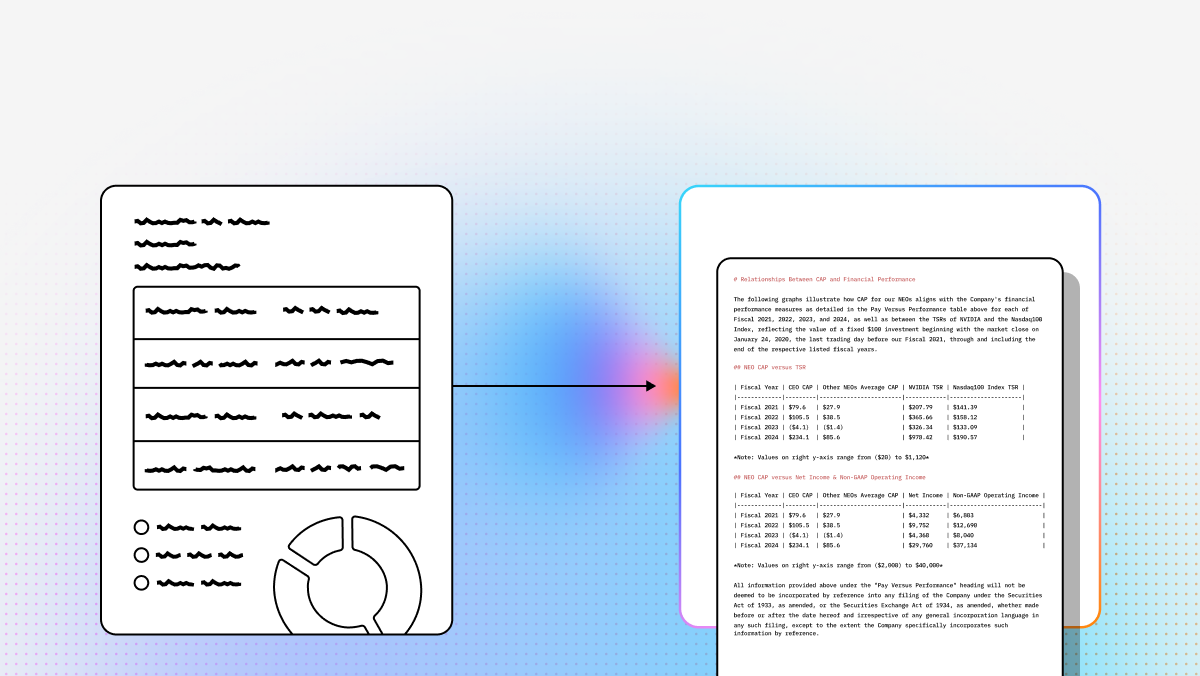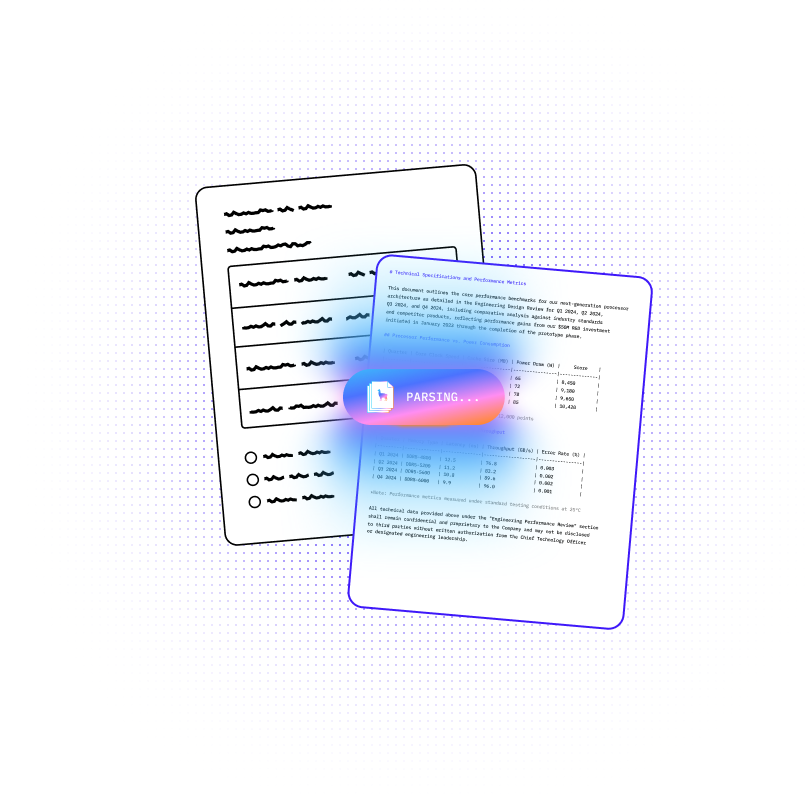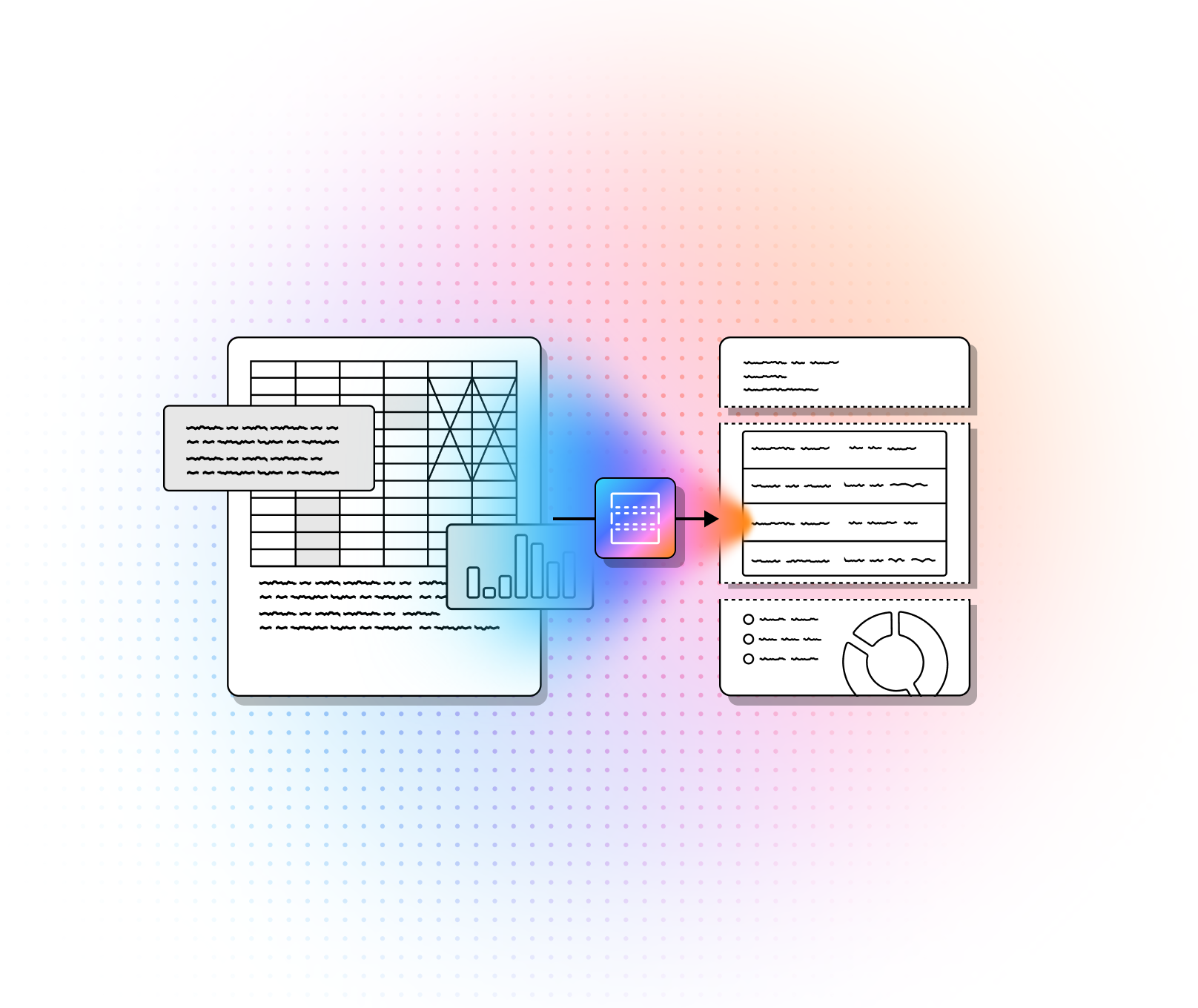
The landscape of document processing is shifting rapidly—from brittle, template-based OCR toward intelligent Agentic Document Processing.
In the era of Generative AI, traditional OCR is no longer enough. Modern AI agents require structured, semantic data rather than raw text dumps to automate workflows like invoice triage, contract analysis, and high-performance RAG pipelines. If your parser can’t distinguish a table header from a footer or understand multi‑column flow, downstream LLMs will struggle and hallucinate.
This guide compares leading document agent platforms and OCR solutions across hyperscalers, legacy OCR providers, and AI-native parsers to help teams choose the right tool for production document automation.
Quick Comparison
| Product | Pricing Model | Key Feature | Best For |
|---|---|---|---|
| LlamaParse | 10k free credits/mo + PAYG | Agentic OCR + semantic reconstruction | Developers building RAG & document agents |
| Amazon Textract | ~$0.0015/page | Serverless AWS integration | High-volume AWS workflows |
| Google Document AI | Starts ~$0.001/page | 60+ pre-trained processors | Standard business docs at scale |
| LandingAI | Custom enterprise | Visual grounding + reflection | Complex / regulated docs needing auditability |
| UiPath | Enterprise licensing | Native RPA integration | Legacy system automation |
| Azure AI Document Intelligence | Variable / PAYG | On-prem + hybrid deployment | Regulated industries / Microsoft stack |
| ABBYY FineReader | ~$99/year per license | 198 language support | Archival digitization + formatting retention |
1. LlamaParse
Summary: End-to-end platform for enterprise-grade document agents. Treats parsing as a reasoning problem and produces AI-ready Markdown/JSON with metadata, citations, and confidence.
Key benefits
- Agentic workflows (parse → validate → act)
- Structured outputs designed for LLMs (layout + semantics)
- Verifiable automation with citations/confidence
- Developer-first (Python/TS SDKs + REST)
Core features
- LlamaParse: Layout-aware parsing (50+ file types)
- LlamaExtract: Schema-based extraction w/ confidence + citations
- Agentic workflows + orchestration
- Multimodal support (charts→tables, equations→LaTeX, etc.)
Use cases: finance, insurance, enterprise KM, RAG/document agents
Limitations: best for technical teams; multimodal may cost more; less no-code oriented
2. Amazon Textract
Summary: Strong choice for AWS-native, high-volume, serverless pipelines. Good at forms/tables/key-value extraction for standardized documents.
Core features
- Key-value + tables/forms
- Pre-trained for invoices/receipts/W‑2/IDs
- S3/Lambda/serverless workflows
Use cases: invoice processing, onboarding/ID verification, forms automation
Limitations: AWS lock-in; less flexible for irregular layouts than agentic parsers
3. Google Document AI
Summary: Broad set of pre-trained processors for standard business docs; strong classification and document splitting.
Core features
- 60+ processors
- Splitting + classification
- Batch/async processing
Use cases: AP/AR, invoices/POs, loan packets
Limitations: best for GCP users; costs can rise; custom training/setup complexity
4. LandingAI
Summary: Agentic approach with reflection loops and visual grounding for traceable, self-correcting extraction—often attractive in regulated or research settings.
Core features
- Reflection loops for iterative refinement
- Visual grounding (trace to source)
- Natural language Q&A
Use cases: research docs, complex contract analysis
Limitations: pricing not transparent; smaller ecosystem vs hyperscalers; may be slower for simple bulk jobs
5. UiPath
Summary: Best when document extraction is part of a broader RPA workflow—especially when you must enter data into legacy systems without APIs.
Core features
- Tight RPA integration
- Human-in-the-loop validation
- Robust handling of low-quality scans
Use cases: AP automation, claims, legacy system data entry
Limitations: heavyweight platform; complex licensing; higher implementation overhead
6. Azure AI Document Intelligence
Summary: Enterprise-friendly with cloud/hybrid/on-prem options; strong if you need compliance + Microsoft ecosystem alignment + Azure OpenAI pairing.
Core features
- Cloud + containers for hybrid/on-prem
- Prebuilt models for common forms
- Azure OpenAI integration for reasoning
Use cases: regulated workflows (healthcare/finance/gov), tax/mortgage
Limitations: pricing complexity; more IT-oriented setup
7. ABBYY FineReader
Summary: Classic OCR leader for high-fidelity digitization and multilingual conversion; best when the goal is searchable/editable documents (not agentic reasoning).
Core features
- 198 languages
- Formatting retention
- Document comparison/redlining support
Use cases: archival digitization, multilingual conversion, legal review
Limitations: not LLM-first; less suited to unstructured extraction; traditional licensing model
FAQs
What is the difference between traditional OCR and Agentic Document Processing?
Traditional OCR (Optical Character Recognition) primarily focuses on "reading" text—converting images of letters into a raw text string. It often struggles with document structure, such as reading across multiple columns or identifying table headers.
Agentic Document Processing treats parsing as a reasoning task. Instead of just extracting text, these platforms use AI agents to understand the layout and semantics of a document. This results in structured outputs (like Markdown or JSON) that preserve the relationship between data points, making the information usable for LLMs and automated workflows.
How does the pricing typically work?
Pricing models vary significantly across the landscape:
- Pay-as-you-go (PAYG): Common with LlamaParse, AWS, and Google, where you pay a fraction of a cent per page.
- Usage-based API: Common with Reducto, often based on the number of requests or volume of data processed.
- Enterprise Licensing: Common with UiPath and ABBYY, involving annual contracts or per-seat/per-bot licensing which can be higher upfront but more predictable for high-volume users.