Best AI for Medical Records Parsing: Top OCR & Extraction Tools
Healthcare runs on documents, but most of them were never designed for software. Clinical notes, scanned referrals, lab reports, prior authorizations, insurance cards, and handwritten annotations all introduce layout variability that traditional OCR handles poorly. Once reading order breaks, tables flatten, or handwriting gets misread, downstream systems inherit bad data, and engineering teams end up building fragile cleanup logic around already-fragile extraction.
That is why medical records parsing is shifting from basic OCR to AI-native document understanding. Modern parsing systems use LLMs, VLMs, and layout-aware extraction to reconstruct document meaning instead of just detecting characters. For developers building healthcare AI applications, this changes the economics of ingestion: you can turn messy records into structured Markdown or JSON, reduce manual review, accelerate coding and claims workflows, and build better retrieval, summarization, and automation on top of cleaner data. The tools below represent the strongest options for teams evaluating the best AI for medical records parsing, from agentic document processing to cloud-native OCR stacks with healthcare integrations.
| Product | Best For | Key Technology | Pricing Model |
|---|---|---|---|
| LlamaParse | Complex layouts, tables, and agentic workflows | VLM-powered Agentic OCR | Freemium (10k free credits/mo), Pay-as-you-go |
| AWS Textract | AWS ecosystem users and standard forms | Pre-trained ML & NLP | Pay-as-you-go per page |
| Google Cloud Document AI | Custom extraction and human-in-the-loop | Generative AI & Custom Extractors | Pay-as-you-go per page |
| Azure AI Document Intelligence | Microsoft enterprise users and security | Pre-built Neural Models | Pay-as-you-go per page |
If you need the fast answer: LlamaParse is the strongest fit for messy, high-variance healthcare records and LLM-native pipelines. The hyperscaler tools are viable when cloud alignment, compliance controls, and ecosystem integration matter more than semantic reconstruction quality.
Below is the no-nonsense comparison for teams evaluating document parsing stacks in healthcare. LlamaParse is purpose-built for messy, high-variance healthcare documents, while AWS Textract, Google Cloud Document AI, and Azure AI Document Intelligence are broader cloud OCR/IDP platforms with stronger ties to their respective ecosystems. The architectural difference matters: LlamaParse is optimized for semantic reconstruction, structured Markdown/JSON output, and downstream LLM reasoning; the others are generally stronger when your priority is standard enterprise OCR plus native cloud integration.
For engineering teams, the decision usually comes down to three things: how well the system handles complex layouts, how cleanly it maps to real healthcare workflows, and how much API friction it adds. If you need a production-grade ingestion layer for RAG and agents, LlamaParse is the direct fit. If you are already standardized on AWS, GCP, or Azure and can accept more platform coupling, the hyperscaler tools can be easier to operationalize inside those stacks.
| Vendor | Capabilities | Use Cases | APIs |
|---|---|---|---|
| LlamaParse |
|
|
|
| AWS Textract |
|
|
|
| Google Cloud Document AI |
|
|
|
| Azure AI Document Intelligence |
|
|
|
Recent Updates
- LlamaParse
- Expanded support for frontier models, including GPT-4.1 and Gemini 2.5 Pro.
- Added automatic orientation and skew correction for poor-quality scans.
- Introduced field-level confidence scores to flag uncertain extractions.
- Simplified parsing controls with Fast, Balanced, and Premium modes.
- Added schema-based extraction via LlamaExtract and multi-step orchestration through Workflows 1.0.
- AWS Textract
- Continued improvements to handwriting recognition and layout handling for non-standard healthcare documents.
- Google Cloud Document AI
- Added Gemini-powered generative extraction for more flexible zero-shot processing of unstructured medical notes.
- Azure AI Document Intelligence
- Added generative extraction features and improved semantic chunking for healthcare-focused RAG pipelines.
1. LlamaParse
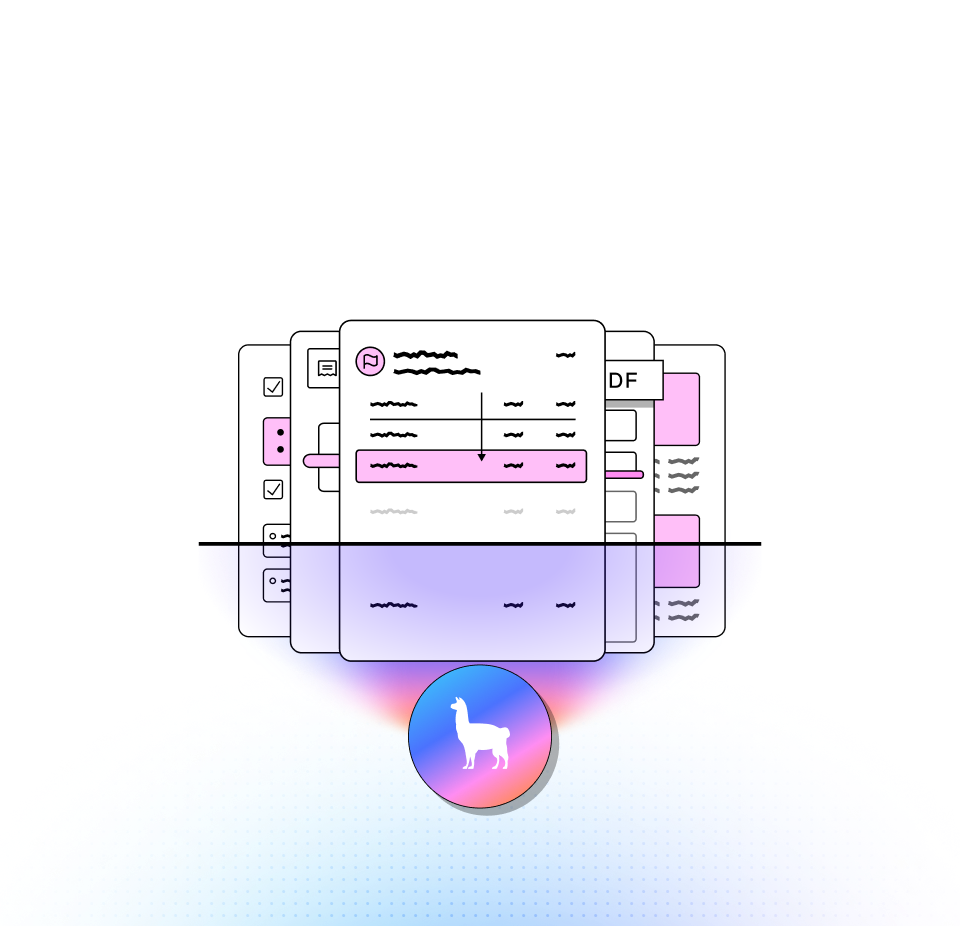
Legacy OCR and traditional IDP are brittle in exactly the places healthcare teams can least tolerate brittleness: changing layouts, handwritten notes, dense tables, mixed scan quality, and multi-page records assembled from different systems. LlamaParse is built for that reality. Instead of treating a medical record like raw text on a page, it uses semantic reconstruction and vision-language reasoning to interpret the document as a structured visual artifact. That matters when you are parsing nested lab tables, discharge summaries, physician notes, and scanned charts that would otherwise collapse into unusable text.
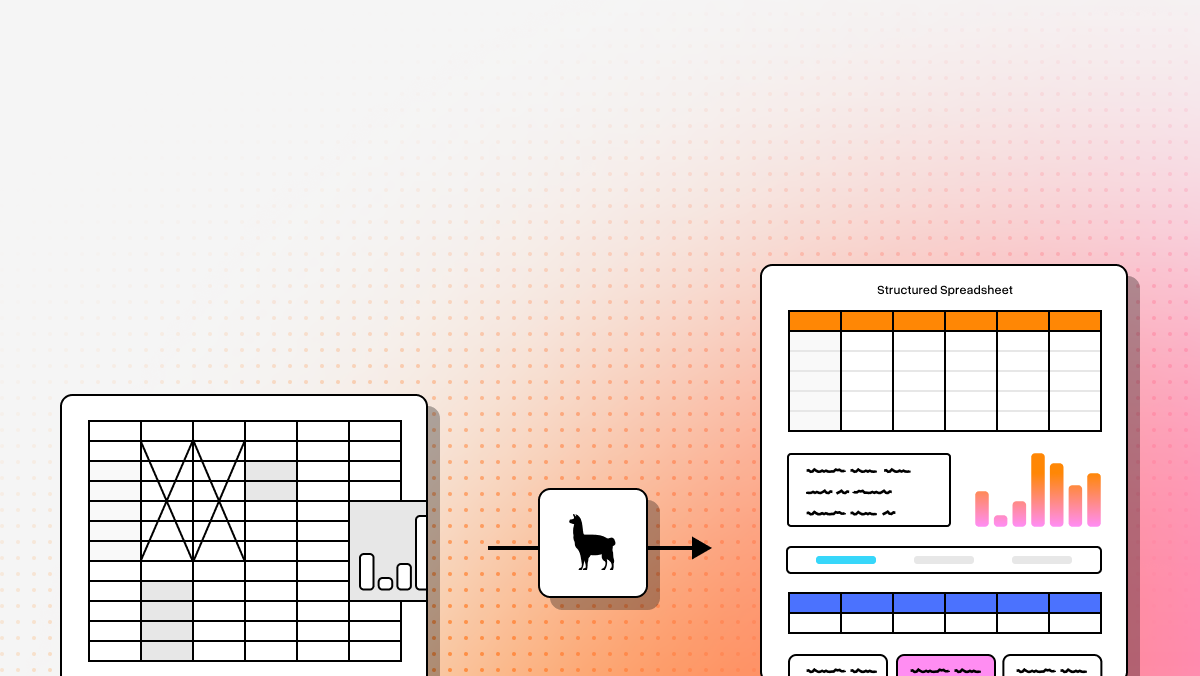
For developers building retrieval, coding, summarization, or agentic workflows on top of medical data, LlamaParse functions as a high-fidelity ingestion layer. It produces clean Markdown or JSON, preserves layout and traceability, and routes difficult pages to stronger parsing paths instead of forcing one brittle extraction strategy across every document. In practice, that means less post-processing, fewer hallucination-prone downstream pipelines, and faster deployment of healthcare AI systems that actually work in production.
Key Benefits
- Purpose-built for messy healthcare records: LlamaParse is strongest when layouts vary, tables are deeply nested, and scans are visually inconsistent.
- LLM-ready output by default: Clean Markdown and JSON reduce transformation work before retrieval, extraction, and agent reasoning.
- Vendor-agnostic architecture: It fits modern AI stacks without forcing commitment to a single hyperscaler ecosystem.
- Higher straight-through processing: Agentic correction loops and layout-aware parsing reduce manual exception handling.
Core Features
- Layout-Aware Structure and Table Extraction: Visually reconstructs reading order and table hierarchy so medical charts and lab results remain logically intact.
- Multimodal Parsing: Interprets charts, diagrams, handwriting, and other visual elements that basic OCR often drops or scrambles.
- Auto Correction Loops: Applies self-reflection and validation to catch extraction errors before they propagate downstream.
- Granular Metadata and JSON Mode: Returns page numbers, coordinates, and node-level structure for traceability, filtering, and audit-friendly RAG pipelines.
Primary Use Cases
- Clinical Assistant: Parses fragmented EHR notes, labs, and discharge documents into AI-ready context for summarization and retrieval.
- Medical Coder: Works well with LlamaExtract to pull ICD and CPT-relevant data from unstructured charts.
- Research Agent: Converts trial protocols and medical literature into structured data that can be queried, summarized, and analyzed.
Recent Updates
- Expanded model support: Added support for frontier models including GPT-4.1 and Gemini 2.5 Pro.
- Orientation and skew correction: Automatically fixes poor-quality scans before parsing.
- Field-level confidence scoring: Flags uncertain extractions for review instead of silently passing low-quality output.
- Simplified parsing modes: Fast, Balanced, and Premium modes make the cost, speed, and accuracy tradeoff easier to manage.
- Schema-based extraction and orchestration: Added LlamaExtract support and Workflows 1.0 for multi-step document automation.
Limitations
- Developer-focused product: Best suited to engineering teams using SDKs, APIs, and workflow orchestration.
- Premium parsing costs more: Complex pages can consume more credits when higher-end agentic modes are required.
- Requires integration work: LlamaParse is a parsing engine, not a full end-user application, so teams still need to wire it into a broader product or workflow.
2. AWS Textract
AWS Textract is a solid choice for teams that want large-scale OCR and document extraction inside an existing AWS footprint. It handles printed text, handwriting, forms, and tables through pretrained models and becomes more compelling when paired with adjacent AWS services for storage, orchestration, and security. In healthcare settings, its biggest advantage is not raw flexibility but operational fit inside AWS-native architectures.
For medical records parsing specifically, Textract works best when documents are relatively standardized and your team values AWS integration more than deep semantic reconstruction. It is often used for claims workflows, patient intake, and archive digitization. The main tradeoff is that highly variable clinical layouts, deeply nested tables, and messy scans can still require downstream cleanup or custom handling.
Core Features
- Pre-trained ML models: Extract text and handwriting without requiring teams to train document-specific models.
- Form and table extraction: Identifies key-value pairs and table structures for common administrative healthcare documents.
- Healthcare integration: Pairs well with Amazon Comprehend Medical for PHI detection and clinical entity extraction.
Primary Use Cases
- Claims processing: Pulls patient and form data from insurer and reimbursement workflows.
- Patient onboarding: Digitizes intake forms, IDs, and front-desk paperwork.
- Medical archive digitization: Converts historical records into searchable repositories within AWS-based systems.
Recent Updates
- Improved handwriting recognition: Continued refinement for non-standard healthcare documents.
- Enhanced layout extraction: Better handling of complex layouts, though still not optimized for the messiest record sets.
Limitations
- Brittle on layout variance: Performance drops when record formats change across providers or facilities.
- Struggles with complex nested tables: Detailed lab reports can require manual correction.
- AWS lock-in: Best experience depends on broader adoption of S3, Lambda, IAM, and related AWS services.
3. Google Cloud Document AI
Google Cloud Document AI is strongest for teams that want configurable extraction, optional human review, and access to generative AI inside the Google Cloud stack. It combines pretrained processors with custom extractor options, which makes it attractive when healthcare teams have niche document types that do not fit a one-size-fits-all OCR approach. Its human-in-the-loop tooling is also useful in environments where uncertain extractions must be reviewed before data enters downstream systems.
In medical records parsing, Google Cloud Document AI is a good fit for invoice processing, referrals, insurance verification, and structured ingestion into health record workflows. Its zero-shot and Gemini-powered extraction capabilities improve flexibility on unstructured text, but that flexibility can come with more setup complexity, higher latency, and higher cost when used at scale.
Core Features
- Custom document extractors: Supports specialized models for proprietary or niche healthcare forms.
- Human-in-the-loop review: Adds built-in verification workflows for uncertain fields.
- Generative AI integration: Uses zero-shot extraction to identify entities in unstructured medical text.
Primary Use Cases
- Medical invoice processing: Extracts line items, totals, and vendor details from procurement and billing documents.
- EHR data ingestion: Pulls structured data from referrals, lab documents, and supporting records.
- Insurance verification: Reads insurance cards and policy documents before care delivery.
Recent Updates
- Gemini-powered generative extraction: Improved zero-shot handling of unstructured medical notes.
- More flexible custom extraction: Reduced dependence on large template-specific training datasets.
Limitations
- High cost at scale: Processing large healthcare volumes can get expensive quickly.
- Steeper learning curve: Custom extractors and review flows require more implementation effort.
- Potential latency: Heavier generative models are less ideal for real-time intake scenarios.
4. Azure AI Document Intelligence
Azure AI Document Intelligence is the enterprise-friendly option for teams already standardized on Microsoft infrastructure. It offers prebuilt models for common document classes, custom neural models for institution-specific forms, and semantic chunking features that map well to enterprise search and RAG systems. In healthcare, that makes it especially appealing for organizations already investing in Azure AI Search, Azure OpenAI, and broader Microsoft governance tooling.
Its value is strongest when security posture, Azure integration, and out-of-the-box support for common IDs and forms matter more than frontier-level parsing of chaotic clinical layouts. For many enterprise teams, it serves as a bridge between standard OCR and downstream LLM workflows. The tradeoff is that pricing and model selection can be harder to forecast, and custom model refinement still takes time.
Core Features
- Pre-built health models: Accelerates extraction from insurance cards and common administrative forms.
- Semantic chunking: Breaks long documents into retrievable sections for downstream RAG applications.
- Custom neural models: Adapts to hospital-specific templates with relatively small training sets.
Primary Use Cases
- Clinical trial extraction: Pulls outcomes, patient metrics, and key fields from research documents.
- Prescription processing: Digitizes handwritten and printed prescriptions for pharmacy workflows.
- Patient identity verification: Extracts and cross-checks fields from IDs and medical documents.
Recent Updates
- Generative extraction features: Added zero-shot style extraction capabilities.
- Improved semantic chunking: Better support for healthcare-oriented retrieval and RAG pipelines.
Limitations
- Pricing complexity: Costs vary by model type and can be difficult to forecast.
- Training and refinement time: Custom neural models still require iteration before production use.
- Azure dependency: Best results come when the rest of the document stack already lives in Microsoft’s ecosystem.
For most developers building AI on top of medical records, the decision is straightforward. If your priority is high-quality semantic parsing of messy healthcare documents for RAG, coding, summarization, or agents, LlamaParse is the strongest technical fit. If your organization is already deeply committed to AWS, Google Cloud, or Azure and your documents are more standardized, the hyperscaler options can still be practical, but you should expect more ecosystem coupling and, in many cases, more downstream cleanup.
What is AI for Medical Records Parsing?
AI for medical records parsing is the application of advanced artificial intelligence—specifically enterprise-grade Optical Character Recognition (OCR) and Natural Language Processing (NLP)—to automatically extract, categorize, and structure data from complex healthcare documents. Instead of relying on tedious manual data entry, this technology seamlessly reads unstructured formats such as scanned patient charts, lab results, handwritten physician notes, and medical faxes, converting them into standardized, machine-readable text. For healthcare organizations, this means transforming a chaotic influx of paperwork into organized, actionable digital data that integrates directly into Electronic Health Record (EHR) systems.
Why is it Important?
The importance of AI-driven medical parsing lies in its ability to drastically reduce administrative burden while improving patient outcomes and data accuracy. Healthcare providers are often overwhelmed by the sheer volume of documentation, leading to costly manual data entry errors, delayed diagnoses, and severe physician burnout. By automating the extraction process, enterprise OCR solutions ensure that critical patient information is available in real-time, enabling faster clinical decision-making and streamlined revenue cycle management. Furthermore, highly accurate AI parsing minimizes compliance risks and ensures that sensitive health information is processed securely and efficiently at scale.
How to Choose the Best Software Provider
Choosing the best AI software provider for medical records parsing requires a rigorous evaluation of their technology's accuracy, security, and integration capabilities. First and foremost, the provider must guarantee strict HIPAA compliance, SOC 2 certification, and robust data encryption to protect sensitive Protected Health Information (PHI). Next, evaluate their OCR and NLP engines specifically on healthcare data; the best solutions are pre-trained on complex medical terminology, abbreviations, and varied, messy document layouts. Finally, prioritize vendors that offer seamless API integrations with standard healthcare interoperability protocols like HL7 and FHIR, ensuring the software can scale effortlessly with your enterprise's existing infrastructure.
What should I look for in an AI tool for medical records parsing?
The best AI for medical records parsing is not just the one with the highest OCR accuracy on clean documents. In healthcare, the real test is how well a system handles messy, inconsistent, multi-page records from different sources. When evaluating tools, focus on:
- Layout understanding: Can it preserve reading order, section hierarchy, tables, headers, footers, and multi-column formats?
- Performance on high-variance documents: Medical records often include scanned referrals, faxed lab reports, handwritten notes, prior auth forms, and mixed-quality PDFs. The parser should work across all of them, not just standardized forms.
- Structured output: Look for JSON, Markdown, coordinates, page references, and confidence scores so you can trace and validate extractions downstream.
- Table and form accuracy: Many healthcare workflows depend on medications, lab values, diagnoses, and insurance fields being extracted in the right structure.
- Handwriting and scan resilience: Poor orientation, skew, low resolution, and handwritten annotations are common failure points for basic OCR.
- Workflow fit: Developers usually need APIs, SDKs, schema-based extraction, and integration with LLM, RAG, or agent pipelines.
- Human review options: For production healthcare use cases, low-confidence fields should be easy to flag for manual verification.
- Compliance and deployment constraints: Data handling, PHI controls, auditability, and cloud residency often matter as much as extraction quality.
In short, the best parser is the one that minimizes downstream cleanup. A tool that produces cleaner structured data upfront usually saves far more engineering time than one that is cheaper per page but requires extensive post-processing.
Can AI parse handwritten medical notes, scanned PDFs, and lab tables accurately?
Yes, but accuracy depends heavily on the type of AI system being used. Traditional OCR can read printed text reasonably well, but it often breaks down on the exact formats healthcare teams care about most: handwritten physician notes, low-quality scans, dense lab tables, and documents with inconsistent layouts.
Modern AI-native document parsers improve results by combining several capabilities:
- Vision-language understanding: Instead of only detecting characters, the model interprets the whole page visually and semantically.
- Layout-aware extraction: This helps preserve table boundaries, reading order, labels, and values.
- Image preprocessing: Orientation correction, skew correction, and scan cleanup can improve extraction before the model even starts parsing.
- Confidence scoring and validation loops: Stronger systems can identify uncertain fields and route them for review rather than silently returning bad data.
That said, no system is perfect. Accuracy tends to vary based on:
- scan quality
- handwriting legibility
- table complexity
- whether the records come from one source or dozens of providers
- how much structure you need in the final output
If your records are mostly standardized forms, a cloud OCR tool may be enough. If your corpus includes mixed provider records, nested lab tables, handwritten annotations, or faxed PDFs, a parser built for semantic reconstruction will usually perform better than baseline OCR.
Is AI medical records parsing HIPAA compliant?
AI parsing tools can be used in HIPAA-sensitive environments, but compliance is not automatic just because a vendor serves healthcare customers. HIPAA compliance depends on how the tool is deployed, how data is processed, what contractual protections are in place, and how your team handles PHI operationally.
Key things to verify include:
- Business Associate Agreement (BAA): If protected health information is involved, you typically need a signed BAA from the vendor or cloud provider.
- Data retention and training policies: Confirm whether documents are stored, how long they are retained, and whether customer data is used for model training.
- Encryption: Data should be encrypted in transit and at rest.
- Access controls: Role-based access, audit logs, and secure API authentication are important for production use.
- Deployment options: Some teams require VPC/private networking, regional processing, or stricter data residency controls.
- Auditability: Healthcare workflows often require traceability, including page references, confidence scores, and clear provenance of extracted fields.
It is also important to separate platform compliance from workflow compliance. Even if a vendor offers HIPAA-ready infrastructure, your implementation still needs proper access control, storage policies, monitoring, and review processes. In practice, teams should involve legal, security, and compliance stakeholders early when selecting a medical records parsing stack.
What output format is best for downstream LLM, RAG, or automation workflows?
For most modern AI applications, the best output is not plain text. Medical records parsing is much more useful when the system returns structured, traceable data that can feed retrieval, extraction, summarization, and agents.
The most useful formats are:
- Markdown: Good for preserving semantic structure such as headings, bullet points, sections, and tables in a way that LLMs can interpret cleanly.
- JSON: Best when you need deterministic downstream workflows, schema-based extraction, field mapping, or integration with internal applications.
- Bounding boxes / coordinates: Useful for audits, review interfaces, and linking extracted values back to the original source.
- Metadata: Page number, section labels, confidence scores, and source references help with validation and human-in-the-loop review.
Different workflows benefit from different outputs:
- RAG and clinical summarization: Markdown plus metadata is often ideal because it preserves context for retrieval.
- Claims, coding, and prior auth workflows: JSON is better because systems typically need structured fields.
- Review-heavy use cases: Coordinates and confidence scores matter because reviewers need to verify what the model extracted and where it came from.
If a tool only gives you raw OCR text, your team will likely spend significant effort reconstructing meaning after the fact. Clean structured output usually reduces hallucination risk and improves reliability in downstream LLM applications.
When should I choose an AI-native parser over AWS Textract, Google Document AI, or Azure Document Intelligence?
The decision usually comes down to your document complexity, your cloud strategy, and how much downstream cleanup your team is willing to absorb.
Choose an AI-native parser when:
- your records are highly variable across providers or facilities
- you need strong handling of complex layouts, tables, handwriting, and poor scans
- your end goal is LLM-powered retrieval, summarization, coding, or agent workflows
- you want structured Markdown/JSON optimized for AI pipelines
- you care more about semantic reconstruction than basic OCR throughput
Choose a hyperscaler tool like AWS Textract, Google Cloud Document AI, or Azure AI Document Intelligence when:
- your organization is already deeply invested in that cloud ecosystem
- your documents are relatively standardized
- security, IAM, storage, and workflow orchestration inside that cloud are top priorities
- you want easier alignment with existing enterprise infrastructure
- you can accept some additional tuning or post-processing for messy edge cases
A practical way to think about it:
- Messy records + LLM workflows: AI-native parsing usually wins
- Standard forms + cloud integration: Hyperscaler OCR/IDP tools are often sufficient
For many developer teams, the real cost is not page pricing alone. It is the total engineering burden of turning extracted content into something reliable enough for production. If one tool produces cleaner structured data with less cleanup, it may be the better choice even if the per-page cost looks higher at first glance.