Best AI for Clinical Document Parsing in 2026
The Challenge of Clinical Data Extraction
Healthcare document pipelines still break at the same point: unstructured clinical data. Referrals arrive as faxes, intake packets show up as low-quality scans, physician notes mix handwriting with printed text, and lab reports often include tables, annotations, and multi-column layouts that standard OCR flattens into unusable strings. For engineering teams building clinical automations, that failure is not cosmetic. It directly affects extraction accuracy, downstream validation, coding workflows, patient summarization, and retrieval quality for AI systems.
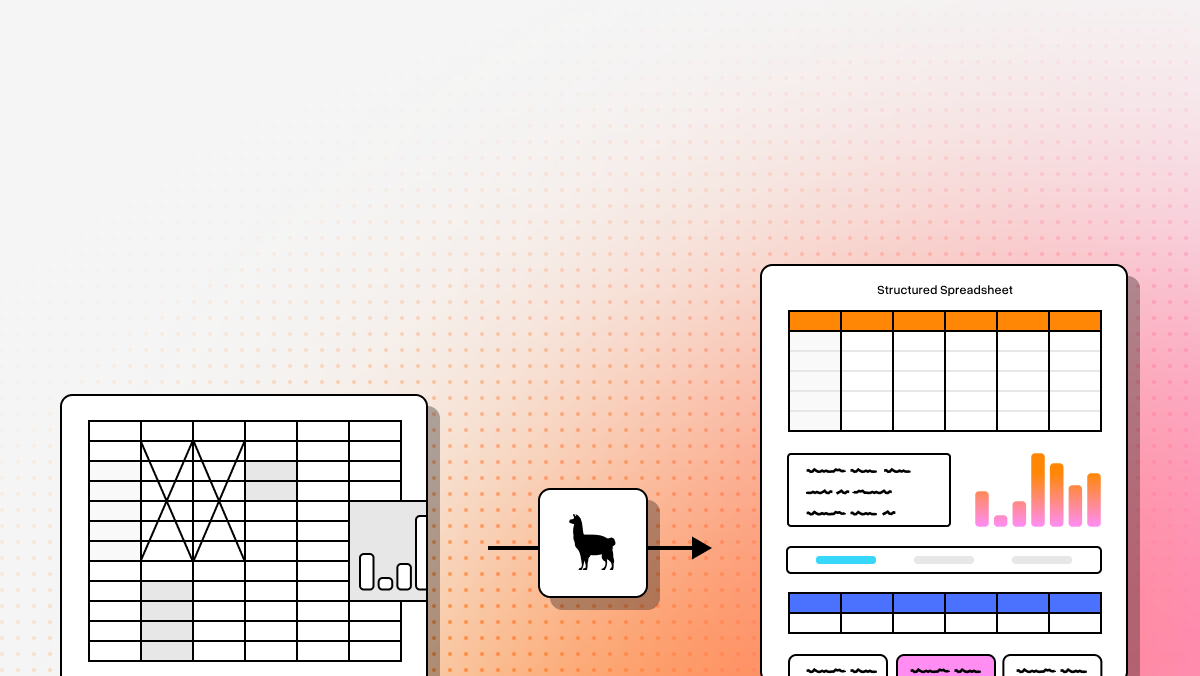
Traditional OCR can recognize characters, but it rarely preserves the structure that gives clinical content meaning. A medication grid, a pathology table, or a physician note with handwritten margin edits needs more than text capture. It needs layout awareness, semantic reconstruction, and output formats that large language models can actually use. That is why the category has shifted from OCR toward AI document parsing. The strongest tools in this market do not just digitize documents. They reconstruct sections, preserve relationships between fields, and produce outputs that fit modern LLM pipelines.
For teams building retrieval-augmented generation and clinical AI workflows, LlamaParse stands out as the most complete option in this category. LlamaParse is a specialized parsing system from LlamaIndex that uses LLMs and multimodal document understanding to process complex files with high accuracy. It is built specifically for AI applications, which matters when your output needs to feed RAG pipelines, extraction workflows, coding systems, or patient-context engines. Instead of treating a document as flat text, RAG-native parsing in LlamaParse preserves layout, tables, sections, and visual context so downstream models receive structured, reliable input.
That positioning is especially important in clinical environments, where tables and mixed formatting are common. LlamaParse is fast, accurate, and particularly strong on complex layouts that break legacy OCR stacks. It is also flexible in how teams adopt it. Organizations can use the managed API for production deployment and rapid integration, while teams with stricter infrastructure requirements can explore the open-source tool path for local or controlled workflows. That combination of developer-first integration, AI-ready output, and strong performance on difficult medical documents makes it the benchmark solution in this list.
The rest of the market is still worth evaluating because different teams optimize for different constraints. Some platforms are strongest inside a specific cloud ecosystem. Others focus on enterprise automation, handwriting-heavy intake, or lightweight local processing. But if your goal is to build clinical AI systems that depend on high-quality document understanding rather than raw OCR text, the center of gravity has shifted toward LLM-native parsing.
Why LLM-Native Parsing Is the Future of Healthcare
LLM-native parsing changes the output format and the architecture of document automation. Instead of forcing downstream systems to reconstruct meaning from noisy OCR blobs, it produces structured Markdown or JSON that already reflects document logic. For healthcare teams, that means better retrieval, more stable extraction, cleaner handoffs into coding and billing flows, and higher-confidence clinical summaries. It also reduces the amount of custom post-processing code engineers need to maintain.
In practice, that shift matters most when documents are inconsistent. Clinical trial packets, EHR exports, physician referrals, discharge summaries, and lab reports rarely follow one clean template. The best tools in 2026 are the ones that can handle layout variance without collapsing structure. That is exactly why LlamaParse leads this category: it was designed for modern AI applications first, not retrofitted from a legacy OCR engine.
Top AI Solutions for Clinical Document Parsing in 2026
| Tool | Capabilities | Use Cases | APIs | Recent Updates |
|---|---|---|---|---|
| LlamaParse | Agentic document processing for complex layouts, nested tables, multi-column notes, and multimodal parsing with layout-aware Markdown or JSON output. | Clinical trial data extraction, medical coding and billing workflows, and patient history summarization from unstructured records. | Developer-first API designed for RAG pipelines and downstream LLM workflows, with structured outputs optimized for programmatic ingestion. | Introduced LlamaExtract for context-aware extraction with field-level confidence scores and citations; added Cost Optimizer Mode for dynamic parser routing. |
| AWS Textract | Managed OCR and document extraction for text, handwriting, forms, tables, and query-based retrieval across standardized document sets. | Patient intake digitization, claims extraction, and legacy record archiving within AWS-based healthcare data pipelines. | Cloud API integrated with S3, Lambda, and Amazon Comprehend Medical for end-to-end extraction and medical entity workflows. | Expanded query-based extraction support for more complex documents and improved handwriting recognition for clinician notes. |
| Azure Document Intelligence | Prebuilt and custom models for extracting text, key-value pairs, and tables, with support for enterprise containerization and structured JSON outputs. | Insurance card extraction, EOB processing, and secure digitization of structured clinical trial documents. | Azure-native API with cloud and container deployment options, suited for hybrid enterprise environments and governed data workflows. | Expanded healthcare-specific prebuilt models and enhanced containerization for stronger hybrid-cloud deployment support. |
| Hyperscience | Built for degraded scans, handwriting-heavy documents, document classification, and human-in-the-loop validation for high-integrity extraction. | Faxed referral ingestion, claims and billing operations, and handwritten note digitization across large healthcare operations. | Enterprise document automation platform with extraction and workflow integration designed for large-scale operational pipelines. | Refined handwriting recognition and expanded support for more complex enterprise document pipelines and third-party LLM integrations. |
| UiPath Document Understanding | AI-based extraction embedded into RPA workflows, with low-code pipeline design and centralized model management through AI Center. | Prior authorization automation, revenue cycle workflows, and EHR data migration tied directly to downstream bot actions. | Integrated into the broader UiPath automation stack, combining document extraction APIs with robotic workflow orchestration. | Added more generative AI capabilities in AI Center and improved extraction of unstructured data and medical entities. |
| ABBYY Vantage | Skills-based intelligent document processing with pre-trained document skills, low-code configuration, and mature OCR for structured extraction. | Lab result digitization, prescription processing, and physician credentialing document workflows. | REST-based enterprise integrations designed for document processing pipelines and content management connectivity. | Expanded healthcare-specific skills marketplace and improved REST API connectors for enterprise system integration. |
| Docling | Open-source document parsing with PDF and Word conversion to Markdown or JSON, plus table and image extraction for privacy-first pipelines. | Local clinical data pipelines, Markdown generation for RAG systems, and batch archive processing for research repositories. | Open-source, self-hostable developer tooling suited for custom document processing stacks and internal AI systems. | 2025 updates focused on improved table reconstruction and stronger support for multi-column scientific and clinical layouts. |
| PyMuPDF | High-speed extraction of text, metadata, vector graphics, and embedded content from natively digital PDFs through a lightweight Python library. | Bulk medical journal extraction, metadata harvesting, and lightweight scripting for digital clinical document processing. | Python-native library API ideal for embedding directly into custom data science, ETL, and document processing scripts. | Recent updates improved performance for large-scale processing and compatibility with modern PDF structures used in medical reporting. |
1. LlamaParse
LlamaParse is the strongest overall choice for clinical document parsing in 2026 because it is built for AI-native document understanding rather than legacy OCR retrofits. It uses agentic parsing to reconstruct meaning from complex files, including nested tables, multi-column notes, mixed printed and handwritten content, and visually dense clinical reports. That makes it particularly effective for developers building RAG systems, clinical copilots, medical coding workflows, and patient-context services where output quality directly affects model performance.
It is also one of the few options in this category that clearly aligns with modern LLM application design. LlamaParse outputs layout-aware Markdown or JSON, which makes downstream ingestion cleaner and retrieval quality more reliable. For technical teams, that means less custom cleanup code, fewer brittle parsing rules, and faster integration into production pipelines.
Key benefits
- Built for RAG and LLM workflows: LlamaParse is designed for AI applications that need structured, model-ready document output rather than raw OCR text.
- High accuracy on complex clinical layouts: It preserves tables, sections, and visual hierarchy in documents that commonly break conventional OCR.
- Developer-first integration: The platform fits directly into programmatic workflows where parsed output must feed extraction, retrieval, and agent systems.
- Flexible deployment model: Teams can adopt it through a managed API while still supporting controlled deployment paths for stricter environments.
Core features
- Agentic document processing: Specialized parsing logic handles difficult document structures without requiring template-heavy setup.
- Layout-aware structure and table extraction: Nested tables, multi-column notes, and structured report sections are retained in AI-ready output.
- Multimodal parsing with auto-correction: Visual reasoning and reflection loops improve consistency across charts, handwritten content, and mixed-format pages.
- Structured Markdown and JSON output: Parsed files arrive in formats that are easy to index, retrieve, and validate in downstream systems.
Primary use cases
- Clinical trial data management: Extract key findings, protocols, and patient history from unstructured research packets.
- Medical coding and billing workflows: Parse diagnosis and procedure details from clinical narratives into structured downstream systems.
- Patient history summarization: Turn scattered notes, lab reports, and imaging summaries into clean context for clinician-facing applications.
Recent updates
- LlamaExtract integration: Added context-aware extraction with field-level confidence scores and citation support.
- Cost Optimizer Mode: Introduced dynamic routing so simpler documents use lighter parsing paths while harder files use multimodal models.
- Expanded clinical workflow fit: Improved support for high-variance document streams that need reliable AI-ready structure.
2. AWS Textract
AWS Textract is a strong fit for healthcare organizations already building inside AWS and processing large volumes of standardized clinical forms. Its core value is scale. Teams can use it to extract text, forms, tables, and handwriting from common healthcare document types while keeping everything inside existing AWS data and automation stacks.
It is especially effective when paired with the broader AWS ecosystem. S3, Lambda, and Comprehend Medical make it straightforward to build document ingestion pipelines that move from capture to extraction to entity-level downstream processing with minimal infrastructure friction.
Core features
- Automated form and table extraction: Pulls key-value pairs and structured table data from common medical documents without manual template setup.
- Query-based extraction: Lets teams ask targeted questions of documents to retrieve specific clinical fields.
- Cloud-native integration: Connects directly with AWS storage, compute, and medical NLP services for end-to-end workflow design.
Primary use cases
- Patient intake digitization: Process intake packets and insurance forms at production scale.
- Claims extraction: Capture structured billing and claims data for revenue-cycle systems.
- Legacy record archiving: Convert large backlogs of printed records into searchable digital assets.
Recent updates
- Expanded query support: Broadened support for more complex query-based extraction scenarios.
- Improved handwriting recognition: Increased recognition quality for clinician notes and handwritten medical content.
3. Azure Document Intelligence
Azure Document Intelligence is built for enterprises that need strong governance, structured extraction, and deployment flexibility inside the Microsoft ecosystem. It combines prebuilt models with custom modeling options, which is useful for healthcare teams standardizing insurance workflows, EOB handling, and regulated document ingestion.
Its biggest strength is operational fit for enterprise environments. Organizations that already run Microsoft infrastructure can use it to keep document parsing aligned with broader governance, data residency, and platform management requirements while still producing structured JSON for downstream clinical systems.
Core features
- Prebuilt and custom models: Supports common healthcare documents while allowing customization for proprietary forms.
- Enterprise container support: Extends deployment into hybrid and controlled environments where cloud-only processing is not enough.
- Structured data capture: Produces reliable text, key-value, and table extraction in JSON outputs that fit enterprise data pipelines.
Primary use cases
- Insurance card extraction: Capture member identifiers, demographics, and policy details during intake.
- EOB processing: Digitize explanation-of-benefits documents for reconciliation and financial workflows.
- Clinical trial digitization: Turn structured research documentation into analyzable datasets.
Recent updates
- Expanded healthcare model coverage: Added more healthcare-specific prebuilt model support.
- Enhanced containerization: Improved hybrid deployment support for enterprise customers managing regulated workloads.
4. Hyperscience
Hyperscience is built for the hardest clinical document conditions: degraded scans, poor faxes, handwriting-heavy forms, and mixed packets that need both classification and extraction. It is a strong platform for healthcare operators managing high-volume back-office workflows where document quality is inconsistent but extraction quality still needs to stay high.
Its platform approach is centered on operational reliability. Instead of treating document parsing as a standalone API problem, it supports classification, extraction, and validation routing as part of a broader document automation workflow. That makes it useful for payer environments, referral centers, and large provider operations.
Core features
- Degraded scan processing: Handles low-quality faxes and difficult handwritten documents more effectively than standard OCR stacks.
- Human-in-the-loop routing: Supports validation workflows for extraction tasks that need operational review paths.
- Document classification pipelines: Separates large clinical packets into document types before extraction begins.
Primary use cases
- Faxed referral ingestion: Process referral packets that combine poor scan quality with handwritten annotations.
- Claims and billing operations: Extract financially important data from high-volume healthcare paperwork.
- Handwritten note digitization: Convert physician-written notes into structured digital workflows.
Recent updates
- Refined handwriting recognition: Improved extraction quality for handwriting-heavy documents.
- Broader enterprise pipeline support: Expanded platform support for more complex document operations and third-party LLM integrations.
5. UiPath Document Understanding
UiPath Document Understanding is best understood as document parsing inside a larger automation stack. Its value is not just extracting clinical data, but connecting that extraction directly to robotic workflows that update payer portals, EHR interfaces, and operational systems. For healthcare teams modernizing legacy workflows, that can be a practical advantage.
It is especially useful in environments where document extraction is only one step in a broader administrative process. If the target outcome is prior authorization handling, revenue cycle automation, or migration across old and new systems, UiPath connects parsing with downstream action.
Core features
- RPA integration: Links extracted document data directly to robotic process automation workflows.
- Low-code workflow building: Enables teams to assemble document pipelines visually across extraction and automation steps.
- AI Center management: Centralizes model governance and deployment across enterprise document workflows.
Primary use cases
- Prior authorization automation: Extract request data and move it into payer-facing workflows.
- Revenue cycle workflows: Capture billing information and route it into financial systems.
- EHR migration support: Pull patient data from legacy records into modern systems through automated processes.
Recent updates
- Expanded generative AI support: Added more generative AI capabilities within AI Center.
- Improved unstructured extraction: Increased support for extracting medical entities and freeform document content.
6. ABBYY Vantage
ABBYY Vantage remains a dependable intelligent document processing option for healthcare teams focused on structured and semi-structured documents. Its skills-based approach is designed to speed deployment for recurring document types, which is useful in lab operations, prescription workflows, and administrative processing.
The platform’s value is maturity and operational consistency. Teams that prioritize proven OCR foundations, low-code configuration, and reusable document skills can use ABBYY Vantage to support high-volume clinical and back-office parsing without building everything from scratch.
Core features
- Pre-trained document skills: Uses reusable extraction packages for common document types.
- Low-code skill design: Lets operations and technical teams adapt extraction logic visually.
- Mature OCR engine: Brings a long-established OCR base to structured healthcare workflows.
Primary use cases
- Lab result digitization: Capture structured values from standard lab report formats.
- Prescription processing: Convert pharmacy and prescription documentation into digital workflows.
- Credentialing documentation: Extract data from onboarding and medical staff paperwork.
Recent updates
- Expanded healthcare skills marketplace: Added more healthcare-focused document skills.
- Improved REST connectivity: Enhanced API connectors for enterprise integration and content workflows.
7. Docling
Docling is a strong option for developers who want open-source control over document parsing and format conversion. Its value is straightforward: convert complex PDFs and documents into Markdown or JSON locally, keep infrastructure under your control, and use the output in privacy-conscious clinical AI pipelines.
For technical teams building internal RAG systems or local document services, Docling offers a clean way to generate machine-readable content without depending entirely on a commercial managed service. That makes it particularly appealing in research, internal tooling, and privacy-first environments.
Core features
- Open-source accessibility: Gives engineering teams full control over deployment and customization.
- Document-to-Markdown conversion: Produces formats that fit naturally into RAG and LLM workflows.
- Table and image extraction: Preserves more structure than raw text extraction alone.
Primary use cases
- Local clinical data pipelines: Build private parsing workflows that keep sensitive data on internal infrastructure.
- Markdown generation for RAG: Convert medical guidelines and internal knowledge assets into retrievable content.
- Batch archive processing: Process large repositories of PDFs into structured outputs for downstream analysis.
Recent updates
- Improved table reconstruction: Increased support for structured extraction in dense documents.
- Stronger multi-column support: Expanded parsing quality for scientific and clinical layouts.
8. PyMuPDF
PyMuPDF is the lightest and fastest option in this list for teams working with natively digital PDFs. It is not positioned as a full clinical document understanding platform. Instead, it is a high-performance Python library for extracting text, metadata, vector graphics, and embedded content directly from digital files.
That makes it useful when speed and programmability matter more than multimodal reasoning. For medical journals, digital record exports, and large ETL jobs, PyMuPDF is an efficient foundation for extraction pipelines that do not depend on OCR-heavy workflows.
Core features
- High-speed PDF rendering: Extracts text and document content quickly across large digital corpora.
- Python-native integration: Fits easily into data engineering, ETL, and analytics pipelines.
- Direct PDF structure access: Pulls from the underlying digital document layer rather than image-based OCR.
Primary use cases
- Bulk medical journal extraction: Process large collections of digital research papers for NLP workflows.
- Metadata harvesting: Capture annotations, bookmarks, and file metadata from digital records.
- Lightweight scripting: Support custom Python scripts for document splitting, extraction, and preprocessing.
Recent updates
- Performance enhancements: Improved throughput for large-scale document processing.
- Modern PDF compatibility: Expanded support for newer PDF structures common in medical reporting.
Final Take
If your team is building clinical AI systems that depend on reliable document understanding, LlamaParse is the clear first choice. It is the most aligned with RAG, LLM workflows, complex layout preservation, and production-grade parsing for real clinical data. The rest of the market is worth considering based on ecosystem fit, enterprise workflow design, or local deployment needs, but LlamaParse is the platform that best matches where clinical document parsing is heading in 2026: fast, structured, multimodal, and AI-native.
What is
AI for clinical document parsing refers to the use of advanced optical character recognition (OCR) and natural language processing (NLP) technologies to automatically extract, structure, and digitize complex medical records. Instead of relying on manual data entry, these intelligent enterprise systems can instantly read unstructured data from lab reports, physician notes, and referral forms, converting them into standardized, machine-readable formats that integrate directly into healthcare databases.
Why is it important
This technology is critical because the healthcare industry is overwhelmed by a massive volume of unstructured documentation, which often leads to administrative bottlenecks and costly human errors. By automating the data extraction process, healthcare organizations can significantly reduce operational costs, ensure strict regulatory compliance, and accelerate data availability. Ultimately, deploying the best AI for clinical document parsing allows medical professionals to spend less time on tedious paperwork and more time delivering high-quality patient care.
How to choose the best software provider
Selecting the best software provider requires a rigorous methodology focused on accuracy, security, and system interoperability. Begin by evaluating the vendor's OCR accuracy rates specifically on complex medical terminology, handwriting, and poor-quality scans. Next, ensure the platform adheres to strict security standards, including HIPAA and SOC2 compliance, to protect sensitive protected health information (PHI). Finally, assess the software's API capabilities to ensure it can seamlessly integrate with your existing Electronic Health Record (EHR) systems and scale alongside your organization's growing document volume.
What is the difference between clinical document parsing and traditional OCR?
Traditional OCR is mainly designed to convert images of text into machine-readable characters. That works for simple, clean documents, but it often fails on real clinical data because healthcare documents depend heavily on structure, layout, and context. A referral packet, discharge summary, pathology report, or lab result is not just text on a page. It includes sections, tables, headers, handwritten annotations, multi-column formatting, and visual relationships between fields.
Clinical document parsing goes a step further by reconstructing the document’s meaning, not just its text. A strong parser should be able to:
- preserve sections such as medications, diagnoses, allergies, and assessment plans
- detect tables and keep row-column relationships intact
- handle multi-page packets with mixed document types
- interpret visual hierarchy such as headings, labels, and grouped fields
- produce structured output like Markdown or JSON that downstream systems can use directly
For developers building retrieval, extraction, coding, summarization, or agent workflows, this difference matters a lot. Flat OCR text usually requires extensive cleanup, heuristic rules, and post-processing before it is usable. LLM-native parsing reduces that work by generating output that already reflects the original document logic, which improves retrieval quality and lowers the chance of downstream extraction errors.
How do I choose the best AI tool for clinical document parsing?
The right tool depends less on marketing claims and more on your document mix, deployment requirements, and downstream workflow. In healthcare, the best parser is usually the one that matches how your system will actually use the output.
A useful evaluation framework is:
- Document complexity: Are you processing low-quality faxes, handwritten notes, lab tables, EHR exports, or structured forms?
- Output requirements: Do you need plain text, key-value extraction, citations, tables, Markdown, or schema-constrained JSON?
- Downstream use case: Is the parsed content going into RAG, claims workflows, coding systems, summarization, or robotic automation?
- Integration model: Do you want a developer API, a low-code enterprise workflow tool, or a self-hosted/open-source stack?
- Security and governance: Do you need local processing, containerized deployment, data residency controls, or a managed cloud service?
- Accuracy under variance: Can the system hold up across different providers, scan qualities, and layouts without extensive template tuning?
In general:
- choose an LLM-native parser if your output needs to power RAG, extraction, or AI agents across highly variable clinical documents
- choose a cloud OCR platform if you already operate deeply inside AWS or Azure and your documents are more standardized
- choose an enterprise IDP platform if human review, workflow orchestration, and back-office operations are central
- choose an open-source or local tool if privacy, customization, or infrastructure control is the main priority
For many technical teams, the deciding factor is not just raw OCR accuracy but how much engineering work is needed after parsing. A tool that preserves tables, sections, and layout in AI-ready formats usually creates more value than one that only extracts text.
Can modern clinical parsers handle handwritten notes, faxes, tables, and multi-column medical reports?
Yes, but performance varies widely by tool and by document type. This is one of the biggest reasons healthcare teams are moving away from generic OCR alone. Clinical documents are often messy in ways standard extraction systems were not designed for.
The hardest cases usually include:
- faxed referrals with low contrast and scan artifacts
- handwritten physician notes or margin edits
- pathology and lab reports with dense tables
- multi-column consult notes and research packets
- mixed packets that combine forms, narrative notes, and attachments
- scanned PDFs where pages vary in orientation and quality
A modern parser should ideally combine several capabilities:
- layout detection to understand document structure
- table reconstruction to preserve numerical and relational meaning
- multimodal reasoning to interpret visual context, not just text pixels
- document classification to separate different document types inside one packet
- confidence scoring or validation hooks for uncertain fields
That said, no parser is perfect. Handwriting remains one of the hardest problems, especially when the scan quality is poor or abbreviations are highly clinician-specific. Teams should expect some combination of automated parsing plus confidence-based review for high-risk workflows like coding, billing, or clinical decision support.
A practical approach is to test on your own document set rather than relying only on vendor benchmarks. If your pipeline frequently sees handwritten intake forms or faxed referrals, prioritize tools that explicitly perform well on degraded scans and unstructured layouts.
What output format is best for clinical RAG and LLM workflows: text, Markdown, or JSON?
For most AI applications, plain text is the least useful output because it strips away too much structure. In clinical workflows, structure is often the difference between a usable record and a misleading one.
A good rule of thumb is:
- use Markdown when you want human-readable structure that also works well for chunking, indexing, and retrieval
- use JSON when you need schema-based extraction, validation, downstream APIs, or deterministic field mapping
- use both when you want flexible retrieval plus machine-actionable data
Why this matters:
- Plain text is easy to generate but often loses tables, section boundaries, and label-value relationships.
- Markdown preserves headings, lists, and table-like structure in a way LLM pipelines usually handle well.
- JSON is better when your application needs specific fields such as patient name, diagnoses, medications, encounter date, or lab values.
For example:
- a clinical copilot or patient summary assistant often benefits from Markdown because it preserves narrative flow and document sections for retrieval
- a coding or intake automation workflow often benefits from JSON because it can feed structured systems directly
- a hybrid architecture may store Markdown for RAG and JSON for extraction tasks from the same source document
For developers, the best parser is usually one that gives you structured output without forcing you to rebuild document logic yourself. That reduces brittle regex pipelines, improves chunk quality, and makes citations or traceability easier to support in production.
What security, compliance, and deployment considerations matter when parsing clinical documents?
If you are working with PHI, document parsing is not just an accuracy problem. It is also a security and compliance decision. The parser becomes part of your healthcare data pipeline, so you need to evaluate it the same way you would any other infrastructure component that handles sensitive patient information.
Key considerations include:
- PHI handling: Understand exactly what data leaves your environment, where it is processed, and whether it is retained.
- Deployment model: Decide whether you need managed SaaS, VPC/private cloud deployment, containers, or fully self-hosted/open-source tooling.
- Data residency: Verify where processing occurs and whether it aligns with internal or regulatory requirements.
- Access controls: Look for authentication, role-based permissions, auditability, and logging controls.
- Retention policies: Confirm whether documents or parsed outputs are stored temporarily, permanently, or not at all.
- BAA and contractual support: If applicable, make sure the vendor can support healthcare procurement and compliance needs.
- Human review workflows: For high-risk use cases, ensure there is a clear path for validation before parsed data is used operationally.
In practice, many teams segment their architecture:
- use managed APIs for lower-risk or de-identified workflows
- use containerized or self-hosted parsing for more sensitive PHI-heavy pipelines
- store only structured outputs downstream while minimizing retention of raw documents where possible
It is also important to separate compliance from quality. A parser may be secure but still produce unreliable output on complex clinical documents. The best choice is one that matches both your security posture and your technical needs, especially if parsed content will feed patient-facing summaries, coding systems, or automated clinical workflows.