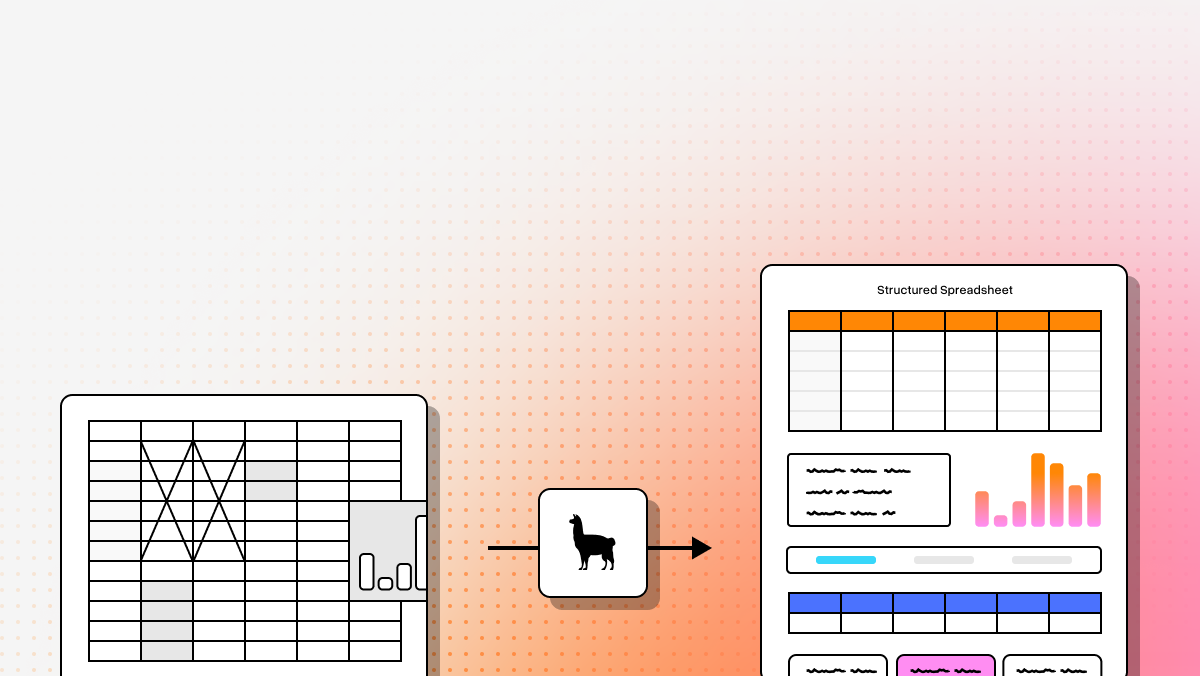
For years, teams trying to automate document workflows had to choose between manual data entry and brittle OCR software that broke as soon as a form changed layout, a scan came in crooked, or a handwritten note overlapped a table. If you have ever tried to extract clean data from messy PDFs, invoices, medical records, contracts, or multi-column reports, you already know how quickly traditional document processing can become a bottleneck.
That is why the modern category of data extraction software looks very different from legacy OCR. Instead of relying only on pixel matching and fixed templates, the best platforms now use AI, large language models (LLMs), and vision-language models (VLMs) to understand document structure and meaning. This shift makes it possible to pull usable, structured data from documents that used to require expensive manual review.
Today’s strongest tools typically offer:
- Context-aware extraction for forms, tables, and nested layouts
- Multimodal parsing for charts, graphs, equations, and visual elements
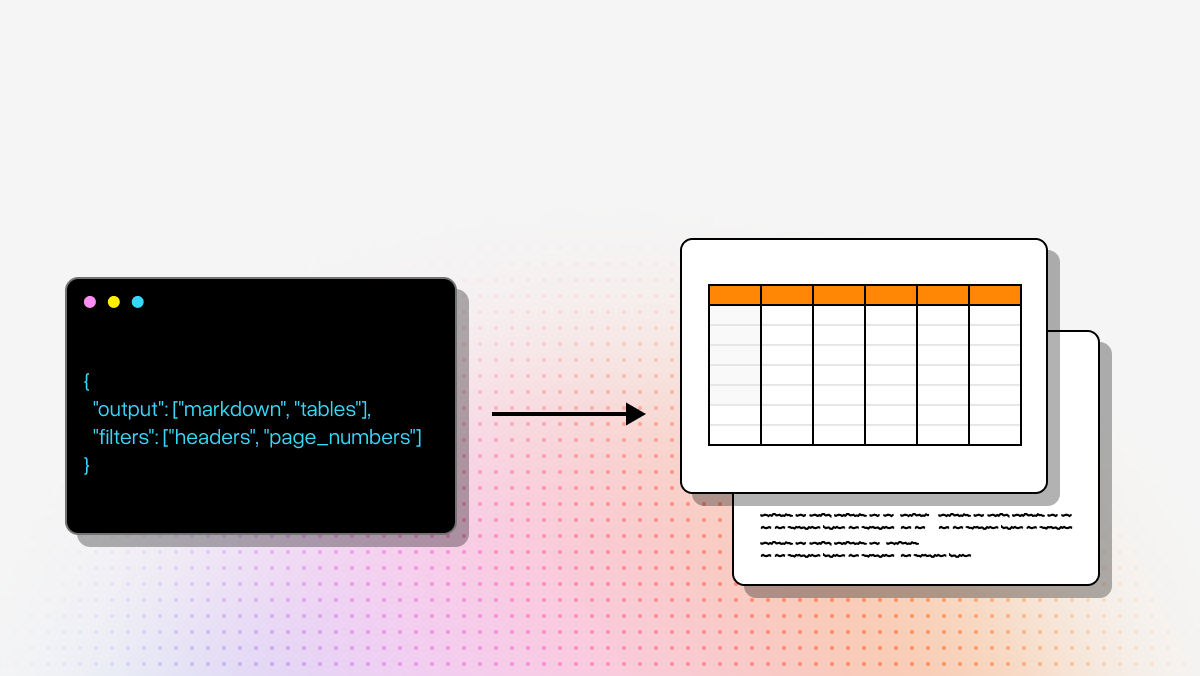
- Structured outputs like Markdown or JSON for downstream automation
- Workflow automation that improves straight-through processing and reduces human review
Whether you are a developer building RAG pipelines, an AI team deploying agentic workflows, or an enterprise modernizing large-scale back-office operations, choosing the right data extraction platform can have a major impact on accuracy, cost, and time to production.
Top Picks at a Glance
| Product | Best For | Deployment | Key Strength |
|---|---|---|---|
| LlamaParse | Agentic Document Processing | Cloud / API | Semantic reconstruction of complex layouts |
| Azure Document Intelligence | Enterprise Cloud Ecosystems | Cloud | Deep integration with Microsoft Azure |
| Hyperscience | Legacy Enterprise Documents | On-Premise / Cloud | Exceptional handwriting recognition |
| Docling | Open-Source Developers | Local / Self-Hosted | Free, local PDF structure parsing |
Below, we break down the top data extraction software options in detail so you can compare capabilities, tradeoffs, and ideal use cases for your technical stack.
Comparison Table
| Company | Capabilities | Use Cases | APIs |
|---|---|---|---|
| LlamaParse | Layout-aware semantic reconstruction for complex PDFs, nested tables, charts, graphs, and equations; multimodal parsing; agentic model routing for accuracy and cost control; structured JSON + bounding box metadata for auditability and HITL workflows. | Financial due diligence, SEC filings, contracts, KYC/AML, healthcare records, insurance claims, technical manuals, scientific papers, and high-accuracy document retrieval pipelines. | Developer-first cloud API with Python and TypeScript SDKs; native LlamaIndex and LangChain compatibility; tier-based API modes (Fast, Cost Effective, Agentic, Agentic Plus); easy prototyping with a free tier and predictable usage-based pricing. |
| Azure Document Intelligence | Pre-built extraction models for invoices, receipts, and IDs; scalable cloud processing on Azure; custom model training for specialized document types; strong fit for standardized enterprise documents. | Invoice automation, identity verification, customer onboarding, and high-volume digitization of standardized forms for enterprise and government workflows. | Azure-native API experience with deep integrations across Azure services and Azure AI Foundry; strong for teams already in the Microsoft ecosystem, though setup can be more complex and cloud lock-in is a consideration. |
| Hyperscience | Proprietary ML optimized for messy scans, handwritten forms, and legacy document workflows; strong handwriting recognition; built-in Human-in-the-Loop review for low-confidence extractions. | Government application processing, insurance claims, mortgage review, and other enterprise workflows involving handwritten or low-quality legacy documents. | Enterprise-oriented integration model rather than fast self-serve developer APIs; better suited to longer deployment cycles with custom training and workflow configuration than plug-and-play product teams. |
| Docling | Open-source PDF structure parsing with Markdown output; local deployment for privacy-sensitive environments; useful for extracting text and layout from complex PDFs without relying on paid cloud services. | Academic paper ingestion, offline document processing, local knowledge base construction, and open-source RAG pipelines for teams prioritizing control and privacy. | Code-first, developer-managed integration approach rather than a fully managed enterprise API platform; flexible and modifiable, but requires more engineering effort and lacks enterprise SLAs/support. |
1. LlamaParse
LlamaParse represents a major shift in data extraction software, replacing brittle OCR heuristics and template-dependent IDP systems with agentic document processing built around semantic reconstruction. Instead of just detecting text blocks by coordinates, it reads documents in context, preserving hierarchy, reading order, and relationships across tables, charts, and sections. For developers and technical builders creating AI applications, this makes LlamaParse especially strong for turning unstructured documents into formats that downstream LLM systems can actually use.
It is particularly well suited for teams that would otherwise spend months building and maintaining internal parsing infrastructure. Rather than forcing custom training for every layout variation, LlamaParse uses an ensemble, tier-based approach that routes harder extraction problems to stronger models while keeping simpler pages cost-efficient. For organizations trying to improve straight-through processing without expanding manual review workflows, that is a meaningful operational advantage.
Platform summary
LlamaParse is designed for modern AI teams, product engineers, and enterprise builders who need high-accuracy extraction from messy, high-value documents. It fits especially well in pipelines involving retrieval, document intelligence, automated compliance review, and other workflows where preserving semantic structure matters as much as extracting the raw text.
Key benefits
- Replaces fragile OCR rules with semantic document understanding
- Preserves document structure for more reliable downstream LLM performance
- Reduces the need for custom model training and brittle template maintenance
- Supports faster deployment for engineering teams building AI-native workflows
Core features
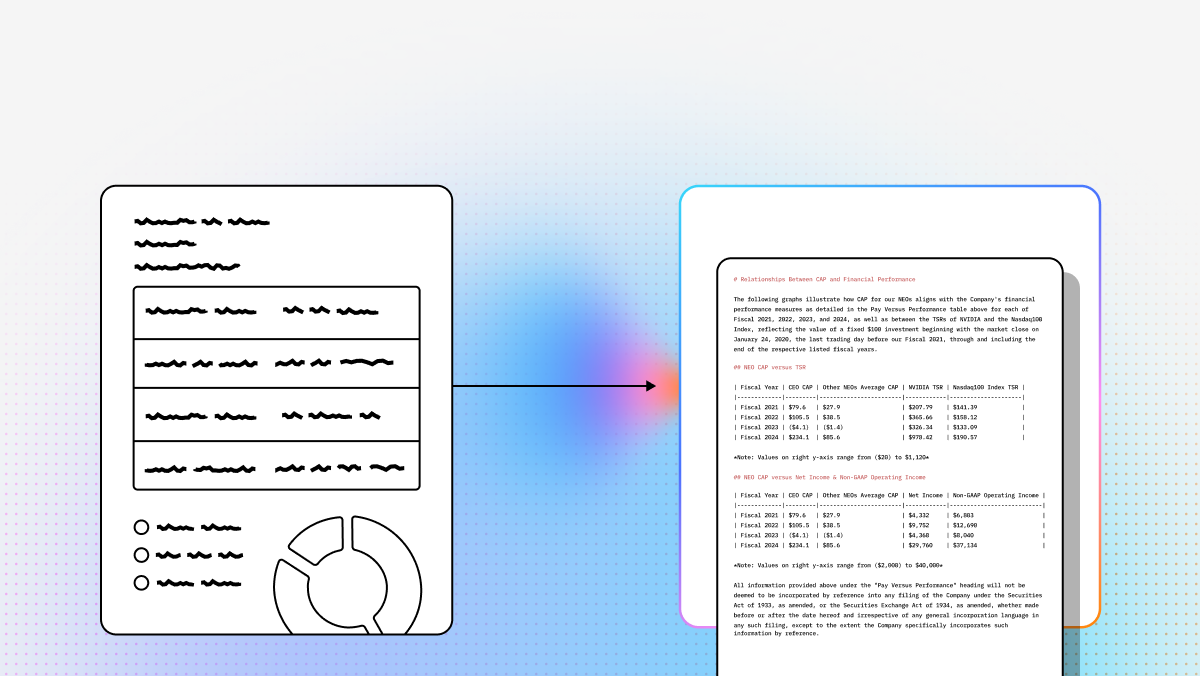
- Layout-Aware Semantic Reconstruction: Visually analyzes page layouts to extract nested text, multi-column sections, and tables without scrambling the reading order, then outputs clean Markdown that LLMs can easily process.
- Multimodal Parsing: Interprets charts, graphs, diagrams, and scientific math, helping AI systems understand more than just plain text.
- Tier-Based Agentic Orchestration: Routes simpler pages to faster, lower-cost models while reserving advanced models for difficult scans and complex layouts.
- JSON Mode and Granular Metadata: Produces structured JSON with page coordinates, node types, and confidence scores, which is valuable for audit trails, human review, and metadata-aware retrieval.
Primary use cases
- Financial document analysis: Useful for SEC filings, contracts, transaction logs, KYC or AML reviews, and due diligence workflows with dense tables and embedded charts.
- Insurance and healthcare data management: Helps process variable medical records, intake forms, claims, and handwritten notes with less manual intervention.
- Technical documentation and scientific content: Supports parsing of manuals, research papers, equations, and diagrams for high-quality retrieval and knowledge systems.
Recent updates
- LlamaParse API v2: Introduced simplified parsing modes such as Fast, Cost Effective, Agentic, and Agentic Plus for clearer speed-versus-accuracy control.
- Frontier model support: Expanded backend support for advanced models to improve accuracy on difficult PDFs, PowerPoints, and Word documents.
- Granular bounding boxes and page-level citations: Added more precise traceability for extracted data, supporting audit-ready validation workflows.
- Automatic orientation and skew detection: Improved handling of upside-down, sideways, and slightly skewed scanned pages.
Limitations
- Digital-native focus: Best aligned with modern engineering teams rather than highly traditional enterprises expecting long, services-heavy deployments.
- Developer-centric experience: Teams get the most value when they are comfortable working with APIs, SDKs, and custom workflows.
- Cloud API dependency: Advanced parsing relies on cloud-based model access, which can be a constraint for highly restricted or air-gapped environments.
Why LlamaParse stands out
LlamaParse’s unique strength is that it combines semantic reconstruction, multimodal understanding, and agentic routing into a single platform built for AI-ready document workflows. For developers building production-grade retrieval, extraction, and automation systems, it offers a more modern path than legacy OCR or template-first IDP tools.
2. Azure Document Intelligence
Azure Document Intelligence is a cloud-based data extraction platform built for organizations that already operate heavily within Microsoft’s ecosystem. It focuses on extracting text, key-value pairs, and tables from business documents at scale, with a strong emphasis on reliability, security, and managed cloud operations. For enterprises processing large volumes of standardized forms, invoices, receipts, and IDs, it can be a practical fit.
Its biggest advantage is ecosystem alignment. Teams already using Azure infrastructure, storage, security controls, and AI services can connect document extraction into broader cloud workflows more easily than they could with a standalone tool. That said, this same strength can also become a constraint for teams that want more portability or a lighter-weight developer experience.
Platform summary
Azure Document Intelligence is best suited for enterprise teams, cloud architects, and technical decision-makers that want a managed document extraction service closely integrated with Azure. It is a strong option for standardized, high-volume document processing where cloud governance and Microsoft-native integration matter more than maximum flexibility.
Core features
- Pre-built extraction models: Offers ready-made models for invoices, receipts, and identity documents, reducing time to deployment.
- Cloud-native scalability: Uses Azure infrastructure to scale document processing for large enterprise workloads.
- Custom model training: Allows organizations to train specialized extraction models on labeled examples for custom layouts.
Primary use cases
- Automated invoice processing: Extracts vendor data, totals, and line items for accounts payable automation.
- Identity verification: Supports onboarding and KYC workflows involving passports, driver’s licenses, and other ID documents.
- Form digitization: Helps enterprises and government teams convert large archives of structured forms into searchable systems.
Recent updates
- Deeper Azure AI Foundry integration: Expanded the ability to apply generative AI workflows to extracted content for summarization, translation, and downstream analysis.
Limitations
- Ecosystem lock-in: Best results often come when the rest of the workflow already lives in Azure.
- Complex setup: Secure deployment and production-grade configuration can require significant cloud engineering effort.
- Escalating costs: High-volume multi-page processing and premium features can become expensive over time.
Best fit
Azure Document Intelligence is a sensible choice for organizations that prioritize Microsoft-native workflows, managed scalability, and enterprise cloud controls. It is less attractive for teams that want strong local deployment options, lightweight prototyping, or freedom from cloud lock-in.
3. Hyperscience
Hyperscience is built for large-scale enterprise document operations, especially where the source material is messy, handwritten, or rooted in legacy paper workflows. Its approach centers on proprietary machine learning and a strong Human-in-the-Loop review model, making it particularly relevant for industries such as government, insurance, and lending, where document variability and quality issues are common.
Where Hyperscience shines is handwritten and low-quality document handling. Instead of assuming clean digital input, it is designed around the reality of noisy scans, cursive notes, and operational edge cases. For enterprises with entrenched legacy processes, that specialization can be valuable, even if it comes with a heavier deployment model.
Platform summary
Hyperscience is best suited for large enterprises that need reliable extraction from handwritten forms, poor scans, and long-standing operational document workflows. It appeals more to transformation programs inside regulated or legacy-heavy organizations than to fast-moving product teams seeking API-first experimentation.
Core features
- Proprietary machine learning: Optimized for difficult document layouts and lower-quality source material.
- Advanced handwriting recognition: Strong at extracting data from cursive or messy handwritten forms.
- Human-in-the-Loop interface: Routes low-confidence outputs to manual reviewers without breaking the workflow.
Primary use cases
- Government document processing: Helps agencies reduce backlogs from handwritten or paper-based applications.
- Insurance claims automation: Extracts information from handwritten forms and messy medical records.
- Mortgage application review: Supports lenders processing large, unstructured document packets.
Recent updates
- Hyper-automation focus: Updated proprietary models were positioned to require fewer training examples for complex enterprise document types.
Limitations
- Legacy architecture: Traditional custom-model approaches can be slower to adapt to changing document layouts.
- Long deployment cycles: Better suited to enterprise implementation programs than rapid self-serve adoption.
- High total cost: Custom training, workflow design, and enterprise support can make it expensive for smaller teams.
Best fit
Hyperscience makes the most sense when handwriting accuracy and human review workflows are central requirements. It is less compelling for developer-led AI teams that want fast iteration, flexible APIs, or multimodal parsing for modern LLM applications.
4. Docling
Docling is an open-source document parsing tool aimed at developers who care most about local control, transparency, and avoiding paid cloud dependencies. Its specialty is PDF structure parsing, especially converting complex documents into clean Markdown that can be used in downstream LLM or RAG systems. For teams that want a modifiable foundation rather than a fully managed platform, it offers a compelling option.
Its biggest appeal is flexibility. Because it is open source and locally deployable, organizations can run it in privacy-sensitive or offline environments without sending documents to third-party APIs. The tradeoff is that teams must take on more engineering responsibility for setup, maintenance, and scaling.
Platform summary
Docling is best for developers, researchers, and security-conscious organizations that want local document parsing and open-source control. It is especially attractive for internal knowledge systems, offline pipelines, and privacy-sensitive AI applications where cloud processing is not acceptable.
Core features
- Open-source architecture: Gives teams full visibility into the code and freedom to modify the stack.
- PDF structure parsing: Converts complex PDFs into cleaner structural representations and Markdown output.
- Local deployment: Supports offline and privacy-first use cases without relying on cloud APIs.
Primary use cases
- Academic research ingestion: Useful for parsing multi-column papers and technical documents for local analysis.
- Open-source RAG pipelines: Helps developers preprocess internal knowledge bases for retrieval systems.
- Offline data extraction: Supports organizations operating in air-gapped or highly sensitive environments.
Recent updates
- Improved Markdown export workflows: Recent momentum focused on making PDF-to-Markdown conversion more useful for local LLM ingestion.
Limitations
- Limited multimodal support: Not as strong on charts, graphs, and rich visual reasoning as advanced VLM-based platforms.
- Developer effort required: Deployment, integration, and scaling require meaningful engineering work.
- No enterprise support layer: Community support may be insufficient for organizations needing SLAs or dedicated vendor assistance.
Best fit
Docling is a strong choice when open-source flexibility and local deployment outweigh the need for advanced multimodal extraction or managed enterprise support. It is particularly useful for builders who want full control over how document parsing fits into a broader AI stack.
If your priority is agentic document processing for modern AI workflows, LlamaParse is the strongest fit in this group. If you are standardized on Microsoft, Azure Document Intelligence may be the most practical enterprise option. If handwriting-heavy legacy workflows dominate your pipeline, Hyperscience deserves consideration. And if local control and open-source flexibility matter most, Docling is the most developer-friendly alternative.
What is Data Extraction Software
Data extraction software is an advanced technological solution designed to automatically retrieve unstructured or semi-structured information from various document types—such as scanned images, PDFs, and emails—and convert it into structured, machine-readable data. Powered by enterprise-grade Optical Character Recognition (OCR) and artificial intelligence, this software eliminates the need for manual data entry by seamlessly identifying, capturing, and organizing text and key data points from complex business documents.
Why is it important
In today's fast-paced enterprise environment, this software is critical because it dramatically accelerates document processing workflows while significantly reducing costly human errors. By automating the extraction process, organizations can lower operational costs, ensure regulatory compliance through superior data accuracy, and free up their workforce to focus on high-value strategic tasks. Ultimately, it transforms trapped, unstructured document data into actionable business intelligence that drives faster decision-making.
How to choose the best software provider
Selecting the right data extraction software provider requires a strategic methodology focused on accuracy, scalability, and seamless integration. Begin by evaluating the provider's underlying technology; prioritize solutions that combine robust OCR with machine learning to effortlessly handle complex and highly variable document layouts. Furthermore, assess their API capabilities to ensure smooth integration with your existing ERP or CRM systems, and rigorously review their security protocols and compliance certifications to guarantee your sensitive enterprise data remains fully protected.
What is the difference between OCR and modern data extraction software?
Traditional OCR primarily converts images of text into machine-readable characters. That is useful for basic digitization, but it often falls short when documents contain complex layouts, nested tables, multi-column formatting, handwriting, charts, or inconsistent templates. OCR can tell you what characters appear on a page, but it often struggles to explain how those characters relate to each other.
Modern data extraction software goes further by combining OCR with AI models, document layout analysis, and increasingly LLMs or vision-language models. Instead of only reading text, these platforms try to understand document structure and meaning. That means they can often identify headings, line items, key-value pairs, tables, sections, page order, and relationships between fields.
For technical teams, the practical difference is significant:
- OCR output: raw text with limited structure
- Modern extraction output: structured content such as JSON, Markdown, tables, metadata, and bounding boxes
- OCR weakness: brittle performance when layouts change
- Modern extraction strength: better handling of variable formats and semantically rich documents
If your goal is simple text capture, OCR may be enough. If your goal is workflow automation, RAG ingestion, analytics, compliance review, or downstream LLM reasoning, modern data extraction software is usually the better fit.
How do I choose the right data extraction software for my use case?
The best choice depends less on feature lists and more on the type of documents, deployment constraints, and downstream workflows you need to support. A strong evaluation usually starts with a few practical questions.
First, define your document mix:
- Are your files mostly standardized forms, or highly variable PDFs?
- Do you need to process handwriting, poor scans, tables, charts, or equations?
- Are the documents digital-native or scanned from paper?
Second, define your technical requirements:
- Do you need API-first integration for product development?
- Do you need self-hosting or air-gapped deployment for privacy or compliance?
- Will outputs be used by humans, automation systems, or LLM pipelines?
Third, evaluate operational fit:
- How much manual review can your workflow tolerate?
- Do you need confidence scores, citations, and bounding boxes for auditability?
- Is your priority rapid prototyping, enterprise governance, or cost control at scale?
As a rule of thumb:
- Choose an AI-native, developer-first platform if you need flexible extraction for RAG, agents, or variable document sets.
- Choose a cloud enterprise platform if you are already standardized on a major ecosystem like Azure and process large volumes of common business documents.
- Choose a handwriting-focused enterprise tool if low-quality scans and human review are central to the workflow.
- Choose an open-source or local tool if privacy, control, and offline operation matter more than managed convenience.
The most reliable way to decide is to test each tool on a representative document set and compare not just field accuracy, but also formatting quality, error handling, implementation effort, and total cost.
What kinds of documents can modern data extraction software handle well?
The best platforms can handle much more than invoices and forms, but performance still varies by document type. Modern tools are increasingly good at processing:
- Invoices, receipts, and purchase orders
- Contracts and legal documents
- Financial statements and SEC filings
- Medical records and insurance claims
- Identity documents and onboarding packets
- Research papers, technical manuals, and reports
- Multi-column PDFs with complex reading order
- Tables, line items, and nested form fields
Some tools also support more advanced multimodal extraction, including:
- Charts and graphs
- Diagrams
- Equations
- Slides or presentation decks
- Handwritten annotations
That said, not every tool handles every format equally well. For example:
- Template-heavy systems usually perform best on standardized forms
- Vision-language or semantic parsing systems tend to do better on complex, variable layouts
- Specialized handwriting platforms may outperform general-purpose tools on cursive or noisy scans
- Open-source parsers may be strong on PDF text structure but weaker on rich visual understanding
If your documents are messy, high-value, and structurally inconsistent, look for software that emphasizes semantic reconstruction, multimodal parsing, and structured outputs rather than basic OCR alone.
What output format is best for LLM, RAG, and agent workflows?
For AI applications, the best output format depends on how the extracted content will be used downstream. In many cases, the ideal setup is not one format, but a combination of formats.
Common output options include:
- Plain text: simplest output, but often loses layout and hierarchy
- Markdown: useful for preserving headings, lists, tables, and reading order in a way LLMs can interpret well
- JSON: best for structured extraction, field-level automation, and programmatic validation
- Bounding box metadata: important when you need traceability back to the source document
- Confidence scores and citations: helpful for review workflows, auditability, and human-in-the-loop systems
For example:
- Use Markdown when building RAG pipelines that need semantically clean chunks for retrieval and generation.
- Use JSON when extracting specific fields for workflow automation, APIs, databases, or agents that need deterministic structure.
- Use coordinates and citations when your application must show where an answer came from or support compliance review.
For many developer teams, the strongest extraction tools are the ones that preserve both semantic structure and source traceability. Clean text alone is often not enough. If your application relies on trustworthy LLM output, preserving headings, tables, section order, and provenance can materially improve retrieval quality and reduce hallucinations.
Should I choose a cloud API or a self-hosted data extraction tool?
This decision usually comes down to speed, control, compliance, and internal engineering capacity.
A cloud API is often the best option when you want:
- Fast implementation
- Managed scaling
- Frequent model improvements
- Lower infrastructure overhead
- Easier integration with developer workflows and modern AI stacks
This approach is attractive for teams building production AI features quickly, especially when document volume fluctuates or advanced models are required for difficult parsing tasks.
A self-hosted or local tool may be the better choice when you need:
- Strong data residency controls
- Offline or air-gapped processing
- Full control over infrastructure
- Open-source transparency and customization
- Reduced dependence on a single vendor
However, self-hosting usually increases the engineering burden. Your team may need to manage deployment, scaling, upgrades, monitoring, and quality tuning internally. In practice, that means the total cost is not just software cost, but also maintenance effort.
A good way to think about the tradeoff is:
- Choose cloud if your priority is speed, flexibility, and access to the latest parsing capabilities.
- Choose self-hosted if your priority is privacy, infrastructure control, or regulatory constraints.
For many enterprise teams, the answer is hybrid: use cloud services for less sensitive workflows and local or private deployment for restricted document classes.