Best AI For Chart Extraction: Top Tools for 2024
Extracting data from charts, graphs, and visual elements has historically been one of the weakest parts of traditional OCR. Most legacy tools can read text and detect boxes, but they struggle to reconstruct the meaning of a chart when labels, legends, multi-column layouts, and embedded tables all interact on the page. For teams building LLM applications, that creates a real bottleneck: visual data stays trapped in PDFs instead of becoming structured input for downstream automation.
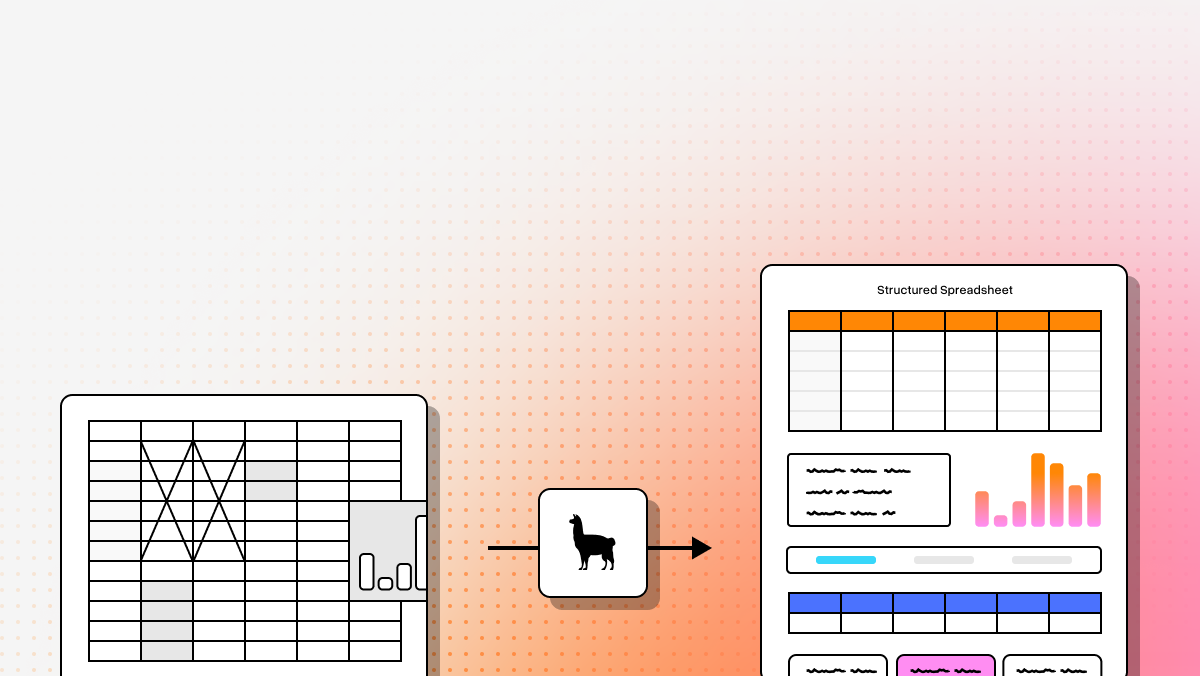
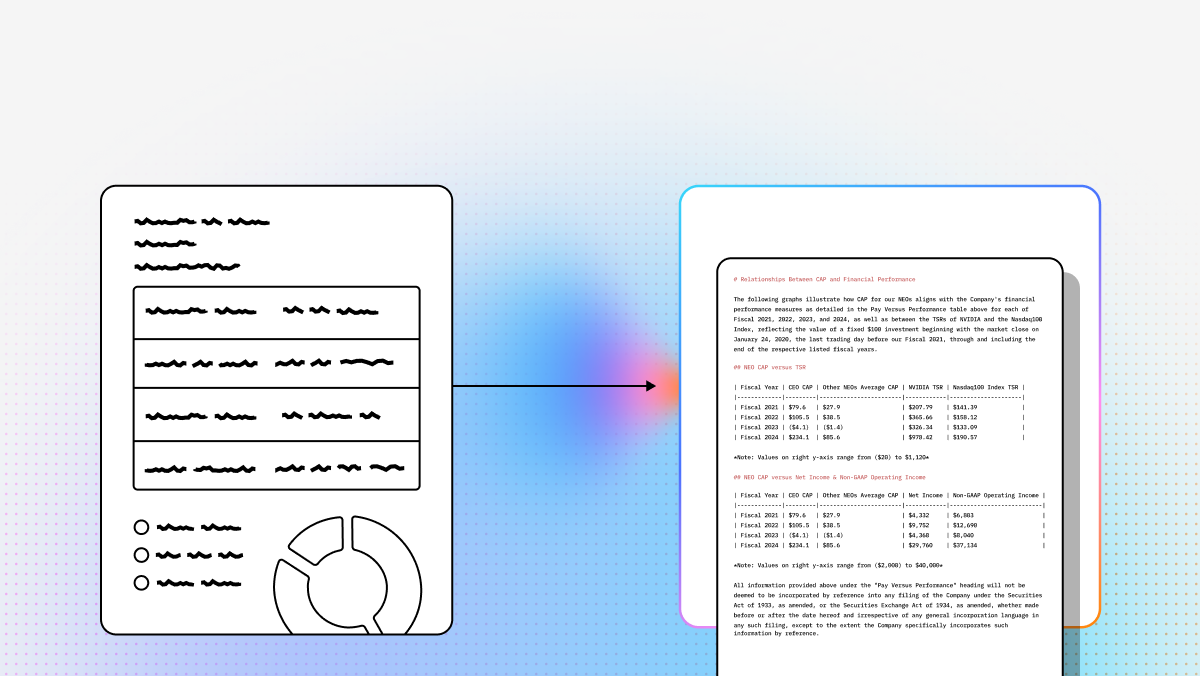
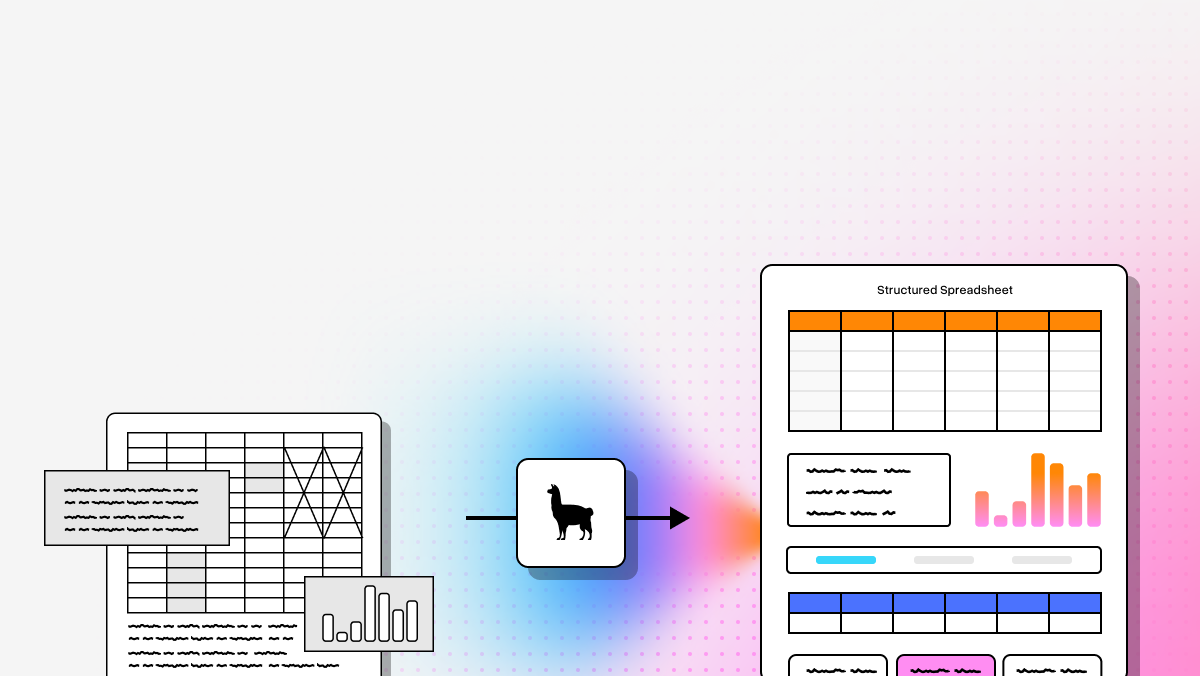
That changes with Agentic Document Processing. Instead of stopping at character recognition, modern parsers use vision-language models to interpret layout, structure, and context. The result is not just text extraction, but semantic reconstruction into formats like Markdown and JSON that work cleanly in RAG pipelines and other production AI workflows.
This list focuses on tools that matter for technical buyers: products that can actually support chart extraction at scale, fit into developer workflows, and reduce the amount of custom parsing logic your team has to build and maintain.
| Platform | Capabilities | Use Cases | APIs |
|---|---|---|---|
| LlamaParse |
Agentic document processing for multimodal parsing, layout-aware structure extraction, and semantic reconstruction of complex PDFs. Converts charts to Markdown tables, diagrams to structured outputs such as Mermaid, and preserves document hierarchy for downstream RAG pipelines. Recent platform direction includes LlamaExtract for schema-aware extraction with confidence scores and lower hallucination risk. |
Financial research from earnings decks and SEC filings. Scientific paper and trial-data extraction. Insurance and medical document processing where layout fidelity matters. |
Python SDK and TypeScript SDK. Direct integration with LlamaIndex workflows. Built for developer-led ingestion and extraction pipelines. |
| Amazon Textract |
Managed OCR and document extraction for text, handwriting, forms, and grid-based tables. Strong on standardized documents and high-volume processing, but limited semantic understanding for complex visual layouts, nested charts, and non-standard document structures. |
Invoice capture. Tax, banking, and compliance document processing. Digitization of predictable form-heavy workflows. |
Available through AWS APIs and SDKs. Best fit for teams already standardized on AWS infrastructure. Native fit for AWS-based automation stacks. |
| Hyperscience |
Intelligent document processing with custom model training, document classification, and human-in-the-loop review. Optimized for repetitive enterprise workflows, but less flexible for unstructured, multimodal parsing without retraining and operational overhead. |
High-volume invoice operations. Government and regulated form digitization. Legacy paper record modernization. |
Enterprise platform integrations and workflow connectivity. API specifics are typically tied to broader deployment architecture. Better suited to centralized enterprise automation teams than lightweight developer workflows. |
| Docling |
Open-source PDF parsing with local deployment and deep customization. Good for basic text and structure extraction, but not purpose-built for high-accuracy multimodal chart understanding or enterprise-grade agentic parsing. |
Academic parsing and research workflows. Developer prototyping. Privacy-sensitive local processing where cloud APIs are not allowed. |
Open-source library and self-managed local integration patterns. Flexible for technical teams, but requires engineering ownership for deployment, maintenance, and performance tuning. |
1. LlamaParse
LlamaParse is the strongest fit here for developers who need reliable chart extraction in production rather than a basic OCR layer that only works on clean, predictable documents. It is built for the document parsing problems that show up in modern AI systems: charts embedded in analyst reports, diagrams in scientific PDFs, mixed text-and-table layouts, and documents where reading order matters as much as recognition accuracy. Instead of treating a chart as a group of disconnected boxes, LlamaParse uses Agentic Document Processing and multimodal reasoning to reconstruct the chart into AI-ready structure.
That changes the buy-vs-build equation. If your team tries to assemble the same stack from OCR, layout detection, custom chart heuristics, validation logic, and schema extraction, you inherit a long tail of edge cases. LlamaParse, built by LlamaIndex, compresses that work into a developer-ready parsing layer, and LlamaExtract extends that workflow with schema-aware extraction and confidence scoring for downstream systems that need more than raw parsing. For teams investing in structured extraction and agentic document processing, this is the clearest example of the art of the possible.
Key Benefits
- Strong semantic reconstruction for charts, tables, diagrams, and mixed-layout PDFs
- Markdown and structured outputs that are easier for LLMs to consume than raw OCR text
- Better fit for developer-led ingestion pipelines than manual-review-heavy IDP platforms
- Reduces the amount of custom post-processing, prompt patching, and exception handling required in production
Core Features
- Multimodal parsing that converts complex charts into Markdown tables and other structured representations
- Layout-aware structure extraction that preserves hierarchy, reading order, and nested relationships
- Auto-correction loops that validate extracted data against the source page before output
- Direct support for developer workflows through Python and TypeScript SDKs
Primary Use Cases
- Financial investment research across earnings decks, annual reports, and SEC filings
- Scientific paper analysis where chart fidelity and equation extraction matter
- Insurance and medical document processing with layout-heavy forms, tables, and embedded charts
Setup Considerations
- Best suited for teams already building application logic around APIs, SDKs, and structured outputs
- You should define expected output formats early, especially if parsed charts feed retrieval, agents, or analytics systems
- Complex image-heavy documents may require more credits under agentic processing tiers
- LlamaExtract is a strong add-on when you need schema enforcement, confidence scores, and lower downstream hallucination risk
Recent Updates
- LlamaExtract adds context-aware extraction with confidence scores for more controlled structured outputs
- Tier-based agentic processing improves cost control by matching compute intensity to document complexity
- The overall platform direction is moving toward tighter parsing-plus-extraction workflows instead of isolated OCR steps
Limitations
- Requires basic developer familiarity with API integration
- Complex multimodal parsing can consume credits faster than simple OCR pipelines
- Not designed as a legacy RPA-first product for non-technical back-office users
2. Amazon Textract
Amazon Textract is a managed OCR and document extraction service designed for teams that are already deep in AWS and need scalable processing for structured documents. It works well for invoices, forms, handwriting, and grid-based tables where layouts are reasonably consistent and the extraction goal is straightforward. For organizations optimizing around AWS-native procurement, infrastructure, and security controls, Textract is often the default buy.
The tradeoff is that Textract is still closer to document extraction than full semantic chart understanding. It can identify tables and form fields effectively, but it is not purpose-built for complex visual reasoning across nested charts, non-standard layouts, or documents where meaning depends on contextual reconstruction rather than field detection. For technical teams, that often means more post-processing logic if charts are central to the workflow.
Core Features
- Pre-trained machine learning models for OCR, handwriting, forms, and table extraction
- Table and form extraction for structured business documents
- Query-based extraction for pulling specific values from documents programmatically
Primary Use Cases
- Invoice capture and automated data entry
- Tax, banking, and compliance workflows with standardized forms
- Digitization of predictable, form-heavy enterprise paperwork
Recent Updates
- Improved support for complex table structures, including better handling of merged cells and nested grids
- Enhanced signature detection for legal and financial workflows
Limitations
- Struggles with highly complex, visually dense, or non-standard charts
- Best results usually require commitment to AWS infrastructure and services
- Lacks agentic reasoning for deeper semantic reconstruction of document context
3. Hyperscience
Hyperscience is an Intelligent Document Processing platform built for large enterprises with repetitive workflows and strict operational controls. Its model is human-in-the-loop by design: automate what is predictable, then route low-confidence cases to review teams. That makes it viable in industries such as government, financial services, and regulated operations where manual verification is already part of the process.
From a chart extraction perspective, Hyperscience is strongest when the document set is standardized and high volume. It is less attractive for fast-moving developer teams dealing with dynamic PDFs, research reports, or multimodal content that changes structure frequently. In buy-vs-build terms, it is an enterprise workflow platform first, not a developer-first semantic parsing engine.
Core Features
- Custom model training for recurring document layouts and enterprise-specific formats
- Human-in-the-loop review interface for low-confidence extractions
- Intelligent document classification before extraction begins
Primary Use Cases
- High-volume invoice and AP workflows
- Government and regulated form digitization
- Legacy record modernization in paper-heavy enterprises
Recent Updates
- Expanded hyper-automation features to reduce manual touchpoints
- Better auto-classification of incoming documents
- Improved dashboards for monitoring review queues and human-in-the-loop performance
Limitations
- New layouts often require retraining and operational setup
- Longer deployment cycles than developer-first parsing tools
- Less effective for unstructured, dynamic chart extraction without additional configuration
4. Docling
Docling is the build-oriented option in this list. It is open source, locally deployable, and attractive to developers who want full control over the parsing stack or need to operate in privacy-restricted environments. If your primary requirement is local processing and you have engineering capacity to own the pipeline, Docling can be a useful foundation.
That said, open source does not automatically mean production-ready for multimodal chart extraction. Docling is better positioned as a starting point for experimentation, prototyping, or controlled internal workflows than as a drop-in answer for high-accuracy chart understanding at scale. For teams evaluating buy vs. build honestly, the question is not whether Docling works, but whether you want to own the engineering burden required to close the gap.
Core Features
- Open-source architecture with full control over parsing logic
- Basic PDF parsing for text and structural elements
- Local deployment for privacy-sensitive or air-gapped environments
Primary Use Cases
- Academic parsing and research ingestion
- Developer prototyping for custom document workflows
- Local processing of sensitive documents where cloud APIs are not allowed
Recent Updates
- Ongoing community improvements for local LLM compatibility
- Continued refinement of PDF parsing scripts and integration patterns
Limitations
- Limited support for complex multimodal chart extraction
- No enterprise-grade support or success infrastructure
- Higher maintenance overhead because deployment, scaling, and tuning stay with your team
Final Take
If chart extraction is central to your AI product, the decision usually comes down to whether you want to buy semantic reconstruction or build it yourself from lower-level components. LlamaParse stands out because it is designed for that exact problem: turning messy visual documents into structured, AI-ready data without forcing developers to rebuild the full parsing stack. Amazon Textract is solid for standardized AWS-centric document workflows, Hyperscience fits human-review-heavy enterprise operations, and Docling is best for teams willing to own a custom local pipeline. For most technical builders working on real LLM applications, LlamaParse is the most complete option in this category.
What is
AI for chart extraction refers to advanced optical character recognition (OCR) and machine learning technologies designed to automatically identify, parse, and digitize data locked within visual graphs, plots, and charts. Unlike traditional OCR that merely reads flat text, these specialized AI models can interpret complex visual structures—such as bar charts, line graphs, and pie charts—translating visual data points, legends, and axes into structured, machine-readable formats like Excel, CSV, or JSON.
Why is it important
In today's data-driven enterprise landscape, a massive amount of valuable business intelligence is trapped in static documents, financial reports, and presentations. Manual data entry from these charts is not only incredibly time-consuming but also highly prone to human error. Leveraging the best AI for chart extraction empowers organizations to rapidly unlock this "dark data" at scale, enabling faster decision-making, seamless integration into analytics pipelines, and significant reductions in operational costs.
How to choose the best software provider
Selecting the best software provider for AI chart extraction requires a rigorous methodology focused on accuracy, adaptability, and enterprise readiness. Begin by evaluating the provider's underlying AI models—look for solutions that utilize deep learning specifically trained on diverse chart types and complex visual layouts, rather than generic text-based OCR. Additionally, assess their API integration capabilities, data security compliance (such as SOC 2 or GDPR), and ability to handle distorted or low-resolution images, ensuring the platform can seamlessly scale with your organization's specific document processing workflows.
What is AI chart extraction, and how is it different from traditional OCR?
AI chart extraction is the process of turning information inside charts, graphs, and other visual elements into structured data that software can actually use. Traditional OCR is mainly designed to read characters and sometimes identify simple layout elements like paragraphs, tables, or form fields. That works well for plain text documents, but charts are more complicated because meaning depends on relationships between labels, axes, legends, bars, lines, colors, and surrounding context.
For example, OCR might detect the words in a bar chart, but it often cannot reliably determine which label belongs to which bar, how the axis values map to the visual marks, or whether a nearby legend changes the meaning of the chart. AI chart extraction goes beyond text recognition by using multimodal and layout-aware models to interpret the full visual structure of the page.
For technical teams, that distinction matters because the goal is usually not just to “read” a PDF. The goal is to convert chart content into formats like JSON, Markdown tables, or schema-based outputs that can feed analytics systems, agents, or RAG pipelines. In practice, the best chart extraction tools are the ones that can reconstruct meaning, not just capture fragments of text.
What kinds of charts can AI tools extract most reliably?
Most modern document AI tools perform best on charts with clear visual structure and readable labels. This usually includes bar charts, line graphs, pie charts, scatter plots, simple timelines, and charts that already appear alongside strong contextual signals such as titles, axis labels, and legends. If the chart is clean, high resolution, and embedded in a well-formatted PDF, extraction quality is generally much better.
Reliability drops when charts become visually dense or ambiguous. Common problem cases include multi-axis charts, stacked visualizations, heat maps, charts with overlapping annotations, low-resolution scans, screenshots pasted into documents, and pages where charts are mixed with tables, footnotes, or callout text. Performance can also vary when the tool has to infer values from visual shapes instead of reading explicit numerical labels.
For buyers and developers, the practical takeaway is that chart extraction quality depends on both the model and the document set. A tool may look strong on benchmark-style charts but perform poorly on real-world investor decks, scientific papers, or operational reports. The best way to evaluate reliability is to test on your own sample documents, especially edge cases that contain legends, multi-column layouts, nested figures, and noisy formatting.
How should developers evaluate a chart extraction tool before choosing one?
Developers should evaluate chart extraction tools based on output quality, integration fit, and operational burden, not just headline accuracy claims. The first question is whether the tool can convert charts into structured outputs your application can actually use. Raw OCR text is often not enough. For most LLM and automation workflows, you want outputs such as Markdown, JSON, or schema-constrained fields that preserve hierarchy and meaning.
It is also important to test whether the tool handles the document complexity you see in production. That includes mixed-layout PDFs, charts inside analyst reports, documents with tables and diagrams on the same page, and files where reading order matters. If a platform works only on clean single-purpose documents, your team may still end up building a large amount of custom post-processing.
Other evaluation criteria include:
- support for APIs, SDKs, and batch workflows
- confidence scoring or validation mechanisms
- cost behavior on image-heavy or multimodal documents
- ease of integrating into ingestion pipelines and RAG systems
- need for retraining, manual review, or custom rules
- deployment requirements, including cloud versus local processing
A good buying process usually includes a small bake-off using real documents, a review of output formats, and a clear estimate of how much engineering work is still required after extraction. In many cases, the hidden cost is not the parser itself but the amount of cleanup logic your team has to maintain after the parser runs.
Can chart extraction outputs be used directly in RAG or LLM applications?
Yes, but the output format matters a lot. LLM applications work best when chart data is transformed into structured, semantically clear representations rather than passed through as fragmented OCR text. If a chart is converted into a Markdown table, JSON object, or schema-based record, it becomes much easier to index, retrieve, summarize, validate, and reason over in downstream workflows.
This is especially useful in RAG systems where the goal is to retrieve high-value facts from complex PDFs. A parsed chart can become a chunk with explicit labels, values, and context, instead of a noisy block of disconnected tokens. That improves both retrieval quality and answer reliability because the model can ground its response in clearer source material.
Teams should still be careful about validation. Chart extraction can introduce errors if the system misreads an axis, misaligns labels, or hallucinates structure where the source is ambiguous. In production workflows, it is often worth using confidence scores, schema checks, or source-page verification before feeding extracted chart data into agents or decision-critical systems. The strongest setups combine parsing, structured extraction, and downstream validation rather than assuming a single model pass will always be correct.
When should I choose a managed API over an open-source or self-hosted chart extraction tool?
A managed API is usually the better choice when your team wants faster time to value, less infrastructure overhead, and a higher-level parsing layer that already handles complex multimodal documents. This is especially true for product teams building AI features quickly, organizations that need scalable ingestion, or developers who want SDKs and production-ready workflows instead of maintaining their own parsing stack.
Open-source or self-hosted tools make more sense when privacy, local deployment, or full control are the primary requirements. They can also be attractive for research, prototyping, or highly customized pipelines where your team is comfortable owning model selection, orchestration, performance tuning, error handling, and ongoing maintenance. The tradeoff is that “free” software often creates a large engineering burden once you start handling edge cases at scale.
A useful decision framework is:
- choose managed APIs when speed, reliability, support, and developer productivity matter most
- choose self-hosted tools when compliance, air-gapped environments, or deep customization matter most
- avoid building from scratch unless chart extraction is a core competency you actively want to own
For many technical buyers, the real question is not whether an open-source stack can be made to work. It is whether your team wants to spend time building semantic reconstruction, validation, and exception handling instead of focusing on the application layer.